Monday, July 18, 2011

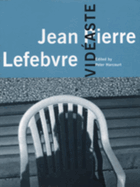
Jean Pierre Lefebvre's video work (a book by Peter Harcourt)

Title: Jean Pierre Lefebvre: Vidéaste*
Series: Canadian Directors**
Author: Peter Harcourt
Publisher: Toronto International Film Festival Group (2001)
Pages: 91
Price: $9.95
*****
“Once we understand its conventions, it can inspire the human delight that we feel for the best of folk art.” – Peter Harcourt

It is topical to review a book on an important Canadian director after writing a post on contemporary Canadian cinema as a way to contextualize today's output alongside its heritage. Peter Harcourt writes that “the films of Jean Pierre Lefebvre helped consolidate a sense in Québec of an emerging national cinema.” And his career begins as a film-critic, like those New Wave guys, though, unlike them, he's still one with regular contributions to 24 images; his latest entry was on Serge Giguère (N. 151). Inspired by Gilles Groulx's Le chat dans le sac (1964), Lefebvre's first film Le révolutionnaire (1965) was one of the first landmarks of Québécois cinema. His National Film Board work is as innovative and beautiful as anything by Gilles Carle and Il ne faut pas mourir pour ca (1967) was the first Canadian film to premiere at Cannes. The Harcourt-Lefebvre book explores the L’Âge des images*** (1994-1995) series that was made after Le fabuleux voyage de l’ange (1991), which was aggressively rejected by the critics, and before his lastest effort the TV movie Le manuscrit érotique (2002). Pertaining to his influence, Piers Handling notes, “Many of the new generation of Anglophone filmmakers – among them Atom Egoyan, Jeremy Podeswa, Bill MacGillivray and Bruno Pacheco – have cited Lefebvre as a formative influence.”

Lefebvre’s examines his early film-going experiences in the ‘40s and ‘50s in Snapshots from Québec and discusses them with warmth and passion; the essay itself is divided into helpful sub-headings which themselves form a narrative: Chance and Neccesity, Candid Eye, Cinema Direct, Cinema Verite, Time/Money, Form/Content. Lefebvre speaks kindly of his mother who “judged films on only on criterion: the film was good if it made her laugh or cry.” After the NFB reign of propaganda and folkloric images, according to Lefebvre, “If the pot began to simmer in 1956, especially at the NFB, it was in 1958 that it boiled over with thirteen short films for the television series Candid Eye on the one hand, and the film Les Raquetteurs shot by Gilles Groulx in collaboration with Michel Brault and Marcel Carrière on the other." The most representative film of the cinema direct period is Gilles Groulx’s Golden Gloves (1961) and for cinéma vérité there is Pierre Perrault’s Pour la Suite du Monde (1963) and Claude Jutra’s A Tout Prendre (1964), according to Lefebvre.

Peter Harcourt’s The Music of Light: The Video Work of Jean Pierre Lefebvre is the centerpiece of the book and it is an analysis of the five episode series L’Âge des images; the episodes are Le Pornolithique, L’Écran invisible, Comment filmer Dieu, Mon chien n’est pas mort, and La Passion de l’innocence. Harcourt examines the genesis of Lefebvre aesthetic approach and its impact - “His films combine the formal authority of Michael Snow with the compassionate humanity of Jean Renoir” - and divides his work into three categories: the personal, the political, and the pastoral. Harcourt compares Lefebvre with Jean-Luc Godard as, at the time, they both had difficulty financing films, which result is a turn towards video, and L’Âge des images is contrasted with Histoire(s) du cinema (1988-1998). The comparison is apt though it might be pushing it as Lefebvre is not as epochal as Jean-Luc Godard, who is described by Raymond Bellour (Trafic) as, “It is through the filmmaker Jean-Luc Godard that the history of cinema - understood as the history of the twentieth century – was forever divided.” And on Godard’s magnum opus Histoire(s) du Cinema, Antoine de Baecque writes, “Unrivalled in terms of its ambition, and aesthetically peerless, it is the culmination of our time.” It is worth mentioning here that the Godard lectures at the Conservatory of Cinematographic Art at Concordia University in the late 1970s, which Lefebvre brings up, are in the process of being put together in a book by the publisher Caboose in Montreal.

The videos in the L’Âge des images seem both narratively and thematically interconnected and the scope is as broad and diverse as an examination of the origins of cosmological time to the Clarence Thomas versus Anita Hill sexual harassment hearing (in the interview it is discusses how this came to be). There are appropirations of Stan Laurel and Oliver Hardy’s Babes in Toyland (1934) and intertextual references to the Group of Seven. L’Écran invisible is about potential and family, in Comment filmer Dieu Lefebvre interviews his cameraman Lionel Simmons, Mon chien n’est pas mort is about Lefebvre's family pup Kathy, and La Passion de l’innocence is described as being “full of longuers,” which are “quiet, slow moments of contemplation that invite participation by the audience.” In the special 100th issue of 24 Images one of the features got ten Québécois directors to expand on the one film that most marked them: Lefebvre answer is Umberto D. for its humanity in harsh circumstances, its focus on ordinary people, and its emphasis on regular gestures.

Some interesting comments from Lefebvre from the interview include: Lefebvre says that, “I’ve always loved wrestling,” which is strange as it is presented almost as one of the most nauseating activities imaginable in Le Pornolithique where, “I also tried to see things through the eyes of Sammy, my newborn baby." While the idea for La Passion de l’innocence came from what was not happening, "I was waiting to shoot a feature film, waiting and waiting and nothing was happening.”

Like all books on Canadian cinema, Lefebvre provides his own perspective on its necessity,
“Consider as well all the filmmakers who personify the concept of national cinema: Renoir, Ford, Hawks, Buñuel (three nations), Eisenstein, Mizoguchi, Kobayashi, Bergman, Lang, Wenders, Renais, Griffith, De Sica, Fellini … you will notice that not only do the stories they recount originate in their environment, but also the form through which they transmit those stories is a perfect amalgam of the specifics of that envinroment and the attendant emotion: the emotion of belonging to a corner of the world, a river bank, a mountain, a lake, an ocean, a season, another human being.”
The reoccurring complaint is there that “either the Canadian cinema would survive or it will become American.” Harcourt and Lefebvre, in short, argue for a stronger presence of experimental cinema against that of the entertainment ideology of Hollywood and this can viewed by the important role experimental film has in Canada from Café Ex in Ottawa to the Winnipeg Film Group to the Images Festival in Toronto to Media City in Windsor to Phil Hoffman's Film Farm and to Isuma Productions. Lefebvre says it best, “Beyond all doubt, the concept of a national creation, and a national cinema, is of great importance as it is linked to the nation of belonging, which is in turn linked to the instinct for survival.”

*****
“Although Robin didn’t much care about the new cinemas that were emerging [in the 1960s] from, say, the previously invisible cultures of Latin America or Canada, the work he was doing on largely the Hollywood product was all part of the burgeoning excitement of the times…. But we continued to have our quarrels. I would get annoyed at some of the more pompous assertions he would make in CineAction!, especially if related to Canadian film.” - Peter Harcourt

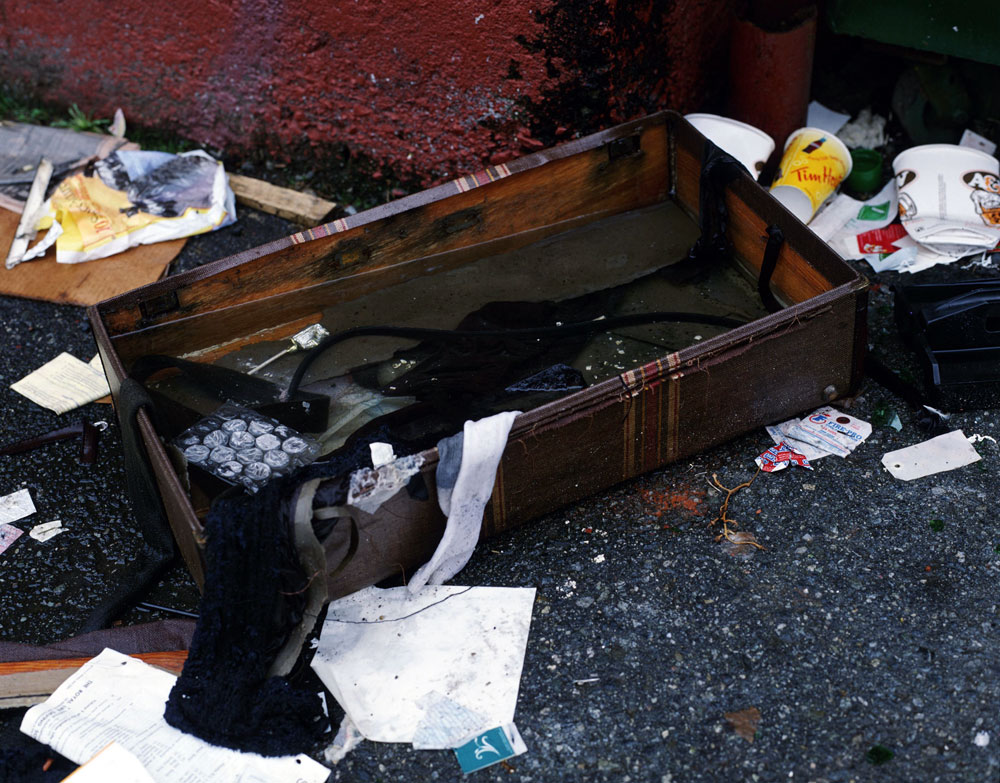
This quote from the latest issue of CineAction (N.84) - whose feature is Robin Wood in Celebration, which includes pieces by William MacGillivray (whose Life Classes was important to Wood) and Olof Hedling - asserts a strong impulse to support a burgeoning and over-looked national cinema in opposition to Hollywood. Even though after reading the Lefebvre book one can get the impression that Harcourt feels that cinema both begins and ends with Lefebvre - he even has another book on Lefebvre (Canadian Film Institute, 1981) – my point is that the endeavor is honorable. I first discovered Harcourt as he was already a recognizable name (I remember seeing one of his books at the CFI office in Ottawa) and, what really caught my eye, is that he is the only Canadian brought up in Raymond Durgnat’s seminal text Films and Feelings. There is this sense of validation associated with seeing Canadians positively recognized in the international film community. Like how in the photographer Jeff Wall’s Rainfilled Suitcase (2001), which mounted light-box can be seen in its vivid glory at the Art Institute of Chicago, where the vintage yellow Tim Hortons coffee cup – Timmy’s being one of Canada’s most identifiable products – becomes a symbol of Canadiana within a nondescript scene. Spotting this detail, like noticing the Harcourt reference, is a pleasant recognition of seeing even just a small part of Canada within great work being discussed in a more international setting. The same applies to Timothy Barnard’s introduction to the new edition of André Bazin’s What is Cinema? where he discuses the peculiarities of reading and translating Bazin into French- and English-Canadian.

Not that people have an aversion to Canadian films, well, maybe they do. It is just that it is rarely discussed by the heavyweight film-critics. An example of a ‘heavyweight’ is Dave Kehr who on his indispensable blog contributors from around the world put in their two cents on his “weekly column on film history.” His background as discussed in the long-awaited When Movies Mattered is a post-Sarris focus on the transition from classical to post-classical Hollywood with an emphasis on “filmmakers who built on the past, who seemed dedicated not to trampling on the classical model but trying to reconfigure it,” like Cassavetes, Demme, Scorsese, Schrader and Brooks. It’s almost funny how the “uncharted territory” of his DVD reviews includes Swedish silent-films, the long unavailable work of Naruse Mikio and even in his new “Further Research” column in Film Comment – which features un-canonized directors like John H. Auer - there is hardly ever any references to Canadian cinema. On that note I would like to highlight some note-worthy Canadian DVDs that have recently come out: the Eclipse box set The Actuality Dramas of Allan King, Patricia Rozema’s I've Heard the Mermaids Singing, the long unavailable work of Joyce Wieland on a 5-DVD box set by CFMDC, and Daruma Pictures release of Midi Onodera’s video work.

Even as I write this I realize that maybe the lack of serious critical reflection has to do with both relevancy and quality of Canadian cinema. After attending all of the João Pedro Rodrigues films as part of the New Auteurs series at the TIFF Cinematheque and watching Terrence Malick’s The Tree of Life; it is obvious that they are more formally invigorating and conversation worthy. In To Die Like a Man when Tonia (Fernandos Santos) goes off into the fairytale forest with her boyfriend and the two cross-dressers where they sit down – the screen becomes a roseate tableaux - and listen to Baby Dee’s Cavalry; the effect is hypnotizing. As Brad Deane puts it, it’s cinema. This is a long way away from watching an old tape and sitting on an uncomfortable chair with big clunky headphones at the Film Reference Library. Even Lefebvre writes about his work “What I’ve wanted to insist upon and to apply to my films… is the right to adopt a small scale, to make films that don’t claim to be absolute masterpieces.”

I guess what I am trying to advocate for, at least in my own writing, is a mediation between art-house, Hollywood and Canadian cinema. But my only concern is that I hope studies in it can become a marketable asset, as say, that of being an expert on Blake Edwards as is the friendly Sam Wasson who has two popular books on the subject and who recently came to the Lightbox to introduce Breakfast at Tiffany's. I want to eventually apply to do my Masters in Film Studies at the University of Toronto in the hopes, for now at least, to write about the renegade Québécois filmmaker Gilles Carles; as well, I would like to explore certain key Québécois films and their similarities with the work of Robert Altman; and, what exactly constitutes Québécois film language. I would hope that it would be a rich experience for both myself and for other people to hear and read about. – David Davidson

*****
*Jean Pierre Lefebvre: Vidéaste is divided into the following sections: a preface by Handling; two articles by Lefebvre, the autobiographical Snapshots from Québec and The Concept of National Cinema. The centerpiece of the book is Harcourt’s essay The Music of Light: The Video Work of Jean Pierre Lefebvre on L'Âge des images and there is an interview with the director, his filmography and a selected bibliography.

**The Canadian Director series is part of the TIFF Cinematheque publications that includes books on Jean Pierre Lefebvre, Don Owen, Pierre Perrault, Michel Brault and Allan King; as well, in a different series, books on Jack Chambers, Peter Mettler, and Joyce Wieland. While the Canadian Cinema series, which are extended textual analysis of key Canadian films, has books so far on A History of Violence, Le Déclin de l'empire américain, The Adjuster, A Married Couple, The Far Shore and My Winnipeg. These books are available at the TIFF.Shop.

***The Film Reference Library at the TIFF Bell Lightbox has L'Âge des images I, III, IV and V. Though the FRL will be closed for July and August, you can always set up an appointment with Eve to view their collection. The NFB Mediatheque has both of Lefebvre’s NFB films: Mon amie Pierrette (1967) and Jusqu’au Coeur (1968).

Thursday, July 14, 2011

Canadian Cinema (Summer 2011)

It's time to get patriotic over here at Toronto Film Review as I attempt to provide an overview of Canadian cinema – an idea sparked by reading Tom McSorley’s contribution in the International Film Guide 2011 – by grouping together the various elements that constitute it. The four different categories that will be explored are: the first-tier directors, which are the ones that have the most international recognition; the second-tier directors, which are accomplished filmmakers who have yet to cross the border; the directors of short-films; and Québécois cinema.

In Toronto, in anticipation for TIFF 2011 one cannot help but think of the projects that our directors are working on for possible nominees for the Opening Gala and Canada First! so from this ‘first-tier’ category those who have completed films or have ones in production include David Cronenberg, Deepa Mehta, Guy Maddin, Bruce McDonald and Don Shebib. Peter Mettler is editing a new film. Atom Egoyan is now preparing an opera. For the ‘second-tier’ directors, my point of reference is Adam Nayman’s piece in Montage where he discusses with some filmmakers their possible dream projects. The directors on this list include Carl Bessai, Kari Skoglang, Lynne Stopkewich, Ingrid Verninger, David Weaver, David Christensen and Jerry Cioccritti. I would also include here Sarah Polley, Ron Mann, Michael Dowse, Simon Ennis, Jason Eisener, John Greyson, Patricia Rozema, Philip Hoffman, Vincenzo Natali, Sook-Yin Lee, Charles Officer, and Lee Demarbre. Other note-worthy talents that have been highlighted in Cinema Scope include Bruce LaBruce, Daniel Cockburn and Isabelle Lavigne. Pertaining to short films (and some of the directors have gone on to features) there is the First Generation school, with directors from both Ryerson and York, which includes Kazik Radwanski, Nicolás Pereda (who currently has a retrospective at the Anthology Film Archives), Chris Chong Chan Fui, Igor Drljaca, Shervin Kermani, and the Vancouver-based Antoine Bourges (who is completing his much-anticipated first full-length feature). These projects in waiting and the short-film directors getting ready for their first full-length feature just goes to show the bustling energy under the radar that should be ready to surface soon.

I don’t think people can talk about Québécois cinema without first acknowledging the important role Cinéma Beaubien plays in projecting their films as well that of the Cinémathèque québécoise; and there is also the Québécois film magazine 24 Images that continuously writes about and supports these filmmakers. In the new issue of 24 Images the feature is Renouveau du Cinema Québécois where they discuss the multifaceted subject of where their cinema is today and, though my attempt is not to convey its complexities here, I want to highlight Jean-Pierre Sirois-Trahan contribution (he did the feature on Québécois cinema in Cahiers) who writes about the different types of filmmakers. There is the “Québec’s New Wave” of the 1990s: Denis Villeneuve, André Turpin, Arto Paragamian and François Girard. The new auteurs of the 2000s: Denis Côté (who in the issue comments about his Director of Photography and Editor), Maxime Giroux (whose Jo pour Jonathan everyone’s talking about), Rafaël Ouellet, Stéphane Lafleur, Myriam Verreault and Henry Bernadet. While there are outsiders like Sophie Deraspe and Xavier Dolan who make “a cinema more artist.” While others still include Yves-Christian Fournier, Simon Galiero, Simon Lavoie, Simon Sauvé, Anaïs Barbeau-Lavalette and Jacob Tierney. There are also the COOP Video de Montréal filmmakers like Bernard Émond, Catherine Martin and Robert Morin. There were some Québec short films that were brought to Toronto this summer that were part of the program Québéc Gold. It is worth restating that Donigan Cumming’s Too Many Things and Theodore Ushev’s Lipsett Diaries are both masterpieces. And after all of that if there is one Québécois director that I have missed and that I think is making some of the most fantastic films (C.R.A.Z.Y., The Young Victoria) in the entire country it is Jean-Marc Vallée whose new film Café de flore I am especially looking forward to see. - David Davidson

Saturday, July 9, 2011

Interview with Adam Nayman (On Love Em or Hate Em: MORE Controversial Directors)


In anticipation of Adan Nayman’s newest series of classes Love Em or Hate Em: MORE Controversial Directors, I decided to take the opportunity to meet up with the guy to ask him a few questions. In this new series there will be lectures on Lars von Trier on Monday July 11th, Michael Haneke on Monday July 18th, Luis Buñuel on Monday July 25th and Woody Allen on August 8th. All of the classes start at 7PM and are at Miles Nadal JCC (750 Spadina Avenue). – D.D.

Toronto Film Review : So Adam why these particular directors?

Adam Nayman : The first course seemed to go well, and I felt that the idea of talking about challenging filmmakers was still appealing to me. So I asked around about some other directors who might fit into this class, and Lars von Trier's name kept coming up, plus he was in the news at the time because of what he said at Cannes. And then from there, I thought that it would be good to pick some filmmakers who were a little less famous than the ones I did last time: Verhoeven, Cronenberg and Polanski are all artists who moved from the margins to the mainstream (less so Catherine Breillat). Buñuel is of course famous but maybe not to a non cinephile audience. Michael Haneke is well known and his films are polarizing but he's someone who people might want to learn more about. As for Woody Allen, he's more mainstream but in some ways he's a guy who begs to be considered as a kind of European art-house auteur even though he's American. I think that the throughline between all four filmmakers is that there are elements of satire and absurdity in their work -- all expressed very differently of course.

TFR : Buñuel is the one director out of the four that I am least familiar with. I remember seeing his Las Hurdes at the Cinémathèque québécoise in Montreal. I was just wondering how many of his 34 titles have you seen? Are they available on DVD? I know Criterion Collection has released a few of them. And have you gone over his autobiography My Last Sigh? I remember Jonathan Rosenbaum was telling us that in the editing process from French to English that the editor was conspicuously editing things out; I wonder what he actually removed?

AN : I can't speak to the differences in the translations. That's something that Jonathan Rosenbaum would know more about then I do. And there's no lack of critical writing on Buñuel, but one of the things I want to work against is the idea that he mellowed as he got older -- that his late pictures are the work of a less strident filmmaker. For me, films like The Phantom of Liberty, Discreet Charm of the Bourgeoisie and That Obscure Object of Desire are still examples of an artist challenging himself and his audience, right to the end. As for whether I've seen all of his films; I can't count offhand, but probably not.

TFR : I think Woody Allen is just great! And I am especially fond of his latest films, did you know that both You will meet a tall dark stranger and Midnight in Paris made the cover of Positif, which is not an easy task. And it is interesting to note that Richard Brody, one of the biggest Woody Allen partisans along with Eric Lax, sees the Barbara Kopple documentary Wild Man Blues (1997) as the beginning of his late period. Allen also excels at fiction; there is a big database over at The New Yorker of his collected work; I particularly recommend Udder Madness. Which brings me to how I like that you bring up his fictional writing in your review of Midnight in Paris. One of my favorites of his short stories is Fabrizio’s: Criticism and Response from Side Effects. Have you read that one? It is about a high-minded restaurant critic who writes these elaborate criticism and responses about restaurant food profiles, and in the process undermines the jargon of analysis:
“I began my meal with an antipasto, which at first appeared aimless, but as I focused more on the anchovies the point of it became clearer. Was Spinelli [the chef at the restaurant in question; Fabrizio’s Villa Nova Restaurant] trying to say that all life was represented here in this antipasto, with the black olives an unbearable reminder of mortality? If so, where was the celery? Was the omission deliberate? At Jacobelli’s the antipasto consists solely of celery. But Jacobelli is an extremist. He wants to call our attention to the absurdity of life. Who can forget his scampi: four garlic-drenched shrimp arranged in a way that says more about our involvement in Vietnam than countless books on the subject?”
Anyways, what themes are you going to highlight in your WA class?

AN : Yes, I like that essay, among others in Side Effects. Like Polanski, Allen’s films are not overtly transgressive (although I rewatched Husbands and Wives last night and was shocked by how raw it was). He does not craft extreme images. The controversy stems from his private life and the possibility that his films -- especially the ones in the 1990s -- are autobiographical. Polanski used to deny that sort of thing, and Allen doesn't encourage it, but it seems plain. I feel like Allen makes movies as a form of therapy -- like Lars von Trier -- but he seems to get less out of it; he has the same hangups and phobias as he did forty years ago. If you want to put it positively, you can say he's consistent; if you want to be negative you can say he's redundant.

TFR : Once when you and Andrew Tracy were in the tiff.shop, he picked up Screening Modernism and was saying that since the book had a blurb from David Bordwell that it was reason enough to buy it. I bring this up because there are some critics that I hardly see make these kind of blurbs. For example, there is Dave Kehr, out of all of my DVDS his name is only on two of them: James Cameron’s Ghosts of the Abyss and Lars von Trier’s The Boss of It All. Though his DVD reviews for the New York Times are great as well he highlights books sometimes on his personal website. I bring this up as I have noticed your name only once on a DVD and it is on the Canadian film Six Figures. Are you quoted on any other DVDs? What is it about supporting these quality under-exposed Canadian films that you like?

AN
: I have been quoted before on DVD boxes, sure. and I even wrote the liner notes for Sergei Dvortsevoy's film Tulpan (2008). Pull quotes can be funny to be read, and I've had my name on films I'm not sure I'd stand by now -- like the 2001 Canadian drama Treed Murray -- but it's not really an important thing one way or the other. On the other hand, I think it's great when critics get to write liner notes or essays for DVD releases, like my friend Mark Peranson’s text for the Pedro Costa Letters from Fontainhas Criterion box set and Michael Koresky’s pieces on The Actuality Dramas of Allan King Eclipse box-set. It’s not the format that most people usually look for penetrating criticism but they can be a wonderful supplement to the features on the disc. I think that Kent Jones has written better DVD booklet notes than most critics have ever written good film reviews. And I would rather read a pull-quote blurb by Dave Kehr then an entire review by Peter Travers.

TFR : Michael Haneke. That guy is controversial. I was blown away the first time I discovered Cinema Scope. It was an issue dedicated to the Cannes Film Festival and there was only one sentence (!) dedicated to the Palme d’Or winner The White Ribbon. What I got from that was the position that sometimes the movies that are the most interesting are not the ones getting the main prizes at film festivals. What are your thoughts on Haneke?

AN : What I think Mark was getting at there, in his inimitable style, is that Haneke is a little old to be an enfant terrible. Though he always was a little too old. The Seventh Continent and Funny Games were films made by a guy in his forties, even though they feel more adolescent and even a bit snotty. You would picture their maker as a punk like Gaspar Noé rather than an older Austrian intellectual. I think Haneke has had that paradoxical thing happen to him where the more acknowledged his talents have become by the critical establishment, the less certain kinds of anti-establishment critics want to go the bat for him. I would say that I think he's one of the more brilliant contemporary directors in terms of composition, pacing, sustaining tone and staging acts of violence. He’s a born film director. Even The White Ribbon, which I didn't really want to write about either, there's more filmmaking savvy than in 90% of whatever came out that year. But it's also very much of a piece with his old work, thematically, and if someone finds his style didactic, there's nothing in the new movie that's going to change their mind. If a critic like Mark, or anyone else, found the didactic qualities of his old films unforgiving back then there is nothing that’s going to change their mind.

TFR : Do you recommend any particular film books relating to the directors in this series? I really tried to get you the Director’s Cut book on von Trier.

AN : Linda Badley 's book on von Trier in the Contemporary Film Directors series is good. She does not mythologize the guy, partially because he does that already himself. It's incisive analysis without a ton of jargon. The book on Woody Allen in the Masters of Cinema series is atrocious; it feels like the copy-editor was so bored that he stopped catching errors by the end, and I am not a fan of film books that you can read in 8 minutes. One of my favourite pieces on Haneke is a very negative short take by Nick Pinkerton at Reverse Shot, who describes him as the kind of guy who could not watch someone enjoy a steak without mentioning the abattoir. At the other end though there is Robin Wood, who was one of Haneke’s best champions. I do like the Directors Cuts series, even if I didn't use it for this class; the Spielberg book in the series is good, it made me think that in possible future iterations of this class that I could maybe focus on supposedly uncontroversial directors. I'd point to Spielberg as someone who's actually sort of complicated.

TRF : On von Trier, do you take his films seriously or do you see a kind of snarky derision in them to both the characters and the stories? I saw some black humor in Antichrist which I liked even thoughhe was always putting his characters through the most unbearable situations where things could not have gotten worst.

AN : I think in summation that Lars is funny. I think that snarky is only half of it. And I think that it is rare that his films end up on the side of snark. It is a weapon in his arsenal, and he is so good at it that people think his films are only snarky and mean. Re-watching Breaking the Waves or Dogville or Antichrist, I think that it is superficial to dismiss them as essentially mean-spirited. One of the things that I have come to think about Lars is the characters in his films that get punished are the ones he feels closer, whereas Haneke like to pummel people he has contempt for. A film like Antichrist would be unbearable if the film took Willem Dafoe’s point of view, but it has the courage, or the craziness, or both to align itself with Charlotte Gainsbourg even in her worst moments. Von Trier identifies with her character and how incredibly infuriating it is for her to be told how to feel and how to think by someone that is condescendingly trying to help her.

TRF : You got a Masters in Film Studies at the University of Toronto, right? I want to eventually do my Masters there and I was wondering a bit about their program and what are your thoughts of it?

AN : I loved their one-year program, even though I do not consider myself to be an academic as I have and will continue to work as a film-critic. They have a great faculty there: Bart Testa, Rob King, Nicholas Sammond and Corin Columpar are all terrific. Any graduate or under-graduate student would be lucky to study with them, listen to them and be listened to by them. I don’t know if it is true of all graduate film programs, but U of T offered a lot of space for students to contribute and lead the discussion. For anyone who might be reading this from outside of Toronto, getting a film degree in a city where there are so many films to see is a good idea. Toronto is the kind of city where you can get a film education in class or in your spare time, and if you combine both things, you will be in good shape.

TFR : When Stéphane Delorme became the editor of Cahiers late in 2009, he asked himself, what is the point of a film magazine today? The answer was simple: movies make you speak. As someone interested in films, it is always interesting to hear what other people have to say. So there are tons of books to read. What I like about your classes is that they offer the information and perspective you can find in a book but there is a more human and communal quality to them as you are there engaging with people. There is something comforting about being in that JCC room with other like-minded individuals; kind of like the feeling of acceptance in Role Models with that nerdy teenager and Paul Rudd reuniting for the medieval role-playing combat. Anyways, where I was going, can you tell me about your method of putting the classes together?

AN : I love the idea that you compared my class to L.A.I.R.E. from Role Models. I can only hope that in one of my classes I can ask the probing question: "Who the fuck is Marvin Hamlisch?" I really do try to leave space for people to chat and contribute, though I don’t think I was too good at it in the first series of lectures on contemporary New Waves in World cinema, as there was just too much information to impart in two hours. I think people attending a class on polarizing directors are already coming with an opinion and in this cycle I will try and let people assert how they feel, too.

TRF : I’ve read your writing in The Grid (formely Eye Weekly), Cinema Scope, Cineaste and Reverse Shot. And I recently saw a couple of articles pop up at the Museum of Moving Images and Project: New Cinephilia (am I missing anything?); where you wrote about the Toronto classes that you give, can you elaborate on this segment:
“The challenge, as I see it, is to retain my critical voice without alienating the uninitiated. A drop-in course is very different from a university curriculum, and it’s better to err on the side of accessibility than elitism — to encourage cinephilia rather than assume it. It’s a fine line between consolidating one’s critical authority and talking down to an audience, and the adjustment of that tone is an ongoing process. Nobody likes to feel lectured to, even when they’re attending something explicitly billed as a lecture; my goal was to make my points and leave plenty of room for group discussion. At the same time, the idea of a total free-for-all cheapened the idea that I was facilitating some kind of relevant film education.”
AN : There should be balance. It's about the sweet spot between having authority and being accommodating. I would rather a self-described cinephile feel a little bored then a less experienced and curious newcomer be alienated.

TFR : I remember in the last series it seemed like a big issue for you was staying within the two-hours time spot. Its weird, the lectures were generally thorough, wouldn’t cut anything from them, but they generally went over the time limit. I know that you just got a teaching position at Ryerson giving a class on documentaries. Are you going to be stricter on the time limit in this series? And how do you think these classes will prepare you to be a professor in the classroom?

AN : Yeah, I felt bad that a couple of classes went over, though it felt good that people did not mind as the classes are rather informal. It’s not nice to feel like anyone’s eyes are on the clock. But if I'm slow people can tell me to hurry up!

TRF : On a final note, what do you hope people take from these classes?

AN : A sense that their twelve dollars are not wasted. Or a desire to learn more about the films and filmmakers discussed. I'm not trying to have the last word on anything; I like starting a discussion.

TRF : Kaz and Dan from MDFF films first told me about your New Waves class, which I am grateful for, and now you moved onward to two Controversial Directors and then there will be Stanley Kubrick series. I’ve met some cool people there like Marc Saint-Cyr, Natalie Killick, Kiva Reardon and James McNally. I know that we all look forward to this new series!

Wednesday, July 6, 2011

Photographing Directors (and Cannes Cinema)

Title: Magnum Cinema - photographs from over 50 years of movie-making
Series: Phaidon
Author: Alain Bergala
Publisher: Phaidon Press Limited* (1995)
Pages: 360
Price: $59.95
*****
I am not quite sure if the 2005 English language re-print of Magnum Cinema is the same one Mr. Toubiana** highlights as one of the many accomplishments of the recently deseased Claudine Paquot (I do not see her name in the credits) but it is a gorgeously put-together book. Toubiana's post from his magnificent blog, which since then he wrote about Pierre Cottrell and the arrest of Mahnaz Mohammi, highlights the important back-stage role Pacquot had at the world's best film magazine Cahiers du Cinéma and there are some moving comments from the old Cahiers writers Nicolas Saada, Jean-Michel Frodon and Bill Krohn as well as one from the filmmaker Chantal Akerman. The personal anecdotes describe a singular and wonderful women who help shaped Cahiers for what it is now.

On the front cover of Magnum Cinema Elli Wallach is in the front seat of a car driving Marilyn Monroe. The black-and-white photograph which is drabbed in shadows with the azure blue title in the top left corner is an unassuming beginning to this beautiful documentation of the seventh art through different behind the scene film shoots. The book comprises of a small selection of Magnum Photos seven-thousand photograph collection which are spread throughout the sections: The Movie Nomads, Preparing for the Shoot, The Shoot, In the Edit Room, Film Festivals, The Stars, Cinema in the Street. The index of films and personalities at the back of the book make it easily navigable.

Alain Bergala opens the book with his essay Magnum meets the Cinema where he writes an abridged history of the photography agency which was spear-headed by Roger Capa, who was originally renowned for his war-time photographs, and Henri Cartier-Bresson and George Rodger who started Magnum in 1947. Their first photograph is of Alfred Hitchcock filming Ingrid Bergman's hand on the set of Notorious. Capa brought a magnetisms to the agency while their executive editor John G. Morris, who would use his connections from his stint at Life Magazine, was able to guarantee magazine purchases of the backstage photo shoots that reeled them in a higher income as well as more prestige. Though sometimes acquiring contracts through personal connections prevented certain openings, as well some studios were not receptive, which is one of the reasons for the exclusion of some directors in the book. The photographers talked about the difficulty and restrictions about their work on set, yet, as Bergala notes, "Yet the greatest strength of Magnum's photographers in dealing with set photography has been both their ability to maintain artistic freedom with subjects that were not necessarily of their own choosing, and their strength of character in not giving in to market demands." The golden age of the agency seemed to have reached a climax with The Misfits which was to become a symbol of the gloriousness of the Studio Era as well of the changing of a time as Clark Gable and Marilyn Monroe died shortly afterwards. The Misfits, which Phaidon has another book dedicated too, with its iconic images of Monroe, Gable and Montgomery Clift captures, as Bergala notes, "the legacy of a dying dynasty and of a woman who was its last tragic embodiment." The crisis and turning point for Magnum on acquiring contracts had to do with the rising competition from television on the studios which lead to lesser interest in both the films and for coverage by prestigious photographers.

The subjects of the photographs in Magnum Cinema include stars, directors, technicians, screenplay writers, authors, film critics and philosophers; and some photographers are a better match for particular subjects. Some noteworthy affiliations include: Antonioni saw Bruce Davidson, who took the pictures of Zabriskie Point, as his alter ego. Eli Reed shoots John Singleton. Erich Solomon's in situ photographs of Eisenstein and Lubitsch. Other note-worthy talents include Guy Le Querrec and Philipp Halsman whose pictures are both innovative and ambitious. Eve Arnold has a good eye. Ernst Hass did well with his subjects. And from all their photographers the one that successfully moved onward to feature film is Raymond Depardon.

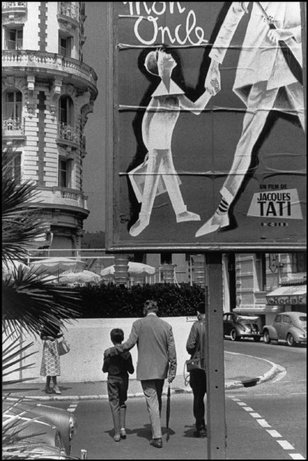
There is a great photograph of the white-haired bearded older man John Huston, who has a major presence in Magnum Cinema as Capa and him were friends, who is filming Under The Volcano. Thierry Jousse writes in Cannes Cinema, "Huston was one of the last superstars of American Cinema." Orson Welles appears almost God-like. The Italians Visconti, Rosselini and De Sica are there. Truffaut and Godard have a big presence and so does Renoir. As well many other directors sporadically pop up: Kusturica, Wajda, Ray, Allen, Fuller, Mankiewicz, Angelopolous, Chaplin, Wilder, Wise, Yimou, Robson, Renais, Wenders, Hartley, Cronenberg, De Palma, Tarantino, Ferrara, Eastwood, Rivette and Garrel. One of the most gorgeous images is of Jacques Tati walking with a boy with a Mon Oncle poster in the background. There is part of the set of Carax's Les Amants du Pont-Neof. There is also a focus on actors and actresses like Isabelle Hupert and Jane Birkin, Elizabeth Taylor and Humpthrey Bogart, Edward G. Robinson and Audrey Hepburn. Some writers that are photographed include Jacques Prevert, Margarite Duras and William Faulkner. As well you can see Henri Langlois and a Cahiers chief editor boardroom.

Magnum Cinema is at its most interesting when there is more descriptions and commentary, which it is lacking, as one wishes it had even more text kind-of like the Cannes Cinema book. And the book appears almost dated, as the latest in art cinema seems incarnated by Kusturica, Hartley and Angelopoulos. When was the last time these guys even made a movie? I would have liked to seen some photographs of Terrence Malick, Apichatpong Weerasethakul and James Gray. Anyways, for more recent trends there are the film magazines: Cahiers, Positif and Cinema Scope. I really liked in Cahiers the pictures of Gregg Araki in a tanktop and big head-set directing two chicks on the set of Kaboom, Wes Craven almost-looking like a devil directing My Soul to Take or Philipe Garrel with some of his friends making Un Été Brûlant. And for photography, last years out-of-series issue of Positif Portfolio: 80 cinéastes vus par… Positif & Nicolas Guérin is one of the best collections of director portraits mixed with serious film-criticism that’s out there.

Though in the other book Cannes Cinema: a visual history of the world’s greatest film festival the film festival is documented through the local Traverso family over four generations of photographers starting with Auguste Traverso, the founder of Traverso Maison, to the Traverso that is still working today Henri. The book is similar to Kieron Corless and Chris Darke’s Cannes: Inside the World's Premier Film Festival (Faber and Faber, 2007) as they both expand on the same stories. Toubiana writes about the raison d'être of Cannes that in the wake of the catastrophic Second World War,
"Thus the festival was about demonstrating, in the most visible and impressive way possible, the desire on nations to gather together around the idea of peace. Cinema became the vehicle for this recovered ideal. And the festival would continue to fly the many flags of the nations that presented their films in competition."
Cannes Cinema is better at chronologically documenting the history of cinema then Magnum Force as it encompasses a wider subject as well the bottom of each page is filled with interesting observations from the perspective of Cahiers with the contributors Serge Toubiana, Joël Magny and Thierry Jousse. You can even see the Cahiers and Cannes ties from the photographs of Godard, the discussion of Hitchcock as a serious artist, and photographs of the writers, directors and programmers all together. The connection between Cahiers and Cannes is still present in the lastest issues (N. 667, 668) as the magazine covers the competition, discusses four French films that played at the Directors’ Fortnight Après le sud, La Fin du silence, My Little Princess and 17 Filles; as well Cahiers has a feature on the Palme d'Or winner Tree of Life with multiple interviews with everyone involved, except for the elusive Mallick. Even the chief editor Stéphane Delorme has been on the selection of Directors’ Fortnight since 2004.

Like the crisis for Magnum there came a time when photography at Cannes changed; in terms of both approach and style, the media accreditations and restrictions in the 1980s, around the time of the expansions of the Palais des festival, shifted the tone from casual to more restrictions. The golden age of the photography encapsulated within these pages makes the book a pleasure to go through. Magnum Cinema and Cannes Cinema are also necessary illustrations of film-history, similarly to Gallimard’s publishing of Godard’s Histoire(s) du cinema, as these documents put a face and a context on film history, as they expand on the backstage presence of the stars as well it illustrates the convergence between the studio era and a prestigious photography agency. – David Davidson

*Other books from Phaidon Press includes Truffaut at Work, Hitchcock at Work and Welles at Work. They have two film-festival books Take 100 - The Future of Film and Gilles Jacob’s Citizen Cannes. As well Cinema Today, Seen Behind the Scene, Musée du Cinema and Movie Book. They are also responsible for the Masters of Cinema series and a Clint Eastwood and Martin Scorsese interview book with Michael Henry Wilson.

**Serge Toubiana was the Cahiers chief editor from 1981 to 2000 and he is now the director general of the Cinémathèque Française. Here is Toubiana’s Top Ten list of films from the 2000s from Cahiers (N. 652):
- Million Dollar Baby (Clint Eastwood, 2004)
- The Departed (Martin Scorsese, 2006)
- Tetro (Francis Ford Coppola, 2009)
- Three Times (Hou Hsiao-Hsien, 2005)
- Coeurs (Alain Resnais, 2006)
- Catch me if you Can (Steven Spielberg, 2002)
- Volver (Pedro Almodovar, 2006)
- Les destinées sentimentales (Olivier Assayas, 2000)
- The Queen (Stephen Frears, 2006)
- A Christmas Tale (Arnaud Desplechin, 2008)
- Saraband (Ingmar Bergman, 2003)

Wednesday, June 29, 2011

100 Best British Films (according to Ron)

This is a guest contribution from  Ron, which he gave me in hopes to change my mind on British cinema. Though, I have to say, Ron’s list is quite legitimate, which includes a lot of titles and names that are already on my list of films and directors that deserve further investigation. – D. D.

Ron’s Favorite British Films
- The League of Gentlemen (Basil Dearden, 1960)
- Victim (Basil Dearden, 1961)
- The Servant (Joseph Losey, 1963)
- The Go-Between (Joseph Losey, 1970)
- Sunday Bloody Sunday (John Schlesinger, 1971)
- The Last Holiday (Mark Callum, 2009)
- Tunes of Glory (Ronald Neame, 1960)
- Tiger Bay (J. Lee Thompson, 1959)
- Another Country (Marek Kanievska, 1984)
- About a Boy (Chris & Paul Weitz, 2002)
- Saturday Night and Sunday Morning (Karel Reisz, 1960)
- A Taste of Honey (Tony Richardson, 1961)
- This Sporting Life (Lindsay Anderson, 1963)
- Alfie (Lewis Gilbert, 1966)
- Get Carter (Mike Hodges, 1971)
- Maurice (James Ivory, 1987)
- Brideshead Revisited (Julian Jarrold, 2008)
- The Ruling Class (Peter Medak, 1972)
- The Wicker Man (Robin Hardy, 1973)
- The Lavender Hill Mob (Charles Crichton, 1951)
- The Man in the White Suit (Alexander Mackendrick, 1951)
- Women in Love (Ken Russell, 1969)
- The Devils (Ken Russell, 1971)
- The Music Lovers (Ken Russell, 1970)
- Savage Messiah (Ken Russell, 1972)
- If… (Lindsay Anderson, 1968)
- O Lucky Man (Lindsay Anderson, 1973)
- Far From the Madding Crowd (John Schlesinger, 1967)
- The Chalk Garden (Ronald Neame, 1964)
- The Mark (Guy Green, 1961)
- Room at the Top (Jack Clayton, 1959)
- The Wrong Box (Bryan Forbes, 1966)
- Peeping Tom (Michael Powell, 1960)
- Brief Encounter (David Lean, 1945)
- The Romantic Englishwoman (Joseph Losey, 1975)
- Accident (Joseph Losey, 1967)
- Morgan (Karel Reisz, 1966)
- The Knack… and How to Get It (Richard Lester, 1965)
- The Lady Vanishes (Alfred Hitchcock, 1938)
- Frenzy (Alfred Hitchcock, 1972)
- The Trials of Oscar Wilde (Ken Hughes, 1960)
- Billy Budd (Peter Ustinov, 1962)
- The Collector (William Wyler, 1965)
- The Magic Christian (Joseph McGrath, 1969)
- I’ll Never Forget What’s’isname (Michael Winner, 1967)
- Shirley Valentine (Lewis Gilbert, 1989)
- Tom Jones (Tony Richardson, 1963)
- The Leather Boys (Sidney J. Furie, 1964)
- Sons and Lovers (Jack Cardiff, 1960)
- The Virgin and the Gypsy (Christopher Miles, 1970)
- A Night to Remember (Roy Ward Baker, 1958)
- Black Narcissus (Michael Powell & Emeric Pressburger, 1947)
- Educating Rita (Lewis Gilbert, 1983)
- Withnail & I (Bruce Robinson, 1987)
- My Beautiful Laundrette (Stephen Frears, 1985)
- All Ken Loach films starting with Poor Cow (1967) and Kes(1969)
- All Mike Leigh
- The Killing of Sister George (Robert Aldrich, 1968)
- Entertaining Mr. Sloane (Douglas Hickox, 1970)
- Prick Up Your Ears (Stephen Frears, 1987)
- Billy Liar (John Schlesinger, 1963)
- The Loneliness of the Long Distance Runner (Tony Richardson, 1962)
- Quartet (James Ivory, 1981)
- A Room with a View (James Ivory, 1985)
- The Remains of the Day (James Ivory, 1993)
- A Passage to India (David Lean, 1984)
- The Angry Silence (Guy Green, 1960)
- The Battle of the Sexes (Charles Crichton, 1959)
- Cal (Pat O’Connor, 1984)
- The Draughtman’s Contract (Peter Greenaway, 1982)
- Mountains of the Moon (Bob Rafelson, 1990)
- Dance with a Stranger (Mike Newell, 1985)
- Priest (Antonia Bird, 1994)
- Dead of Night (Alberto Cavalcanti, 1945)
- Mona Lisa (Neil Jordan, 1986)
- Truly Madly Deeply (Anthony Minghella, 1990)
- Look Back in Anger (Tony Richardson, 1959)
- The Rocking Horse Winner (Anthony Pelissier, 1949)
- The Winslow Boy (David Mamet, 1999)
- The Browning Version (Mike Figgis, 1994)
- The Red Shoes (Michael Powell & Emeric Pressburger, 1948)
- Odd Man Out (Carol Reed, 1947)
- Georgy Girl (Silvio Narizzano, 1966)
- Nothing But the Best (Clive Donner, 1964)
- The Hill (Sidney Lumet, 1965)
- Sapphire (Basil Dearden, 1959)
- Hobson’s Choice (David Lean, 1954)
- The Yellow Canary (Buzz Kulik, 1963)
- Up the Junction (Peter Collinson, 1968)
- The Heart of the Matter (George More O’Ferrall, 1953)
- Whistle Down the Wind (Bryan Forbes, 1961)
- So Long at the Fair (Antony Darnborough & Terence Fisher, 1950)

Thursday, June 16, 2011

Francis Ford Coppola (and Stéphane Delorme at Cahiers du Cinéma)


Title: Francis Ford Coppola
Series: Masters of cinema
Author: Stéphane Delorme
Publisher: Cahiers du cinéma Sarl (2010)
Pages: 103
Price: $11.95

*****
“If we were stuck in a blazing building, I’d sneak down the back stairs and Francis would leap off the top at the front!” – George Lucas

“Coppola had achieve what he had been trying to do from the beginning, to be a director free of attachments, directing and producing personal stories of which he was the sole creator. It was quite a journey to get there.” – Stéphane Delorme.


Francis Ford Coppola is an omnipresent figure in film history with masterpieces that include The Godfather I & II, The Conversation, Apocalypse Now, One for the Heart, Rumble Fish and Tetro. The films in his oeuvre are tightly knit worlds with paralleling characters and reoccurring images. The main subject is time which is pursued through stories of individuals and families in a changing world. This subject is explored in how time is used, gained, created, lost, held onto, the nostalgia for it and how it changes people and places. The director adapts his style to the subject of each new film, though they generally share a theatricality. And, there is something about the above Lucas quote that seems particular apt to describe Coppola’s attitude to filmmaking; whether it is the singular drive to take risks, the ambitiousness of the undertaking, or the glorious images that it conjures. Coppola is a natural storyteller whose varying projects, however impersonal, cannot help but reflect some aspect of its creator.

The story starts off when he was born on April 7th, 1939 in Detroit, Michigan. His Italian parents were Italia and Carmine Coppola, a flautist and conductor, he had an older brother August and a younger sister Talia. He would graduate in theatre studies from Hofstra University, New York in 1960 before going to UCLA to join its emerging film school. This background in theater will later come to shape his aesthetics. In these years he made a short-film Aymonn the Terrible and two ‘nudies’: Tonight for Sure and The Bellboy and the Playgirls. He also wrote a few good screenplays.

It continues with Roger Corman at American International Pictures where he made Dementia 13 and also worked on The Terror (both 1963). His work on The Terror, especially the women apparition seems like an inspiration for the elusiveness of the wife at the French plantation in Apocalypse Now Redux. Coppola also did some editing at AIP. You’re a Big Boy is his ‘official’ directorial debut: a young man in search of a hot blonde. New York nightlife at its most complicated. Then there is the Fred Astaire and Petula Cark musical Finian’s Rainbow: a father and daughter go from Ireland to Kentucky to find the girl an ideal husband, with a dollop of African American protest. If One From the Heart will emphasize Coppola’s interest in the musical, which is further confirmed in Tetro, with its references to The Tales of Hoffmann, then Finian’s Rainbow is the beginning of Coppola’s relationship with that old classical Hollywood genre. With the leprechaun’s lustrous green garments and the films anything-goes magical lyricism, the title could have easily been called The Tales of Finian.

His next film The Rain People is one of his little-known masterpieces. A pregnant woman (Shirley Knight) drives off and leaves her husband. She picks up a hitchhiker (James Caan), a former college football player, hoping for a one-night stand before she figures out that he’s brain damaged and she debates if she should take care of him or leave him. The feelings that come from watching the film are overwhelming, everyone is treated with such simpathy. The reoccurring motif of water and rain, how the characters always seem isolated in the frame, the subconscious flash-backs and a exotic, yet familiar, setting all contribute to an atmosphere of regret, melancholy, yearning and unfulfilled desire. It’s also the first mark by Coppola to distance himself from the studios.

The Godfather trilogy is the black hole of Coppola’s oeuvre, everything revolves around it. From the opening marriage celebration and the Don (Marlon Brando) attending appointments in his office engulfed in Gordon Willis’ dark shadows to an aged Michael Corleone (Al Pacino) sitting alone on his property with all of his humanity drained from him, the trilogy offers a generational epic family saga in the tradition of The Leopard, East of Eden, and Gone with the Wind. It explores the inner-dynamics of the family through an America that is geographically expanding from that of the communal to the international. The Godfather was edited together piecemeal, with certain scenes added after principal shooting, which leads Delorme to call it, “A self-styled masterpiece of impassivity, The Godfather is like a necklace made up of stones of different sizes and colors, and is reminiscent of the cobbled-together methods of the Corman school.” Robert A. Harris recently digitally restored the three films for DVD.

Harry Caul (Gene Hackman) in The Conversation seems like commentary on Michael from The Godfather, as did the anxieties and trajectory of The Rain People. Caul is a surveillance expert; isolated from his peers he becomes even more reclusive as the film progresses, though reserved to brief moments of satisfaction playing the tenor saxophone. Though a complete film, the screenplay was not entirely filmed and it is Walter Murch that edited together the final product as Coppola was elsewhere filming.

Coppola would make two Vietnam War films: Apocalypse Now and The Gardens of Stone. Apocalypse Now is an adaptation of Joseph Conrad’s Heart of Darkness by Coppola and John Millius, originally offered to Dušan Makavejev to direct, set in the late 1960s a captain (Martin Sheen) is sent on an assignment up a river in Cambodia (filmed in the Philippines) to kill a rogue dissident general (Marlon Brando). One of its co-producers Mike Medavoy will be getting the Raimondo Rezzonico Prize at the Locarno Film Festival 2011. Where Apocalypse Now turns the war into a spectacular disaster, The Gardens of Stone turns it into a complex human drama. Dedicated to Coppola’s eldest son Gian-Carlo who had then recently died. An American sergeant (James Cann) works at the Arlington National Cemetery and tries to protect this young man from going off to war. Angelica Huston is moving as the romantic interest.

The electronic-neon musical One From the Heart is unforgettable, Coppola at his best. The story of a woman who leaves her boyfriend for a night gets a Busby Berkeley treatment in a stylized replica of Las Vegas with a whispering soundtrack by Tom Waits and Crystal Gayle. Nastassja Kinski is just magical. And everything contributes to a haunting beauty. Delorme writes, “It’s a reversal that typifies the spirit of the 1980s, years of a retreat from the epic to the personal, but also, in parallel with that, a period of expansion of the image towards a mythology of the image (…) At the very moment when he was extolling the virtues of electronic transformation, what Coppola really wanted was to make theatre.” One From the Heart would be major inspiration for Claire DenisFriday Night.

Then there are the two greaser films: The Outsiders and Rumble Fish. “Stay Gold” says Ponyboy, which seems an apt tagline to describe the sunset engulfed The Outsiders based on S.E. Hinton book for high-schoolers. On Rumble Fish, from a Serge Daney extract (which is included in the book): “This mistake would be to think that Coppola is simply content to add his hypertrophied style to themes that are in and pretty much worn out. That is not entirely true (…) It is clear that Rumble Fish is the story of lost illusions (…) At bottom, the world barely exists. Coppola only works its material to regain a little of his soul.”

The Cotton Club is a hired-gun job, with some nice moments, such as the romance and comedy between the black Cotton Club dancers, but otherwise, like The Outsiders, is a disinterested illustration of a generic screenplay. Coppola made some short-films and commissions: there is Rip Van Winkle, Captain Eo and Life without Zoe (which he made with his talented daughter Sofia). There was a Megalopolis project, which was abandoned.

On Peggy Sue Got Married, a story of a middle-age woman who becomes a teen again just-in-time for the prom. She reconsiders her relationship with her goofy husband (Nicolas Cage). In a recent interview in Cahiers (N.665), Dean Tavoularis:
“I think Tucker and Peggy Sue Gets Married and Rusty James are under-valued. They are films that are strange (…) Peggy Sue was only a contract film for Coppola for him to repay his depts (...) On reading the script he told me: “what can we do to make it more interesting?” We decided on painting everything, the streets, the grass. (…) This gives it its aura, even if we do not notice it consciously.”
Bram Stoker’s Dracula and John Grisham’s The Rainmaker are two more successful attempts at literary adaptation. The Dracula film continues Coppola’s interest in the horror genre which started with Dementia 13, also in Rumble Fish the guys watch a Bela Lugosi film, where the frights come from old-fashion special effects, a heightened sense of atmosphere and an eerie score. Like how The Gardens of Stone aesthetic was inspired by Japanese Kabuki Theater, Jack seems partly inspired by the philosophy and stories of Aristotle and Socrates. Delorme writes about the film, “Jack fufills Coppola’s dearest wish: to travel across time without losing one’s integrity.”

Then there is the Tucker Automobile creator biopic, which has similarities with Welles’ The Magnificent Ambersons as it is nostalgic for a vanished time and there is an inventor who gets spurned. And Youth Without Youth with its theme of the unraveling of a person identity is his Mr. Arkadin. Peter Cowie writes: “The two directors are tightly linked, however by their fascination with the exotic and the diabolical, the notion of Man as a fallen angel.” Delorme at Cahiers (N.651) on Coppola’s newest film, “Tetro gives the sentiment of a little film indie transforming itself, without us knowing about it, into an ‘epic’.” Coppola with Tetro, starts again from scratch. (I wrote about the film here).

*****
In 1969 Coppola set up American Zoetrope in the Sentinel Building, San Francisco. Earlier on the successes fluctuated between outright flops (THX1138) and success (Coppola’s screenplay for Patton). Coppola is also known for his screenplays, like the ones he wrote for René Clément, Sydney Pollack and Jack Clayton. Coppola would buy the General Studios in Hollywood in 1980, when he returned from the Philippines, where he transplanted his Zoetrope Studios to make the ‘electronic’ film One from the Heart, where through his Silverfish viewing system, he was able to see the rushes as he was working. This pre-visualizing system would eventually become the norm. One From the Heart bankrupted Coppola and he would spend the two subsequent decades making up for the losses. Though he made up for it financially on other fronts: he opened a vineyard in Napa Valley, California (purchased in 1975) where he creates the appellation Rubicon and he also owns a vacation retreat. Coppola worked with some European auteurs through his Zoetrope studio like Werner Herzog, Wim Wenders, Dušan Makavejev and Hans-Jürgen Syberberg as well he produced some films like Kurosawa’s Kagemusha and did some distribution of Abel Gance’s Napoleon.

His wife Eleanor Coppola has a couple of books: Notes on a Life and Notes on the Making of Apocalypse Now; and she also worked with Fax Bahr and the late George Hickenlooper on a documentary Hearts of Darkness: A Filmmaker’s Apocalypse, which Jonathan Rosenbaum argues quite persuasively in his book Movies as Politics has little to do with the actual Vietnam (“But the biggest absence in Hearts of Darkness is not Vietnam itself, but the shadow of any awareness that it’s missing”). While for more biographical information on Coppola, a good resource is Peter Cowie’s book Coppola (the latest entry is The Godfather III). There is also a documentary Inside the Coppola Personality by Monte Hellman.

*****
“I not only always admired Orson Welles, I always was drawn to the kinds of things he seemed to have been interested in – the theatre, magic, cinema, as having powerful illusion-creating abilities. And just innovation in general, to be able to use the tools of theatre or radio in a new way, that’s a most wonderful thing.” - Francis Ford Coppola

The career and films of Coppola and the earlier maverick filmmaker Orson Welles share many similarities which are worth exploring as a way to measure their accomplishments and to examine their innovations in relation to film history. Delorme would contrast The Godfather and Citizen Kane in his book’s introduction while Peter Cowie explicitly argues the link between them in his book Coppola and Rosenbaum compares Apocalypse Now to Othello and The Trial. Coppola and Welles most renowned films opened up new eras in American Cinema. André Bazin wrote, “The two most important events in film history since 1940 are the films Citizen Kane and Paisan.” According to Bazin, from Timothy Barnards’s recent translation of What is Cinema? (Caboose books 2009), the innovative use in Citizen Kane of Gregg Toland’s cinematography through depth-of-field and long single-takes changed the traditional decoupage into mise-en-scéne. As well it brought the director to the fore-front of public consciousness. Welles not only contributed to the screenplay and directed the film; he was its star.

Welles technological revolution involved bridging the effects of the silent-era into the sound age and this evolution will be furthered by Coppola through the possibilities of the Dolby Laboratories. While in the 1970s Coppola and his contemporaries (Lucas, Friedkin and Spielberg) changed the way movies were made as the old studio system was crumbling as this generation of young filmmakers found success in mediating personal impulses through commercial projects. This eventually led to Coppola getting the reputation of a megalomaniac who makes these commercial flops, with a public response of anticipation and scorn of his self-indulgence. This reception was also shared by Welles, who later on in his career found it difficult to get financing. And for Coppola and Welles, after baroque masterpieces so early in their careers, where do they one go from there? Coppola not only grew with the evolution of cinema from celluloid to digital, he predicted it, shaping it as it were evolving to standing at its forefront today. Though he took on director-for-hire projects and pursued business endeavors, his desire to refuel his utopian cinema production company Zoetrope got him to work better with others and make more financially sound choices.

On a mere surface level, one can spot Copolla’s dept to Welles like Don Corleone's make-up which resembles the older Charles Foster Kane, the short-focus black-and-white smoky cinematography of Rumble Fish seems in dept to Welles RKO productions and the Mercury Theater group performed Heart of Darkness on the radio which is one of the sources for the screenplay of Apocalypse Now. And also there are the earlier comparisons between the two brought up in this review. Just as Coppola is in dept to Welles, according to Bazin, Welles was only one director in a tradition of realist-humanism already set up by Von Stroheim and Renoir.

Welles background in theater is more readily known, especially since Linklater’s Me and Orson Welles with the titular lead putting on Julius Ceasar in 1937 at the newly opened Mercury Theatre, but Coppola also studied drama before film-school. And this background with the stage is a reoccurring base for his films whether in inspiration, technique, setting or through the casting of his regular repertoire of actors. This background in theater is shared with other directors like James Bridges, Ingmar Bergman, and John Cassavetes. Bazin also championed Olivier and discussed at length cinemas relationship with theater, for Bazin, ‘filmed theater’ was as an admission of the mediums theatrical origins: faithfulness to its aesthetic specificity as an increase in its theatricality.

*****
The Masters of Cinema series, which "presents an excellent introduction to the life and work of the greatest directors from around the world,” by Cahiers du Cinéma originated in the earlier French language series Collection Grands Cineastes and so far the titles that have been translated include books on Allen, Almodovar, Burton, Coppola, Eastwood, Hitchcock, Kubrick, Lynch, Scorsese, Spielberg and more recently Bergman, Chaplin, Fellini, Welles and Wilder. The books incarnate a way of looking at the film that is near to Bazin’s politique des auteurs which, “consists, in short, of choosing the personal factor in artistic creation as a standard of reference, and then assuming that it continues and even progresses from one film to the next.” The extracts of pieces by Nicolas Saada and Serge Toubiana are of great interest. The Grands Cineastes series seems like a modern incarnations of Cahiers older Cinema d’Aujourd’hui series which had some titles by some cool contributors like Luc Moullet on Fritz Lang, Georges Sadoul on Georges Méliès, and Henri Agel on Robert Flaherty. The differences between the French and the English series are: one major criticism, is that some parts of the English translation do not read as smoothly as the French books. I preferred the spines on the French books, as when they are shelved together, in numerical order, they form director portraits (book 8-11 form Spielberg’s face). Though the design of the English books seems more pop and colorful. The books are not all text, they include a profuse use of large-format color illustrations of film stills and behind-the-scenes activities, without ever depending entirely on them, like do the cheap Tashen books on actors and directors. Cahiers will also be putting out a couple of monographs: Cannes Cinema with text by Serge Toubiana and photographs by Traverso; and two interview books by Michael Henry Wilson (Positif) on Eastwood and Scorsese.

*****
“Cahiers is fifty-eight, it has changed ten times, it is great and vital that it keeps changing. To change to remain the same Cahiers.” – Jean-Michel Frodon

The Frodon quote is from his editorial Tournant in Cahiers July-August 2009 (N. 647), after writing 66 editorials, the magazine was purchased by Phaidon Press and Stéphane Delorme was given the role of chief editor starting in the next issue (N. 648). Since then Delorme supervised 20 issues and wrote all of their editorials (except for one that he reserved for an Akira Kurosawa re-print, which was related to the recent earthquake in Japan). When Delorme first got to the helm of the magazine, in the editorial (N.648), he asked himself, “How do you put together a film magazine today?” and answers the question, “le cinema fait parler” [“movies make you speak”]. On the role of Cahiers, Delorme emphasizes that it will “provide different perspectives on film.” The provision of a different perspective on film is important to re-iterate as, I think, Cahiers provides alternative readings of commercial American films, usually in response to simplified reviews the films received in North America. This revisionism hawks back to the Hitchcocko-Hawksiens.

Other then editing Cahiers, since 2004 Delorme has been on the selection committee of the Quainzaine des Realisateurs (Director’s Fortnight), mostly under the Artistic Director Olivier Père (2004-2009) and now Frédéric Boyer. An earlier president of the Cannes sidebar, Pascal Thomas describes the festival as “ The Director’s Fortnight confirms its role year after year as a manifesto of youth, vitality, and insubordination in filmmaking.” And their primary concerns that guide their selection, according to Olivier Père are: discovery, surprise, admiration, audacity and emotion.

Delorme is actually a fun and smart writer. His taste is both auteurist and mainstream. He usually discusses French cinema more in depth, highlights the crème de la crème of French cinema, as well he provides a revisionist take on American directors. He gave both of de Oliveira newest films (Eccentricities of a Blonde-haired girl and The Strange Case of Angelica) the ranking of a chef-d’oeuvre, the biggest compliment a film can receive (and should not be used lightly). Some filmmakers that are hated (“inutile de se déranger”) include Tsai Ming-Liang, Jacques Doillon, Hong Sang-soo, Amos Gitai, François Ozon and Benoît Jacquot. Delorme’s style of writing is inspirational and some things that he does: he builds upon the existing literature whether it is Cahiers history, major works (i.e. 50 Ans de Cinéma Américain) and the writer Serge Daney. Subjects that interest him are brought up in other reviews as a way to reiterate his taste as well he cross-references. He has an interest in politics and classic literature. He knows that italics are a great way to put an emphasis and brackets are use to input self-questions. As well he shares with his readers some of his concerns and anxieties that go with putting together a new Cahiers every month, it is an immense responsibility and should not be taken lightly.

These great skills would be enough, but to make matters better, they are genuinely shared amongst the magazines regular writers. The ten writers that make up le conseil des dix are Sophie Avon, Laurent Delmas, Jacques Morice, Jean-Baptiste Morain, Isabelle Regnie, Stéphane Delorme, Jean-Philippe Tessé, Joachim Lepastier, Vincent Malausa, and Nicolas Azalbert. The le conseil des dix (the equivalent of Film Comment’s critics choice) at the back of the magazine is an easily navigable way to see the magazines taste. Other contributors include Clélia Cohen, Nicole Brenez, Ariel Schweitzer, Charlotte Garson, Nicholas Elliot, Bill Krohn and Charles Tesson. The individual writers all seem to have their specialty and Delorme, as a good chief-editor, knows how to best utilize them. Charles Tesson, who used to be an editor, frequently contributes, either Cinema Retrouvé or Portfolio, which are reviews of special presentations at either the Centre Pombidou or the Cinémathèque Française, as well the magazine covers other art gallery/cinema hybrids wherever and whenever they pop-up. Nicolas Azalbert is great at shooting down films, the ones that are too simple or too arty, as well as championing punk auteurs (i.e. MacKay, Rodriguez). Joachim Lepastier is great at discussing film technique. Essays and think pieces are elaborations on the magazines aesthetic and moral position, such as guest contributions from philosophers like Žižek and Badiou. The Nouvelle Vague bunch, the post-New Wave Cahiers-critics-turned-filmmakers (From Téchiné and Assayas to Jousse and Saada), the past Cahiers editor Serge Toubiana that is now the director general of the Cinémathèque Française and Emmanuel Burdeau at Capprici France all contribute to the magazines charm of inherent cinephilia, where the movies, and their discussion, is part of a pleasurable life burden. The magazines back-issues are an unquestionably important resource for the scholarship of cinema, for example one of Durgnat’s sections in his in-depth article on Bresson in James Quandt’s tome is Bresson at Cahiers.

The Le Journal are sort of random going-about related to the cinema. In the magazine there are short reviews of new books and DVDs. The Cine-Clubs des Cahiers, where the magazine puts on a screening, sound like a lot of fun and I find Julia Hasting covers to be nice. Their advertisement for hair-products are sometimes a little corny, but not a big deal (though the Vincent Cassel one was cool). Cahiers use of pictures, both the selection and placement, should be an example to other film-magazines.

Cahiers is the contemporary cinema magazine.

*****
A Short – and point form – History of Delorme at Cahiers du Cinema
Cahiers (N.648) there is a special on de Oliveira and Hellman (Brad Stevens has a contribution); Cahiers (N.649) Delorme mobilizes his troop and Apatow and Fellini don’t make the cut; Cahiers (N.650) Alain Resnais; Cahiers (N.651) Tetro is championed and Delorme brings the year to an end (Les Herbes Folles, Vincere, and Inglorious Basterds are the trop three films); Cahiers (N.652) a decade is finished (Mulholland Drive is number one); Cahiers (N.653) in memoriam to Eric Rohmer (Cahiers ed. 1957-63), the magazines old American correspondent Kent Jones has a contribution; Cahiers (N.654) Bad Lieutenant: Herzog gets the cover. Madness. And, Delorme meditates on the future of 3D technology and how it will affect cinema, he quotes Chris Marker: “but we finally have had, the sentiment of captured space, and we know that this could be used for a cinematographic worth.” Cahiers (N.655) Alice in Wonderland, with a piece by Antoine de Baecque, who also just wrote a book on Tim Burton, just in time for the Burbank Goth Cannes Jury presidency. Delorme also champions the brothers Josh and Benny Safdie and Xavier Dolan, young and personal filmmakers: “It is vital that these really young filmmakers pick up the camera without waiting for financing or permission to film.” Cahiers (N.656) Delorme’s first Cannes issue, “Every year, there are the same laments, “Cannes does not look to good this year.” While they play the best movies that will come out in the following year.” As well, Delorme likes Certified Copy and the mainstream director Doug Liman; Cahiers (N.657) Apichatpong (“un des plus grands cineaste aujourd’hui”); Cahiers (N.658) the feature is American television series (Mad Men) and Delorme writes about the Louxor cinema in Egypt; Cahiers (N.659) Nouvelles utopias du cinema Francais and Shyamalan’s The Last Airbender is written about at length, though is generally seen as a disappointment (nobody will like Devil); Cahiers (N.660) like Rohmer seven magazines earlier, a Nicolas Guérin portrait of the New Wave Cahiers-critic-turned-filmmaker Claude Chabrol sits on the cover; Québec cinema is looked at (see: Denis Côté); Cahiers (N.661) French cinema, alt; Les Beaux Gosses and Belle Épine are greeted with welcome. Cahiers (N.662), for Delorme's second year end round-up he seems to be more strongly embracing the magazines direction, embracing its variability; Cahiers (N.663) Aronofsky’s casting in Black Swan, Le Guay, Hongqi and Brooks; Krohn elaborates on Hitchcock’s unrealized project Frenzy (before he made the other one); the most anticipated films of 2011 are looked at; while Charles Tesson has a dossier on Mexican cinema (See: Nicolás Pereda); Cahiers (N.665) Delorme includes Cahiers on a national debate through discussings forms of represention and identity in French cinema; Cahiers (N.666) the devil issue with Hark, Craven and Kubrick; Cahiers (N.667) there are some notes about Cannes; and positive reviews of Hall Pass and Sucker Punch as well a focus on Libyan cinema. Cahiers (N.668), the feature is Terrence Mallick’s Tree of Life. - David Davidson

*All of the English translations from French were done by myself.
Monday, June 13, 2011

João Pedro Rodrigues in Toronto

The Portuguese filmmaker João Pedro Rodrigues is getting a New Auteurs* treatment June 23rd to the 28th at the TIFF Cinematheque and his newest feature To Die Like a Man, which made Cahiers Top Ten of 2010, will be getting a three night run. Here is Andréa Picard, the Free Screen programmer, from her essay on the mini-retrospecitve:
"Wry and perfectly poised between the silly and the serious (and sometimes shocking), Rodrigues’ “unholy three” (to quote the title of his Carte Blanche selection for this programme) reveals the filmmaker’s willingness to veer into dangerous territory by challenging not only moral and ethical boundaries, but those of taste. The films’ ritualistic push and pull between seduction and repulsion speaks to the unspeakable in matters of desire, but also to those of artistic creation, in which wild contradictions of style can be a risky affair. Rodrigues’ paradoxical vision, in which cruelty is ultimately confronted by hope, is made manifest by his feverish, uninhibited imagination. Even the depths of abjection offer a sideways slit for transcendence, best expressed by the dying Tonia’s incurable romanticism and her/his brave, dignified acceptance. In Rodrigues’ extreme studies of lust, longing and loneliness, death looms, but so does the everlasting. As a rival softly but matter-of-factly says to Tonia as she lies weakened on her deathbed: “We’re all here in passing. This is not the end.”
*Pedro Rodrigues and his longtime collaborator João Rui Guerra da Mata will be in attendance to discuss their work.