Showing posts with label Adam Nayman. Show all posts

Wednesday, November 4, 2015

A Must Read: Adam Nayman on Ron Mann

"The films that Ron Mann buys tend to get good reviews. If they get bad ones, they're in big trouble. Long before he decided to start Films We Like, Mann was (and remains) a director of eclectic documentaries—most famously Comic-Book Confidential and Grass. Like his fellow Toronto New Wavers Atom Egoyan, Bruce McDonald, and Patricia Rozema, Mann's reputation in the early days was dependent on reviewers giving his work a thumbs up. This is still the case now that he's become a distributor. Without big stars or big budgets, the films that Mann acquires have to appeal to a more rarefied sensibility."

To read Adam Nayman's full article, 'Seen a Great, Weird-Ass Movie Lately? You Should Thank This Guy', follow the link : http://www.vice.com/en_ca/read/without-ron-mann-canadians-would-only-see-hollywood-blockbusters-and-terrible-cancon?utm_source=vicetwitterca

Friday, January 9, 2015

A Must-Read: Adam Nayman on Toronto DIY Filmmakers

"In the course on the history of Toronto cinema that I teach at the University of Toronto, I try to place Radwanski’s film in conversation with seminal titles like Don Owen’s Nobody Waved Goodbye (1964) and Don Shebib’s Goin’ Down the Road, as well as Morley Callaghan’s key Canadian modernist novel Strange Fugitive (1930), with which it shares both a calculatedly hardscrabble aesthetic and a poetically dismal view of its host metropolis."
Follow the link to read a great piece that contextualizes the emerging trend of young Toronto directors within Canadian film history, Friends from the North: Adam Nayman on the Canadian filmmakers in First Look 2015.

Saturday, May 3, 2014

David Lynch in Nayman's Terms

 
The local film critic Adam Nayman continues his film-lecture series at the JCC and this time it's on David Lynch. They're on Mondays at 7PM until June 23rd. Be there!

Monday, March 10, 2014

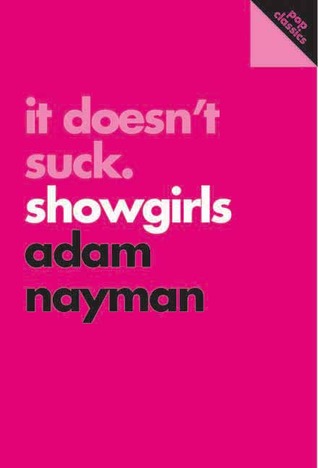
It Doesn't Suck!


The local film-critic Adam Nayman will be having a launch for his new monograph It Doesn't Suck on Paul Verhoeven's Showgirls on Friday, March 14th at 9PM at the TIFF Bell Lightbox before he introduces the film. It Doesn't Suck is one of the best recent film books for the spirit of Nayman's endeavor to redeem Showgirls from its disreputable reputation through the erudition of his research and the passion and thoughtfulness of his analysis. To give one example Nayman cites that the French director Mia Hansen-Løve is a big fan of the film and that the discussion of the film will play a key role in her upcoming film Eden (I, II). There are many other great revelations regarding Showgirls to be had. A must read!

Monday, March 11, 2013

Nayman on the Coen brothers (Media Mondays at the Miles Nadal JCC)


Adam Nayman's film lectures on the Coen brothers continue on Mondays from March 11th to April 29th at 7pm at the Miles Nadal JCC. Tonight's (March 11th) class is on the Coen brother's pastiche of screwball comedies with a focus on The Hudsucker Proxy and Intolerable Cruelty.  

See the TFR interview with Nayman for more information about the series.

Wednesday, February 20, 2013

The Coen Brothers in Nayman's Terms (an interview w/ Adam Nayman)

In anticipation for the class The Coen Brothers in Nayman's Terms, an eight-week series at the Miles Nadal JCC on the Mondays at 7PM (see the Facebook page for more info), I chatted with Adam at the Ideal Coffee on Ossington to talk about the class, the Coen brothers, and Toronto-based independent cinema among other things. - D.D.
*****
David: Before we start: are you coming out to the MDFF short-film program tonight? I also wonder what are your thoughts on these emerging young independent filmmakers here in Toronto?
Adam: I don't think that I'll be able to make it, unfortunately. And regarding local filmmaking: yeah, I like them. There seems to be some pretty interesting filmmakers. There is Calvin Thomas and Yonah Lewis who are still waiting for their new movie The Oxbow Cure to premiere and there is Igor Drljača and his film Krivina, Simon Ennis and Lunarcy!, and Dan and Kaz with Tower (who are accompanying it with local short-films when it opens on Friday at The Royal). So I think that it is a good moment in the city. I also think that with Ingrid Veninger's $1,000 feature film challenge they created some pretty interesting movies like Nadia Litz's Hotel Congress. It’s a happy coincidence of timing. I do feel like something is going on because not only are these films being made and not only are they good but they are also getting released. And the person who I think should get some kind of mention here is Stacey Donen for his programming at The Royal and his work with College Street Pictures that distributed Krivina and Tower. So I think that Stacey is putting his theater where his mouth is in terms of nurturing independent feature filmmaking. And I think by the time you post this Jason Anderson is going to have a piece on the same subject in The Grid.

David: I've been attending the classes since the beginning with the classes on World Cinema and Controversial Directors. I like them for bringing together cinephiles in a social setting to hear someone talk about movies seriously. What are your thoughts on how the classes have grown?
Adam: Well I'm happy about it and so is my boss Esther. It's something that we've been working on. It is great when people in the film community help too. In the Media Mondays series Kevin Courrier also gave a couple of classes. They are easy to prepare because the technology is there to create DVDs with clips from the movies. Let's call it do-it-yourself film studies. If the classes got bigger and more successful it is because, I would like to think, that I’m good at it and that I know what I’m doing. There is a lot of loyalty and generosity among the people who come, too. Because I must say the class does ask something from somebody: you come for two hours and you're paying money and you're not seeing a full film and you might not know too many people who are there. So I realize if that it is not a hard sell, it is still not the easiest sell in the world. And I’ve tried to pick films and filmmakers that would be popular and grow the course. If you pick Stanley Kubrick you're making a pretty good bet that people would be interested in the course. If you pick the Coen brothers, well, we will see.

David: Why the Coen brothers? And why now?
Adam: Good question. I think that after the Kubrick class I was wondering what director to talk about for the next one. I asked myself who is accomplished and famous enough to get a big enough of an audience. Though the JCC never insist that I choose a Jewish filmmakers or Jewish artist it is like the joke about the ad in the Jewish paper for rye bread - it wouldn’t hurt. By coincidence I also had recently seen Raising Arizona and Blood Simple and I realized how much there is to say about their old films. So my first thought was that there used to be so much to say about the Coen brothers and that now, but for the odd exception, there isn’t. Then when I watched the newer films again I realized that the opposite is true and that I was finding much more of interest, of auteurist interest, in the newer films. So I thought that if the older films are being revisited by the people my age and they are still of interest and that maybe the newer films are better than we thought, and if sprinkled over the last 30 years they've made some undeniable classics like Blood Simple, Fargo, Big Lebowski, and No Country for Old Men, than this is enough material for a pretty good class. When you ask why now that is another good question because it is not like they are retiring or one of them has died, and their new film Inside Llewyn Davis isn't coming out until later on in the year. So to answer the question I want to say that filmmakers like them are just perennially interesting. It is not like Stanley Kubrick wasn’t any more dead last year than the year before or the next. So I guess when you are dealing with the canon or the pantheon of filmmakers then any time is a good time to talk about them. I guess what I’m less confident is if the Coen brothers belong there is in the canon. Sometimes I think they do, other times I’m not so sure.

David: How is the class structured?
Adam: There are eight classes that are spread across ten weeks. The lessons are not strictly chronological as I’m trying to give a sense of the arch of their career. For example in the first class the focus is on Blood Simple and Raising Arizona because I want to give a sense of where they came from. In the following classes they are divided more thematically. For example in the second class the focus is on the film noir genre and how they appropriate it in Milller’s Crossing and how it interacts with it and the same for The Man Who Wasn’t There. Following that there is going to be a class on screwball comedy and in particular The Hudsucker Proxy and Intolerable Cruelty. From there onwards I try to pair things in a way that I find to be interesting like The Ladykillers and True Grit as part of the remakes class and so on. The only film that I’m giving a whole class about is A Serious Man, which is a film that I in particularly really like.

David: When people talk about their films some criticism that are brought up include their reliance on pastiche, irony, and formalism. What is your perspective on this aspect of their films?
Adam: Pastiche is right because they are obviously pastiche filmmakers. Whether that is negative or not is a matter of taste. Because they are truly postmodernist in that everything that they do comes out of or is derived from pre-existing text, whether they are filmic or literary. What I think is remarkable about them is that everything that they make is a synthesis of allusions and references but what they end up making is a genre into itself that of the Coen brothers film. So when they make a screwball comedy they aren’t lost within it but instead they make it into a Coen brothers film. Some people find this to be too assertive or presumptuous and others say that is why they are auteurs. You can say that they are formalist or you can say that they are commercial mainstream filmmakers who just pay attention to form and are gifted at finding the right form for their films. I think that the idea that all of their films are all stylistically similar is simplistic. So many of their films have different tones and style. Movies like Raising Arizona and The Man Who Wasn’t There are really different in terms of their look. On the other hand these two films are similar in that they are both about men who just want to find a sense of normalcy. Another major criticism of their films is that they are cold and cruel and mean-spirited. The question is to what extent does that detract from their films? We like to think that artists are entitled to a temperament and theirs seems to be more cynical and bleak. I try not to hold this temperament against them. Ironically it is one of their most acclaimed films but I find No Country For Old Men to be the least persuasive for its nihilism. Because in that film I think there is a big disconnect between how much Cormac McCarthy means it in the book and how much they do in the film.

David: What are your thoughts on the literature about the Coen brothers?
Adam: I find the new Ian Nathan book in the Masters of Cinema series to be skimpy but I don’t hold it against him because it’s a setback of the picture-based format of the series. The R. Barton Palmer book in the Contemporary Film Directors series on the other hand is good but because the book is from 2004 it doesn’t touch upon their more recent work. I think that Palmer is really good at some things like connecting The Hudsucker Proxy to the films of Frank Capra or elaborating on how Fargo is able to change the everyday into the exotic. Unfortunately I think that he underrates some of their other films like The Big Lebowski and Raising Arizona. But what I think is perhaps one of the best piece on the Coen brothers is a little essay by Kent Jones which he wrote on O Brother, Where Art Thou? where he discusses many of their contradictions: their freshness and their predictability; their singularity and their derivativeness, and so on.

David: Thanks for doing this, Adam. And I look forward to attending some of the classes once they begin on Monday, February 25th. Any last words?
Adam: The hope is that people would come out and that they would learn new things and that they are getting a good analysis. But I also want there to be a discussion. Because the Coen brothers are such polarizing filmmakers I would like to hear more about what other people have to say about them, even if that means being contradicted. I would like more people to contribute this time around. I hope that if anyone is reading this, and if they’ve never been to the class, then if they come then they would ask questions, make comments, and argue for their favorite Coen brother’s films. Because I think that is what is fun. It is exciting when people who care about cinema talk about it and debate about it in a mature way. I hope this class gives people a framework for that.

Wednesday, August 1, 2012

Pop Quiz: Le fils

Pop Quiz 1
           A man marries a woman, they aren’t too well off, but that’s not important to the story, and they have a baby, a boy, who they love, a lot. One night, the boy, the couples son, he gets killed, he was in their families car and it gets broken into and he gets killed, it’s a tragedy, terrible, wouldn’t even wish this onto ones enemies, but life has to go on, right? The happily married couple, after the murder of their son, splits up, gets divorced, are no longer together, i.e. are no longer legally married, though he still misses her, or not exactly “her,” but his wife, and his son at that, and the life he had, which he longer has. And the man, who sees his ex-wife regularly, has found out that she is now with a new guy and pregnant again, with a new child that wont be his. Let’s say that the man X is a carpenter, you know the blue denim overall type, and at his job, one day he sees this sixteen-year-old kid, let’s call him Y, come in looking for a job, and he recognizes the boy from the trial for his sons murder. This boy Y at first gets a job in the wielding department of the factory, but then, for some complex reason the man X wants for some reason be closer to this “messed up” kid, well after what he’s done, he has to be messed up – right? So this blonde-haired boy who has just got out of a five-year prison term, and you can tell he’s probably living in a half-way house with a social-worker or a shitty one-room apartment with his mattress on the floor and stuff, and he’s so happy and feels lucky to have this job, and but like starts to appreciate X’s guidance and helpfulness, as this kid never knew his own father and apparently his mom’s boyfriend doesn’t allow him to see her, i.e. the boys mom. And X does help him out, not exactly because he wants to, but he’s caught in a few instances where he just kind-of has to help, like he’s asked where a certain street is and, really, if you know, how can you not direct him to the right street, or else you would be a total dick. And Y is impressed with X’s ability to precisely measure objects and distances, to the fucking centimeter, and they play around with this, the distance between Y and a car, the length of a piece of wood etc. Let’s return back to X and describe him more faithfully: X is a big man, he does sit-ups on his floor regularly, looks to be around 5’10 and weighs around 210 pounds, balding with short brown hair, thick lenses in his steel-rimmed glasses, with a constant pissed off look on his face, as if he’s keeping at bay an overwhelming anger (with the loss of the son, this is understandable), and when ever X is around Y this seems to be amplified. While Y is aloof, silent, also more introspective, but unlike X the reasons for Y w/r/t the introspection it seems like its more like that of a hurt puppy or that of a child who accidentally touched a cooking element, he’s gone through too much and is now weary, and its painful to hear Y describes playing foosball when he was locked up as a way “to forget my problems,” because its a perfectly child-like thing to do, but in a very un-childlike mise en scène. So X and Y work more and more together, and on one day they go on a suspiciously long drive to a lumber yard (so far they’ve only been working in the carpentering workshop), and on this drive X asks Y about the murder, and Y asks X if he would consider taking him in and being his guardian. Silence. They keep driving. They are now in the lumberyard, where everything seems to reach a climax w/r/t to their interpersonal relationship. As at the lumberyard, this expansive industrial space, with its steel walls and ceiling, full of stacks of lumber, stacked on one another, full of hiding spaces and shadows: X tells Y that he’s the father of the boy that he killed. An unbalanced moment, for Y as he has to both (a) think about all of the experiences he had with X and mentally revisit these experience – some of them have been pretty scary, e.g. X knocking him off a ladder, X throwing down large planks of wood at him – to see how this might change his perception of them and (b) run, get away from this deranged figure, um, because who would actually spend all of this time to get close to the person who killed your son, right, and what does he, X, want to do to him, anyways? After an extensive chase, which seems like its right out of French Connection II or something, the two of them are now outside on the dirt, X catches up with Y, is on top of him, choking him, X has his hands around his throat, Y isn’t breathing right, X’s grip is getting tighter, there is the look of a murderer in his eyes, shit, is he going to do it? Kill Y, the person who killed his son, who he’s been working with for these last few days, and who he now kind-of likes, what good would it actually do? There is no way X’s son is coming back, and what about, when X was chasing Y, and tells him that he doesn’t want to hurt him, and now he’s doing just that.
And then X stops, and throws his hands, his fists, on the ground.
They both sit up, beside each other, for a while, and breathe heavily, and then the man, X, walks away. He’s now back at his car, dirty, after all the rolling around in dirt, and he’s putting the last few pieces of lumber in his vehicle, and then the boy, Y, is there and after a brief moment of hesitation, the boy starts to help.

Q: (A) Is the man, X, a good father?
*****

For the answer to this question, and more concerning Jean-Pierre and Luc Dardenne's film Le fils come to hear Adam Nayman discuss it at the next talk in the series What We Talk About at the Drake Underground later on this month.

Saturday, May 5, 2012

A Child’s Hope (A Placed Called Los Pereyra at the Projection Booth)

"A very honest, strong film. I liked the vision of this film very much." - Carlos Reygadas on A Place Called Los Pereyra

The documentary A Place Called Los Pereyra, which is directed by Andrés Livov-Macklin (who was born in Buenos Aires, and is mostly known for short films) and produced by Hugh Gibson and Peter Starr, is about the elementary school 959 in the rural community of Los Pereyra, in the Tucumán Province, Argentina. A Place Called Los Pereyra is like a mixture between two films: the classroom drama Monsieur Lazhar, which is about an elementary school teacher guiding a group of young and impressionable students; and the documentary-fiction hybrid Alamar, a naturalistic cinéma vérité look at a Mexican father teaching his son how to fish in the coral reef.

These two films give a sense of what A Place Called Los Pereyra is like. But the film is different from these other works and needs to be further discussed.

Los Pereyra is located east of the Tucumán Province, which is known for its Gran Chaco flatlands. The documentary refers to the area as the El Impenetrable, “the second largest forested region in South America after the Amazon.” A Place Called Los Pereyra shows a town without electricity or modern day appliances. It paints a portrait of a culturally and geographically isolated location that hardly has any information online.

In the community of Los Pereyra there are families and children. The children either stay at home where they help their parents at their farms, or they go to school with the hope of later pursuing their education elsewhere. A Place Called Los Pereyra centers on a group of high school girls from an expensive all-girl private school in Buenos Aires, who are known as the godmothers. The young godmothers are part of an annual charitable mission from Buenos Aires that provides goods and medical attention to the people of the area. It is these godmothers that were the inspiration for A Place Called Los Pereyra. One of Livov-Macklin’s friends went to this school in Buenos Aires, and shared with him the experience of the trips. Livov-Macklin was struck by both the disparity between the two groups and the kindness of their interactions.

These godmothers are a great asset to the community, and their arrival seems much anticipated. They show to the kids the possibilities that lie outside of Los Pereyra. As well they emphasize education, they bring them new toys and they perform medical check-ups. Fun and nice anecdotes from A Place Called Los Pereyra includes: the girls describing contraception, you see the boys playing with a new soccer ball, the girls tease one of the older boys, they do math equations where they distribute candy, they bring them to a zoo, and they even make one of the boys a nice birthday cake. But they are only there for a short amount time, and who knows when, and if, they are ever going to come back?

As Los Pereyra is over one-thousand kilometers away from the city of Buenos Aires, one of the subjects of the film is the Argentinean rural/urban divide. The teacher continuously brings up to these children that if they want a better future for themselves they will need to go to Buenos Aires to study. The teacher says, “You know that as people grow up, they want to do something with their lives. They dream of becoming something.” Concluding, “Nothing is difficult, if you’re willing to do it.”

A Place Called Los Pereyra will be screening at the Projection Booth from May 11th to the 17th.  And there will be a special event on Friday May 11th with a cocktail reception and post-screening discussion with producer Hugh Gibson and film critic Adam Nayman (The Grid, Cinema Scope).

Wednesday, March 14, 2012

Stanley Kubrick by Michel Ciment: Part I

In anticipation of Adam Nayman’s upcoming and much anticipated class Kubrick in Nayman’s Terms which starts on April 16th and continues onwards every Monday at 7PM at the Miles Nadal JCC. Here at Toronto Film Review I will be reviewing Michel Ciment’s Kubrick: The Definitive Edition, which I find to be the Stanley Kubrick book. To get ready for this post, which will take me a while to write, I am going to post the Foreword of the book’s first edition, which can be found in the following section.

From this foreword I want to expand a little on Ciment’s approach to film criticism and the modus operandi of the most thorough and pleasant film journal Positif, which he is the chief-editor.

First off: choosing to write a book on Stanley Kubrick is no coincidence as Kubrick just might be the filmmaker absolute over at Positif. In Positif’s 30th anniversary issue the number one film in a poll on "what were the films that have had the biggest impact on you" was 2001: A Space Odyssey. The paperback edition of Positif 50 Years: Selected writings from the French Film Journal has a still from A Clockwork Orange on its cover. And at Positif the critics judge contemporary cinema in relation to Kubrick highlighting filmmakers that share his rigorous approach and singular aesthetic like Terrence Malick, Paul Thomas Anderson, Nicolas Winding Refn, Lynne Ramsay, and Stephen Spielberg.

And just as Kubrick’s aesthetic and narratives have such a looming presence over contemporary cinema, Ciment’s brand of film-criticism has an overarching influence over at Positif and in contemporary French criticism. Ciment is highly esteemed as one of the Honorary Presidents of The International Federation of Film Critics (FIPRESCI) and as a professor at the Université Paris. Ciment, who started at the magazine in 1963, now usually provides the magazines editorial stance through his polemic editorials, interviews with directors and film festival coverage. Ciment also shares many anecdotes of being around revered filmmakers in a friendly tone (see his introduction to Film World: The Director's Interviews). While Ciment’s writing shows an interest in history, politics and culture wrapped in a Nabokovian prose which is mixed with humor. For example, he recently denounced documentaries for a preference for fiction films saying, in his inimitable way, that he prefers his Fay Wray to some faits vrais. The only other film critic that I could compare Ciment to would be Raymond Durgnat. Especially as Durgnat seems most in line with the old school vein of Positif surrealism and knowledge of psychoanalysis while also sharing many other cinematic interest. Durgnat also quoted, built upon and argued against Ciment over the course of his career.

Some things that are noteworthy that Ciment brings up in his Foreword includes the challenge of film criticism to find the perfect words to describe scenes from movies, especially when the films are so image- and sound-based. There is an emphasis on a personal response and to gut-reactions when it comes to the films and to not stoop to a snobery, when the focus should be on the films (also see Durgnat’s Films and Feelings). And Ciment brings up his time in London which might have something to do with his and Positif’s long-term championing of British cinema especially against many of the attacks against it from their rivals at Cahiers du Cinéma.

As well Ciment discusses the publication and design aesthetic that he uses that fully uses photographs to add to the criticism and expand on it, which is especially relevant as at Positif they have now started to include color photographs (N.611). And which can be viewed in other books like the Positif-contributor Michael Henry Wilson interview books with Clint Eastwood and Martin Scorsese.

These are just a few modest observations on the design and thought that goes into book and magazine publishing on film where Ciment and Positif are paving the way for many future endeavors. – D.D.

*****
Michel Ciment’s Foreword to Kubrick: “Every critic, I feel sure, who has attempted to come to terms with Stanley Kubrick’s work has been made painfully aware of the limits of his own discourse. To describe films in words – which is to say, to present to the reader in conceptual terms a series of associations of animated images – is in itself a challenge. With films which their maker has always described as ‘a non-verbal experience’ the tasks is rendered even more difficult. And the refusal often shown by Kubrick to comment on his art comes from his desire to conserve a margin of mystery and uncertainty. His is an oeuvre that both demands and defies analysis.

As long as I can remember, by recalling my own encounters with his films – in particular, the night I wandered through the streets of London after my first viewing of 2001: A Space Odyssey, trying to collect my thoughts after an experience unique in my years of film-going – I have dreamt of a book about Kubrick in which images would play an essential role.

Such is the spirit in which this album has been conceived. The illustrations (often frame enlargements rather than a set photographer’s stills, as was Kubrick’s request for his later work) will not only conjure up a shot or lighting effect, a composition or gesture, but provide a critical commentary through unexpected analogies or internal rhymes. And the text itself both influenced and was influenced by the choice of photographs. The book does not claim to be exhaustive, but proposes a unchanging core of Kubrick’s art. Apart from a detailed bibliography and filmography, it consists of seven sections. In five of thses (Kubrick’s odyssey; Reflections on an oeuvre in evolution; Kubrick and the fantastic; Interviews with Stanley Kubrick; Interviews with colleagues), both words and pictures are used. In the other two (Eleven films; Directing), only pictures.

Afterwards, it will be up to the reader-viewer to pursue his own personal thoughts and impressions of one of the most demanding, most original and most visionary film-makers of our time.”

Sunday, March 4, 2012

The Great Debate: Michael Bay Auteur?


"A film is the epitome of an artwork resting on style. There must be an author, an écriture. The author writes on the screen, expressing himself through the photographic shots of varying duration and angles. For an author worthy of the name, each choice is determined, dictated by calculation or instinct but not by chance." - Robert Bresson

On Thursday March 8th at 6:30PM, TIFF Next Wave will be hosting at the Lightbox an in-cinema debate about Michael Bay. Is he a modern day Griffith shaping the language of how films are made today or is he an incompetent hack whose use of explosive special effects is a cover for the nothingness of his films? The panel will consist of Adam Nayman (The Grid, Cinema Scope), two film students from the Etobicoke School of the Arts and will be moderated by Mark Little.

What exactly is an auteur anyway? For André Bazin talking about an auteur means “choosing the personal factor in artistic creation as a standard of reference, and then assuming that it continues and even progresses from one film to the next.” François Truffaut gives his definition of the auteur in his famous essay Une certaine tendance du cinéma Français pointing out that the auteur should be considered as fully an artist as any of the great novelists, painters or poets. Jim Hillier highlights that there was a unique temperament to the 1950s auteur at Cahiers du cinéma: “it was not any world view but rather a particular world view that was being privileged.” John Hess further expands, “An auteur was a film director who expressed an optimistic image of human potentialities within an utterly corrupt society. By reaching out emotionally and spiritually to other human beings and/or to God, one could transcend the isolation imposed on one by a corrupt world.” The auteur would be recognizable by his mise en scène, which Fereydoun Hoveyda emphasizes, “The originality of the auteur lies not in the subject matter he chooses, but in the technique he employs, i.e. the mise en scène, through which everything on the screen is expressed.”

When the auteur theory first emerged at Cahiers in the 1950s it was used as a polemic to argue the singularity of Modernist Hollywood directors in opposition to the novelistic qualities of the French films of the time and in a post-WWII intellectual climate of strong anti-Americanism. The term to describe these privileged filmmakers has changed over the years. Jean-Claude Biette in his essay Que’est ce qu’un cinéaste? in Trafic revised auteur for the term cinéaste, which has broader implications. While more recently Michel Ciment at Positif argues for the practicing of a politique de hauteurs. Where the question is not if a certain director is an auteur or a cinéaste, but let’s champion these directors best work and not let them just ride on their reputation.

So lets return the conversation to Micheal Bay, whose latest film is Transformers: Dark of the Moon: the story of Sam Witwicky (an over-compensating Shia LaBeouf) trying to find a job, when there aren't too many prosperous positions available, while his girlfriend (British model Rosie Huntington-Whiteley) is working her way up nicely at a corporation. Everything quickly escalates out of control towards CGI Hasbro Transformers getting together with the American military to save the world from other "evil" Transformers. There isn't much depth to the story or to the characters and instead what you get are noisy robots hitting one another for an extended period of time. Go figure.

The Transformers franchise series and its embrace of the military-industrial complex, and whose Dark of the Moon came out on Independence Day, gives off the bad impression of resembling too much a long promotional video for a teenage demographic to go out and thoughtlessly join the American military. In Dark of the Moon the death of human life is reduced down to a mournful country song, the real attacks on the World Trade Center is reduced to a suspense gimmick, and the presentation of the Korean actor Ken Jeong is crude and stereotyped. In regards to form, Bay's shots don't feel determined and there is no sign of a visible artistry.

What does Bay have going for him? One can think of the iconic roles that he creates for his lead actors, an interesting balance of moods in the films, and he is building upon a distinct repertoire of associations.

But what one seriously needs to ask oneself: Is there anything left to Bay's films after the explosions have stopped and the dusts has settled?

Tuesday, December 27, 2011

Happy New Years! (TFR Top Ten of 2011)

Instead of the typical Top Ten, each entry is organized through thematic categories: (1) the presentation of the unconscious mind through cinema by the world's best Québécois directors, (2) Hitchcockian French thrillers starring the great Guillaume Canet, (3) late works by masters of American cinema, (4) these short films are precursors of what is to come out of Canadian cinema, (5) hybrid films that take the luster of mainstream movies, inflicting them with a singular and vibrant sensability, (6) horror, action and the supernatural reigns supreme, (7) some might call these middle-brow but they are undeniably well crafted and complex, (8) funny, smart, personal and full of feeling, (9) formally invigorating world cinema, (10) social activism, political documentary and anarchist films has been pushed to the margins of experimental cinema - these have been the most challenging.
Following the Top Ten there are a few other lists: best new film books, favorite local film critics, upcoming series etc...
I hope you've enjoyed reading Toronto Film Review and that you keep checking it out in 2012 - there is a lot more film coverage and book reviews to come. A special thanks goes out to everyone who contributed and helped. And make sure to check out the twitter account, TOFilmReview. - D.D.


"You know what, my films resemble more and more what children make in their rooms, when they make little expositions with rocks and seashells: I see more and more clearly my films, and more so the next one, like expositions of little things that I want to share." - Lars von Trier

Top Ten of 2011
 1.       Café de Flore (Jean-Marc Vallée)
          Curling (Denis Côté)
 2.       Espion(s) (Nicolas Saada)
          Une vie meilleure (Cédric Kahn)
 3.       Road to Nowhere (Monte Hellman)
          Twixt (Francis Ford Coppola)
          The Tree of Life (Terrence Malick)
 4.       The Fuse: Or How I Burned Simon Bolivar (Igor Drljača) 
          Coorow-Latham Road (Blake Williams)
          Up In Cottage Country (Simon Ennis)
          La Ronde (Sophie Goyette)
          Three Mothers (Rafal Sokolowski)
 5.       Melancholia (Lars von Trier)
          Drive (Nicolas Winding Refn)
          You Are Here (Daniel Cockburn)
          Hors Satan (Bruno Dumont) 
          Un été brûlant (Philippe Garrel)
 6.       Super 8 (J.J. Abrams)
          Scream 4 (Wes Craven)
          Le Gamin au vélo (Jean-Pierre and Luc Dardenne)
          The Twilight Saga: Breaking Dawn: Part 1 (Bill Condon)
          Attack the Block (Joe Cornish)
          Kill List (Ben Wheatley)
          Martha Marcy May Marlene (Sean Durkin)
 7.       Restless (Gus Van Sant)
          The Skin I Live In (Pedro Almodóvar)
          Pina (Wim Wenders)
          Contagion (Steven Soderbergh)
          Shame (Steve McQueen)
          The Adventures of Tintin (Steven Spielberg)
 8.       Hall Pass (Bobby and Peter Farrelly)
          How Do You Know (James L. Brooks)
          Midnight in Paris (Woody Allen)
          Bridesmaids (Paul Feig)
          We Bought a Zoo (Cameron Crowe)
          The Descendants (Alexander Payne)
 9.       Ne change rien (Pedro Costa)
          To Die Like a Man (João Pedro Rodrigues)
          The Strange Case of Angelica (Manoel de Oliveira)
          Mysteries of Lisbon (Raoul Ruiz)
          The Future (Miranda July)
          Le quattro volte (Michelangelo Frammartino)
          The Autobiography of Nicolae Ceausescu (Andrei Ujica)
 10.      Seeking the Monkey King (Ken Jacobs)
          The Forgotten Space (Allan Sekula and Noël Burch)
          Vapor Trail (Clark) (John Gianvito)
          This is not a Film (Mojtaba Mirtahmasb and Jafar Panahi)
          Slow Action (Ben Rivers)
          We Can't Go Home Again (Nicholas Ray)
          Too Many Things (Donigan Cumming)
Best new and discovered film books and writing:
  • Another Fine Mess: A History of American Film Comedy by Saul Austerlitz (Chicago Review Press, 2010).
  • The Film Comedy Reader edited by Gregg Rickman (Limelight Editions, 2004).
  • Comment Woody Allen peut change votre vie by Éric Vartzbed (Éditions du Seuil, 2011).
  • Apichatpong Weerasethakul edited by James Quandt (Austrian Film Museum, 2009).
  • Splitting the Choir – The Moving Images of Donigan Cumming edited by Scott Birdwise (Canadian Film Institute, 2011).
  • Pencil, Ashes, Matches & Dust by Donigan Cumming (Editions J’ai VU, 2009).
  • Trammel up the Consequences by Robin Wood (Lightstruck Film & Media Book, 2011).
  • Monte Hellman - Sympathy for the devil by Emmanuel Burdeau (Capricci, 2011).
  • Monte Hellman: His Life and Films by Brad Stevens (McFarland & Company, 2003).
  • Masters of Cinema: Francis Ford Coppola by Stéphane Delorme (Phaidon, 2010); as well as his writing and direction of Cahiers du cinéma.
  • When Movies Mattered: Reviews from a Transformative Decade by Dave Kehr (University Of Chicago Press, 2011); as well as Kehr's weekly DVD review column in The New York Times.
  • The American Cinema: Directors and Directions 1929-1968 by Andrew Sarris (Da Capo Press, 1968).
  • Films And Feelings by Raymond Durgnat (MIT Press, 1971).
  • BFI Modern Classics - WR: Mysteries of the Organism by Raymond Durgnat (BFI, 2008).
  • Joseph L. Mankiewicz et son double by Vincent Amiel (Presses Universitaires de France, 2010).
  • World Film Locations: Tokyo edited by Chris MaGee (Intellect Ltd, 2011).
  • Optic Antics: The Cinema of Ken Jacobs edited by Michele Pierson, David E. James and Paul Arthur (Oxford University Press, 2011)
Best North American Repertory:
  • Anthology Film Archives.
Favorite local film critics:
  • Adam Nayman:
who writes for the Toronto alternative paper The Grid as well the more worthwhile Cineaste and Cinema Scope. His polemical pieces alongside his vocal position on certain kinds of filmmaking definitively elevates film criticism and the film critic to a higher plane. But more so then his writing, Adam's extracurricular activities like his classes at the Miles Nadal JCC have been one of the highlights of 2011. Who can forget the janitor cleaning the alleyway while the stragglers finished watching Goodbye, Dragon Inn or the ridiculously popular class on Woody Allen. More so then reading film criticism, the classes seemed like the next logical progression of it - the living incarnation. The classes are great as Adam's tone blends the informal and the academic and he illustrates the comments with film clips from a ripped DVD - everything seems to be light years ahead of the curriculum at the University of Ottawa. And going to The Pump and Shoeless Joe's after for pints with a group of people and friends is always a lot of fun. Adam's classes included New Wave Foreign Cinema Lectures In Nayman’s Terms and the two part series Love Em or Hate Em: Controversial Directors and MORE Controversial Directors. And Adam has a new class scheduled for the spring of 2012 at the JCC on Stanley Kubrick, with each class dedicated to a specific film. I know that I am speaking for more then myself when I say, we can't wait!


  • Andrew Parker:
  • for his writing at Criticize This! and Dork Shelf as well as his programming series Defending the Indefensible at the Toronto Underground Cinema. If you were to have told me a year ago that the state of Toronto's weekly film criticism is in good shape and that the best writing could be found on website's with silly names like Criticize This! and Dork Shelf, I would have probably laughed at you. But lo and behold, I was wrong. Andrew is the kind of guy that still writes his reviews longhand with an old pen and notepad. And Andrew's weekly reviews, which run around the one-thousand word mark, of the majority of new releases provides the most thorough readings of what is playing on Toronto's screens. With a special attention to the films that can gain from this critical support like Extremely Loud and Incredibly Close and Beauty Day. As well he seems to be ahead of most trends as he can tell you why movies like Like Crazy and Margaret are terrific and his opinions stand out as he can also say why most commercial drivel is bad.


  • Along with Andrew's series Defending the Indefensible, there is also John Semley's (A.V. Club Toronto) new series Remake/Remodel, both of which I recommend and that I look forward to starting up again in the new year. As well there is a new class that seems interesting as part of the Media Mondays at the JCC, Reflections in the Hall of Mirrors: American Movies and the Politics of Idealism presented by Kevin Courrier which will be running from January 16th to March 26th each Mondays starting at 7:00PM - except for February 20th and March 12th. As well, like always, there is Early Monthly Segments and Pleasure Dome for your experimental film fix, and the monthly film-blogger pub nights for some camaraderie. And while I am shouting people out, might as well bring up the Cinema Scope Twitter account CinemaScopeMag, which is a lot of fun too.
  • Most anticipated films of 2012:
    • Abel Ferrara's 4:44 Last Day on Earth and Christopher Nolan's The Dark Knight Rises. As well Kazik Radwanski and Antoine Bourges from Medium Density Fibreboard Films (MDFF) should hopefully have their current projects finished in the new year - I look forward to catching these two on the festival circuit.

    Saturday, July 9, 2011

    Interview with Adam Nayman (On Love Em or Hate Em: MORE Controversial Directors)


    In anticipation of Adan Nayman’s newest series of classes Love Em or Hate Em: MORE Controversial Directors, I decided to take the opportunity to meet up with the guy to ask him a few questions. In this new series there will be lectures on Lars von Trier on Monday July 11th, Michael Haneke on Monday July 18th, Luis Buñuel on Monday July 25th and Woody Allen on August 8th. All of the classes start at 7PM and are at Miles Nadal JCC (750 Spadina Avenue). – D.D.

    Toronto Film Review : So Adam why these particular directors?

    Adam Nayman : The first course seemed to go well, and I felt that the idea of talking about challenging filmmakers was still appealing to me. So I asked around about some other directors who might fit into this class, and Lars von Trier's name kept coming up, plus he was in the news at the time because of what he said at Cannes. And then from there, I thought that it would be good to pick some filmmakers who were a little less famous than the ones I did last time: Verhoeven, Cronenberg and Polanski are all artists who moved from the margins to the mainstream (less so Catherine Breillat). Buñuel is of course famous but maybe not to a non cinephile audience. Michael Haneke is well known and his films are polarizing but he's someone who people might want to learn more about. As for Woody Allen, he's more mainstream but in some ways he's a guy who begs to be considered as a kind of European art-house auteur even though he's American. I think that the throughline between all four filmmakers is that there are elements of satire and absurdity in their work -- all expressed very differently of course.

    TFR : Buñuel is the one director out of the four that I am least familiar with. I remember seeing his Las Hurdes at the Cinémathèque québécoise in Montreal. I was just wondering how many of his 34 titles have you seen? Are they available on DVD? I know Criterion Collection has released a few of them. And have you gone over his autobiography My Last Sigh? I remember Jonathan Rosenbaum was telling us that in the editing process from French to English that the editor was conspicuously editing things out; I wonder what he actually removed?

    AN : I can't speak to the differences in the translations. That's something that Jonathan Rosenbaum would know more about then I do. And there's no lack of critical writing on Buñuel, but one of the things I want to work against is the idea that he mellowed as he got older -- that his late pictures are the work of a less strident filmmaker. For me, films like The Phantom of Liberty, Discreet Charm of the Bourgeoisie and That Obscure Object of Desire are still examples of an artist challenging himself and his audience, right to the end. As for whether I've seen all of his films; I can't count offhand, but probably not.

    TFR : I think Woody Allen is just great! And I am especially fond of his latest films, did you know that both You will meet a tall dark stranger and Midnight in Paris made the cover of Positif, which is not an easy task. And it is interesting to note that Richard Brody, one of the biggest Woody Allen partisans along with Eric Lax, sees the Barbara Kopple documentary Wild Man Blues (1997) as the beginning of his late period. Allen also excels at fiction; there is a big database over at The New Yorker of his collected work; I particularly recommend Udder Madness. Which brings me to how I like that you bring up his fictional writing in your review of Midnight in Paris. One of my favorites of his short stories is Fabrizio’s: Criticism and Response from Side Effects. Have you read that one? It is about a high-minded restaurant critic who writes these elaborate criticism and responses about restaurant food profiles, and in the process undermines the jargon of analysis:
    “I began my meal with an antipasto, which at first appeared aimless, but as I focused more on the anchovies the point of it became clearer. Was Spinelli [the chef at the restaurant in question; Fabrizio’s Villa Nova Restaurant] trying to say that all life was represented here in this antipasto, with the black olives an unbearable reminder of mortality? If so, where was the celery? Was the omission deliberate? At Jacobelli’s the antipasto consists solely of celery. But Jacobelli is an extremist. He wants to call our attention to the absurdity of life. Who can forget his scampi: four garlic-drenched shrimp arranged in a way that says more about our involvement in Vietnam than countless books on the subject?”
    Anyways, what themes are you going to highlight in your WA class?

    AN : Yes, I like that essay, among others in Side Effects. Like Polanski, Allen’s films are not overtly transgressive (although I rewatched Husbands and Wives last night and was shocked by how raw it was). He does not craft extreme images. The controversy stems from his private life and the possibility that his films -- especially the ones in the 1990s -- are autobiographical. Polanski used to deny that sort of thing, and Allen doesn't encourage it, but it seems plain. I feel like Allen makes movies as a form of therapy -- like Lars von Trier -- but he seems to get less out of it; he has the same hangups and phobias as he did forty years ago. If you want to put it positively, you can say he's consistent; if you want to be negative you can say he's redundant.

    TFR : Once when you and Andrew Tracy were in the tiff.shop, he picked up Screening Modernism and was saying that since the book had a blurb from David Bordwell that it was reason enough to buy it. I bring this up because there are some critics that I hardly see make these kind of blurbs. For example, there is Dave Kehr, out of all of my DVDS his name is only on two of them: James Cameron’s Ghosts of the Abyss and Lars von Trier’s The Boss of It All. Though his DVD reviews for the New York Times are great as well he highlights books sometimes on his personal website. I bring this up as I have noticed your name only once on a DVD and it is on the Canadian film Six Figures. Are you quoted on any other DVDs? What is it about supporting these quality under-exposed Canadian films that you like?

    AN
    : I have been quoted before on DVD boxes, sure. and I even wrote the liner notes for Sergei Dvortsevoy's film Tulpan (2008). Pull quotes can be funny to be read, and I've had my name on films I'm not sure I'd stand by now -- like the 2001 Canadian drama Treed Murray -- but it's not really an important thing one way or the other. On the other hand, I think it's great when critics get to write liner notes or essays for DVD releases, like my friend Mark Peranson’s text for the Pedro Costa Letters from Fontainhas Criterion box set and Michael Koresky’s pieces on The Actuality Dramas of Allan King Eclipse box-set. It’s not the format that most people usually look for penetrating criticism but they can be a wonderful supplement to the features on the disc. I think that Kent Jones has written better DVD booklet notes than most critics have ever written good film reviews. And I would rather read a pull-quote blurb by Dave Kehr then an entire review by Peter Travers.

    TFR : Michael Haneke. That guy is controversial. I was blown away the first time I discovered Cinema Scope. It was an issue dedicated to the Cannes Film Festival and there was only one sentence (!) dedicated to the Palme d’Or winner The White Ribbon. What I got from that was the position that sometimes the movies that are the most interesting are not the ones getting the main prizes at film festivals. What are your thoughts on Haneke?

    AN : What I think Mark was getting at there, in his inimitable style, is that Haneke is a little old to be an enfant terrible. Though he always was a little too old. The Seventh Continent and Funny Games were films made by a guy in his forties, even though they feel more adolescent and even a bit snotty. You would picture their maker as a punk like Gaspar Noé rather than an older Austrian intellectual. I think Haneke has had that paradoxical thing happen to him where the more acknowledged his talents have become by the critical establishment, the less certain kinds of anti-establishment critics want to go the bat for him. I would say that I think he's one of the more brilliant contemporary directors in terms of composition, pacing, sustaining tone and staging acts of violence. He’s a born film director. Even The White Ribbon, which I didn't really want to write about either, there's more filmmaking savvy than in 90% of whatever came out that year. But it's also very much of a piece with his old work, thematically, and if someone finds his style didactic, there's nothing in the new movie that's going to change their mind. If a critic like Mark, or anyone else, found the didactic qualities of his old films unforgiving back then there is nothing that’s going to change their mind.

    TFR : Do you recommend any particular film books relating to the directors in this series? I really tried to get you the Director’s Cut book on von Trier.

    AN : Linda Badley 's book on von Trier in the Contemporary Film Directors series is good. She does not mythologize the guy, partially because he does that already himself. It's incisive analysis without a ton of jargon. The book on Woody Allen in the Masters of Cinema series is atrocious; it feels like the copy-editor was so bored that he stopped catching errors by the end, and I am not a fan of film books that you can read in 8 minutes. One of my favourite pieces on Haneke is a very negative short take by Nick Pinkerton at Reverse Shot, who describes him as the kind of guy who could not watch someone enjoy a steak without mentioning the abattoir. At the other end though there is Robin Wood, who was one of Haneke’s best champions. I do like the Directors Cuts series, even if I didn't use it for this class; the Spielberg book in the series is good, it made me think that in possible future iterations of this class that I could maybe focus on supposedly uncontroversial directors. I'd point to Spielberg as someone who's actually sort of complicated.

    TRF : On von Trier, do you take his films seriously or do you see a kind of snarky derision in them to both the characters and the stories? I saw some black humor in Antichrist which I liked even thoughhe was always putting his characters through the most unbearable situations where things could not have gotten worst.

    AN : I think in summation that Lars is funny. I think that snarky is only half of it. And I think that it is rare that his films end up on the side of snark. It is a weapon in his arsenal, and he is so good at it that people think his films are only snarky and mean. Re-watching Breaking the Waves or Dogville or Antichrist, I think that it is superficial to dismiss them as essentially mean-spirited. One of the things that I have come to think about Lars is the characters in his films that get punished are the ones he feels closer, whereas Haneke like to pummel people he has contempt for. A film like Antichrist would be unbearable if the film took Willem Dafoe’s point of view, but it has the courage, or the craziness, or both to align itself with Charlotte Gainsbourg even in her worst moments. Von Trier identifies with her character and how incredibly infuriating it is for her to be told how to feel and how to think by someone that is condescendingly trying to help her.

    TRF : You got a Masters in Film Studies at the University of Toronto, right? I want to eventually do my Masters there and I was wondering a bit about their program and what are your thoughts of it?

    AN : I loved their one-year program, even though I do not consider myself to be an academic as I have and will continue to work as a film-critic. They have a great faculty there: Bart Testa, Rob King, Nicholas Sammond and Corin Columpar are all terrific. Any graduate or under-graduate student would be lucky to study with them, listen to them and be listened to by them. I don’t know if it is true of all graduate film programs, but U of T offered a lot of space for students to contribute and lead the discussion. For anyone who might be reading this from outside of Toronto, getting a film degree in a city where there are so many films to see is a good idea. Toronto is the kind of city where you can get a film education in class or in your spare time, and if you combine both things, you will be in good shape.

    TFR : When Stéphane Delorme became the editor of Cahiers late in 2009, he asked himself, what is the point of a film magazine today? The answer was simple: movies make you speak. As someone interested in films, it is always interesting to hear what other people have to say. So there are tons of books to read. What I like about your classes is that they offer the information and perspective you can find in a book but there is a more human and communal quality to them as you are there engaging with people. There is something comforting about being in that JCC room with other like-minded individuals; kind of like the feeling of acceptance in Role Models with that nerdy teenager and Paul Rudd reuniting for the medieval role-playing combat. Anyways, where I was going, can you tell me about your method of putting the classes together?

    AN : I love the idea that you compared my class to L.A.I.R.E. from Role Models. I can only hope that in one of my classes I can ask the probing question: "Who the fuck is Marvin Hamlisch?" I really do try to leave space for people to chat and contribute, though I don’t think I was too good at it in the first series of lectures on contemporary New Waves in World cinema, as there was just too much information to impart in two hours. I think people attending a class on polarizing directors are already coming with an opinion and in this cycle I will try and let people assert how they feel, too.

    TRF : I’ve read your writing in The Grid (formely Eye Weekly), Cinema Scope, Cineaste and Reverse Shot. And I recently saw a couple of articles pop up at the Museum of Moving Images and Project: New Cinephilia (am I missing anything?); where you wrote about the Toronto classes that you give, can you elaborate on this segment:
    “The challenge, as I see it, is to retain my critical voice without alienating the uninitiated. A drop-in course is very different from a university curriculum, and it’s better to err on the side of accessibility than elitism — to encourage cinephilia rather than assume it. It’s a fine line between consolidating one’s critical authority and talking down to an audience, and the adjustment of that tone is an ongoing process. Nobody likes to feel lectured to, even when they’re attending something explicitly billed as a lecture; my goal was to make my points and leave plenty of room for group discussion. At the same time, the idea of a total free-for-all cheapened the idea that I was facilitating some kind of relevant film education.”
    AN : There should be balance. It's about the sweet spot between having authority and being accommodating. I would rather a self-described cinephile feel a little bored then a less experienced and curious newcomer be alienated.

    TFR : I remember in the last series it seemed like a big issue for you was staying within the two-hours time spot. Its weird, the lectures were generally thorough, wouldn’t cut anything from them, but they generally went over the time limit. I know that you just got a teaching position at Ryerson giving a class on documentaries. Are you going to be stricter on the time limit in this series? And how do you think these classes will prepare you to be a professor in the classroom?

    AN : Yeah, I felt bad that a couple of classes went over, though it felt good that people did not mind as the classes are rather informal. It’s not nice to feel like anyone’s eyes are on the clock. But if I'm slow people can tell me to hurry up!

    TRF : On a final note, what do you hope people take from these classes?

    AN : A sense that their twelve dollars are not wasted. Or a desire to learn more about the films and filmmakers discussed. I'm not trying to have the last word on anything; I like starting a discussion.

    TRF : Kaz and Dan from MDFF films first told me about your New Waves class, which I am grateful for, and now you moved onward to two Controversial Directors and then there will be Stanley Kubrick series. I’ve met some cool people there like Marc Saint-Cyr, Natalie Killick, Kiva Reardon and James McNally. I know that we all look forward to this new series!