 Title: Jean Pierre Lefebvre: Vidéaste*
Series: Canadian Directors**
Author: Peter Harcourt
Publisher: Toronto International Film Festival Group (2001)
Pages: 91
Price: $9.95
It is topical to review a book on an important Canadian director after writing a post on contemporary Canadian cinema as a way to contextualize today's output alongside its heritage. Peter Harcourt writes that “the films of Jean Pierre Lefebvre helped consolidate a sense in Québec of an emerging national cinema.” And his career begins as a film-critic, like those New Wave guys, though, unlike them, he's still one with regular contributions to 24 images; his latest entry was on Serge Giguère (N. 151). Inspired by Gilles Groulx's Le chat dans le sac (1964), Lefebvre's first film Le révolutionnaire (1965) was one of the first landmarks of Québécois cinema. His National Film Board work is as innovative and beautiful as anything by Gilles Carle and Il ne faut pas mourir pour ca (1967) was the first Canadian film to premiere at Cannes. The Harcourt-Lefebvre book explores the L’Âge des images*** (1994-1995) series that was made after Le fabuleux voyage de l’ange (1991), which was aggressively rejected by the critics, and before his lastest effort the TV movie Le manuscrit érotique (2002). Pertaining to his influence, Piers Handling notes, “Many of the new generation of Anglophone filmmakers – among them Atom Egoyan, Jeremy Podeswa, Bill MacGillivray and Bruno Pacheco – have cited Lefebvre as a formative influence.”
Lefebvre’s examines his early film-going experiences in the ‘40s and ‘50s in Snapshots from Québec and discusses them with warmth and passion; the essay itself is divided into helpful sub-headings which themselves form a narrative: Chance and Neccesity, Candid Eye, Cinema Direct, Cinema Verite, Time/Money, Form/Content. Lefebvre speaks kindly of his mother who “judged films on only on criterion: the film was good if it made her laugh or cry.” After the NFB reign of propaganda and folkloric images, according to Lefebvre, “If the pot began to simmer in 1956, especially at the NFB, it was in 1958 that it boiled over with thirteen short films for the television series Candid Eye on the one hand, and the film Les Raquetteurs shot by Gilles Groulx in collaboration with Michel Brault and Marcel Carrière on the other." The most representative film of the cinema direct period is Gilles Groulx’s Golden Gloves (1961) and for cinéma vérité there is Pierre Perrault’s Pour la Suite du Monde (1963) and Claude Jutra’s A Tout Prendre (1964), according to Lefebvre.
Peter Harcourt’s The Music of Light: The Video Work of Jean Pierre Lefebvre is the centerpiece of the book and it is an analysis of the five episode series L’Âge des images; the episodes are Le Pornolithique, L’Écran invisible, Comment filmer Dieu, Mon chien n’est pas mort, and La Passion de l’innocence. Harcourt examines the genesis of Lefebvre aesthetic approach and its impact - “His films combine the formal authority of Michael Snow with the compassionate humanity of Jean Renoir” - and divides his work into three categories: the personal, the political, and the pastoral. Harcourt compares Lefebvre with Jean-Luc Godard as, at the time, they both had difficulty financing films, which result is a turn towards video, and L’Âge des images is contrasted with Histoire(s) du cinema (1988-1998). The comparison is apt though it might be pushing it as Lefebvre is not as epochal as Jean-Luc Godard, who is described by Raymond Bellour (Trafic) as, “It is through the filmmaker Jean-Luc Godard that the history of cinema - understood as the history of the twentieth century – was forever divided.” And on Godard’s magnum opus Histoire(s) du Cinema, Antoine de Baecque writes, “Unrivalled in terms of its ambition, and aesthetically peerless, it is the culmination of our time.” It is worth mentioning here that the Godard lectures at the Conservatory of Cinematographic Art at Concordia University in the late 1970s, which Lefebvre brings up, are in the process of being put together in a book by the publisher Caboose in Montreal.
The videos in the L’Âge des images seem both narratively and thematically interconnected and the scope is as broad and diverse as an examination of the origins of cosmological time to the Clarence Thomas versus Anita Hill sexual harassment hearing (in the interview it is discusses how this came to be). There are appropirations of Stan Laurel and Oliver Hardy’s Babes in Toyland (1934) and intertextual references to the Group of Seven. L’Écran invisible is about potential and family, in Comment filmer Dieu Lefebvre interviews his cameraman Lionel Simmons, Mon chien n’est pas mort is about Lefebvre's family pup Kathy, and La Passion de l’innocence is described as being “full of longuers,” which are “quiet, slow moments of contemplation that invite participation by the audience.” In the special 100th issue of 24 Images one of the features got ten Québécois directors to expand on the one film that most marked them: Lefebvre answer is Umberto D. for its humanity in harsh circumstances, its focus on ordinary people, and its emphasis on regular gestures.
Some interesting comments from Lefebvre from the interview include: Lefebvre says that, “I’ve always loved wrestling,” which is strange as it is presented almost as one of the most nauseating activities imaginable in Le Pornolithique where, “I also tried to see things through the eyes of Sammy, my newborn baby." While the idea for La Passion de l’innocence came from what was not happening, "I was waiting to shoot a feature film, waiting and waiting and nothing was happening.”
Like all books on Canadian cinema, Lefebvre provides his own perspective on its necessity,
“Consider as well all the filmmakers who personify the concept of national cinema: Renoir, Ford, Hawks, Buñuel (three nations), Eisenstein, Mizoguchi, Kobayashi, Bergman, Lang, Wenders, Renais, Griffith, De Sica, Fellini … you will notice that not only do the stories they recount originate in their environment, but also the form through which they transmit those stories is a perfect amalgam of the specifics of that envinroment and the attendant emotion: the emotion of belonging to a corner of the world, a river bank, a mountain, a lake, an ocean, a season, another human being.”The reoccurring complaint is there that “either the Canadian cinema would survive or it will become American.” Harcourt and Lefebvre, in short, argue for a stronger presence of experimental cinema against that of the entertainment ideology of Hollywood and this can viewed by the important role experimental film has in Canada from Café Ex in Ottawa to the Winnipeg Film Group to the Images Festival in Toronto to Media City in Windsor to Phil Hoffman's Film Farm and to Isuma Productions. Lefebvre says it best, “Beyond all doubt, the concept of a national creation, and a national cinema, is of great importance as it is linked to the nation of belonging, which is in turn linked to the instinct for survival.”
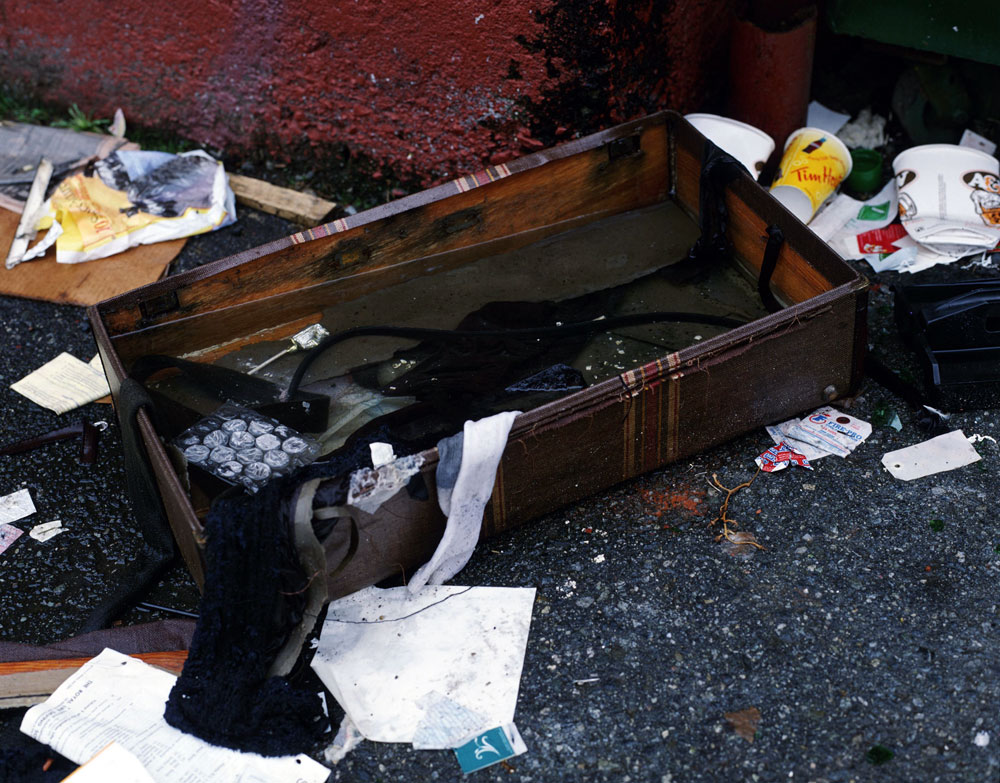
This quote from the latest issue of CineAction (N.84) - whose feature is Robin Wood in Celebration, which includes pieces by William MacGillivray (whose Life Classes was important to Wood) and Olof Hedling - asserts a strong impulse to support a burgeoning and over-looked national cinema in opposition to Hollywood. Even though after reading the Lefebvre book one can get the impression that Harcourt feels that cinema both begins and ends with Lefebvre - he even has another book on Lefebvre (Canadian Film Institute, 1981) – my point is that the endeavor is honorable. I first discovered Harcourt as he was already a recognizable name (I remember seeing one of his books at the CFI office in Ottawa) and, what really caught my eye, is that he is the only Canadian brought up in Raymond Durgnat’s seminal text Films and Feelings. There is this sense of validation associated with seeing Canadians positively recognized in the international film community. Like how in the photographer Jeff Wall’s Rainfilled Suitcase (2001), which mounted light-box can be seen in its vivid glory at the Art Institute of Chicago, where the vintage yellow Tim Hortons coffee cup – Timmy’s being one of Canada’s most identifiable products – becomes a symbol of Canadiana within a nondescript scene. Spotting this detail, like noticing the Harcourt reference, is a pleasant recognition of seeing even just a small part of Canada within great work being discussed in a more international setting. The same applies to Timothy Barnard’s introduction to the new edition of André Bazin’s What is Cinema? where he discuses the peculiarities of reading and translating Bazin into French- and English-Canadian.
 Not that people have an aversion to Canadian films, well, maybe they do. It is just that it is rarely discussed by the heavyweight film-critics. An example of a ‘heavyweight’ is Dave Kehr who on his indispensable blog contributors from around the world put in their two cents on his “weekly column on film history.” His background as discussed in the long-awaited When Movies Mattered is a post-Sarris focus on the transition from classical to post-classical Hollywood with an emphasis on “filmmakers who built on the past, who seemed dedicated not to trampling on the classical model but trying to reconfigure it,” like Cassavetes, Demme, Scorsese, Schrader and Brooks. It’s almost funny how the “uncharted territory” of his DVD reviews includes Swedish silent-films, the long unavailable work of Naruse Mikio and even in his new “Further Research” column in Film Comment – which features un-canonized directors like John H. Auer - there is hardly ever any references to Canadian cinema. On that note I would like to highlight some note-worthy Canadian DVDs that have recently come out: the Eclipse box set The Actuality Dramas of Allan King, Patricia Rozema’s I've Heard the Mermaids Singing, the long unavailable work of Joyce Wieland on a 5-DVD box set by CFMDC, and Daruma Pictures release of Midi Onodera’s video work.
Even as I write this I realize that maybe the lack of serious critical reflection has to do with both relevancy and quality of Canadian cinema. After attending all of the João Pedro Rodrigues films as part of the New Auteurs series at the TIFF Cinematheque and watching Terrence Malick’s The Tree of Life; it is obvious that they are more formally invigorating and conversation worthy. In To Die Like a Man when Tonia (Fernandos Santos) goes off into the fairytale forest with her boyfriend and the two cross-dressers where they sit down – the screen becomes a roseate tableaux - and listen to Baby Dee’s Cavalry; the effect is hypnotizing. As Brad Deane puts it, it’s cinema. This is a long way away from watching an old tape and sitting on an uncomfortable chair with big clunky headphones at the Film Reference Library. Even Lefebvre writes about his work “What I’ve wanted to insist upon and to apply to my films… is the right to adopt a small scale, to make films that don’t claim to be absolute masterpieces.”
I guess what I am trying to advocate for, at least in my own writing, is a mediation between art-house, Hollywood and Canadian cinema. But my only concern is that I hope studies in it can become a marketable asset, as say, that of being an expert on Blake Edwards as is the friendly Sam Wasson who has two popular books on the subject and who recently came to the Lightbox to introduce Breakfast at Tiffany's. I want to eventually apply to do my Masters in Film Studies at the University of Toronto in the hopes, for now at least, to write about the renegade Québécois filmmaker Gilles Carles; as well, I would like to explore certain key Québécois films and their similarities with the work of Robert Altman; and, what exactly constitutes Québécois film language. I would hope that it would be a rich experience for both myself and for other people to hear and read about. – David Davidson
**The Canadian Director series is part of the TIFF Cinematheque publications that includes books on Jean Pierre Lefebvre, Don Owen, Pierre Perrault, Michel Brault and Allan King; as well, in a different series, books on Jack Chambers, Peter Mettler, and Joyce Wieland. While the Canadian Cinema series, which are extended textual analysis of key Canadian films, has books so far on A History of Violence, Le Déclin de l'empire américain, The Adjuster, A Married Couple, The Far Shore and My Winnipeg. These books are available at the TIFF.Shop.
***The Film Reference Library at the TIFF Bell Lightbox has L'Âge des images I, III, IV and V. Though the FRL will be closed for July and August, you can always set up an appointment with Eve to view their collection. The NFB Mediatheque has both of Lefebvre’s NFB films: Mon amie Pierrette (1967) and Jusqu’au Coeur (1968).


