Wednesday, October 5, 2011

Himizu Review

This is the first guest contribution by Oded Aronson. - D.D.

Himizu (Shion Sono, 2011)
**** (Masterpiece)
Ruins lie everywhere. Dust and smashed objects litter the atmosphere. A teenager stands in the middle holding a gun to his own head. The wind gradually becomes louder and dissolves into the sound of a million voices of the dead crying for mercy. The boy shoots himself. Blood streams out of his head, leaving a long red trail. He lies in the field, no longer remembering who he is. Then he wakes up.

The boy’s name is Yuichi Sumida, and his family has been left without any means of income because of a tsunami that has all but demolished his hometown. His family’s business is a boat rental company, which has not had any profits at all since the tsunami. Yuichi’s father is a nasty, abusive harpy who storms home at midnight most of the time and proceeds to beat him up then complain that he never wanted a child. Yuichi’s mother has run away from her husband with her lover due to years of frustration and blood, so Yuichi is left to fend for himself.

His financial situation is so poor that eventually he is forced to leave school so that he can work at the boathouse in the vain hope that someone will rent a boat. One of his classmates, Keiko Chizawa, has had a crush on him for as long as she can remember, and searches for him. Keiko’s family also has their own troubles; her parents want to kill her so that they can collect insurance money, and are in the process of building their own guillotine. Keiko is forced to pass the guillotine every day and notice its development.

For the first two thirds of the story, there is frequent juxtaposition of dark humour and straight faced drama. The attitudes of the two main characters play a role in that juxtaposition. Yuichi has become so emotionally inured due to the beatings he receives from his father that he has retreated into a dark, nearly silent shell. He is almost completely unwilling to open himself up to anyone or anything. On the other hand, Keiko’s lifelong preparation for her upcoming death at the hands of her parents has somehow opened up wells of emotion in her, and she feels as though she has to cheer people up for as long as she lives. Keiko goes far beyond optimism into the realm of desperation, which then becomes so pronounced that it feels like optimism again.

The two clash, but Keiko tries to become friends with Yuichi despite his protestations. Eventually, they end up sharing most of their scenes to the extent that everybody thinks of them as friends. Although Yuichi remains sullen, her presence does seem to have some kind of positive effect on the people other than Yuichi. Keiko tries to revamp the boat house. As a result, it finally begins to have some business. Yuichi’s father comes home for the last time one night and suddenly things become even more complicated than before.

The last part of the movie is emotionally brutal. Not all people will enjoy the descent into darkness, but it is appropriate for the material, and leads to a powerful climax that will be a source of joy for anyone who is in love with the movies. I strongly recommend Himizu, the best of the 25 movies I watched at this year’s TIFF. - Oded Aronson

Thursday, September 29, 2011

Le drôle Woody Allen (and Film Comedy Scholarship)

For my parents Alysse Weinberg and Michael Davidson who first turned me towards film and who encouraged me to pursue it as an academic endeavor. – D.D.

Title: Comment Woody Allen peut change votre vie
Author: Éric Vartzbed
Publisher: Éditions du Seuil
Pages: 112
Price: 12 €
Title: Another Fine Mess: A History of American Film Comedy
Author: Saul Austerlitz
Publisher: Chicago Review Press
Pages: 512
Price: $27.95
*****
“Woody Allen’s comedy is art, as all good comedy is.” – Saul Austerlitz
Introduction
With over forty films to his name and a career that spans from 1965 to today, it is hard to pin down Woody Allen. He was born Allen Konigsberg in Brooklyn, 1935, a shabby New York Jew with too much intelligence, wit and neuroses. His career trajectory goes from writing wisecracks for NBC, then Sid Caesar, getting expelled from NYU, performing stand-up, writing screenplays, becoming a film-director, writing short-fiction - and he still finds time to play the clarinet! His current wife is Soon-Yi Previn.

In his films, Allen’s characters are burdened by the accompanying neuroses of their privileged position. In his world, the people who have a belief in some kind of faith seem better off then their atheist counterparts. His protagonists give a whole new meaning to the Hitchcockian character-type of the man who knew too much. And like one of Hitchcock’s wrong men they are born into a godless world where things eventually go awry. Everything and anything can happen, ranging from murder to finding love. And what is most emphasized is the role chance plays in our lives. The films are funny too.

As a filmmaker he has worked with some of Hollywood’s best actors and actresses like Owen Wilson and Rachel McAdams, Anthony Hopkins and Naomi Watts, Larry David and Evan Rachel Wood, Javier Bardem and Penélope Cruz, just to name a few. Everybody wants to work with him. The cast of his upcoming Rome-set film The Bob Decameron includes Jesse Eisenberg, Ellen Page, Greta Gerwig and Allen himself (who will be returning in front of the camera). Allen is not the only talented one; he has worked with some of the best cinematographers out there such as Gordon Willis, Carlo Di Palma, Sven Nykvist, Vilmos Zsigmond and Darius Khondji. He writes his own screenplays too.

“But what made Bergman great – and there were guys who were working the same side of the street but who were not great – was that he was show business, he was an entertainer,” according to Allen*, who like Bergman, is one a master entertainer-philosophers that have blessed the seventh art. Allen seamlessly blends pathos and comedy to magical results. For example, in his latest film Midnight in Paris – one of his most profitable films (eighty million dollars worldwide) – this middle-aged screenwriter (played by Owen Wilson) who wants to start writing serious literature is visiting Paris with his wife and her parents. At night he decides to wander off and mysteriously finds himself traveling back in time to the the 1920s and then to the belle époque. The lightness of touch, the ease of the actors, the magical mood all leads me to believe this is the high point of his late European period.

Allen has many supporters: Jean-Luc Godard** made a wonderful little documentary Meetin’ WA (1986), an interview between the two directors that Godard interrupts with jazzy inter-titles and film stills. And he has also starred in films by Paul Mazursky and Martin Ritt. Some smart people have written about him such as Robert Benayoun (Woody Allen, au-delà du language), John Baxter, Raymond Durgnat, Foster Hirsch, Jean-Pierre Coursodon, Richard Brody, Jean-Michel Frodon and Richard Schickel ; while real life intellectuals like Marshal McLuhan and Susan Sontag have also appeared in his films. In regards to the man himself voicing his thoughts, there is the Stig Björkman and Eric Lax interview books.

Allen’s films begin like novels: there is always that black screen set to soothing jazz music, punctuated by the credits written in Allen’s signature Windsor font. The experience of watching the credits change is akin to flipping through the pages of a book***. This technique builds excitement for a new Allen adventure within the viewer. And then the film begins…
* Woody Allen by Kent Jones, which included an interview, in Film Comment (May/June 2011).

** Godard also cast Allen as King Lear in his Shakespeare adaptation. Though Allen, overall, is not really a Cahiers-filmmaker (see Olivier Assayas scathing remarks on Everyone says I love you or Jones on Celebrity). On the other hand, Allen seems to have found a home over at the more generous Positif with his two latest films making it onto their cover.

*** This literary analogy is only made stronger as Allen is the author of a vast collection of short stories that can be found in The New Yorker and collected in books like Mere Anarchy, The Insanity Defense and Getting Even. Allen also recently contributed to The Guardian a piece on his five favorite books (The Catcher in the Rye, Really the Blues, The World of SJ Perelman, Epitaph of a Small Winner, and Elia Kazan: A Biography), which show the influence books had on him as a person.
*****
“One’s important encounters are the spice of life.” - Éric Vartzbed

How Can Woody Allen Change Your Life?
I first discovered Allen in my early university years. I was studying Psychology and Film Studies at the University of Ottawa. On my summer off, I stumbled upon Annie Hall where in it Allen represented what is commonly known as an auteur: he was the star, director, and screenwriter of the film and it was clear that this Alvy Singer character was loosely autobiographical. That month I watched Annie Hall maybe five or six times, making sure to scribble down on a little notepad all of the cultural references that I was not being taught in university. Over the summer I tried to see all of his films, which coincided with a blossoming interest in cinema, where I was also discovering the films of Alfred Hitchcock and John Ford. Since then I have gone to see all of Allen’s new films during their first-run releases, starting with Vickie Christina Barcelona (2008). I was also fortunate to go to Lyon, France that summer for some French language and culture classes. Where coincidently the Hangar Lumière (the birthplace of European cinema) was having an Allen retrospective. I didn’t need anything else…

The psychoanalyst Éric Vartzbed in his wonderful little French-language book Comment Woody Allen peut changer votre vie? talks about the way certain films seen at particular, and impressionable, times in ones life can influence someone personally, and that these small realizations and pleasures should be acknowledged and cherished. For Vartzbed, one of those occurrences happened to be when he saw Allen’s Another Woman*. Being a practitioner of psychology (at the Réseau Santé Valais) Vartzbed better understands the difficulty that Hope (Mia Farrow) is going through and the difficulty of confessing intimate and repressed thought. Allen in Another Woman and throughout his career proves to be a director of anxieties. Not only of presenting characters with anxieties but in how they can be debilitating in certain situations and what coping mechanism people come up with**. This is one of the subjects explored in the book, with particular characters from different films being used as case studies for the psychoanalyst to examine as he dissects the unconscious of Allen and his films through quoting other theorist like Sigmund Freud, Eric Fromm and Jacques Lacan.

Just as Allen has changed the lives of many people (Vartzbed’s, my own), Allen too was affected by the movies. The director? You’ve guessed it: Ingmar Bergman. Allen’s thoughts on Monika: “I came away reliving only the moment Harriet Andersson disrobed.” On The Naked Night, “Although the story was not totally focused, the work was directed with such immense talent that I sat forward for an hour and a half, my eyes bulging.” On Wild Strawberries, “I still recall my mouth dry and my heart pounding away from the first uncanny dream sequence to the last serene close-up.” On The Seventh Seal (“always my favorite”), “The flagellants, the burning of the witch (worthy of Carl Dreyer) and the finale, as Death dances off with all the doomed people to the nether lands is one of the most memorable shots in all movies.”***
* This first section of the book Comment Woody Allen a changé ma vie [How Woody Allen changed my life] is part self-analysis, while in the next section Comme Woody Allen peut changer votre vie [How Can Woody Allen change your life] Vartzbed tries to tease out life lessons and particular morals from the films themselves, and he is quite good at it.

** The role of the analyst in the films is also analyzed. Vartzbed sees complacency on their part where the session’s goal is no longer psychological progress but that of a routine, which would become a reoccurring gag for Allen. Like the wisecrack in Sleepers, “I haven’t seen my shrink for two-hundred years. If I had been going all of this time then I would almost be cured.”

*** From Woody Allen’s review of Ingmar Bergman’s autobiography The Magic Lantern.
*****
On to the Book
Vartzbed prose is fun. It isn’t too academic, though it is smart and well written. Vartzbed knows how to translate cinematic gags and jokes onto the page; there are a lot of exclamation marks. The title of the book makes it seem like it is one of those goofy self-help books, which it isn’t. How Can Woody Allen change your life is a serious look at Allen’s films, who for Vartzbed, are in the same league as the work of the great European writers and philosophers like Marcel Proust, Antoine de Saint-Exupéry (Le Petit Prince), Molière and Emil Cioran.

Vartzbed quotes Allen from an interview with Robert Benayoun from Positif (which can be found in the Grand Interview issue) on Manhattan, “It isn’t New York that I am attacking, it’s the root of evil. It’s not a film that is happy to say: “Clean Central Park.” It is a film that is saying: “Clean up your emotional lives, or else you will never be able to clean Central Park.” Another insightful quote from the interview is, “My hero Isaac Davis prefers to think of the time past then the terrible things that are ruining the city today, he misses the time when New York looked like how you see it in the old sepia photographs, when it was as simple and romantic as Gershwin’s music.”

Vartzbed sees Allen humor as a defensive-mechanism - a way to make the people around him happy - while the sources of frustration is not coming from the exterior but the interior. For Allen, “desire and counter-desire is the same thing,” like the Julia Roberts character in Everyone Says I Love You who, “seems to prefer the dream of a potential happiness then the “closure” that comes with it’s realization.” This self-defeating impulse goes quite well with the famous Annie Hall* quip, “I would never be a part of a club that will have someone like me as a member.”

Vatzbed sees Zelig as Allen’s most political film, “Allen describes the mimetic passion that is central to in all the totalitarian phenomenon.” As well on Allen’s politics, “In the Allen universe, politics as they are are placed onto the second-plane ; the point of view is psychological and existential.”**

Allen shows the gap between what people say and what they mean, “with his style, he expresses the essence of the human life: our condition of the denatured animal, exiled in a landscape of signs, lost into language.” There is too much justification of bad behavior through a mise-en-mots, like the ‘natural’ and ‘happy’ divorce at the beginning of Husbands and Wives. And there seems to be an emphasis for Allen on capturing the complexity and contradiction of human feelings*** like when Isacc is running to meet Tracy at the end of Manhattan. One would want the two to get-back together but there are so many factors against that from happening. Even so we are still cheering Allen on.
* Annie Hall’s original title is Anhedonia, which means the inability to experience pleasure.

** Which makes Allen different then a more left-wing actor-director like Albert Brooks whose most recent film Looking for Humor in the Middle East (2005) is very critical of America’s foreign policy, which might have caused the films minor distribution and reception. Brooks also has a new fictional novel about a futuristic dystopian society 2030.

*** The subject of emotional validity is important to Allen which he highlights, as well as the disparities of critical reception, in the Eric Lax interview book:
"But the criticism that can be made of any film can be refuted from another point of view and, in the critical community, often is. So I'm not really interested in these analyses and discussions because I feel they're all rationalizations to justify an emotional response to the work. Two critics can see the same film and write opposite reviews and both are completely correct in their reasoning. So what do you have? Two conflicting intelligent points of view. So when I show my film to two or three friends in my screening room before I put it out, I'd like to hear their emotional response and not their cerebral analysis."
*****
Career Periods:
What’s Up, Tiger Lily
(1966) – Love and Death (1975) /
Annie Hall (1977) – Husbands and Wives (1992) /
Manhattan Murder Mystery (1993) – Melinda and Melinda (2004) /
Match Point (2005) – Midnight in Paris (2011)

With over forty films to his credits it is hard to pin down Allen, but to make an attempt, one can see view his films in four distinct periods:
(1) The early funny ones: these films have a loose structure – the comparison to a stand-up sketch is frequently brought up - and include more physical comedic gags and non sequitur one-liners. This stage starts with What’s New Pussycat (1965 ; he wrote the original screenplay though didn’t direct the film) and What’s Up, Tiger Lily? (1966; a re-dubbing of a Japanese action film) and ends with Love and Death (1975). As Saul Auterlitz brings up in Another Fine Mess, “Nonethless, Allen’s yearning for gravity is hardly unfamiliar; we have already borne witness to similar ambitions from Charlie Chaplin, Jerry Lewis and numerous others. To penetrate deeper into comedy one must grow more serious.” This brings us to Allen’s second period.

(2) The films of the first period were made away from Allen’s beloved Manhattan. So when Allen finally returned to make a movie in Manhattan, the results were astounding [cf. Annie Hall (1977)]. Through the help of his cinematographer Gordon Willis, Allen learnt to be a more stylistic and resourceful director, as well he learnt more about narrative cohesion from his editor Ralph Rosenblum. But drama then began to take precedence. The attempted suicide in Interiors (1978) through carbon monoxide poisoning created one of the most haunting images in Allen’s cinema. Who can forget Eve (Geraldine Page) turning the oven on high and sealing the cracks in the door with masking tape? With such a bold shift in tone Allen was detaching himself from his early ‘funny’ films. He was not going to continue to conform to expectations and simply make comedies, which would be the subject of Stardust Memories (1980). On a whole, this period is marked more by its dramas even though there are moments of humor in them. But even though some of the films were fluffier the overall tone is more pessimistic, which seems ingrained in the design of the films black-and-white cinematography - which Allen used more in this period then any of the others - that gives off a darker atmosphere. The mood is one of social oppression that recalls the anxieties of the post-WWII crime thrillers (The Maltese Falcon, The Big Sleep). This period also coincides with Allen’s relationship with his wife Mia Farrow who they collaborated together in thirteen films. Starting with A Midsummer Night’s Sex Comedy (1982) and ended in January 1992 when she discovered sexually explicit photos of her adopted daughter Soon-Yi in Allen’s room. Their final film together is Husbands and Wives (1992). Farrow is now more concerned with humanitarian concerns, which was the subject of Alice.

(3) The end of the Farrow-Allen relationship brings us to Allen’s next period: “From comedic genius and New York icon to sleazeball and degenerate: Woody Allen’s fall was precipitous,” says Austerlitz. These post-Farrow films seem like a return to a more crowd-pleasing fare, even though they are pretty adventurous for Allen in terms of both content and form: starting with the noir Manhattan Murder Mysteries (1993), to a musical Everyone Says I Love You (1996) to the last film in this period the bifurcated Melinda and Melinda (2004). In these films Allen is exploring his interest in the writing of creative fiction as well as his ideas pertaining to chance and faith. There is also the European jazz tour documentary Wild Man Blues (1997) by Barbara Kopple, which is a striking project as it anticipates Allen’s next period.

(4) The final period, which brings us to today: the death of Allen’s longtime producer Jean Doumanian led him to take European financing. This move expanded the scope of the Allenian universe to Barcelona (Vicky Christina Barcelona), to London (Match Point) and to Paris (Midnight in Paris). The tennis metaphor in Match Point of a ball hitting a net relates to faith because one can never possibly know whether the ball will go over it or not. This indelible image of a round neon-yellow tennis ball hitting a net and spinning upwards as it almost floats in mid-air plays an important role in this latest period as the uncertainty of fate will lace all of Allen’s next films. Moving onward Allen shows himself to be more interested in open-endings and capturing people in indecisive moments. Though even amidst all this chaos and contradictions some people can still find meaning and happiness, which is a thought worth cherishing.
*****
“It is a cliché that clowns cry; it has rarely been admitted that they might also think.” – Gerald Mast

Film Comedy Scholarship
Gerald Mast’s The Comic Mind (1979), for me, is the foundation of film comedy scholarship. It looks at the subject of film comedy beginning with the breed of clown that “translated comedy into cinematic terms” and tries to figure out what is the structure of film comedy in cinema, what are it’s roots, what is the goal of comedy, and who were the individuals that had the largest impact on it. While someone like Andrew Sarris was building upon James Agee’s The Golden Age of Comedy* (1949) when he compiled the comic section Make Way For The Clowns! in The American Cinema (1968), on the other hand, Mast’s pantheon is reserved for strictly comedians of the world that defined the seventh art in its formative years: Mack Sennet, Charlie Chaplin, Harold Lloyd, Ernst Lubitsch, René Clair and Jean Renoir.

One of Mast’s points is that, “There has been little attempt to draw comic films into this mainstream of twentieth-century artistic thought.” Mast places Film Comedy alongside New Comedy and Aristophanic Old Comedy as well with purely ‘cinematic’ forms by, for example, creating parallels between Samuel Beckett’s Waiting for Godot and Charlie Chaplin (e.g. the bowler hat, the comic business) or by comparing Renoir to Shakespeare. Arguing with and against people like Wylie Sypher, Elder Olson and Henri Bergson, Mast’s argues for film comedy to be discussed seriously and lays the foundation scholarship in discussing it at the birth of film as medium by emphasizing silent-films and the works created at the transition to the talkie and afterwards. As well, Mast’s adds, “And so this book is evaluative, not just descriptive. It begins with the intention of revealing serious thought in the comic film form. And it assumes that the best comedies (even the funniest comedies) are those which achieve something that is more than simply funny.”

The eight comic film plots and basic structures, according to Mast, that are central to Film Comedy are as follows:
(1) The young lovers finally wed despite the obstacles to their union, and the amorous conclusion grows directly and exclusively from amorous complications.
(2) The film’s structure can be an intentional parody or burlesque of some other film or genre of films, the parodic plot is deliberately contrived and artificial.
(3) The reductio ad absurdum where a simple human mistake or social question is magnified, reducing the action to chaos and the social question to absurdity.
(4) An investigation of the workings of a particular society – usually through multileveled plots – comparing the responses of one social group or class with those of another, contrasting people’s different responses to the same stimuli and similar responses to different stimuli.
(5) A structure unified by a central figure (pícaro) of the film’s action, also known as the comedian comedy, which is built around the comedians persona.
(6) The “riffing” or “improvised and anomalous gaggery” plot that takes an initial situation, an object and then runs off with a series of gags that revolve around this central situation where pace and motion become unifying principles in themselves.
(7) The central character either chooses to perform or is forced to accept a difficult task, often risking his life in the process within a “comic climate” (built signs that let the audience know that he is watching a comedy).
(8) The story of the central figure who eventually discovers an error he has been committing in the course of his life, also within a “comic climate.”
To expand on Mast’s study on film comedy there is Professor Emeritus from Harvard University Stanley Cavell’s Pursuits of Happiness: The Hollywood Comedy of Remarriage (1981) – or one can look towards James Harvey’s Romantic Comedy in Hollywood: From Lubitsch to Sturges** (1987) for a similar study of screwball comedies. Though my examination will focus on Cavell who in Pursuits of Happiness takes a long hard look at seven films or as he calls them “spiritual parables”: Preston Sturges’ The Lady Eve (1941), Frank Capra’s It Happened One Night (1934), Howard Hawks’ Bringing Up Baby (1938) and His Girl Friday (1940), George Cukor’s The Philadelphia Story (1940) and Adam’s Rib (1949), and Leo McCarey’s The Awful Truth (1937). These Hollywood talkies made between 1934 and 1949, for Cavell, constitute a particular genre: the comedy of remarriage - an inheritor of the Shakespearean romantic comedy (The Winter’s Tale). Cavell describes this group of films as, “the principal group of Hollywood comedies after the advent of sound and therewith one definitive achievement in the history of the art of film.”

Here is Cavell explaining what exactly is at heart of this comedy of remarriage genre:
“[T]he achievement of human happiness requires not the perennial and fuller satisfaction of our needs as they stand but the examination and transformation of those needs (…) [Which] applies only in contexts in which there is satisfaction enough, in which something like luxury and leisure, something beyond the bare necessities, is an issue (…) This is why our films must on the whole take settings of unmistakable wealth; the people in them have the leisure to talk about human happiness, hence the time to deprive themselves of it unnecessarily (…) It is as essential for the settings of our films to be such that we can expect the characters in them to take the time, and take the pains, to converse intelligently and playfully about themselves and about one another as it is essential for the settings and characters of classical tragedy to be such that we can expect high poetry from them (…) it will be a virtue of our heroes to be willing to suffer a certain indignity, as if what stands in the way of change, psychologically speaking, is a false dignity; or, socially speaking, as if the dignity of one part of society is the cause of the opposite part’s indignity, a sure sign of a disordered state of affairs (…) The conversations of what I call the genre of remarriage is, judging from the films I take to define it, of a sort that leads to acknowledgment; to the reconciliation of a genuine forgiveness; a reconciliation so profound as to require the metamorphosis of death and revival, the achievement of a new perspective on existence; a perspective that presents itself as a place, one removed from the city of confusion and divorce.”
Cavell focuses on the heroine and places them in their historical-cultural-social context. This woman is a continuation of the feminism that is rooted in the Seneca Falls Convention in 1848 and women gaining the right to vote back in 1920. As Cavell puts it,
“The genre it projected, on my interpretation, can be said to require the creation of a new woman, or the new creation of a woman, something I describe as a new creation of the human. If the genre is as definitive of sounds comedy as I take it to be, and if the feature of the creation of the woman is as definitive of the genre as I take it to be, then this phase of the history of cinema is bound up with a phase in the history of the consciousness of women (…) Our films may be understood as parables of a phase of the development of consciousness at which the struggle is for the reciprocity or equality of consciousness between a woman and a man, a study of the conditions under which this fight for recognition (as Hegel put it) or demand for acknowledgment (as I have put it) is a struggle for mutual freedom, especially of the views each holds of the other.”
In his textual analysis Cavell provides examples of possible interpretations for the motivations of the characters behavior as well as the directors intentions and then decides on the choice that appears the most rational. The important philosophers for Cavell that he references are Ralph Waldo Emerson and Henry David Thoreau. And this radical juxtaposition of Immanuel Kant (philosophy) and Frank Capra (film) is part of Cavell’s uninhibited rejoice of Classical Hollywood films (à la Robert Warshow) mixed with his university context. Cavell articulates the reasons for why he writes*** and that, for him, “philosophy is to be understood, however else, aesthetically.” He provides other Depression-era fairy tale films that could have been examined as well he provides other contemporary ‘remarriage’ films like Starting Over, An Unmarried Woman and Kramer and Kramer. And to posit some more recent titles: Eyes Wide Shut, Hall Pass, and Certified Copy.
* The comedians highlighted by Sarris were W.C. Fields, Jerry Lewis, Harold Lloyd, The Marx Brothers and Mae West. Though as Gregg Rickman notes in the introduction to The Film Comedy Reader: “Agee also established a starring comedian’s talents and personality as the major factor by which to judge screen comedy,” and that there were “[s]ilent comedians dismissed by Agee, meanwhile, such as Roscoe “Fatty” Arbuckle and Charley Chase, have taken years to find new partisans.”

** On this period James Harvey writes, “Nineteen thirty-four was the turning point, the year when it first began to seem as if the Hollywood movie had invented the romantic comedy. Suddenly in The Thin Man and It Happened One Night and The Gay Divorcee, in actors like Dunne and Lombard and Grant, Powell and Loy and Astaire – all the familiar, borrowed elements came together in combinations so new and fresh, so eclectic, and so intrinsically movielike that familiarity became revelation.”

*** Cavell, “one learns that without this trust in one’s experience, expressed as a willingness to find words for it, without thus taking an interest in it, one is without authority in one’s own experience.” He also uses really ordinary language to describe complex ideas by renowned philosophers.
*****
Twenty-First Century Jokers
What are the well-researched and well-written film-comedy books of our time? Which ones are the most up-to-date and insightful? And which ones are the most likely to teach you about a comic-director or -star that one is unfamiliar with? Or make you re-appraise a personality originally viewed as fluff?

If The Comic Mind and Pursuits of Happiness (and/or Romantic Comedy in Hollywood) lay the foundation of film comedy as a field of study in book-form, then it is in The Film Comedy Reader and Another Fine Mess: A History of American Film Comedy that the subject as a whole is brought into the twenty-first century*.

One thing that The Film Comedy Reader (2006) edited by Gregg Rickman is interested in is “how ideas develop over time,” as it anthologizes essays about film-comedy from the beginning to the present day. Some examples include: James Agee’s Comedy’s Greatest Era and Buster Keaton's What Are the Six Ages of Comedy moving forward with Raymond Durgnat on Vincente Minnelli's Bells Are Ringing and Robin Wood on Gays and '90s Comedy. Rickman points out differences in the writing about film-comedy, “Some further background on the different schools of film theory which inflect our readings of cinema follows. To briefly summarize, a divide exist between those who define the comic film in terms of its narrative pattern, and those who define it in terms of its goal, the physical act of laughter,” which is worth considering.

Rickman personal entries are on Some Like It Hot ("Wilder's characters more often than not are con artists, manipulators of other people's emotions, usually through their skilled use of language."), Bamboozled ["That Bamboozled indulges in a "rhetoric of blame" (Edward Said's phrase) cannot be doubted. Yet Spike Lee can be thought of as a critic of blackface minstrelsy in line with Imamu Amiri Baraka (LeRoi Jones)."], The Producers [""Putting on a show" has been sufficient plot justification for many a great musical comedy and it may perhaps be in this particular subgenre (rather than as a satirist or performer) Brooks may ultimately best be remembered."] and Runaway Bride ("This reduction of a privileged moment in film history to a plot device, a gimmick, is just another reason It Happened One Night will still be debated a hundred years from now, while Runaway Bride will be little more than a footnote to its star's career.")

While Saul Austerlitz's book Another Fine Mess: A History of American Film Comedy (2010) is one of the broadest in scope and up-to-date books on the subject. For Austerlitz the important film is Preston Sturge’s Sullivan’s Travels. To make comedies or to make dramas? Now that is the question. In the book Austerlitz posits thirty pantheon personalities that have been important to film comedy. From Chaplin to Judd Apatow by way of Laurel & Hardy and Katharine Hepburn and Jerry Lewis**, Mel Brooks and Albert Brooks and Richard Pryor, Steven Martin and Eddie Murphy and Ben Stiller. As well there are one-hundred-and-five shorter entries on oddities, one-shots and newcomers: Nora Ephron, Jim Jarmusch, Robin Williams, the Farrelly’s, Whit Stillman, Paul Rudd, John Belushi, Jayne Mansfield, Mike Nichols, Tyler Perry et cetera.

What else does Austerlitz have to say on Allen (who receives a longer entry): Well that he sees Allen as a hybrid child between Bob Hope and Ingmar Bergman. On Allen’s early routines, “Allen was modeling himself after satirist Mort Sahl, but rather than Sahl’s didja-see-this-article shtick, Allen was punching above his intellectual weight, providing his own freewheeling annotations to Freud and Dostoyevsky.” And that with Annie Hall, “Allen created something entirely new: a somber comedy,” where “the humor, ultimately, is inseparable from the sentiment.”

Allen bridges the long-standing tradition of nonsense in film history that begins with the Marx Brothers (whose Duck Soup appears in a segment in Crimes and Misdemeanors) and passes through Charlie Chaplin, Billy Wilder, Blake Edwards and Robert Altman. Allen’s oeuvre has variations of all of Mast’s eight comic plot structures and his best characters reach Cavell’s criteria of, “the achievement of a new perspective on existence.” With each new film – a reliable Woody every year - the connections and links between the works are getting denser. As Allen creates continuity between the films and different career periods there is also an evolution and maturation where he places different emphasis on certain behavior and ideas. Where his work was once more parody and slapstick, it has evolved going into light-hearted jest, drama and philosophical exploration. Geographically going from the micro to the macro. Allen is creating his own Infinite Jest, to use a David Foster Wallace expression. The somber comedy*** that Allen popularized with Annie Hall has been the mise en abyme of his carreer and its influence on contemporary auteur film comedy (Apatow, Solondz) might just be his legacy. - David Davidson
* Though I should bring up here Laurence Maslon and Michael Cantor’s Make ‘Em Laugh: The Funny Business of America (2008) whose focus is more multi-disciplinary as it looks at comedy from the position of stand-up, talk-shows, Saturday Night Live, comedians, television series, and film. And to include an eccentricity in film comedy scholarship, I am going to suggest, Jonathan Rosenbaum’s catalogue for a series he programmed for the Viennale, The Unquiet American: Transgressive Comedies from the U.S. (2009), which includes a long introduction (where he explains his selection criteria), eleven re-published essays, and capsules for fifty-five films from Owen Land’s On the Marriage Broker Joke as Cited by Sigmmund Freud in Wit and its relation to the Unconscious, or Can the Avant-Garde Artist be Whole (1979) to John Waters’ Hairspray (1988).

** There was a time, I believe, when the cinephilic debates were over Jerry Lewis or Woody Allen. Just as, I imagine, there was a time that you have had to prefer Chaplin or Keaton. Whil now the directors you have to align yourself with are Todd Philips, Judd Apatow or the Farrelly’s. My response: I just don’t know why some people can’t just get a long. From the above list, the only director that I have a serious problems with is Todd Philips whose Old School I liked but I thought the Hangover is abysmal with its two-dimensional characters, racism and homophobia - I could not be bothered to go watch the sequel.

*** And two unlikely directors have recently pronounced their appreciation of Allen’s films: Monte Hellman and Francis Coppola.

Monday, August 15, 2011

A Woman’s Work is Rarely Done (or Backwards in Heels)

This is the second guest contribution from Daniel Gallay. – D.D.

For Andréa Picard

“And there will be poets like this! When the eternal slavery of Women is destroyed, when she lives for herself and through herself, when man – up till now abominable – will have set her free, she will be a poet as well! Woman will discover the unknown! Will her world of ideas differ from ours? She will discover strange things, unfathomable, repulsive, delightful; we will accept and understand them.”
-- Arthur Rimbaud in a letter to Paul Demeny, May 15, 1871


I have had many experiences viewing films that have expanded my consciousness. The films of Paolo Gioli and Joseph Cornell come to mind, as do Welles, Warhol, Rivette, Antonioni, and, of course, Rossellini. These artists have all offered me tremendous experiences. The most important experiences I’ve yet had, however, have been through the work of women filmmakers. The films of Catherine Breillat, for example, have impacted me immensely. From her I learned, among other things, that feminism could be as faulty as chauvinism. By that I mean that within chauvinism, a woman must be a man’s version of a woman, but within feminism, a woman must often be a woman’s version of a man. (To this I’ll add that from her films I learned that the only thing I truly know about women is that I’m not one.) From that I understood that all things and all circumstances must be viewed with respect for their own individual content. This, I find, is achieved nowhere better than in the films of female directors.
Films with this approach that immediately come to mind are Glimpses of the Garden and Lights by Marie Menken. In these films there is a sensitive observation and respect for the inherent content of the subjects of these films, in this case a garden and lights. These things do not have their own consciousness, of course, but they are still accepted and respected by Menken if only because they exist. The presence that permeates these films can also be sensed, in relation to performers this time, in the films of Agnès Varda and Ida Lupino, particularly in the climactic scenes of the latter’s The Bigamist and The Hitchhiker. Chantal Akerman and Tacita Dean, too, take this approach to beautiful extremes with the huge, spiritual gulps of time and subject in their work. To elaborate on this further, however, I will touch on what I find to be one of the finest examples of this particular kind of filmmaking, the films of Joyce Wieland.

In her short work, such as Sailboat, Birds at Sunrise, or Rat Life and Diet in North America, there is a constant presence of acceptance. Even in Barbara’s Blindness, there seems to be an acceptance of the found film footage she is editing. In terms of acceptance itself, anyone who has experienced either side of true acceptance knows the courage the act takes. It calls for a steely nerve and a concrete, dignified sense of self. This authentic sense of acceptance is very present in her one feature length film, The Far Shore, although in this case with several other elements also at play. Too “normal” for the avant-garde and too “weird” for the mainstream, The Far Shore is a generally unknown and unseen film that easily stands beside her greatest accomplishments as an artist. Like her quilt works, it intelligently and subversively reclaims something dismissively relegated to the domain of the woman. In the case of the quilts, it is “woman’s work” and in the case of The Far Shore, it is the “woman’s film” – the melodrama. Within the structures of this genre, she speaks to the nature of the artist in Canada, the relationship between Anglophones and Francophones, but most importantly, the place of the Free Woman (in a mental and emotional sense, at least) in modern society. She does this in a number of ways – through abstraction and satire and through her tremendous compositions – but mainly through that very essential and fine edged acceptance. Most notably, it is visible in the performances, or more accurately said, the performers. This is due to a very intricate relationship that, I think, lies at the heart of these films. In The Far Shore (and in many of the other films mentioned here), there are often infinitesimally small gestures visible in the performers that are very affecting. They are of such consequence because they are not emanating from the performers within the artificial construct of the film, but from the person, the human, reacting to the artificial construct of the film. This is very complex, and would be regarded by less sensitive and perceptive artists as mistakes, whereas they are, in fact, triumphs. The main thing this approach accomplishes is that it renders the elements of the film as subjects rather than objects. This permits them dignity, autonomy and true vitality. These acts are not of forcing things into existence, but of being aware of what will exist and permitting it to by creating the proper conditions. It’s the reverse of the typically assumed direction; backward, like Ginger Rogers to Fred Astaire. It’s similar, too, to that tremendous, almost Franciscan effort that it takes to actually see the sky – to look up and allow the sky to exist and not have it blotted out by your assumptions. It’s a very selfless act, a sublimely passive one, and, I will say, an importantly feminine one.

I am, by no means, implying that only women are capable of this approach. The films of Rossellini in both film and television could easily be said to have these elements; as can works like Maurice Pialat’s L’Enfance Nue, Jacques Demy’s Model Shop or certain works by Nathaniel Dorsky, like Summerwind. All people have these capacities within them -- like Lorca said, “Mi alma de niña y niño” (My soul is both male and female). Though, in my experience it seems that directors who are women can most wholly and organically accomplish this effect. Experiencing works like these that take such an independent mind have been extraordinary for me. This is in part because they are so delicate, and in part because they are so rare. Until Rimbaud’s statements on the female poet are true to a greater extent, however, the last word will come from one of these rare, courageous and important Free Women: “There should always be a giving to the senses and an enrichment of the soul.... It's a way to tell the truth but it's also a way to open vision, how to see.” (Joyce Wieland).

Daniel Gallay
*****
Further Viewing: The CFMDC’s recently released box set of the complete works of Joyce Wieland is cause for celebration. It is available through the CFMDC.

Further Reading: Johanne Sloan’s recent Canadian Cinema monograph on Wieland’s The Far Shore is an invaluable resource for information on the film. Cinematheque Ontario’s monograph on Wieland is also an excellent source of information on the artist’s work in film. Both are available at the TIFF.Shop at the TIFF Bell Lightbox.

Monday, July 18, 2011

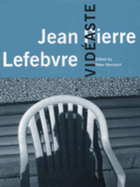
Jean Pierre Lefebvre's video work (a book by Peter Harcourt)

Title: Jean Pierre Lefebvre: Vidéaste*
Series: Canadian Directors**
Author: Peter Harcourt
Publisher: Toronto International Film Festival Group (2001)
Pages: 91
Price: $9.95
*****
“Once we understand its conventions, it can inspire the human delight that we feel for the best of folk art.” – Peter Harcourt

It is topical to review a book on an important Canadian director after writing a post on contemporary Canadian cinema as a way to contextualize today's output alongside its heritage. Peter Harcourt writes that “the films of Jean Pierre Lefebvre helped consolidate a sense in Québec of an emerging national cinema.” And his career begins as a film-critic, like those New Wave guys, though, unlike them, he's still one with regular contributions to 24 images; his latest entry was on Serge Giguère (N. 151). Inspired by Gilles Groulx's Le chat dans le sac (1964), Lefebvre's first film Le révolutionnaire (1965) was one of the first landmarks of Québécois cinema. His National Film Board work is as innovative and beautiful as anything by Gilles Carle and Il ne faut pas mourir pour ca (1967) was the first Canadian film to premiere at Cannes. The Harcourt-Lefebvre book explores the L’Âge des images*** (1994-1995) series that was made after Le fabuleux voyage de l’ange (1991), which was aggressively rejected by the critics, and before his lastest effort the TV movie Le manuscrit érotique (2002). Pertaining to his influence, Piers Handling notes, “Many of the new generation of Anglophone filmmakers – among them Atom Egoyan, Jeremy Podeswa, Bill MacGillivray and Bruno Pacheco – have cited Lefebvre as a formative influence.”

Lefebvre’s examines his early film-going experiences in the ‘40s and ‘50s in Snapshots from Québec and discusses them with warmth and passion; the essay itself is divided into helpful sub-headings which themselves form a narrative: Chance and Neccesity, Candid Eye, Cinema Direct, Cinema Verite, Time/Money, Form/Content. Lefebvre speaks kindly of his mother who “judged films on only on criterion: the film was good if it made her laugh or cry.” After the NFB reign of propaganda and folkloric images, according to Lefebvre, “If the pot began to simmer in 1956, especially at the NFB, it was in 1958 that it boiled over with thirteen short films for the television series Candid Eye on the one hand, and the film Les Raquetteurs shot by Gilles Groulx in collaboration with Michel Brault and Marcel Carrière on the other." The most representative film of the cinema direct period is Gilles Groulx’s Golden Gloves (1961) and for cinéma vérité there is Pierre Perrault’s Pour la Suite du Monde (1963) and Claude Jutra’s A Tout Prendre (1964), according to Lefebvre.

Peter Harcourt’s The Music of Light: The Video Work of Jean Pierre Lefebvre is the centerpiece of the book and it is an analysis of the five episode series L’Âge des images; the episodes are Le Pornolithique, L’Écran invisible, Comment filmer Dieu, Mon chien n’est pas mort, and La Passion de l’innocence. Harcourt examines the genesis of Lefebvre aesthetic approach and its impact - “His films combine the formal authority of Michael Snow with the compassionate humanity of Jean Renoir” - and divides his work into three categories: the personal, the political, and the pastoral. Harcourt compares Lefebvre with Jean-Luc Godard as, at the time, they both had difficulty financing films, which result is a turn towards video, and L’Âge des images is contrasted with Histoire(s) du cinema (1988-1998). The comparison is apt though it might be pushing it as Lefebvre is not as epochal as Jean-Luc Godard, who is described by Raymond Bellour (Trafic) as, “It is through the filmmaker Jean-Luc Godard that the history of cinema - understood as the history of the twentieth century – was forever divided.” And on Godard’s magnum opus Histoire(s) du Cinema, Antoine de Baecque writes, “Unrivalled in terms of its ambition, and aesthetically peerless, it is the culmination of our time.” It is worth mentioning here that the Godard lectures at the Conservatory of Cinematographic Art at Concordia University in the late 1970s, which Lefebvre brings up, are in the process of being put together in a book by the publisher Caboose in Montreal.

The videos in the L’Âge des images seem both narratively and thematically interconnected and the scope is as broad and diverse as an examination of the origins of cosmological time to the Clarence Thomas versus Anita Hill sexual harassment hearing (in the interview it is discusses how this came to be). There are appropirations of Stan Laurel and Oliver Hardy’s Babes in Toyland (1934) and intertextual references to the Group of Seven. L’Écran invisible is about potential and family, in Comment filmer Dieu Lefebvre interviews his cameraman Lionel Simmons, Mon chien n’est pas mort is about Lefebvre's family pup Kathy, and La Passion de l’innocence is described as being “full of longuers,” which are “quiet, slow moments of contemplation that invite participation by the audience.” In the special 100th issue of 24 Images one of the features got ten Québécois directors to expand on the one film that most marked them: Lefebvre answer is Umberto D. for its humanity in harsh circumstances, its focus on ordinary people, and its emphasis on regular gestures.

Some interesting comments from Lefebvre from the interview include: Lefebvre says that, “I’ve always loved wrestling,” which is strange as it is presented almost as one of the most nauseating activities imaginable in Le Pornolithique where, “I also tried to see things through the eyes of Sammy, my newborn baby." While the idea for La Passion de l’innocence came from what was not happening, "I was waiting to shoot a feature film, waiting and waiting and nothing was happening.”

Like all books on Canadian cinema, Lefebvre provides his own perspective on its necessity,
“Consider as well all the filmmakers who personify the concept of national cinema: Renoir, Ford, Hawks, Buñuel (three nations), Eisenstein, Mizoguchi, Kobayashi, Bergman, Lang, Wenders, Renais, Griffith, De Sica, Fellini … you will notice that not only do the stories they recount originate in their environment, but also the form through which they transmit those stories is a perfect amalgam of the specifics of that envinroment and the attendant emotion: the emotion of belonging to a corner of the world, a river bank, a mountain, a lake, an ocean, a season, another human being.”
The reoccurring complaint is there that “either the Canadian cinema would survive or it will become American.” Harcourt and Lefebvre, in short, argue for a stronger presence of experimental cinema against that of the entertainment ideology of Hollywood and this can viewed by the important role experimental film has in Canada from Café Ex in Ottawa to the Winnipeg Film Group to the Images Festival in Toronto to Media City in Windsor to Phil Hoffman's Film Farm and to Isuma Productions. Lefebvre says it best, “Beyond all doubt, the concept of a national creation, and a national cinema, is of great importance as it is linked to the nation of belonging, which is in turn linked to the instinct for survival.”

*****
“Although Robin didn’t much care about the new cinemas that were emerging [in the 1960s] from, say, the previously invisible cultures of Latin America or Canada, the work he was doing on largely the Hollywood product was all part of the burgeoning excitement of the times…. But we continued to have our quarrels. I would get annoyed at some of the more pompous assertions he would make in CineAction!, especially if related to Canadian film.” - Peter Harcourt

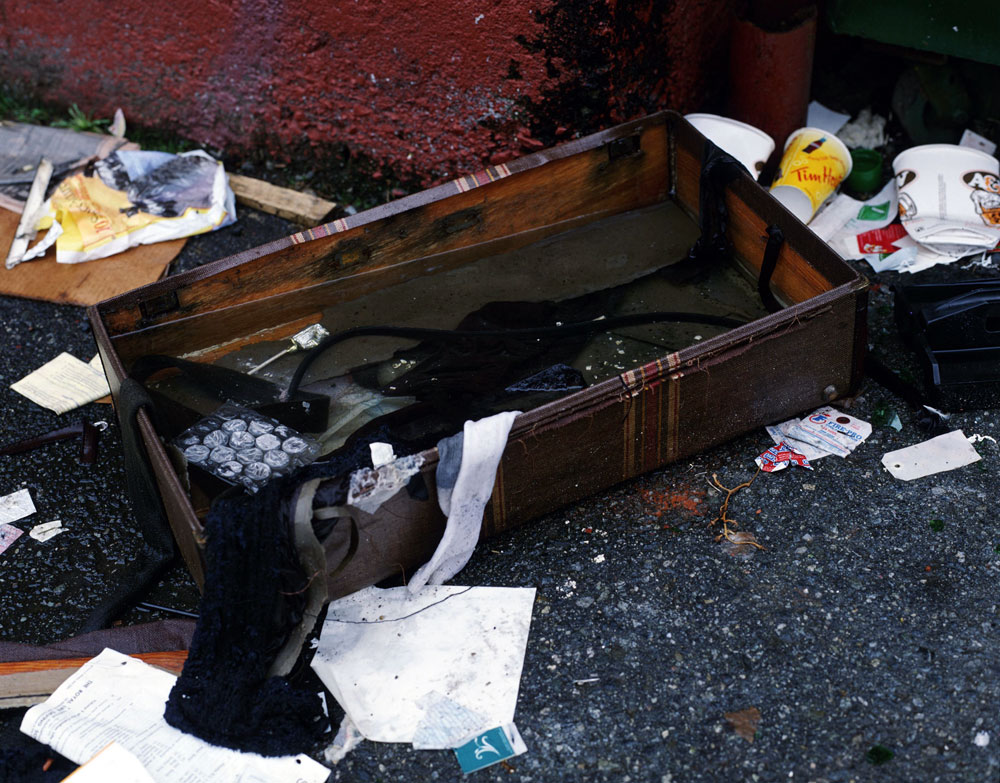
This quote from the latest issue of CineAction (N.84) - whose feature is Robin Wood in Celebration, which includes pieces by William MacGillivray (whose Life Classes was important to Wood) and Olof Hedling - asserts a strong impulse to support a burgeoning and over-looked national cinema in opposition to Hollywood. Even though after reading the Lefebvre book one can get the impression that Harcourt feels that cinema both begins and ends with Lefebvre - he even has another book on Lefebvre (Canadian Film Institute, 1981) – my point is that the endeavor is honorable. I first discovered Harcourt as he was already a recognizable name (I remember seeing one of his books at the CFI office in Ottawa) and, what really caught my eye, is that he is the only Canadian brought up in Raymond Durgnat’s seminal text Films and Feelings. There is this sense of validation associated with seeing Canadians positively recognized in the international film community. Like how in the photographer Jeff Wall’s Rainfilled Suitcase (2001), which mounted light-box can be seen in its vivid glory at the Art Institute of Chicago, where the vintage yellow Tim Hortons coffee cup – Timmy’s being one of Canada’s most identifiable products – becomes a symbol of Canadiana within a nondescript scene. Spotting this detail, like noticing the Harcourt reference, is a pleasant recognition of seeing even just a small part of Canada within great work being discussed in a more international setting. The same applies to Timothy Barnard’s introduction to the new edition of André Bazin’s What is Cinema? where he discuses the peculiarities of reading and translating Bazin into French- and English-Canadian.

Not that people have an aversion to Canadian films, well, maybe they do. It is just that it is rarely discussed by the heavyweight film-critics. An example of a ‘heavyweight’ is Dave Kehr who on his indispensable blog contributors from around the world put in their two cents on his “weekly column on film history.” His background as discussed in the long-awaited When Movies Mattered is a post-Sarris focus on the transition from classical to post-classical Hollywood with an emphasis on “filmmakers who built on the past, who seemed dedicated not to trampling on the classical model but trying to reconfigure it,” like Cassavetes, Demme, Scorsese, Schrader and Brooks. It’s almost funny how the “uncharted territory” of his DVD reviews includes Swedish silent-films, the long unavailable work of Naruse Mikio and even in his new “Further Research” column in Film Comment – which features un-canonized directors like John H. Auer - there is hardly ever any references to Canadian cinema. On that note I would like to highlight some note-worthy Canadian DVDs that have recently come out: the Eclipse box set The Actuality Dramas of Allan King, Patricia Rozema’s I've Heard the Mermaids Singing, the long unavailable work of Joyce Wieland on a 5-DVD box set by CFMDC, and Daruma Pictures release of Midi Onodera’s video work.

Even as I write this I realize that maybe the lack of serious critical reflection has to do with both relevancy and quality of Canadian cinema. After attending all of the João Pedro Rodrigues films as part of the New Auteurs series at the TIFF Cinematheque and watching Terrence Malick’s The Tree of Life; it is obvious that they are more formally invigorating and conversation worthy. In To Die Like a Man when Tonia (Fernandos Santos) goes off into the fairytale forest with her boyfriend and the two cross-dressers where they sit down – the screen becomes a roseate tableaux - and listen to Baby Dee’s Cavalry; the effect is hypnotizing. As Brad Deane puts it, it’s cinema. This is a long way away from watching an old tape and sitting on an uncomfortable chair with big clunky headphones at the Film Reference Library. Even Lefebvre writes about his work “What I’ve wanted to insist upon and to apply to my films… is the right to adopt a small scale, to make films that don’t claim to be absolute masterpieces.”

I guess what I am trying to advocate for, at least in my own writing, is a mediation between art-house, Hollywood and Canadian cinema. But my only concern is that I hope studies in it can become a marketable asset, as say, that of being an expert on Blake Edwards as is the friendly Sam Wasson who has two popular books on the subject and who recently came to the Lightbox to introduce Breakfast at Tiffany's. I want to eventually apply to do my Masters in Film Studies at the University of Toronto in the hopes, for now at least, to write about the renegade Québécois filmmaker Gilles Carles; as well, I would like to explore certain key Québécois films and their similarities with the work of Robert Altman; and, what exactly constitutes Québécois film language. I would hope that it would be a rich experience for both myself and for other people to hear and read about. – David Davidson

*****
*Jean Pierre Lefebvre: Vidéaste is divided into the following sections: a preface by Handling; two articles by Lefebvre, the autobiographical Snapshots from Québec and The Concept of National Cinema. The centerpiece of the book is Harcourt’s essay The Music of Light: The Video Work of Jean Pierre Lefebvre on L'Âge des images and there is an interview with the director, his filmography and a selected bibliography.

**The Canadian Director series is part of the TIFF Cinematheque publications that includes books on Jean Pierre Lefebvre, Don Owen, Pierre Perrault, Michel Brault and Allan King; as well, in a different series, books on Jack Chambers, Peter Mettler, and Joyce Wieland. While the Canadian Cinema series, which are extended textual analysis of key Canadian films, has books so far on A History of Violence, Le Déclin de l'empire américain, The Adjuster, A Married Couple, The Far Shore and My Winnipeg. These books are available at the TIFF.Shop.

***The Film Reference Library at the TIFF Bell Lightbox has L'Âge des images I, III, IV and V. Though the FRL will be closed for July and August, you can always set up an appointment with Eve to view their collection. The NFB Mediatheque has both of Lefebvre’s NFB films: Mon amie Pierrette (1967) and Jusqu’au Coeur (1968).

Thursday, July 14, 2011

Canadian Cinema (Summer 2011)

It's time to get patriotic over here at Toronto Film Review as I attempt to provide an overview of Canadian cinema – an idea sparked by reading Tom McSorley’s contribution in the International Film Guide 2011 – by grouping together the various elements that constitute it. The four different categories that will be explored are: the first-tier directors, which are the ones that have the most international recognition; the second-tier directors, which are accomplished filmmakers who have yet to cross the border; the directors of short-films; and Québécois cinema.

In Toronto, in anticipation for TIFF 2011 one cannot help but think of the projects that our directors are working on for possible nominees for the Opening Gala and Canada First! so from this ‘first-tier’ category those who have completed films or have ones in production include David Cronenberg, Deepa Mehta, Guy Maddin, Bruce McDonald and Don Shebib. Peter Mettler is editing a new film. Atom Egoyan is now preparing an opera. For the ‘second-tier’ directors, my point of reference is Adam Nayman’s piece in Montage where he discusses with some filmmakers their possible dream projects. The directors on this list include Carl Bessai, Kari Skoglang, Lynne Stopkewich, Ingrid Verninger, David Weaver, David Christensen and Jerry Cioccritti. I would also include here Sarah Polley, Ron Mann, Michael Dowse, Simon Ennis, Jason Eisener, John Greyson, Patricia Rozema, Philip Hoffman, Vincenzo Natali, Sook-Yin Lee, Charles Officer, and Lee Demarbre. Other note-worthy talents that have been highlighted in Cinema Scope include Bruce LaBruce, Daniel Cockburn and Isabelle Lavigne. Pertaining to short films (and some of the directors have gone on to features) there is the First Generation school, with directors from both Ryerson and York, which includes Kazik Radwanski, Nicolás Pereda (who currently has a retrospective at the Anthology Film Archives), Chris Chong Chan Fui, Igor Drljaca, Shervin Kermani, and the Vancouver-based Antoine Bourges (who is completing his much-anticipated first full-length feature). These projects in waiting and the short-film directors getting ready for their first full-length feature just goes to show the bustling energy under the radar that should be ready to surface soon.

I don’t think people can talk about Québécois cinema without first acknowledging the important role Cinéma Beaubien plays in projecting their films as well that of the Cinémathèque québécoise; and there is also the Québécois film magazine 24 Images that continuously writes about and supports these filmmakers. In the new issue of 24 Images the feature is Renouveau du Cinema Québécois where they discuss the multifaceted subject of where their cinema is today and, though my attempt is not to convey its complexities here, I want to highlight Jean-Pierre Sirois-Trahan contribution (he did the feature on Québécois cinema in Cahiers) who writes about the different types of filmmakers. There is the “Québec’s New Wave” of the 1990s: Denis Villeneuve, André Turpin, Arto Paragamian and François Girard. The new auteurs of the 2000s: Denis Côté (who in the issue comments about his Director of Photography and Editor), Maxime Giroux (whose Jo pour Jonathan everyone’s talking about), Rafaël Ouellet, Stéphane Lafleur, Myriam Verreault and Henry Bernadet. While there are outsiders like Sophie Deraspe and Xavier Dolan who make “a cinema more artist.” While others still include Yves-Christian Fournier, Simon Galiero, Simon Lavoie, Simon Sauvé, Anaïs Barbeau-Lavalette and Jacob Tierney. There are also the COOP Video de Montréal filmmakers like Bernard Émond, Catherine Martin and Robert Morin. There were some Québec short films that were brought to Toronto this summer that were part of the program Québéc Gold. It is worth restating that Donigan Cumming’s Too Many Things and Theodore Ushev’s Lipsett Diaries are both masterpieces. And after all of that if there is one Québécois director that I have missed and that I think is making some of the most fantastic films (C.R.A.Z.Y., The Young Victoria) in the entire country it is Jean-Marc Vallée whose new film Café de flore I am especially looking forward to see. - David Davidson

Saturday, July 9, 2011

Interview with Adam Nayman (On Love Em or Hate Em: MORE Controversial Directors)


In anticipation of Adan Nayman’s newest series of classes Love Em or Hate Em: MORE Controversial Directors, I decided to take the opportunity to meet up with the guy to ask him a few questions. In this new series there will be lectures on Lars von Trier on Monday July 11th, Michael Haneke on Monday July 18th, Luis Buñuel on Monday July 25th and Woody Allen on August 8th. All of the classes start at 7PM and are at Miles Nadal JCC (750 Spadina Avenue). – D.D.

Toronto Film Review : So Adam why these particular directors?

Adam Nayman : The first course seemed to go well, and I felt that the idea of talking about challenging filmmakers was still appealing to me. So I asked around about some other directors who might fit into this class, and Lars von Trier's name kept coming up, plus he was in the news at the time because of what he said at Cannes. And then from there, I thought that it would be good to pick some filmmakers who were a little less famous than the ones I did last time: Verhoeven, Cronenberg and Polanski are all artists who moved from the margins to the mainstream (less so Catherine Breillat). Buñuel is of course famous but maybe not to a non cinephile audience. Michael Haneke is well known and his films are polarizing but he's someone who people might want to learn more about. As for Woody Allen, he's more mainstream but in some ways he's a guy who begs to be considered as a kind of European art-house auteur even though he's American. I think that the throughline between all four filmmakers is that there are elements of satire and absurdity in their work -- all expressed very differently of course.

TFR : Buñuel is the one director out of the four that I am least familiar with. I remember seeing his Las Hurdes at the Cinémathèque québécoise in Montreal. I was just wondering how many of his 34 titles have you seen? Are they available on DVD? I know Criterion Collection has released a few of them. And have you gone over his autobiography My Last Sigh? I remember Jonathan Rosenbaum was telling us that in the editing process from French to English that the editor was conspicuously editing things out; I wonder what he actually removed?

AN : I can't speak to the differences in the translations. That's something that Jonathan Rosenbaum would know more about then I do. And there's no lack of critical writing on Buñuel, but one of the things I want to work against is the idea that he mellowed as he got older -- that his late pictures are the work of a less strident filmmaker. For me, films like The Phantom of Liberty, Discreet Charm of the Bourgeoisie and That Obscure Object of Desire are still examples of an artist challenging himself and his audience, right to the end. As for whether I've seen all of his films; I can't count offhand, but probably not.

TFR : I think Woody Allen is just great! And I am especially fond of his latest films, did you know that both You will meet a tall dark stranger and Midnight in Paris made the cover of Positif, which is not an easy task. And it is interesting to note that Richard Brody, one of the biggest Woody Allen partisans along with Eric Lax, sees the Barbara Kopple documentary Wild Man Blues (1997) as the beginning of his late period. Allen also excels at fiction; there is a big database over at The New Yorker of his collected work; I particularly recommend Udder Madness. Which brings me to how I like that you bring up his fictional writing in your review of Midnight in Paris. One of my favorites of his short stories is Fabrizio’s: Criticism and Response from Side Effects. Have you read that one? It is about a high-minded restaurant critic who writes these elaborate criticism and responses about restaurant food profiles, and in the process undermines the jargon of analysis:
“I began my meal with an antipasto, which at first appeared aimless, but as I focused more on the anchovies the point of it became clearer. Was Spinelli [the chef at the restaurant in question; Fabrizio’s Villa Nova Restaurant] trying to say that all life was represented here in this antipasto, with the black olives an unbearable reminder of mortality? If so, where was the celery? Was the omission deliberate? At Jacobelli’s the antipasto consists solely of celery. But Jacobelli is an extremist. He wants to call our attention to the absurdity of life. Who can forget his scampi: four garlic-drenched shrimp arranged in a way that says more about our involvement in Vietnam than countless books on the subject?”
Anyways, what themes are you going to highlight in your WA class?

AN : Yes, I like that essay, among others in Side Effects. Like Polanski, Allen’s films are not overtly transgressive (although I rewatched Husbands and Wives last night and was shocked by how raw it was). He does not craft extreme images. The controversy stems from his private life and the possibility that his films -- especially the ones in the 1990s -- are autobiographical. Polanski used to deny that sort of thing, and Allen doesn't encourage it, but it seems plain. I feel like Allen makes movies as a form of therapy -- like Lars von Trier -- but he seems to get less out of it; he has the same hangups and phobias as he did forty years ago. If you want to put it positively, you can say he's consistent; if you want to be negative you can say he's redundant.

TFR : Once when you and Andrew Tracy were in the tiff.shop, he picked up Screening Modernism and was saying that since the book had a blurb from David Bordwell that it was reason enough to buy it. I bring this up because there are some critics that I hardly see make these kind of blurbs. For example, there is Dave Kehr, out of all of my DVDS his name is only on two of them: James Cameron’s Ghosts of the Abyss and Lars von Trier’s The Boss of It All. Though his DVD reviews for the New York Times are great as well he highlights books sometimes on his personal website. I bring this up as I have noticed your name only once on a DVD and it is on the Canadian film Six Figures. Are you quoted on any other DVDs? What is it about supporting these quality under-exposed Canadian films that you like?

AN
: I have been quoted before on DVD boxes, sure. and I even wrote the liner notes for Sergei Dvortsevoy's film Tulpan (2008). Pull quotes can be funny to be read, and I've had my name on films I'm not sure I'd stand by now -- like the 2001 Canadian drama Treed Murray -- but it's not really an important thing one way or the other. On the other hand, I think it's great when critics get to write liner notes or essays for DVD releases, like my friend Mark Peranson’s text for the Pedro Costa Letters from Fontainhas Criterion box set and Michael Koresky’s pieces on The Actuality Dramas of Allan King Eclipse box-set. It’s not the format that most people usually look for penetrating criticism but they can be a wonderful supplement to the features on the disc. I think that Kent Jones has written better DVD booklet notes than most critics have ever written good film reviews. And I would rather read a pull-quote blurb by Dave Kehr then an entire review by Peter Travers.

TFR : Michael Haneke. That guy is controversial. I was blown away the first time I discovered Cinema Scope. It was an issue dedicated to the Cannes Film Festival and there was only one sentence (!) dedicated to the Palme d’Or winner The White Ribbon. What I got from that was the position that sometimes the movies that are the most interesting are not the ones getting the main prizes at film festivals. What are your thoughts on Haneke?

AN : What I think Mark was getting at there, in his inimitable style, is that Haneke is a little old to be an enfant terrible. Though he always was a little too old. The Seventh Continent and Funny Games were films made by a guy in his forties, even though they feel more adolescent and even a bit snotty. You would picture their maker as a punk like Gaspar Noé rather than an older Austrian intellectual. I think Haneke has had that paradoxical thing happen to him where the more acknowledged his talents have become by the critical establishment, the less certain kinds of anti-establishment critics want to go the bat for him. I would say that I think he's one of the more brilliant contemporary directors in terms of composition, pacing, sustaining tone and staging acts of violence. He’s a born film director. Even The White Ribbon, which I didn't really want to write about either, there's more filmmaking savvy than in 90% of whatever came out that year. But it's also very much of a piece with his old work, thematically, and if someone finds his style didactic, there's nothing in the new movie that's going to change their mind. If a critic like Mark, or anyone else, found the didactic qualities of his old films unforgiving back then there is nothing that’s going to change their mind.

TFR : Do you recommend any particular film books relating to the directors in this series? I really tried to get you the Director’s Cut book on von Trier.

AN : Linda Badley 's book on von Trier in the Contemporary Film Directors series is good. She does not mythologize the guy, partially because he does that already himself. It's incisive analysis without a ton of jargon. The book on Woody Allen in the Masters of Cinema series is atrocious; it feels like the copy-editor was so bored that he stopped catching errors by the end, and I am not a fan of film books that you can read in 8 minutes. One of my favourite pieces on Haneke is a very negative short take by Nick Pinkerton at Reverse Shot, who describes him as the kind of guy who could not watch someone enjoy a steak without mentioning the abattoir. At the other end though there is Robin Wood, who was one of Haneke’s best champions. I do like the Directors Cuts series, even if I didn't use it for this class; the Spielberg book in the series is good, it made me think that in possible future iterations of this class that I could maybe focus on supposedly uncontroversial directors. I'd point to Spielberg as someone who's actually sort of complicated.

TRF : On von Trier, do you take his films seriously or do you see a kind of snarky derision in them to both the characters and the stories? I saw some black humor in Antichrist which I liked even thoughhe was always putting his characters through the most unbearable situations where things could not have gotten worst.

AN : I think in summation that Lars is funny. I think that snarky is only half of it. And I think that it is rare that his films end up on the side of snark. It is a weapon in his arsenal, and he is so good at it that people think his films are only snarky and mean. Re-watching Breaking the Waves or Dogville or Antichrist, I think that it is superficial to dismiss them as essentially mean-spirited. One of the things that I have come to think about Lars is the characters in his films that get punished are the ones he feels closer, whereas Haneke like to pummel people he has contempt for. A film like Antichrist would be unbearable if the film took Willem Dafoe’s point of view, but it has the courage, or the craziness, or both to align itself with Charlotte Gainsbourg even in her worst moments. Von Trier identifies with her character and how incredibly infuriating it is for her to be told how to feel and how to think by someone that is condescendingly trying to help her.

TRF : You got a Masters in Film Studies at the University of Toronto, right? I want to eventually do my Masters there and I was wondering a bit about their program and what are your thoughts of it?

AN : I loved their one-year program, even though I do not consider myself to be an academic as I have and will continue to work as a film-critic. They have a great faculty there: Bart Testa, Rob King, Nicholas Sammond and Corin Columpar are all terrific. Any graduate or under-graduate student would be lucky to study with them, listen to them and be listened to by them. I don’t know if it is true of all graduate film programs, but U of T offered a lot of space for students to contribute and lead the discussion. For anyone who might be reading this from outside of Toronto, getting a film degree in a city where there are so many films to see is a good idea. Toronto is the kind of city where you can get a film education in class or in your spare time, and if you combine both things, you will be in good shape.

TFR : When Stéphane Delorme became the editor of Cahiers late in 2009, he asked himself, what is the point of a film magazine today? The answer was simple: movies make you speak. As someone interested in films, it is always interesting to hear what other people have to say. So there are tons of books to read. What I like about your classes is that they offer the information and perspective you can find in a book but there is a more human and communal quality to them as you are there engaging with people. There is something comforting about being in that JCC room with other like-minded individuals; kind of like the feeling of acceptance in Role Models with that nerdy teenager and Paul Rudd reuniting for the medieval role-playing combat. Anyways, where I was going, can you tell me about your method of putting the classes together?

AN : I love the idea that you compared my class to L.A.I.R.E. from Role Models. I can only hope that in one of my classes I can ask the probing question: "Who the fuck is Marvin Hamlisch?" I really do try to leave space for people to chat and contribute, though I don’t think I was too good at it in the first series of lectures on contemporary New Waves in World cinema, as there was just too much information to impart in two hours. I think people attending a class on polarizing directors are already coming with an opinion and in this cycle I will try and let people assert how they feel, too.

TRF : I’ve read your writing in The Grid (formely Eye Weekly), Cinema Scope, Cineaste and Reverse Shot. And I recently saw a couple of articles pop up at the Museum of Moving Images and Project: New Cinephilia (am I missing anything?); where you wrote about the Toronto classes that you give, can you elaborate on this segment:
“The challenge, as I see it, is to retain my critical voice without alienating the uninitiated. A drop-in course is very different from a university curriculum, and it’s better to err on the side of accessibility than elitism — to encourage cinephilia rather than assume it. It’s a fine line between consolidating one’s critical authority and talking down to an audience, and the adjustment of that tone is an ongoing process. Nobody likes to feel lectured to, even when they’re attending something explicitly billed as a lecture; my goal was to make my points and leave plenty of room for group discussion. At the same time, the idea of a total free-for-all cheapened the idea that I was facilitating some kind of relevant film education.”
AN : There should be balance. It's about the sweet spot between having authority and being accommodating. I would rather a self-described cinephile feel a little bored then a less experienced and curious newcomer be alienated.

TFR : I remember in the last series it seemed like a big issue for you was staying within the two-hours time spot. Its weird, the lectures were generally thorough, wouldn’t cut anything from them, but they generally went over the time limit. I know that you just got a teaching position at Ryerson giving a class on documentaries. Are you going to be stricter on the time limit in this series? And how do you think these classes will prepare you to be a professor in the classroom?

AN : Yeah, I felt bad that a couple of classes went over, though it felt good that people did not mind as the classes are rather informal. It’s not nice to feel like anyone’s eyes are on the clock. But if I'm slow people can tell me to hurry up!

TRF : On a final note, what do you hope people take from these classes?

AN : A sense that their twelve dollars are not wasted. Or a desire to learn more about the films and filmmakers discussed. I'm not trying to have the last word on anything; I like starting a discussion.

TRF : Kaz and Dan from MDFF films first told me about your New Waves class, which I am grateful for, and now you moved onward to two Controversial Directors and then there will be Stanley Kubrick series. I’ve met some cool people there like Marc Saint-Cyr, Natalie Killick, Kiva Reardon and James McNally. I know that we all look forward to this new series!

Wednesday, July 6, 2011

Photographing Directors (and Cannes Cinema)

Title: Magnum Cinema - photographs from over 50 years of movie-making
Series: Phaidon
Author: Alain Bergala
Publisher: Phaidon Press Limited* (1995)
Pages: 360
Price: $59.95
*****
I am not quite sure if the 2005 English language re-print of Magnum Cinema is the same one Mr. Toubiana** highlights as one of the many accomplishments of the recently deseased Claudine Paquot (I do not see her name in the credits) but it is a gorgeously put-together book. Toubiana's post from his magnificent blog, which since then he wrote about Pierre Cottrell and the arrest of Mahnaz Mohammi, highlights the important back-stage role Pacquot had at the world's best film magazine Cahiers du Cinéma and there are some moving comments from the old Cahiers writers Nicolas Saada, Jean-Michel Frodon and Bill Krohn as well as one from the filmmaker Chantal Akerman. The personal anecdotes describe a singular and wonderful women who help shaped Cahiers for what it is now.

On the front cover of Magnum Cinema Elli Wallach is in the front seat of a car driving Marilyn Monroe. The black-and-white photograph which is drabbed in shadows with the azure blue title in the top left corner is an unassuming beginning to this beautiful documentation of the seventh art through different behind the scene film shoots. The book comprises of a small selection of Magnum Photos seven-thousand photograph collection which are spread throughout the sections: The Movie Nomads, Preparing for the Shoot, The Shoot, In the Edit Room, Film Festivals, The Stars, Cinema in the Street. The index of films and personalities at the back of the book make it easily navigable.

Alain Bergala opens the book with his essay Magnum meets the Cinema where he writes an abridged history of the photography agency which was spear-headed by Roger Capa, who was originally renowned for his war-time photographs, and Henri Cartier-Bresson and George Rodger who started Magnum in 1947. Their first photograph is of Alfred Hitchcock filming Ingrid Bergman's hand on the set of Notorious. Capa brought a magnetisms to the agency while their executive editor John G. Morris, who would use his connections from his stint at Life Magazine, was able to guarantee magazine purchases of the backstage photo shoots that reeled them in a higher income as well as more prestige. Though sometimes acquiring contracts through personal connections prevented certain openings, as well some studios were not receptive, which is one of the reasons for the exclusion of some directors in the book. The photographers talked about the difficulty and restrictions about their work on set, yet, as Bergala notes, "Yet the greatest strength of Magnum's photographers in dealing with set photography has been both their ability to maintain artistic freedom with subjects that were not necessarily of their own choosing, and their strength of character in not giving in to market demands." The golden age of the agency seemed to have reached a climax with The Misfits which was to become a symbol of the gloriousness of the Studio Era as well of the changing of a time as Clark Gable and Marilyn Monroe died shortly afterwards. The Misfits, which Phaidon has another book dedicated too, with its iconic images of Monroe, Gable and Montgomery Clift captures, as Bergala notes, "the legacy of a dying dynasty and of a woman who was its last tragic embodiment." The crisis and turning point for Magnum on acquiring contracts had to do with the rising competition from television on the studios which lead to lesser interest in both the films and for coverage by prestigious photographers.

The subjects of the photographs in Magnum Cinema include stars, directors, technicians, screenplay writers, authors, film critics and philosophers; and some photographers are a better match for particular subjects. Some noteworthy affiliations include: Antonioni saw Bruce Davidson, who took the pictures of Zabriskie Point, as his alter ego. Eli Reed shoots John Singleton. Erich Solomon's in situ photographs of Eisenstein and Lubitsch. Other note-worthy talents include Guy Le Querrec and Philipp Halsman whose pictures are both innovative and ambitious. Eve Arnold has a good eye. Ernst Hass did well with his subjects. And from all their photographers the one that successfully moved onward to feature film is Raymond Depardon.

There is a great photograph of the white-haired bearded older man John Huston, who has a major presence in Magnum Cinema as Capa and him were friends, who is filming Under The Volcano. Thierry Jousse writes in Cannes Cinema, "Huston was one of the last superstars of American Cinema." Orson Welles appears almost God-like. The Italians Visconti, Rosselini and De Sica are there. Truffaut and Godard have a big presence and so does Renoir. As well many other directors sporadically pop up: Kusturica, Wajda, Ray, Allen, Fuller, Mankiewicz, Angelopolous, Chaplin, Wilder, Wise, Yimou, Robson, Renais, Wenders, Hartley, Cronenberg, De Palma, Tarantino, Ferrara, Eastwood, Rivette and Garrel. One of the most gorgeous images is of Jacques Tati walking with a boy with a Mon Oncle poster in the background. There is part of the set of Carax's Les Amants du Pont-Neof. There is also a focus on actors and actresses like Isabelle Hupert and Jane Birkin, Elizabeth Taylor and Humpthrey Bogart, Edward G. Robinson and Audrey Hepburn. Some writers that are photographed include Jacques Prevert, Margarite Duras and William Faulkner. As well you can see Henri Langlois and a Cahiers chief editor boardroom.

Magnum Cinema is at its most interesting when there is more descriptions and commentary, which it is lacking, as one wishes it had even more text kind-of like the Cannes Cinema book. And the book appears almost dated, as the latest in art cinema seems incarnated by Kusturica, Hartley and Angelopoulos. When was the last time these guys even made a movie? I would have liked to seen some photographs of Terrence Malick, Apichatpong Weerasethakul and James Gray. Anyways, for more recent trends there are the film magazines: Cahiers, Positif and Cinema Scope. I really liked in Cahiers the pictures of Gregg Araki in a tanktop and big head-set directing two chicks on the set of Kaboom, Wes Craven almost-looking like a devil directing My Soul to Take or Philipe Garrel with some of his friends making Un Été Brûlant. And for photography, last years out-of-series issue of Positif Portfolio: 80 cinéastes vus par… Positif & Nicolas Guérin is one of the best collections of director portraits mixed with serious film-criticism that’s out there.

Though in the other book Cannes Cinema: a visual history of the world’s greatest film festival the film festival is documented through the local Traverso family over four generations of photographers starting with Auguste Traverso, the founder of Traverso Maison, to the Traverso that is still working today Henri. The book is similar to Kieron Corless and Chris Darke’s Cannes: Inside the World's Premier Film Festival (Faber and Faber, 2007) as they both expand on the same stories. Toubiana writes about the raison d'être of Cannes that in the wake of the catastrophic Second World War,
"Thus the festival was about demonstrating, in the most visible and impressive way possible, the desire on nations to gather together around the idea of peace. Cinema became the vehicle for this recovered ideal. And the festival would continue to fly the many flags of the nations that presented their films in competition."
Cannes Cinema is better at chronologically documenting the history of cinema then Magnum Force as it encompasses a wider subject as well the bottom of each page is filled with interesting observations from the perspective of Cahiers with the contributors Serge Toubiana, Joël Magny and Thierry Jousse. You can even see the Cahiers and Cannes ties from the photographs of Godard, the discussion of Hitchcock as a serious artist, and photographs of the writers, directors and programmers all together. The connection between Cahiers and Cannes is still present in the lastest issues (N. 667, 668) as the magazine covers the competition, discusses four French films that played at the Directors’ Fortnight Après le sud, La Fin du silence, My Little Princess and 17 Filles; as well Cahiers has a feature on the Palme d'Or winner Tree of Life with multiple interviews with everyone involved, except for the elusive Mallick. Even the chief editor Stéphane Delorme has been on the selection of Directors’ Fortnight since 2004.

Like the crisis for Magnum there came a time when photography at Cannes changed; in terms of both approach and style, the media accreditations and restrictions in the 1980s, around the time of the expansions of the Palais des festival, shifted the tone from casual to more restrictions. The golden age of the photography encapsulated within these pages makes the book a pleasure to go through. Magnum Cinema and Cannes Cinema are also necessary illustrations of film-history, similarly to Gallimard’s publishing of Godard’s Histoire(s) du cinema, as these documents put a face and a context on film history, as they expand on the backstage presence of the stars as well it illustrates the convergence between the studio era and a prestigious photography agency. – David Davidson

*Other books from Phaidon Press includes Truffaut at Work, Hitchcock at Work and Welles at Work. They have two film-festival books Take 100 - The Future of Film and Gilles Jacob’s Citizen Cannes. As well Cinema Today, Seen Behind the Scene, Musée du Cinema and Movie Book. They are also responsible for the Masters of Cinema series and a Clint Eastwood and Martin Scorsese interview book with Michael Henry Wilson.

**Serge Toubiana was the Cahiers chief editor from 1981 to 2000 and he is now the director general of the Cinémathèque Française. Here is Toubiana’s Top Ten list of films from the 2000s from Cahiers (N. 652):
- Million Dollar Baby (Clint Eastwood, 2004)
- The Departed (Martin Scorsese, 2006)
- Tetro (Francis Ford Coppola, 2009)
- Three Times (Hou Hsiao-Hsien, 2005)
- Coeurs (Alain Resnais, 2006)
- Catch me if you Can (Steven Spielberg, 2002)
- Volver (Pedro Almodovar, 2006)
- Les destinées sentimentales (Olivier Assayas, 2000)
- The Queen (Stephen Frears, 2006)
- A Christmas Tale (Arnaud Desplechin, 2008)
- Saraband (Ingmar Bergman, 2003)