A new guest contribution by Daniel Gallay. – D.D.
Content: A Brief Statement
(or: “You know nothing of my work! How you got to teach a course in anything is totally amazing!”)
I’m convinced that there isn’t a word more accurate than “bankrupt” to describe certain experiences I’ve had in the cinema. There have been films I have seen that as I watched them, I felt a certain suspicion. Not only was I not able to ignore this suspicion, it became the central element of the experience. I felt, almost from the outset, that there was a hollowness to what I was seeing and that beyond the surface of the image lay nothing at all. The images, although imaginative and aesthetically sound, carried with them no substance or presence of any content. In one such film, this was the intent of the director, and there is a story to illustrate why. This director, as was fairly common during the period, experimented with LSD under the supervision of his psychoanalyst (Cary Grant did this also, and praised it as a tool of self-realization). The experience this director had was one where the definition of all things fell away and he was left in a hellish landscape where nothing held any meaning whatsoever. The experience led him to the conclusion that since the definition of any object is always provided and constantly renewed by the viewer of the object, objective meaning, by the very nature of perception, is impossible. He found that this then freed up his ability to create images since he wasn’t bound by having to attempt to instill objective meaning. “The fire and the rose,” he said, “became one.” This is problematic, if only because it is the perfect definition of solipsism, but it brings me to the point of my statement. My point is this: Is there not an element of an experience that is common to all those who experience it? Take this essay as an example. As you experience it, my consciousness (or perhaps, more so, the consciousness of the essay, which may or may not be my own) and your consciousness are present. There is the presence of each independent of the other, but there is also some point at which they touch and overlap. As each person reads the essay, each of their experiences will differ; these experiences will not be necessarily definable, but necessarily existent. That perhaps is a definition of content – the overlapping of one consciousness with another where a personal experience can take place. The infusion of an object with consciousness relies to a great extent on the intentionality of the creator – if the intent is shallow, the results will likely seem shallow; alternately, if the intent is joyous, the results will likely seem joyous. So, as in the story of this director, if there is no intent, there is also likely no content. If there is no content, then the object will be hollow, and the experience of it will be likewise. If nothing is returned for the viewers’ investment of consciousness, bankruptcy results. It’s perhaps the most unforgivable form of thievery – a thievery not just of time, but, more importantly, of spirit.
Daniel Gallay
Showing posts with label Daniel Gallay. Show all posts
Showing posts with label Daniel Gallay. Show all posts
Monday, October 17, 2011

Monday, August 15, 2011
A Woman’s Work is Rarely Done (or Backwards in Heels)
This is the second guest contribution from Daniel Gallay. – D.D.
 For Andréa Picard
“And there will be poets like this! When the eternal slavery of Women is destroyed, when she lives for herself and through herself, when man – up till now abominable – will have set her free, she will be a poet as well! Woman will discover the unknown! Will her world of ideas differ from ours? She will discover strange things, unfathomable, repulsive, delightful; we will accept and understand them.”
-- Arthur Rimbaud in a letter to Paul Demeny, May 15, 1871
I have had many experiences viewing films that have expanded my consciousness. The films of Paolo Gioli and Joseph Cornell come to mind, as do Welles, Warhol, Rivette, Antonioni, and, of course, Rossellini. These artists have all offered me tremendous experiences. The most important experiences I’ve yet had, however, have been through the work of women filmmakers. The films of Catherine Breillat, for example, have impacted me immensely. From her I learned, among other things, that feminism could be as faulty as chauvinism. By that I mean that within chauvinism, a woman must be a man’s version of a woman, but within feminism, a woman must often be a woman’s version of a man. (To this I’ll add that from her films I learned that the only thing I truly know about women is that I’m not one.) From that I understood that all things and all circumstances must be viewed with respect for their own individual content. This, I find, is achieved nowhere better than in the films of female directors.
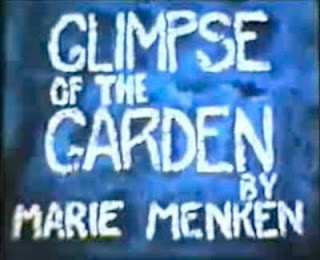 Films with this approach that immediately come to mind are Glimpses of the Garden and Lights by Marie Menken. In these films there is a sensitive observation and respect for the inherent content of the subjects of these films, in this case a garden and lights. These things do not have their own consciousness, of course, but they are still accepted and respected by Menken if only because they exist. The presence that permeates these films can also be sensed, in relation to performers this time, in the films of Agnès Varda and Ida Lupino, particularly in the climactic scenes of the latter’s The Bigamist and The Hitchhiker. Chantal Akerman and Tacita Dean, too, take this approach to beautiful extremes with the huge, spiritual gulps of time and subject in their work. To elaborate on this further, however, I will touch on what I find to be one of the finest examples of this particular kind of filmmaking, the films of Joyce Wieland.
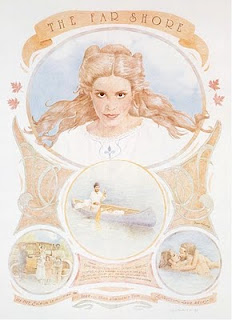
In her short work, such as Sailboat, Birds at Sunrise, or Rat Life and Diet in North America, there is a constant presence of acceptance. Even in Barbara’s Blindness, there seems to be an acceptance of the found film footage she is editing. In terms of acceptance itself, anyone who has experienced either side of true acceptance knows the courage the act takes. It calls for a steely nerve and a concrete, dignified sense of self. This authentic sense of acceptance is very present in her one feature length film, The Far Shore, although in this case with several other elements also at play. Too “normal” for the avant-garde and too “weird” for the mainstream, The Far Shore is a generally unknown and unseen film that easily stands beside her greatest accomplishments as an artist. Like her quilt works, it intelligently and subversively reclaims something dismissively relegated to the domain of the woman. In the case of the quilts, it is “woman’s work” and in the case of The Far Shore, it is the “woman’s film” – the melodrama. Within the structures of this genre, she speaks to the nature of the artist in Canada, the relationship between Anglophones and Francophones, but most importantly, the place of the Free Woman (in a mental and emotional sense, at least) in modern society. She does this in a number of ways – through abstraction and satire and through her tremendous compositions – but mainly through that very essential and fine edged acceptance. Most notably, it is visible in the performances, or more accurately said, the performers. This is due to a very intricate relationship that, I think, lies at the heart of these films. In The Far Shore (and in many of the other films mentioned here), there are often infinitesimally small gestures visible in the performers that are very affecting. They are of such consequence because they are not emanating from the performers within the artificial construct of the film, but from the person, the human, reacting to the artificial construct of the film. This is very complex, and would be regarded by less sensitive and perceptive artists as mistakes, whereas they are, in fact, triumphs. The main thing this approach accomplishes is that it renders the elements of the film as subjects rather than objects. This permits them dignity, autonomy and true vitality. These acts are not of forcing things into existence, but of being aware of what will exist and permitting it to by creating the proper conditions. It’s the reverse of the typically assumed direction; backward, like Ginger Rogers to Fred Astaire. It’s similar, too, to that tremendous, almost Franciscan effort that it takes to actually see the sky – to look up and allow the sky to exist and not have it blotted out by your assumptions. It’s a very selfless act, a sublimely passive one, and, I will say, an importantly feminine one.
I am, by no means, implying that only women are capable of this approach. The films of Rossellini in both film and television could easily be said to have these elements; as can works like Maurice Pialat’s L’Enfance Nue, Jacques Demy’s Model Shop or certain works by Nathaniel Dorsky, like Summerwind. All people have these capacities within them -- like Lorca said, “Mi alma de niña y niño” (My soul is both male and female). Though, in my experience it seems that directors who are women can most wholly and organically accomplish this effect. Experiencing works like these that take such an independent mind have been extraordinary for me. This is in part because they are so delicate, and in part because they are so rare. Until Rimbaud’s statements on the female poet are true to a greater extent, however, the last word will come from one of these rare, courageous and important Free Women: “There should always be a giving to the senses and an enrichment of the soul.... It's a way to tell the truth but it's also a way to open vision, how to see.” (Joyce Wieland).
Daniel Gallay
***** Further Viewing: The CFMDC’s recently released box set of the complete works of Joyce Wieland is cause for celebration. It is available through the CFMDC.
Further Reading: Johanne Sloan’s recent Canadian Cinema monograph on Wieland’s The Far Shore is an invaluable resource for information on the film. Cinematheque Ontario’s monograph on Wieland is also an excellent source of information on the artist’s work in film. Both are available at the TIFF.Shop at the TIFF Bell Lightbox.

 For Andréa Picard
“And there will be poets like this! When the eternal slavery of Women is destroyed, when she lives for herself and through herself, when man – up till now abominable – will have set her free, she will be a poet as well! Woman will discover the unknown! Will her world of ideas differ from ours? She will discover strange things, unfathomable, repulsive, delightful; we will accept and understand them.”
-- Arthur Rimbaud in a letter to Paul Demeny, May 15, 1871
I have had many experiences viewing films that have expanded my consciousness. The films of Paolo Gioli and Joseph Cornell come to mind, as do Welles, Warhol, Rivette, Antonioni, and, of course, Rossellini. These artists have all offered me tremendous experiences. The most important experiences I’ve yet had, however, have been through the work of women filmmakers. The films of Catherine Breillat, for example, have impacted me immensely. From her I learned, among other things, that feminism could be as faulty as chauvinism. By that I mean that within chauvinism, a woman must be a man’s version of a woman, but within feminism, a woman must often be a woman’s version of a man. (To this I’ll add that from her films I learned that the only thing I truly know about women is that I’m not one.) From that I understood that all things and all circumstances must be viewed with respect for their own individual content. This, I find, is achieved nowhere better than in the films of female directors.
 Films with this approach that immediately come to mind are Glimpses of the Garden and Lights by Marie Menken. In these films there is a sensitive observation and respect for the inherent content of the subjects of these films, in this case a garden and lights. These things do not have their own consciousness, of course, but they are still accepted and respected by Menken if only because they exist. The presence that permeates these films can also be sensed, in relation to performers this time, in the films of Agnès Varda and Ida Lupino, particularly in the climactic scenes of the latter’s The Bigamist and The Hitchhiker. Chantal Akerman and Tacita Dean, too, take this approach to beautiful extremes with the huge, spiritual gulps of time and subject in their work. To elaborate on this further, however, I will touch on what I find to be one of the finest examples of this particular kind of filmmaking, the films of Joyce Wieland.
In her short work, such as Sailboat, Birds at Sunrise, or Rat Life and Diet in North America, there is a constant presence of acceptance. Even in Barbara’s Blindness, there seems to be an acceptance of the found film footage she is editing. In terms of acceptance itself, anyone who has experienced either side of true acceptance knows the courage the act takes. It calls for a steely nerve and a concrete, dignified sense of self. This authentic sense of acceptance is very present in her one feature length film, The Far Shore, although in this case with several other elements also at play. Too “normal” for the avant-garde and too “weird” for the mainstream, The Far Shore is a generally unknown and unseen film that easily stands beside her greatest accomplishments as an artist. Like her quilt works, it intelligently and subversively reclaims something dismissively relegated to the domain of the woman. In the case of the quilts, it is “woman’s work” and in the case of The Far Shore, it is the “woman’s film” – the melodrama. Within the structures of this genre, she speaks to the nature of the artist in Canada, the relationship between Anglophones and Francophones, but most importantly, the place of the Free Woman (in a mental and emotional sense, at least) in modern society. She does this in a number of ways – through abstraction and satire and through her tremendous compositions – but mainly through that very essential and fine edged acceptance. Most notably, it is visible in the performances, or more accurately said, the performers. This is due to a very intricate relationship that, I think, lies at the heart of these films. In The Far Shore (and in many of the other films mentioned here), there are often infinitesimally small gestures visible in the performers that are very affecting. They are of such consequence because they are not emanating from the performers within the artificial construct of the film, but from the person, the human, reacting to the artificial construct of the film. This is very complex, and would be regarded by less sensitive and perceptive artists as mistakes, whereas they are, in fact, triumphs. The main thing this approach accomplishes is that it renders the elements of the film as subjects rather than objects. This permits them dignity, autonomy and true vitality. These acts are not of forcing things into existence, but of being aware of what will exist and permitting it to by creating the proper conditions. It’s the reverse of the typically assumed direction; backward, like Ginger Rogers to Fred Astaire. It’s similar, too, to that tremendous, almost Franciscan effort that it takes to actually see the sky – to look up and allow the sky to exist and not have it blotted out by your assumptions. It’s a very selfless act, a sublimely passive one, and, I will say, an importantly feminine one.
I am, by no means, implying that only women are capable of this approach. The films of Rossellini in both film and television could easily be said to have these elements; as can works like Maurice Pialat’s L’Enfance Nue, Jacques Demy’s Model Shop or certain works by Nathaniel Dorsky, like Summerwind. All people have these capacities within them -- like Lorca said, “Mi alma de niña y niño” (My soul is both male and female). Though, in my experience it seems that directors who are women can most wholly and organically accomplish this effect. Experiencing works like these that take such an independent mind have been extraordinary for me. This is in part because they are so delicate, and in part because they are so rare. Until Rimbaud’s statements on the female poet are true to a greater extent, however, the last word will come from one of these rare, courageous and important Free Women: “There should always be a giving to the senses and an enrichment of the soul.... It's a way to tell the truth but it's also a way to open vision, how to see.” (Joyce Wieland).
Daniel Gallay
Further Reading: Johanne Sloan’s recent Canadian Cinema monograph on Wieland’s The Far Shore is an invaluable resource for information on the film. Cinematheque Ontario’s monograph on Wieland is also an excellent source of information on the artist’s work in film. Both are available at the TIFF.Shop at the TIFF Bell Lightbox.

Wednesday, March 23, 2011
On Arthur Lipsett
This is a guest contribution from TIFF gallery attendant Daniel Gallay. - D.D.
 Arthur Lipsett and The Canadian Capacity
I have often thought about the particular nature of Canadian genius and why when this country produces a genius, it tends to be both troubling and gargantuan – great geniuses like Norman Bethune, Tommy Douglas, Northrop Frye and Marshall McLuhan. One solution that has occurred to me (often while gazing out of the window of an airplane) is that perhaps in Canada, one’s genius must be as large as the land. If it is not of sufficient size, it recedes; but if it can stand against the land, it can stand against time, strongly, like a mountain. It will, however, often emerge darker for the struggle. Another genius of this type is Arthur Lipsett, and what follows is a brief description of his mode and legacy in relation to this particularly Canadian capacity.
In a brief life and career, Arthur Lipsett produced his short films while at the National Film Board of Canada. He received early guidance there from Norman McLaren and before that from Arthur Lismer while a student at the Musée des Beaux-Arts de Montréal. In terms of mode, however, Lipsett is not particularly comparable to either of these artists. He is not even quite comparable to other Canadians who have excelled at short form film work, like Joyce Wieland or Jack Chambers. In both life and art Lipsett is most comparable to the archetype of the Canadian artist - Tom Thomson. In terms of Thomson’s work, for example, many find that the rich poetry of his en plain air work on panel is less evident in his larger studio produced canvases. The canvas for The West Wind, perhaps Canada’s most famous artwork, is out paced in many people’s minds by the panel it is based on. This is perhaps because the panel, not intended for exhibition as was the canvas, was permitted a privacy that fosters poetry. It is in this way that Lipsett’s films were assembled, in seclusion at the NFB, composed in part from his own shots and in part from discarded elements of other filmmaker’s more public offerings. Also like Thomson’s panels, they were produced outside the homogenizing effects of the roar of the marketplace and the comfort of trend (as has the work of other Canadians like David Blackwood or John Gould). It is said, too, that during the production of the panel for The West Wind, Thomson was nearly killed by a tree uprooted by the wind he was depicting; it is in this same manner that Lipsett and other Canadians have worked. Just as, at his own peril, Thomson went deeply into nature and how, with dark courage, Leonard Cohen goes deeply into song, Lipsett went deeply into film. There is a particular essence that exists in his films; an essence not only of the medium, but also of the frightening quest into poetry and the resulting renewal of cultural blood-ties perhaps possible only through the poète maudit.
 Lipsett’s legacy, too, is particularly Canadian. It is also in-line with the legacy of Canadian film as a whole in that it is unheralded yet immensely wide-ranging. The most widely acknowledged nods to Canadian film may be Alfred Hitchcock’s Psycho license plate or Renoir’s quote about Allan King, but it should not be forgotten that two artists whose film work is some of most influential yet made owe a direct debt to Lipsett. Stanley Kubrick and George Lucas were hugely influenced by his work, and the essence of their most important films are in part derived from him. This, however, is rarely referenced, perhaps because it is both challenging and troubling, like a sort of unacknowledged colonization. Despite this disconcerting obscurity, or perhaps because of it, Lipsett’s work has provided me with an answer to the question “What is film?” more clearly than any work I have yet experienced. I am not, however, capable of articulating the answers that have been offered me. His films, like much of the best poetry (as per MacLeish), are not solutions but experiences, imbued with the intentionality that William Carlos Williams deemed essential. Because of the intense directness of his films, they grapple most fiercely with the question and therefore offer the individual their most personal conclusions. Unfortunately, much like Canada itself, a troubling legacy that must be experienced for oneself is almost always assured of obscurity.
In all, perhaps more so than any artist whose medium was film, Arthur Lipsett most accurately portrays both the mode and legacy of the Canadian genius. His work was dangerous and solitary, and the often troubling results can only be truly experienced by the individual. Yet, in spite of this and our own struggles with culture and identity, whether or not Lispett’s genius is specifically Canadian is ultimately unimportant. What will remain important is that Lipsett, through his few but essential contributions, is the most important of geniuses. He is the mountain that stands strongly against time; the unsung peak, reconnecting contemporary culture with its source and renewing its mysterious ties. - Daniel Gallay
Further reading: Lispett’s Legacy: Recollecting Collage Films from the NFB and CFMDC. Published by the Atlantic Filmmakers Cooperative and Distributed by Image Arts Press, Toronto, ON.
Further viewing: Lipsett Diaries by Theodore Ushev and Chris Robinson, produced by the National Film Board of Canada. The DVD includes the digital transfers of 3 films by Arthur Lipsett.

 Arthur Lipsett and The Canadian Capacity
I have often thought about the particular nature of Canadian genius and why when this country produces a genius, it tends to be both troubling and gargantuan – great geniuses like Norman Bethune, Tommy Douglas, Northrop Frye and Marshall McLuhan. One solution that has occurred to me (often while gazing out of the window of an airplane) is that perhaps in Canada, one’s genius must be as large as the land. If it is not of sufficient size, it recedes; but if it can stand against the land, it can stand against time, strongly, like a mountain. It will, however, often emerge darker for the struggle. Another genius of this type is Arthur Lipsett, and what follows is a brief description of his mode and legacy in relation to this particularly Canadian capacity.
In a brief life and career, Arthur Lipsett produced his short films while at the National Film Board of Canada. He received early guidance there from Norman McLaren and before that from Arthur Lismer while a student at the Musée des Beaux-Arts de Montréal. In terms of mode, however, Lipsett is not particularly comparable to either of these artists. He is not even quite comparable to other Canadians who have excelled at short form film work, like Joyce Wieland or Jack Chambers. In both life and art Lipsett is most comparable to the archetype of the Canadian artist - Tom Thomson. In terms of Thomson’s work, for example, many find that the rich poetry of his en plain air work on panel is less evident in his larger studio produced canvases. The canvas for The West Wind, perhaps Canada’s most famous artwork, is out paced in many people’s minds by the panel it is based on. This is perhaps because the panel, not intended for exhibition as was the canvas, was permitted a privacy that fosters poetry. It is in this way that Lipsett’s films were assembled, in seclusion at the NFB, composed in part from his own shots and in part from discarded elements of other filmmaker’s more public offerings. Also like Thomson’s panels, they were produced outside the homogenizing effects of the roar of the marketplace and the comfort of trend (as has the work of other Canadians like David Blackwood or John Gould). It is said, too, that during the production of the panel for The West Wind, Thomson was nearly killed by a tree uprooted by the wind he was depicting; it is in this same manner that Lipsett and other Canadians have worked. Just as, at his own peril, Thomson went deeply into nature and how, with dark courage, Leonard Cohen goes deeply into song, Lipsett went deeply into film. There is a particular essence that exists in his films; an essence not only of the medium, but also of the frightening quest into poetry and the resulting renewal of cultural blood-ties perhaps possible only through the poète maudit.
 Lipsett’s legacy, too, is particularly Canadian. It is also in-line with the legacy of Canadian film as a whole in that it is unheralded yet immensely wide-ranging. The most widely acknowledged nods to Canadian film may be Alfred Hitchcock’s Psycho license plate or Renoir’s quote about Allan King, but it should not be forgotten that two artists whose film work is some of most influential yet made owe a direct debt to Lipsett. Stanley Kubrick and George Lucas were hugely influenced by his work, and the essence of their most important films are in part derived from him. This, however, is rarely referenced, perhaps because it is both challenging and troubling, like a sort of unacknowledged colonization. Despite this disconcerting obscurity, or perhaps because of it, Lipsett’s work has provided me with an answer to the question “What is film?” more clearly than any work I have yet experienced. I am not, however, capable of articulating the answers that have been offered me. His films, like much of the best poetry (as per MacLeish), are not solutions but experiences, imbued with the intentionality that William Carlos Williams deemed essential. Because of the intense directness of his films, they grapple most fiercely with the question and therefore offer the individual their most personal conclusions. Unfortunately, much like Canada itself, a troubling legacy that must be experienced for oneself is almost always assured of obscurity.
 In all, perhaps more so than any artist whose medium was film, Arthur Lipsett most accurately portrays both the mode and legacy of the Canadian genius. His work was dangerous and solitary, and the often troubling results can only be truly experienced by the individual. Yet, in spite of this and our own struggles with culture and identity, whether or not Lispett’s genius is specifically Canadian is ultimately unimportant. What will remain important is that Lipsett, through his few but essential contributions, is the most important of geniuses. He is the mountain that stands strongly against time; the unsung peak, reconnecting contemporary culture with its source and renewing its mysterious ties. - Daniel Gallay
Further reading: Lispett’s Legacy: Recollecting Collage Films from the NFB and CFMDC. Published by the Atlantic Filmmakers Cooperative and Distributed by Image Arts Press, Toronto, ON.
Further viewing: Lipsett Diaries by Theodore Ushev and Chris Robinson, produced by the National Film Board of Canada. The DVD includes the digital transfers of 3 films by Arthur Lipsett.

Subscribe to:
Posts (Atom)