Showing posts with label Montreal. Show all posts

Monday, November 25, 2019

Weekend at RIDM

A weekend in Montreal for RIDM is a real cinephile pleasure. The city’s documentary festival leans more towards the avant-garde so, unlike more pedestrian doc fests, they tend to spotlight auteurs of the film fest circuit that are exploring new cinematic territories in interesting ways. 
I specifically went for their Luc Moullet retrospective. In the nine years that I’ve lived in Toronto I don’t think any Moullet films have ever screened theatrically. This speaks to the worth of RIDM and the Cinémathèque Québécoise that they would not only present a retrospective but also invite Moullet to give a masterclass and introduce his films. The director is already in his eighties so this will probably be his last trip abroad. And RIDM really made an event out of the retrospective by getting new digitisations of many of his films, organizing them into thematic programs and having lengthy discussions with Moullet at every opportunity.

The masterclass was really good. Its moderator Bruno Dequen split the two-hour discussion between his early years at Cahiers du Cinéma and his filmmaking. Being already familiar with Moullet, I can say that I was really impressed with the territory that was covered. 
Moullet shared some interesting anecdotes about his cinephile origins: At the age of ten, around the time of the fiftieth anniversary of cinema in Paris, Moullet discovered classics like Dreyer’s Day of Wrath. Later he would be able to see new films before others since at the time cinema owners, they wouldn’t actually go see the movies that they would book, so they would give their tickets to their staff, which Moullet would inevitably befriend and accompany.
Moullet had interesting stories from when he joined Cahiers in 1956: Their articles had to be written on typewriters in which the movie titles had to be underlined (which were then converted to italics during printing) and couldn’t be submitted on two-sided paper (la règle du recto-verso). Jacques Rivette was the leader and François Truffaut was his right-hand man. The À bout de souffle producer Georges de Beauregard was so inspired by Jean-Luc Godard after their success that he produced Moullet on his recommendation.
Then the conversation turned towards his films that included some interesting observations about his documentaries: Just like how Moullet’s earlier film reviews explored little known subjects in an encyclopedic and ironic fashion, this would also be a trait that he would bring to his documentary practice. Moullet describes his own presence in his films as a heightened exaggeration of his own quirky characteristics. Over the years, he has to worked with a lot with French television broadcasters, especially Canal Plus, as they were the ones who most frequently funded his projects.

Of Moullet’s fortyish films, which date as far back as 1960, he has only made around ten full-length features, some fiction but many documentaries, while most of the others are either shorts or medium lengths. Moullet’s oeuvre is discreet. I wouldn’t necessarily say that it’s mainstream, but I wouldn’t say its esoteric either. Having seen some of his TV work back-to-back I would probably put forward that he’s the closest thing to a French Jerry Seinfeld. The films are usually organized around a comedic bit (just like Jerry’s concluding stand-up sketches) that takes something very mundane and specific and then analyzes it to the point of the nonsensical. 
While at RIDM I got to see eight of Moullet’s films. I’ll rank them in order of how much I liked them and how much they made me laugh (how else should you judge comedies?): In La cabale des oursins he explores mountains made from abandoned coal mine detritus as if they were ideal tourist destinations. In Foix he fines the most decrepit town in all of France and a narrator in a dead-pan and ironic voice-over then speaks to its “qualities”. In Imphy, capitale de la France, along with his wife Antonietta Pizzorno, they search the countryside for an anonymous town to relocate the nation’s capital. Barres is about sneaking past the metro fares in Paris. In Essai d’ouverture Moullet struggles to open a Coke bottle. In Toujours plus he explores the bourgeoning and excessive new supermarket culture. And Le ventre de l’Amérique, the closest thing I saw of his there to a more traditional documentary, he explores small-town Iowa. 
They all made for really interesting programs. I tended to prefer the more eccentric and witty documentaries. And there was a Laurel and Hardy aspect to them where the laughs came from the stubbornness and childish conflict of two exaggerated and opposing personalities. 
As I already mentioned, it was just great seeing these in a cinema and with Moullet there to talk about them. I think it was an experience of a lifetime.

I had already seen Une aventure de Billy le Kid, which isn’t necessarily one of my favorites (I don’t think Jean-Pierre Léaud is that funny in it) and it still isn’t, but re-watching I couldn’t help but notice how the film nicely illustrates Moullet’s ideas on Samuel Fuller: that his westerns aren’t about reflection but about action and how this instinctive quality, which is distinctively American, comes out through his chase scenes. You can see a bit of this in Une aventure de Billy le Kid through all of the Léaud scenes where he’s struggling to make his way through the desert. As well, the film’s particular landscape of the French mountainous countryside is a reoccurring geography in all of Moullet’s work from Terres noire in 1961 to his most recent documentaries. Moullet makes work that only resembles himself: of curious ecosystems, either directly in cities or in the middle of nowhere, that really benefit from a close inspection to best reveal their charm, edges and life.

At RIDM I also got to see Frank Beauvais’ Ne croyez surtour pas que je hurle and a documentary on the modern dancer Merce Cunningham. The Beauvais film was interesting. It consists of him reading in voice-over his diary-like observations of living in the countryside for seven years where he experienced a break-up, the death of his father, and a frustration with French society as he retreated more and more towards living in isolation. While the visuals were taken from short clips from hundreds of different films to illustrate the mood or idea of what he’s talking about. It’s quite an original idea. And the film feels therapeutic: You hear Beauvais talks about his depression all while you see the art that he was able to create through it. And there’s something healthy and positive about its ending where you hear about how he’s finally able to re-find a community and he returns to Paris. I was surprised by Cunningham. It was nice tribute to mid-century New York modernism – Cunningham regularly collaborated with such artists like Robert Rauschenberg, John Cage and Andy Warhol – and the many gestures and new human movements that he created. Not that I know anything about modern dance, but there was something stunning about the 3D scenes of the contemporary dancers putting on their shows. Its something like Yvonne Rainer meets Wim Wenders’ Pina.  

I can’t really speak to the other films that played at RIDM since I didn’t see them but there was good word-of-mouth buzz for the prize-winning films (except one that Denis Côté really didn’t like; and whose Wilcox will be screening in Toronto in January). And the evening parties at the cinémathèque, where I got to see some friends and other cinephiles, were fun. 
But when in Montreal it’s well worth checking out what’s playing at the other cinemas. Their cineplexes screen films that rarely get distribution outside of Quebec. In Montreal you can see more Québécois, French and European films in general. At the Cineplex Quartier Latin, I got to see Nicolas Pariser’s Alice et le Maire, which stars Anaïs Demoustier as a new consultant to the mayor of Lyon (Fabrice Luchini). It has some interesting things to say about a certain careerism and dullness that has affected their political class and what happens when the desire for inspiration strikes. There was something distinct about it in terms of recent French comedies and I liked how it told its story and treated its characters. 
And then I finally got to discover Cinéma Moderrne, which is further north on St. Laurent, to check out Marriage Story. Not as good as Baumbach’s The Meyerowitz Stories, I would still say it’s worth seeing, even though it has a few frustrating Netflix-tropes (its images are too pristine, accepts a mediocre naturalism, too theatrical), for the performances Adam Driver and Scarlett Johansson give. Like in all of Baumbach’s films there’s something especially affecting about the characters’ vulnerability and desperateness. And it asks some interesting questions: How do you really see your partner once habits takeover in long-term relationships? What’s listening and communicating when you’re just seen as an extension of your husband? How come expectations, in both relationships and in society, are different for women? How do you still love someone while you’re no longer together?
It’s worth seeing Marriage Story, and it gives me great pleasure to see a renaissance in repertory cinema attendance that comes from this sort of programming, but I would still say it’s not as subtle or deep as Ingmar Bergman’s Scenes from a Marriage which it’s clearly riffing on. Instead of Bergman now we get Baumbach. 

Anyways here’s a short report on my weekend trip to Montreal. Still my favorite city in the country for moviegoing: I go there to spend time with films, as one would travel to spend time with friends. It’s so easy to see up to three movies in a day there and get a microcosm of the diversity of cinema in general. That’s why the city’s film culture is so great. The experiences and the discourse are far richer and kinder than the hermetic yelling that usually takes place on social media. What works so well in Montreal is that things are smaller, therefore nimbler and more efficient, you can do more. It becomes more about the people who are there and their experiences with the films and each other. There’s less institutional mediation, so there’s less interval between watching films and life. Moviegoing just feels more natural, like a way of living.

Monday, August 23, 2010

September Decisions.

September Film Listing
Bytowne Cinema
Life During Wartime (Todd Solondz, 2009) 17/09 – 23/09.
Saboteur (Alfred Hitchcock, 1942) 27/09 & 28/09.

Mayfair Theatre
Canadian Cult Review 22/09.
American Grindhouse (Elijah Drenner, 2010) 24/09 & 25/09.

Museum of Civilization (Gatineau, Quebec)
The Lost Dominion 70mm Film Festival 24/09 & 26/09.
*****
More about what I have been up too: After I finish editing these instructional videos that I have been commissioned for by U of O, the deadline is the first week of September, I have to figure out what I am going to do with myself. I anticipate hearing from the Canadian Film Institute to see if I can get more responsibilities. Anyways, we shall see. In September I just might go on a road-trip to Montreal or Toronto to see some friends if I have not yet figured anything out. The World Film Festival and the Toronto International Film Festivals look really good this year. I want to write more right now but I just cannot think of anything else to say...

I will leave you guys with the new music video of Adam Saikaley's song Bike that was directed by my friend Luke Ciesielski starring Lidija Marie and Anton Sharko.

Tuesday, May 4, 2010

Moviephile May Listings

May Film Listings

Bytowne Cinema
The Young Victoria (Jean-Marc Vallée, 2009) 23/05 & 24/05.
Mother (Bong Joon-ho, 2009) 28/05 – 3/06.
The Red Shoes (Michael Powell & Emeric Pressburger, 1948) 28/05 – 3/06.

Mayfair Theatre
La Dance (Frederick Wiseman, 2009) 7/05 - 9/05 & 12/05.
Canadian Cult Revue 19/05.
Carmen, Baby (Radley Metzger, 1967) 29/05.

Movie Night at the Imperial
Sunrise (F.W. Murnau, 1927) 25/05.

Cinémathèque Québécoise (Montreal, QC)
Le Documentaire Utilitaire d’Après Gierson 13/05.
Précurseurs des Nouvelle Vague 20/05.

Carleton University
Scott Birdwise's Thesis Dissertation on Donigan Cumming 12/05, 10:00AM.

Friday, April 23, 2010

Silent Drama

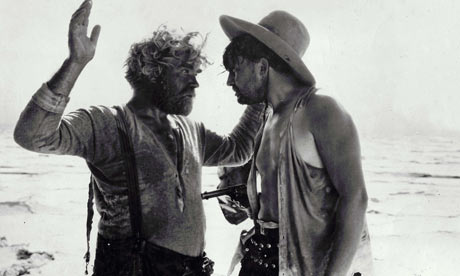
Greed (Erich von Stroheim, 1924)
**** (Masterpiece) * Rick Schmidlin will be presenting the film.


Stroheim’s prominence doesn’t lie only in the power of his images, nor does it come from the merciless rhythm propelling the story and the anguish it stirs in us. It stems from a passion for the grandiose; a grandiose beyond bad taste. It is a climate that might seems harsh at first, but once one gets used to it, it becomes the Garden of Eden.” - Jean Renoir

(Cinémathèque Québécoise, 335 boul. De Maisonneuve Est, Montreal, QC, 23/04, 6:30PM)

Wednesday, March 17, 2010

Montreal Social Margins

I would like to thank Scott Birdwise for leading me to Mr. Cummings oeuvre and providing me with useful information for this piece.-D.D.

Donigan Cumming: Oeuvres Récentes (Donigan Cumming, 2003 - 2009) *Director in Attendance
**** (Masterpiece)


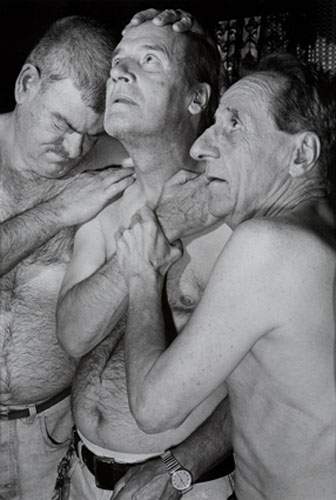
The screening of Montreal documentarian Donigan Cumming’s recent oeuvre at the Cinémathèque Québécoise,in the Salle Claude Jutra, on Wednesday March 17th has been eagerly anticipated, met its expectations, exceeded them and was so exasperatingly original that you wished there were more films. Donigan introduced the screening and you could recognize his familiar voice and face from his earlier works. He is also taller then you would imagine. The screening from a high quality Blue-ray disc included Locke’s Way (2003), Cold Harbor (2003), Voice: Off (2003), Fountain (2005), 3 (2005), Monument (2008), Untitled (2009), and Too Many Things (2010).


Outside the screening hall there is Cumming’s photograph exhibit Kincora 2010. The exhibit Kincora includes the framed photographs Barber’s Music (Ottawa, 1999), Les Pleureurs (which accompanied the video installation of A Prayer for Nettie, 1995), Lying Quiet and a few mixed-materials Kincora sketches. Donigan writes about it:
“The title of this exhibition refers to a street in downtown Montreal that was erased by developers in the late 1980s, destroying a little neighborhood and scattering its residents across the city and suburbs. Nothing was ever built on the site. It remains an urban wasteland, a parking lot. Most of the people who lived there are now dead."
The show will be on display in the Foyer Luce-Guilbeault until March 28th.


Locke’s Way is an epistemological rumination on Donigan’s older brother Julien through a photographic analysis. Donigan speaks out his train of thought as he goes through one picture to the next. Locke’s Way is and apt start to the retrospective as it presents the end of Cumming’s early video period (1995 – 2003), which is available on the DVD set Controlled Disturbance. Similarly to how Cumming's A Prayer for Nettie (1995) presented the end, or at least a transition, from photography to video. Cumming’s photographic publications up to that point included Reality and Motive in Documentary Photography (1986), The Stage (1991), and Pretty Ribbons (1996). The transition from photography to video was highlighted by a decreased sample size and increased attention to the minutia details of his participants and the spontaneity of their collaboration.


Locke’s Way deals with larger philosophical and political issues. An immediate philosophical reference is to the British empiricist John Locke who posited that all knowledge arises from sensory experiences. Locke’s Way also evokes the process of memory and the act of recollection as Donigan looks and thinks about the table full of photographs. Though he tries repeatedly to escape this activity by running up the basement stairs to get away from the memories, he is only able to find that upstairs there are his brother Julien's old medical reports. Julien, the subject of Locke’s Way, seems to represent a repressed subject for the filmmaker and the descent into the basement physically illustrates this concept of delving into the unconscious. There are two photographs of Donigan hidden in the mess. One is a childhood portraiture in a family collection and the second is at a wedding and Donigan is wearing a black suit with dark sunglasses. The film deals with biopolitics - Michel Foucault's term for the style of political power that regulates all aspects of human life - as it is the government policy that deems Julien as unfit. Julien was deemed “mentally disabled” at a young age by the government. His mother and grandmother worried about how his presence would affect his siblings. This is akin to Robert Zajonc’s confluence model, which suggests that children are born into intellectual environments that affect their intelligence. While Donigan is reflecting on these issues, he is also being affected by biopolitics as he runs around his house. This process of running up-and-down stairs directly alternates Donigan’s physiology, how he communicates, and the audio-track through Donigan’s heavy breathing. If you look closely at the edge of the steps when Donigan is moving there are signs of fading on the stairs. The edge of the stairs are missing paint and are grooved. This detail in the mise-en-scène extends the themes of frailty, timeworn, and decrepitness. Finally As Donigan looks over the pictures the audio-track fast-forwards and then slowdowns coming to a creeping close on a picture of Julien.


Cold Harbor is a 3-minute short-film about an ill African-Canadian decrepitly breathing with off-screen voice-over narration reciting facts about the American Civil War (1861 – 1865) and it ends with a radio news report on the Iraq war. The American Civil War was a prominent subject in Donigan Cumming’s childhood growing up in the United States. Fountain is the accumulated video-footage from the earlier videos and photograph with some unseen footage. It is an eulogy for all his past-collaborators (e.g., Pierre, Julien, Gerry, Marty, Nettie, etc) and examines his old friends from multiple perspectives varying from bodily close-ups, to their rooms, neighborhoods, and their reciprocal relationship. This video footage had been also used for the book and grid collage Lying Quiet that was produced with Peggy Gale for the Museum of Contemporary Canadian Art. It interesting to see the footage that had not yet been released and in it Donigan creates a visual bricolage of live-action and photographs. 3 is interlaced with a lot more intertitles then his previous work. The intertitles include: men asleep, a dream, play, a song; angel and snow, wings and flowers, money and trees; fast then slow, piano decays, laughter. The intertitles and the scenes present dualities that sometime contradict one another. One scene that particularly stands out is an exchange of money between the hands of Donigan and a collaborator where he exposes the monetary transaction side of his film-making while presenting a beautiful image of a green grass and trees background. Untitled, A.K.A. Pencils, Ashes, Matches, Dust, is a commissioned “film haïku” for Visions du Réel International Film Festival in Nyon, Switzerland.
The two most interesting films in the series were Monument and Too Many Things. They represent very transitional works in Donigan’s career. These unexpected illustrations show Donigan’s films in a post-Nettie-Collin-Colleen-Pierre-Albert-Nelson world. There is the passing of an era and the resurrection of another for a new decade.

Monument starts with Donigan kneeling down naked in a white room, he crushes a statue of a flower, there is a quick cut to Julien waking up, and then a sunrise on the water. The strange flower sculture is passed around and people are mourning. In the video interview “Visions du Réel, Atelier with Donigan Cumming” Donigan is critiqued for documenting others instead of himself. In Monument Donigan brings himself more directly into the picture. He creates an angst-ridden portraiture of himself destroying the symbolic flower. Nakedness in art history represents simultaneously a symbol and a true identity. Also while interviewing the new collaborators Donigan implements his presence more as he reflects himself in a mirror and his discussions with his collaborators showcases the slow process of building trust with an unreceptive participant. In Donigan's friendship with his old participants there was a mutual understanding that Donigan guided the behavior and controlled their actions. Now, when Donigan guides the new collaborators, such as asking them to put the destroyed statue in a fridge, there are these moments of hesitancy and ridicule. As if they are surprised to perform such a task. This could possibly be the result of the interviewees temperament or how many takes Cumming’s chose to film.

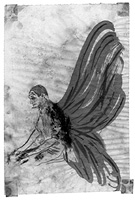
In Too Many Things, which was produced during Donigan Cumming's 2008 - 2009 artist residency at the Productions Réalisations Indépendantes de Montréal (PRIM), there is such an overabundance of creativity and celebration that the excitement leaks out of the frame. Now that Cumming’s has a firmly established palette and a distinct visual style which includes the socially assisted poor, his Mini-DV mobility, images with an abstract quality, useful trivia, slow-motion, and songs. He can abstractly present these issues through visual stand-ins. The narrative follows Ross (who looks strikingly similar to the late Éric Rohmer) and his friends during their routine weekday two-hour visits to the Salvation Army (880 rue Guy) where they hang out and look at the assortment of objects. They enjoy each others companionship and they incomprehensibly babble on top of each other in a Altmanesque fashion. There are breaks in the narrative for a stop-motion waterpaint-infused dissection of a CPU and Kincora moth-like sketches filling the frame. Where earlier on in his career Cumming’s was investigating the underrepresented now it is the underrepresented examining discarded household objects with the same magnifying precision.

Fountain presents an eulogy for his past-collaborators, in Monument Donigan works through his frustrations, and in Too Many Things there is a rejuvenation. This retrospective showcases Donigan Cumming as an ever-evolving artist who is fully aware and interested of pursuing his career to the brink. He is experimenting with different approaches, meeting new participants and building an evolving body of work. He is a constant extender of the Canadian documentary tradition and now he is also appropriating the NFB animation sector with his use of stop-motion. The theatrical programming really added a narrative to the works and I eagerly anticipate his future endeavors.-David Davidson

Monday, February 22, 2010

Old and New Canadian Films in March

March Film Listings

Canadian Film Institute
Dying At Grace (Allan King, 2003) 14/03.

Bytowne Cinema
J’ai Tué Ma Mère (Xavier Dolan, 2009) 19/03 - 25/03.
Inferno of Henri-Georges Clouzot (Serge Bromberg & Ruxandra Medrea, 2009) 17/03 & 18/03.
Chloe (Atom Egoyan, 2009) 26/03 - 8/04.

The Mayfair Theatre
Near Dark (Kathryn Bigelow, 1987) 12/03.
eXistenZ (David Cronenberg, 1999) 23/03.
The Frighteners (Peter Jackson, 1996) 26/03.

Cinémathèque Québécoise (Montreal, QC)
Donigan Cumming: Oeuvres Récentes (Donigan Cumming, 2003 - 2009) 17/03, 6:30PM.

Monday, February 1, 2010

French Thirties Film Noir

Pépé le Moko (Julien Duvivier, 1937)
**** (Masterpiece)


(Cinémathèque Québécoise, 335 boul. De Maisonneuve Est, Montreal, QC, 31/01)

Wednesday, December 2, 2009

Leering at Decadence

The Magnificent Ambersons (Orson Welles, 1942)
**** (Masterpiece)


(Cinéma du Parc, 3575 Parc Avenue, Montreal, PQ)

Wednesday, August 12, 2009

Grandfather of American Independent Cinema

Love Streams (John Cassavetes, 1984)
**** (Masterpiece)


Big Trouble (John Cassavetes, 1986)
* (Has redeeming facets)


(Cinema du Parc, 3575 Parc Avenue, Montreal, PQ)