Showing posts with label Gilles Carle. Show all posts
Showing posts with label Gilles Carle. Show all posts
Monday, February 23, 2015

Thursday, March 24, 2011
3 + 4 + 1 (Borduas, Québec and Côté)
“We are the offspring of modest French-Canadian families, working-class or petit bourgeois, French and Catholic from the day we set foot on these shores, steadfast out of resistance to the conqueror, out of stubborn attachment to the past, out of sentimental pleasure and pride, and other drives.
We are a small and humble people clutching the robes of priests who've become sole guardians of faith, knowledge, truth and our national heritage; and we have been shielded from the perilous evolution of thought going on all around us, by well intentioned but misguided educators who distorted the great facts of history whenever they found it impractical to keep us totally ignorant.
As early as 1760, this colony was cast behind slick walls of fear (the normal refuge of defeated peoples) and abandoned there, for the first time. Our leaders sailed away, or sold themselves to the highest bidder, as they have done ever since, whenever they had the chance.” - Paul-Émile Borduas
*****
Anne Newlands’ in Canadian Paintings, Prints and Drawings addresses the subject of Canadian 21st century art, “At the same time, images of enduring beauty of the land and the infinite expression of the human face and body will surely persist as artists across the country expand and question our views of ourselves and our places in society.” It is this subject of man’s place within a landscape at a particular time in history, which makes the evolution of Canadian art so fascinating. Whether it is the View of the Fire in the Saint-Jean District of Quebec City or the 401 Towards London the paintings are beautifully rendered cultural artifacts that depict Canada at particular instants. The work can be prescient documents of today or mythologies about the countries history. And the works titles are usually accurate descriptors of the representational art. While reactionary trends like the Québécois Automatistes stand out in opposition.
.jpg)
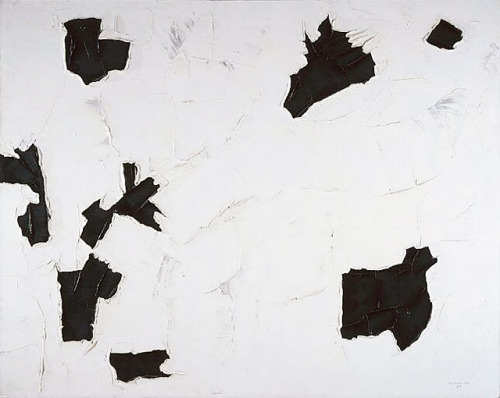
 Paul-Émile Borduas, who was the head of the Automatistes, taught at L’École du Meuble until getting fired for publishing the group's manifesto Refus Global. With influences like André Breton, Paul Klee and Wasily Kandinsky the Automatistes would go and adapt the Surrealist maxim of “attempting to give pictorial form to the workings of the subconscious.” The groups formalism is best viewed as a variation of abstract expressionism. Refus Global in Québec was seen as a major provocation. The polemic supposedly lead to mine protest, which was already a desperate situation as seen in Claude Jutra’s Mon Oncle Antoine. Dénis Arcand would further examine worker dissatisfaction in On est au Cotton. These antecedents of left-wing Québécois directors and their radical and unruly spirit are at heart of the films of Denis Côté.
The thirty-eight-year old New Brunswick-born Denis Côté founded his production company Nihil Productions in 1993. At first he mostly made shorts but as he continued his first feature-length Les états nordiques (2005) won the Golden Leopard at Locarno (where since then, he has won a few Best Director prizes). Carcasses (2009) premiered at the Directors’ Fortnight at Cannes ; Côté was telling me he wants his next film to premiere at Berlin, a hybrid filmed at a Montreal zoo. Côté‘s films progress in vignettes with sequences that use metaphoric images. Like how in Curling the father visits his incarcerated wife, he watches a curling match and the two Bilodeau’s listen to the 80’s pop hit I Think We're Alone Now. The film captures a few days from the life of a father Jean-Francois, a motel cleaner who also works at a bowling lane, who isolates his daughter Julyvonne from public schools and all public contact. She now appears to be cognitively underdeveloped. It's texture is in the subtext as it explores the underlying character psychology.
 The Scot John Grierson in the 30’s with his advocacy for the ‘documentary’ and the birth of the National Film Board of Canada led to a strict format of how to use the cinematic medium to convey facts in Canadian documentaries. And then in the ‘60s there was a loosening of this scripture with the emergence of people like Arthur Lipsett and Serge Giguère (see: Robert Daudelin and Jean Pierre Lefebvre articles on Giguère in 24 Images, No. 151), which prolonged into the ‘80s with the Morin-Dufour collaborations and into the ‘90s with Donigan Cumming. The emphasis was on creating new forms of storytelling through digging towards unexplored subjects, the layering of fact and fiction, an emphasis on video, varied running times and alternative viewing outlets.
Côté’s cinema might be that of “isolation” - as Adam Nayman insightfully points out to be a overriding theme for Côté - but the urgent message behind it is that, at the end, ‘isolation’ becomes a source of reflection that leads the characters to a change, re-opening themselves to the world. In relation to Canadian painting: the Perrault-Brault collaboration are most similar to Cornelius Kreighoff’s pastoral landscapes, Gilles Garles stylistic flourishes resembles William Kurelek highlighter colors and playful tone, and finally Denis Côté’s abstract lyricism is most similar to the formalism of the Automatistes painters. The heir of Borduas. – David Davidson
“Within a foreseeable future, men will cast off their useless chains. They will realize their full, individual potential according to the unpredictable, necessary order of spontaneity - in splendid anarchy.
Until then, we will not rest or falter. Hand in hand with others thirsting for a better life, no matter how long it takes, regardless of support or persecution, we will joyfully respond to a savage need for liberation.” - Paul-Émile Borduas
*****
Curling is playing March 26th, 6:15PM at the Museum of Modern Art, New York and March 27th, 3:30PM at the Film Society of Lincoln Center, New York as part of the New Directors/New Films series.
We are a small and humble people clutching the robes of priests who've become sole guardians of faith, knowledge, truth and our national heritage; and we have been shielded from the perilous evolution of thought going on all around us, by well intentioned but misguided educators who distorted the great facts of history whenever they found it impractical to keep us totally ignorant.
As early as 1760, this colony was cast behind slick walls of fear (the normal refuge of defeated peoples) and abandoned there, for the first time. Our leaders sailed away, or sold themselves to the highest bidder, as they have done ever since, whenever they had the chance.” - Paul-Émile Borduas
.jpg) Paul-Émile Borduas, who was the head of the Automatistes, taught at L’École du Meuble until getting fired for publishing the group's manifesto Refus Global. With influences like André Breton, Paul Klee and Wasily Kandinsky the Automatistes would go and adapt the Surrealist maxim of “attempting to give pictorial form to the workings of the subconscious.” The groups formalism is best viewed as a variation of abstract expressionism. Refus Global in Québec was seen as a major provocation. The polemic supposedly lead to mine protest, which was already a desperate situation as seen in Claude Jutra’s Mon Oncle Antoine. Dénis Arcand would further examine worker dissatisfaction in On est au Cotton. These antecedents of left-wing Québécois directors and their radical and unruly spirit are at heart of the films of Denis Côté.
Paul-Émile Borduas, who was the head of the Automatistes, taught at L’École du Meuble until getting fired for publishing the group's manifesto Refus Global. With influences like André Breton, Paul Klee and Wasily Kandinsky the Automatistes would go and adapt the Surrealist maxim of “attempting to give pictorial form to the workings of the subconscious.” The groups formalism is best viewed as a variation of abstract expressionism. Refus Global in Québec was seen as a major provocation. The polemic supposedly lead to mine protest, which was already a desperate situation as seen in Claude Jutra’s Mon Oncle Antoine. Dénis Arcand would further examine worker dissatisfaction in On est au Cotton. These antecedents of left-wing Québécois directors and their radical and unruly spirit are at heart of the films of Denis Côté.The thirty-eight-year old New Brunswick-born Denis Côté founded his production company Nihil Productions in 1993. At first he mostly made shorts but as he continued his first feature-length Les états nordiques (2005) won the Golden Leopard at Locarno (where since then, he has won a few Best Director prizes). Carcasses (2009) premiered at the Directors’ Fortnight at Cannes ; Côté was telling me he wants his next film to premiere at Berlin, a hybrid filmed at a Montreal zoo. Côté‘s films progress in vignettes with sequences that use metaphoric images. Like how in Curling the father visits his incarcerated wife, he watches a curling match and the two Bilodeau’s listen to the 80’s pop hit I Think We're Alone Now. The film captures a few days from the life of a father Jean-Francois, a motel cleaner who also works at a bowling lane, who isolates his daughter Julyvonne from public schools and all public contact. She now appears to be cognitively underdeveloped. It's texture is in the subtext as it explores the underlying character psychology.
The Scot John Grierson in the 30’s with his advocacy for the ‘documentary’ and the birth of the National Film Board of Canada led to a strict format of how to use the cinematic medium to convey facts in Canadian documentaries. And then in the ‘60s there was a loosening of this scripture with the emergence of people like Arthur Lipsett and Serge Giguère (see: Robert Daudelin and Jean Pierre Lefebvre articles on Giguère in 24 Images, No. 151), which prolonged into the ‘80s with the Morin-Dufour collaborations and into the ‘90s with Donigan Cumming. The emphasis was on creating new forms of storytelling through digging towards unexplored subjects, the layering of fact and fiction, an emphasis on video, varied running times and alternative viewing outlets.Côté’s cinema might be that of “isolation” - as Adam Nayman insightfully points out to be a overriding theme for Côté - but the urgent message behind it is that, at the end, ‘isolation’ becomes a source of reflection that leads the characters to a change, re-opening themselves to the world. In relation to Canadian painting: the Perrault-Brault collaboration are most similar to Cornelius Kreighoff’s pastoral landscapes, Gilles Garles stylistic flourishes resembles William Kurelek highlighter colors and playful tone, and finally Denis Côté’s abstract lyricism is most similar to the formalism of the Automatistes painters. The heir of Borduas. – David Davidson
“Within a foreseeable future, men will cast off their useless chains. They will realize their full, individual potential according to the unpredictable, necessary order of spontaneity - in splendid anarchy.
Until then, we will not rest or falter. Hand in hand with others thirsting for a better life, no matter how long it takes, regardless of support or persecution, we will joyfully respond to a savage need for liberation.” - Paul-Émile Borduas
Wednesday, August 4, 2010
The Last Of Summer (Carle, Torossian, Local Films)
Bytowne Cinema
I Am Love (Luca Guadagnino, 2009) 06/08 – 17/08.
The Hidden Fortress (Akira Kurosawa, 1958) 10/08 & 11/08
Les Herbes Folles (Alain Resnais, 2009) 27/08 – 31/08.
Mayfair Theatre
Long Pigs (Nathan Hynes & Chris Power, 2007) 06/08.
Two Evil Eyes (Dario Argento & George. A. Romero, 1990) 13/08.
Ip Man Double Bill 17/08.
Canadian Cult Review 18/08.
Survival of the Dead (George A. Romero, 2009) 20/08, 21/08, 25/08 & 26/08.
Dixie Dynamite (Lee Frost, 1976) 28/08.
Merry Christmas Mr. Lawrence (Nagisa Oshima, 1983) 31/08.
Réalisateur Nouvelle-France
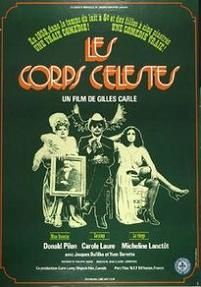
Whether it is in his period films (Les Corps Célestes, L’âge de la Machinne) or in his contemporary film (La vraie nature de Bernadette, Le mort d’un bûcheron), roadblocks pop up sporadically in the work of Gilles Carle. In the only province in North America to emerge from a French colony - all the way back to the exploration of the Saint Lawrence River by Jacques Cartier in 1534. The uncontrollable nature of Canada’s untamed landscape for a long time has been aggravating its travelers, bringing them together, and making them late for wherever they are going. This visual is an apt metaphor to describe Gilles Carle mark in film history, as Gilles Carle is one of those directors that are undeservingly little known outside of Québec.
Piers Handling’s has written “Carle is a central figure in the history of Québec cinema, having created a diverse, rich, complex body of work over 40 years, which despite its unevenness, contains several enduring classics.” Which is true. Gilles Carle was born July 31st 1928 in Maniwaki, QC. Then he moved to Atibidi where he spent part of his childhood before moving to Montreal. He would set Les corps célestes in Atibidi during the 1940s, around the same time he would have been growing up there. He has won a plethora of Canadian film awards. His resume includes being a director, scriptwriter, and cinematographer for the NFB and then for the production companies Les Productions Carle-Lamy, Onyx Films, and Editions de l’Hexagone. He died of Parkinson’s disease complications on November 28th 2009 in Granby, Québec.
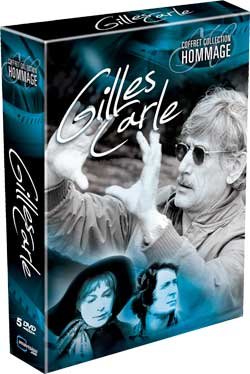
The fact that Gilles Carles is unrecognized might have to do that other then his film festival output in the 1970s and 1980s he has not received an international distribution or major DVD release outside of Quebec. Presently only five of his films and one of his TV-series, Les plouffe, are available on a unilingual French DVD’s that does not have English subtitles. The Coffret Collection; Hommage Gilles Carle only came out in September 9th 2009. And it was not until his death late last year that the NFB put up a few of his short films on their online catalog. Some of his other films are available on Ilico On Demand television. And a few others are available on VHS. With only these few films available, most of them purely for a French-speaking Québécois audience, Gilles Carle is truly on that other side of that roadblock.
The Coffret Collection; Hommage Gilles Carle set has been one of the most rewarding DVD collections I have had the pleasure to discover in a while. On it there is La vie heureuse de Léopold Z (1965), La vraie nature de Bernadette (1972), Les corps célestes (1973), La mort d’un bûcheron (1973) and La tete de Normande St-Onge (1975). The titles themselves anticipate these folkloric tales that are integral to the French-Canada mythology. As well they hint towards his blend of comedic irony and warm complicity in the troubling of the typical Carles protagonist. The southwestern Québec townships of his childhood are not only relevant in his biography but they play a prominent role in the locales of his films. The stories provide the opportunity for these locals with their exotic quétaine (i.e. Québécois kitsch) and joual (i.e. the working-class dialect) to be crystallized on film. Throughout the collection there is the depiction of the change in the province of Québec from the rural and catholic towards a modern, urban and secular society.
The latter films in the series have an Altmanesque quality as Gilles Carle uses genre and farcical characters to paint a colorful and riveting portrait of his idea of the Québécois community. The characters stand out with their odd wardrobe and irregular situations but there is a familiar quality to them. This approach differs from his earlier films iconoclasm, like Le viol d’une jeune fille douce (1968), as he moves more towards realism that allows an emphasis on the characters and the situations instead of the aesthetics. However eccentric the characters are, the inevitable fact that they are together makes them care for one another. This sense of community is the emotional bases grounded in the films of Gilles Carle. There is also a consistent theme of the return to nature and wilderness but as he demonstrates in La vraie nature de Bernadette; it is not feasible, and what the 1930s setting of Les corps célestes suggests, it never was.
His first feature, a short that was expanded to sixty-eight minutes, La vie heureuse de Leopold Z. is a tour-de-force of a snowplower Leopold Z. Trembaly (Guy L'Ecuyer) making his rounds on December 24th doing everything but snowplowing. The film was ostensibly funded by the NFB to be a straightforward documentary on Montreal snowplowing, which Gilles Carles subverted to create his dreamlike and snowy tale. Some of Leopold’s tasks include getting a fur coat for his wife, picking up his cousin and helping his supervisor move. The black-and-white cinematography dazzles and the bumbling protagonist seems to just float his way by on chance. Leopold takes out a loan to get his wife a fur coat. She kisses him on the cheek after he gives it to her. She then holds his hands before slowly moving it towards the coat. As much warmth is directed towards Leopold there is sly cynicism as Gilles Carle puts him through a lot of annoyances by the end of the day. This hand movement emphasizes the tension between the two.
La vraie nature de Bernadette is a real “director” movie as the elliptical story seems to progress in a way to illustrate a Carlien tableaux of the rural Québécois landscape with striking colors and irregular situations.
The next three films can be seen as the Carole Laure trilogy that examines femininity during the sexual revolution of the 1960s. Carole Laure in Les corps célestes is a virgin courtesan, in Le mort d’un bûcheron she is in search of her lost father, and in La tete de Normande St-Onge she is desperately getting her mother out of a psychiatric ward.
Les corps céletes is set in the pre-WWII days in Atibidi, as a pimp and his five prostitutes try to set up a brothel. One of the girls is frequently scared for the European Jews as she listens to radio broadcast of the demagogues, Adolf Hitler and Benito Mussolini. This is Gilles Carle take on Hannah Arendt’s theory of the banality of evil and Jean-Luc Godard’s one-time idea to make a film about a secretary at Auschwitz.
In Le mort d’un bûcheron, based on the 1913 Louis Hémon novel, Marie Chapdeleine (Carole Laure) moves to Montreal to find her estranged father. The only job she can get is that of a country-western singer at a nudie bar and then as a nude fashion model. Gilles Carles is making up here for the timidity of Les corps céletes, which only had a few seconds of bare breast. After finding out her mother died, by finding all the letters she sent to her returned by her door. She leaves with her boss, her fathers ex-lover and her generous neighbor to find her father dead at the lumberyard he worked at. All the while her exploitative boyfriend is trying to find her. They meet a serial killer in the woods.
In La tete de Normande St-Onge, Carole Laure moves from her job at a pharmacy, where everyone is really friendly with her, to kidnapping her mother from a psychiatric ward. Returning to her mother will prove to be detrimental to her mental health and social life, as she becomes a source of stress and a factor to regress from everyday life. Denys Arcand is great as the brother of Carole Laure’s mother.
What makes Carole Laure so great is both her sensuality and vulnerability. She is both sexy and exciting. It does not hurt that she also acted in Dušan Makavejev’s Sweet Movie (1974), John Houston’s Victory (1981) and André Forcier’s L’eau chaude, l’eau frette (1976). What makes her personality so interesting and Gilles Carle’s liberal worldview so fascinating is how sexuality does not impede on the sense of community. The brothel in Les corps célestes is a family oriented place and in Le mort d’un bûcheron Carole Laure has sex a few feet away from her adult friends. And none of this seems at all sleazy.

There is the element of cinema of attractions to his films as he interlaces them with non-narrative vignettes. For example, a dash of a musical-sequence here and real-time intercourse-sequence there. There is also marginal narratives. These two aspects of his work anticipates the films of Robert Morin and Lorraine Dufour from the Coop Vidéo de Montréal. The family oriented strip club where Marie is country-western singer is similar to the strip club in Robert Morin’s My Life is for the Rest of my life (1980), He has earned his wings (1981), and Yes Sir! Madame... (1984). The quirkiness of the Western club owner (Wilie Lamothe) seems like he could have been the star of Morin’s The mysterious Paul (1983). The street scenes share the same local as Morin’s The thief lives in hell (1984). And the western Les corps célestes falls into the genre of Québécois westerns like Morin’s Preliminary notes for a western (1989).
The works of Gilles Carles and other Québécois filmmakers exist in a film history of their own. Bill Marshall has a book Quebec National Cinema (McGill-Queen’s University Press; 2001) where he focuses on the French speaking “national majority” and the representation of its cultural identity. Québécois cinema is extremely fertile and is proud to boast such big names like Gilles Groulx, Jean Pierre Lefebvre, Michel Brault, Pierre Perrault, and Claude Jutra. What I find so interesting about the work of Gilles Carles is not exactly what he has to say about Québec but what he has to say about contemporary experiences, which resonates decades after their original creation. People should care for one another, sex is normal, relationships are tough, and there are a lot of obstacles we need to overcome. His work should be more widely accessible and should be more generously remembered.
Elective Identities
The Canadian Film Institute hosted two Café eX screenings in July for a retrospective on the film tapestries of Gariné Torosisan. For me, Ms. Torossian’s work consists of self-portraits and homage’s that can be interpreted as self-portraits. I agree with Scott Birdwise when he writes that “Come Around partakes and what can be called a pneumatological imagination and process.” Just as Pneumatology is the study of holy spirits, Torossian’s work flickers between spiritual meditations and the means of self-representation. When she does not put herself in her films that position is passed onto one of her many friends and artists. All the while contemplating on her home country of Armenia and what it means and how she feels towards it from the position of a Diaspora Armenian.
To accompany the retrospective the CFI put out a book on the filmmaker Elective Identities: The Moving Images of Gariné Torossian, edited by Tom McSorley. The book is well worth checking out and can be purchased online through the institute. To order yourself a copy e-mail the CFI here (info@cfi-icf.ca). Torossian Short Film Programme I: Ferocities of Arrival, Early Works 1992-1999 consisted of Visions (1992), Girl From Moush (1993), Drowning in Flames (1994), My Own Obsession (1998), Passion Crucified (1998), Pomegranate Tree (1998), Find Your Holy Self (1998), Red Brick (1999), and Sparklehorse (1999). Torossian Short Film Programme II: New Millennial Memory, 21st Century Works 2000-2008 consisted of Platform (1998), Dust (2000), Hokees (2000), Babies On The Sun (2001), Death To Everyone (2001), Shadowy Encounters (2002), Garden In Khorkhom (2003), Hypnotize/Mesmerize (2005), Elect The Dead (2007), and Come Around (2008). It was a sublime experience. More people should have came out to enjoy them…

Independent Canadian Filmmaking
It seems like this summer has been a major one for independent projects. In April the Canadian Film Institute projected Carlo Bruno’s supernatural road-movie In April (2009). In July, Scott Birdwise presented his experimental film Of Hands (2010) at IFCO’s third annual summer-time evening of experimental films Dogme Films 2010. Of Hands is a wonderfully photographed series of hands performing various tasks. Some scenes that stick out are of hands grabbing money, fingers wearing flamboyant jewelry, a lighter being lit, and the act of using a hammer. These observations are a microcosm for the most basic tasks within a post-colonial capitalist federation. This is Scott Birdwise’s second feature, the first being Smoke and Mirrors (2009) that played at the Dogme Films 2009. Patrice James wonderfully hosted the event at the Rideau street underpass.

This month on August 3rd, Lesley Marsland and Matt Miwa’s will project at Club Saw their short sci-fi comedy Captain Sorelski and the women in search of Spacegold (2010). Luke Ciesielski will be presenting the music video he made for local musician Adam Saikaley at the Ottawa International Film Festival, which will take place on August 21st and 22nd. Starring Lidija Marie and Candace Boivin’s bicycle the Golden Hawk. The Toronto directors Nathan Hynes and Chris Power and actor Anthony McAlister will be at the Mayfair Theatre on August 6th to present their cannibal pseudo-documentary Long Pigs (2007). These independent features will all be well worth checking out. I hope to see all of you out there.
I also picked up Lee Demarbre’s latest effort Summer’s Moon (2009) on DVD. Fellow Ottawa film-critic Joel Crary, who is soon moving to Vancouver, has written an interesting piece on the residing memories from, and use of, locations in Lee’s Jesus Christ Vampire Hunter (2001), which can be found here.
Finally, I am currently working on an instructional video for the French language department at the University of Ottawa. I am sure this series of seven podcasts will be keep me busy for this upcoming month. Expect less entries.-David Davidson

Monday, July 5, 2010
Love of Movies (Carles, Rohmer)
La Petite Forêt (Gilbert Taggart, 2000), La Guerre des Boutons (Yves Robert, 1962), The Great Dictator (Charles Chaplin, 1940), Leonardův Deník (Jan Švankmajer, 1973), Wanda (Barbara Loden, 1970), Dr. Jekyll and Mr. Hyde (John Robertson, 1920), L’âge de la machinne (Gilles Carle, 1978) Le Viol d’une Jeune Fille Douce (Gilles Carle, 1968) When the Day Breaks (Wendy Tilby & Amanda Forbis, 1999) Les Nuits de la Pleine Lune (Éric Rohmer, 1984), La Città Delle Donne (Federico Fellini, 1980), Konservfilm (Zlatin Radev, 1990), Runaway Train (Andrei Konchalovsky, 1985), Ssaki (Roman Polanski, 1963), The Shout (Jerzy Skolimovski, 1985), Across The Street (Arto Paragamian, 1988), Fast Company (David Cronenberg, 1979)

The second annual Fête du Cinéma hosted by 24 Images: La Revue Québécoise du Cinéma at the Cinémathèque Québécoise took place in the salle Claude-Jutra and at the Café-bar Saturday June 19th to Sunday June 20th. The Fête du Cinéma consisted of a twenty-four hour movie marathon; 35mm and 16mm celluloid passing through a projector for an eager community of cinéphiles. In the lobby there was a booth selling the magazine (2$ for older issues; 6$ for the ones including a DVD) and the Café-bar had specials on sangria and local brews while on the patio they were projecting classic NFB Unit B documentaries. The magazine 24 Images, which started in 1987, has always had a close relationship with the Cinémathèque as it typically reviews the more eclectic films that they screen, the venue’s ticket booth sells the magazines and for special occasions 24 Images dabble in programming. I got there later on in the day at seven o’clock for a commemoration of the works of Gilles Carle.
*****
Gilles Carle’s cinema reflects both his creativity and its fragrances over his perceptions of the Québécois landscape. Whether it is the runaway housewife in La vraie nature de Bernadette (1972); the effortful mannered gentleman in his 1950s Labatt commercials “C’est l’étiquette”; the whimsical police officer who truly wants to become an entomologist in L’âge de la Machinne (1978); to his multifaceted social portrait and bewildering comedy Le viol d’une jeune fille douce (1968). Gilles Carle’s always seem interested in showing the mainstream and sub-sector of his wonderful French-speaking province with wit and an eccentricity.
The misspelled typo in the title of L’âge de la machinne (there is only one “n” in machine) refers to the inability to backspace in the then modern new technological instrument of the typewriter. The title also shows up in Le viol d’une feune fille douce when one of the girls is also learning how to use the machine. L’âge de la machinne is set in 1933 and is about a police officer going from Senneterre to Montréal to recover a cute detainee on Christmas Eve. This NFB short film is noteworthy for the universal theme of pursuing independence in face of the imposition of religion, job security and social norms. There is a meticulous attention to period detail like the community-truck, which is an enclosed flatbed on a truck as a form of public transportation, is significantly delayed due to a roadblock. There is sense of warmth in the filming of all the characters as the viewer can sympathize with all these passengers that would rather be at home with their families then waiting at a train station for a delayed locomotive.
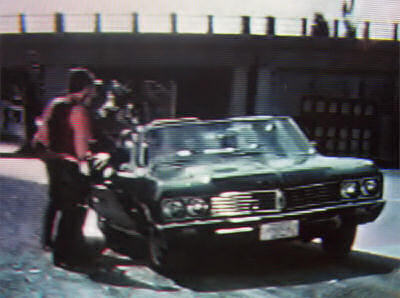
Le viol d’une jeune fille douce is a pop aesthetic portrait of a young women, Julie (Julie Lachappelle), ennui, pregnancy and early motherhood in Montreal in 1960s. It is comparable to Jean-Luc Godard’s early filmmaking period as the two are marked by an iconoclastic enthusiasm. The oddly title of the film refers to an unsympathetic short scene where Julie’s three thuggish brothers rape a young women. It is just one short episode out of many. Emphasizing that even amongst all of this fun and excitement, brutalities still unfold. There is a deadpan humor to everything as people remain emotionless. Gilles Carle dabs each frame with a Crayola-crayon palette of primary colors: a tyrian purple hat here, a baby blue sports car there, the placement of a bulk of consumer goods, and references to contemporary art. The characters dialogue also seems interested in the expressions of a national identity. Like when Julie’s Moroccan Jewish boyfriend asks her about her citizenship in reference to the national holiday Saint-John-Baptiste and the Front de libération du Québec (FLQ). While later on Julie buys stereotyped African groceries emphasizing the food consumption value whereas he see the goods in terms of their country of origin. There seems to be constant conflict between opposing people’s whether it is through language or actions.
Gilles Carle passed away at the age of 81 on November 28th 2009 at a hospital in Granby, Québec. His mark on Québécois cinema and culture seems omnipresent whether it is through the programming of his films or the respect and awe he instills. There are even visual reminder of his presence like the etching on the Fête du Cinéma poster or his portrait that hangs around certain cultural landmarks, for example, the restaurant Le Café Cherrier. His films La vraie nature de Bernadette, La Mort d’un bûcheron (1973) and Fantastica (1980) made their way to the Official Competition at the Cannes Film Festival. Gilles Carle is proving to be an untapped treasure of French-Canada cinema and his films continue to prove to be ever adventurous and intensely pleasurable.

*****
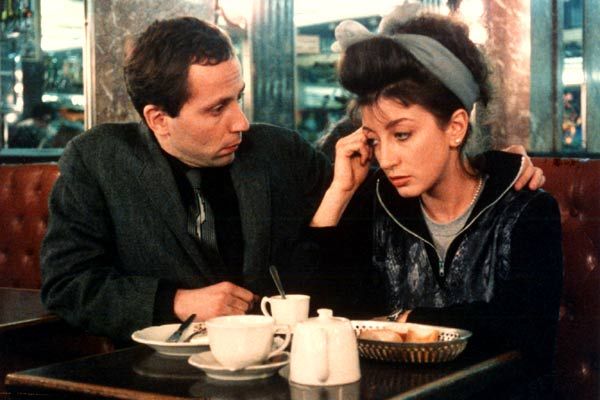
The series highlight and my favorite was the late Éric Rohmer’s Les nuits de la pleine lune. A masterpiece! The fourth in his series Comédies et Proverbes, the subtitle is “Qui a deux femmes perd son âme, qui a deux maisons perd sa raison”. Les nuits de la pleine lune is about a gorgeous, yet somewhat androgynous, women Louise (Pascale Ogier) who gets bored with her husband Rémi (Tchéky Karyo), an architect working on the redevelopment of Marne-la-Vallée in province de Champagne. Louise decides to return to Paris studio that is no longer being rented. Basically, Louise is having a midlife crisis and is unsure of what she wants. Still, she will continue her deep friendship with intellectual and writer Octave (Fabrice Luchini); have a one-night stand with a drummer Bastien (Christian Vadim) who’s leaving town; and sporadically visits her husband.
The night Louise spends with Bastien consists of party hopping and riding on his motorcycle. She returns to his place. They have sex. When she leaves in the middle of the night there is a full moon. Les nuits de la pleine lune is similar to Ma nuit chez Maud (1969) and La genou de Claire (1970) as Éric Rohmer uses movie titles that express the films visual imagery while simultaneously important scenes that culminate the crashing or comedy of an enlightened self-deception. While Les nuits de la pleine lune also refers to the myth of the werewolf and the transformation towards animalistic impulses that arises during full moons.


Éric Rohmer, like the large-format photographs of Jeff Wall, uses fiction as a guise to document the modernization of their own countries respective metropolis; Paris, France and Vancouver, Canada. After a rudimentary glance at Éric Rohmer’s episode Place de l’Étoile in Paris vu par (1965) this fact is further emphasized. The film follows this quirky shirt salesman Jean-Marc (Jean-Michel Rouzière) as he accidentally gets into a fight with a thief. In the background of all of this comic yarn is the 1964 subway reconstruction and theArch of Triumph. Cranes are flying, buildings are being built, roads are closed off and construction workers are on the street. One of Les nuits de la pleine lune more sublime camera movements is at the start with a 360-degree pan of the newly built housing developments and the subway connecting it to the rest of the city. Like Jean-Luc Godard’s 2 ou 3 choses que je sais d’elle (1967), these films are interested in Parisian real estate and architecture and how their consumption infiltrates modern day consciousness. One of Les nuits de la pleine lune shots is framed through a two-plane window. There is an immense crane right in the center of the image. Just as the banlieue is in a constant state of construction, the characters themselves are simultaneously also in a current state of expansion. Where the future for everyone and everything is equally uncertain.
Éric Rohmer birth name is Jean-Marie Maurice Scherer. The first name Éric is an appropriation of Austrian-born director Erich von Stroheim and the last name Rohmer came from the American pulp novelist Sax Rohmer. Mr. Rohmer finished his thesis dissertation on the organization of space in F.W. Murnau’s Faust (1926). He was a film critic and editor during the early years of Cahiers du Cinéma. He worked into his septuagenarian years creating his last film Les amours d'Astrée et de Céladon in 2007 from Honoré d'Urfé 17th century text L'Astrée. One of the heirs of his particular type of talky cinema is Noah Baumbach. As Baumbach’s latest film Greenberg (2010) approach is interested in household and restaurant conversations that are really inquisitive and poignant in regards to his characters motivation and there are strong textual references that give off a strong sense of the Los Angeles and its progressive upper class culture.


The French New Wave actor László Szabó has a small role in the film as a comic-book artist sitting at a café one night. He draws sketches of people and is inspired by the dreams of people. The idea of an artist drawing rough sketches of people is a very modest proposal especially from Éric Rohmer who, if I can be so bold, is one of the most psychologically introspective directors. Éric Rohmer seems interested in the use of language and how it is used and abused in conversations as a way to better understand one another. These inquisitions have quick way to intensify and some times are so memorable that Octave has to write them down. These conversationalist appear all the more foreign and exotic as it seems to be a culturally specific quality that makes France and French culture all the more attractive.
What a terrific experience! My personal reaction to the film (in the Barthesian punctum sense) was very engaged. I downlooked, sighed, was exasperated, laughed, got frustrated and was on the edge of my seat. To see a Éric Rohmer film on the big screen (my first time) was a terrific experience. The wall-sized screen is a right outlet for the classic cinematography of Renato Berta that focuses more on full body shots while consciously discarding classic editing norms. In a gorgeous 1,37:1 35mm original print without any subtitles this was the highlight of the night.
*****
Federico Fellini’s La città delle donne (1980) is a commedia all'italiana about Snàporaz (Marcello Mastroianni) who gets mixed up in a feminist rally and then in a philanderers mansion party that even Silvio Berlusconi would approve of. The one memorable scene that sticks out is a nostalgic musical sequence to Irving Berlin’s Lets Face the Music and Dance with Mastroianni in a top hat and cane prancing with two showgirls. Other then that the film gets itself lost in its own episodic drift and carnivalesque spectacle. By the end keeping up got strenuous.

I would have slept through more of Andrei Konchlovsky’s Runaway Train (1985) if the soundtrack weren’t more obtrusive. It felt like a movie made by a high school drop out that sees the world through crude stereotypes. The Alaskan cinematography was all right. Starring Jon Voight and a couple of other unimpressive actors.
Why I bothered to stay through the dreg were these next two films. Roman Polanski’s Ssaki (1961) is the last of his Łódź Film School black-and-white short films. The English title Mammals is appropriate as it is a tale of two guys who interchangeably pull one another on a sled in a barren snow-covered field while slowly depluming a chicken. A conceptual work whose title I posit refers to the plight of humanity.
Following was Jerzy Skolimoski’s fantastic horror film The Shout (1978). Jerzy Skolimoski who arrived in London from Poland in 1968, like the Italian director Marco Bellochio, seems like the type of director that is really underrepresented on video, which really restricts autodidact studies on these films. Thankfully the Cinémathèque has these programming and where I was lucky enough to see Marco Bellochio’s Abbasso il zio (1961) and Nel nome del padre (1972). Jerzy Skolimosky’s (who in 2008 appeared in David Cronenberg’s Eastern Provinces) The Shout begins with an unsuspecting visitor (Tim Curry) going to mental institute and what unfolds is the maddening of the already insane. All of this takes place in a flashback during a game of cricket in a Caligari fashion. There are some pretty interesting formal experiments including reverberating sound equipment and the use of close up.


*****
Though by six in the morning - like for most movie marathons - consciousness drifts in and out. I still perceived an overall unifying narrative to the programming. Both le viol d’une jeune file douce and Les nuits de la pleine lune have women protagonist and a narrative that progressives monthly, while the displacement from Montreal to France emphasized a shifting international setting. La città delle donne takes the idea of a vacation and pushes it southward to Italy. The progressing train Snàporaz is on with his wife before he starts dreaming will be passed on to Runaway Train and that movies winter landscape will be shared in Ssaki while the interest in landscapes will be continued now through sand desert vistas in The Shout. Les nuits de la pleine lune, La città delle donne and The Shout all have bookend stories that start at the location where they begin.


The programming at the Cinémathèque Québécoise under Pierre Jutras and Yolande Racine continues to prove to be adventurous. The fun and carriable eco-responsible schedule (which started in autumn 2009) and a good communicative website make their calendar easily accessible. The special programs highlight both high- and low-cultures works and highlight films and filmmakers hard to come by on video or ones that truly deserve a big-screen and communal viewings. Like their series on erotic Japanese films, Souleymane Cissi, Stroheim Boulevard, Marco Bellochio, Chairs et Vicere and Ken Rusell among many others.
After The Shout I decided to leave. I was on my way to my friend Alexandre Lemire’s place. I met a few of his friends there too. I was really tired after all that movie watching. Even the previous night I did not get much sleep after partying with friends at an Italo disco concert. St. Denis and Sherbrooke Street are really still at six in the morning. There were very few cars and a few staggerers that look like they belong in a Donigan Cumming or Robert Morin film. After a long night like that all you want to do is get to bed. Tomorrow will be a new day.-David Davidson
(Cinémathèque Québécoise, 335 boul. De Maisonneuve Est, Montreal, QC, 19/06 & 20/06)
The second annual Fête du Cinéma hosted by 24 Images: La Revue Québécoise du Cinéma at the Cinémathèque Québécoise took place in the salle Claude-Jutra and at the Café-bar Saturday June 19th to Sunday June 20th. The Fête du Cinéma consisted of a twenty-four hour movie marathon; 35mm and 16mm celluloid passing through a projector for an eager community of cinéphiles. In the lobby there was a booth selling the magazine (2$ for older issues; 6$ for the ones including a DVD) and the Café-bar had specials on sangria and local brews while on the patio they were projecting classic NFB Unit B documentaries. The magazine 24 Images, which started in 1987, has always had a close relationship with the Cinémathèque as it typically reviews the more eclectic films that they screen, the venue’s ticket booth sells the magazines and for special occasions 24 Images dabble in programming. I got there later on in the day at seven o’clock for a commemoration of the works of Gilles Carle.
Gilles Carle’s cinema reflects both his creativity and its fragrances over his perceptions of the Québécois landscape. Whether it is the runaway housewife in La vraie nature de Bernadette (1972); the effortful mannered gentleman in his 1950s Labatt commercials “C’est l’étiquette”; the whimsical police officer who truly wants to become an entomologist in L’âge de la Machi
The misspelled typo in the title of L’âge de la machi
Le viol d’une jeune fille douce is a pop aesthetic portrait of a young women, Julie (Julie Lachappelle), ennui, pregnancy and early motherhood in Montreal in 1960s. It is comparable to Jean-Luc Godard’s early filmmaking period as the two are marked by an iconoclastic enthusiasm. The oddly title of the film refers to an unsympathetic short scene where Julie’s three thuggish brothers rape a young women. It is just one short episode out of many. Emphasizing that even amongst all of this fun and excitement, brutalities still unfold. There is a deadpan humor to everything as people remain emotionless. Gilles Carle dabs each frame with a Crayola-crayon palette of primary colors: a tyrian purple hat here, a baby blue sports car there, the placement of a bulk of consumer goods, and references to contemporary art. The characters dialogue also seems interested in the expressions of a national identity. Like when Julie’s Moroccan Jewish boyfriend asks her about her citizenship in reference to the national holiday Saint-John-Baptiste and the Front de libération du Québec (FLQ). While later on Julie buys stereotyped African groceries emphasizing the food consumption value whereas he see the goods in terms of their country of origin. There seems to be constant conflict between opposing people’s whether it is through language or actions.
Gilles Carle passed away at the age of 81 on November 28th 2009 at a hospital in Granby, Québec. His mark on Québécois cinema and culture seems omnipresent whether it is through the programming of his films or the respect and awe he instills. There are even visual reminder of his presence like the etching on the Fête du Cinéma poster or his portrait that hangs around certain cultural landmarks, for example, the restaurant Le Café Cherrier. His films La vraie nature de Bernadette, La Mort d’un bûcheron (1973) and Fantastica (1980) made their way to the Official Competition at the Cannes Film Festival. Gilles Carle is proving to be an untapped treasure of French-Canada cinema and his films continue to prove to be ever adventurous and intensely pleasurable.
The series highlight and my favorite was the late Éric Rohmer’s Les nuits de la pleine lune. A masterpiece! The fourth in his series Comédies et Proverbes, the subtitle is “Qui a deux femmes perd son âme, qui a deux maisons perd sa raison”. Les nuits de la pleine lune is about a gorgeous, yet somewhat androgynous, women Louise (Pascale Ogier) who gets bored with her husband Rémi (Tchéky Karyo), an architect working on the redevelopment of Marne-la-Vallée in province de Champagne. Louise decides to return to Paris studio that is no longer being rented. Basically, Louise is having a midlife crisis and is unsure of what she wants. Still, she will continue her deep friendship with intellectual and writer Octave (Fabrice Luchini); have a one-night stand with a drummer Bastien (Christian Vadim) who’s leaving town; and sporadically visits her husband.
The night Louise spends with Bastien consists of party hopping and riding on his motorcycle. She returns to his place. They have sex. When she leaves in the middle of the night there is a full moon. Les nuits de la pleine lune is similar to Ma nuit chez Maud (1969) and La genou de Claire (1970) as Éric Rohmer uses movie titles that express the films visual imagery while simultaneously important scenes that culminate the crashing or comedy of an enlightened self-deception. While Les nuits de la pleine lune also refers to the myth of the werewolf and the transformation towards animalistic impulses that arises during full moons.
Éric Rohmer, like the large-format photographs of Jeff Wall, uses fiction as a guise to document the modernization of their own countries respective metropolis; Paris, France and Vancouver, Canada. After a rudimentary glance at Éric Rohmer’s episode Place de l’Étoile in Paris vu par (1965) this fact is further emphasized. The film follows this quirky shirt salesman Jean-Marc (Jean-Michel Rouzière) as he accidentally gets into a fight with a thief. In the background of all of this comic yarn is the 1964 subway reconstruction and theArch of Triumph. Cranes are flying, buildings are being built, roads are closed off and construction workers are on the street. One of Les nuits de la pleine lune more sublime camera movements is at the start with a 360-degree pan of the newly built housing developments and the subway connecting it to the rest of the city. Like Jean-Luc Godard’s 2 ou 3 choses que je sais d’elle (1967), these films are interested in Parisian real estate and architecture and how their consumption infiltrates modern day consciousness. One of Les nuits de la pleine lune shots is framed through a two-plane window. There is an immense crane right in the center of the image. Just as the banlieue is in a constant state of construction, the characters themselves are simultaneously also in a current state of expansion. Where the future for everyone and everything is equally uncertain.
Éric Rohmer birth name is Jean-Marie Maurice Scherer. The first name Éric is an appropriation of Austrian-born director Erich von Stroheim and the last name Rohmer came from the American pulp novelist Sax Rohmer. Mr. Rohmer finished his thesis dissertation on the organization of space in F.W. Murnau’s Faust (1926). He was a film critic and editor during the early years of Cahiers du Cinéma. He worked into his septuagenarian years creating his last film Les amours d'Astrée et de Céladon in 2007 from Honoré d'Urfé 17th century text L'Astrée. One of the heirs of his particular type of talky cinema is Noah Baumbach. As Baumbach’s latest film Greenberg (2010) approach is interested in household and restaurant conversations that are really inquisitive and poignant in regards to his characters motivation and there are strong textual references that give off a strong sense of the Los Angeles and its progressive upper class culture.
The French New Wave actor László Szabó has a small role in the film as a comic-book artist sitting at a café one night. He draws sketches of people and is inspired by the dreams of people. The idea of an artist drawing rough sketches of people is a very modest proposal especially from Éric Rohmer who, if I can be so bold, is one of the most psychologically introspective directors. Éric Rohmer seems interested in the use of language and how it is used and abused in conversations as a way to better understand one another. These inquisitions have quick way to intensify and some times are so memorable that Octave has to write them down. These conversationalist appear all the more foreign and exotic as it seems to be a culturally specific quality that makes France and French culture all the more attractive.
What a terrific experience! My personal reaction to the film (in the Barthesian punctum sense) was very engaged. I downlooked, sighed, was exasperated, laughed, got frustrated and was on the edge of my seat. To see a Éric Rohmer film on the big screen (my first time) was a terrific experience. The wall-sized screen is a right outlet for the classic cinematography of Renato Berta that focuses more on full body shots while consciously discarding classic editing norms. In a gorgeous 1,37:1 35mm original print without any subtitles this was the highlight of the night.
Federico Fellini’s La città delle donne (1980) is a commedia all'italiana about Snàporaz (Marcello Mastroianni) who gets mixed up in a feminist rally and then in a philanderers mansion party that even Silvio Berlusconi would approve of. The one memorable scene that sticks out is a nostalgic musical sequence to Irving Berlin’s Lets Face the Music and Dance with Mastroianni in a top hat and cane prancing with two showgirls. Other then that the film gets itself lost in its own episodic drift and carnivalesque spectacle. By the end keeping up got strenuous.
I would have slept through more of Andrei Konchlovsky’s Runaway Train (1985) if the soundtrack weren’t more obtrusive. It felt like a movie made by a high school drop out that sees the world through crude stereotypes. The Alaskan cinematography was all right. Starring Jon Voight and a couple of other unimpressive actors.
Why I bothered to stay through the dreg were these next two films. Roman Polanski’s Ssaki (1961) is the last of his Łódź Film School black-and-white short films. The English title Mammals is appropriate as it is a tale of two guys who interchangeably pull one another on a sled in a barren snow-covered field while slowly depluming a chicken. A conceptual work whose title I posit refers to the plight of humanity.
Following was Jerzy Skolimoski’s fantastic horror film The Shout (1978). Jerzy Skolimoski who arrived in London from Poland in 1968, like the Italian director Marco Bellochio, seems like the type of director that is really underrepresented on video, which really restricts autodidact studies on these films. Thankfully the Cinémathèque has these programming and where I was lucky enough to see Marco Bellochio’s Abbasso il zio (1961) and Nel nome del padre (1972). Jerzy Skolimosky’s (who in 2008 appeared in David Cronenberg’s Eastern Provinces) The Shout begins with an unsuspecting visitor (Tim Curry) going to mental institute and what unfolds is the maddening of the already insane. All of this takes place in a flashback during a game of cricket in a Caligari fashion. There are some pretty interesting formal experiments including reverberating sound equipment and the use of close up.
Though by six in the morning - like for most movie marathons - consciousness drifts in and out. I still perceived an overall unifying narrative to the programming. Both le viol d’une jeune file douce and Les nuits de la pleine lune have women protagonist and a narrative that progressives monthly, while the displacement from Montreal to France emphasized a shifting international setting. La città delle donne takes the idea of a vacation and pushes it southward to Italy. The progressing train Snàporaz is on with his wife before he starts dreaming will be passed on to Runaway Train and that movies winter landscape will be shared in Ssaki while the interest in landscapes will be continued now through sand desert vistas in The Shout. Les nuits de la pleine lune, La città delle donne and The Shout all have bookend stories that start at the location where they begin.
The programming at the Cinémathèque Québécoise under Pierre Jutras and Yolande Racine continues to prove to be adventurous. The fun and carriable eco-responsible schedule (which started in autumn 2009) and a good communicative website make their calendar easily accessible. The special programs highlight both high- and low-cultures works and highlight films and filmmakers hard to come by on video or ones that truly deserve a big-screen and communal viewings. Like their series on erotic Japanese films, Souleymane Cissi, Stroheim Boulevard, Marco Bellochio, Chairs et Vicere and Ken Rusell among many others.
After The Shout I decided to leave. I was on my way to my friend Alexandre Lemire’s place. I met a few of his friends there too. I was really tired after all that movie watching. Even the previous night I did not get much sleep after partying with friends at an Italo disco concert. St. Denis and Sherbrooke Street are really still at six in the morning. There were very few cars and a few staggerers that look like they belong in a Donigan Cumming or Robert Morin film. After a long night like that all you want to do is get to bed. Tomorrow will be a new day.-David Davidson
(Cinémathèque Québécoise, 335 boul. De Maisonneuve Est, Montreal, QC, 19/06 & 20/06)
Thursday, January 21, 2010
Gilles Carle
La Vraie Nature de Bernadette (Gilles Carles, 1972)
*** (A Must-See)

(Canadian Film Institute, Library and Archives Canada, 395 Wellington Street, 22/01 & 24/01)
*** (A Must-See)
(Canadian Film Institute, Library and Archives Canada, 395 Wellington Street, 22/01 & 24/01)
Subscribe to:
Posts (Atom)