Showing posts with label François Truffaut. Show all posts

Sunday, March 20, 2016

François Truffaut to Luc Moullet

“Neither in its tone nor its form nor its content is your article on Les Hussards right for Cahiers, even though it’s not-uninteresting… That’s why your joining Cahiers poses the moral problems that you can image; I’m sure we’ll come to trust you, but you will understand why we are wary...

 “It was so very friendly and revealed a Moullet I had not suspected, full of humour, relaxed and realistic…. Yes, I admit it, we were a little scared of you. First because you are as (sincerely and violently) caustic as we used to be and there’s something shocking about this eternal recurrence at Cahiers, this eternally recurring sarcasm, and it also seemed to us that you tended to go too far in both directions (adulation and loathing)...

(Francois Truffaut: Correspondence, Pg. 85, 95)

Wednesday, April 22, 2015

Cahiers and Truffaut : A Reconciliation

-->
In the early Eighties at Cahiers French cinema became a renewed area of interest and this was celebrated in their two special 30th anniversary issues (May and June 1981). Through these issues Cahiers were able to strengthen their ties with the French film industry and its producers, directors and actors. Even though articles on Godard had already been a standard feature since Daney’s early editorship now finally the rest of the nouvelle vague directors would become a renewed area of interest for the magazine.
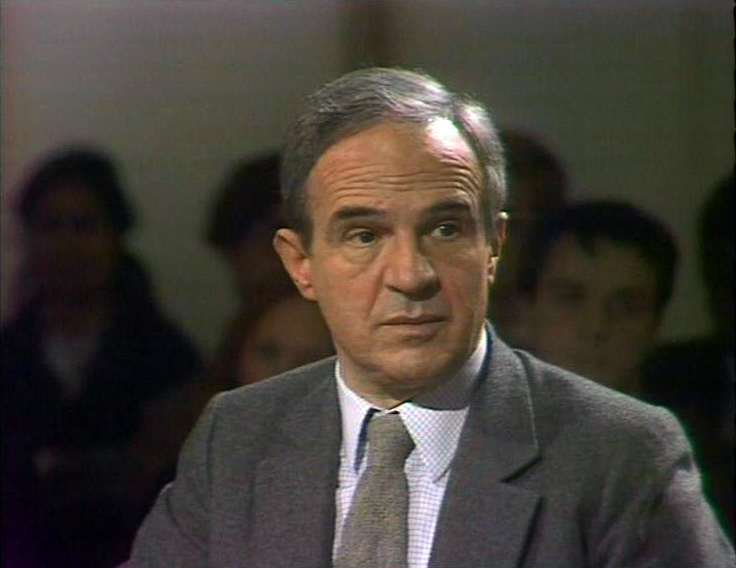
In 1980 Daney and Toubiana met Truffaut in an effort of reconciliation as he had been actively neglected from the magazine. They discussed the new philosophy of the magazine and requested help with financing that Truffaut would help to arrange. After their meeting Truffaut would say that he now had an ‘open neutrality’ towards Cahiers. As a result of this meeting, a lengthy interview with Truffaut would follow and would be published throughout two issues in 1980. It builds upon the two previous interviews with Truffaut. (This makes Truffaut the less interviewed nouvelle vague director. The other interviews include with Jean Collet, Michel Delahaye, Jean-André Fieschi from December 1962 and with Jean-Louis Comolli and Jean Narboni from 1967).
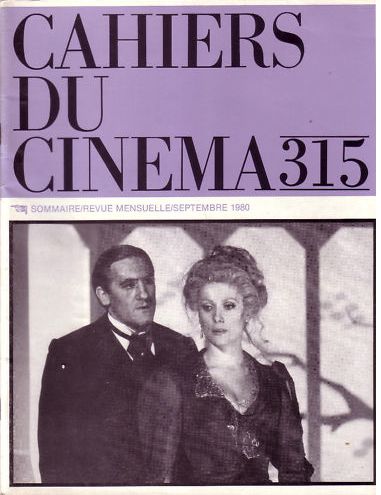
 The Événement film that sparked the encounters with Truffaut was Le Dernier Métro. The film was publicized on the magazine’s cover and a positive review, Une nuit au theatre by Yann Lardeau, was printed along with the interview. Truffaut, who represents French popular cinema, received an equal amount of attention as Godard.
The first part of the Truffaut interview by Daney, Narboni and Toubiana appeared in the September 1980 issue. The Événement was prefaced by Toubiana, Truffaut ou le juste milieu comme experience limite. The last interview the magazine had done with Truffaut was in 1967 (which was entitled, Le juste milieu) for Fahrenheit 451, and since then Truffaut made 13 more films.
Toubiana wrote,

There was thirteen years of silence or non-dialogue (there were some critiques of his films, but no interviews) between us and Truffaut because of our attachment to theory and our political chores. What we were looking for in the Seventies were what you could call limit experiences – far from the ‘juste milieu’ which preoccupied Truffaut.

Toubiana then argued that what Truffaut was doing at the juste milieu was a limit experience of the center of French society and film production. The extreme qualifier is that Truffaut was making the films that he wanted to make and he had the independence to make them through his own production company. It’s a paradoxical and contradictory proposition. Truffaut is not trying to distinguish himself from the other professionals in the French film industry but he’s not part of the Qualité française which he in the past denounced. Toubiana’s perspective offers a different way to look at Truffaut’s more conventional works. Cahiers was in perpetual evolution and it constantly tried to gaze beneath the surface of things.
In the interview Truffaut was very frank and modest. On his work as a director he said, “Finally, what makes me the happiest about cinema is that it gives me the best job possible.” “I don’t see an incompatibility between the terms auteur and professional.” “I work better with director-producers that work hard - Rohmer, Mocky, Berri – than with those that complain like spoiled children that deserve everything.” On Godard, who he thought was ‘compulsively jealous,’ Truffaut undermined his more high-minded statements by showing the simple, uncaring arguments behind them:

When Rivette received one of the largest advances on receipts - 200 million for four films - Godard went after him in Pariscope. ‘The pleasure of Rivette is the same as Verneuil but it’s not mine. Rivette has no longer any humanity.’ And then it was Rohmer’s turn when everyone admired La Marquise d’O, Godard criticized it. When Resnais won six or seven Césars for Providence, Jean-Luc, as you can expect, turned against him saying ‘Resnais hasn’t made any good films since Hiroshima.’

On his distancing himself from Cahiers, Truffaut said “I’ve stepped back from Cahiers since the day where I made my first film. I had the sense of changing camps [from critic to filmmaker].”
The interview with Truffaut signaled a major shift at Cahiers from Daney’s often enigmatic editorial stances to Toubiana’s more populist ones. Godard would not necessarily be dropped but he would no longer be as fetishized. Truffaut and other popular French directors would start to get equal coverage. Cahiers and Toubiana, drawing from Bazin, Truffaut, Hitchcock, and Chaplin, would show how strong personal art works could be created within the popular film industry.

Monday, February 9, 2015

Truffaut par Truffaut by the Cinémathèque française.

To coincide with their recent François Truffaut exhibition the Cinémathèque française put together an amazing website where they compiled a variety of Truffaut quotes. It’s described as “a website in the form of an intimate journal” and the quotes come from a variety of classic essays and interviews, which includes text, audio and videos (some of this rare footage is also embedded in the site). They’re full of fascinating insights on all of his films, how they were made, his personal obsessions, and the work of his many collaborators. The mise-en-page of Truffaut par Truffaut is gorgeous as the site, building upon the Cinémathèque’s extensive Truffaut’s Films de Carrosse archive, is full of rare pictures of the director, annotated documents, and interesting promotional material. Each new entry, which was slowly launched over a couple of months, opens with a unique banner and a brief resume of the previous chapter. It’s wide reaching as it goes from his beginnings and his disadvantaged childhood through to his early years as a film critic at Cahiers du Cinéma to his emergence as an innovative filmmaker alongside his nouvelle vague peers and finally to his steady career at Les films du Carrosse. The 15 sections of Truffaut par Truffaut are: L'école buissonnière, Premiers souvenirs de cinéma, André Bazin ou l'initiation à la critique, La passage à la réalization, Nouvelle vague, Les Films du Carosse, Série noire, Série blême; Antoine Doinel, moi et mon double; Fahrenheit 451, un tournage difficile; Cinéaste des passions, Acteur, Tournages, Filmer les enfants, Musique et chansons, and Truffaut/Hitchcock.

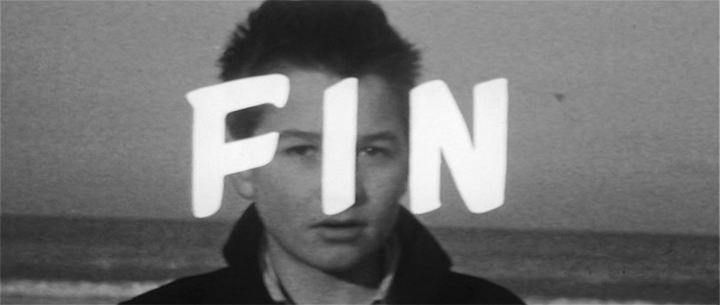
In it you can read about Truffaut’s troubled childhood and skipping class as a youth to go to the cinema (material he would draw from when he would make Les quatre cents coups). On these matinee screenings in the Forties Truffaut describes how the first movie theater that would open would receive a large group of kids who just wanted to get out of sight and off of the streets since they were skipping class. It would be in this period where Truffaut and his friend Robert Lachenay, through their film club Cercle cinémane, would get to know Henri Langlois and Bazin. Truffaut discusses how he first read Bazin in Revue du Cinéma – a critique of Monsieur Verdoux – and when Truffaut’s stepfather discovered that he ‘borrowed’ funds to run his film club and he brought him to prison (a similar experience that created guilt to what happened to Hitchcock) and that it was Bazin who got him out and who he would stay with afterwards, and who would get him a job at Travail et Culture. Bazin, and Jean Genet surprisingly, would also help Truffaut when he was trying to get out of his military service. Truffaut would dedicate Les quatre cents coups to Bazin.

On his youthful cinephilia, Truffaut discusses seeing Citizen Kane around 20 times by the age of 13, and that,  “Suddenly, I realized that a film could be written like a novel,” and that in this period, he denounced French films (“a little excessively”) in contrast to the star power of the American actors. He started writing serious film criticism in 1953 and his famous essay on the politique des auteurs (Cahiers N.31), which emphasizes the director’s worldview as illustrated through his body of work, and a certain extremity in taste, would be an important early influence at the magazine.

On what makes a good critique, around this time, Truffaut writes,
“It has to be intellectual, since it necessitates a reflection on the films. To comment upon them. But what to write! One can’t just be washed over by the images, you really had to analyze its scenario. This was a real important step for me: I started to search for why a film wasn’t entirely interesting, why the first half was good and the second went into these weird directions. For the first time, instead of saying ‘it’s good!’ or ‘it’s bad!’, I started to ask myself why.”
On Bergman’s Summer Interlude, “it’s the film that gave me the impression that anyone could write dialogue, or at least that I could.”

Meeting Rossellini in 1951, and working with him for two years on scripts (which were never made) greatly contributed to Truffaut wanting to become a filmmaker. It was Rossellini who would turn Truffaut a little away from American films in favor of simplicity, clarity, and logic. Truffaut made his first film at the age of 27. His first short film, Une visite (there is a picture of its script on Truffaut par Truffat), is a lost film and is described as being ‘not good.’ Alain Resnais even proposed to re-edit it. But as Truffaut says his first official work is Les Mistons working with Gerard Blain and Bernadette Lafont. Truffaut describes this short-film working best when it was closer to a documentary on the boys. Truffaut got money from Pierre Braunberger to make a documentary on a flood, which would become Une histoire d'eau and would be edited together by Godard. It was “copiously mocked!”

Truffaut’s definition of the nouvelle vague,
“The nouvelle vague never had an aesthetic program, it was simply a tentative to renew a certain independence that was lost around 1924, when films became to expensive, a little before the talkie. In 1960, for us, to make a film, it was to imitate D.W. Griffith, who made his films under the California sun, even before the birth of Hollywood. In this period, the directors were all really young. It’s crazy to know that Hitchcock, Chaplin, Vidor, Walsh, Ford and Capra all made their first films before the age of 25. It was the work of youthful boys, as it should be. Therefor the youth need to take over, like Guy Gilles or Lelouch, or even younger people, cameras in hand, ready to get in a helicopter or even to trek the Amazon.”
On Tirez sur le pianiste,
“In one way, I made Tirez sur le pianiste against Les quatre cents coups. For my second film, I felt there was a lot of expectations, from this public who only go to the cinema twice a year. I wanted to please those are really passionate about the cinema and only them, to re-route those who liked the earlier one. I refused to be the prisoner of this success, I avoided the temptation of making an ‘important film’. I turned my back on what was expected from me, and I took up as a rule to follow my own desires… And Tirez sur le pianiste also gave me the occasion to show that I was formed by American cinema.”
On Jean Renoir’s influence,
“I dedicated La Sirène du Mississipi to Renoir because, the way I improvise with the actors and dialogue, it was always him that I thought about. In front of each difficulty, I always asked myself: “How would Renoir get out of this?” I don’t think that a filmmaker should ever feel alone if he knows the thirty-five films of the auteur of La Règle du jeu and La Grande illusion.” 
On growing up,
“Up to L'Enfant sauvage, when there were children in my films, I always identified with them, and then, for the first time, I started to identify with the adult, the father, all the way to the point, that while I was finishing editing it, I decided to dedicate it to Jean-Pierre Léaud, because this passage for me, starting to become clearly evident. I thought a lot about him and our earliest work while I was making this film. For me, L'Enfant sauvage, it’s also my passage towards adulthood. Up to then, I always considered myself an adolescent.” 
On Hitchcock and their interview book,
“I told myself that if he accepted – for the first time – to answer systemically my questions on his art and his productions, that this book could produce a positive change in how American intellectuals see him… His oeuvre is both commercial and experimental. It’s as universal as Wyler’s Ben Hur and as confidential as Anger’s Fireworks. A film like Psycho, which was incredibly popular, is just as free and savage as certain youthful avant-garde films made on 16mm. The scale of North by Northwest, the tricks of The Bird have the poetic qualities of an experimental cinema as practiced by the Czech Jiří Trnka with his marionettes. I’m convinced that Hitchcock’s work, even on those that refuse to acknowledge it, influences, for a while now, all of world cinema. This influence, direct or subterranean, stylistic or thematic, well-done or badly assimilated, has been exercised on varied directors.”
The Cinémathèque, also to coincide with the exhibition, organized a series of fascinating conferences and published a new catalogue. Serge Toubiana, the director of Cinémathèque, speaks of his 1980 interview with Truffaut as a redefining experience, for himself and Cahiers, in understanding cinema’s potential to be both personal and industrial. This reconciliation with an important figure of the Cahiers project would become a decisive feature of Toubiana’s Cahiers editorship starting in the Eighties and it would continue onwards through his editorship, eventual side-projects and his responsibilities at the Cinémathèque. Toubiana would also publish a magnificent Cahiers issue on Truffaut after his death (Le Roman de François Truffaut), co-write a biography, and make a documenaty (Portraits volés) on him. In the new Truffaut catalogue (Flammarion) Toubiana also seems to be continuing a youthful Truffaut tradition by going out with an audio-recorder to do interviews with Truffaut’s past collaborators on their experiences and how it affected them.

Also there’s great new dossier on Truffaut on the website Feux Croisés. There Chloé Beaumont, who did a great job writing and putting together these texts, has an interview with Toubiana, and of note is Oriane Sidre’s article Truffaut l'acteur.

Truffaut’s spirit is still with us.
 ****

Friday, January 30, 2015

Le départ Truffaut, Le rencontre Truffaut


(Cahiers du Cinéma, January-February 1971, N.226-227)


 ***


(Cahiers du Cinéma, December 1984. Hors Séries: François Truffaut)

Saturday, January 24, 2015

Monday, October 27, 2014

L’école Truffaut

In the new issue of Cahiers (N.704) there is a good dossier on Truffaut to coincide with the Toubiana cinémathèque exhibition. In it Stéphane Delorme highlights one of Truffaut’s paradoxes, “it is this polemist that theorizes in the most efficient way,” and how for Truffaut film-criticism as a concept is tool of combat. And this means, “Today, where the excessive protection of auteur cinema prevents critical thought, there needs to be a return to Truffaut’s critical standards, to get ready for tomorrow’s cinema. So one must always repeat: this isn’t enough.”

Truffaut’s writing, as characterized by his first text at Cahiers, Les extrême me touchent (N.21, March 1953), a review of David Miller’s Sudden Fear, is one of a restless energy and subjective response. In this first text, Truffaut lays out the arguments that he would bring to the magazine: a defense of American films over French ones, a preference for small B films over pretentious serious ones, compassion for outsiders, and a love of actresses.

It is also worth noting that Joan Crawford plays a key role in Sudden Fear and in Truffaut’s review of it just like she does in one of Steven Spielberg’s early television works Eyes from Rod Serling’s Night Gallery. Coincidence? – D.D.
***

I’m Affected by Extremes (Translation from The Early Film Criticism of François Truffaut)

Sometimes they make films in the streets of Paris. A few extras [are there], more gapers, but no stars.
Concerned that you are not mistaken for one of the Béotians [people from the rue de la Béotie] who are hoping for the arrival of Suzy Carrier or Philippe Lemaire, you spot an assistant. You explain to him that you are not who he thinks you are. You directed a public debate at the Ciné-Club de Chamalières in Puy-de-Dôme on pure cinema before at least eighty people, and there is nothing you don’t know about the theme of failure in John Huston or about the misogyny of American cinema.
Supposing this first or second assistant hears you out, you ask him the ritual question, “What are filming?” To which he replies – what could he reply? – “We’re filming a linking shot.”
If Aurenche and Bost were adapting Le Voyage au bout de la nuit (Journey to the End of the Night), they would cut sentences, even words: what would remain? A few thousand suspension points; that is rare angles, unusual lighting, cleverly centered. The notion of a shot in France has become concern for clothing, which means following fashion. Everything happens to the right and to the left, off the screen.
This preamble, in order to introduce a film is completely different. An American film. David Miller is the director of Sudden Fear. He made La Pêche au trésor [Love Happy (1950)] and Celle de nulle part [Our Very Own (1950)]. Before that he assisted in [the World War II Allied propaganda series] Why We Fight.
While respectable, nothing in his recent career led us to suspect that David Miller would give us the most brilliant “Hitchcock style” known in France.
Outside of two very short but fairly unpleasing sequences (a dream and a planning sequence in pictures), there is not a hot in this film that isn’t necessary to its dramatic progression. Not a shot, either, that isn’t fascinating and doesn’t make us think it is a masterpiece of filmmaking.
If the audience laughs when it isn’t suitable to do so, I take that as a sign of daring, of finish. The public has lost the habit of intensity. Twenty years of adaptations that are guilty of excessive timidity have gotten the public accustomed to golden insignificance. Filming Balzac has become impossible. Put into pictures, Grandet’s deathbed agony reaching for the crucifix would cause gales of laughter in the same people who swoon with admiration when a legless cripple hurtles down a street at fifty kilometers an hour.
The “in” public, the public of the Ciné-Clubs, is hardly any different. Althoug they may allow Ladies of the Boies de Boulogne [1945] (no doubt because of Diderot and Cocteau), they are ready to burst out laughing at all of Abel Gance’s films. What Ciné-Club has shown Nicholas Ray’s They Live by Night [1949] or Robert Wise’s Born to Kill [1947] – the most “Bressonian” of the American films?
As for the films, films of psychological anguish, laughter is a form of revenge of the spectator on the auteur of the story, which he is ashamed to have believed in. Yes, twenty years of fake great subjects, twenty years of Adorable Creatures, Return to Life, Don Camillo, and others like Minute of Truth have created this blasé public, whose sensibilities and judgment alike are alienated by the base and despicable “fear of being duped,” denounced by Radiguet.
No doubt it is this attitude of the public that has made Hitchcock pretend not to believe in the subjects he is dealing with by introducing into his films that element of humor –English, so they say – that is useless in my opinion, and Hitchcock’s detractors claim is the “tithe” through which the auteur of Strangers on a Train [1951] will be able to claim a right to purgatory of bad filmmakers of good will.
A weekly paper that no one is obliged to take seriously affirms that Joan Crawford herself financed Sudden Fear with half of her personal fortune: half a million dollars. No Matter.
The casting: it is permissible to have forgotten Crossfire [1947; Dir. Edward Dmytryk], but not a young blond woman who was better than an intelligent extra: as a prostitute, she danced in a courtyard. Even professional critics noticed the dancer; it was Gloria Grahame, whome we saw again in L’as du cinéma [Merton of the Movies (1947); Dir. Robert Alton] playing opposite Red Skelton.
Then Gloria Grahame became Mrs. Nicholas Ray and made In a Lonely Place [1950], with Humphrey Bogart as costar, under the direction of Nicholas Ray himself.
Gloria is no longer Mrs. Ray, as far as we know, and is filming in Germany under the direction of Kazan. We will see her again even sooner in Cecil B. DeMille’s Greatest Show on Earth [1952].
 It seems that of all the American stars Gloria Grahame is the only one who is also a person. She keeps from one film to the next certain physical tics that are so many acting inventions and that can only be vainly expected from French actresses. Let’s be serious (we are required to, since a production hangs in the cinematographic balance); Edwige Feuillère, Madeleine Robinson, Danielle Delorme, Michèle Morgan, and Dany Robin opposite the [production] that proposes among a hundred others Lauren Bacall, Joan Bennett, Susan Hayward, Jennifer Jones, and Gloria Grahame? It took all the genius of Renoir, Bresson, Leenhardt, and Cocteau to make Mila Parely, Maria Casarès, Renée Devillers, and Edwige Feuillère appear to have any genius. From one film to the next, on the other hand, Gene Tierney, Joan Bennett, and Susan Hayward equal on the other hand, Gene Tierney, Joan Bennet, and Susan Hayward equal themselves. That and the bill for American cinema, often perfect right down to “Series Z” films, upset by hierarchy that could not be the same in our country where the only things that count are ambitious screenplays and the producer’s quote. In reality, there are no directors of actors in France, except those four names whose praises can never be sung enough: Renoir, Bresson, Leenhardt, and Cocteau. Gloria Grahame’s acting is all in correspondences between cheeks and looks. You can’t analyze it, but you can observe it. Let us make ours the definition  by Jean-Georges Auriol: “cinema is the art of doing pretty things to pretty women,” and let us wager that as he wrote that, he was thinking more of Jean Harlow than of Lisette Lanvin.
Jack Palance has been known to us since a good film of Elia Kazan’s Panic in the Streets [1950]. His character here is that of a young man with unusually fine physical qualities and who, by his exceptional charm, acquires the favors of women whose experience with men has made them less demanding and, at the same time, more so.
Joan Crawford? A question of taste. She takes her place in a category that I label rather crudely the “Raimu/Magnani tradition.” But if it’s really true that we owe the existence of this film to her…
Each follows his own path. The one that Jack Palance and Gloria Grahame have chosen will lead them to death.
Joan Crawford’s path is also the San Francisco street that seven years of American cinema from The Lady from Shanghai (1948; Dir. Orson Welles] to They Live by Night [1949; Dir. Nicholas Ray] have made familiar to us. An ingenious screenplay with a fine strictness, a set more than respectable, the face of Gloria Grahame and that street of Frisco whose slope is so steep, the prestige of a cinema that proves to us every week that it is the greatest in the world.”

François Truffaut

Monday, October 20, 2014

Wednesday, July 9, 2014

François Truffaut by Lillian Ross

“There’s a scene I would like to have in a film. About an elderly and prominent man. A young man comes to see him, to get something from him, to learn how achieve prominence and success. The old man is facing him this young man – virile, healthy, ambitious. All the old man tells him is ‘Play golf. Sleep eight hours a night. Do not smoke. Do not eat too much. Be sure not to put on weight.” - François Truffaut

The new book François Truffaut: from The New Yorker, 1960-1976 published by The Film Desk consist of five short featured interviews with the French director, and as the title indicates, they start in 1960 when he’s at the start of his filmmaking career all the way to 1976. Lillian Ross, who is best known for her book Picture on the making of John Huston’s The Red Badge of Courage, writes in the signature The New Yorker cosmopolitan writing style, which is attuned to larger cultural descriptions such as close details to diets, appearances, fashion, and social life just as much it does to art. These interviews make a nice counter-point to Antoine de Baecque and Serge Toubiana’s exhaustive biography and to the excited interviewer in the Hitchcock book – Truffaut’s criticism is too literary and polemic to reflect the casual generosity of these other texts or his rare media appearances.

On the Hitchcock interviews,
“From the third day on, his sensitivity emerged. He became self-critical. He described scenes in which he thought he had done something that was foolish or pretentious or careless. I was struck by the contrast between the public man, so sure of himself, so cynical, and what seemed to me to be a very vulnerable man, very emotional… And I learned what I needed to know… the principle, extremely important, that an emotion must be created on screen and then must be sustained – on the technical level as well as on the scenario level.”
Truffaut becomes just as open in these interviews with Ross. Some of Truffaut’s fascinating comments include: Morris Engel’s Little Fugitive is quoted as being a big influence on the New Wave for teaching them about the benefits of smaller, more independent productions. There are interesting remarks on his youth and childhood in general. The five films about childhood that Truffaut admires the most are Zéro de conduite by Jean Vigo (“who has had the greatest influence on my work”), The Road to Life, Germany Year Zero, Little Fugitive, and The Two of Us. (It’s a shame that he never got around to The Night of the Hunter and Moonfleet, films that would only be reevaluated after his time). Truffaut discusses his literary taste: he’s a great admirer of Henri-Pierre Roché, whose two novels Jules et Jim and Les Deux Anglaises et le continent he would adapt. Truffaut prefers the American society and their media landscape to that of the French, even though he acknowledges that it’s from the position of a visitor (his remarks of the French during the occupation and the post-68 depoliticization are especially scathing). In Paris he prefers snack bars to haute cuisine: he recommends Manny’s Bar on Rue Washington street. On Close Encounters of the Third Kind, “Spielberg telephoned him in Paris and told him he liked the way Truffaut wore an old-fashioned wristwatch and always wore a necktie.” It almost appears that he learnt English, which he speaks about at length, to read more film books as the two books he describes as Extraordinaire! (which is quoted phonetically) are Memo from David O. Selznick and Vincente Minnelli’s I Remember It Well both which he procured at the “best shop for film,” Larry Edmunds Cinema & Theatre Bookshop on Hollywood Boulevard. There is also an indelible anecdote of Truffaut going to Cinemabilia at 10 West Thirteenth Street in New York where he scours through their books. On academia, “Their interest in movies is fine, he thinks, but intellectuality about movies without enthusiasm may not be such a good thing.” Truffaut is also critical of some of his projects, and there is surprisingly little talk of Jean-Pierre Léaud or any of the other New Wave directors.

There is almost a Groundhog Day repetition at the start of each piece as Ross repeatedly describes Truffaut, his current project that brings him to town, the magazine’s relationship to him, and how many movies that he’s seen in his life. From the age of eleven to twenty-eight he’d seen 3000 films and by the last trip at age of forty-four he would have seen 2450 more, which adds up to 5450. The life of a cinephile! There is an ambivalence for Truffaut between this enthusiastic film love with a melancholic solitude. His travels are described to be lonely and he seems to really cherish his friendships, especially with Jean Renoir. There is the impression of Truffaut growing older through the sixteen years of these interviews. He becomes more mature, ages physically, learns English, and directs more films. It seems like it could be right out of Domicile Conjugal when he talks about his two daughters,
“They don’t live with me, because I am divorced, but I see them constantly. And I constantly take them to see movies. Luna is eleven, and I took her with me to see Gone with the Wind. She said, ‘It’s the most beautiful movie I have ever seen.’ Eva is eight. She compelled me to see Mary Poppins twice. Because I saw it through her eyes, I loved it. Most of the time, I wind up liking the same movies they do.”
Knowing that Truffaut died of cancer too young at the age of 52 shadows the book and makes casual observations of life, growing old and death even more melancholic. Because of this the small moments of enthusiasm and joy come off as even more important and what makes life worth living. In 1973 Ross describes him as, “He is getting more and more lovable with age (by the time he’s eighty he’ll probably be a cross between Mr. Chips and Jean Gabin).” Life is short. Make the most of it.