Showing posts with label Cinémathèque Française. Show all posts
Showing posts with label Cinémathèque Française. Show all posts
Wednesday, May 6, 2015

Monday, February 9, 2015
Truffaut par Truffaut by the Cinémathèque française.

To coincide with their recent François Truffaut exhibition
the Cinémathèque française put together an amazing website where they compiled
a variety of Truffaut quotes. It’s described as “a website in the form of an
intimate journal” and the quotes come from a variety of classic essays and interviews,
which includes text, audio and videos (some of this rare footage is also
embedded in the site). They’re full of fascinating insights on all of his
films, how they were made, his personal obsessions, and the work of his many
collaborators. The mise-en-page of Truffaut par Truffaut is gorgeous as the
site, building upon the Cinémathèque’s extensive Truffaut’s Films de Carrosse
archive, is full of rare pictures of the director, annotated documents, and
interesting promotional material. Each new entry, which was slowly launched
over a couple of months, opens with a unique banner and a brief resume of the
previous chapter. It’s wide reaching as it goes from his beginnings and his
disadvantaged childhood through to his early years as a film critic at Cahiers du Cinéma to his emergence as an
innovative filmmaker alongside his nouvelle
vague peers and finally to his steady career at Les films du Carrosse. The
15 sections of Truffaut par Truffaut are:
L'école buissonnière, Premiers souvenirs de cinéma, André Bazin ou l'initiation
à la critique, La passage à la réalization, Nouvelle vague, Les Films du
Carosse, Série noire, Série blême; Antoine Doinel, moi et mon double; Fahrenheit 451, un tournage difficile;
Cinéaste des passions, Acteur, Tournages, Filmer les enfants, Musique et
chansons, and Truffaut/Hitchcock.
In it you can read about Truffaut’s troubled childhood and
skipping class as a youth to go to the cinema (material he would draw from when
he would make Les quatre cents coups).
On these matinee screenings in the Forties Truffaut describes how the first movie
theater that would open would receive a large group of kids who just wanted to
get out of sight and off of the streets since they were skipping class. It
would be in this period where Truffaut and his friend Robert Lachenay, through
their film club Cercle cinémane, would get to know Henri Langlois and Bazin. Truffaut
discusses how he first read Bazin in Revue
du Cinéma – a critique of Monsieur Verdoux – and when Truffaut’s
stepfather discovered that he ‘borrowed’ funds to run his film club and he brought
him to prison (a similar experience that created guilt to what happened to Hitchcock) and that it was Bazin who got
him out and who he would stay with afterwards, and who would get him a job at Travail et Culture. Bazin, and Jean
Genet surprisingly, would also help Truffaut when he was trying to get out of
his military service. Truffaut would dedicate Les quatre cents coups to Bazin.
On his youthful cinephilia, Truffaut discusses seeing Citizen Kane around 20 times by the age
of 13, and that, “Suddenly, I realized
that a film could be written like a novel,” and that in this period, he
denounced French films (“a little excessively”) in contrast to the star power
of the American actors. He started writing serious film criticism in 1953 and
his famous essay on the politique des
auteurs (Cahiers N.31), which
emphasizes the director’s worldview as illustrated through his body of work,
and a certain extremity in taste, would be an important early influence at the
magazine.
On what makes a good critique, around this time, Truffaut
writes,
“It has to be intellectual, since it necessitates a reflection on the films. To comment upon them. But what to write! One can’t just be washed over by the images, you really had to analyze its scenario. This was a real important step for me: I started to search for why a film wasn’t entirely interesting, why the first half was good and the second went into these weird directions. For the first time, instead of saying ‘it’s good!’ or ‘it’s bad!’, I started to ask myself why.”
On Bergman’s Summer
Interlude, “it’s the film that gave me the impression that anyone could
write dialogue, or at least that I could.”
Meeting Rossellini in 1951, and working with him for two
years on scripts (which were never made) greatly contributed to Truffaut
wanting to become a filmmaker. It was Rossellini who would turn Truffaut a
little away from American films in favor of simplicity, clarity, and logic.
Truffaut made his first film at the age of 27. His first short film, Une visite (there is a picture of its
script on Truffaut par Truffat), is a
lost film and is described as being ‘not good.’ Alain Resnais even proposed to
re-edit it. But as Truffaut says his first official work is Les Mistons working with Gerard Blain
and Bernadette Lafont. Truffaut describes this short-film working best when it
was closer to a documentary on the boys. Truffaut got money from Pierre Braunberger to make
a documentary on a flood, which would become Une histoire d'eau and would be edited together by Godard. It was
“copiously mocked!”
Truffaut’s definition of the nouvelle vague,
“The nouvelle vague never had an aesthetic program, it was simply a tentative to renew a certain independence that was lost around 1924, when films became to expensive, a little before the talkie. In 1960, for us, to make a film, it was to imitate D.W. Griffith, who made his films under the California sun, even before the birth of Hollywood. In this period, the directors were all really young. It’s crazy to know that Hitchcock, Chaplin, Vidor, Walsh, Ford and Capra all made their first films before the age of 25. It was the work of youthful boys, as it should be. Therefor the youth need to take over, like Guy Gilles or Lelouch, or even younger people, cameras in hand, ready to get in a helicopter or even to trek the Amazon.”
On Tirez sur le
pianiste,
“In one way, I made Tirez sur le pianiste against Les quatre cents coups. For my second film, I felt there was a lot of expectations, from this public who only go to the cinema twice a year. I wanted to please those are really passionate about the cinema and only them, to re-route those who liked the earlier one. I refused to be the prisoner of this success, I avoided the temptation of making an ‘important film’. I turned my back on what was expected from me, and I took up as a rule to follow my own desires… And Tirez sur le pianiste also gave me the occasion to show that I was formed by American cinema.”
On Jean Renoir’s influence,
“I dedicated La Sirène du Mississipi to Renoir because, the way I improvise with the actors and dialogue, it was always him that I thought about. In front of each difficulty, I always asked myself: “How would Renoir get out of this?” I don’t think that a filmmaker should ever feel alone if he knows the thirty-five films of the auteur of La Règle du jeu and La Grande illusion.”
On growing up,
“Up to L'Enfant sauvage, when there were children in my films, I always identified with them, and then, for the first time, I started to identify with the adult, the father, all the way to the point, that while I was finishing editing it, I decided to dedicate it to Jean-Pierre Léaud, because this passage for me, starting to become clearly evident. I thought a lot about him and our earliest work while I was making this film. For me, L'Enfant sauvage, it’s also my passage towards adulthood. Up to then, I always considered myself an adolescent.”
On Hitchcock and their interview book,
“I told myself that if he accepted – for the first time – to answer systemically my questions on his art and his productions, that this book could produce a positive change in how American intellectuals see him… His oeuvre is both commercial and experimental. It’s as universal as Wyler’s Ben Hur and as confidential as Anger’s Fireworks. A film like Psycho, which was incredibly popular, is just as free and savage as certain youthful avant-garde films made on 16mm. The scale of North by Northwest, the tricks of The Bird have the poetic qualities of an experimental cinema as practiced by the Czech Jiří Trnka with his marionettes. I’m convinced that Hitchcock’s work, even on those that refuse to acknowledge it, influences, for a while now, all of world cinema. This influence, direct or subterranean, stylistic or thematic, well-done or badly assimilated, has been exercised on varied directors.”
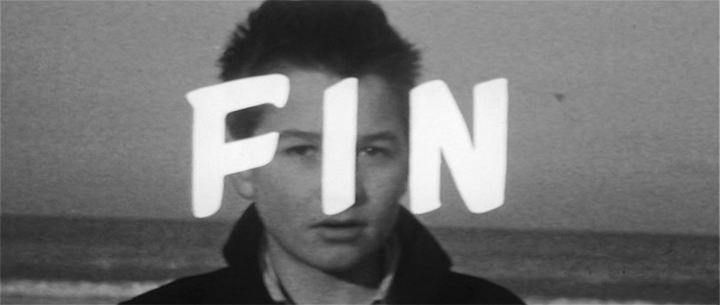
The Cinémathèque, also to coincide with the exhibition,
organized a series of fascinating conferences and published a new catalogue.
Serge Toubiana, the director of Cinémathèque, speaks of his 1980 interview with
Truffaut as a redefining experience, for himself and Cahiers, in understanding cinema’s potential to be both personal
and industrial. This reconciliation with an important figure of the Cahiers project would become a decisive
feature of Toubiana’s Cahiers editorship
starting in the Eighties and it would continue onwards through his editorship, eventual side-projects and his responsibilities at the Cinémathèque. Toubiana would also publish a magnificent Cahiers issue on Truffaut after his
death (Le Roman de François Truffaut),
co-write a biography, and make a documenaty (Portraits volés) on him. In the new Truffaut catalogue (Flammarion) Toubiana also seems to be
continuing a youthful Truffaut tradition by going out with an audio-recorder to
do interviews with Truffaut’s past collaborators on their experiences and how it affected them.
Also there’s great new dossier on Truffaut on the website Feux
Croisés. There Chloé Beaumont, who did a great job writing and putting together
these texts, has an interview with Toubiana, and of note is Oriane Sidre’s
article Truffaut l'acteur.
Truffaut’s spirit is still with us.
Monday, October 8, 2012
Serge Daney: early Cahiers du Cinéma writing
Nous aurons été les dernier à vénéré Serge Daney…
There is a lot going on regarding the French film-critic Serge Daney: his life was recently celebrated by the Cinémathèque
française with a series Serge Daney: 20 Ans Après. There was the publication by Edition P.O.L. of a
new book of his collected writing: the third in the series La Maison cinéma
et le monde - Les années Libé II (1986-1991). In Cahiers du
Cinéma, where Daney played an important
role as a writer between 1964 to 1981, - he left the monthly magazine, to have
a more direct, daily relationship with his readers at Libération – the magazine ran a feature Hommage: Serge Daney (N.679). In a recent issue of Trafic
(N.82), a journal that Daney co-founded,
they published three essays by and/or about him: Marché de l’individu et disparition de
l’experience by Serge Daney, a critique of
publicity and television regarding the corruption of images; Appartions
de Serge Daney by Pierre Eugène, which is a
really clever essay – perhaps as reflexive as the En Couverture series over at Nightswimming – where Eugène takes the subject of so many Daney analysis, the image,
and interrogates Daney’s manifestations on them (in documentaries, and such); and Serge Daney
pour mémoire by Marcos Uzal, who describes an emotional and intellectual ciné-filitation that he has towards Daney, while also addressing this phenomenons larger social impact.
In the world of English-language film criticism, Daney is
most readily associated with Jonathan Rosenbaum, who regularly brings up his
old French friend (I’ve seen Jonathan talk twice on panels, and on both times he
brought him up). It’s unfortunate that his only translated book, Postcards
from the Cinema, is out-of-print. But to
make up for the lack of official translations of his work, the internet has
spoken: a few film-blogs – some of the best ones out there, in
my opinion – have picked up the slack and their writers have taken up the role as unofficial
Daney translators: these websites are Serge Daney in English, Steve Erickson’s website, Kino Slang, Diagonal Thoughts and My Gleanings.
Here is my attempt to contribute to this conversation: the following are my translations of Daney’s first three contributions to Cahiers, which I think are insightful to better
understand the spirit of Cahiers and
his legacy which lives on in the world of film-criticism.
*****
Petit Journal du Cinema: Retrospective Donskoy (Cahiers,
April 1964, N.154)
The cinema of Mark Donskoy - as it was revealed at the
retrospective at the Cinémathèque Française - affects us by its singular love
for life. This tenderness which affects, this attachment towards everything
alive, this predilection for kids: this is what separates him from the truisms
of Soviet cinema. Donskoy, likewise for any great director, wouldn't mean
anything to us if his tenderness didn't arise from cruelty, the tragedy of the
pursuit of happiness alongside the suffocation of life.
Because he believes in the fatality of life, Donskoy shows
what restrains and suffocates. Existence, feverish and precarious, always
menaced, which is seized by a look of incomprehension on a child's face, brings us
closer to Griffith then any other Russian filmmaker. He has a way to portray
growing up by showings its contradictions and what prevents it - doing the
subject justice - in regards to: political constraints (Mother, 1955), describing a stifling world (the Gorky
Trilogy, 1938-39) and the condemned (Thomas Gordejev, 1959), a village of martyrs (Rainbow, 1943), the tragic tales of separated lovers, the
injustice of man (The Horse That Cried, 1958). A thematic link between the films, but especially a major
preoccupation for the filmmaker: it's when something is lost or when it's being
fought for that it's truly there: hence, joy.
The same intention presides in the films form. If the
constraint prides blossoming, only with discontinuity will we find any
equilibrium. This is an art that affects us by its modernity: founded on
oppositions, with ruptures of tone, a complexity of construction, and all of
this without even mentioning the music. The cineaste goes as far as
punctuating his films with interior rhythms, of camera-movements that respond
to no other necessity then to establish a network of musical correspondences (Mother). An art whose effect, goes through breaks and
dissonance, where one note, one melody, can cause a fervor: the final triumph
of life: ultimate cavalcade (How The Steel Was Tempered, 1942), the rain on the tracts in Mother, the liberating combat that finishes Rainbow.
If sometimes this approach works to the detriment of
Donskoy, in the less good films, misery that leads to boredom, this shouldn't
take away from the merits of the filmmaker, but only should prove that for him,
like with all inspired cineastes, beauty only stems from what’s going on in addition, independent of formulas. It is then in between an
elegy and cruelty, between The Horse That Cried and Rainbow, where we need to place Mark Donskoy. If it's true,
according to the cineaste, one must hate before one can love. - S.D.
*****
Petit Journal du Cinema: Sirk A Munich (Cahiers, June 1964, N.156)
After Imitation of Life we hardly ever heard from Douglas Sirk. What had happened to him? A
long illness forced him to abandon two cinematographic projects, Lady
X and Streets of Montmartre (about the life of d'Utrillo and Suzanne Valdon,
supposedly starring Lana Turner). He then left Hollywood and the New World, to
return to the Old World (Switzerland, where he would relax) but where he
couldn't help returning to his first love: the theater. For Residenz-theater
(the national theater) in Munich, his first mise-en-scène was Cyrano
de Bergerac, which was unanimously praised
by the critics (they spoke of a "literal opera of speeches").
Afterwards, he would take on Exit the King by Ionesco, in a version very faithful to the original text.
It's then under the green and pink sun in Munich, eating
sausages with sauerkraut and drinking two giant beers, that we had a chance to
assist one of these plays. Even though Sirk was still in recovery, he seemed
absorbed in his work, with his eyes on the lookout, hiding in the shadows of
the empty hall to better survey, then sliding out on the stage, to mime actions
to the actors, demanding them to put more of themselves into their roles,
pointing to the French text before stampeding off of the stage. The stage set
is fantastique (it reminds us of the house in Written on the Wind) full of unreal purple tints; the actors (of
reputation in Germany) that we certainly know in France, like Kurt Meisel (who
has appeared on the screen numerous times, particularly good in A
Time to Love and a Time to Die) brings
to his role of the king his unsettling presence and conviction.
That Exit the King
responds to specific Sirkian preoccupation is without a doubt: the
mise-en-scène insists (and the play wonderfully lends itself) that there should be the the collapse
of the palace, on the deterioration of the decor, that it be constricting and
hostile all the way to the end, up until the king is literately dead, until it
closes in on itself. We then understand the importance of this work for Sirk, a
prolongation of his cinema oeuvre, and where he could finally emphasize a
tragic dimension, that he couldn't put in his films (he confided this to us)
due to commercial reasons. But, finally, he doesn't plan on giving it all up
for the theatre, as Sirk confesses to us, Hollywood still attracts him: it's
likely that he'll make Lady X,
and certainly Streets of Montmartre,
which seems to hold a strong place in his heart, with the first of these films
for Universal, and the second for a smaller, less important company. But,
especially, he hopes to film in Europe. - S.D. and J.-L. N.
*****
Frank Tashlin's Who's Minding The Store? : Frank and Jerry (Cahiers, June 1964, N.156)
Because cruelty and
dryness always arises - a recurring Tashlin thematic - it's appropriate to imagine him differently: while
he betrays more than when he liberates. Lets talk less about America, and talk
more about Tashlin. It's true that America is always the subject of his films.
Even more so than that, they are its foundation: the cineaste needs to put back
in place what he has seen, which is the condition for a new movie. Also, the
last one in a series (and the best one in a while) isn't an exception to the
rule: it's exemplary of its aim, rigorous in its manner, disturbing in what
escapes it.
Tashlin was never tender when he looked upon an inhuman
world; when he wanted to denounce artifice, he resorted - in all sincerity - to
satire and caricature. Between
when he started his career to his days with animation, his detachment was thin
and the ambiguity was immense: if the "American way of life" is a caricature of real life, as far as the genre of satire is concerned: both of
them only exist in relation to something which is preexisting. In that case,
Tashlin exist because of, and for, the monsters that he plans on destroying.
Because he goes to war with false arms, his
successes are always conditional. This vision of a mechanical world where
humanity is slowly devoured and overrun with quarrels about differences, and
where a complicity (like the jaded world of the comics in Artists and Models) is no longer
possible. Between the man and the machine, the inventor and the invention, the
relations are no longer about submission but of uncertainty: when the machines
win their freedom, the men loose their maturity. It is this relation that
Tashlin pursues and highlights with an unflagging precision, which makes his
cinema a cinema of cranks and wheels and where all that matters is social
climbing.
Betrayed by his mise-en-scène, Tashlin falls prey to the
traps of all mechanisms (similar, to the cause and effect laws of animation). And what happens to the systems? They crash and
destroy themselves by the same rhythm and movements that make them up and which
they assimilate. They have their own laws, which one can follow, and are a
creation of the human spirit: but what is created by man can also be destroyed by man.
And the only way out of this infernal cycle, which traps, would be then to
specifically include the uncontrollable: life, itself. An anarchistic behavior,
externalizing itself at each instant; in
short, everything in Tashlin's oeuvre with Jerry Lewis.
The role and the importance of Jerry Lewis got stronger as
the two of them evolved, which is now in parallel to one another. Between their own films
and their reunions, like this one, we have reached a point where Lewis started to
reign over Tashlin. The moment where the director gave the star carte blanche
is also the one where he reached the limit of his art: life itself, in its most
anarchistic form, can’t be created, just like you can’t really direct Jerry
Lewis. This is what is achieved in this film.
Here, in the framework of a scenario that authorizes
everything and excludes nothing (a superstore), the register is that of a joyous
feeling: Tashlin disposes of his tools, Lewis drops the ball. When everything
drops, this disorder is that of poetry and the fantastique. It is in all innocence
that Lewis no longer recognizes the mechanism of a world where – despite
himself – he can only provoke catastrophe. An object of curiosity (here, the
whims of Jill St. John), he is embarrassed by a
world where he reflects its faults (and also its strengths) - a humanity
descended into mimicry, where grimaces reflect a scandalous fading of energy.
Unflappable and indestructible because he isn’t a
creation, but an incarnation of nature, the force unleashed by Tashlin is to exercise
his personal demons: the worry of the fate of being submissive and condemned. Therefore the
only possible positive movement belongs to Tashlin and that is of being a
destructor. This paradox is the best explication of Tashlin's drama which is that of being
able to grasp man by certifying that there is a disappearing progression or
by evoking animalistic and monsterous forms (Jerry Lewis). Always by failing or exceeding his
objectives (jaded episodes even in the warm films like Artists and Models), he is now closer to the object and closer to the animal, which forces Tashlin to show what really alienates man: what really makes him a caricature and an
animated drawing.
With a bitterness and precision, this is the triumph of
their latest film. All that is left is the purity of the drawing with its
relentless movements, which precipitates each sequence towards its natural
outburst. Behind this exasperation, what is also brought to light, is that it shows a
worry that might admit to that sterility which exists (Charles MacGivern). This is what gives this
light-hearted film it's grave tone. – Serge DANEY
Subscribe to:
Posts (Atom)