Monday, March 9, 2015

Saturday, March 7, 2015
Jean-Marc Vallée at RVCQ
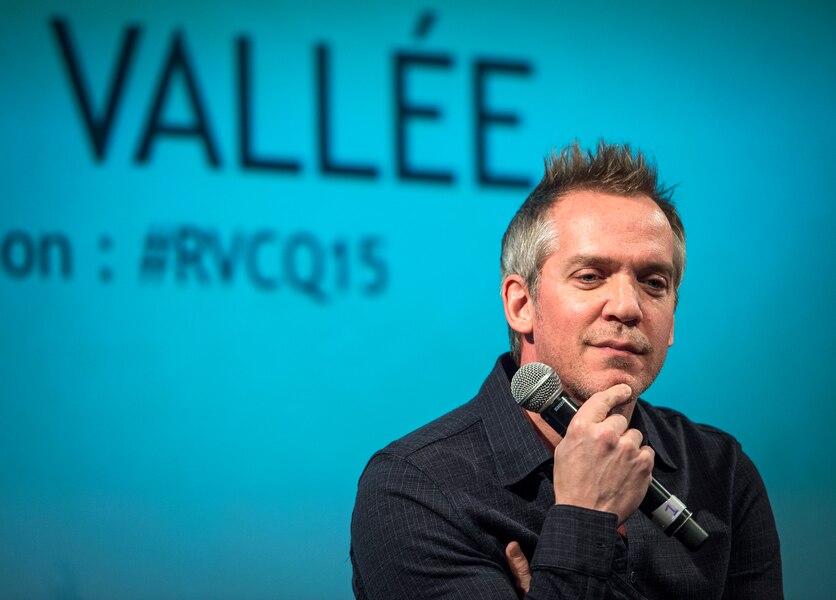
My biggest disappointment so far this year is not having gone to this.
Jean-Marc Vallée is one of the great directors. He's the eyes and ears of a Canadian cinephilia in the Hollywood machine.
Read Marie-Josée Roy's coverage of his Leçon de cinéma. It's fantastic.
Jean-Marc Vallée is one of the great directors. He's the eyes and ears of a Canadian cinephilia in the Hollywood machine.
Read Marie-Josée Roy's coverage of his Leçon de cinéma. It's fantastic.
Monday, March 2, 2015
Extracts from an Interview with Antoine de Baecque
[…]
“Like said Serge Daney, or
actually more like the opposite, cinema didn’t watch over my childhood. I
wasn’t a cinephile, like were the other young writers at Cahiers from my
generation. The cinema didn’t count for much during my childhood. I discovered
it actually a little late when I was in hypokhâgne and khâgne. I was twenty
years old. And the cinema that I discovered wasn’t necessarily the popular
auteurs. My first shock was Andrei Tarkovsky. This wasn’t part of the Cahiers
culture. It was something different. It was only after this that I experienced
a catch-up effect. I had to discover all of the films that I missed through my
adolescent. Notably when I joined Cahiers, and more precisely when I wrote the
two volumes of its history. For that task I had to watch an enormous amount of
films, notably all of the American films since the 1950s.

“I wasn’t born into a
cinephilia, like are most people at Cahiers. I have a trajectory that is a
little particular. My father, didn’t value cinema too highly. He was a man of
the theater, which was initially also my culture. He was a playwright. Every
week he would take me to see two or three plays. This is why in my adolescent
my culture of theater was bigger than that of cinema. It’s paradoxical at
Cahiers, where theater is generally disliked. This makes me pretty rare there
for liking theater, which I continue to attend, and sometimes write about. I
remember conversations with Daney, who would tell me, that theater bored him
and he didn’t like how everyone spoke so loudly. The Cahiers cinephile culture
was also historically build against the theater. The only strong to link to
cinema in my biography was experienced through a director that my father worked
with; otherwise he didn’t really work in cinema. But my father was actually the
scriptwriter for the director Gérard Blain. I knew him well. My father actually
wrote all of the scripts of Gérard Blain’s first films. So Gérard was a major
figure in my childhood and adolescence. And it is like that that I first had
contact with the cinema. To see my father work with him, to go onto the set,
when I was only 12 or 13.
“After this, it was
Tarkovsky that was a real shock. So afterwards I started to go see all of the
new films by Godard and Truffaut when they came out. So now we are at the
beginning of the Eighties. I was born in 1962 so I was 20 in 1982. So it is at
this moment when I started to go a lot to the cinema. And really quickly my
relationship with the cinema brought me towards criticism. I wrote about what I
was watching. The films of Tarkovsky and I also really liked African cinema. I
wrote just for myself on Passion, Prénom Carmen and the other films by
Godard in this period. It was decisive.
“I think I’m one of the
rare people at Cahiers that has a complete scholarly and academic background
from
the École normale supérieure de Saint-Cloud. I studied literature, and at
school I formed a group. We created a theater company and we started a literary
magazine. I also created a film magazine, which exists today, and which is
called Vertigo. It was really hand-made and artisanal. We are in 1984 and
through this magazine we have a more active role in the cinephile culture. We went
to both the Cannes and Venice film festival this year. It was still possible in
this period to just attend these festivals as a cinephile and to be able to
watch films. It’s at Cannes in 1984 where I met the guys at Cahiers like
Toubiana and his team that was there. It’s a particular moment at Cahiers
because a lot of people that are there are about to leave like Assayas, Tesson
and Bergala. They were the pillars at Cahiers since the beginning of the
Eighties and they helped return Cahiers towards the center of cinema. They are
leaving to make films, or become distributors or producers. Leos Carax was part
of this too.
[…]
“Daney was no longer at
Cahiers. When I arrive it’s 1984 and he’s already at Libération.. I’ve been
reading him at Libé, which has always been my newspaper. I’ve always read him
with interest, but never knew him personally. I met him a little later. I
remember that it was Nicolas Saada, one of the younger critics from my
generation who arrived around the same time as I did, in the mid-Eighties, who
one day during a projection, it must have been sometime between 1987 and ’87, he
pointed Daney out to me, and told me that that was the greatest French film
critic. I knew the name, but I wouldn’t have recognized him.
“So the chief editor of
Cahiers that I met was Toubiana. It was Toubiana that managed Cahiers, and he
was recruiting new critics. So this is how he was to be the first person that I
met there. He was from the previous generation, he was older. But Serge was
someone that was really attentive to the young. There was always a bit of a
pedagogical vocation to him. There was something filial too, of being a mentor
and having disciples. So he welcomed all of us who came to Cahiers, even though
our paths were really different. There was Thierry Jouse, Nicolas Saada,
Frédéric Strauss, Iannis Katsahnias, and Frédéric Sabouraud. This is
a kind of the group that arrives at Cahiers at the same time. So Toubiana would
have a relationship that is kind of paternal towards us, in the good sense of
the term. There is a filiation. We were like his first children. Because before
this people would come to visit Cahiers to see Daney actually. It was Daney who
was more the paternal figure of the generation before us, like for Assayas and
Bergala. So we are his first generation, the children of Toubiana. So there is
a strong relationship with him.
“But Toubiana wasn’t really
a critic. He didn’t write much, nor was he that impressive as a critic. Daney
was impressive as a critic. It isn’t something either that he would describe
himself as. The force of Serge is the encounter. That is to say that he’s a
great interviewer. He gets people to talk, and he listens to them. So for us,
he listened to us, and we talked to him. We could dialogue with Serge. He did a
great job at animating the team at Cahiers. He had a lot of ideas. But he
wasn’t really someone that was impressive as a critic. My relationship with
Toubiana was one of friendship, and of filitation. He guided Cahiers. It’s
something that is important to understand Toubiana and Cahiers in this period.
It became a small cinephile enterprise, and he was its director, the boss.
Toubiana, as I would define him, is more of a creator of a press group. He’s
from a certain generation of those who created journals. There was also Serge
July who created Libération. So Toubiana in a certain way recreated Cahiers
like a press enterprise. And Serge was really attentive in regards to this. He
had his ideas about cinema, but what counted for him was less the way we wrote
our reviews, than it was how to invest Cahiers into the cinema. To go out to
report on filmmaking sets, to look into areas worth exploring. So to fill the
Journal des Cahiers, which was his invention. This was at the heart of Cahiers
since 1980. The Journal proposed news regarding the profession, but seen
through the perspective of Cahiers. It was journalism more than it was
criticism. So Toubiana was more of a journalist than a critic, in a certain
way. He was also the one who was responsible for the finances of Cahiers. He
was able to transform this moribund magazine into a lucrative magazine. It was
prosperous. The quantity of issues went from 2 to 3 thousand to nearly 50,000.
This was Toubiana. To transform this little gauchiste magazine into a real
enterprise of press. He animated the group. He transformed our ideas into
articles, into journalism, and into books. It was he who created the Éditions
de l'Étoile. He ccreated these cinephile events like the ciné-club and special
projections. It’s the professional aspect of the magazine. He was able to
reinstall Cahiers within the heart of the cinema profession. This was Toubiana,
and it was really his force. Toubiana was more the boss of a press group, an
entrepreneur, while Daney was more a critic, and a voyager, who closely
analyzed the material of cinema.
[…]
“So my first text in
Cahiers, I wrote it in the fall of 1984. It’s on an African film by Souleymane
Cissé, Baara. I sent my review to
Cahiers. I actually frequented its critics and the office, but I never dared
show them my writing, to say that I would write on such and such film. I was
really impressed by those who were writing there. And then, when Truffaut died,
on the 21st of October 1984, everyone was shocked. So I sent my
first review to Toubiana, to Cahiers, which was Truffaut’s house. I had to send
something to Truffaut’s mailbox. Serge published this review in the December
1984 issue. It’s my first text in Cahiers, this critique of Cissé’s Baara. So after that, I was now part of
Cahiers. I wrote my first text and which was published as a Critique, and this
felt great.
“I have an anguished memory
of this period. Because I could now go to Cahiers and propose things to write,
but I was anxious because I felt like an imposter, because my cinematographic
culture wasn’t that big. And those who worked with the new critics – it wasn’t
Toubiana, who you only saw us at the beginning – in the machine which was
Cahiers, those who put together each issue, were Claudine Paquot, with two
other young critics, who were actually a bit older than me, and those were Marc
Chevrie and Hervé Le Roux. They were really the pillars at Cahiers when I
arrived. They were the ones who I saw when I went to the Cahiers office, which
was near the Bastille on the Passage de la Boule-Blanche. So I go there and I
see them, and I bring them my reviews, I propose them pieces, and I have a lot
of anxiety about this. We never know if a piece is going to be accepted. I
still remember the sensation from hearing the phone ring when they called.
Sometimes it worked well, and other times not. This ringing noise was like a
nightmare. We were nervous about this part of the job. Cahiers was like a
temple.
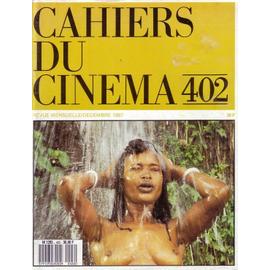 “I realized that I had to
find a place for myself there. But it was complicated. I wasn’t the most
legitimate writer there. I hardly knew American cinema. Horror films made me
too scared. So I tried to bring something else, something to carve my own
niche. I started out writing about
African films. But also on Tarkovsky. These are two combats that really brought
me into the magazine. My first cover film review was for a Critique of another
Souleymane Cissé film, Yeelen. It’s
a magnificent African film. So this is in 1987. The title of the piece was
‘Cela s’appelle l’aurore’.
“I realized that I had to
find a place for myself there. But it was complicated. I wasn’t the most
legitimate writer there. I hardly knew American cinema. Horror films made me
too scared. So I tried to bring something else, something to carve my own
niche. I started out writing about
African films. But also on Tarkovsky. These are two combats that really brought
me into the magazine. My first cover film review was for a Critique of another
Souleymane Cissé film, Yeelen. It’s
a magnificent African film. So this is in 1987. The title of the piece was
‘Cela s’appelle l’aurore’.
“This was what I was
bringing to Cahiers. The other big fight for me was Tarkovsky, who wasn’t at
all liked at Cahiers. It was a cinema of the imagination, dreams and of
spirituality. This wasn’t what Cahiers was interested in. So with Michel Chion,
we would change this. So in 1986 we would make a dossier on Tarkovsky. This
contributes to my legitimacy at Cahiers. So I grew up there through what I
could bring to it, whether it was African cinema or directors that were a
little to its margins, like Tarkovsky or Manoel de Oliveira, who would also be
someone really important to me. I would make myself a place there by being the
specialist on this kind of thing.
“So everything that was
central to the magazine, like French or American cinema, I wouldn’t bother to touch
because I didn’t know it that well, and there were others who knew it better
than I did. The great specialist on American cinema of my generation was Iannis
Katsahnias and Nicolas Saada. They wrote on Scorsese, Coppola, De Palma and
Cronenberg. It was their thing, since they had a knowledge on that culture,
which I didn’t have.
[…]
“When you arrive like I did
in 1984, you are really far from writing cover reviews. We arrive by writing
short pieces. I remember the first group meeting that I went to. We talked
about all of the new films, but that which concerned the new critics were the
little films, that nobody else wanted to write about. We were really far from
being able to write a cover review. My first memory of a cover review was
really important. It was on Yeelen
in 1987, and this is three years after I got there.
“At the beginning you
participate more in the concrete creation of an issue. And since Cahiers has to
talk about a lot of films, then there are also the bad ones. So we wrote little
capsule reviews in the Notes sur d’autres film section. And slowly you grow
there, and you get to write more lines, and slowly you earn being able to write
more about the films that are important to the magazine.
“What I remember the most
about the covers, which are important to a magazine, is more what was going on
at the end of the Eighties, more so than the beginning. So we discuss what film
will get the cover. There is a committee of writers who, at the time, would
meet pretty frequently, though it varied. Toubiana really liked these meetings,
because he really liked to talk. They took place every 15 days or 3 weeks.
There we discussed what would make the cover. First thing that needs to be said
was there was no interference, or pressure – or at least we didn’t experience
it, maybe Toubiana did – from the distributors of the films. Because sometimes
people say that distributors purchase the right to be featured on a cover, but
this wasn’t the case at Cahiers in the Eighties. But I would find out that in
the Fifties this wasn’t the case. In that period the covers would not reflect
the magazine’s editorial choices.
“So
we discuss, and what’s important, is that we pick a good cover. It should be a
film that regroups all of us critics, but also the readers. The covers are
something that a reader can see himself in a magazine, and which motivates them
to buy it. It’s commercially important too. I would find this out ten years
later when I become the chief editor of Cahiers. The difference in a cover can
affect 50% of your sales. It’s incredible. On this matter, Toubiana was really
smart, so he should be the one to discuss this further. So there were no covers
in the Eighties that the Cahiers team didn’t decide on. This wouldn’t have been
possible. Everyone had to agree.
“Another important thing
regarding the covers is the surprise effect. There should be a provocation. I
have strong memories, first of my Yeelen
cover, and then the one with Tim Burton’s Batman. Because it was a true choice by us critics, of this new
generation of critics that I was a part of. Toubiana didn’t really like it. He
thought it was too much Hollywood commerce, too many tricks. There was a critic
Iannis Katsahnias, who sadly died of AIDS at a too young age, who was really
important regarding this, since he was the one who wrote about, and was one of
the top explorers of American cinema. He was really important in regards to the
Cahiers relationship with American cinema in this period. He was the one who
discovered Tim Burton, with Nicolas Saada. They watched Pee-wee's Big Adventure and Beetlejuice,
and they decided that Burton was a really important director.
“So Tim Burton’s first
cover at Cahiers on Batman created a
real scandal at Cahiers. Because some readers refused the cover. For them, it
was the worst of Hollywood, commerce, and special effects. I don’t know if the
archive is still at Cahiers, but we got a lot of people who unsubscribed after
it. There were insulting letters, people telling us that we betrayed them, that
we sold out. It was all this one cover. But the thing is, which is evident
today, is that Cahiers was right. The discovery of Tim Burton as an auteur has
been proven, and this passage on the cover of Cahiers was part of his
initiation. The critic imposed on the reader this prophetic vision. This is the
future of American cinema. This young man in his thirties, who made Batman, an important film, is an
artist.

“Batman made me realize that Burton was important. I’ve seen all of
his films, I interviewed him, I got him to talk. I became the specialist on
Burton at Cahiers. He’s my first American object at Cahiers, and my first
object at the heart of Cahiers, and it’s important for me at Cahier to have Tim
Burton. To seize Tim Burton. I actually stole Burton from Katsahnias and Saada.
Still, Nicolas, when I see him, who no longer likes Burton, still tells me that
I was wrong for picking Burton, who he thinks is no longer interesting. We
laugh about it. After the Batman cover,
we have him. And for his next film, Edward
Scissorhands, everyone agrees that it’s a great film. I was marked at
Cahiers by Tim Burton.
“A cover like this which is
provocative is something typical at Cahiers. I experienced two moments like
this at Cahiers of provocative covers. The other great cover is on Spielberg’s E.T., with a review by Jean Narboni in
1984. This cover also had the same effect. Cahiers said Spielberg was important
and its readers disagreed. It was fundamental to reinstall at Cahiers the Hollywood
cinema. There are covers like this that are important to the history of Cahiers
and its relationship with American cinema. Batman
was essential.
“With the Batman cover, Cahiers re-found its
historical mission, to impose a love for Hollywood cinema in France. This is
the work Truffaut did with Hitchcock. It’s the same kind of provocation. When
Chabrol, Truffaut, and Rivette made a special issue on Hitchcock in 1954, it’s
the same thing as giving Batman a
cover in 1989. It’s the same operation. We’re saying that inside the Hollywood
commercial system, that there can be something important. It’s not because he’s
commercial that we like him, but because he’s a great artist and director. And
this is what we have to love in cinema. In the Eighties there is a return
towards this mission, which is practically the founding mission of the
magazine, that at the center of American cinema that there are auteurs. And
where it is the most explicit is in Hollywood. Cahiers re-finds its historical
role at this moment, it renews something that was lost in the Sixties and
Seventies.
Thursday, February 26, 2015
1992 – Serge Toubiana Leaves Cahiers


Toubiana would organize an important special issue dedicated
to Daney[2]
that consists of 38 testimonies by fellow critics, friends and filmmakers.
These testimonies and the publication of two of his essays – one of his first,
on Rio Bravo, and the other regarding
the launch of Trafic – highlight his
singularity and value in the French cultural sphere as well as his importance
at Cahiers, which he always saw as
his maison-mère. It is only the
second time, throughout a sixty-year period, where a sole critic (excluding critics-turned-filmmakers) received a cover
of the magazine, with the first one being on one of its original founders André
Bazin (N.91).[3]
The issue, which is gorgeously illustrated, and attest to Daney’s love of
travel and friendship with a myriad of filmmakers, is described by the rédaction in its opening editorial,
“This issue is the sign of our loyal friendship, and admiration to Serge
Daney.”
The testimonies in this issue provide a good portrait of
Daney: they trace an evolving human being who conceptualized the relationship
between politics and art within a new media sphere; they address the importance
that he stressed on dialogue and work within a group; as well as his love to
travel. There is also a lot regarding what characterized his editorship of Cahiers from 1974-1981.
In Toubiana’s entry, Parce
que l’amitié!, he recalls first meeting Daney in 1972 at a point where he
wanted move away from gauchisme, and the strong political fervor that arose
from May ’68, towards something new. On their early encounter, “In reality, we
were so different… But deep down, we both shared a friendship, we were also poor
together.” On this early Seventies period and Daney’s editorship,
Serge ‘inherited’, despite
himself, the magazine. With his back against the wall, he improvised and, after
a bit of experimentation, was able to put the magazine back in place on a much
better trajectory… Serge accepted my help, more out of friendship than
necessarily my competence. We had a tight alliance, sharing for many years the
same somber office, which was already at the Bastille. At the heart of this
alliance, he brought the essentials: principals, an immense culture, a project
for the magazine founded on the desire to accompany the strongest, and craziest,
experiences of the cinema.
Toubiana highlights what Daney brought out in others and the
impact that he had on himself,
I always admired with Serge his
way to highlight the importance of things, and to oblige others, like myself,
to rise up to this level. I feel like I’m missing him already, that I won’t
have anyone to talk to, except for his memory, when I have my doubts on a film,
a book, show or other things, simply put, when I have a personal choice to
make… For Daney, who, regarding whatever the film, thought so strongly and
naturally about the frame, he might have not known how much he helped me, like
he did so many others, to help frame my life, and my relationship with the
cinema. It bothered him still recently, when he asked me what I would become, while
all the while he was telling me that my time was coming to accomplish
something…

Claudine Paquot, the general secretary of the magazine[4],
highlights how the deux Serges in
1978 would meet her, and how Daney would think that the magazine was missing quelque chose and that she would bring
to it a fabrique d’une revue, which
would include an open new layout and more pictures that would enrich the texts.
Paquot would highlight Daney’s dictionary entry on Italiques in their 30th
anniversary issue as just one example of on how they would put together an issue.
Paquot highlights Daney’s generous personality and the
personal impetus of what it meant to carry the Cahiers identiy.
 And your voice never lacked
generosity to discuss Cahiers, its
history, its raison d'être, from its
largest projects to its smallest notes... First, at the Cahiers office, in a reconverted floor at the Passage de la Boule
Blanche; the pleasure of reading all of the pieces, discovering ideas, the
quality of style, the work of a critique; precise syntax, the right word,
perfect orthography, and especially the respect for each proper name, verifying
in its original language, as a sign of respect (Ouch, the day where I spelt it
‘Minelli’! – N.328, Pg. XV).
And your voice never lacked
generosity to discuss Cahiers, its
history, its raison d'être, from its
largest projects to its smallest notes... First, at the Cahiers office, in a reconverted floor at the Passage de la Boule
Blanche; the pleasure of reading all of the pieces, discovering ideas, the
quality of style, the work of a critique; precise syntax, the right word,
perfect orthography, and especially the respect for each proper name, verifying
in its original language, as a sign of respect (Ouch, the day where I spelt it
‘Minelli’! – N.328, Pg. XV).
[1]
Including: Nouvelle du monde, Image(s) du mois,
Portrait, Séquence du mois, Actuelles, Chronique, Hors-Salles.
[2]
Cahiers, July-August 1992 (N.458).
[3]
These special eulogy issues, which highlight singular figures in the Cahiers history, would have an
importance in Toubiana’s editorship: As a way to look backwards and to reflect,
as well as to use these figures and their lessons as guides while moving
forward. There would be Hors Séries homage issues on Alfred Hitchcock (1981)
and Francois Truffaut (1984) after their death, as well as featured dossiers on
Orson Welles, John Cassavetes and Sergio Leone, throughout the Eighties.
[4] An important figure at the magazine in this period as
she would work closely with the new writers and help them through editing, and
refining, their reviews, before she would move on to the Cahiers book publishing department. When she died in 2011, Stéphane
Delorme, the current chief-editor at Cahiers,
would feature an homage to her, with contributions by Toubiana, Alain Bergala,
Thierry Jousse, and Hélène Frappat. On Paquot, and Clotilde Arnaud, who was in
charge of their administration, Toubiana writes, “Serge Daney and I wanted to
re-launch the magazine, to give it a redactional and economic bases. These new
recruits, ‘les filles’, were going to
help us.” (Cahiers, July-August 2011,
N.669).


Subscribe to:
Posts (Atom)