Sunday, March 25, 2012

Clintophilia

“But as you know, when we like something, we like it… that’s all.” – Clint Eastwood

Clint Eastwood is a bit of an oddity. Somehow that Nameless Gunslinger and Inspector Harry Callahan had become a filmmaker of grocery-store paperbacks: a Meryl Streep romance, a quirky court-room drama, over-long liberal-humanist war films, Angelina Jolie looking sour for two hours, a movie about Nelson Mandela that avoids all of Africa's social realities, and now a queer J. Edgar Hoover story. The diversity and range is immense. In his twilight years at the respectful age of eighty-one, it seems like Eastwood is out of step with contemporary trends. Even in France the publisher Capricci recently put out the book Clint Fucking Eastwood, which argues his decline as a filmmaker since the mid-nineties.

This might be accurate for some people but I don't think that it is the best way to approach Eastwood's oeuvre.

I will try to argue for an appreciation for Eastwood: he's a charming man and one of action. His brand of individualism is quintessentially American, which includes a faith in humanity - one just needs to remember the beginning of Hang 'Em High where he stops to pick up a calf that couldn't make it across a river. Whether it should be viewed as a nomadic pioneering spirit or a vein of sublime narcissism, in his films the society is viewed as a corrupt place while the main character - usually played by himself - is put in a situation to fix it by acting out and doing what's right. His films demystify legends as he shows them off as mere ordinary people. Eastwood has had a long and industrious career, so to share some rudimentary biographical information: he was born Clinton Eastwood Jr. in 1930 during the Great Depression (a subject of some of his films) and fought in the Korean War before returning to Hollywood to take acting classes before getting his first big break on the television series Rawhide. This was a time when the classic studio system era was ending so his career trajectory explored new territory: first television, and then Eastwood went to Europe to film the spaghetti westerns, and when he returned to Hollywood he continued to make films in the system (Where Eagles Dare, some Orangutang films) while also starting to work with an early mentor Don Siegel and also paving his own path as a director and by starting his own production company.

To discuss his style of film-making, in his most recent efforts, I would say it is of a gut-reaction simplicity and assurance. While some argue that the quality of his films depend too much on the screenplay, the other side of the coin, is that, like Alain Resnais, Eastwood picks and chooses his screenplay as a camouflage to explore new territory and subjects that interested him. Eastwood's films have a particular atmosphere - a seriousness that allows room for humor - and are filmed with a simplicity, an expressionist use of lighting and a freshness of performances that comes from a loose sense of improvisation on his sets. The Cahiers guys write about his approach, “We have the impression that you like to combine two styles: one form really established, that you have refined over the years with your team, as well as some liberties that you manage on set... In the last 10 years [1990-2000], you were able to affirm a veritable style, which has since simplified and refined: you pay so much attention to lighting, a real poetics of lighting. Absolute Power is a perfect example.” Similar to the greatest films, say, like Le diable probablement or Once upon a time in Anatolia, one gets a sense that Eastwood is trying to get at the ideas behind the subjects of the films; like the social criticism and historical revisionism in his recent period films, the peaceful anti-revenge angle of Invictus, and the Dickensian inter-connectivity of Hereafter. Eastwood's productivity of almost a new film each year (that might only be matched by Woody Allen) makes his body of work even more relevant to today's concerns and denser in associations. As well his engagement with new digital technologies and special effects is especially interesting.

*****
Eastwood in France
Recently at Cahiers du Cinema, in their January 2012 issue (N.674), the event is C. Eastwood – Investigation. The well-illustrated feature includes a review of J.Edgar and an essay on Malpaso Productions, both by Stéphane Delorme, and a piece on Leonardo DiCaprio by Cyril Béghin (“DiCaprio is with Matt Damon one of the rare actors that still physically integrates himself in face of the digital malleability: never does a movie deform him through pixels, instead, and still today, it is through make-up, a method that is as old as Hoover."); and there is an interview with Eastwood and his director of photography Tom Stern (who is vocal about filming with an informed blackness), editor Joel Cox (who discusses speed, instinct, observations etc) and producer Robert Lorenz. On Eastwood, Delorme classifies his late period as the following: “the moment of the strongest crystallization of his directing abilities was around 1992-95, with the perfect triangle Unforgiven, A Perfect World, On the Bridge of Madison County... Then there are the darker films of the 2000’s: Mystic River, Million Dollar Baby, Flags of Our Fathers/Letters from Iwo Jima.” And on Changeling, Invictus, and Hereafter: “in terms of the image the filmmaker has become more blurry, fuzzy, if only in trying to engage in a purely melodramatic way.”

Since the 80's Cahiers has had a strong and durable relationship with Eastwood’s films and a major investment towards him occurred at the time of the release of Space Cowboys in September 2000 (N.549). Il Etait une fois Eastwood, is the the title of the issue, and the centerpiece is an interview between Eastwood and the Cahiers writers Nicolas Saada and Serge Toubiana. What is included in this feature are a few introductory text, a twenty-two page illustrated interview, a review of Space Cowboys by Oliver Joyard (“Eastwood forgets a priori what constitutes the story. He stops filming the elderly, but instead focuses on men at work, that are occupied with assuring their survival to realize their dreams, seeing the planet from the stars.”), and a discussion with a few of Eastwood's collaborators (it’s interesting to note the differences between both Eastwood issues, to see who changed in the Malpaso staff). Eastwood comes off as very candid in the interview, discussing a variety of subjects at length, always saying jokes, and he is similar to John Ford as he resists over-intellectualizing his work and process. Some interesting answers by Eastwood include his remarks on Don Siegel and filming Coogan’s Bluff which “Isn’t necessarily my best film that I acted in, far from it, but all the while it was an agreeable experience which we built upon in Two Mules for Sister Sara and The Beguiled.” And, “If my acting style stuck, from a few certain films that made me famous, it’s because sometimes you can do a lot without saying much and instead say a lot by doing these little things.”

Now onto J.Edgar: a mythological biopic on the man that created the Federal Bureau of Investigation and ruled it from from 1924 to 1972. The story centers around Hoover and the Associate Director Clyde Tolson (Armie Hammer) and their secretary Helen Gandy (Naomi Watts). The film looks at how Hoover's policies where shaped by an early political attack which led to a new police procedural system that included fingerprint investigation and more registering of information. Like Land of the Pharoahs for Hawks (an individualistic late film in career built on so many groups), J.Edgar seems atypical for Eastwood, as a director of so many anti-authoritarian figures now in J.Edgar Eastwood seems to be glorifying, or at least identifying, a man that has build an institution. And in this institution this man, Hoover, has been able to implement his vision for over forty years and where he was able to look out of his window towards a changing world to different times with new presidents and all. As well there is a reflexivity in the myth-making process as you see Hoover take charge of dictating his own biography.

Here I want to bring up both the Cahiers and the Positif review of J.Edgar to expand on the film and the differences in how the magazines judge movies.

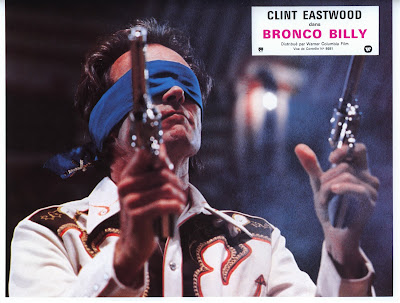
One thing in J.Edgar that Cahiers narrows in on is the mother figure in the film. In a brief survey of Eastwood's films (Bronco Billy, Perfect World, Bridges) one can spot many mother figures, who are complex in their own way, but are important as providers of a moral center for their children. While in J.Edgar the mother figure is almost domineering as she guides her son on the right path. Delorme writes about how these intimate conversations in her room are the reverse-shot of the powerful man he presents himself in his office, “like the secret explanation of exterior wrong doing, everything outside of this room... This room, similar to the one in Psycho, is his confidential report, with the mother tucked away like a file in a drawer.” This reference to Hitchcock's film maudit seems especially appropriately for Eastwood and this film. As they are both about guilt-ridden sons. Hoover is shown as faithful son riddled by his insecurities, partly, caused by his domineering mother - he even throws on one of her dresses in an intense moment of despair after her death - and this personal malaise and paranoia would seep into the larger culture. Just as Hitchcock was able to create some of his darkest images in Psycho, like the rain crashing on the windshield when Marion Crane is driving out of town, the room full of taxidermy birds, or the skeleton mother revealed by a swinging lamp; Eastwood is also able to create some unparalleled images of sadness, misery and power in his oeuvre. As well there have been other references to Psycho in Eastwood's other films like how in Bronco Billy there is this rich blonde (Sandra Locke) who gets "killed" at this roadside motel and there is even a comedic cameo by Anthony Perkins at the motel in Thunderbolt and Lightfoot (a Malpaso Productions). The references to Psycho illustrates Cahiers interest in characters who deviate from the norm, a film remembered by images, and the feelings - maybe that of horror - that one can experience watching a movie.

While at Positif, Franck Garbarz reviews J.Edgar and Michael Henry Wilson keeps up his rapport with Eastwood. In Garbarz interesting review, he discusses the other Hoover films by Larry Cohen, Rick Pamplin, and Oliver Stone; finds parallels with J.Edgar and Citizen Kane: a man who builds his own myth and who alters the American psyche through his empire, a man who collects and builds up an inexhaustible archive; and Garbarz has a spot-on conclusion, in describing the scene, between Edgar and Helen Gandy in the Library of Congress, while the Goldberg Variations is playing: “In this moment here, the palette, quasi-monochrome brightens suddenly. As if we could be believe in a form of relief and carefreeness. That, evidently, does not last long.”

That Positif compares J.Edgar to Citizen Kane while Cahiers compares it to Psycho says something about both magazines. It is relevant to show how Cahiers stands behind their cinema maudit while Positif's plane is more willfully artistic, Cahiers is more interested in intense images while Positif revels in a literary analysis, and that even though they are both auteurist publications it shows how both magazines have a different frame of reference.


*****
"In my experience, I am always stupefied when I meet these guys that work in cinema and who don't know anything about it. We encounter both extremities. There are guys that are genuinely passionate about the history of cinema, like Martin Scorsese, who would be able to tell you what film George Marshall directed in 1938. And there are some people who are responsible for the studios, here, who wouldn't even know the name George Marshall. For myself, I was always a fan of Destry Rides Again." - Clint Eastwood

Eastwood - Cinephile
While reading the previously mentioned interviews, as well as Eastwood by Eastwood, it's interesting just to hear Eastwood talk about movies: to hear what actors, films and directors that he likes. As well to hear what are the little-known projects that he has been associated with or worked on. The discovery of many of these titles expands ones knowledge on the history of cinema and Eastwood's relationship to it.

Eastwood acted in William A. Wellman's Lafayette Escadrille (1958) and in Michael Cimino's Thunderbolt and Lightfoot (1974). He has brief cameo in the friendly ghost movie Casper and David Gordon Green recently filmed him in the Super Bowl commercial Halftime in America. He admires the old actors Steve McQueen, Joel McCrea, Henry Fonda and James Cagney. Movies that Eastwood really likes includes Billy Wilder’s Sunset Blvd. and Double Indemnity, Carol Reed’s The Third Man, David Lynch’s The Straight Story, Howard Hawks' Sergeant York, the early Warner Bros gangster films, and, with his favorites being The Ox-Bow Incident, Paths of Glory, and White Heat. Other directors that he likes are Anthony Mann, Frank Capra, Alfred Hitchcock, Sam Peckinpah and, who he even made a film White Hunter Black Heart based on, John Huston. On the films that have most marked Eastwood: "when I was a kid, and that I have the best memories of, were films that were modest. I adored Red River and The Searchers, but also Out of the Past, and films of that caliber that remained marginal.”

Of special importance to Eastwood was his early working relationship with Sergio Leone, who he talks about: “He admired a lot John Ford which shows in his long shots, he understood the importance of the landscape. And Leone's films with all of their violence are a real departure of the what was being made in Hollywood under the Hays Code" And, "I understood that Leone wasn’t making an epic western à la John Ford, because it wasn’t his temperament. Instead Leone focusing on parody, which interested me a lot. It suited perfectly the spirit of the times, or at least the 60s.” And on the rhythm, mood and music in Leone's films: “Leone has been one of the first to get it. He understood that and had an interesting way to increase the tensions before confrontations. The confrontations were fine, but the way to increase the tension was extraordinary. This had to do with the waiting… and the music by Morricone, of course. While we wait and we look at the faces…. Don Siegel proceeded in a similar way. He would tighten the frames right before the action and then would multiply them afterwards.”
*****
"Clint Eastwood is an auteur: this has been said, here and elsewhere, always with good reason. But he is an auteur because he was able to create a system of production, unique in what it does, where experience and competence always contributes to his formidable institution of cinema." - Nicolas Saada

Malpaso Productions
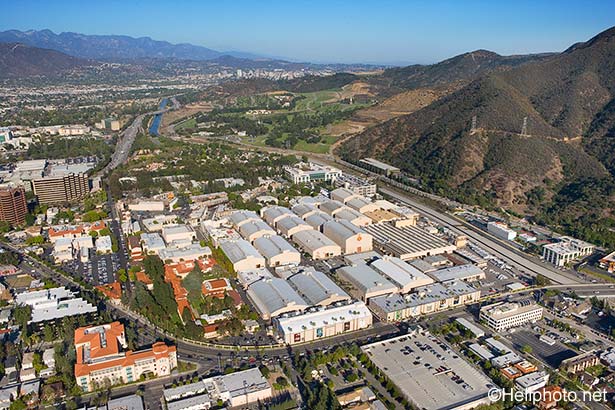
You've probably seen the title before one of Eastwood's films: A Malpaso Productions. The name derives from the Malpaso Creek in Carmel, California (where Eastwood is from, and where he spent one term as the mayor) and the word is Spanish for a "bad step", which is what Eastwood was told when he was first going to film the Dollar Trilogy in Europe, so to spite this producer he gave his company that ironic title. Eastwood talks about the impetus in creating his own production company as a way to protect himself from studio negligence, the harassment from producers and to stay away from a world of eternal discussion. The Malpaso production company is genuinely known for making affordable films, quickly. It was founded in 1967 with the first production being Hang 'Em High, which was Eastwood's first post-Leone film. The Malpaso production company is usually associated with Eastwood as it produces his directorial projects and the films that he acts in. The Malpaso Productions offices and warehouse is in the Warner Bros Studios in Burbank, California. The new Eastwood issue of Cahiers has pictures of it and you can go on a mini-tour of it in Richard Schickel's documentary The Eastwood Factor.

There is an idea that is discussed in relation to cinema of that of a utopia: an ideal place, a visionary system, for artist to make their films. A place without any studio interference, where the goal is to create the film as the director conceives it. One imagines a studio piling together their resources to push the medium to its limits and create vibrant new films. In this utopia one would make movies for themselves and friends, about subjects that interest the creator. The dream would be that all of this would be sustainable within the industry. This idea of an utopia is most often associated with Francis Ford Coppola's Zoetrope studio. Where in the eighties it was a place where art-house directors like Wim Wenders and populist filmmakers like George Lucas would come together. A studio that would be more a labor of love then it would based on capitalistic impulses. This Tucker-like factory is an ideal. It is also a collaborative ideal. So, like, when Coppola would run out of funds when he was filming One From the Heart his crew postponed their pay and kept on working. Since the bust of this utopia Coppola retreated from filmmaking, for a while. Until his resurgence in the late 2000s with his last three great films Youth without Youth, Tetro and now Twixt. These self-financed projects are personal films that he makes for himself - keeping on this utopian dream of a world where the movies are a place of creative self-expression, before being anything else.

This utopia of production is the somewhat what Eastwood seems to be doing at Malpaso. "You can't make a film to fit the presumed tastes of the audiences. You make the film in which you believe," says Eastwood. The collaborative nature is there as many of Malpaso's staff - so, like, Tom Stern, Joel Cox and Robert Lorenz - have a loyalty to the studio and seem to dedicate themselves wholeheartedly to it. And it's economic streamlining production avoids the economic faults of other major studio. Through making films Eastwood has even been able to literally integrate his family and other interest, like music, into them. If Eastwood continues to be this prolific in his twilight years, the reason is the efficient production system that he has created and maintained. From Eastwood in the coming years you can expect from him, back in front of the camera, in his producer Robert Lorenz's directorial debut Trouble With the Curve where he plays a blind father to his daughter a baseball player (Amy Adams), and then a remake of A Star is Born featuring Beyoncé.

This model of having a small localized production company seems to be shared amongst the up-and-coming young independent filmmakers: like Josh and Benny Safdie from Red Bucket Films in New York, whose new short-film The Black Balloon is much anticipated; and Antoine Bourges, Kazik Radwanski and Dan Montgomery from Medium Density Fibreboard Films (MDFF) in Toronto, whose new films East Hastings Pharmacy (which is playing at Cinéma du Réel and Images Festival, so far) and Tower should be real event film experiences of the year.

Wednesday, March 14, 2012

Stanley Kubrick by Michel Ciment: Part I

In anticipation of Adam Nayman’s upcoming and much anticipated class Kubrick in Nayman’s Terms which starts on April 16th and continues onwards every Monday at 7PM at the Miles Nadal JCC. Here at Toronto Film Review I will be reviewing Michel Ciment’s Kubrick: The Definitive Edition, which I find to be the Stanley Kubrick book. To get ready for this post, which will take me a while to write, I am going to post the Foreword of the book’s first edition, which can be found in the following section.

From this foreword I want to expand a little on Ciment’s approach to film criticism and the modus operandi of the most thorough and pleasant film journal Positif, which he is the chief-editor.

First off: choosing to write a book on Stanley Kubrick is no coincidence as Kubrick just might be the filmmaker absolute over at Positif. In Positif’s 30th anniversary issue the number one film in a poll on "what were the films that have had the biggest impact on you" was 2001: A Space Odyssey. The paperback edition of Positif 50 Years: Selected writings from the French Film Journal has a still from A Clockwork Orange on its cover. And at Positif the critics judge contemporary cinema in relation to Kubrick highlighting filmmakers that share his rigorous approach and singular aesthetic like Terrence Malick, Paul Thomas Anderson, Nicolas Winding Refn, Lynne Ramsay, and Stephen Spielberg.

And just as Kubrick’s aesthetic and narratives have such a looming presence over contemporary cinema, Ciment’s brand of film-criticism has an overarching influence over at Positif and in contemporary French criticism. Ciment is highly esteemed as one of the Honorary Presidents of The International Federation of Film Critics (FIPRESCI) and as a professor at the Université Paris. Ciment, who started at the magazine in 1963, now usually provides the magazines editorial stance through his polemic editorials, interviews with directors and film festival coverage. Ciment also shares many anecdotes of being around revered filmmakers in a friendly tone (see his introduction to Film World: The Director's Interviews). While Ciment’s writing shows an interest in history, politics and culture wrapped in a Nabokovian prose which is mixed with humor. For example, he recently denounced documentaries for a preference for fiction films saying, in his inimitable way, that he prefers his Fay Wray to some faits vrais. The only other film critic that I could compare Ciment to would be Raymond Durgnat. Especially as Durgnat seems most in line with the old school vein of Positif surrealism and knowledge of psychoanalysis while also sharing many other cinematic interest. Durgnat also quoted, built upon and argued against Ciment over the course of his career.

Some things that are noteworthy that Ciment brings up in his Foreword includes the challenge of film criticism to find the perfect words to describe scenes from movies, especially when the films are so image- and sound-based. There is an emphasis on a personal response and to gut-reactions when it comes to the films and to not stoop to a snobery, when the focus should be on the films (also see Durgnat’s Films and Feelings). And Ciment brings up his time in London which might have something to do with his and Positif’s long-term championing of British cinema especially against many of the attacks against it from their rivals at Cahiers du Cinéma.

As well Ciment discusses the publication and design aesthetic that he uses that fully uses photographs to add to the criticism and expand on it, which is especially relevant as at Positif they have now started to include color photographs (N.611). And which can be viewed in other books like the Positif-contributor Michael Henry Wilson interview books with Clint Eastwood and Martin Scorsese.

These are just a few modest observations on the design and thought that goes into book and magazine publishing on film where Ciment and Positif are paving the way for many future endeavors. – D.D.

*****
Michel Ciment’s Foreword to Kubrick: “Every critic, I feel sure, who has attempted to come to terms with Stanley Kubrick’s work has been made painfully aware of the limits of his own discourse. To describe films in words – which is to say, to present to the reader in conceptual terms a series of associations of animated images – is in itself a challenge. With films which their maker has always described as ‘a non-verbal experience’ the tasks is rendered even more difficult. And the refusal often shown by Kubrick to comment on his art comes from his desire to conserve a margin of mystery and uncertainty. His is an oeuvre that both demands and defies analysis.

As long as I can remember, by recalling my own encounters with his films – in particular, the night I wandered through the streets of London after my first viewing of 2001: A Space Odyssey, trying to collect my thoughts after an experience unique in my years of film-going – I have dreamt of a book about Kubrick in which images would play an essential role.

Such is the spirit in which this album has been conceived. The illustrations (often frame enlargements rather than a set photographer’s stills, as was Kubrick’s request for his later work) will not only conjure up a shot or lighting effect, a composition or gesture, but provide a critical commentary through unexpected analogies or internal rhymes. And the text itself both influenced and was influenced by the choice of photographs. The book does not claim to be exhaustive, but proposes a unchanging core of Kubrick’s art. Apart from a detailed bibliography and filmography, it consists of seven sections. In five of thses (Kubrick’s odyssey; Reflections on an oeuvre in evolution; Kubrick and the fantastic; Interviews with Stanley Kubrick; Interviews with colleagues), both words and pictures are used. In the other two (Eleven films; Directing), only pictures.

Afterwards, it will be up to the reader-viewer to pursue his own personal thoughts and impressions of one of the most demanding, most original and most visionary film-makers of our time.”

Sunday, March 4, 2012

The Great Debate: Michael Bay Auteur?


"A film is the epitome of an artwork resting on style. There must be an author, an écriture. The author writes on the screen, expressing himself through the photographic shots of varying duration and angles. For an author worthy of the name, each choice is determined, dictated by calculation or instinct but not by chance." - Robert Bresson

On Thursday March 8th at 6:30PM, TIFF Next Wave will be hosting at the Lightbox an in-cinema debate about Michael Bay. Is he a modern day Griffith shaping the language of how films are made today or is he an incompetent hack whose use of explosive special effects is a cover for the nothingness of his films? The panel will consist of Adam Nayman (The Grid, Cinema Scope), two film students from the Etobicoke School of the Arts and will be moderated by Mark Little.

What exactly is an auteur anyway? For André Bazin talking about an auteur means “choosing the personal factor in artistic creation as a standard of reference, and then assuming that it continues and even progresses from one film to the next.” François Truffaut gives his definition of the auteur in his famous essay Une certaine tendance du cinéma Français pointing out that the auteur should be considered as fully an artist as any of the great novelists, painters or poets. Jim Hillier highlights that there was a unique temperament to the 1950s auteur at Cahiers du cinéma: “it was not any world view but rather a particular world view that was being privileged.” John Hess further expands, “An auteur was a film director who expressed an optimistic image of human potentialities within an utterly corrupt society. By reaching out emotionally and spiritually to other human beings and/or to God, one could transcend the isolation imposed on one by a corrupt world.” The auteur would be recognizable by his mise en scène, which Fereydoun Hoveyda emphasizes, “The originality of the auteur lies not in the subject matter he chooses, but in the technique he employs, i.e. the mise en scène, through which everything on the screen is expressed.”

When the auteur theory first emerged at Cahiers in the 1950s it was used as a polemic to argue the singularity of Modernist Hollywood directors in opposition to the novelistic qualities of the French films of the time and in a post-WWII intellectual climate of strong anti-Americanism. The term to describe these privileged filmmakers has changed over the years. Jean-Claude Biette in his essay Que’est ce qu’un cinéaste? in Trafic revised auteur for the term cinéaste, which has broader implications. While more recently Michel Ciment at Positif argues for the practicing of a politique de hauteurs. Where the question is not if a certain director is an auteur or a cinéaste, but let’s champion these directors best work and not let them just ride on their reputation.

So lets return the conversation to Micheal Bay, whose latest film is Transformers: Dark of the Moon: the story of Sam Witwicky (an over-compensating Shia LaBeouf) trying to find a job, when there aren't too many prosperous positions available, while his girlfriend (British model Rosie Huntington-Whiteley) is working her way up nicely at a corporation. Everything quickly escalates out of control towards CGI Hasbro Transformers getting together with the American military to save the world from other "evil" Transformers. There isn't much depth to the story or to the characters and instead what you get are noisy robots hitting one another for an extended period of time. Go figure.

The Transformers franchise series and its embrace of the military-industrial complex, and whose Dark of the Moon came out on Independence Day, gives off the bad impression of resembling too much a long promotional video for a teenage demographic to go out and thoughtlessly join the American military. In Dark of the Moon the death of human life is reduced down to a mournful country song, the real attacks on the World Trade Center is reduced to a suspense gimmick, and the presentation of the Korean actor Ken Jeong is crude and stereotyped. In regards to form, Bay's shots don't feel determined and there is no sign of a visible artistry.

What does Bay have going for him? One can think of the iconic roles that he creates for his lead actors, an interesting balance of moods in the films, and he is building upon a distinct repertoire of associations.

But what one seriously needs to ask oneself: Is there anything left to Bay's films after the explosions have stopped and the dusts has settled?

Monday, February 20, 2012

I’ll Be Your Mirror – 750,000 visitors in a square of light

This is the first guest contribution by Dawn Saville. - D. D.

Performance art partisan Marina Abramović’s physical endurance, dedication and scope of vision are emblematic of her career. She once walked the length of the Great Wall of China over the span of three months in a performance piece that was eight years in the making. She is no stranger to public nudity, fasting, self-mutilation, blood, fire and tears. Famously known for carving a pentagram into her stomach before flagellating herself with a whip until her back bled, she also laid in the center of a burning five-pointed star (a symbol of communism of her native Yugoslavia) until she lost consciousness from lack of oxygen.

Forty years later Abramović is securing the immortality of this legendary career in Marina Abramović: The Artist is Present, a documentary that has its Canadian premiere as it opens the Reel Artists Film Festival at the TIFF Bell Lightbox. Shot over eleven months in seven countries and racking up 700 hours of footage The Artist is Present delves into Abramović’s beginnings as a performance artist in the early 1970s, through her collaborative work with lover and fellow artist, Ulay, and the explosion of her cult-status solo career. The film’s primary focus, though, is on her 2010 MoMA retrospective of the same name, whose centrepiece is her longest running and most physically and emotionally demanding solo piece to date. Museumgoers lined up for hours, sometimes camping out over night, for a chance to sit in a chair across from Abramović and stare silently into her eyes for as long as they wanted; this lasted 7.5 hours a day, six days a week, for three months. At one point in the film Abramović describes her role in the piece as “a mountain, a stillness, in the middle of hell.”

Indeed, Abramović’s beacon-like presence lends an arresting immediacy to the piece, set within the contemporary-world-in-overdrive (not to mention our collective, waning attention span) that is part of the power and appeal of The Artist is Present. There is something inherently meditative in the simplicity of sitting opposite someone and staring at them in silence. Abramović transforms into an oracle, a medium, a mirror, moving many patrons to tears as they look at their own reflection. As she turns the gaze on her audience, Abramović says “I am the mirror of their own self.”

MoMA curator Klaus Biesenbach asserts in the film that “time is a weight on the performer’s shoulders” but it’s clearly a sacrifice Abramović willingly makes for her audience (and, in light the key connections Akers draws between Abramović’s early work and the MoMA show, it’s expected). During its run Abramović’s ribcage began to literally weigh on her internal organs, causing her a great deal of pain. When Biesenbach let’s her know that she can opt to end the piece early, it is no surprise that the ever-stoic Abramović refuses. Chris Lee of loveartnotpeople.com writes “in keeping with the piece’s engagement with issues of body and pain, space and time, Abramović began to take on an almost saintly aura.” In the weeks leading up the MoMA opening, we hear Abramović confirm “this is my cross I’m carrying”; fittingly, Biesenbach later concludes that part of Abramović’s goal is to “bring performer and public into the same state of consciousness.” The film definitely posits that Abramović artistic persona is like Atlas, carrying the weight of the world; what viewers think of these lofty statements will be interesting. Abramović is certainly not without her inconsistencies and this is what makes her human. When she accepts an award at the Florence Biennale three months before the MoMA show opens, Akers zooms in on her reading her current manifesto. One of its tenets: “an artist should not make themselves into an idol”; later Abramović tells us “if they idolise me, it’s a side-effect. It’s not the aim of the art, it’s a bi-product. I love bi-product.”

The Artist is Present had its world premiere at Sundance in January, winning the Grand Jury Prize. It also won the Audience Award for Best Documentary at the Berlinale on February 18, screened at the Big Sky Film Festival in Montana on February 17 and is slated for the True/False Film Festival in Columbia Missouri in March. Though it started as an independent, The Artist is Present is now owned by HBO and will be airing in the US in June. Akers states that it was nudity, in part, that dictated going with HBO, though the studio also got them to Sundance. In an interview with indiewire.com’s Bryce J. Renninger, Akers declares that ‘the goal was to make a film for as wide an audience as possible...for the uninitiated and not just the rarefied art world’; in the same interview, Marina speaks similarly about bringing performance art into the mainstream: ‘For me, Lady Gaga and HBO are bringing us to mass culture.’ In the film, Abramović refers to the “incredible responsibility” of introducing performance art to the masses and we see in a media clip that this pressure is very real; though for some she is the grand matriarch of her craft, she is still sometimes viewed as just ‘some Yugoslavian-born provocateur.” Abramović surely sees this as her chance to prove them wrong.

In a documentary with content so colossal, it seems conceivable to leave the form until last. Going beyond Abramović’s rock star stature, Akers does a fine job of capturing Abramović’s frank, eccentric and very witty character. Editor E. Donna Shepherd segues between shots and scenes with significance and more jarring transitions are subtly symbolic in their paradox. Nathan Halpern’s score is often intrusive and particularly heavy-handed in pushing more emotional scenes. As a first-time director, Akers is no innovator, stylistically, but there is some curiously evocative imagery throughout, especially when we see Abramović and her protégés training at her home. There is a balanced mix of past and present footage; the black and white stills and Super 8 from the 70s are beautiful in their trademark graininess, serving their purpose in counterpoint to Abramović’s current work while never being nostalgic. - Dawn Saville

Marina Abramović: The Artist is Present opens the Reel Artists Film Festival on February 22nd (the artist, director and producers will be present) and has an encore screening the closing day of the festival, February 26th. The Reel Artists Film Festival is a Canadian Art Foundation Film Festival. candianart.ca/raff. The director, Matthew Akers, is part of a Free Filmmakers Panel on February 24th.

Friday, February 10, 2012

Wow, A Real Humdinger! (Recent Canadian Short Films)

This is the last of three pieces on Canadian short films, with the two others being on The Fuse: Or How I Burned Simon Bolivar and La Ronde. Also check out the website Nous Sommes Les Filles, which recently did a feature on Sophie Goyette and her new film Le Futur Proche.
In the coming months at Toronto Film Review you can expect essays on the filmmakers Alfred Hitchcock, Joseph Mankiewicz, Brian De Palma, Sacha Guiltry, Stanley Kubrick, Judd Apatow, Clint Eastwood, John Boorman; reviews of books by Robin Wood, Raymond Durgnat, Jonathan Rosenbaum and Pierre Berthomieu; and comments about the French film journals Cahiers du Cinéma, Positif and Trafic. And anything else that pops up that I find to be interesting. – D.D.


There are certain cult films that stand out in Canadian English-language cinema: George McCowan’s Face-Off (1971), Daryl Duke’s The Silent Partner (1978), Leon Marr’s Dancing in the Dark (1986), David Christensen’s Six Figures (2005), Bruce McDonald’s Pontypool (2008), Lee Demarbre’s Smash Cut (2009), Jay Cheel’s Beauty Day (2011), Jason Eisener’s Hobo with a Shotgun (2011), and Michael Dowse’s Goon (2011). And I would have to add to this list a recent discovery, Simon Ennis’ You Might as Well Live (2009)*. The film is like the hybrid child of Buffalo ‘66 and Observe and Report. It is the story of loser Robert Mutt (Josh Peace) who gets out of an asylum and then struggles to integrate himself back home. He wants to - no, needs to! - prove to the world that he is a real somebody! With Michael Madsen (Reservoir Dogs, Iguana), Stephen McHattie and others. You Might as Well Live is a local favorite; it was recently aired on City TV.

Simon Ennis’ last project was a short film called Up in Cottage Country, an update of the Franz Kafka short story about judicial procedures, In the Penal Colony. Shot in crisp black-and-white, the film begins at an Ontario cottage, showing a married couple arguing on the dock. Co-writer Josh Peace plays the husband, George, and a sweet Liane Balaban plays the wife, Annie. George wants to yell at his unmannered brother, sister-in-law and nieces who are visiting. It’s funny to hear George complain because the misdeeds are so insignificant: “Three minute showers - max!” “Wet bathing suits on the couch!”

To relax he goes canoeing, with his pockets full of Voyager premium lager. On this trip he passes through a mysterious fog and a bilingual sign indicating he is no longer in Canadian waters. The absurdist humor begs to be compared with the films of Joel and Ethan Coen. I was reminded most strongly of A Serious Man with its memorable dream sequence where Larry sends his brother off in a boat to Canada.

When George gets off the boat and steps onto an island, he meets a Beckettian defunct military officer (a sinister Julian Richings). The officer is about to perform an execution using a carefully designed apparatus – with the different levels being the draftsman, harrow and bed – on an unsuspecting soldier. This rural military setting – perhaps a comment on the army training bases scattered throughout Canada - is similar to the setting of Denis Côté’s short film Les lignes enemies (2010). Even though there are some differences between the book and Up in Cottage Country - one imagines more a Lawrence of Arabia desert setting – the film is still able to translate and convey Kafka’s story and ideas about punishment, with the concluding moral being to, “Be just!” After George’s ordeal with the apparatus he returns to his wife, who asks, “Have you come to your senses?” Yes, he had come to his senses.
* Ennis’ other short films include: The Business of Suicide (03), The Waldo Cumberbund Story (05), and The Canadian Shield (07). He also edited Ron Mann’s Know Your Mushrooms (2008).
*****
Next up is Rafal Sokolowski’s Three Mothers (2010)*, which he wrote and directed, featuring Kristin Booth, Camilia Scott, and Hannah Hogan. The cinematography by Cabot McNenly shifts from poetic to intense as it captures these women in moments of desperation and relief. Three Mothers is the story of, as the title suggest, three mothers: one who is giving birth to a newborn, a teenage mother who is debating abandoning her child, and another mother whose son is comatose, on life support. Like Asghar Farhadi’s A Separation it subtly deals with the psychological strains and difficulties of what it means to be a parent today. The subject broached by Three Mothers is how parents treat their children and why they do it. In the essay by film critic Brad Stevens on Phillipe Garrel, Childhood: Secret and Otherwise, Stevens refers to Pictures of a Childhood by Alice Miller who writes, “It actually is in the way the newborns have been treated that society makes the first of its many contributions toward equipping a person with destructive and self-destructive tendencies." In Three Mothers the medical institution and the violence it perpetrates towards the babies and mothers is only the start of the problem. As the real problem is the economic and social circumstances surrounding these people. In pointing to these conditions Three Mothers is a bold social critique.
* Sokolowski’s previous short film is Lightchasers (2007) and his production company is Blind Dog Films. There is also a great profile on him at YouNxt Blog.
*****
In the Toronto world of experimental film*, only two newcomers come mind: Clint Enns and Blake Williams. Though I am sure there are others, these two are the ones that I am most familiar and enthusiastic about. I will be elaborating on the work of Williams**.

Wiliams is from Houston, Texas. He studied video and sculpture at the School of the Museum of Fine Arts in Boston, then completed graduate studies at the University of Toronto. Those people who are interested in experimental films would be most familiar with Williams’ Coorow-Latham Road, which played at Wavelengths 2011. Andréa Picard included it as an additional highlight of the year in Fast and Furious: The Best of 2011 in Avant-Garde Film. It is a twenty-minute silent drive in rural Australia from Coorow to Latham. And what makes it unique is that it was entirely shot on Google Street View.

Coorow alters the painterly landscape tradition for the digital age leaving on pixels behind. There is the impression of catching something new for the first time through a hallucinatory journey where the richness comes from paying attention to the small changes that are going on in the frame. Through Williams’ emphasis on the digital he differentiates himself from the older generation of Canadian experimental filmmakers like Philip Hoffman, who makes essay-films, and Donigan Cumming, who makes experimental documentaries. Coorow embarks on a poetic, formal, and structural elaboration of new forms of technology. It is about duration, mapping and how we relate to space – real and digital. To describe Coorow’s process Michael Sicinski at MUBI wrote, “For his part, Williams is able to reduce the older tropes of structural realism – duration, physical presence, the flat correspondence of time with space – to a desktop procedure.” Coorow is structural film for the digital age and the floating ride, with it’s 180° pan, is like the zoom in Michael Snow’s Wavelength or the breaking up of the frame in Chris Kennedy’s Tamalpais.

But how did Williams get to Coorow? And how does it relate to his other work? Williams MFA period work, the only work that is is available, goes back to 2009 . They are mostly shorts, usually under the ten minutes mark. To list them off in chronological order there is Hotel Video, The Storm, Ladybug Video, No Signal, Space-Ship, A Cold Compress, Depart, and Coorow Latham Road. And there are the art installations Pupils and Two Rainbows.

I find Hotel Video and The Storm to be the strongest of the early works; they are meditations on landscapes with a strong emphasis on long-takes and dislocating editing. They are filmed in a style that recalls James Benning and Ben Rivers. The other work is almost performative with their simple camera set-up and they show Williams’ interests in technology and illumination. Though key transition work is Depart as it synthesizes his filmic work and integrates it with digital alteration malleability anticipating Coorow.
* The groups responsible for the programming of experimental films in Toronto are Early Monthly Segments, Pleasure Dome, The Free Screen, Images Festival, The 8 Fest, LIFT, Wavelenghts, and in nearby Windsor there is Media City.

** Williams is also a passionate film-blogger, and you can find him at most TIFF Cinematheque retrospectives. His own blog is R, and G, and B. He also writes for Ion Cinema and BlogTO.
*****
In the late sixties, who knew that the guy who made those weird short-films, Transfer, From the Drain and Stereo; would turn out to be one of Canada’s most acclaimed directors? David Cronenberg’s early work anticipates a lot of what would follow like The Brood, Videodrome and A Dangerous Method. These lurid low-budget horror films already show his interest in psychiatry, the mind/body schism, and power relations between men. This just goes to show how important the short-film form is in the fostering of Canadian filmmakers.

The directors of short-films discussed are the ones that make me the most excited about the future of Canadian cinema. If these diverse filmmakers have proved that they can work in the short-film format, with the minimum of resources, I am confident that with more they will be able to create new narratives, forms and images. These filmmakers are investing themselves, their time and money into these projects. Hopefully their films get programmed at film festivals, distributed, seen, and discussed.

At the present moment: Ennis is currently filming a new project in Ft. Worth, Texas. Sokolowski’s new short film Seventh Day is completed, it is a comedy about two Eastern European immigrants who drive a taxicab in Toronto. Williams' next project is a 3D remake of a famous structural film.

Who else do I find to be interesting? There is Yonah Lewis and Calvin Thomas – the duo that made the great Amy George – and they are, apparently, starting up a new project, which they will start filming soon. The Vancouver-based duo Ryan Flowers and Lisa Pham made a very strong first film, No Words Came Down; hopefully they make something else. Joe Ciaravino’s A Clean, Well-Lighted Place should be seen by more people. There are the York university guys Igor Drljača, Luo Li (Rivers and My Father), Nicolás Pereda (Summer of Goliath). Ashley McKenzie is working on a new film When You Sleep about “a misfit young couple facing adult decisions while dealing with a rodent infestation in their slum apartment.” Antoine Bourges new mid-length feature East Hastings pharmacy is having its World Premiere at the Cinéma du Réel as part of the First Films Competition. It is, “The chronicle of a typical pharmacy of the Vancouver Downtown Eastside, where most clients are on a treatment that requires taking daily doses of methadone witnessed by the pharmacist.” While Kazik Radwanski’s latest film is in post-production.

Tuesday, February 7, 2012

"Master Precision. Be a precision instrument myself." (Robert Bresson at the Lightbox)

Title: Notes on the Cinematographer
Author: Robert Bresson
Publisher: Green Integer
Pages: 140
Price: $8.95


*****
"These words are more than notes from an experienced film-maker's diary. These words are scars, marks of suffering, they are gems."- J. M. G. Le Clézio

Who are the great filmmakers whose films and method evoke an ideal of what cinema can be? Who are the directors that made the films that have shaped the evolution of the seventh art - laying down its foundation? If I can try to answer these two question, usually with crossover between both answers, I would have to mention: Antonioni, Bergman, Brakhage, Bresson, Cassavetes, Chaplin, Dreyer, Edison, Eisenstein, Eustache, Ford, Flaherty, Garrel, Godard, Griffifth, Hawks, Hitchcock, Kubrick, Kurosawa, Keaton, Lang, Lumière brothers, McLaren, Mekas, Méliès, Mizoguchi, Murnau, Ozu, Ray, Renoir, Rossellini, Snow, Tarkovsky, Truffaut, Vertov, Vigo and Welles. The fact that the TIFF Cinematheque regularly projects prints of their films, amongst a lot of other stuff, makes it such a valuable asset to the Toronto film community.

The highly anticipated series, which has been in the works for a while, The Poetry of Precision: The Films of Robert Bresson consists of, as Senior Programmer James Quandt, refers to them, "one of film history's most legendary and influential bodies of work." Bresson's thirteen films will have scheduled projections from February 9th to March 30th, with two being introduced by Cinema Studies professors from the University of Toronto: Bart Testa on Un condamné à mort s'est échappé on February 9th and 12th, and Brian Price on Lancelot du Lac on February 20th. I am particularly looking forward to Bresson's early works like Les anges du péché, Les dames du Bois de Boulogne and Affaires publiques as well as Quatre nuits d'un rêveur and L'argent. This series will then go on a North American tour.

There is going to be a book launch for the new edition of the TIFF Cinematheque publication Robert Bresson (Revised), a revision of the 1998 book. For anyone that is unfamiliar with the book, I highly recommend it. I am especially fond of Quandt's introduction and the Raymond Durgnat essay. And To further cement Robert Bresson’s street cred, it also appears on John Waters’ bookshelf in Cindy Sherman's photographs of them in Place Space. Though there is also an essay by Michael Haneke, which I find a little surprising because don't I really see any comparison; instead I think Haneke to be more derivative of the renegade horror director, Wes Craven.

Bresson's films are usually austere and bleak, sparse and daunting. He is known as a modernist director, whose emphasis is that of medium specificity: "What the cinematographer captures with his or her own resources cannot be what the theater, the novel, painting capture with theirs". His particular brand of minimalism is described by András Bálint Kovács', in Screening Modernism, as metonymic minimalism, due to Bresson's usage of off-screen sounds as exposition. While Brian Price would remind us, in Neither God Nor Master, that Bresson's films are also political as their subject matter responded to a growing dissolution in France especially in the later, post-May 1968, films. What I find so captivating about Bresson's work can be best articulated by this Andrei Tarkosvky quote, from an interview between him and Michel Ciment: "Engels expressed a marvelous idea when he said a work of art soars to an even higher plane the profoundly buried - better still, hidden - the idea behind it is. And that's the course we chose to take. We forced ourselves to submerge the idea in the ambiance, in the characters, in the conflicts between different characters." The ideas of sacrifice and redemption hidden in Bresson's films through atmosphere, characters, sound, image, and editing (i.e. cinematography) makes his cinema one of the apogee of film art. Creating images in cinema like the spellbinding bumper car scene in Mouchette where toy-cars hit one another trapping this young little girl in a anarchy of collisions, which rivals with the night-time boating sequence in Strangers on a Train, as the most exciting visual complement to describe a character's situation. There is a brutal intensity mixed with an aesthetic exultation.

With this retrospective one can discover where much of cinema seems to have been spun-off from. The influence of Journal d'un curé de campagne, an adaptation of the George Bernanos novel, as well of Dostoevsky, is readily acknowledged by Paul Schrader and Martin Scorsese on their Taxi Driver. You can see the Un condamné à mort s'est échappé influence on Don Siegel's Escape from Alcatraz. Anne Wiazemsky’s immortal performance in her debut role in Au hasard Balthazar, which she would carry around with her in her other films. As well Bresson's mark on Monte Hellman sixties and seventies output or on Jean-Marie Straub’s appropriation of the Bressonian model in Not Reconciled and in Moses und Aron. And for more vibrations of Bresson in contemporary cinema there is his religious influence (i.e. moments of transcendence) in the work of the Dardenne brothers, and the austere and marginal subjects of a Bruno Dumont. Even Stephen Spielberg picked up from Bresson like the Pickpocket homage in his recent, and fantastic, The Adventures of Tintin.

Asides from his films, Bresson is also known for one small little book: Notes on the Cinematographer, whose original French publication was in 1975. It consists of poetic musings sort-of like Kiarostami's Walking with the Wind. As well it is a revered director talking about his art and process similar to Ray's I was Interrupted. It is an intense little log-book full of his likings and his disliking, references to the Renaissance and Classicism, composers and Kabuki theater, the relationship between photography and reality, theater and cinema; Pascal, Debussy, Purcell, Baudelaire, a short film Thirty Seconds Over Tokyo etc. The book is divided into two periods: 1950-1958 (which includes the subtitles: Human Models, On Looks, On True and False, On Music, On Automatism, On Poverty, Sight and Hearing, Gestures and Words, The Real, On Fragmentation, Exercises) and Further Notes: 1960-1974. For English readers there is the Green Integer edition, which has an introduction by J. M. G. Le Clézio and is translated in by Jonathan Griffin.

Who can forget the appearance of Notes on the Cinematographer in Godard’s Éloge de l'amour? When a woman picks it up and starts reciting lines as if it is a holy doctrine. Notes on the Cinematographer presents a high standard of criteria on how to judge films - Bresson’s and others.


*****
Here are some excerpts of his Notes on the Cinematographer:

"The faculty of using my resources well diminishes when their number grows."

"Metteur en scène, director. The point is not to direct someone, but to direct oneself."

"No Actors.
(No directing of actors.) No parts.
(No learning of parts.) No staging.
But the use of working models, taken from life.
BEING (models) instead of SEEMING (actors)."

"(1925?) The TALKIE opens its doors to theater which occupies the place and surrounds it with barbed wire."

"Two types of film: those that employ the resources of the theatre (actors, direction, etc.) and use the camera in order to reproduce; those that employ the resources of cinematography and use the camera to create."

"On the choice of models
His voice draws for me his mouth, his eyes, his face, makes for me his complete portrait, outer and inner, better than if he were in front of me. The best deciphering got by the ear alone."

“On two deaths and three births. My movie is born first in my head, dies on paper; is resuscitated by the living persons and the real objects I use, which are killed on film but, placed in a certain order and projected on to a screen, come to life again like flowers in water.”

"To your models: " Don't think what you're saying, don't think what you're doing." And also: "Don't think about what you say, don't think about what you do.""

"One single mystery of persons and objects."

"Cinematography, a military art. Prepare a film like a battle."

"No music as accompaniment, support or reinforcement. No music at all. "

"The Noises must become music."

"You shall call a fine film the one that gives you an exalted idea of cinematography."

"Your film - let people feel the soul and the heart there, but let it be made like a work of hands."

"Catch instants. Spontaneity, freshness."

"In ***, a film that smacks of the theatre, this great English actor keeps fluffing to make us believe that he is inventing his lines as he goes along. His efforts to render himself more alive do just the opposite."

"A too-expected image (cliché) will never seem right, even if it is."

"A sigh, a silence, a word, a sentence, a din, a hand, the whole of your model, his face, in repose, in movement, in profile, full face, an immense view , a restricted space... Each thing exactly in its place: your only resources."

"The insensible bond, connecting your furthest apart and most different images, is your vision."

"Let it be the feelings that bring about the events. Not the other way."

"Cinematography: new way of writing, therefore of feeling."

"In every art there is a diabolical principle which acts against it and tries to demolish it. Analogous principle is perhaps not altogether unfavorable to cinematography."

"Forms that resemble ideas. Treat them as actual ideas."

"Model. "All face."”

"Someone who can work with the minimum can work with the most. One who can with the most cannot, inevitably, with the minimum."

"If, on the screen, the mechanism disappears and the phrases you have made them say, the gestures you have made them make, have become one with your models, with your film, with - then a miracle."

"Hide the ideas, but so that people find them. The most important will be the most hidden."

"CINEMA seeks immediate and definitive expression through mimicry, gestures, intonations of voice. This system inevitably excludes expression through contacts and exchanges of images and of sounds and the transformations that result from them."

"Not to shoot a film in order to illustrate a thesis, or to display men and women confined to their external aspect, but to discover the matter they are made of. To attain that "heart of the heart" which does not let itself be caught either by poetry, or by philosophy, or by drama."

"Nothing too much, nothing deficient."

"Music takes up all the room and gives no increased value to the image to which it is added."

"Draw the attention of the public (as we say that a chimney draws)."

"A small subject can provide the pretext for many profound combinations. Avoid subjects that are too vast or too remote, in which nothing warns you when you are going astray. Or else take from them only what can be mingled with your life and belongs to your experience."

"Of lighting: Things made more visible not by more light, but by the fresh angle at which I regard them."

"Bring together things that have as yet never been brought together and did not seem predisposed to be so."

"A single word, a single movement that is not right or is merely in the wrong place gets in the way of all the rest."

"Model. His pure essence."

"The exchanges that are produced between images and images, sounds and sounds, images and sounds, give the people and objects in your films their cinematographic life and, by a subtle phenomenon, unify your composition."

"All those effects you can get from repetition (of an image, of a sound)."

"If a sound is the obligatory complement of an image, give preponderance either to the sound, or to the image. If equal, they damage or kill each other, as we say of colors."

"The sight of movement gives happiness: horse, athlete, bird."

"x demonstrates a great stupidity when he says that to touch the masses there is no need of art."

"A whole gaggle of critics making no distinction between CINEMA and cinematography. Opening an eye now and then to the actors' inadequate presence and performance, shutting it again at once. Obliged to like in a lump all that is projected on to the screens."

"No psychology (of the kind which discovers only what it can explain)."

"Economy: Make known that we are in the same place by repetition of the same noises and the same sonority."

"It is in its pure form that an art hits hard."

"Do not use the same models in two films. (1) One would not believe in them. (2) They would look at themselves in the first film as one looks at oneself in the mirror, would want people to see them as they wish to be seen, would impose a discipline on themselves, would grow disenchanted as they corrected themselves."

"See your film as a combination of lines and of volumes in movement apart from what it represents and signifies."

"Displaying everything condemns CINEMA to cliché, obliges it to display things as everyone is in the habit of seeing them. Failing which, they would appear false or sham."

"Shooting. You will not know till much later if your film is worth the mountain rage of efforts it is costing you."

"Silence, musical by an effect of resonance. The last syllable of the last word, or the last noise, like a held note."

"Cinematography films: emotional, not representational."

"Let the cause follow the effect, not accompany it or precede it."

"Several takes of the same thing, like a painter who does several pictures or drawings of the same subject and, each fresh time, progresses towards rightness."

"In the Greek Catholic liturgy:"Be attentive!""

"The most ordinary word, when put into place, suddenly acquires brilliance. That is the brilliance with which your images must shine."

"Ten properties of an object, according to Leonardo: light and dark, color and substance, form and position, distance and nearness, movement and stillness."

"The people I pass in the Avenue des Champs-Élysées appear to me like marble figures moved forward by springs. But let their eyes meet mine, and at once these walking and gazing statues become human."

"Hollow idea of "art cinema," of "art films." Art films, the ones most devoid of it."

"To forge for oneself iron laws, if only in order to obey or disobey them with difficulty."

"In X's eyes the cinema is a special industry; in Y' an enlarged theatre. Z sees the box office figures."

"The future of cinematography belongs to a new race of young solitaries who will shoot films by putting their last penny into it and not let themselves be taken in by the material routines of the trade."

"In your passion for the true, people may see nothing but faddism."

"(1963) Left Rome abruptly, abandoned irrevocably the preparatory work for Genesis, to cut short idiotic discussions and desecrating obstruction. How strange it is that people can ask you to do what they themselves would certainly be prevented from doing, because they do not know what it is!"

"What economy!"

"Bach at the organ, admired by a pupil, answered: "It's a matter of striking the notes at exactly the right moment.""

"For want of truth, the public gets hooked on the false. Falconetti's way of casting her eyes to heaven, in Dreyer's film, used to draw tears."

"These horrible days - when shooting film disgusts me, when I am exhausted, powerless in the face of so many obstacles - are part of my method of work."

"Precision of aim lays one open to hesitations. Debussy: "I've spent a week deciding on one chord rather than another."

"Oscars to actors whose body, face and voice do not seem to be theirs, do not produce any certainty that they belong to them."

"MASTERPIECES. The masterpieces of painting or sculpture, such as the Giaconda or the Venus of Milo, have so many reasons for being admired that they are admired for both the good and the bad ones. CINEMA masterpieces are often admired only for the bad ones."

"In the NUDE, all that is not beautiful is obscene."

"Cézanne: "A chaque touche, je risque ma vie."

"Let nothing be changed and all be different."

"DIVINATION - how can one not associate that name with the two sublime machines I use for my work? Camera and tape recorder carry me far away from the intelligence which complicates everything.

Tuesday, January 24, 2012

American Movies and the Politics of Idealism (Media Mondays at the JCC)

I want to thank Adam Nayman for the shout-out in his piece on these classes in The Grid. - D.D.

You like the movies? And you want to hear and talk about them? You should check out the eight-part series by veteran critic Kevin Courrier (Critics At Large), Reflections in the Hall of Mirrors: American Movies and the Politics of Idealism. As part of the Media Mondays at the Miles Nadal JCC every Monday, except for February 20th and March 12th, from 7PM to 9PM, Courrier will be connecting the changing zeitgeist from the sixties onwards with the Hollywood films that best encapsulates them. From John F. Kennedy assassination in 1963 all the way to Barack Obama's inauguration in 2009. No American presidential era will be left unexamined. Like the great new Stephen King book 11/22/63, Courrier starts the course off with one of the turning points in American history - the death of John F. Kennedy. The shooting that happened in Dallas and its portrayal and discussion on network broadcasting will have a large impact on the population and culture and there will be a rippling effect throughout the following eras. News footage and video clips from the eras are examined and, for someone that was born in '88, these clips and background are revelatory. Even though the course is on American idealism there is still something quintessentially Canadian about them. Courrier's tone and demeanor is that of the infectious Canadian friendliness along with a modest authority and a well-researched intelligence. While Courrier's background in journalism and music brings a comprehensiveness as it allows him to bring up many other aspects of the culture. While there is also something personal about the series as this is his selection and he has lived through these times in both Oshawa and Toronto, Ontario. From the two classes that I have attended the lessons have been on par with other zeitgeist film critics like Siegfried Kracauer, Robin Wood and Jim Hoberman. Particular images from films are studied to see how they resonate with a wider culture of the time and the filmmakers that have receive the most focus, so far, are John Frankenheimer and Arthur Penn. All of these classes are for the preparation for a book Courier is writing, which I am sure would be fantastic, but there is just so much more that you get through the classes. If you are in the area you should definitively check them out.