Ouf! Putting
together a trekking-pack and then off to hike the PCT! It’s not going to be
easy for poor Reese but she’ll do it and it’ll be memorable. With the release of
Wild on Blu-ray you can now join her
either for a casual stroll or to closely examine each step. It’s well worth it
since there’s a lot that’s tucked away in Wild.
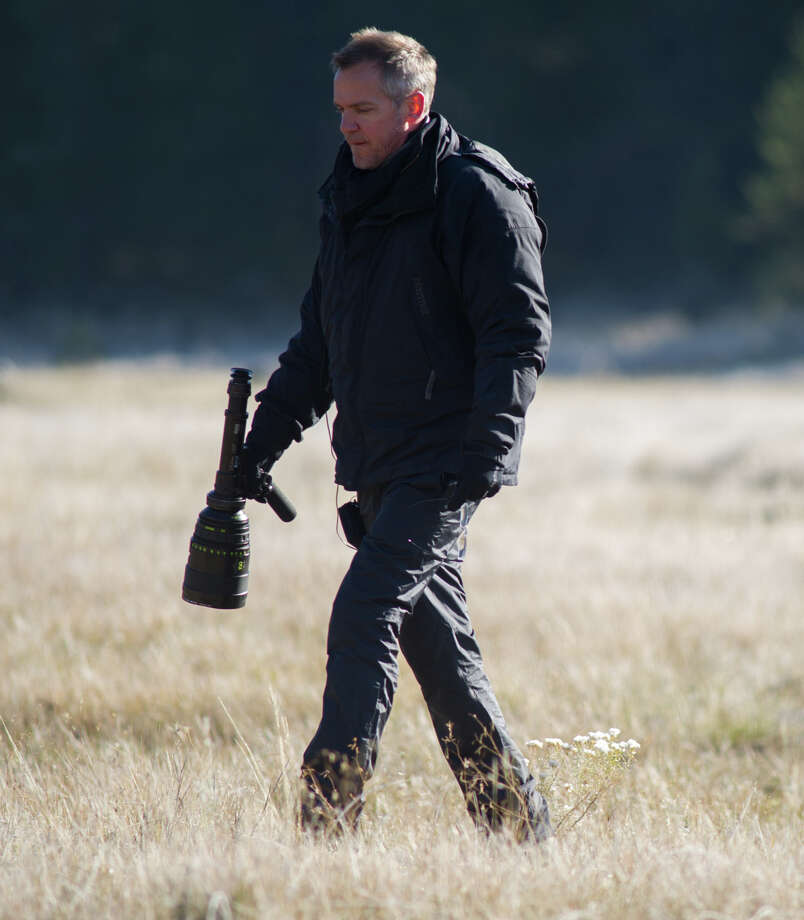
The location of the opening scene where Reese loses her boot took the crew a
whole morning to get to as they had to take two chair lifts and then walk
twenty minutes to get there! The fox, which is her spiritual guide for the
journey, has more appearances than you might think. The scene where Reese is
getting a martini the bartender is actually played by Vallée’s son Alex. Who
knew that with the visual effects technician Marc Côté that a lot of the
landscapes scenes were digitally altered? And the scene at the end when Reese
gets to the Bridge of the Gods it’s actually Cheryl Strayed’s husband and son
that wave to her. These are just a few examples of how Vallée meticulously
crafts his films and makes them personal. He’s the exception to the rule and
clearly illustrates how Hollywood can still produce great works of art. This Blu-ray of Wild is one of the best new DVDs of the
year just for Vallée’s audio commentary. It’s good to hear him talk about his
craft and to hear how he’s settling into Hollywood. The many making-of
featurettes, deleted scenes with commentary, and an impressive gallery section
also contribute to making this a must-have for all Valléeians.
Showing posts with label Wild. Show all posts
Monday, April 20, 2015
Tuesday, December 16, 2014
Monday, December 8, 2014
On Wild for Mubi
"As Vallée’s producer Nathan Ross recently told the Los Angeles Times,
“he feels most comfortable when he's off with his actors in some remote
place." It is this personal impetus to create, explore and engage with
life and the world that is at the root of Vallée’s cinema. Everything
else is a distraction."
Read my full review of Wild on Mubi.
Thursday, October 9, 2014
Thursday, September 18, 2014
A New Start
"There is a real problem when even Steven Spielberg is confused about the
state of modern cinema. It needs to be said: The old ways of doing
things is over. And there needs to be the creation of a new system.
Jean-Marc Vallée is the phoenix to arise from these ashes."
Read my Wild review at Cinema Scope online.
Monday, September 15, 2014
Monday, August 18, 2014
Cheryl Strayed's Wild
Cheryl Strayed,
while in her mid-twenties, traveled the Pacific Crest Trail from Mojave,
California to the Bridge of God near Portland, Oregon. It goes without saying
that during her hike she goes through a lot: the extreme burden of carrying her
over-packed backpack, the extreme variation of the weather (from extreme heat
to snow), unfriendly terrains and dangerous wildlife, boot problems (six loss
toenails), worries about being attacked and so on. But after eleven-hundred
miles she eventually makes it!
But what pushed
her onto taking this trip was the death of her mother. Bobbi, who had a rough
childhood and married life, was healthy throughout her life but after
surprisingly been diagnosed with lung cancer while in her mid-forties the
disease would take her life in a mere seven weeks (this section of the book is
the most heart-wrenching to read). This led to the disintegration of their
family and would send Cheryl into a dark spiral – she would drop out of school,
divorce her husband, and begin doing heroin. By coincidence seeing a travel
guide for the Pacific Crest Trail in a convenience store would change her life
and get it back on track.
Though she
wasn’t prepared for her trip she would eventually adapt, and through meeting
others she would learn new skills, and become all the better at hiking for it
(by the end she would be labeled the Queen of the PCT). She needs to change her path a few
times due to unseen weather circumstances (probably the early effects of global
warming) and her resupply packages, which she organized with her friend Lisa to
be sent to the many camps on the way, provide markers of her progress.
But there are many
themes throughout Wild: the
relationship a daughter has to her mother, experiences growing up poor, coping
with illness in the family, dealing with death and bereavement, how to start
your life again, divorce, friendships, self-love and that of others… There is
so much in Wild. It’s a major work
for our times.
During her hike
Strayed reads a lot and talks about writing in a journal (in the trailer for
the book you can also see some great photos that were taken). But it is the
many years spent between the actual hike and the writing of the book where the
maturity of the author can put her journey into perspective and reveal her
skills as a writer. Strayed’s journey inspires and Wild illustrates the power of good art to still move people.
Strayed during
her hike works so hard not to be afraid and describes being just motivated to
move forward. But it is her mother who she is trying to fully grasp and there
are several times where she describes the spirit of her around her.
Part of the book
takes place on the Sierra Nevada and the
film High Sierra is brought up, which is one of the book's only film reference. While the many literary influences include: each section begins with a couple inspiring quotes (the
one by Emily Dickinson, “If your Nerve, deny you— Go above your Nerve— ” is
especially striking) and Strayed, who is a literature major, is constantly reading (all of the books are listed at the back) and there are certain
chapters where one can detect potential literary influences (a group of people that pick
her up and describe their hard lives especially reminded me of Stephen King).
But all of this,
if it is anything, it is also very Valléeien. Even the Dickinson poem with its slant
rhymes, existential themes, and vivid imagery brings to mind the director of C.R.A.Z.Y. It’s a perfect match for Vallée:
a personal fresco that can be cinematically rendered, and with it the creation of an
alternative community and a humanizing outreach towards those in need. Similar to how Luc Moullet describes Fritz Lang, Vallée is also an auteurs
d’oeuvre. Wild seems like it
would perfectly fit within his body of work. Even Strayed’s point of view descriptions seem like
they would easily transfer into a gripping cinematic drama. Without even yet seeing
it I just know that Wild will be one
of the great films of the year!
Darkness in Jean-Marc Vallée's Cinema
They key scene
in Jean-Marc Vallée’s cinema is the first important one in C.R.A.Z.Y.*
It can’t be stressed enough – everything in Vallée’s cinema revolves around
this black hole: Zachary is born on December 25th around midnight. Shortly
after his birth, when, he is given to his father to hold, his brother accidentally knocks him to the ground. This fall seems to anticipate his tragic
destiny and consequently everything in Vallée’s cinema.
But lets stay on
this primal scene – this unforgettable image – a little longer, because it’s
important. A newborn being dropped into the abyss of darkness and shadows. A
young child without the opportunity to even be himself, make choices and live
his life, is already lost. After being dropped - one imagines that he would reach out for safety, trying
to grasp at something to hold onto but he is all bundled up - no one catches him. He could be gone
forever. There is something infinitely sad and tragic about this whole
situation – where do you go from there? The scene could have lasted longer.
Zach makes it –
barely – but his life afterwards is still a continuous fight – nothing comes
easy for him. This is life. There is a desperation to it. And if you want to
make it, you need to struggle from the deepest of yourself. Zach does so, or at least he tries, to do his best to be emotionally
honest and to find moments of happiness where he can, even though for him life is very confusing. (The scenes of Zach biking
to loose his asthma, walking in the snow to overcome his sexuality, or through the desert to understand life seems to really anticipate Vallée’s interest in Cheryl
Strayed’s book Wild and her confrontation with the natural elements during her hike of the PCT).
Christmas (the death of Jesus, Christianity) and winter time plays
an important role in the film as a marker of the cycle of life that passes by.
(The Christmas setting is also a point of common with Gilles Carle’s masterful La vie heureuse de Léopold Z). C.R.A.Z.Y. is set in the Sixties and
Seventies and in Québec this is the post-le Grand noiceur, Révolution
tranquille (this is the period of political corruption as on view in Denys
Arcand’s Réjeanne Padovani). Through
the transition between generations there is the creation of a new world (a
reoccurring motif in Vallée's cinema). It’s not directly political, as say how
Robert Lepage would film it, but the social is explored through the personal as
within the Beaulieu household the five boys represent different paths the
society is going (e.g. sports, intellectual pursuits, homosexuality, drugs,
a blank slate). Through the emotional and the psychological Vallée depicts how
it feels to face the abyss of
existing within new times. The fights between the children and their father
emphasize this conflict and awkwardness.
There is a
supernatural quality to Vallée’s cinema. In C.R.A.Z.Y. Zach has a don
– a supernatural power to heal others – which is a local folklore in Quebec. Zach
sees the souls of people that are not actually there or have died (this would
be a trait passed on to character’s in Café
and Dallas) like his father when in
Jerusalem or his brother who died of a heroin overdose. (This actually connects
Vallée to the M. Night Shyamalan of The Sixth
Sense). Zach’s brother Raymond
(Pierre-Luc Brillant) has triangular tattoo on his back, which would reappear
as a visual motif in Café. And that film's repeating of similar plot points from C.R.A.Z.Y, but without its cowriter’s François Boulay emphasis on homosexuality, can be seen as both a tabula rasa for Vallée and a variation on a different path Zach could have taken in life - further emphasizing Vallée's mysticism.
I think Vallée
is perhaps the most Québécois of directors. It’s just that with C.R.A.Z.Y. he said everything
that he needed to on the subject so that afterward he had to move onwards
to new territories. In C.R.A.Z.Y. there’s a very sophisticated use of Québécois
French and later in Café he looks at young
adult life there that’s too rarely shown in films. Other examples include: Vallée discussing Francis
Mankiewicz’s Les Bons Débarras, or
talking to Montreal film students about the joys of film school, or when he appears on Québécois
media interviews where he expresses his deep love for the culture, or when he brings his own crew to work on his films abroad. He's infiltrating his Québécois sensibility worldwide, which, I think, makes it more influential.
If the ending of
C.R.A.Z.Y. seems a little too
saccharine today, as Zach and Gervais reunite in old age to get French fries,
it’s just because Vallée's recent films are a lot more mature and aren’t afraid to
acknowledge the darkness (while still being humanistic). There is a bleakness
and fatalism to Café and Dallas (Antoine dies in a plane
explosion and Ron dies too). These traits actually makes the endings of Café de flore more similar to another film by another Québécois
director, Denis Côté, and his Vic and Flow saw
a Bear.
Just like the
title of Jean-Sébastien Chauvin’s new film Les
Enfants indicates: youth is a major subjects of our times. The young have
to carry the weight of history on their shoulders and these are dangerous times: just
look at the news to see how world is being ravished by ethnic differences,
national pride, unnecessary wars, diseases, the negative effects of capitalism, and environmental problems. We're fucked. But we still have to fight.
For his new film
Wild if any film comparison would be deemed
appropriate (even before seeing the film) it would be with Sarah Polley and her
beautiful film Stories We Tell,
which is about a young daughter trying to grasp the enigma of her mother that
passed away prematurely of cancer (which is also the driving force behind her entire filmography
from Away from Her to Take This Waltz). The experience of bereavement led both women to change their lives and this led them to create artistic works of catharsis (directing and writing, respectively), which propose that there is still meaning to be had.
Excluding
The Young Victoria (whose restriction paralleled Vallée's within the restraints of a super-production period film), Wild with its strong female character, a first for late-career Vallée, based on Strayed's incredible story, has the potential to be Vallée’s
most feminist film.
* For another fascinating look at C.R.A.Z.Y. see Gabriel Laverdière’s mémoire, Poétiques Identitaires (Université Laval, 2010).
Strayed's Boot (Shoes in Cultural History)
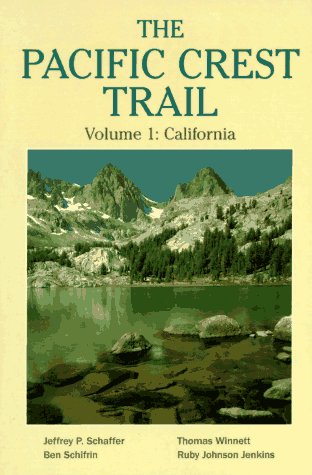
On the cover of Cheryl
Strayed’s book Wild there is a
picture of a well-worn boot. Though not actually Strayed’s but a stock photo,
the boot has black rubber soles and are a brown canvas. Their petite quality
and the brightness of the red laces emphasize their femininity. It’s a striking
image as the boots are a symbol of Strayed’s journey. They convey a
durability, adventure and sense of fun. This image beautifully stands in for
the best and the worst of everything that she went through during her her hike of the Pacific Crest Trail.
During the
months Strayed hiked the PCT she went through two pairs of
boots. The first pair was too small and broke her toenails (she would even
loose a boot mid-hike). After learning about the company's great warranty she would get
a second pair shipped to her (free of cost) during the hike. One imagines that
her actual pair would look a lot worst than the one’s on the cover. Strayed
eventually finished her hike and got to the Bridge of God near Portland, Oregon
where to celebrate she got herself an ice cream cone (during her trip, having only
the tips raised from waitressing for a few months, it was the small pleasures
like a Snapple or a burger that helped her get through the trip).
A picture of Strayed’s
backpack, which she labeled Monster, would have conjured a whole different set
of associations. The backpack symbolized the
weight of the personal turmoil that she went through and was dealing with. So by the end, after
overcoming these traumas, how she regards Monster from at first a beast she could not even carry then slowly towards affection (she
still keeps it in her basement as a souvenir), can be seen as a sign of her coming to terms
with her past.
The chosen picture of
the boot on the cover might still be a better one, though. Boots have played
a significant role in art history and it’s worth conjuring other examples of
their representation to better understand what makes Strayed’s work and the
cover of Wild so exemplary.
There is the
impressionism of Vincent van Gogh’s A
Pair of Shoes (1886) with its earthy colors and bold brush strokes. Van
Gogh’s still life painting of his own shoes emphasizes the harshness of
existence through their well-worn quality. This realistic portrayal of shoes,
drab yet honorable, of what is typically a disregarded and forgotten object is humanized
through van Gogh’s empathy towards them. One can understand why Martin
Heidegger would specifically address the painting in terms of concepts like ‘being’ and
‘truth’ in his seminal essay The Origin
of the Work of Art.
There is the
Surrealist tradition of René Magritte’s The
Red Model (1937): an uncanny image of a pair disembodied feet meshing into leather
boots. Magritte’s brand of modern art, which incorporates a critique of the
illusion of painting within the
painting, was brilliantly studied by the post-structuralist and post–modernist.
For a more pop sensibility there is Elvis Presley’s song Blue Suede Shoes or a more urban equivalent Nelly’s Air Force Ones. But what Strayed does in Wild is retreat to nature as a way to overcome a trauma, which might make her journey closer to the cultural zeitgeist of the run by Tom Hanks in Forrest Gump, John Karakeuer’s Into the Wild, or maybe more appropriately Terry Fox’s run for cancer.
Strayed's journey
is a return to basics - shedding the obligations of a social life to better find inner peace. It is worth bringing up K-Hole’s
article Youth Mode: A Report on Freedom
(without having to get into its all-caps aphorisms, trend words dialectics, or
normcore collages) as some of its ideas are useful to understand the exceptional nature of Strayed's journey. It's a
polemic against social expectations and uniqueness for the sake of being
idiosyncratic and one of its key concepts include the connection between youth and freedom. For K-Hole ‘Youth Mode’ is for a democracy against a culture
created by corporations and marketers,
"Youth [is] the fullness of potential, the ability to be the person you want to be. It’s about the freedom to choose how you relate; the freedom to choose how you understand; the freedom to try new things; the freedom to make mistakes.”
All of the above, from Strayed's journey to K-Hole, goes really well with Jean-Marc Vallée and what he's doing with films as since his last film, Dallas Buyers Clubs, he has had a strong
interest in regular people and everyday heroism, though never in a superficial
or self-aggrandizing way. Just
like Ron Woodroof, the story of an AIDS activist that opened a experimental medical
clinic, whose fight for life gave it its meaning, with Wild Vallée highlights Strayed, in his first literary adaptation, and her recovery
and walk into the wilderness. Like Charlie Chaplin’s humanism, Vallée’s
cinema is that of the working class, overcoming obstacles, and a welcoming hand to those people in need. (The sections
in Wild of the campsites and
communal sharing on the PCT between the hikers really reminded me of similar scenes in Nicholas Ray’s The Lusty Men.)
Vallée chooses sources material and characters with spirits that he admires. After Wild,
which will be premiering soon at TIFF, his next project is Demolition, which will star Naomi
Watts and Jake Gyllenhaal, and is about an investment banker
struggling to deal with the death of his wife as he becomes obsessed with
destruction and starts a relationship with a single mom.
Jean-Marc Vallée: DJ
“I wanted to put my signature on the film with the
soundtrack, so while I was writing, I was listening to a lot of music trying to
find the right feeling, the right lyrics that define and describe the
characters and set up different tones.” - Jean-Marc Vallée
It’s Christmas
and in church Zach levitates into the air as the choir joins him in
singing Sympathy for the Devil. A
single mother and her young boy with Down syndrome dance through Paris’ streets
as Café de flore is playing. A rig
worker in Dallas, Ron Woodroff, opens an experimental AIDS clinic set to Life is Strange.
Jean-Marc Vallée’s
cinema is one full of scenes with striking accompanying songs. Through the drama and
music he can instill a strong emotion in the viewer, which is unmatched in contemporary
cinema. Music is really important to his films - this needs to be
stressed. Vallée includes in his film music that people actually listen to
(regardless of budget restrictions) and this makes his films more affective and universal.
After being
frustrated with his first three films, Vallée would spend ten years getting C.R.A.Z.Y. off of the ground. It’s his artistic and
commercial breakthrough. On its cinematic inspirations, and similar films to it, Vallée brings up Martin Scorsese,
Hal Ashby (Zach even has a Harold and
Maude poster in his room), American
Beauty, Billy Elliot, and other rock-centered films like High
Fidelity and Almost Famous.
It’s fascinating too to hear interviews with Vallée as he
discusses the other songs that he couldn’t get the rights to, which makes one imagine how differently the films could have been. (A film like C.R.A.Z.Y. was never able to play in
the States for this reason as the rights for the songs were sold only to Canada
thinking it was only going to be a small film before it achieved its popularity
after playing at Venice and TIFF).
There are
periphery connections between Vallée’s cinema and the music industry, too. Marc-André
Grondin from C.R.A.Z.Y. played drums
in two bands, Nitrosonique and The Adam Brown. Kevin Parent from Café de Flore, who plays the DJ, is a
famous Québécois singer-songwriter. Jared Leto from Dallas Buyers Club is in the band 30 Seconds to Mars and Bradford
Cox from Deerhunter has a small role in the film, too. This heavy interest in
bands aligns Vallée with other famous directors that also pursue music in side
projects like Scorsese, Jonathan Demme, and Jim Jarmusch.
Vallée on C.R.A.Z.Y., “The soundtrack in this
film is like another character. While I was writing I was doing a mix tape,
like I have done for my friends or when I am DJing.” (I really want to know
more about these DJing activities now). Vallée even speaks about how the Sex Pistols’
album Never Mind the Bollocks
changed his life (his interest in British Rock was one of the reasons he
would spend a year in London filming The
Young Victoria, even though you wouldn’t know it due to the classical qualities of
that film and its score).
You can see the influence of a film like C.R.A.Z.Y. on other Québécois directors. For example, in Denis
Villeneuve’s Incendies the use of
the Radiohead song seems very Valléeien.
Xavier
Dolan’s J'ai tué ma mere, about a queer
teenager coming of age, is really close in subject to C.R.A.Z.Y. and the use of music in his new film Mommy also sounds really Valléeien.
But what makes Vallée’s
films stand out so much is the structural perfection of his use of scores. The
songs are organically imbued to reflect all at once the characters, drama of
the scene, and atmosphere. Certain songs are used in a very specific way. For example, they can reflect generational gaps. In C.R.A.Z.Y. Zach’s father Gervais Beaulieu
(Michel Côté) listens to traditional, older music like Patsy Cline (he even names
his children after each letter of her song Crazy,
which plays a major role in the film) and Charles Aznavour, while Zach listens more to rock
music like The Cure and David Bowie. There are these musical contrasts in all of his films (e.g. the mother and Dj in Café, Ron and Rayon in Dallas),
as well.
Though this DJ
aesthetic to film scores isn’t anything new – one can thing of the pop score
sensibilities of Scorsese’s Goodfellas
or the films of Olivier Assayas – Vallée not only renders perfectly this technique, but he brings it to Canadian cinema, which is known for being a modest cinema,
where the high licensing fees usually scares the producers off. (Vallée actually
had to get his directing and producing fee cut to afford them on C.R.A.Z.Y.).
This is a
ways away from the film scores typically associated with the Classical Hollywood Studio
era as epitomized by a David Lean-Maurice Jarre orchestra score or its modern
Hollywood equivalent Steven Spielberg-John Wiliams (the kind of composers you
would find described at length in say Pierre Berthomieu’s La
musique de film). If Spielberg is more classical, Vallée is more modern as
in his films the music varies from being played off of records, CDs and iPods. (Vallée even has his own
Celebrity iTunes playlist, to illustrate how up he is with the times). Even the commercials that he made in his
intervening years included great songs (e.g. Mr. Lonely in his LCBO commercial).
If a film like Café means so much for Vallée (regardless of its ambiguous resurrection, which I know some people deride him for) it’s because it's actually one of his most personal films. With its main DJ protagonist it's his film where he brings his love of music to the forefront. As well, discussing music with him is the best way to get a great interview out of the director.
At first I was worried how he’ll bring his music sensibility to his new film Wild, which is mostly set in the wilderness, but after actually reading the book, it is actually full of musical references. Cheryl Strayed’s a music buff and sings to herself, hitchhikes in cars which are playing music, and surprisingly even goes to a couple of bars and concerts.
If a film like Café means so much for Vallée (regardless of its ambiguous resurrection, which I know some people deride him for) it’s because it's actually one of his most personal films. With its main DJ protagonist it's his film where he brings his love of music to the forefront. As well, discussing music with him is the best way to get a great interview out of the director.
At first I was worried how he’ll bring his music sensibility to his new film Wild, which is mostly set in the wilderness, but after actually reading the book, it is actually full of musical references. Cheryl Strayed’s a music buff and sings to herself, hitchhikes in cars which are playing music, and surprisingly even goes to a couple of bars and concerts.
Vallée’s obviously a
master of his art and is in total control of his films and career. Music plays an important part in them for their emotional affectiveness and universal appeal
(Here are the playlists to his films C.R.A.Z.Y., The Young Victoria, Café de flore, and Dallas Buyers Club.)
Friday, July 11, 2014
Sunday, May 25, 2014
Subscribe to:
Posts (Atom)