Showing posts with label Cheryl Strayed. Show all posts

Monday, August 18, 2014

Cheryl Strayed's Wild

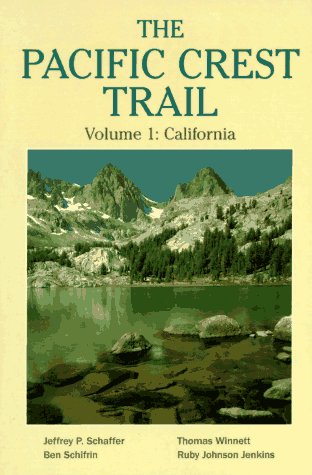
Cheryl Strayed, while in her mid-twenties, traveled the Pacific Crest Trail from Mojave, California to the Bridge of God near Portland, Oregon. It goes without saying that during her hike she goes through a lot: the extreme burden of carrying her over-packed backpack, the extreme variation of the weather (from extreme heat to snow), unfriendly terrains and dangerous wildlife, boot problems (six loss toenails), worries about being attacked and so on. But after eleven-hundred miles she eventually makes it!

But what pushed her onto taking this trip was the death of her mother. Bobbi, who had a rough childhood and married life, was healthy throughout her life but after surprisingly been diagnosed with lung cancer while in her mid-forties the disease would take her life in a mere seven weeks (this section of the book is the most heart-wrenching to read). This led to the disintegration of their family and would send Cheryl into a dark spiral – she would drop out of school, divorce her husband, and begin doing heroin. By coincidence seeing a travel guide for the Pacific Crest Trail in a convenience store would change her life and get it back on track.

Though she wasn’t prepared for her trip she would eventually adapt, and through meeting others she would learn new skills, and become all the better at hiking for it (by the end she would be labeled the Queen of the PCT). She needs to change her path a few times due to unseen weather circumstances (probably the early effects of global warming) and her resupply packages, which she organized with her friend Lisa to be sent to the many camps on the way, provide markers of her progress.
But there are many themes throughout Wild: the relationship a daughter has to her mother, experiences growing up poor, coping with illness in the family, dealing with death and bereavement, how to start your life again, divorce, friendships, self-love and that of others… There is so much in Wild. It’s a major work for our times. 

During her hike Strayed reads a lot and talks about writing in a journal (in the trailer for the book you can also see some great photos that were taken). But it is the many years spent between the actual hike and the writing of the book where the maturity of the author can put her journey into perspective and reveal her skills as a writer. Strayed’s journey inspires and Wild illustrates the power of good art to still move people.

Strayed during her hike works so hard not to be afraid and describes being just motivated to move forward. But it is her mother who she is trying to fully grasp and there are several times where she describes the spirit of her around her.

Part of the book takes place on the Sierra Nevada and the film High Sierra is brought up, which is one of the book's only film reference. While the many literary influences include: each section begins with a couple inspiring quotes (the one by Emily Dickinson, “If your Nerve, deny you— Go above your Nerve— ” is especially striking) and Strayed, who is a literature major, is constantly reading (all of the books are listed at the back) and there are certain chapters where one can detect potential literary influences (a group of people that pick her up and describe their hard lives especially reminded me of Stephen King).

But all of this, if it is anything, it is also very Valléeien. Even the Dickinson poem with its slant rhymes, existential themes, and vivid imagery brings to mind the director of C.R.A.Z.Y. It’s a perfect match for Vallée: a personal fresco that can be cinematically rendered, and with it the creation of an alternative community and a humanizing outreach towards those in need. Similar to how Luc Moullet describes Fritz Lang, Vallée is also an auteurs d’oeuvre. Wild seems like it would perfectly fit within his body of work. Even Strayed’s point of view descriptions seem like they would easily transfer into a gripping cinematic drama. Without even yet seeing it I just know that Wild will be one of the great films of the year!

Strayed's Boot (Shoes in Cultural History)

On the cover of Cheryl Strayed’s book Wild there is a picture of a well-worn boot. Though not actually Strayed’s but a stock photo, the boot has black rubber soles and are a brown canvas. Their petite quality and the brightness of the red laces emphasize their femininity. It’s a striking image as the boots are a symbol of Strayed’s journey. They convey a durability, adventure and sense of fun. This image beautifully stands in for the best and the worst of everything that she went through during her her hike of the Pacific Crest Trail.

During the months Strayed hiked the PCT she went through two pairs of boots. The first pair was too small and broke her toenails (she would even loose a boot mid-hike). After learning about the company's great warranty she would get a second pair shipped to her (free of cost) during the hike. One imagines that her actual pair would look a lot worst than the one’s on the cover. Strayed eventually finished her hike and got to the Bridge of God near Portland, Oregon where to celebrate she got herself an ice cream cone (during her trip, having only the tips raised from waitressing for a few months, it was the small pleasures like a Snapple or a burger that helped her get through the trip).

A picture of Strayed’s backpack, which she labeled Monster, would have conjured a whole different set of associations. The backpack symbolized the weight of the personal turmoil that she went through and was dealing with. So by the end, after overcoming these traumas, how she regards Monster from at first a beast she could not even carry then slowly towards affection (she still keeps it in her basement as a souvenir), can be seen as a sign of her coming to terms with her past.

The chosen picture of the boot on the cover might still be a better one, though. Boots have played a significant role in art history and it’s worth conjuring other examples of their representation to better understand what makes Strayed’s work and the cover of Wild so exemplary.

There is the impressionism of Vincent van Gogh’s A Pair of Shoes (1886) with its earthy colors and bold brush strokes. Van Gogh’s still life painting of his own shoes emphasizes the harshness of existence through their well-worn quality. This realistic portrayal of shoes, drab yet honorable, of what is typically a disregarded and forgotten object is humanized through van Gogh’s empathy towards them. One can understand why Martin Heidegger would specifically address the painting in terms of concepts like ‘being’ and ‘truth’ in his seminal essay The Origin of the Work of Art.

There is the Surrealist tradition of René Magritte’s The Red Model (1937): an uncanny image of a pair disembodied feet meshing into leather boots. Magritte’s brand of modern art, which incorporates a critique of the illusion of painting within the painting, was brilliantly studied by the post-structuralist and post–modernist. 

For a more pop sensibility there is Elvis Presley’s song Blue Suede Shoes or a more urban equivalent Nelly’s Air Force Ones. But what Strayed does in Wild is retreat to nature as a way to overcome a trauma, which might make her journey closer to the cultural zeitgeist of the run by Tom Hanks in Forrest Gump, John Karakeuer’s Into the Wild, or maybe more appropriately Terry Fox’s run for cancer.

Strayed's journey is a return to basics - shedding the obligations of a social life to better find inner peace. It is worth bringing up K-Hole’s article Youth Mode: A Report on Freedom (without having to get into its all-caps aphorisms, trend words dialectics, or normcore collages) as some of its ideas are useful to understand the exceptional nature of Strayed's journey. It's a polemic against social expectations and uniqueness for the sake of being idiosyncratic and one of its key concepts include the connection between youth and freedom. For K-Hole ‘Youth Mode’ is for a democracy against a culture created by corporations and marketers,
"Youth [is] the fullness of potential, the ability to be the person you want to be. It’s about the freedom to choose how you relate; the freedom to choose how you understand; the freedom to try new things; the freedom to make mistakes.”
All of the above, from Strayed's journey to K-Hole, goes really well with Jean-Marc Vallée and what he's doing with films as since his last film, Dallas Buyers Clubs, he has had a strong interest in regular people and everyday heroism, though never in a superficial or self-aggrandizing way. Just like Ron Woodroof, the story of an AIDS activist that opened a experimental medical clinic, whose fight for life gave it its meaning, with Wild Vallée highlights Strayed, in his first literary adaptation, and her recovery and walk into the wilderness.  Like Charlie Chaplin’s humanism, Vallée’s cinema is that of the working class, overcoming obstacles, and a welcoming hand to those people in need. (The sections in Wild of the campsites and communal sharing on the PCT between the hikers really reminded me of similar scenes in Nicholas Ray’s The Lusty Men.)

Vallée chooses sources material and characters with spirits that he admires. After Wild, which will be premiering soon at TIFF, his next project is Demolition, which will star Naomi Watts and Jake Gyllenhaal, and is about an investment banker struggling to deal with the death of his wife as he becomes obsessed with destruction and starts a relationship with a single mom.

Wild by Cheryl Strayed (Book Trailer)