Abstract
This essay will analyze
the Toronto DIY Filmmaker movement through studying some of its more prominent
figures and their work. Each filmmaker will be isolated (with the First
Generation filmmakers grouped together in their own section) and discussed in
regards to how they contribute to the representation of Toronto as a cinematic
city. There will be a focus in terms of their films, public activities, and
reception. Through studying the Toronto DIY filmmakers as a group hopefully a
broader sense of their diversity and preoccupations emerges, as it is through
their growing size that the movement stands out. Included would be a working
filmography. The introduction will contextualize the movement’s major themes,
stylistic approaches and relation to the Toronto New Wave.
Introduction
To broadly define the
Toronto DIY Filmmaker movement: Their
dominantly narrative films, shot with digital cameras, by young Toronto
filmmakers, about Toronto residents, set in Toronto. The origins of the movement can be traced back to
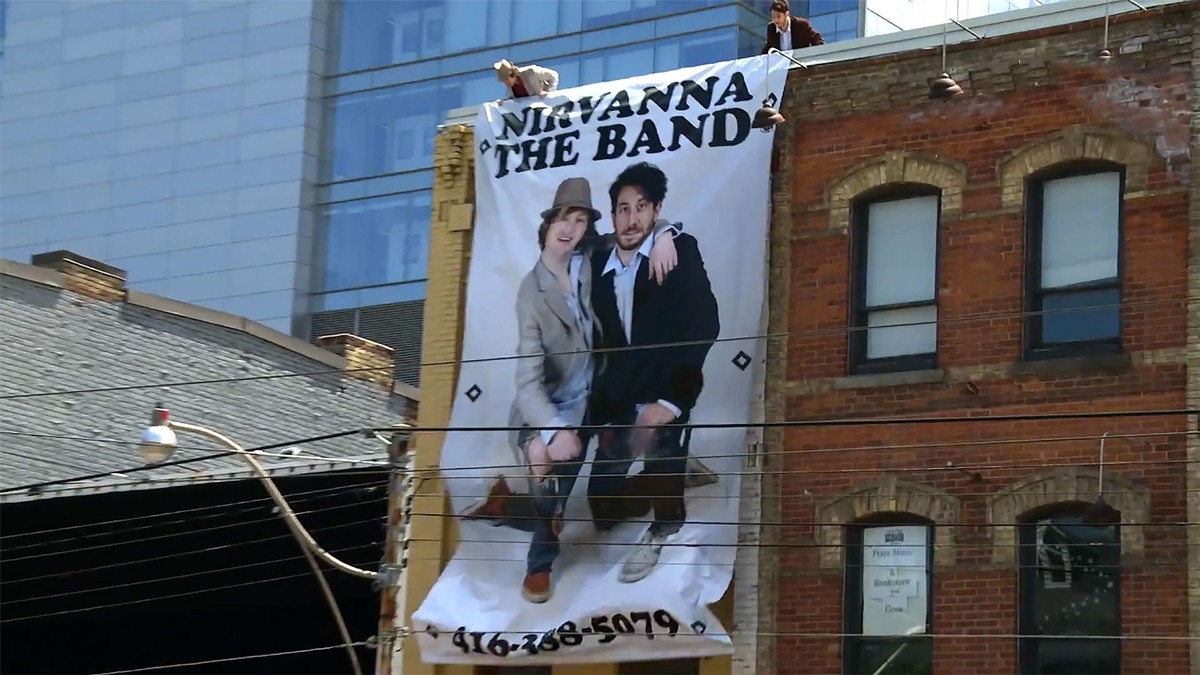
2009-2010 with the completion of Kazik Radwanski's MDF Trilogy and Matt
Johnson's Nirvana the Band. These
works are important due to the international recognition that they received,
groundwork they laid that led to their respective filmmaker’s future projects,
and larger local visibility that led to both Radwanski and Johnson becoming
public figures for the movement which since then led has led to the creation
and merging of a broader artistic community surrounding each of them.
The
methodology of studying filmmakers as auteurs in a Canadian context is argued
for by George Melnyk who writes, “Canadian
cinema is director-driven… The reasons for this are rooted in Canada’s cultural
history as a colony, as well as its tradition of state support for cinema that
ends up emphasizing directorial accomplishment.” For Melnyk, who defines
Canadian cinema as being integral to Canadian culture, the work of these auteur
filmmakers reflect the Canadian cultural psyche in terms of nationality, race,
gender, ethnicity and class. Melnyk argues that the Canadian film director has
risen to the status of a cultural icon, and that, “The auteur director has been
integral to the Canadian cinematic imagination and has served as its prime
foundation.”
The
emergence of the Toronto DIY filmmakers parallels other new national and
generational filmmaking movements that were taking place around the world. For
example, the
magazine Cahiers du Cinéma around
this period had a feature, New York: La
Génération ‘Do It Yourself’, in their September 2011 issue, where they
interview a range of up-and-coming independent New York filmmakers. As well the
Québécois magazine 24 Images proposed
a similar conceptual framework in their discussion of a ‘New Québécois
Generation’ of filmmakers, which from this group Denis Côté has been an
important influence on the Toronto DIY Filmmakers, regularly seeing each other
when he would bring a new film to TIFF, he would provide a model of a festival
filmmaker and offer constructive criticisms to some of them. Many of the issues
surrounding filmmaking and how to represent their respective cities in both of
the aforementioned magazines were simultaneously occurring in Toronto, which
for these Toronto DIY filmmakers meant that they were starting to get notice
from the Toronto-based film magazine Cinema
Scope who would highlight some of their work.
The
Toronto DIY filmmakers offer a youthful, fresh perspective on growing up in the
city – childhood and schools are an important feature of them and so is being a
young adult – and they offer a unique look on specific parts of Toronto’s
urbanism and geography. The year 2010 is important for the movement because
these filmmakers would have experienced the first decade of the 21st
century in Toronto while also allowing for a temporal rupture with the previous
one as they could start tabula rasa on
how to conceptualize the city for a new decade.
An
important aspect of the movement is that it is do-it-yourself, which means that it excludes major productions and
films with major funding (including those by more privileged young filmmakers).
The freedom of being in charge, and having to work for, deciding on the content
(however modest or crude), form, distribution is integral to this group. These
DIY filmmakers typically use non-professional, non-ACTRA actors and
technicians, and they do not work within the industry or with its unions. The
rise in prominence of digital
filmmaking equipment has been a great resource to these filmmakers, as perhaps
were it not have been available, they might not have been as productive and
unconventional as they are. Also of importance is how with the technological
developments of many of these new digital cameras, which the Toronto DIY
filmmakers have relatively easy enough access to (mostly from film schools or
film cooperatives, while some even own their own equipment) and their greatly
improved image and audio recording quality, this had led to a matched
professional standard of much of their work.
The
Toronto DIY filmmakers can be seen as the spiritual successors to the Toronto
New Wave of the mid-eighties (and perhaps even further back to Don Owen making
one of the first Toronto films in 1964) as many of the ideas of an original and
challenging new Canadian cinema along with publicly debated issues and
problems, in terms of financing and distribution, have remained quite constant
since the eighties.* For example, Aaron Taylor in Great Canadian Film Directors writes,
Collectively,
the Toronto New Wave turned its back on traditionalist representations of urban
Canada, contributing to the formation of a recognizable national cinema that
finally made its presence known in the international market.
While
Paul Salmon, also in Great Canadian Film
Directors, characterizes the Toronto New Wave in more depth as,
Emerging
in the mid-1980s, this group shares a number of basic characteristics,
including: a rejection or at least deep questioning of the entrenched Canadian
tradition of documentary realism, an openness to experiment in terms of narrative
structures and subject matter, and a willingness to embrace collaboration and
artistic versatility. While many New Wave filmmakers have been outspoken in
their interest in remaining in Canada and in supporting an indigenous Canadian
film industry, they often share an equally fierce desire to remain unfettered
by any sense of obligation to focus on traditional Canadian subjects.
But
were the Toronto New Wave or even now the Toronto DIY Filmmakers truly
independent, and what does this even mean? Well the answer is complicated.
Though some of the filmmakers receive Canadian art council grants and others
investments from Telefilm, it is never guaranteed. Others crowd-source money
from friends and family and make their films with a small group of friends while
others actually have their own production company and are actually paid to make
films or shows. So there is a broad spectrum of economic resources available to
them, which varies depending on their commercial and critical success and where
they are in their careers.
But
perhaps, and to further connect the Toronto DIY filmmakers with the earlier
Toronto New Wave, it is actually Bruce McDonald, from his special Outlaw
Edition of Cinema Canada which he put
together in 1988, who offers one of the best portraits of what are the goals,
drives, and desires of what it is like being a young working independent
filmmaker (which necessitates also having another, ‘real’ job to afford living
costs) in Toronto,
This
issue is on the concerns and viewpoints relating to the Toronto independent
film community as opposed to the film
industry, the Outlaws as opposed to
the Establishment Cats. We’re sending this out as a communiqué from one
community to another with the hope of offering an alternative view of
filmmaking in this city… The Toronto Independent Filmmaker is a hard bird to
define because the work covers the spectrum… If there is any trend or school
emerging from Toronto the Good, it must have something to do with the desire to
break on through to the other side. It is definitely not a political cinema or
a cinema of urban realism. Many of the films are attempting to open portals
into surrealism and stepping through the stiches in time… Toronto filmmakers
are creating the Cinema of Escape. Not escapist
cinema by any means, for the work has the highest respect for its audience,
but a way out of our home turf as we know it, flying deeper into the century,
venturing into a world where time loses its meaning, searching for someplace
west of lunch, someplace close to the edge, somewhere where East meets West and
north and south do not exist. Living, growing, and working in a city as stolid
as Toronto, this is not a difficult concept to grasp… Now as far as the term outlaw goes, one might argue that these
people can’t be coined as true outlaws because they’re all camped out on the
doorsteps of every government funding agency in the book. Yet I would argue
that the term does apply ‘cause we’re just casing the joints, every damn one of
us is on the run from at least three people we owe money to, we operate outside
the established parameters of tried and tired formulas of film production and
storytelling and, most important, we realize and revel in the fact there are no rules. We’ve discovered that nobody
else really knows what’s going on, and we aren’t going to put all our precious
time into pretending like we do. We’re going to drive all the way till the
wheels fall off and burn. The term Independent
is quite useless, especially in this country where there is no studio
system to be independent from… The enemy of the would-be outlaw filmmaker lies
first in themselves, and in the timidity of the community and industry in
thinking there are rules they must follow. There ain’t.
David Davidson
***
Toronto DIY Filmmakers
Kazik Radwanski (1985 – )
Films:
Assault (2007), Princess Margaret Blvd. (2008), Nakuru
Song (2008), Out in That Deep Blue
Sea (2009), Green Crayons (2010),
Tower (2012), Cutaway (2014), How Heavy
This Hammer (2015).
Born and raised in
Toronto, east of the Don Valley River around Riverdale and the Danforth, having
attended the Montcrest school and then film production at the School of Image
Arts at Ryerson University, Kazik Radwanski has the privilege of making the
first full length feature of the Toronto DIY movement Tower (2012), about an odd young man Derek who pursues an animation
passion project while also working construction for his uncle and trying to
find a girlfriend. The Toronto DIY filmmaker movement came to fruition with Tower as the film was full of subtle and
important Toronto references from its focus on young adult anxieties, engaging
with a less seen and personal encounter with the city, to its title that refers
to the iconic CN Tower, to prominently featuring one of the city’s more
infamous habitants, that of the ubiquitous raccoon. Tower also benefited from receiving critical acclaim and
international attention as it had its international premiere at the 2012
Locarno Film Festival before playing in the city at TIFF.
Tower is important because it provided the start of the
rise of the movement’s young and unique perspectives on the Toronto experience.
Radwanski speaks about making the film in a Toronto DIY Filmmakers feature on
The Slate,
When
I made Tower and my first few shorts
it really felt like I was all alone. I looked up to people like Denis Côté and
Nicolás Pereda but there was no one making English-language films that I really
related too… I like to tell stories that I feel are true to Toronto. I’m not
sure exactly what they are but I know what they are not. I don’t want to force
big stories on the city.
Tower was the logical conclusion of Radwanski’s MDF
trilogy (which gathered its name from his and his producer Dan Montgomery’s
production company Medium Density Fibreboard Films) that includes the three
short films Assault (2007), Princess Margaret Blvd. (2008) and Out In That Deep Blue Sea (2009), which
all gathered attention from premiering at the Berlinale Shorts Competition.
Radwanski speaks about the transition in an interview with Adam Nayman in Metro Toronto as, “I’d spent so much
time developing characters (in my shorts) that it seemed like a shame not to do
more. We wanted to allow ourselves more time to dig deeper and live with the
characters longer.”
Since
then he has made Cutaway (2014) a
sorrowful study of the death of child through expressive Bressonian close-ups
of hands, which he dedicated to his father who had recently passed away. His
sophomore feature How Heavy This Hammer
(2015) continues the project of Tower by
focusing on another odd Torontonian, a father of two sons, as he avoids taking
care of his health, has conflicts with his wife that leads to a separation,
violently playing rugby and sitting at his computer playing a Viking-oriented
computer game. Radwanski and Montgomery are also responsible for the exciting
MDFF Screening Series, now at The Royal, which is the unofficial social hub for
many of the Toronto DIY filmmakers. He is also now in the process of getting
his Masters in film production from York University where he has a few
different projects in the works.
Matt Johnson (
– )
Films: Nirvana: The Band (2010), The
Dirties (2013), Operation Avalanche (2016)
In an interview with The Seventh Art in 2013 Matt Johnson
spoke about how that there was not a young Toronto filmmaker community, and
perhaps he was right, but since then in the following few years many of these
filmmakers came to know each other, meeting in Toronto or abroad at film
festivals through mutual acquaintances, film critics and programmers, and since
then more of their films have been screening publicly in the city while more
filmmakers have also been appearing, graduating from film schools or moving to
Toronto from other cities. Johnson has been one of the most public and
encouraging figures of the first generation Toronto DIY filmmakers through
providing crash courses in DIY filmmaking in one of the Nirvana: The Band audio commentaries and publicly advocating for
more support networks for younger filmmakers. By actively making films in
opposition to more traditional funding bodies (whose mandate and criteria has
the potential for a homogenizing effect) Johnson’s films are refreshingly
original in terms of Canadian cinema as they address particular taboo subjects:
a dark comedy high school shooting film (The
Dirties) and a Stanley Kubrick moon landing conspiracy film (Operation Avalanche). By skirting the line between
documentary and fiction (most of his work is labeled as being ‘documentaries’),
which coincided with a loosening of fair use laws, Johnson has been able to get away
with appropriating more commercial images than most others (who would have to pay large fees to include them). The web-series Nirvana:
The Band was about two young musicians, Johnson and Jay McCarrol (playing
versions of themselves), trying to book a concert at The Rivoli. This critique
of privileged cultural institutions is pursued further in Operation Avalanche (2016) against the CIA and will take on an even
more national dimension in Johnson’s proposed critical John A. Macdonald
biopic. Johnson, unique in this movement as an actor-filmmaker, has taken to
acting in the films of some of the Toronto DIY filmmakers, such as Pavan Moondi
and Brian Robertson’s Diamond Tongues (2015),
Radwanski’s How Heavy This Hammer, and
Calvin Thomas, Yonah and Lev Lewis’ Spice
it Up. (And some of them have
even returned the favor by having small roles in Johnson’s films). Johnson’s
production company Zapruder Films is best seen as a collaborative community,
all taking on other projects to stay active, but returning to Johnson’s films
for their originality and audacity.
* They include the
producer Matthew Miller, who previously directed Portage (2008), the co-writer Josh Boles, the assistant director
Matt Greyson, the cinematographer Jareed Raab, who is credited for the
Johnson-written The Revenge Plot (2011),
and the former co-writer Evan Morgan who has a new feature in the works.
Pavan Moondi, Brian Robertson ( – )
Films: Everyday is like Sunday (2013), Diamond
Tongues (2015), Sundowners (in
production).
After founding the online
video interview film magazine The Seventh
Art along with Christopher Heron, Pavan Moondi and Brian Robertson took to
filmmaking (with at first Robertson just producing, before they would start to
co-direct). So far they have been the best at representing Toronto as a young
party city (which is paralleled by some of their own production stories and
launch parties), even though it is still presented as a city leveled with a
frustration of unfulfilled ambition, difficulty of finding work and romantic
separation. With an attempt to maintain a true geography of the city,
recognizable locations such as the Dundas and Ossington blocks, the Queen
street strip of malls and other smaller neighborhoods are regularly in the
background or are used as exposition to be as faithful to the representation of
the city as it is lived through personal experiences. Through its specificity
the films allow for a stronger identification with its story. Everyday is like Sunday (2013) is
interesting, though flawed, due to a rushed and partly unprepared
pre-production. Inspired by the teenage melodramas of American television, such
as The OC (2003-2007), and also a
Morrissey song from where it gets its title, Everyday is like Sunday is about a few friends dealing with love
issues, friendship and trying to find work in Toronto. Moondi and Robertson’s
follow-up Diamond Tongues (2015)
about a struggling actress is more varnished and successful as it was made with
more pre-production and on a larger scale, with a better lead actress (Leah
Goldstein, from the band July Talk) and more financial resources. Diamond Tongues was generally well
received, which has led to bigger projects for the duo that includes Sundowners which will be set in Mexico
and will star the stand-up comedian Phil Hanley, Luke Lalonde from the band
Born Ruffians, and Tim Heidecker from Tim
and Eric.
Andrew Cividino (
– )
Films: I
Norbert (2007), Mud (2009), We Ate the Children Last (2011), Yellow Fish (2012), Anatomy of a Virus: The Making of Antiviral (2013), Sleeping Giant (2014), Sleeping Giant (2015).
The unexpected success of
Cividino’s career so far has been the selection of his first full-length
feature Sleeping Giant at the 2015
Cannes Critics' Week (a first for any of these filmmakers), which gathered it a
plethora of accolades, who were happy to see a good English Canadian film by a
young Toronto filmmaker finally playing at the prestigious and hard-to-get-into
French festival. The story is about three young boys spending their restless
summer in Thunder Bay. Cividino allowed the boys to just be themselves and to
improvise, which led to some really great and surprising moments in the film.
For his follow up Cividino will turning his earlier short-film We Ate the Children Last, based on a
Yann Martel story, into a feature. Cividino works closely with his producer
Karen Harnisch (who also produced The
Oxbow Cure and has an upcoming collaborative project in the works, Delta Venus) as they run their company
Film Forge Productions together. Cividino’s short films Mud and We Ate the Children
Last were both co-directed with Geoffrey Smart and he also made the
making-of Brandon Cronenberg’s Antiviral (2012).
Calvin Thomas, Yonah and Lev Lewis ( – )
Films:
Amy George (2011), The Oxbow Cure (2013), Spice It Up (2015), Sublet (production).
The feature film Amy George (2011) brought the working
pair of Calvin Thomas and Yonah Lewis to the forefront of young Toronto DIY
filmmaker movement. It is a film set in the Riverdale neighborhood where a
young teenager Jesse has trouble fulfilling an assignment of taking a
photograph that best represents himself. His teacher's advice is “you can find
something interesting anywhere… you just have to look around,” which gets Jesse
to explore his neighborhood and nearby parks to find something that meets this
description. Experiencing anxiety about not being able to be a true artist
without having experienced ‘true suffering’ (something which he read in the
library in a book on the subject of being an artist) Jesse becomes worried that
he might not be able to complete the project. With troubled relations with his
parents, since they do not trust him and think that he is odd, Jesse ends up
being closer with his younger aunt who he talks to bout his romantic affinity
for a classmate Amy, who after playing with would become a source of guilt.
Thomas and Lewis’ sophomore film The
Oxbow Cure (2013) is darker and more brooding as in it a young Toronto
woman retreats to a Muskoka cottage to recover from an illness and the death of
her father (perhaps as an answer to the notion of the necessity of suffering
for serious artists as mentioned in Amy
George?) and once there is haunted by fantastical visions. The Oxbow Cure is a singular film for
the Toronto DIY filmmaker movement as it is combines elements from an Ingmar
Bergman drama (The Passion of Anna is
said to have been an influence), experimental cinematography of nature à la Philippe
Grandrieux (Un lac) and a vintage style
hand-crafted movie monster (Swamp Thing).
Thomas and Lewis are perhaps the Soderberghs of the Toronto DIY filmmakers as
they work quickly and economically with a close team and Thomas and Lewis
operate their own cameras. Yonah Lewis’s brother Lev started working with them
as the composer of Amy George before
taking on more responsibility to the point of co-directing their latest feature
Spice It Up (which still has not
premiered) to now directing his own feature Sublet.
Fantavious Fritz (
– )
Films:
Kosmos (2011), Tuesday (2012), Paradise
Falls (2013), Lewis (2015).
A well-regarded
short-filmmaker, having his work play at Short Cuts Canada at TIFF and even
some getting on Canada’s Top Ten, but it was the audacity and warmth of Lewis (2015), which premiered at the
MDFF screening series, that brought Fritz a lot more local and critical
attention. Lewis is a story told from
a cat’s point of view as he gets lost from his owner and starts to be taken
care of by a senior woman. Lewis (the cat’s name) still gets to wander around
the neighborhood, seeing the sights and having fun with kids, but he returns to
her every night, where she discusses with him the sadness’s of her life and
lovingly dances with him. Unfortunately she passes away one night and Lewis is
trapped in the house, with very few ways to get out… Fritz moved to Toronto in
2011, and since then has formed a working team, who they share projects with,
such as making music videos, while also having day job working on commercial
media. In one of his earliest projects which he co-created with Austin Will, the bartender slides me a beer it runs down
the bar like an Olympic sprinter, (2011), which title comes from a Charles
Bukowski poem and whose voice-over is Bukowski reading a different poem Style, it is defined as “A fresh way to
approach a dull or a dangerous thing… To do a dangerous thing with style is
what I call art,” and, “Cats have it with abundance.” Stylish and cat-like, a
great way to characterize the beautiful work of Fantavious Fritz.
Nadia Litz (
– )
Films: How to Rid Your Lover of a Negative
Emotion Caused by You! (2010), The Frame with Adrienne Clarkson (2012),
The Good Escape (2013), Hotel Congress (2014), The People Garden (2016).
A popular Canadian
actress before becoming a filmmaker, Nadia Litz perhaps offers one of the best
models of how to remedy the gender disparity in feature filmmaking: for young
women to just go out and make films themselves. Litz’s first feature Hotel Congress (2014), which she
co-directed with Michel Kandinsky, was made as part of the Toronto independent
filmmaking veteran Ingrid Verninger's 1K Wave, which recruited a myriad of
younger Toronto filmmakers to make a film for under one-thousand dollars. This
DIY catalyst makes Hotel Congress even
more impressive as it was filmed at the real Hotel Congress (where the film
gets its title) in Tucson, Arizona. Hotel
Congress is a reflective, witty and funny comedy about a man and a woman
who are at the hotel to have an affair in which they promise to be
non-committal but where they inevitably fall in love. Perhaps a generation
older than the DIY filmmakers the ethos of Hotel
Congress definitively gives Litz a place within this movement. As well,
along with others like Simon Ennis (You
Might as Well Live, Lunarcy!), Daniel Cockburn (You Are Here), and Reginald Harkema (Monkey Warfare, Manson, My Name Is Evil), this generation of
filmmakers fills the transitional years between the Toronto New Wave and the
Toronto DIY filmmakers, through how they were able to express their youthful
new directorial voices through more industrially driven projects. Litz new
feature The People Garden (2016) is
screening theatrically in the summer of 2016 and includes an impressive cast, such
as Dree Hemingway and Pamela Anderson.
Rebeccah Love (1990– )
Films: Pitching for the Heights, (2013), Circles
(2013, as the writer/art-director), Abacus,
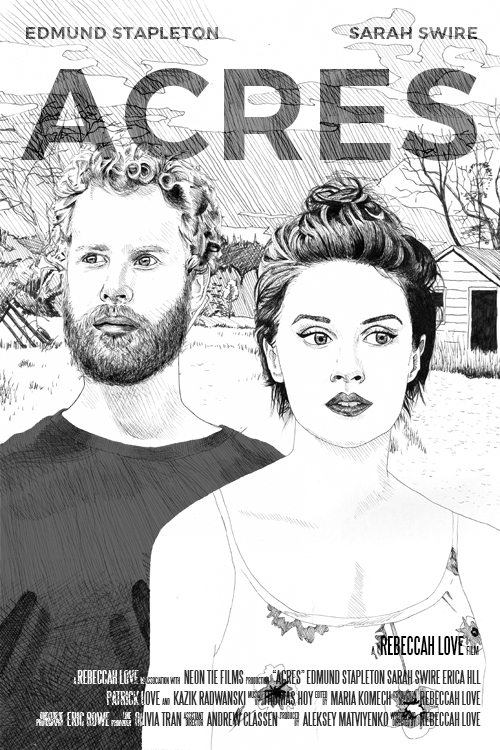
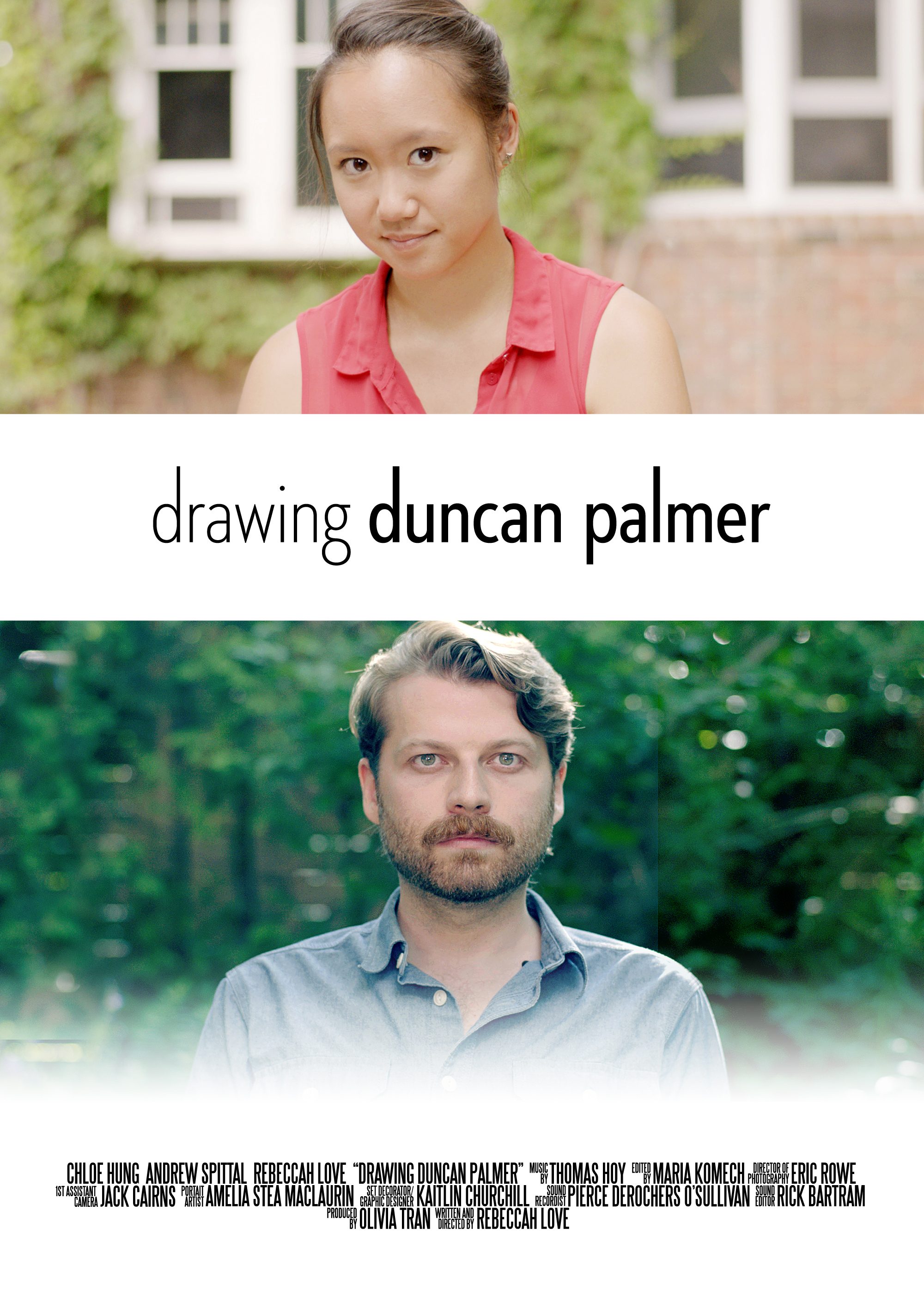
My Love (2014), Drawing Duncan Palmer
(2016), Props Girl (2016), Acres (in production).
Has there even been a
Toronto filmmaker as committed to showcasing the beauty of Regal Heights before
Rebeccah Love? Probably not, as since Love’s first short-film Pitching for the Heights (2013) about
two friends exploring the neighborhood, playing baseball, and nostalgically
recalling their youth; the neighborhood, its charm and slower pace has never
been as beautifully portrayed. Love’s films are a nice counter-point to some of
the more male-centric downtown work of a lot of the Toronto DIY films. A
feminine and intimate filmmaker, Love’s Abacus,
My Love (2014), her Ryerson graduating project, is a fairy tale of a young woman who finds the man of her dreams
to rescue her from a despairing life. It is impressive for its theatrical
effects and lavish production design. In a cinema filled with mourning and
sorrow (the boy and father missing their mother in Circles and the missing mother in Abacus), the belief in dreaming and for something magical proposes
the remedy to so much of life’s despair.
Drawing Duncan Palmer (2016)
still needs to have its premiere and Love has a new project Acres in the works.
Sofia Bohdanowicz ( – )
Films:
falling with force. (2009), Dundas Street (2012), A Prayer (2013), An Evening (2013), Another
Prayer (2013), Last Poem (2013), Never Eat Alone (2016), A Drownful Brilliance of Wings (2016), Maison du bonheur (2016).
Since the Consulate
General of the Republic of Poland gathered five of Sofia Bohdanowicz short
poetic films for a small retrospective Last
Poems in 2014 there has not been any more public screenings of her work,
even though since then she has made three more of them. Bohdanowicz’s greatest
claim to fame in the Toronto DIY filmmaker movement is her short film Dundas Street (2012), named after the
famous street that stretches across the city, which is inspired by one of
Bohdanowicz's grandmother Zofia Bohdanowiczowa’s (1895-1965) poems. Dundas Street is less a narrative than a
visual poem, which emphasizes striking scenes and visual beauty. Dundas Street, which is co-directed by
Joanna Durkalec, is set in the past (when Zofia would have first moved to
Toronto) and is narrated by an elderly Polish woman who is discusses being
unable to adapt to her new urban landscape. Dundas
Street follows her efforts to find meaning in an inhospitable and
unfriendly city. She speaks fondly of the fruit merchant Cornelius and in one
stunning scene as he is cashing out, the lighting brightens, and he sings a
sorrowful song. Hopefully more of Bohdanowicz’s newer work finally plays
publicly on Toronto screens.
***
First Generation Toronto DIY Filmmakers
Nicolás Pereda (1982 – )
Films:
Where Are Their Stories (2007), Interview with the Earth (2008), Juntos (2009), Perpetuum Mobile (2009), All
Things Were Now Overtaken by Silence (2010), Summer of Goliath (2010), Greatest
Hits (2012), Killing Strangers
(2013), The Palace (2013), The Absent (2014), Minotaur (2015), Tales of Two
Who Dreamt (2016, which he made with his partner Andrea Bussmann).
Igor Drljača (1983 – )
Films: The Battery-Powered Duckling (2006), Mobile
Dreams (2008), On a Lonely Drive
(2009), Woman in Purple (10), The Fuse: Or How I Burned Simon Bolivar
(2011), Krivina (2012), The Waiting Room (2015).
Albert Shin (
– )
Films:
Pin Doctor (2006), Kai’s Place (2008), Point Traverse (2010), In Her
Place (2014).
Luo Li (
– )
Films:
Fly (2004), Ornithology (2005), stills (__), I Went to the Zoo the Other Day (2009), Rivers and my Father (2010), Emperor Visits the Hell (2012), Li
Wen at East Lake (2015).
The First Generation
label is a sub-group of the Toronto DIY filmmakers that categorizes filmmakers
who immigrated to Toronto, Canada earlier on in their lives and studied, for
the most of them at the film production program at York University, and with
the skills, resources and community which they formed, took to filmmaking, with
some making Toronto or Toronto-related, films, back to their country of origins
to tell prescient stories affecting their own home country, while still
returning to Toronto afterwards, where many of them live the rest of the year.
The
term was coined by Radwanski who in 2011 programmed a First Generation series
at the Lichter Filmtage in Frankfurt. Radwanski describes the initiative,
We
were given carte blanche and told that we could program anything we like as
long as it related to Toronto. Frankfurt is Toronto’s sister city and one of
the festivals missions is to celebrate that fact. However, we soon found that
all of our favourite local filmmakers were from somewhere else.
The
focus of the program was on how the filmmakers could be informed by their city
and its inhabitants, while also removing this context from their films.
Radwanski define them as, “These temporary-residents play a role in Canadian
cinema: their films maintain a connection to Toronto, while defining their own
territories and landscapes.” Since this program in 2011 these First Generation
filmmakers, and others which includes also Second and Third Generation
immigrant filmmakers, have only rose in prominence. There is an emphasis on
international co-productions and funding for this group. For example, Nicolás
Pereda works closely with the Mexican production company Interior XIII and Igor
Drljača has received the Hubert Bals Fund for project development on a new film
Tabija. As well, these films have
easier access and international recognition to play at more and different
international film festivals and cities, whose mandate is to play more films
from those other respective countries.
From
this group Nicolás Pereda is perhaps the most prominent. Pereda moved to
Toronto from Mexico at the age of nineteen to enroll in film production at York
University. With his first feature film Where
Are Their Stories? dating from 2007, in interim he has created a dozen
films, ranging from full-length features to medium- and short-films, to pure
fiction films to hybrids and documentaries. Pereda’s films are typically set in
and around Mexico City, with a cast including his regular repertoire actors
Teresa Sánchez and Gabino Rodríguez (whom typically play mother and son), dealing
with themes of alienation and class disparity, and are characterized by motifs
of repetition and formal experimentation.
Pereda’s
low-budget minimalist form of filmmaking is also open to experiment with
narrative and structural patterns. The splitting of the films into two parallel
and contrasting parts regularly appears (perhaps an influence of Apichatpong
Weerasethakul?) to interrogate and dissolve certain ideas of representation. As
he discusses with Radwanski in a Cinema
Scope interview, “Maybe you watched the Dardenne brothers and I watched
Tsai Ming-liang or something like that…” These kind of hyper-conscious forms of
storytelling might at first glance appear to be jarring, but they allow Pereda
to interrogate his own motives and the filmmaking process. The films are
character driven, with minimal plots, with typical scenes involving characters
siting together in a slum-like room for long durations without any dialogue,
filmed in a fixed long take. Typically there are also retreats to nature, which
is never as utopian as the characters would desire.
Since the 2012 TIFF Cinematheque retrospective Where Are the Films of Nicolás Pereda?
(as the title seems to anticipate) Pereda’s recent films have not screened
publicly in Toronto, except for Minotaur in
the 2015 TIFF Wavelengths program. But this is not to suggest that Pereda has
not been busy as since then he has made Killing
Strangers (2013) with the Danish filmmaker Jacob Schulsinger as part of
Copenhagen’s DOX:LAB collaborative initiative; his own films The Palace (2013), The Absent (2014) and Minotaur;
contributed to Venice 70: Future Reloaded
(2013) and Gael Garcia Bernal’s omnibus film El aula vacía (2015); and finally made his first Toronto film, Tales of Two Who Dreamt, a documentary
with his partner Andrea Bussmann, about the Hungarian Laska family in a
low-cost housing complex as they await their day in court to confirm their
asylum in Canada. As well Pereda has returned, now as a professor, to York
University to teach a new generation of students film production.
Drljača and Albert Shin have had a close working
relationship since their time at York. Drljača was born in Bosnia and
Herzegovina and moved to Canada with his family due to the Bosnian War (the
subject of his autobiographical The Fuse).
Shin, a Second Generation immigrant, was born and raised in Ottawa, and went to
York for film production and has been living in Toronto since. They work
together at their production company Timelapse Pictures, balancing directing
and producing roles on each other’s films. Drljača’s two feature films Krivina (2012) and The Waiting Room (2015) are both partly set in Toronto (more so The Waiting Room) even though they both
primarily deal with the Sarajevo diaspora (in Krivina the protagonist returns there), which is also the subject
of many of Drljača’s short films. Krivina
stars Goran Slavkovic (who Drljača has worked with on his earlier short
films) who brings to the humble wanderer Miro a tough outer-shell with a buried
sensitivity. The story is about Miro, a Bosnian refugee who works in
construction, who returns to Bosnia and Herzegovina to search for an old lost
friend who has been rumored to have reappeared. His other friend Drago (played
by the Bosnian actor Jasmin Geljo) has many conversations with Miro as their
driving to work in which he complains about the Harper government’s immigration
policies.
Geljo would return as the lead in The Waiting Room (and so would Slavkovic in a bit role) as a
stereotyped working actor. He was prior a famous actor in Bosnia and now he is
making a film in Toronto on a production stage about the wartime experience (the
opening scene with its rear-projection is stunning). Geljo’s character has
fraught relations with his whole immediate family: estranged from his first
wife who is now in a terminal cancer ward, he is in what appears to be an
unfulfilled second marriage, gets in fights with his daughter and cannot always
relate to his son. The Bosnian psychic landscape that Geljo’s character left
over twenty-years ago is omnipresent throughout the film. He tends of find
solace in the intimate conversations in his own language with his closer friends,
re-interpreting his native comedic performances, over drinks, as a last bastion
of his previous life, which he can’t really express with anyone else. And even
these moments end up in anxiety, frustration and misery. There are some wounds
that cannot be healed – the psychic memory of the Bosnian war has left more
victims than just the casualties.
Formally the major influence on Drljača is Andrei
Tarkovsky from the oneiric narrative structure and temporal leaps, reality and
dreams seamlessly blending together to create something extremely hypnotizing.
Two particular big influences are The
Mirror (1975), for its flashback narrative structure and how it engages
with the fracturing psychological effects of wartime experiences, and also Solaris (1972) for its famous
highway-driving scene that leads into the city (Drljača’s films are almost all
prominently set in or around cars).
While Shin’s better well known for his feature In Her Place (2014) which is a critique
of South Korean affluence as it is about a rich woman from Seoul who goes to
the countryside to secretly, and exploitatively, adopt an unborn child. Filmed
in South Korea, with a technical crew from both countries, Shin’s filmmaking
approach blends Lee Chang-dong’s poetic realism with Luis Buñuel’s sarcastic
surrealism. The difficulty to access Shin’s earlier feature Point Traverse (2010) and his previous
short films Pin Doctor (2006) and Kai’s Place (2008) makes him a subject
for further research.
And
finally Luo Li, with four completed features in the span of six years, he is
one of the more proactive filmmakers in the group. On top of that they have all
had public and repeated screenings in Toronto. His graduate student film I Went to the Zoo the Other Day (2009)
onwards to Rivers and my Father (2010)
and Li Wen at East Lake (2015) all
played at the Images Festival, while Emperor
Visits the Hell (2012) played at the MDFF screening series, before they
would all return for a TIFF Cinematheque retrospective, You Can't Go Home Again: The Films of Luo Li, in the summer of
2015.
Born
in Wuhan, China, Li moved to Toronto to receive a BFA and MFA from York, and
now lives in Hamilton, while returning to China to make his feature films.
Perhaps his only true Toronto film is his first I went to the zoo the other day where two young Yugoslavian
immigrants go to the city’s zoo, to overcome their depression and to experience
the animal life. Made without any form of official permission, in an artistic
black-and-white cinematography, with dialogue in Serbian, dealing with themes
of alienation, an inability to communicate and personal reservations; it is one
of the more stunning Toronto films from this group. Li’s following films are
experimental documentaries set in China, that attempt to bridge the personal
with the political, as he interrogates his own motives for going there and
working while also examining the negative effects of the country’s rapid
capitalism. For their meditative tone, use of fantasy, raw social portraits,
and heightened and regular casting of the same actors they recall the films of
Apichatpong Weerasethakul and Tsai Ming-liang.