Showing posts with label Big Little Lies. Show all posts
Showing posts with label Big Little Lies. Show all posts
Monday, September 18, 2017

Monday, August 14, 2017
A Cinema Of Imagination in English Canada
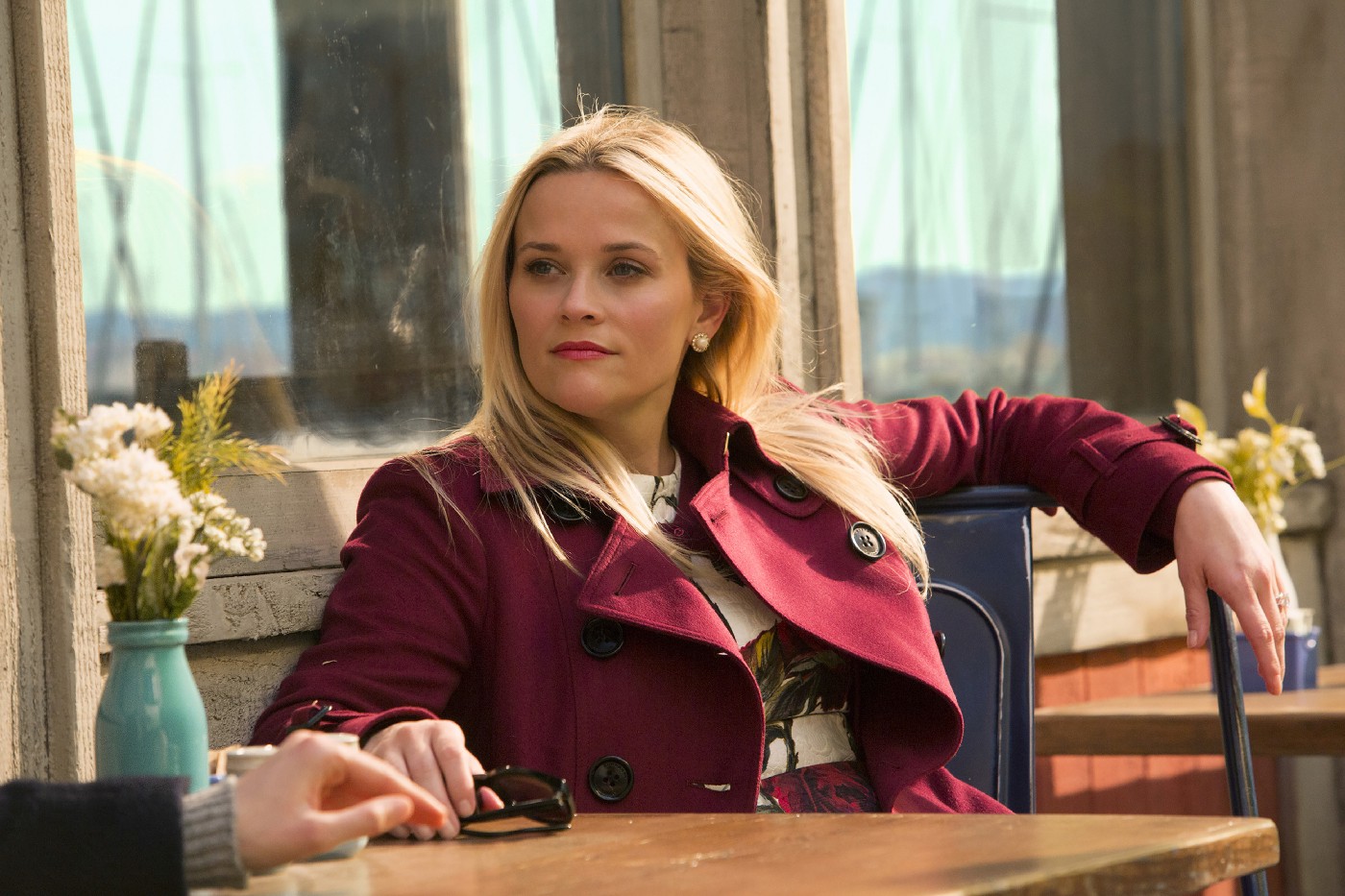 The release of Big Little Lies out now on Blu-ray is a
reminder of what’s lacking so much in Canadian cinema: beauty, generosity and
spirit. The community of and around these three mothers and their children is
going through many challenges and problems but there’s a resilience that holds
everyone together. The interior emotional world of these characters oscillates
between anger and joy, sadness and humor. It’s by this fine balance,
accentuated by a powerful soundtrack, that Big
Little Lies captures a truth of the human spirit today. The image that
comes to mind is that of Madeline telling people to fuck off with a smile as
she has the best interest of her family and friends in mind. That is to mean
well and to fight for it. In Big Little
Lies everyone are themselves: they are complex characters that have
experienced challenges, they are beautiful and full of emotions, they need to
be loved and are loving, and at the end they get what they need (to cite the
Rolling Stones song that plays during the end credits). If Jean-Marc Vallée is
still the best working Canadian director it’s not because he has gone stateside
and has more resources (though this is obviously a plus as it has given him
more freedom), it’s because he proposes a cinema of three things: dreams,
imagination and winning.
The release of Big Little Lies out now on Blu-ray is a
reminder of what’s lacking so much in Canadian cinema: beauty, generosity and
spirit. The community of and around these three mothers and their children is
going through many challenges and problems but there’s a resilience that holds
everyone together. The interior emotional world of these characters oscillates
between anger and joy, sadness and humor. It’s by this fine balance,
accentuated by a powerful soundtrack, that Big
Little Lies captures a truth of the human spirit today. The image that
comes to mind is that of Madeline telling people to fuck off with a smile as
she has the best interest of her family and friends in mind. That is to mean
well and to fight for it. In Big Little
Lies everyone are themselves: they are complex characters that have
experienced challenges, they are beautiful and full of emotions, they need to
be loved and are loving, and at the end they get what they need (to cite the
Rolling Stones song that plays during the end credits). If Jean-Marc Vallée is
still the best working Canadian director it’s not because he has gone stateside
and has more resources (though this is obviously a plus as it has given him
more freedom), it’s because he proposes a cinema of three things: dreams,
imagination and winning.
So to repeat these three terms,
since they are so necessary though actually scarce: dreams, imagination and winning. Dreams as it’s so important to
believe in a future or another world where so many of today’s problems are no
longer prescient and happiness is possible. Imagination as it’s necessary to
believe, to imagine these
possibilities and relationships to make them real. And finally winning as it
through these wishes coming true and perseverance eventually paying off, which
gives meaning to the struggle that it took to get there. Humanist beliefs for
sure, but why have they become so hard to find and rare in an English Canadian
cinema? Why is it when so many Canadian directors finally get a chance to make
a film the end result is usually the opposite: reality, oppression and defeat?
A collective imagination doesn’t have to essentially rely on social reality and
its problems, an individual defeat that’s a symptom of institutional malaise.
Why instead of dreaming success and victory that instead so many of these
directors put forward defeat and failure? I know that the world is and can be a
shitty place but this only makes the potential for imagination and victory even
more important: at least in art it doesn’t have to be.
Jacques Rancière can be valuable
here as he has a novel manner to articulate the link between art and democratic
politics. His concept of the distribution
of the sensible refers to the communal forms of naturalized perception
within a particular social order. For Rancière social formations are naturally
oligarchic therefore the powers of artistic operations are capable of
reconfiguring hegemonic perceptions of reality. Art is able to dispute any
sense that existed meanings of socio-cultural life is inevitable. This can be
seen in his two favored regimes of imageness: the artistic image for Rancière, which creates discrepancies within a
given order of expectation of reality as it attempts to dismantle normalized
standards of representation; and symbolic
montage that connects disparate elements to create affinities, whose
co-belonging shows these elements as being part of the same world, as it blends
familiarity with mystery. Two other important terms are politics which for Rancière is anything that reframes the sensory
community and police which is anything
that reinforces the status quo.
Through a Rancièrien perspective the
positive qualities of this idea of an English language Canadian Cinema of the Imagination becomes political, in that they imagine a world of co-habituation
while also troubling the apparatus, the institutions that circulate in the
financing and distribution of these works.
The current genre of the English Canadian miserablist drama seems to be have been solidified by the institutionalization of the discourse formations of and surrounding the work of Atom Egoyan – whose films regularly denounces the problems of society and shows the effects of alienation, while routinely being celebrated for it – as this model, and themes about Canadian fiction like the garrison mentality and weird sex and snow shoes, has ended up creating a collective imagination of individuals being separated instead of finding a place within a larger social community. This ossification might have its roots in the creation of a state-sponsored fiction film industry in favor of social portrayals and in opposition to the communal popularity of American films. It can even be seen as disseminating into current CBC television productions like the reboot of Anne of Green Gables that focuses more on sensationalism and violence than the earlier joyous moments and accomplishments of its original. In this context programming can be seen as supporting this industry and curation favoring those that work within this system.
The current genre of the English Canadian miserablist drama seems to be have been solidified by the institutionalization of the discourse formations of and surrounding the work of Atom Egoyan – whose films regularly denounces the problems of society and shows the effects of alienation, while routinely being celebrated for it – as this model, and themes about Canadian fiction like the garrison mentality and weird sex and snow shoes, has ended up creating a collective imagination of individuals being separated instead of finding a place within a larger social community. This ossification might have its roots in the creation of a state-sponsored fiction film industry in favor of social portrayals and in opposition to the communal popularity of American films. It can even be seen as disseminating into current CBC television productions like the reboot of Anne of Green Gables that focuses more on sensationalism and violence than the earlier joyous moments and accomplishments of its original. In this context programming can be seen as supporting this industry and curation favoring those that work within this system.
Part of this problem is that there
are so few directors with a clear, personal vision of hope. Instead of
believing in coherence and breath the reigning model is that of fragmentation
and group-consensus. Feeding social expectations and stereotypes instead of
exceeding them.
 If
there’s a noble tradition in English Canadian cinema its roots can be seen in
the work of Don Owen and Allan King: the documentary tradition, focusing on the
people and streets of Toronto and elsewhere, as it hesitates towards fiction.
In this middle-ground there is room for imagination to appear where through improvisation
surprises can occur to show off what makes us unique. This tradition can be seen as
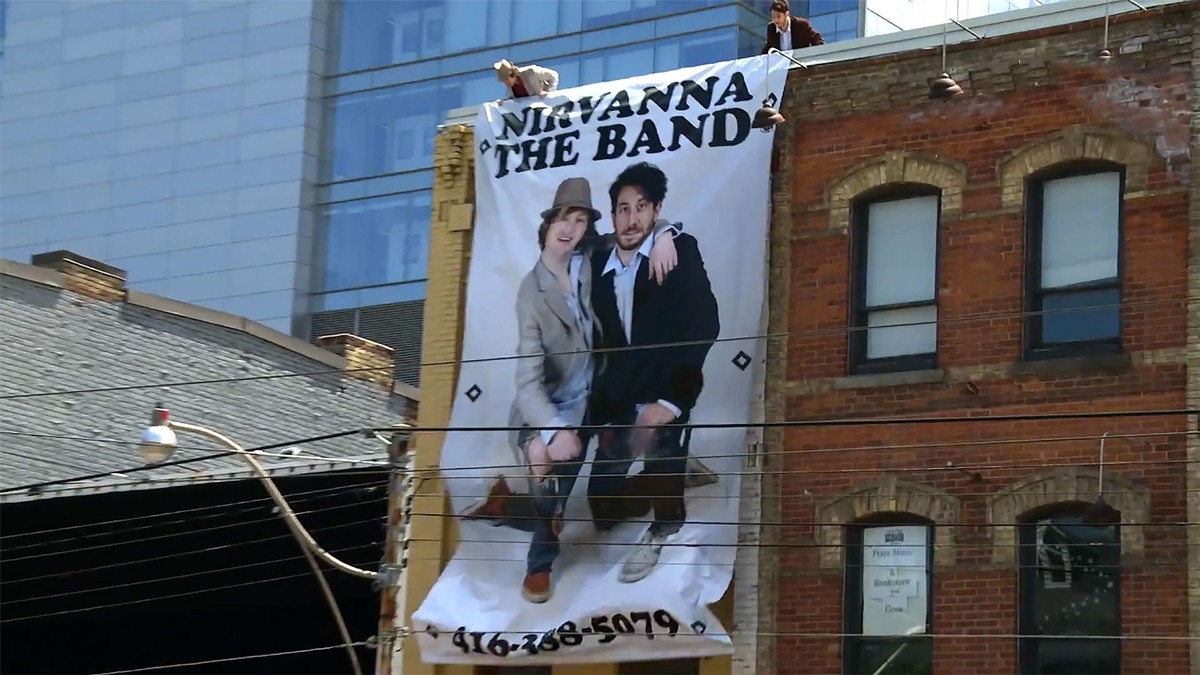
continuing in the work of Kazik Radwanski (Scaffold)
and Matt Johnson (Nirvanna The Band The
Show). But there’s also a more imaginative Canadian film history hidden
behind this: I’m thinking about the line that traces John Paizs’ Crime Wave to Matt Johnson’s Operation Avalanche in English Canada,
and Gilles Carle’s La vie heureuse de
Léopold Z to Vallée’s C.R.A.Z.Y.
in Québec. A leap to dreams, imagination and winning is possible and nobler. And
there’s a history of these works in Canadian cinema that shows it has been done in the past. Some examples that come to mind includes King’s Who Has Seen the Wind?, Peter Mettler’s
The Top of his Head, Donald
Brittain’s Family: A Loving Look at CBC
Radio and Terrance Odette’s Saint
Monica.
If
there’s a noble tradition in English Canadian cinema its roots can be seen in
the work of Don Owen and Allan King: the documentary tradition, focusing on the
people and streets of Toronto and elsewhere, as it hesitates towards fiction.
In this middle-ground there is room for imagination to appear where through improvisation
surprises can occur to show off what makes us unique. This tradition can be seen as
continuing in the work of Kazik Radwanski (Scaffold)
and Matt Johnson (Nirvanna The Band The
Show). But there’s also a more imaginative Canadian film history hidden
behind this: I’m thinking about the line that traces John Paizs’ Crime Wave to Matt Johnson’s Operation Avalanche in English Canada,
and Gilles Carle’s La vie heureuse de
Léopold Z to Vallée’s C.R.A.Z.Y.
in Québec. A leap to dreams, imagination and winning is possible and nobler. And
there’s a history of these works in Canadian cinema that shows it has been done in the past. Some examples that come to mind includes King’s Who Has Seen the Wind?, Peter Mettler’s
The Top of his Head, Donald
Brittain’s Family: A Loving Look at CBC
Radio and Terrance Odette’s Saint
Monica. So
how to break the mold? How to combat individualism and cynicism? The answer, to
restate it, is quite simple (though hard to achieve): find the possibility to
dream, imagine and find success (how ever intimate it’s defined: it can be as
small as two friends high-fiving after a rough day). Some recent examples that
come to mind that strive for this includes Pierce Csurgo and Mitch Greenberg’s La Chasse and its fantasy narrative to recover a stolen painting; the
expanded cinema route of Rebeccah Love’s live readings of short stories and
plays and the over-ambitiousness of the longer short film Acres; or finally Mark Cira’s work that’s oversaturated with
symbolism whether through the story of a young girl being diagnosed with
diabetes (Sweet Yoyo) or an out of control Instagram short.
So
how to break the mold? How to combat individualism and cynicism? The answer, to
restate it, is quite simple (though hard to achieve): find the possibility to
dream, imagine and find success (how ever intimate it’s defined: it can be as
small as two friends high-fiving after a rough day). Some recent examples that
come to mind that strive for this includes Pierce Csurgo and Mitch Greenberg’s La Chasse and its fantasy narrative to recover a stolen painting; the
expanded cinema route of Rebeccah Love’s live readings of short stories and
plays and the over-ambitiousness of the longer short film Acres; or finally Mark Cira’s work that’s oversaturated with
symbolism whether through the story of a young girl being diagnosed with
diabetes (Sweet Yoyo) or an out of control Instagram short.
This Cinema of Imagination in English Canada would be one that’s loyal
to one’s emotions and intellect. It would need to be faithful to one’s personal
history and the people that have crossed it. It’s currently what’s so
exciting about Canadian cinema and it might just have to take place at the
margins: A small group of friends making work, coming together and dreaming that
happiness and success is possible.
Tuesday, February 21, 2017
Crossroad: Jean-Marc Vallée at Big Little Lies
“I’ve
been doing one after the other for the last five years, since Dallas Buyers Club and I’m exhausted. After
Sharp Objects and another American
film (perhaps with Witherspoon) to follow, I’m taking a break where Hollywood
won’t see me. No one will see me except for my close ones in Montreal.” –
Jean-Marc Vallée (Montreal Gazette)
There’s a
reservation and anger to Jean-Marc Vallée. Even though he’s at the peak of his
career, now with the seven one-hour episodes of Big Little Lies currently airing on HBO which is perhaps his most ambitious,
heartfelt and stylistic work so far; there’s still a resentment to his private
observations (‘No one will see me…’).
You would think he would be in a better mood: Variety gave Big Little Lies
a cover and it has been getting rave reviews from the likes of IndieWire, The Week and Le Blog du
Cinéma. In the Variety feature
there’s even an anecdote from the Big
Little Lies wrap party where Reese Witherspoon, Nicole Kidman, Laura Dern
and Shailene Woodley serenaded him to Fleetwood Mac's Dreams (a reference to episode 3). You
would have to wonder what he has to be upset about?
Similar to Steven Soderbergh, and
unlike Denis Villeneuve, Vallée seems to have an ambivalent relationship to the
film industry. The economics, logistics and bureaucracy are all hindrances
towards his need to create and make movies. And after the commercial failure of
his more personal project Demolition
– audiences are no longer interested in character studies, so he says, even such an
action-oriented and luminous one such as this – there’s a sense that what he
wants to create and what others want from him are no longer the same. The Janis Joplin
project fell through and now after another television series (Sharp Objects) his friend Witherspoon
wants him for another feature. But these aren’t the projects of his choosing.
If Vallée wants to remain a personal filmmaker (with the personal films being
the ones where he appears in a cameo) then he needs to free himself from the
industry so that he can make what he wants: whether this is the John Franklin film, an extension of his
earlier Les Fleurs and Mots magiques films or any other project that he desires.

It’s this Vallée, the private
filmmaker, that generally gets overlooked in broad summaries of him. Take the Vice Guide to Film episode on Vallée
for example. With interviews with his actors, actresses and producer Matthew
McConaughey, Marc-André Grondin, Evelyne Brochu, Vanessa Paradis and Bruna
Papandrea (whose now no longer at Pacific Standard) along with rare
photographs, clips and voice over analysis, the episode does a good job at
identifying how Vallée’s like on set and reoccurring themes and motifs. But Vallée
doesn’t appear in it, which illustrates both his thoughts on these sorts of vanity
projects and his busy schedule. Though they mention his earlier Los Locos and Loser Love it’s unclear if the works were even seen or if their merits
picked up upon. About the sequel to Posse,
Los Locos: Posse Rides Again Vallée talks about first working with children with Down
syndrome whose positive spirits would charm him and his production crew so much that he would
cast children with it in his films from Café de
flore onward. The New York setting of Loser
Love would anticipate Demolition and
its domestic abuse subject the fights between Celeste and her husband in Big Little Lies. Probably the biggest
inaccuracy of the episode is its blind acceptance of The Young Victoria into his cannon, which he has regularly disowned due to studio interference both on set and in the final cut. And there’s nothing
either on the two television shows that he’s worked on Strangers and The Secret
Adventures of Junes Verne, which also anticipates his move now back to the
small screen.

This brings us to Big Little Lies. It needs to be said,
in these cynical times, Big Little Lies
is more urgent then ever with its message of kindness, nostalgia and its association to music, and its emphasis on sentiment which all contribute in making it a piercing spark of light and hope that can shine its surrounding darkness. Though it
acknowledges divided households and communities, it’s message is one of
strength, endurance and reconciliation in tough times. The David E. Kelley
adaptation of Liane Moriarty’s book is a pretty loyal adaptation and though
there are some differences it makes it better suited to express the feelings of the
scenes and the social world of the characters. In the Variety feature Witherspoon speaks about giving Renata (Dern) more
depth and for spicing up Madeline through how she hooks up with the theater director. Some
other changes includes nobody saying the catchphrases ‘Oh, calamity!’ which was
famous from the book. It hints that Madeline had a cancer scare. Anger and the gesture
towards violence is more presently bubbling underneath the social surface. For example Ed, who is no
longer a journalist but a website designer, nearly fights with Nathan. And the big shift is that it’s no longer set in rural
Australia but in Monterey, California.
There are also scenes that
anticipates Vallée’s adaptation of Dominique Fortier’s Du bon usage des étoiles. Madeline looks out to the ocean and
mentions its beauty and mystery. There are scenes about putting on a play
that are similar to ones in the Fortier book. Big
Little Lies gets at what’s it like to feel pain and to fight for oneself
while also allowing for some more frivolous scenes. The melancholic beauty and
nostalgic musicality comes through the song selection. Michael Kiwanuka’s Cold Little Heart sets the tone and each
character, most notably Madeline’s Chloe, play songs that provide a musical and
emotional counterpart to what they’re going through. Vallée’s elliptical style,
mixing flashbacks and fantasy into reality, is subtle as he adapts to the more
straight-forward storytelling approach of television. But it’s all there from book
and Kelley’s adaptation does a better job at balancing moods and giving life to the characters than Nick Hornby did awkwardly with Wild. I won’t say more about the murder mystery that’s at the
center, the story is set around flash-forwards to an apparent death at one of the school’s fundraiser, but as the
opening credits show, all of the main women characters are there and they are
all finally dancing in unison.

If one worried that a new generation
of Québécois directors, of such great films as Les démons, Nelly, Ceux qui font les révolutions à moitié n'ont fait
que se creuser un tombeau and Mes
nuits feront echo, would supersede Vallée as he succumbs to the industrial
Hollywood machine then you should be relieved. He’s lost none of his charm and
the beauty of the project shines brighter than a shooting star. But Big Little Lies is still a transition work
for Vallée as this move to television has left him frustrated and his next
project Sharp Objects, or at least
the book, is extremely cynical. The damaged journalist Camille Preaker (Amy
Adams), discovering the corruption and vileness of her hometown, becomes nearly
catatonic in front of the misery of the world. The youthful cynicism recalls
CW’s Riverdale and the young women
protagonist to Casey and the cutting in Shyamalan’s Split. It would be a shame if Sharp Objects becomes one
of Vallée's more popular projects because his previous work is just filled with
so much heart and generosity.
So what does Vallée need to do to
become Vallée again? To start deciding on what he wants to do again. Maybe find a way to make the Joplin film? Definitively the Franklin film one. And return to Montreal to work on his own projects and to engage more with his community. It’s not the cynical and angry Vallée that we love but
the one of a youthful exuberance, perseverance and dreams.
In
the meanwhile, Big Little Lies is
right at the start of its run and it promises to be one of his grandest
projects yet. There's hope.
Sunday, November 27, 2016
Jean-Marc Vallée in the News
 Taking a break
from the post-production of Big Little
Lies (that needs to be completed by December 23rd), Jean-Marc
Vallée held an intimate master class with a group of eight at-risk teens from
the Emmett Johns school as part of Dans la rue and Québec Cinéma. Two new
articles from La Presse and Le Huffington Post Quebec recount what
went on. After a screening of Dallas
Buyers Club, the students and some journalist, were there to ask him some
questions and get him talking. He liked the experience so much that he hopes to return for another event.
Taking a break
from the post-production of Big Little
Lies (that needs to be completed by December 23rd), Jean-Marc
Vallée held an intimate master class with a group of eight at-risk teens from
the Emmett Johns school as part of Dans la rue and Québec Cinéma. Two new
articles from La Presse and Le Huffington Post Quebec recount what
went on. After a screening of Dallas
Buyers Club, the students and some journalist, were there to ask him some
questions and get him talking. He liked the experience so much that he hopes to return for another event.
From the event: Vallée said that Demolition is the favorite of his films even
though it was a commercial disappointment. While being bored at cégep he took at course
called ‘Cinema and Society’ whose prof Yves Lever gave him the desire to dream and become a filmmaker.
Big Little Lies is described as a
police procedural and drama of manners while Vallée also sees some connections
between it and his breakthrough film C.R.A.Z.Y.,
which shows that he’s conscious about how his American projects rework and refine his
earlier Québécois films. But the real scoop of the pieces is when he discusses
his upcoming projects: Sharp Objects with
Amy Adams as a TV series will be his next project, though unfortunately the more personal Janis Joplin film has been scrapped (most likely due
to copyright issues). But what’s really exciting to hear is that he’s planning to return to filmmaking
immediately after with two Québécois projects. But during his American hiatus there was a new generation of Québécois
filmmakers that imposed themselves: Stéphane Lafleur, Anne Émond,
Philippe Lesage and Sophie Goyette. The competition has grown. But it’s still a positive gesture that he's taking more control of his oeuvre by returning to Montreal to create more personal stories and to engage more with his community.
So what exactly are these new films? Could they include the adaptation of Dominique Fortier’s Du bon usage des étoiles? I’m skeptical of this since its grand historical narrative of John
Franklin’s trans-Atlantic journey would suggest the necessity of an English-language
transnational co-production. And what ever happened to his planned French
production? More information will hopefully come.
A director of red herrings, false starts and who makes sure to keep you
guessing: Jean-Marc Vallée, or how to start again anew, be loyal to oneself and engage with society and the world.
Monday, October 17, 2016
Trailer : Big Little Lies
Wednesday, June 8, 2016
A Post-Demolition World
 “Homme de cinéma, il
sait bien qu’une simple image peut parfois valoir mille mots.” – Bruno Dequen
on Edward Yang’s A Brighter Summer Day
“Homme de cinéma, il
sait bien qu’une simple image peut parfois valoir mille mots.” – Bruno Dequen
on Edward Yang’s A Brighter Summer DaySince the release of Demolition Jean-Marc Vallée has been busy with two new HBO mini-series: an adaptation of Liane Moriarty’s Big Little Lies and then Gillian Flynn’s Sharp Objects. If the reviews of Demolition have been somewhat mixed then it’s hopefully with the release of these upcoming projects that he’ll start to be more publicly appreciated. Because what these critics have missed is that Vallée is a fluid filmmaker whose practice is that of an oeuvre-in-progress. Each new film refracts the previous one and this mise-en-abyme multiplies with each new work. For example: The masculine-centric Demolition (which annoyed many dumbfounded critics) shifts registers with Big Little Lies as it's about a group of mothers and their children. In Vallée’s universe experiences and actions takes place in alternative universes (Café de Flore). So: The erotic one night stand in Wild becomes the worst night of Jane’s life in Big Little Lies. Mitchell’s corporate life in Demolition spins towards entitlement with Renata in Big Little Lies. Vallée’s the type of filmmaker who can be just as much influenced from a mainstream American film (see the investment banking influence of J. C. Chandor’s Margin Call on Demolition) or an Asian art cinema. The obvious influence on Big Little Lies is Ishii Katsuhito’s The Taste of Tea (which Vallée performed a commentary of at the latest Festival du nouveau cinéma) but one could easily also point to Edward Yang’s A Brighter Summer Day (which is named after a popular vintage song just like C.R.A.Z.Y.) for its emphasis on a mise en scène which through gestures and visuals captures the complex interplay between school, home and community life. But perhaps to more fully appreciate Big Little Lies is its detective and mystery aspect that needs to be fully elaborated. Just like how Marcellus spoke to Horatio in Hamlet about something rotten in the state of Denmark or all of the unsolved crimes in Due South and The X-Files, Vallée’s Big Little Lies (and his cinema in general) is attempting to get at a malaise in contemporary culture. Whether that is health care, bereavement, loss of feeling and now entitlement and bullying. If Sharp Objects then at first appears to be a more cynical follow up (let’s hope Vallée is not trying to be the new Fincher) there are still multiple key factors worthy of him to take on the project. Like Spielberg at his prime, Vallée likes to work a lot and fast. And never wanting to be aesthetically trapped, he continues to experiment in different registers. If the community in Big Little Lies offers a utopian ideal – that of young women and children joyfully and with anxiety struggling for an equilibrium – then Sharp Objects is the off-kilter reflection which includes humanity’s worst possible traits. But more importantly to its inception is his desire to collaborate with its planned star Amy Adams. With their pre-production Janis Joplin film (a personal one for Vallée) stalled due to copyrights, Sharp Objects proposes a test-run for the two to see how they work together and explore similar themes: fraught ambition, intense neuroses, troubled backgrounds and a career and life that ends abruptly. Because if Sharp Objects has something Valléeien about it is its bleak conclusion: A senseless Camille Preaker resigned to a somnolent life after facing the intense nastiness of the world. This proposes a raw self-portrait of his doubts as an artist: regardless of whatever he makes it will never change all of the inhumanities of the world. This dark counter-point makes Big Little Lies all the more enriching: shared intimacy, communities coming together, pushing away vices, happiness, smiles, children and the joy for a better future. Get out of the way Turner & Hooch (probably the best thing to watch to get a sense of the Monterey where it’ll be set), Big Little Lies will be here soon.

Monday, January 18, 2016
Jean-Marc Vallée’s Big Little Lies
"That
review came from a guy seated at a sports club with chicken wings and beer.
Chick flick, my ass! " - Jean-Marc Vallée, at the Wild press conference.
"Steven
Soderbergh’s brilliant series, The Knick, one of my favorite series on
television. It’s so brilliantly directed." - Steven Spielberg talking to
Paul Thomas Anderson.
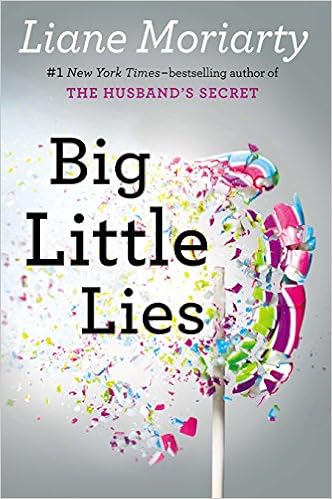
Liane Moriarty’s Big Little Lies
follows three mothers Madeline, Celeste and Jane in an Australian seaside
community during the first six months of their children starting kindergarten
at Pirriwee public school. On the first day of orientation, Jane is introduced to
Madeline, after she rescues her after after she accidentally twists her ankle, and
Celeste, is their ‘perfect’ and beautiful friend. In the genre of the suburban noir
the story begins six months later at an Audrey Hepburn and Elvis Presley costume
trivia night where in drunken mess someone accidentally dies. The
story then flashes backs, so that this impending violence would come to overshadow the
narrative, which is also interspersed with the murder case detective interviewing many of the other
parents.
On this first day of orientation, Jane’s son Ziggy (named in reference to David Bowie) is accused of bullying the corporate mother Renata’s daughter Amabella. And so begins the school ground politics that will only escalate in the upcoming months. This first day is when we're introduced to many of the other students: Madeline's children Chloe, Fred and Abigail; Celestes' twins Max and Josh and the rest of the schoolyard. This accusatory gesture would divide the school, with Team Madeline on one side (with Jane and Celeste) and Team Renata (along with the 'Blonde Bobs') on the other, and their respective children.
On this first day of orientation, Jane’s son Ziggy (named in reference to David Bowie) is accused of bullying the corporate mother Renata’s daughter Amabella. And so begins the school ground politics that will only escalate in the upcoming months. This first day is when we're introduced to many of the other students: Madeline's children Chloe, Fred and Abigail; Celestes' twins Max and Josh and the rest of the schoolyard. This accusatory gesture would divide the school, with Team Madeline on one side (with Jane and Celeste) and Team Renata (along with the 'Blonde Bobs') on the other, and their respective children.
Even though Big Little Lies is being mass-marketed and pejoratively described, with its over-sized rainbow lollipop shattering on its cover, as 'chick lit’, the reviewers have been more kind to the book. Leah Greenblatt for Entertainment Weekly described Moriarty as, "she feels like a humanist: a writer whose insights aren’t any less wise or funny or true just because she sometimes likes a champagne metaphor or hangs her story on a shoe." And in The Washington Post Carol Memmott reviewed it as, "Big Little Lies tolls a warning bell about the big little lies we tell in order to survive. It takes a powerful stand against domestic violence even as it makes us laugh at the adults whose silly costume party seems more reminiscent of a middle-school dance."
The book reads like Stephen King but with a girl-friendly style, and there’s a slow-burn quality, with an impending violence lurking over every scene, as it deals with schoolyard bullying, domestic abuse and human rights issues. It has a feminist quality through taking the personal and emotional lives of these mothers as a subject, along with critique of misogyny and male patriarchy, but is also universal in that the scenario is fundamentally human.
There’s an anecdote in Hitchcock/Truffaut where François Truffaut talks about how Boileu-Narcejac’s D'Entre les morts was specifically written for Hitchcock, which he would adapt as Vertigo, since he liked so much Diabolique. With Cheryl Strayed’s Wild, Dominique Fortier's Du bon usage des étoiles and now Big Little Lies there seems to be similar growing canon of Valléeien literature – the content and style of these books just scream out that he should adapt them.
For example in Big Little Lies: Strong mother figures, their relationship with their children and the children's own personal lives are long-standing interests for Vallée. There's the subject of school-yard bullying which was already there in C.R.A.Z.Y. and more explicitly in Demolition. There's the supposed ‘gay’ barista, which joins many of his LGBT themes, who works in a café which plays the best music in town. The working class Jane who struggles being in and around such an affluent community recalls many of his working class protagonists. A large scale communal party, which has a violence surfacing quietly underneath, makes a nice contrast with the ones in C.R.A.Z.Y. A random letter from a stranger that saves the day is just like Demolition. A bunch of people who travel (a family even goes to Canada for a winter holiday) and cross borders recalls the international trips in Dallas Buyers Club. The emotional and social effects of the life of divorced parents recalls the DJ in Café de flore. And the list goes on!
So there are two type of Vallée films now: There are his more violent personal pictures, where the lead character rushes towards their destiny, possible death and the creation of their legacy (Dallas Buyers Club, Janis Joplin, John Franklin) and now his Reese Witherspoon/Pacific Standard films, which are more uplifting and healthy. It’s a good balance as Witherspoon seems to be on the same wavelength as him and is able to make his cinema breathe, expand their geographies and take on new projects that bring with them a new life, which without they might tend to be more cynical. These Pacific Standard films are more expressionistic and emotional as they focus more on strong women and their interior and surrounding exterior lives, which includes a close attention to fashion.
The seven-episode Big Little Lies series will offer Vallée new opportunities and challenges. Even though IMDB credits him already on the too little-known The Secret Adventures of Jules Verne (2000), in this new series he'll be tackling the challenge of the longer serial form, the cross-editing of multiple stories and a larger scale of filmmaking. The book is full of popular culture references (people watch The Walking Dead and the kids play a Star Wars game), which Vallée tends to usually suppress (for example, see the cinephile Aces High poster in behind the scenes photographs from Café de flore, which never made it into the film). There aren't too many music references in the book, Vallée's specialty, which I'm sure he'll add - there's already an anecdote of a yoga scene where they're playing Bowie's Ziggy Stardust.
With Big Little Lies in the works, Vallée's recent commentary on Katsuhito Ishii's The Taste of Tea at Festival du nouveau cinéma becomes more obvious as a model for this new project. Ishii's simple yet magical story set in rural Japan offers many great examples of how to capture family dynamics. Other films and TV shows that come to mind in relation to an adaptation of Big Little Lies include David Lynch's Twin Peaks (the uncovering of a murder) and M. Night Shyamalan's Wayward Pines, Richard Linklater's Boyhood for the family dynamics and strong mother character in face of domestic abuse (one could also mention Vallée's own, though discredited, Loser Love). Nicole Kidman in the cast brings to mind her earlier performances in The Stepford Wives and Eyes Wide Shut. And it needs to be placed along with great new series like Soderbergh's The Knick or the Wachowski siblings' Sense8. Television, with HBO at the forefront, definitively offers a great extension to the filmmakers oeuvre, which even Steven Spielberg gave his blessing on.
And it's January and they've already started filming, transplanting the story from Australia to Pasadena, California. Witherspoon as Madeline, Kidman as Celeste, Shailene Woodly as Jane, Laura Dern as Renata, Adam Scott as Madeline's husband Ed, Alexander Skarsgård's as Celeste's abusive husband Perry and so on.
But with this new industry weight comes the challenge for Vallée to retain his unique signature (The Young Victoria being an example of a film being taken from him). Philippe Lesage's Les démons offers a compelling counter-point. This is the film that Bruno Dequen in 24 Images describes as "one of the most complex and finely written stories of childhood in the history of cinema." The Québécois director Lesage's first feature film shows how coming of age, through the nice moments and bad, can come together in the schoolyard in a real fascinating way. Les démons deals with many similar topics as Big Little Lies, and Lesage's rigor mixed with simplicity, as he captures Félix's gaze, as he watches and thinks about the world, offers a great example of the need for a look of clarity in cinema.
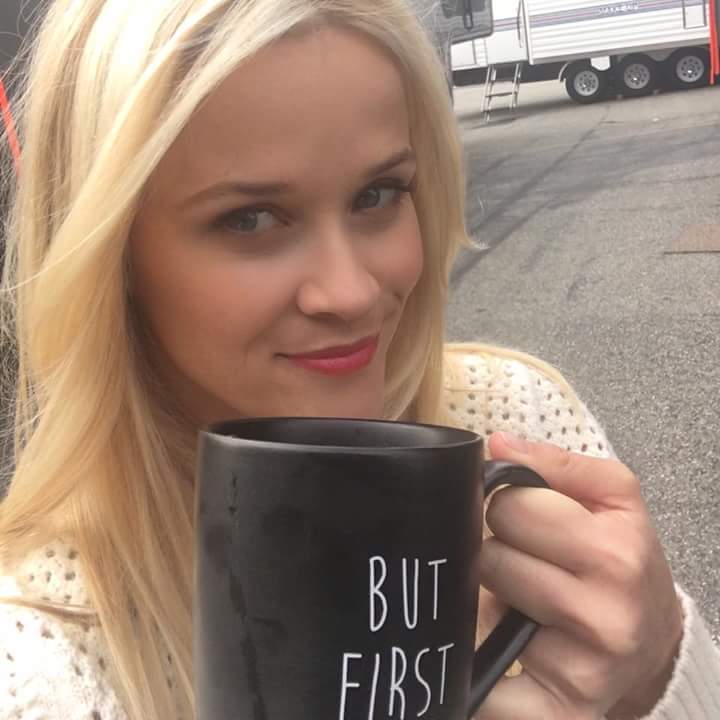
After Demolition, which comes out later on this year, comes the explosion of this rainbow colored lollipop (the cover of the Moriarty book), and the unraveling of the vices of suburbia. To get Vallée one must return to Liste noir. As a young man, excited to make his first feature film, Vallée wanted to criticize the powers that be (in the tradition of Arcand's Réjeanne Padovani), and was really excited to be on a film set and play with the possibilities. As a picture of Witherspoon on one of the first days of shooting shows, she's holding a mug, ‘But First’. To begin again new from scratch. For every film to be like his first. This is Vallée’s method. He's continuing his trajectory, in a mass form, building on the works that he first made here. Jean-Marc Vallée, the best working Canadian director today.
Subscribe to:
Posts (Atom)