Showing posts with label Adieu au langage. Show all posts

Wednesday, December 3, 2014

Zoé Bruneau’s En Attendant Godard

Zoé Bruneau, when she was in her early twenties, would meet Godard for the first time in 2002, for an audition for Notre Musique, which she didn’t get. After working in theater for around ten years, she would meet him again, and after some initial indecisiveness on Godard’s part, would get casted for Adieu au langage. Barely registered in cinephile circles, her book on this period and working on the film, En attendant Godard, clears up many confusions regarding Adieu’s narrative, offers a unique window into Godard’s filmmaking approach, and extends further the pleasures of the film.

It’s a modest book at around 140 pages where Bruneau recounts in a diary form her experiences getting to meet Godard for an audition, getting casted for the film, frustrations never knowing when the next acting sessions will be, eventually filming in Rolle, and all of the way to the announcement that it will premiere in the Official Selection at Cannes. The little book is itself experimental in form as within this intimate diary there are coloured illustrations, maps and personal pictures. And it’s full of intimate reflections that deal just as much with the filmmaking as it does with life, ambitions, relationships and family. The book’s full title is En attendant Godard: Chapitre I and Chapitre II and which with its dual chapter title, appropriately, recalls the coming of age story of La vie d'Adèle by Abdelatif Kechiche.

Even though with Adieu Godard has been a lot more giving, and open to interviews, than the ‘No Comment’ of Film Socialisme Bruneau still offers many new fascinating comments regarding the premise of the film, its making, and changes that occurred while filming.

Bruneau had to send Godard a naked photograph of her after the audition, it was this picture that he walked around with which inspired him to finish writing her role. Godard’s defense of the nudity is, “And The Origin of the World, this painting, it is plainly the sex of the woman, no? The world, this bush, a forest, it is these hairs!” Godard supposedly gave out scripts that recalls its press material but in a large binder which includes dialogue, quotations and pictures. The actors and actresses had to take a train to Switzerland to see Godard and were accommodated there in the same hotel from King Lear. The assistant director Jean-Paul Battaggia played a huge role in the filmmaking as he took care of all of the day-to-day logistics and especially for taking care of Godard whose health is starting to fail him. The actresses were supposed to memorize their lines as well as know them without proper punctuation, then broken up, and then in sign language! This is one of the reasons they were asked to watch the documentary on deaf children, Nicolas Philibert’s Le Pays des Sourds. Godard worked closely with the actors (the scene of Bruneau behind a fence, it is his hand holding it) and gave them room to improvise, even though at other times he was quite firm with what he wanted. Bruneau describes journalist coming to visit the set – for example, Olivier Séguret from Libération – which gives a lighter counter-part to the actual, more serious articles that were written. The films that Godard watched and talked about during production include Alain Guiraudie L'Inconnu Du Lac, Justine Triet’s La Bataille de Solférino, Antonin Peretjatko’s, La fille du 14 juillet, and La Vie d'Adèle. Godard showed Bruneau and Richard Chevallier his Dans le noir du temps, which made Bruneau cry, and which he gave her as gift once they finished filming. As well it is interesting that the Bruneau-Chevallier couple’s encounter with the dog Roxy, which was supposed to be the source of their happiness, never really occurred, because Godard was too anxious of them meeting her. Bruneau on this, “He thinks that the scene isn’t necessary any more and he’s pleased with the idea that their key to happiness will never come.” What one really gets the sense of from En attendant Godard are the imperfections in the final product, and one becomes fascinating with the idea that Battaggia was able to film a making-of of Adieu which is now one of the holy grails.

Bruneau’s first hand descriptions of Godard add to his character:
-           “His voice is calm, but soft and short. The words are meticulously chosen.”
-           “What equally hits you, is how much he lives in the present. Like totally. So much so that he’s in the future.”
-           “His curiosity remains that of seven year old kid, principally in regards technology. Which is certainly why he decided to film in 3D.”
-           “Godard works a lot. Though, it’s not that he works a lot, it’s that he lives he his work. He sees everything.”

En attendant Godard is important as it extends Godard’s work outwards. It deserves to be contextualized alongside the book versions of Histoire(s), Godard’s ECM CDs, and the recent short-film Les Trois Désastres (which is an important to watch to as it dialogues with Adieu). En attendant Godard is less a commodity than it is an idea. Just like Annick Bouleau’s Passage du cinéma, 4992, which equally deserves an important place in the Godardian cannon, Bruneau similarly takes her experience with him to heart and the thought of the writing in the book attests to this. These two books show the strong impact Godard has on his devotees and collaborators. Bruneau’s book can be naïve, honest, personal, frank, youthful, brave – attributes that are hard to come by these days. During the filming Bruneau had both her father (the book is dedicated to Philippe) and grandfather Maurice Nadeau die. En attendant Godard was even published by édition Maurice Nadeau. It is this artistic, personal and challenging legacy that Bruneau is paying an homage to, from Godard to her family, and then outwards. Creating a utopia space of high, artistic, and complex ideals that can only be attained through an intimate and personal reflection.

Sunday, November 30, 2014

Film Review: Adieu au langage

“Along the samelines, one couleinterpret Mand with a Movie Cameraa, by Dziga Vertov Eisesntein’s great opponent as an exemplary case of coinmeatic communism: the affirmation of life in its multiplicity enacted through as akind of cinematic paratqaxis, a setting side-byside fo a serias of daily acitivies – washing harir, wrapping packages, playing pianon connecting phone wires dancing ballet – which resonate with each other at a purely formal There is of course a price to be for this this the level, through the achoing of cisual and other patterns. Ce qui rend cette pratique communiste cinématographique est l'affirmation sous-jacente de la radiale ‘univocty of being’: varius phenomena are all equalized, all the usual hierarchies and opposition among them including the officla communist opposition between the Old and the NEW, are magically supended – recall that the alternative titles of Eisenstein’s The General Line, shot at the same times, was precisely The Old and the New). Communism is here preseted less as the struggle for a goal (with all the pragmatic paradoes this involves’


‘”: the sruggle for universal freedom in a new society means mainting the harshest discipline, and so on). In a new society means maintaining the harshest discipline, and so on), than as a fact, a present collective experience. In this utopia space of “communism”. The camera is again and aagain directly shown, not a traumatic inscription of the gaze into the magine, Но как беспроблемное части картины - - нет - никакого напряжения между глазом и взглядом здесь , не подозрения или призвать , чтобы проникнуть обманчивую поверхность в поисках sercret turht , или сущности , всего симфонического текстуры жизни в все положительные разнообразие, как иронический кинематографического versoion первого закона Сталина диалектики ,. “everything is connected with everything else/?”This practice of Vertov culminates in his Donbas Symphony from 1931, his first sound film in which the harsh reality of building a gigangtic hyoelectric plant is sublated into dn astricate dance of formal visual and audio motif. : the obverse of the symphonic and texture – the suspicious Stalinist gaze always on the lookout for enemies and saboteurs – returns with a vengeance in Eisentstein’s Ivan the Terrible (as a gigantic iconic eye painted on the crooked walks of the Kremlin, an as the eye of Malyuta Skuratov, Ivan’s faithful watchdog

                             Che cosa rappresenta per questa cecità è la partecipazione di Vertov nella versione technoGnostic del comunismo popolare nel sindacato soviert nel 1920 : confronto tra l'uomo sfavorevole alle macchine , credeva che il suo concetto di Kino Eye potrebbe aiutare l'umanità umanità ad evolversi in una forma post-umano più alto che escluderebbe la sessualità ,. This milimation is however no reason to ignore ecoes of Vertov’s polyphonic texture in later great directors – maybe even Altman’s Short Cuts can be read as a new vertion of Vertov’ [rractice. Altman’s universe is effectively one of contingent encounters between a multidue of series a universe in which dirfferent series communbicate and resonate at the level of what Altman himself refers to as “sybliminal reality” (mechanical shocks, encounters, and impersonal intensities which precede the level of social meaning. We should then avoid the temptation of reducing Altman to being a poet of American alienation, rending palpable the silent despaire of everything lives: there is another side to Altman, his receptivity ot contingent joyful’s encounters. Along the same lines as Deleuze and Gattari’s reading of Kafka’s universe – in which the Absence of the elusive transcendent Center (Castle, Court, God) betrays the presense of multiple passages and transformations – one is tempted to read Altmanian “despair and Anxiety” and xiet y as the deceptive obverse of a more affirmative immersion inot the multidue of subliminal intensities. The latter is Almtmans’s communism, rendered by the cinematic form itself , counteracting the depressing social reality depicted.

                             Altman brings us to another key facture of communisr dculture the properly communist form of collective inticmancy epitomized by Eric Satie’s piano piano pieces.Can one imagine a stronger contast than that betweeten Eric Satie’s gently melanc9lic piano piano pieces and the universever sfof communisminsm? The gentlyt melancholic piano pieces  m

Usici usually asscoaited with communism consists of propangasnd songs

和夸大合唱塔塔celebrati前夕TS广告eaders-回回个角度来看,是蒂不是“资产阶级个人主”的非常embodiement ?在在他生命的最后一年的早期2920s 蒂不是新的LY只有一个成的事构成了法国共党,但服的中央委会,是那么肯定只是本人来ROR的挑衅?里的第一个惊喜是,法国brougeois克制另一种典范,Maruce Ravel rejected the invitation to join the Academic Francaise in protest against the new way Framce was treating the SOviety Union: he furtherem ore set to music Nrth African songs protesting against French colonial power. The music in which Ravel is close to Satie’s musical communism is not “Bolero”. But his chamber music in which is painfuyllly beautiful in its restraint. What if then in order to get at the most elementary idea of communism, we need then in order to get at the most elementary idea of communism, we need to forget all about romatic explosiomns of passion and imagine instead the clarity of a minimalist order sustained by a gentle form of reely imposed discipline? Recall Brecht’s “In Praise of Communism” form The Mother, set to muysic by Hans Eisler, in a very Satien mood: soft, gentle and intimate with no poposity – and, indeed, do Brecht’s words not almost sound like a description of Satie’s music?


IT’S QUITE STRAIGHTFORWARD, YOU’LL UNDERSTAND IT. IT’S NOT HARD. THAT’S HARD, SO HARD TO DO.

It’s just the simple thing. It just means order.

Because you’re not an exploter, yuu’ell easily grasp it.

It’s for IT’s for your own good, so find out all about it.

They’re fools who describe it as foolish, and foul who describe it as foulness

It’s against all that’s foul and against all that’s foolish

The exploiters will tell you that it’s criminal criminal

But we know better:

But we know better:

It puts an end to all that’s criminalit isn’tt madness

But puts an end to all meadness.

It’s doesn’t mean’s chaos. It just means order."

(An edited extract from Slavoj Žižek's Living in the End Times. Verso, New York: 2010. Pg. 378-389)

Monday, September 29, 2014

Adieu Godard?

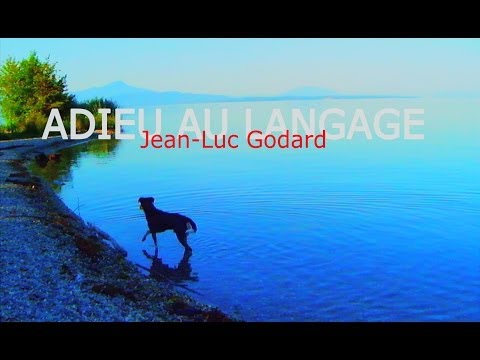
Always an important cinematographic event, the new Godard, and Adieu au langage is just that, a glorious ‘period’ film, like the end of a sentence (or at least it feels that way) with its farewell title and in experimental 3D pyrotechnics, it feels like a gesture to retreat towards the next stage of life. With Godard’s dog Roxy (which has his wife’s last name, Miéville) digging and searching throughout a beautiful nature landscape. And with his cinematographer Fabrice Aragno they fulfill André Bazin’s Myth of Total Cinema by using these new filming cameras to see and record these pioneering new images of place and light for our times.

But is it necessarily his best film? Or how do you talk about Adieu au langage without falling in general hero-worship?

In terms of a poetic documentary on Godard’s surrounding Switzerland, I thought Lettre à Freddy Buache (1982) was a prettier, more concise documentary on the Lausanne, Romandy of the time. (Buache, who by the way, is fascinating in his recent Hors-champs interview on the subject of Godard; I, II). Chris Marker, in his late age, when he makes his video-essay The Case of the Grinning Cat (2004) it feels more politically committed than what Godard is doing here. Film Socialisme also felt more social as it's a contemporary look at a Europe in a state of economic and political crisis. And in Adieu when Godard makes the connection between the election of Hitler and the creation of television it’s the same argument that he’s been making since his Histoire(s) (1998)!  And even thought I really want to read Zoé Bruneau’s experiences working on the film (En Attendant Godard), and I understand the art history references, it still doesn’t sit right with me that he should have her be naked for most of her scenes. Even Bergman didn’t do that in his last film Saraband. And I don’t think he should necessarily be the center of gravity for French cinema, as he is for many, as for example, René Vautier (Afrique 50) has been too little known for too long and deserves more attention (c.f. Nicole Brenez on Vautier). And there are younger directors that are doing similar things which I think deserve more attention like Isiah Medina and his new film 88:88. And Godard speaks of making short videos on his cellphone – and how SMS’s stand for ‘Save My Soul’ – but I don’t know if in the era of YouTube how impressive it is incorporating these into his film. Do I really need to see an eight-second moving close-up of his bed? And I’ll be curious to see how Adieu compares with Michel Gondry documentary on Noam Chomsky (Is the Man Who Is Tall Happy?), another creative documentary on linguistics. But I guess where Godard fails in these other departments he succeeds elsewhere. Since Adieu au language still stands on its own as stunning object that shines by its imperfection. It’s the digital 3D equivalent of a painter’s draft of a self-portrait. Adieu.

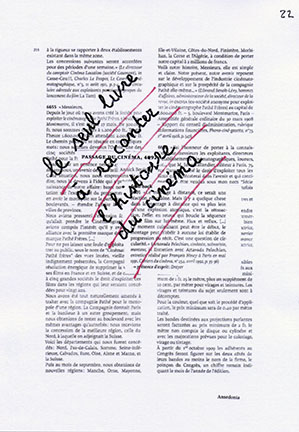
And Godard himself was more generous too with his interviews for Adieu. Where in the Eighties he was severe and sardonic with the press and media, now, without loosing any of his social criticism (though perhaps less people actually listen to him in his late age) he has a peaceful, generous and philosophical approach to his interviews. He complements certain critics that have been long-time supporters, he received Laure Adler for several interviews at his studio, and even in the press release for Adieu he shines a light on an impressive, though little-known, self-published book Passage du cinéma, 4992, which he describes as, “The only book to tell the history of cinema.”

Hopefully to hear, and discuss, more about late Godard Torontonians can come out to what sounds like a great roundtable discussion with leading Godard scholars Nicole Brenez, Daniel Morgan, Murray Pomerance and Jonathan Rosenbaum, who will probe such issues as the critical response to late Godard, the aesthetic and political development of his post-Weekend work, and the controversial themes that have preoccupied him over the last decades. 

Friday, October 3rd at 12:00pm at the TIFF Bell Lightbox.

Wednesday, June 25, 2014

Blake Williams on Adieu au Language

"But Adieu is also (perhaps more) analogous to something like Michael Snow's *Corpus Callosum (2002): a container for mischievous formal experimentation that allows its maker an opportunity to blow wide open all assumptions surrounding the material capabilities of the medium. (To which Clement Greenger said, "Amen.") ... Dutch angles create the impression that figures and objects might slide out of the frame at any moment, while an upside-down shot of a car screeching to a halt is as gravity-defying as anything in Cuarón's 3D outer-space blockbuster."

To read all of Blake Williams' great review of Jean-Luc Godard's Adieu au Langage pick up the Summer 2014 issue of Cinema Scope.

Wednesday, May 14, 2014

Adieu au langage


Adieu au language - Press kit download in French http://bit.ly/RPue95 [PDF] / Press kit download in English http://bit.ly/1jrQUlz [PDF].