Monday, September 24, 2012

John Ford Speaks!


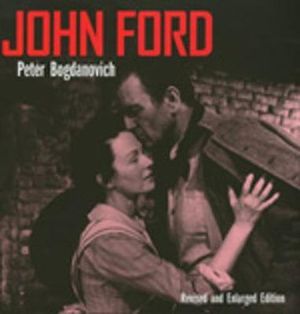
In Peter Bogdanovich's book, John Ford: Revised and Enlarged edition, the center-piece is an interview with Ford, where he discusses his entire career, along with four of Bogdanovich's early journalistic essays. In A Meeting at Monument Valley and My Name's John Ford. I Make Westerns, Bogdanovich describes his experience going to Monument Valley to visit the set of Cheyenne Autumn. In the essay, between reporting on how Ford filmed the movie and how he behaves on the set, are anecdotes about Ford by his collaborators. Two of them that stand out are: a discussion between Ford and Carroll Baker about Ingmar Bergman ("you mean the fella that called me the greatest director in the world."); and how during the McCarthy era at the Director's Guild, Ford defended Joseph L. Mankiewicz against Cecil DeMille who was accusing him  of being a communist.

A Poet and Comedian is how Orson Welles characterizes Ford, and Bogdanovich would add that in Ford's best films "these two sides of his personality are mixed." In the essay, Bogdanovich elaborates about Ford's  career development and themes within his films. "With Ford at his best, you feel that the movie has lived and breathed in a real world," said Welles, quoted by Bogdanovich, and who would add, "he has told the American saga in human terms and made it come alive." And that, "But the key to his work in the thirties lies in a personal struggle (no doubt unconscious) between two very different kinds of film, both of which interested him deeply: the dramas [...] and the lighter pictures of American life."

There is a moving and heart-felt memorial (Taps) and a annotated filmography, which is useful for the brief descriptions of his little-known silent films as well as uncompleted projects.

The following are some of my favorite remarks from the Ford interview, A Job of Work, which was taped at his home in the Fall  of 1966. What's illuminating about the interview is the framework it provides to better understand the realities of a classical Hollywood era studio director and the mediation of personal self-expression within larger commercial projects, as well as the interference and common-place alterations that ended-up shaping his films.

For more information about Ford there is the the great documentary Directed by John Ford, also by Bogdanovich, with a filmed interview with Ford, though he comes off as more gruff and less amicable then he does in the book. As well there is John Ford: Interviews, which is especially interesting for the interviews translated from French, where Ford is more outgoing and receptive. You can also find more of Bogdanovich's writing at his excellent blog Blogdanovich and there is a great interview with him where he speaks for over fifty-minutes about his writing, film-making and other projects at video-magazine The Seventh Art.
*****
Directors and Actors
D. W. Griffith, "influenced all of us. If it weren't for Griffith, we'd probably still be in the infantile phase of motion pictures. He started it all - he invented the close-up and a lot of things nobody had thought of doing before. Griffith was the one who made it an art - if you can call it an art - but at least he made it something worthwhile."

Henry B. Walthall
, "was one of the greatest actors of all time - a personality that just leaped out from the screen. He had nothing to do in that picture [Kentucky Pride] - but he had such a presence - like Barrymore had, but Walthall was a much better actor."

Will Rogers: "Well, no write could write for Will rogers, so I'd say to him, 'This is the script but this is not you - the words will be false coming from you. Just learn the sense of it, and say it in your own words.' Some of the lines he'd speak from the script but most of the time he'd make up his own; he'd stop and let people pick up their cues and then go on; he wouldn't write the lines down, but he'd work it out beforehand and then just get in front of the camera and get the sense of the scene in his own inimitable way."
 
Scripts and Directing
Men Without Women (1930), "I think it was the first picture Dudley Nichols and I did together. From then on, we worked together as much as possible, and I worked very closely with him. He had never written a script before, but he was very good, and he had the same idea I had about paucity of dialogue."

On screenplays: "Well, there's no such thing as a good script really. Scripts are dialogue, and I don't like all that talk. I've always tried to get things across visually. I don't like to do books or plays. I prefer to take a short story and expand it, rather than take a novel and try to condense. But it has become more difficult to get a good story."

Directors: "Certain directors go by fixed rules - they say you must have a close-up of everything. But we've got this big screen: instead of putting a lot of pock-marked faces on it - big horrible head, eye - I just don't like it - if I can play a scene in a two-shot, where you can see both faces very well, I prefer it that way. You see people instead of just faces. Of course, nowadays in pictures, you never even get a chance to look at anyone's face."

Directing: "Phil Dunne wrote the script and we stuck pretty close to it. There May have been a few things added, but that's what a director is for. You can't just have people stand up and say their lines - there has to be a little movement, a little action, little bits of business and things."

Multiple takes: "No-because the actors get tired, they get jaded and lose the spontaneity - so that they-re just mouthing words. But if you get the first or second take, there's a sparkle, an uncertainty about it; they're not sure of their lines, and it gives you a sense of nervousness and suspense."

Music: "Generally, I hate music in pictures - a little bit now and then, at the end or the start - but something like the Ann Rutledge theme belongs. I don't like to see a man alone in the desert, dying of thirst, with the Philadelphia Orchestra behind him."
Medium Specificity and Cinematography
Talkies: "I didn't feel anything about it - it was just a job of work."

His first color film, Drums Along the Mohawk (1939): " There was no change really. It's much easier than black and white for the cameraman; it's a cinch to work in, if you've any eye at all for colour or composition. But black and white is pretty tough - you've got to know your job and be very careful to lay your shadows properly and get the perspective right. In colour - there it is; but it can go awfully wrong and throw a picture off. There are certain pictures, like The Quiet Man, that call for colour - not a blatant kind - but a soft, misty colour. For a good dramatic story, though, I much prefer to work in black and white; you'll probably say I'm old-fashioned, but black and white is real photography."

Filming The Long Gray Line (1955) in CinemaScope: "I hated it. You've never seen a painter use that kind of composition - even in the great murals it still wasn't this huge tennis court. Your eyes pop back and forth, and it's very difficult to get a close-up."

Filming a part of How The West Was Won (1962) in Cinerama
: "It's worse than CinemaScope, because the ends curl on moving shots and the audience moves instead of the picture. You have to hold onto your chair. I didn't care for it."

Cameraman George Schneiderman; "Well, I like to have the shadows black and the sunlight white. And I like to put some shadows into the light. We would talk it over, and I'd say 'Right here, George,' and he'd say 'Fine - I'll move a little to the right.' I'd  say 'Go ahead.' We worked together - Never had an argument with a photographer."

Best cameramen: "Comparisons are odious, of course, but Gregg Toland and Joe August were really great cameramen, and so was Artie Miler. I think they stand out as three of the best I ever worked with."
 
Pictures
The Iron Horse (1924): "But the point is we had this simple little story come out as a so called 'epic', the biggest picture Fox had ever made. Of course, if they had known what was going to happen, they never would've let us make it."

Mother Machree (1927): "I had a lot of fun with that, but you didn't choose these things - they were thrown at you and you did the best you could with them."

Born Reckless (1930): "In those days, when the scripts were dull, the best you could do was to try and get some comedy into it."

Steamboat Round the Bend (1935)
, "should have been a great picture but at the time they had a change of studio and a new manager came in who wanted to show off, so he recut the picture, and took all of the comedy out."

The World Moves On (1934): "I pleaded and quit and everything else, but I was under contract and finally I had to do it, and I did the best I could, but I hated the damn thing. It was really a lousy picture - it didn't have anything to say - and there was no chance for any comedy. But what the hell, that was called 'being under contract.'"

Stagecoach (1939): "I still like that picture. It was really Boule-de-suif, and I imagine the writer, Ernie Haycox, got his idea from there and turned it into a Western story which he called 'Stage of Lordsburg.'"

Young Mr. Lincoln (1939): "They cut some nice things out of it. For example, I had a lovely scene in which Lincoln rode into town on a mule, passed by a theare and stopped to see what was playing, and it was the Booth Family doing Hamlet; we had a typical old-fashioned poster up. Here was this poor shabby country lawyer wishing he had enough money to go see Hamlet when a very handsome young boy with dark hair - you knew he was a member of the Booth Family - fresh, snobbish kid, all beautifully dressed - just walked out to the edge of the plank walk and looked at Lincoln. He looked at this funny, incongruous man in a tall hat riding a mule, and you knew there was some connection there. They cut it out - too bad."

How Green Was My Valley (1941): "I wanted to reprise the mother's song so I got the idea of bringing the cast back. In the theater I always like to see the cast come out - regardless of whether the guy's playing the messenger boy or the butler - I like to see him out and take his bow. That's probably where I got the idea."

My Darling Clementine (1946)
: "I knew Wyatt Earp. In the very early silent days, a couple of times a year, he would come up to visit pals, cowboys he knew in Tombstone; a lot of them were in my company. I think I was an assistant prop boy then and I used to give him a chair and a cup of coffee, and he told me about the fight at the O.K. Corral. So in My Darling Clementine, we did it exactly the way it had been. They didn't just walk up the street and start banging away at each other; it was a clever military manoeuvre."

The Fugitive (1947), "It came out the way I wanted it to - that's why it's one of my favorite pictures - to me, it was perfect. It wasn't popular. The critics got at it and evidently it had no appeal to the public, but I was very proud of my work."

Fort Apache (1948), "Yes - he was the colonel, and what he says - goes; whether they agree with it or not - it still pertains. In Vietnam today, probably a lot of guys don't agree with their leader, but they still go ahead do the job."

When Willie Comes Marching Home (1950)
: "Well, that was my racket for a while, and there wasn't anything funny about it. I wonder what s.o.b. will be the first to make a comedy about Vietnam?"

Wagon Master (1950), "I wrote the original story. Along with The Fugitive and The Sun Shines Bright, I think Wagon Master came closest to being what I wanted to achieve."

The Quiet Man (1952): "We had a lot of preparation on the script, laid out the story pretty carefully, but in such a way that if any chance for comedy came up, we could put it in - like Barry Fitzgerald bringing the crib into their bedroom on the morning after the wedding night, and seeing the broken bed."

The Sun Shines Bright (1953): "The Sun Shines Bright is my favorite picture - I love it. And it's true to life, it happened, Irvin Cobb got everything he wrote from real life, and that's the best of his Judge Priest stories."

The Searchers (1956): "Well, I thought it was pretty obvious - that his brother's wife was in love with Wayne; you couldn't hit it on the nose, but I think it's very plain to anyone with any intelligence. You could tell from the way she picked up his cape and I think you could tell from Ward Bond's expression and from his exit - as though he hadn't noticed anything."

The Wings of Eagles (1957): "I didn't intend it that way, but he did. I woke up one morning and my good hat was gone, my pipe and everything else; they'd taken all the Academy Awards and put them in the office set."

Sergeant Rutledge (1960), "Yes, that's the point. The Negro soldier, the regular, is very proud. They had always been a cavalry outfit, but in this last war, they were mechanized - they took their horses away, and they were broken-hearted. They were very proud of their outfit; they had great esprit de corps. I liked that picture. It was the first time we had ever shown the Negro as a hero."

The Man Who Shot Liberty Valance (1962
): "Well, Wayne actually played the lead; Jimmy Stewart had most of the scenes, but Wayne was the central character, the motivation for the whole thing. I don't know - I liked the both - I think they were both good characters and I rather liked the story, that's all. I'm a hard-nosed director; I get a script - if I like it, I'll do it. Or if I say, ' Oh, this is all right' - I'll do it. If I don't like it, I'll turn it down."

7 Women (1966)
, "I think it was a good story. And it was a good switch for me, to turn around and make a picture all about women. It didn't do well here, but it was a sensation in Europe. I thought it was a hell of a good picture."
Thoughts and Philosophy

The boastful Irish character: "I suppose the character is a composite of several people. My father, for instance. He would tell about the great things he'd done as a young man, such as the time he lifted a heavy boulder up out of the water, or how he swam Galway Bay. Of course, he was a damn liar, but he would entertain us kids."

The concept of the glory in defeat or noble failure that runs throughout Ford's films, "Well, I think that's coincidence - although it's a wonderful thing to think about. But I never realized that - I mean, it isn't something I've done consciously -  it may have been subconscious. But, then, I didn't write the stories."

The difficulty to finance small personal pictures: "Oh, you can't anymore - it's impossible. You've got to go through a series of commands now and you never know who the hell reads the scrips any more. You can't get an O.K. here in Hollywood for a script - it's got to go back to New York, and through a president and a board of directors and bankers and everybody else. What I used to do was try and make a big picture, a smash, and then I could palm off a little one on them. You can't do it any more."

The worth and importance of his films: "Well, that's presumption I can't accept. I never felt that way about it. I've always enjoyed making pictures - it's been my whole life. I like the people I'm around - I don't mean the higher echelons - I mean the actors, the actresses, the grips, the electricians. I like those people. I like to be on the set, and regardless of what the story is, I like to work in pictures - it's fun.
Harry Carey tutored me in the early years, sort of brought me along and the only thing I always had was eye for composition - I don't know where I got it - and that's all I did have. As a kid, I thought I was going to be an artist; I used to sketch and paint a great deal and I think, for a kid, I did pretty good work - at least I received a lot of compliments about it. But I have never thought what I was doing in terms of art, or 'this is great' or 'world-shaking', or anything like that. To me, it was always a job of work - which I enjoyed immensely - and that's it.

Monday, September 17, 2012

History of Film Criticism : Andrew Sarris on John Ford

‘History of Film Criticism’ is a new series that I will be starting to highlight important and/or influential film criticism essays. These pieces will be pulled from books and/or magazines, accessible or not, but which I think deserve more attention. They stand out due to their eloquent prose, critical position, and historical context.
For the first post in this series, which I would like to dedicate to the late Andrew Sarris, is his piece on John Ford – one of the fourteen Pantheon Directors – from The American Cinema – Directors and Directions: 1929 – 1968.
This is the first out of three blog-posts that I’m planning to post about John Ford. – D.D.
*****
John Ford (1895-1973)
If John Ford had died or retired at the end of 1929, he would have deserved at most a footnote in film history. The Iron Hourse and Four Sons attractyed some attention in their time, and seem to be the only Ford silents in the American museum repertory. The Iron Horse  is clearly influenced by Griffith, and Four Sons by Murnau. Neither work is a revelation in itself, though there are privileged moments in these films that belong to Ford alone. Above all, there is a nostalgia for lost innocence on the family level of history.  Ford’s technical competence has been established even at this early stage in his career, but up to 1929 he cannot be considered one of the major artists of the medium. His personal vision has not been developed to the level of a Lubitsch or a Lang at this stage of film history.
            If Ford hard died or retired at the end of 1939, he would have deserved at least a paragraph for The Informer and Stagecoach, the former allegedly the first creative American sound film, and the latter representing the renaissance of the Western. He would now be a faded, dated establishing figure like Marcel Carné, a vulnerable target for all the New Critics after Bazin. Dated also would be the calculated expressionism and maudlin sentimentality of The Informer.  Ford’s style stil lingered in the shadow of Murnau’s in 1935, but no one had seemed to notice Steamboat ‘Round the Bend and The Whole Town’s Talking that same year. Ford has never been sufficiently appreciated for the verve and snap of his visual storytelling. Critics of the thirties always joked about the fact that the Hollywood system compelled Ford to make three Wee Willie Winkies for every Informer. The joke, then as now, was on the critics. Despite the monstrous mythology of Shirley Temple, Wee Willie Winkie contains extraordinary camera prose passages from the wide-eyed point of view of a child. What the critical establishment of the thirties admired in Ford was his ability to avoid so-called woman’s pictures despite studio pressures. Nor was Ford too much interested in the fancier forms of sexual intrigue. Being Irish and Catholic and action-oriented to boot, he tended to gravitate to public places where men spoke their minds openly. The Left has always been puritanical, but never more so than in the thirties when Hollywood’s boy-girl theology threatened to paralyze the class struggle. In such an epoch, even an Irish-Catholic conservative like Ford could be mistaken for a progressive force.
Ford’s critical reputation reached its peak and then began its decline during the forties. The Grapes of Wrath, The Long Voyage Home and How Green Was My Valley firmly established Ford as the Hollywood director despite the extraordinary challenges of Orson Welles and Preston Sturges. The New Dealish propaganda of The Grapes of Wrath has dated badly, as has John Steinbeck’s reputation. Ford’s personal style was particularly inimical to Steinbeck’s biological conception of his characters. Where Steinbeck depicted oppression by dehumanizing his characters into creatures of abject necessity, Ford evoked nostalgia by humanizing Steinbeck’s economic insects into heoic champions of an agrarian order of family and community. By the time of How Green Was My Valley, Ford mastered his narrative style to the point that he could embroider it with those pauses and contemplations that expressed his feelings. Even in Tobacco Road, Charlie Grapewin’s Jeeter Lester was transformed from a greedy barnyard animal to a seedy but serious mainstay of tradition. Ford had more in common with Welles than anyone realized at the time. Ford was forty-six when he made How Green Was My Valley, and Welles was only twenty-five when he made Citizen Kane, but both films are the works of old men, the beginnings of a cinema of memory.
            Ford’s The Battle of Midway is ostensibly a documentary, but it is as personal a statement as any of his fiction films. He focuses her on the ordinary scale by which the most gallant heroes are measured. It is not the battle itself that intrigues Ford, but the weary faces of rescued fliers plucked out of the Pacific after days of privation. World War II was the last war to be endorsed by the intellectual establishment as a valid artistic subject. Ford proceeded into the fifties to photograph the Korean war, an act symptomatic of his downfall with the taste-makers.
            Only the Lindsay Anderson-Gavin Lambert generation of Sequence and Sight and Sound kept Ford’s reputation alive in the period beginning with They Were Expendable in 1945 and ending with The Sun Shines Bright in 1954.The British critics could appreciate Ford for the flowering of his personal style at a time when the rest of the world (this critic included) were overrating Carol Reed and David Lean for the efficient, impersonal technicians that they were. Finally, the New Critics in London and Paris rediscovered Ford after he had been abandoned even by the Sequence-Sight and Sound generation. The last champions of John Ford have now gathered around Seven Women as a beacon of personal cinema.
            The late André Bazin damaged Ford’s reputation with New Critics by describing Ford’s technique as a hangover from the scenario-dominated thirties. Bazin overrated the use of deep focus in The Little Foxes as the antithesis to Ford’s “invisible editing” in Stagecoach. What Ford had been evolving all through his career was a style flexible enough to establish priorities of expression. He could dispose of a plot quickly and efficiently when he had to, but he could always spare a shot or two for a mood that belonged to him and not to the plot. A Ford film, particularly a late Ford film, is more than its story and characterizations; it is also the director’s attitude toward his milieu and its codes of conduct. There is a fantastic sequence in The Searchers involving a brash frontier character played by Ward Bond. Bond is drinking some coffee in a standing-up position before going out to hunt some Comanches. He glances toward one of the bedrooms, and notices the woman of the house tenderly caressing the Army uniform of her husband’s brother. Ford cuts back to a full-faced shot of Bond drinking his coffee, his eyes tactfully averted from the intimate scene he has witnessed. Nothing on earth would ever force this man to reveal what he had seen. There is a deep, subtle chivalry at work here, and in most of Ford’s films, but it is never obtrusive enough to interfere with the flow of the narrative. The delicacy of emotion expressed here in three quick shots, perfectly cut, framed, and distanced, would completely escape the dulled perception of our more literary-minded film critics even if they deigned to consider a despised genre like the Western. The economy of expression that Ford has achieved in fifty year of film-making constitutes the beauty of his style. If it had taken him any longer than three shots and a few seconds to establish this insight into the Bond character, the point would not be worth making.  Ford would be false to the manners of a time and a place bounded by the rigorous necessity of survival.
            Ford’s major works can be traced in a rising parabola from Steamboat ‘Round the Bend to Seven Women, but even when Ford is in less than top form there are marginal compensations. His sentimentality extends to his casting not only of leads but also of the most minute bit roles. As Jean Mitry once observed, there is a John Ford world with a distinctive look to it. How Green Was My Valley established Maureen O’Hara as the definitive Ford heroine just as Stagecoach established John Wayne as the definitive John Ford hero. The extraordinary rapport of the Wayne-O’Hara team through Rio Grande, The Quiet Man, and Wings of Eagles adds a sexual dimension to Ford’s invocation of tradition in human experience. How Green Was My Valley is also notable for introducing Ford’s visual treatment of the past as a luminous memory more real than the present, and presumably more than the heroic future. Ford and Hawks, the directors closest to the Griffith tradition, project different aspects of Griffith’s personality: Ford the historical perspective and unified vision of the world, and Hawks the psychological complexity and innate nobility of characterization.
            Ford can never become fashionable again for the rigidly ideological critics of the Left. Too many of his characters wear uniforms without any tortuous reasoning why. Even the originally pacifistic What Price Glory is transformed by Ford into a nostalgic celebration of military camaraderie with the once-raucous Charmaine emerging from the dim shadows as an idealization of the Chivalric Code. As a director, Ford developed his craft in the twenties, achieved dramatic force in the thirties, epic sweep in the forties, and symbolic evocation in the fifties. His style has evolved almost miraculously into a double vision of an event in all its vital immediacy and yet also in its ultimate memory image of the horizon of history.
            Ford’s failures tend to be objective rather than subjective in that he tends to be faithful to his own feelings at the expense of his material. Mary of Scotland is patently biased in favor of Mary against Elizabeth even in Maxwell Anderson’s blank-minded verse version. Ford Completes the travesty of historical objectivity by treating Katharine Hepburn’s Mary as a soft focused, unfairly slandered Madonna of the Scottish moors. (Curiously, it is not until Seven Women that Ford can bear to look at women with a degree of sexual ambiguity.) When Willie Comes Marching Home seemed to be a Preston Sturges project that Ford directed with undue seriousness, and The Last Hurrah loosed much of its satiric sparkle in the transition from novel into film.  The Fugitive, like The Informer, runs counter to Ford’s sense of order. Graham Greene’s renegade priest and Liam O’Flaherty’s renegade informer are clearly beyond Ford’s comprehension and in both instances Ford’s causal Catholicism cannot grapple with the causal Catholicism in the two novels. Nor with the Left-wing politics of the two novelist. Cheyenne Autumn is a failure simply because Ford cannot get inside the Indians he is trying to ennoble.
            Ultimately, Ford’s cinema must be considered a continent full of mountain peaks and desert valleys. The Horse Soldiers is weakest when the characters are talking abstractly about war, but the march of the little boy soldiers lingers in the mind long after all the dialogues have been forgotten. Tyrone Power may have played very broadly in The Long Gray Line, but who can forget the first materialization of his family at the kitchen table or Maureen O’Hara’s standing in the doorway and watching a son-substitute go off to war. Ford is more than the sum of his great moments, however. A storyteller and poet of images, he made his movies both move and be moving.

Andrew Sarris

Monday, August 27, 2012

Upcoming Canadian Films (+ Amy George & The Strawberry Tree)

The new Canadian films that I'm most looking forward to at the Toronto International Film Festival are: from Toronto there is Igor Drljaca’s Krivina and Kazik Radwanski’s Tower (both in the Discovery section), Sean Garrity’s My Awkward Sexual Adventure (Contemporary World Cinema), Simon Ennis’s Lunarcy! (TIFF Docs), Peter Mettler's The End of Time (Masters), Sarah Polley's Stories We Tell (Special Presentation), Blake Williams’s Many a Swan and Jean-Paul Kelly’s A Minimal Difference (both in the adventurous Wavelengths program, where, as an aside, they are also screening Lillian Schwartz's recently restored UFOs). From Montréal there is Rafaël Ouellet' Camion (Contemporary World Cinema), Denis Coté’s Bestiaire (Wavelengths), Anaïs Barbeau-Lavalette's Inch'Allah (Special Presentation), Bernard Émond's Tout Ce Que Tu Possèdes (Masters), and Xavier Dolan’s Laurence Anyways (Special Presentation).
In the Short Cuts Canada program there is Sophie Goyette’s Le futur proche, Ashley McKenzie’s When You Sleep, Theodore Ushev’s Apart, Deco Dawson’s Keep a Modest Head, and Aaron Phelan’s Dear Scavengers.
I’ll hopefully get to review some of these films later, after, when I’ve seen them. 
*****
Now onto discussing two recent Canadian films: Calvin Thomas and Yonah Lewis's Amy George, and Simone Rapisarda Casanova’s The Strawberry Tree.

In the newest issue of Cahiers du cinéma (N.680), Stéphane Delorme highlights what kind of traits Cahiers likes to champion: “intimate, and affectionate films, […] because of their ambition, richness, and generosity are worth infinitely more than prefabricated narcissistic masterpieces.” I can't think of a better way to start a review of Amy George as describing its treatment of a teenager wading through the difficulties of childhood as being intimate, affectionate and generous. It's like L'argent de poche meets Terry within that Baumbach realm of dysfunctional families but with the humor of The Color Wheel.

Amy George takes place in the Riverdale neighborhood where thirteen-year-old Jesse (the excellent Gabriel del Castillo Mullally), a shaggy haired kid usually dressed in a striped shirt and jeans, is given a school assignment, The Fearless Project. The project is to take a picture of something that best represents himself. The teacher's advice is “you can find something interesting anywhere… you just have to look around.” Jesse asks his parents for a new camera - more points if it's analog - so they bring him to a store to buy him one, and there the store clerk shows him a few tricks on how to use it. At first the curious Jesse tries to find inspiration walking through a park, on his solute strolls, he tries to find something of himself in the surrounding nature. He takes a stunning photograph of a pot in silhouette. Jesse even goes to the library to do some research on how to be an artist, and after some reading, he’s worried that he can’t be a 'true artist' as he hasn't yet experienced true suffering or as he reads in a book The Artist, “You can never be a real artist until you have made love to a woman.”

The challenges of the creative process aren't made easier for Jesse, who’s a single child, as his relationship with his parents is at odds. There is an awkward tension between Jesse and his parents, Tim (Don Kerr) and especially with his mother Sabi (Claudia Dey), as when he's not around she speaks about her concerns that he might be 'gay' or if he'll turn out 'alright.' One day when in the house a watch and money go missing, Sabi asks Jesse if he knows what has happened to them, and even though Jesse says that he doesn't and that his guess is that it was probably the maid - who they eventually, and wrongly, fire - his mother still searches his room, where she discovers that he hasn't been taking his medicine and finds his porno magazines. It is later revealed that it was Jesse's aunt, Tara (Natasha Allan), who stole from them, which was partly caused by her alcohol problem. Jesse's relationship with Tara is the core emotional bond in Amy George, and their conversations together, reveal his timidity and his anxiety of growing up. Jesse shares with his aunt his thoughts about his emerging interest in the opposite sex and how instead of paying much attention in class all that seems to be on his mind is girls. When one day the neighborhood girl he has crush on, Amy (Emily Henry, of the film’s title), is spending the afternoon at his family’s house - her parents are dealing with the police, after their own house has been broken into - the two of them flirt and play a game where he 'hypnotizes' her: where, when she is unconscious, he mischievously unzips her pants and touches her underwear. This is the kind of guilt that he can only share with his aunt. “Have you ever raped somebody?” He asks her, which is what he thought that he did. Jesse's lack of belonging and feelings of shame, guilt and teen angst will all come out in the final photograph that he hands in to his teacher - and it won’t be what you would expect.

Amy George's minimal score by Lev Lewis creates a mood of wistful longing (especially the song The Whole World by Michael Holt) and the somber cinematography by the directorial pair reflects Jesse's feelings of solitude. This dark cinematography seems like it is going to anticipate Calvin and Yonah’s forthcoming production: The Oxbow Cure starring Claudia Dey, which is supposed to be a lot more experimental. An important film to look out for.

*****
The local filmmaker Kazik Radwanski put together a list of First Generation filmmakers that, as he describes them, are a new breed of Toronto filmmakers whose uniqueness is that though they are informed by living in Toronto they shoot their films outside Canada. The First Generation directors that Kazik highlights are Igor Drljaca, Chris Chong Chan Fui, and Nicolás Pereda. And now after seeing The Strawberry Tree I would have to include the York University graduate Simone Rapisarda Casanova onto that list. The Strawberry Tree, which had its Toronto premiere at the Images Festival, is a hybrid documentary. Its subject is the village of Juan Antonio on Cuba’s North Coast and it depicts the rural community filled with fragile straw huts - one year before it was devastated by a category-four hurricane.

The Strawberry Tree is filmed in a poetic-ethnographic style that is really similar to that of the important Canadian documentary, Pierre Perrault's Pour la suite du monde. It is also similar to Andrés Livov-Macklin's A Place Called Los Pereyra as they are both naturalistic documentaries made by outsiders about a foreign community. But where Los Pereyra's approach is more anthropological and in the style of Fred Wiseman, The Strawberry Tree is more ontological and bizarre, in the style of Luis Buñuel. At first The Strawberry Tree is filmed in a tranquil, observatory style capturing the villagers of Juan Antonio preparing, singing, playing around etc. What at first is the capturing of natural activities slowly dissolves into the events that would be the center of attention would slowly gets pushed to the periphery, and it is what's going around these moments that become the center of attention. What is being shown is the physicality of the people and the characteristics of the village. Then there is almost a sinister twist: the beating of a fish, an eerie magician, the killing of a goat. Everything culminates at the end with the sight of the lightning and the thunder storm that would ravage the community. This uneasy sense of dread, of knowing what is going to happen to the village, and knowing that the villagers are going to end up alright, make The Strawberry Tree such a fascinating experience.


Monday, August 20, 2012

The Greatest Films of All Time According to Some Toronto Cinephiles

David Davidson (Blogger: Toronto Film Review)
  1. Indo-china: Opium den (Lumière Brothers)
  2. The Lady from Shanghai & Double Indemnity
  3. Les Enfants du Paradis & Les Anges du péché
  4. Rear Window & Scarlet Street
  5. Cheyenne Autumn & Mr. Deeds Goes to Town
  6. Land of the Pharaohs & Hatari! & Red Line 7000
  7. Rameau's Nephew by Diderot (Thanx to Dennis Young) by Wilma Schoen & The Chronicle of Anna Magdalena Bach
  8. 3 Women & Two-Lane Blacktop & The Swimmer
  9. The Last House on the Left & Assault on Precinct 13 & Rampage & Blue Collar
  10. Les Nuits de la pleine lune & Le viol d'une jeune fille douce  & J’entend plus la guitar
  11. Tucker: The Man and His Dream  & Catch Me If You Can
  12. Eyes Wide Shut
  13. As Good as it Gets & J'ai pas sommeil
  14. Promises Written in Water & Colossal Youth
  15. Cosmopolis
*****
Arielle Gavin (Blogger: Dragonaut)
  1. The Hole (Tsai Ming-Liang, 1998)
  2. (nostalgia) (Hollis Frampton, 1971)
  3. Blue (Derek Jarman, 1993)
  4. Le beau mariage (Éric Rohmer, 1982)
  5. Colossal Youth (Pedro Costa, 2006)
  6. Cosmopolis (David Cronenberg, 2012)
  7. Le diable probablement (Robert Bresson, 1977)
  8. The Smiling Lieutenant (Ernst Lubitsch, 1931)
  9. A nos amours (Maurice Pialat, 1983)
  10. Ms.45 (Abel Ferrara, 1981)
*****
Kazik Radwanski (Filmmaker: Tower, Green Crayons)
1. The Passion of Joan of Arc (Carl Dreyer, 1928)
2. A Woman Under the Influence (John Cassavetes, 1974)
3. Late Spring (Yasujiro Ozu, 1949)
4. Mouchette (Robert Bresson, 1967)
5. Stroszek (Werner Herzog, 1977)
6. Vivre sa vie, The Mother and the Whore, À nos amours
7. Wanda, Killer of Sheep, Mikey and Nicky
8. Made in Britain, Meantime, Raining Stones
8. Beau travail, In Vanda’s Room, Where is the Friend’s Home?
10. A Married Couple, Pour la suite du monde, Goin' Down the Road
*****
Igor Drljaca (Filmmaker: Krivina, The Fuse: or How I Burned Simon Bolivar)
Here is a list of my favourites, though I might be forgetting a few. I refuse to rank them.
-       The Mirror (Andrei Tarkovsky, 1975)
-       2001: A Space Odyssey (Stanley Kubrick, 1968)
-       Au Hasard Balthazar (Robert Bresson, 1966)
-       Tokyo Story (Yasujiro Ozu, 1953)
-       Le fils (Jean-Pierre & Luc Dardenne, 2002)
-       Close-Up (Abbas Kiarostami, 1990)
-       Rear Window (Alfred Hitchcock, 1954)
-       The Thin Blue Line (Errol Morris,1988)
-       A City of Sadness (Hou Hsiao-hsien, 1989)
-       RoboCop (Paul Verhoeven, 1987)
-       Blissfully Yours (Apichatpong Weerasethakul, 2002)
-       Caché (Michael Haneke, 2005)
-       Modern Times (Charlie Chaplin, 1936)
-       Dr. Strangelove or: How I Learned to Stop Worrying and Love the Bomb (Stanley  Kubrick, 1964)
-       Stalker (Andrei Tarkovsky, 1979)
-       What Time Is It There? (Tsai Ming-liang, 2001)
-       Apocalypse Now (Francis Ford Coppola, 1979)
-       The Decalogue (Krzysztof Kieslowski, 1989)
-       In the Mood For Love (Wong Kar-Wai, 2000)
*****
Antoine Bourges (Filmmaker: East Hastings Pharmacy, Woman Waiting)
These are honestly the first ones that came to mind. They are in no particular order. I am probably forgetting 12 more that I'll regret not including, but I feel these ones all deserve top positions anyway.
-       Late Spring (Yasujiro Ozu, 1949)
-       Vivre sa vie (Jean-Luc Godard, 1962)
-       Faces (John Cassavetes, 1968)
-       Gertrud (Carl Theodor Dreyer, 1964)
-       2001: A Space Odyssey (Stanley Kubrick, 1968)
-       Wanda (Barbara Loden, 1970)
-       La maman et la putain (Jean Eustache, 1973)
-       Jeanne Dielman, 23 Quai du Commerce, 1080 Bruxelles (Chantal Akerman, 1975)
-       L'argent (Robert Bresson, 1983)
-       The Taking of Power by Louis XIV (Roberto Rossellini, 1966)
-       Le rayon vert (Éric Rohmer, 1986)
-       Liverpool (Lisandro Alonso, 2008)
*****
Simon Ennis (Filmmaker: Lunarcy!, You Might as Well Live)
Top Ten (in no particular order):
-       The Night of the Hunter (Charles Laughton, 1955)
-       That Obscure Object of Desire (Luis Buñuel, 1977)
-       Vernon, Florida (Errol Morris, 1981)
-       Lost Highway (also Blue Velvet / Eraserhead)
-       Double Indemnity or The Apartment
-       Two or Three Things I Know About Her / Weekend
-       The Shining (also Dr. Strangelove / 2001)
-       Psycho (Alfred Hitchcock, 1960)
-       Welcome to the Dollhouse (Todd Solondz, 1995)
-       Showgirls (Paul Verhoeven, 1995)
Ten More (in no particular order):
-       Seul contre tous (Gaspar Noé, 1998)
-       Out of the Past (Jacques Tourneur, 1947)
-       Ghost World (Terry Zwigoff, 2001)
-       Safe (Todd Haynes, 1995)
-       Repo Man (Alex Cox, 1984)
-       Manhattan (Woody Allen, 1979)
-       Fat Girl (Catherine Breillat, 2001)
-       Monty Python and the Holy Grail (Terry Gilliam & Terry Jones, 1975)
-       Top Hat (Mark Sandrich, 1935)
-       Duck Soup (Leo McCarey, 1933)
*****
Hugh Gibson (Producer: A Place Called Los Pereyra)
Here's my list in no particular order.
-       2001: A Space Odyssey (Stanley Kubrick, 1968)
-       Life and Nothing More… (Abbas Kiarostami, 1992)
-       Barry Lyndon (Stanley Kubrick, 1975)
-       Citizen Kane (Orson Welles, 1941)
-       Days of Heaven (Terrence Malick, 1978)
-       Muriel (Alain Resnais, 1963)
-       The Godfather (Francis Ford Coppola, 1972)
-       Seven Samurai (Akira Kurosawa, 1954)
-       The Thin Blue Line (Errol Morris,1988)
-       The Wild Bunch (Sam Peckinpah, 1969)
Special mention: La jetée, The General, The Godfather II, Goodfellas, Tristana, The Mystery of Picasso, Unforgiven, Dimensions of Dialogue, A Moment of Innocence, One Flew Over the Cuckoo’s Nest, M, The Manchurian Candidate, Contempt, Sherlock Jr., Fantasia, Crimson Gold, A Brighter Summer Day, Close Up, and many more....
*****
Lev Lewis (Composer: Amy George)
I won’t waste space distinguishing between “best” and “favourite”. The “best” lists always straddle the middle, and as valuable an artifact as the S&S list is as a collective group-think, in the end the personal compilation is usually more compelling. What I do want to stress is my still forming library of knowledge. It feels as if I’ve seen a fair share of the past 100 years of movies, but when tasked with making a statement of this sort, I realize how little of a dent I’ve actually made. With that said, this can stand as the ten best films I’ve seen at the ripe age of 21.
There are many apologies necessary. First to women, who go unrepresented here, even if seven of my choices identify a woman as their primary narrative focus. To the 1940’s, who despite yielding The Grapes of Wrath, The Letter, The Philadelphia Story, The Lady Eve, The Ox-Bow Incident, Citizen Kane, Casablanca, Laura, The Best Years of our Lives, Notorious, The Red Shoes, Bicycle Thieves & A Letter to Three Wives did not make the cut. To silents, who get one paltry mention. To the last 25 years of filmmaking. To Bergman and Bresson and Cassavetes and Chaplin and Cukor and Hitchcock and Hou and Kazan and Mizoguchi and Resnais and Wong and Woody. And to all the magnificent films I still have to experience. I’m looking forward to you.
1. Days of Heaven (Terrence Malick, 1978)
2. The Passion of Joan of Arc (Carl Theodor Dreyer, 1928)
3. Woman in the Dunes (Hiroshi Teshigahara, 1964)
4. The Earrings of Madame De... (Max Ophüls, 1953)
5. Broadcast News (James L. Brooks, 1987)
6. Long Day’s Journey Into Night (Sidney Lumet, 1962)
7. Pather Panchali (Satyajit Ray, 1955)
8. The Rules of the Game (Jean Renoir, 1939)
9. New York, New York (Martin Scorsese, 1977)
10. Imitation of Life (Douglas Sirk, 1959)
*****
Chris Kennedy (Programmer: The Free Screen, Early Monthly Segments. Filmmaker: Towards a Vanishing Point, Tamalpais
A very personal list. These are not the best by any objective standards, but they all spun me in different ways.
1. Flaming Creatures (Jack Smith, USA, 1963)
2. Out 1: noli me tangere (Jacques Rivette, France, 1971)
3. The Mysterious Object at Noon (Apichatpong Weerasethakul, Thailand, 2000)
4. The Killing of a Chinese Bookie (John Cassavettes, USA, 1976)
5. Le Fond de l'air est rouge (Grin Without a Cat) (Chris Marker, France, 1977)
6. Sátántangó (Bela Tarr, Hungary, 1994)
7. Life Dances On (Robert Frank, USA, 1980)
8. Les Maître Fous (Jean Rouch, France/Niger, 1955)
9. Nest of Tens (Miranda July, USA, 2000)
Tie:
10. The Hart of London (Jack Chambers, Canada, 1970)
10. A Burning Star (Kenji Onishi, Japan, 1995)
*****
Blake Williams (Filmmaker: Many a Swan, Coorow-Laptham Road)
1. Inland Empire (David Lynch, 2006)
2. 2001: A Space Odyssey (Stanley Kubrick, 1968)
3. Syndromes and a Century (Apichatpong Weerasethakul, 2006)
4. Playtime (Jacques Tati, 1967)
5. Nashville (Robert Atlman, 1975)
6. Rear Window (Alfred Hitchcock, 1954)
7. Wavelength (Michael Snow, 1967)
8. Double Indemnity (Billy Wilder, 1944)
9. Punch-Drunk Love (Paul Thomas Anderson, 2002)
10. Close-Up (Abbas Kiarostami, 1990)
*****
Marco Gualtieri
1. 2001: A Space Odyssey (Stanley Kubrick, 1968)
2. There Will Be Blood (Paul Thomas Anderson, 2007)
3. Playtime (Jacques Tati, 1967)
4. Where is the Friend's Home? (Abbas Kiarostami, 1987)
5. Un condamné à mort s'est échappé (Robert Bresson, 1956)
6. Le Beau Serge (Claude Chabrol, 1958)
7. Synecdoche, New York (Charlie Kaufman, 2008)
8. Jeanne Dielman, 23 Quai du Commerce, 1080 Bruxelles (Chantal Akerman, 1975)
9. Metropolis (Fritz Lang, 1927)
10. Les parapluies de Cherbourg (Jacques Demy, 1964)
*****
1. Daughters of Darkness (Harry Kümel, 1971)
2. Vertigo (Alfred Hitchcock, 1958) 
3. On the Silver Globe (Andrzej Żuławski, 1987)
4. Caché (Michael Haneke, 2005)
5. Choses Secrètes (Jean-Claude Brisseau, 2002)
6. Outer Space (Peter Tscherkassky, 1999)
7. Greed (Erich von Stroheim, 1924)
8. Bungalow (Ulrich Köhler, 2002)
9. Nuit de Chien (Werner Schroeter, 2008)
10. Class Relations (Jean-Marie Straub & Danièle Huillet, 1984)
11. Fascination (Jean Rollin, 1979)
12. The Thing (John Carpenter, 1982)
13. Dogville (Lars von Trier, 2003)
14. The Shooting (Monte Hellman, 1962)
15. A Man Escaped (Robert Bresson, 1956)
16. The Earrings of Madame de… (Max Ophüls, 1953)
17. Perceval le Gallois (Eric Rohmer, 1978)
18. Blind Beast (Yasuzo Masumura, 1969)
19. Grin Without a Cat (Chris Marker, 1977)
20. Taste of Cherry (Abbas Kiarostami, 1997)
*****
Adam Nayman (Film Critic: Cinema Scope, The Grid, The Globe and Mail)
1.     2001: A Space Odyssey (Stanley Kubrick, 1968)
2.     Beau travail (Claire Denis, 1998)
3.     A Brighter Summer Day (Edward Yang, 1991)
4.     Céline et Julie vont en bateau (Jacques Rivette, 1974)
5.     Don’t Look Now (Nicolas Roeg, 1973)
6.     Duck Amuck (Chuck Jones, 1953) 
7.     La Règle du jeu (Jean Renoir, 1939)
8.     Sans Soleil (Chris Marker, 1982)
9.     Tokyo Story (Yasujiro Ozu, 1953)
10.  Viridiana (Luis Buñuel, 1961)
*****
John Semley (Film Critic: The A.V. Club, Cinema Scope)
1. 8 ½ (Federico Fellini, 1963)
2. Bigger Than Life (Nicolas Ray, 1956)
3. Blue Velvet (David Lynch, 1986)
4. Mulholland Dr. (David Lynch, 2001)
5. Nashville (Robert Altman, 1975)
6. Performance (Donald Cammell and Nicolas Roeg, 1970)
7. Pickpocket (Robert Bresson, 1959)
8. Psycho (Alfred Hitchcock, 1960)
9. The Shining (Stanley Kubrick, 1980)
10. The Wild Bunch (Sam Peckinpah, 1969)
*****
Kiva Reardon (Film Critic: inMovies)
In making this list the first rule was it had to be a favourite. Not necessarily something I watch once a year (though many are), but films whose titles instantly conjure a memory, image, or even a tactile experience. That said, I naturally had the established canon in mind when cultivating this list: the French New Wave classic, the Technicolor masterpiece, the silent era favourite etc. But if these types of lists are meant to indicate the greatest contribution to cinema, here I am hoping to suggest we might recalibrate how we—because there is always a bias in any presumed collective—think about “contribution.”
1. Cléo de 5 à 7 (Agnès Varda, 1962)
Because Agnès Varda’s film captures and breaks down bourgeois malaise/idealism; but unlike any, say, Jean-Luc Godard film which has the same aim, she doesn’t merely use the female protagonist as a rhetorical device.
2. All That Heaven Allows (Douglas Sirk, 1955)
For the colour, the melodrama, and it’s influence on Ali: Fear Eats the Soul (which is my way of getting that film on my list).
3. Beau Travail (Claire Denis, 1999)
For creating a new form of war film and the way in which the Denis Lavant’s body becomes the skin of the film.
4. Attenberg (Athina Rachel Tsangari, 2010)
Because years from now we will look back on the New Greek Cinema and marvel at the films (this is the only forecasting I’ll engage in, I promise); for its conflation of the animal’s body and the human’s; and for the ingenious inserts, which speak louder than any dialogue.
5. 24 City (Jia Zhangke, 2008)
Because digital is not the death of cinema.
6. Rebecca (Alfred Hitchcock, 1940)
Because of the fear of the doppelganger and the latent lesbianism.
7. Les Amours de la Pieuvre (Jean Painlevé, 1965) 
Because when else do we stare into the soul of the mighty octopus and bask in its formless wonder?
8. King Kong (Merian C. Cooper &d Ernest B. Schoedsack, 1933)
The best monster movie; sheer entertainment.
9. The Marriage of Maria Braun (R.W. Fassbinder, 1979)
Because there is no better role model than Maria Braun, or R.W. Fassbinder.
10. Orlando (Sally Potter, 1992)
Because it is a celebratory, wildly free feminist exegesis on lived experience and alternate histories.
*****
Nicholas Little
1. Star Wars (George Lucas, 1977)
2. The Wizard of Oz (Victor Fleming, 1939)
3. The Earrings of Madame de... (Max Ophüls, 1953)
4. Tokyo Story (Yasujiro Ozu, 1953)
5. Taxi Diver (Martin Scorsese, 1976)
6. North by Northwest (Alred Hitchcock, 1959)
7. La jetée (Chris Marker, 1962)
8. Lawrence of Arabia (David Lean, 1962)
9. 2001: A Space Odyssey (Stanley Kubrick, 1968)
10. The Tree of Life (Terrence Malick, 2011)
Honorable mentions:
- Pulp Fiction (Quentin Tarantino, 1994)
- Some Like It Hot (Billy Wilder, 1959)
- Rashomon (Akira Kurosawa, 1950)
- Easy Rider (Dennis Hopper, 1969)
- King Kong (Merian C. Cooper &d Ernest B. Schoedsack, 1933)
*****
Megan Widawski
1. Dazed and Confused (Richard Linklater, 1993)
2. Heathers (Michael Lehmann, 1988)
3. Clueless (Amy Heckerling, 1995)
4. Bill & Ted’s Bogus Journey (Peter Hewitt, 1991)
5. Rivers Edge (Tim Hunter, 1986)
6. Sixteen Candles (John Hughes, 1984)
7. Shopgirl (Anand Tucker, 2005)
8. The Godfather (Francis Ford Coppola, 1972)
9. West Side Story (Jerome Robbins & Robert Wise, 1961)
10. Carrie (Brian De Palma, 1976)
Honorable mentions:
- Cinderella (Clyde Geronimi, 1950)
- The Lost Boys (Joel Schumacher, 1987)
- Jaws (Stephen Spielberg, 1975)
- Gone with the Wind (Victor Fleming, 1939)
- The Sound of Music (Robert Wise, 1965)
- Sid and Nancy (Alex Cox, 1986)
*****
1. The Magnificent Ambersons (Orson Welles, 1942)
These first six entries could be swapped out for any other film by their respective filmmakers. Ambersons remains Welles's roomiest film, his saddest. Poetic, its having been ruined.
2. Only Angels Have Wings (Howard Hawks, 1939)
Featuring the most hermetic of Hawks's clans, and so, the most perfect. Tempted to say Red River, instead, if only to include a western on here.
3. Eloge de l'amour (Jean-Luc Godard, 2001)
The most recent title on this list eulogises not just love, but cinema, resistance, the 20th century, all those elements that Godard sees as interchangeable and abandoned.
4. Muriel (Alain Resnais, 1963)
Like Eloge, another film haunted by war, seized by war, fissured by war. Resnais's most tightly controlled film, aside from those devastating flourishes.
5. Vampyr (Carl Dreyer, 1932)
Film's nearest approximation of nightmare, that close cousin to the vaunted spirituality of Dreyer's other work. Plus, a good representative of the horror flick -- another favourite genre.
6. Lancelot du lac (Robert Bresson, 1974)
Bresson's cinema was never about transcendence so much as presence -- this is his most brute and physical film.
7. Flaming Creatures (Jack Smith, 1963)
Smith's gauzy orgy, however, provides the most tactile experience in movies. Tough to pick from among so many other major works in the avant garde, which too rarely get mentioned in exercises like this.
8. Bimbo's Initiation (Dave Fleischer, 1931)
Along with the Hawks and the Minnelli, this is one of the films on this list I've had the pleasure to teach, though always too briefly. As Jonathan Rosenbaum said of Guy Maddin's Heart of the World, the few dense minutes of this flailing, feverish short are "inexhaustible."
9. Sátántangó (Bela Tarr, 1994)
Carved from life's muck.
10. Meet Me in St. Louis (Vincente Minnelli, 1944)
Rich, unalloyed pleasure. Opulence without decadence -- Hollywood at its finest.

The requisite caveats:
a. Listed in the order I thought of them.
b. I'm aware of how American, French, and male these choices shook out. A quick, sneaky corrective might go: The Story of the Last Chrysanthemum, A City of Sadness, Close-Up, Jeanne Dielman..., Ceddo, Daisies, Ivan the Terrible I & II, Marketa Lazarova, M, and Go! Go! Go!.
c. I'm working under the assumption that it's become passé to include Vertigo...
 *****
Marc Saint-Cyr (Blogger: Subtitle Literate)
1. Fanny and Alexander (Ingmar Bergman, 1982)
2. Stalker (Andrei Tarkovsky, 1979)
3. 8 ½ (Federico Fellini, 1963)
4. The 400 Blows (François Truffaut, 1959)
5. Yi Yi (Edward Yang, 2000)
6. The Ascent (Larisa Shepitko, 1976)
7. What Time is it There? (Tsai Ming-liang, 2001)
8. L’Atalante (Jean Vigo, 1934)
9. The Rules of the Game (Jean Renoir, 1939)
10. Syndromes and a Century (Apichatpong Weerasethakul, 2006)
*****
Christopher Heron (Film Critic: The Seventh Art)
1. Sans Soleil (Chris Marker, 1983)
2. Early Summer (Yasujiro Ozu, 1951)
3. The Crime of Monsieur Lange (Jean Renoir, 1936)
4. Journal d'un curé de campagne (Robert Bresson, 1951)
5. Sansho the Baliff (Kenji Mizoguchi, 1954)
6. Gertrud (Carl Dreyer, 1964)
7. Sátántangó (Bela Tarr,1994)
8. Hail Mary (Jean-Luc Godard, 1985)
9. Jeanne Dielman, 23 Quai du Commerce, 1080 Bruxelles (Chantal Akerman, 1975)
10. The Life and Death of Colonel Blimp (Michael Powell & Emeric Pressburger, 1943)
11. Young Mr. Lincoln (John Ford, 1939)
12. The Chronicle of Anna Magdalena Bach (Danièle Huillet & Jean-Marie Straub,1968)
13. Loulou (Maurice Pialat, 1980)
14. Alexander Nevsky (Sergei Eisenstein, 1938)
15. Playtime (Jacques Tati, 1967)
16. Le Plaisir (Max Ophüls, 1952)
17. Beau Travail (Claire Denis, 1999)
18. The Falls (Peter Greenaway, 1980)
19. Chimes at Midnight (Orson Welles, 1965)
20. Blade Runner (Ridley Scott, 1982)
*****
David Balzer (Art Critic: Canadian Art. Writer: Contrivances)
Here's a pretty personal list of essentials, unranked and free of commentary:
- The Life and Death of Colonel Blimp (Michael Powell & Emeric Pressburger, 1943)
- L'avventura (Michelangelo Antonioni, 1960)
- Bunny Lake Is Missing (Otto Preminger, 1965)
- Yolanda and the Thief (Vincente Minnelli, 1945)
- Johnny Guitar (Nicholas Ray, 1954)
- Léon Morin, Prêtre (Jean-Pierre Melville, 1961)
- Lola Montès (Max Ophüls, 1955)
- Journey in Italy (Roberto Rossellini, 1954)
- Andrei Rublev (Andrey Tarkovsky, 1969)
- Imitation of Life (Douglas Sirk, 1959)
*****
Daniel Gallay
1. Out 1: Spectre (Jacques Rivette, 1974)
2. The Far Shore (Joyce Wieland, 1976)
3. Late Spring (Yasujiro Ozu, 1949)
4. L'Atalante (Jean Vigo, 1934)
5. F for Fake (Orson Welles, 1973)
6. Lola Montès (Max Ophüls, 1955)
7. A Matter of Life and Death (Michael Powell & Emeric Pressburger, 1946)
8. The Flowers of St. Francis (Roberto Rossellini, 1950)
9. Dishonored (Josef von Sternberg, 1931)
10. Los Olvidados (Luis Buñuel, 1950)
*****
Calum Marsh (Film Critic: Slant)
An alternative to my Slant Top Ten list, in the spirit of Rosenbaum, who picks a different top 10 for every Sight & Sound poll and doesn't let himself pick the same movies twice, I wanted to come with new picks which I also love.
- California Split (Robert Altman, 1974)
- Bitter Victory (Nicholas Ray, 1957)
- Rock Hudson's Home Movies (Mark Rappaport, 1992)
- The Devil, Probably (Robert Bresson, 1977)
- The Exiles (Kent MacKenzie, 1961)
- The Palm Beach Story (Preston Sturges, 1942)
- Showgirls (Paul Verhoeven, 1995)
- Distant Voices, Still Lives (Terence Davies, 1988)
- Margaret (Kenneth Lonergan, 2011)
- The Act Of Seeing With One's Own Eyes (Stan Brakhage, 1971)
*****
Tina Hassannia
1. Close-Up (Abbas Kiarostami, 1990)
2. Céline et Julie vont en bateau (Jacques Rivette, 1974)
3. Sunrise: A Song of Two Humans (F. W. Murnau, 1927)
4. Playtime (Jacques Tati, 1967)
5. Blow-Up (Michelangelo Antonioni, 1966)
6. Love Streams (John Cassavetes, 1984)
7. The Passion of Joan of Arc (Carl T. Dreyer, 1928)
8. The Cow (Dariush Mehrjui, 1969)
9. 2 or 3 Things I Know About Her (Jean-Luc Godard, 1967)
10. The Thin Red Line (Terrence Malick, 1998)
*****
Samuel Adelarr (Blogger: Guntalk) 
In chronological order:
- Modern Times (Charlie Chaplin, 1936)
- My Darling Clementine (John Ford, 1946)
- Voyage to Italy (Roberto Rossellini, 1954)
- An Autumn Afternoon (Yasujiro Ozu, 1962)
- 2 or 3 Things I Know About Her (Jean-Luc Godard, 1967)
- Playtime (Jacques Tati, 1967)
- Milestones (Robert Kramer, 1975)
- The Passenger (Michelangelo Antonioni, 1975)
- L'argent (Robert Bresson, 1983)
- Abraham's Valley (Manoel de Oliveira, 1993)
*****
Jovana Jankovic (Blogger: Toronto Film Society)
1. Sunset Boulevard (Billy Wilder, 1950)
2. 3 Women (Robert Altman, 1977)
3. Lost Highway (David Lynch, 1997)
4. Basic Instinct (Paul Verhoeven, 1992)
5. Alphaville, une étrange aventure de Lemmy Caution (Jean-Luc Godard, 1965)
6. Lili Marleen (Rainer Werner Fassbinder, 1981)
7. Touch of Evil (Orson Welles, 1958)
8. La ley del deseo (Pedro Almodóvar, 1987)
9. Match Point (Woody Allen, 2005)
10. Barton Fink (Coen Bros., 1991)
11. Chinatown (Roman Polanski, 1974)
12. The Night of the Hunter (Charles Laughton, 1955)
13. The Manchurian Candidate (John Frankenheimer, 1962)
14. La haine (Mathieu Kassovitz, 1995)
15. Caché (Michael Haneke, 2005)
16. Der Blaue Engel (Josef von Sternberg, 1930)
17. The Conversation (Francis Ford Coppola, 1974)
18. Thelma and Louise (Ridley Scott, 1991)
19. In The Cut (Jane Campion, 2003)
20. Harlan County, USA (Barbara Kopple, 1977)
*****
Eastern Yoo (Clerk: Suspect Video)
1. Barry Lyndon (Stanley Kubrick, 1975)
2. La Grande Illusion (Jean Renoir, 1937)
3. Andrei Rublev (Andrey Tarkovsky, 1969)
4. Seven Samurai (Akira Kurosawa, 1954)
5. Star Wars: The Empire Strikes Back (Irvin Kershner, 1980)
6. Cure (Kiyoshi Kurosawa, 1997)
7. Akira (Katsuhiro Ohtomo, 1988)
8. Ma nuit chez Maud (Éric Rohmer, 1969)
9. Fanny and Alexander (Ingmar Bergman, 1982)
10. Vertigo (Alfred Hitchcock, 1958)
*****
Moen Mohamed
My ten films will not be my Top Ten, but it is a selection of ten films that are among my favourites.  I make that distinction very clear because I don't believe in a single film or 10 films being the best of all time.  It is just a personal choice.  I have been lucky to have seen dozens and dozens of masterpieces in my life.  So, I think they all should be given that honour of appearing on any list I create.  I am just being kind and appreciative to the directors whose films mean so much to me.
In alphabetical order:
- The Burmese Harp (Kon Ichikawa, Japan, 1956)
- La Chambre Vertre (Francois Truffaut, France, 1978)
- Cronaca di un Amore (Michelangelo Antonioni, Italy, 1950)
- In a Year with Thirteen Moons (Rainer Werner Fassbinder, Germany, 1978)
- Landscape in the Mist (Theo Angelopoulos, Greece, 1988)
- The Mad Fox (Tomu Uchida, Japan, 1962)
- Pakeezah (Kamal Amrohi, India, 1972)
- Picnic at Hanging Rock (Peter Weir, Australia, 1975)
- Tokyo Twilight (Yasujiro Ozu, Japan, 1957)
- The Tree of Wooden Clogs (Ermanno Olmi, Italy, 1978)
*****
Ron Walther
  1. Purple Noon (René Clément, 1960)
  2. Mysterious Skin (Gregg Araki, 2004)
  3. Out of the Past (Jacques Tourneur, 1947)
  4. Kiss me Deadly (Robert Aldrich, 1955)
  5. If… (Lindsay Anderson, 1968)
  6. This Sporting Life (Lindsay Anderson, 1963)
  7. The Conformist (Bernardo Bertolucci, 1970)
  8. Love with a Proper Stranger (Robert Mulligan, 1963)
  9. In a Lonely Place (Nicholas Ray, 1950)
  10. On Dangerous Ground (On Dangerous Gound, 1952)
*****
Scott Cowan
1. 2001: A Space Odyssey (Stanley Kubrick, 1968)
2. The Graduate (Mike Nichols, 1967)
3. Late Spring (Yasujiro Ozu, 1949)
4. Seven Samurai (Akira Kurosawa, 1954)
5. La Grande Illusion (Jean Renoir, 1937)
6. Les enfants du paradis (Marcel Carné, 1945)
7. On the Waterfront (Elia Kazan, 1954)
8. Rome, Open City (Roberto Rossellini, 1945)
9. Vertigo (Alfred Hitchcock, 1958)
10. Metropolis (Fritz Lang, 1927)
*****
Thom Ernst (Host: Saturday Night at the Movies)
- The Godfather (Francis Ford Coppola, 1972)
- The Godfather: Part II (Francis Ford Coppola, 1974)
- Nashville (Robert Atlman, 1975)
- The Bicycle Thief (Vittorio De Sica, 1947)
- Crimes and Misdemeanors (Woody Allen, 1989)
             - The Miracle at Morgan's Creek (Preston Sturges, 1944)
- Cabaret (Bob Fosse, 1972)
- Paths of Glory (Stanley Kubrick, 1957)
- Magnolia (P.T. Anderson, 1999)
- La Strada (Federico Fellini)
*****
Ryan McNeil (Blogger: The Matinee)
-Modern Times  Charlie Chaplin, 1936)
- Citizen Kane (Orson Welles, 1941)
- Rashomon  (Akira Kurosawa, 1950)
- Vertigo (Alfred Hitchcock, 1958)
- 2001: A Space Odyssey (Stanley Kubrick, 1968)
- Cabaret (Bob Fosse, 1972)
- The Godfather (Francis Ford Coppola, 1972)
- Close Encounters of the Third Kind (Steven Spielberg, 1977)
- Raging Bull (Martin Scorsese, 1980)
- No Country For Old Men (Joel & Ethan Coen, 2007)
*****
Andrew Proczek
1. The Noriko Trilogy: Late Spring / Early Summer / Tokyo Story
2. Germany Year Zero (Roberto Rossellini, 1948)
3. Notorious (Alfred Hitchcock, 1946)
4. Au Hasard Balthazar (Robert Bresson, 1966)
5. India Song (Marguerite Duras, 1975)
6. Persona (Ingmar Bergman, 1966)
7. Le Plaisir (Max Ophüls, 1952)
8. Ordet (Carl T. Dreyer, 1955)
9. Nostalghia (Andrei Tarkovsky, 1983)
10. The Headless Woman (Lucrecia Martel, 2008)
*****
Thom Loree
1. Vertigo (Alfred Hitchcock, 1958)
2. Mulholland Dr. (David Lynch, 2001)
3. Dead of Night (Ealing Studios, 1945)
4. The Thief of Bagdad (Ludwig Berger & Michael Powell, 1940)
5. The Docks of New York (Josef von Sternberg, 1928)
6. The Thing from Another World (Christian Nyby & Howard Hawks, 1951)
7. The Chase (Arthur Ripley, 1946)
8. Fires on the Plain (Kon Ichikawa, 1959)
9. He Who Gets Slapped (Victor Sjöström, 1924)
10. Flesh and Fantasy (Julien Duvivier, 1943)
The Edward G. Robinson episode.
*****
Simon Hue
In chronological order:
- It's a Wonderful Life (Frank Capra, 1946)
- Written on the Wind (Douglas Sirk, 1956)
- Vertigo (Alfred Hitchcock, 1958)
- Rio Bravo (Howard Hawks, 1959)
- Les demoiselles de Rochefort (Jacques Demy, 1967)
- The Wild Bunch (Sam Peckinpah, 1969)
- The Purple Rose of Cairo (Woody Allen, 1985)
- The Thin Red Line (Terrence Malick, 1998)
- Yi Yi (Edward Yang, 2000)
- A.I. Artificial Intelligence (Steven Spielberg, 2001)
*****
David Acacia
1. Gone with the Wind (Victor Fleming, 1939)
2. All About Eve (Joseph L. Mankiewicz, 1950)
3. The Earrings of Madame de... (Max Ophüls, 1953)
4. Beauty and the Beast (Gary Trousdale & Kirk Wise, 1991)
5. Mulholland Dr. (David Lynch, 2001)
6. Stalker (Andrei Tarkovsky, 1979)
7. In a Year with Thirteen Moons (Rainer Werner Fassbinder, 1978)
8. In the Mood for Love (Wong Kar-wai, 2000)
9. Les enfants du paradis (Marcel Carné, 1945)
10. Cries and Whispers (Ingmar Bergman, 1972)
*****
Clint Enns (Filmmaker)
A Few of My Favorite Short Experimental Films and Videos of Recent Years (in no particular order):
1)    Evan Meaney – The Well of Representation (2011) The Well of Representation is arguably Meaney’s best work to date and was easily my favourite video at the 2012 Images Festival.
This video is the epilogue to The Ceibas Cycle
, a 10 part series of videos made between 2007 and 2011 that investigates glitches and their connection to communication theory, the archive, ghosts, and our digital identities.  The Well of Representation combines all of these ideas into a hacked, 16-bit re-make of Hollis Frampton's Gloria! (1979).
2)    Scott Fitzpatrick – Places With Meaning (2012) and Up (2012)
Places With Meaning is the sequel to Wingdings Love Letter (2011) and celebrates the often misunderstood and critically under-appreciated font, Webdings.  These 16mm films were created by laser printing directly onto recycled film.
Up
(2012) was created to be viewed with ChromaDepth glasses (Walter Forsberg's article about Lillian Schwartz and ChromaDepth can be found in Issue #3 of Incite and is available hereIf you would like a pair of  ChromaDepth glasses, Incite Issue #3 comes with a pair and can be purchased here).  The piece can easily be read as a 3D spacial study through colour.
3)    Nicholas O'Brien - A Letter (to Chelsey Hoff) (2010)
A letter to artist Chelsey Hoff made on VHS for a secret santa exchange.  Check out Chelsey Hoff's videos here
4)    Zahid Jiwa - Five Towns: Video Asylum for Shut-Ins  (2010)
A tongue-in-cheek VHS homage to one of my favourite filmmakers James Benning.
5)    Sabrina Ratté - Station Balnéaire V.1 (2011)
The Almalfi Coast electronically manipulated to create a video that is spiritual, meditative, and soothing.  This video could be seen as an extension of Jane Wright's video landscapes.
6)    Mark Pellegrino – On Being Selfish (2011)
In the future we will all have our 15MBs of fame.  Enjoy it while it lasts Mark.
7)    David Domingo – Sound of the Sun (2011)
Remember those 16mm educational documentaries you were forced to watch as a child?  Don't you wish you were watching this instead? 
8)    Sean Dunne - American Juggalo (2011)
The decline of Western Civilization captured in one exploitative ethnographic documentary.  This film is destined to become a cult classic.
9)    Félix Lajeunesse, Paul Raphaël, and Zacharias Kunuk – Kobe (2012) 
I recently saw this video as part of the Home On Native Land exhibit at the Lightbox.  The video perfectly uses 3D technologies to capture the sparse landscape of the north and to present a portrait of contemporary Inuit culture by documenting a the life of a young Inuit boy.  The pacing of the video provides the viewer with time to reflect, a luxury that is missing in major cities.
10) Ji Yeon Lim (aka YALOO林) - Mountain for your mind (2012)
A video that re-imagines the landscape film in a digital era.