Showing posts with label Ottawa. Show all posts

Saturday, August 9, 2014

Monday, August 23, 2010

September Decisions.

September Film Listing
Bytowne Cinema
Life During Wartime (Todd Solondz, 2009) 17/09 – 23/09.
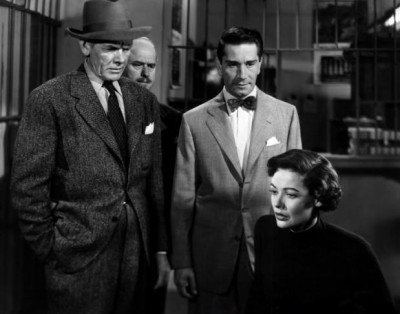
Saboteur (Alfred Hitchcock, 1942) 27/09 & 28/09.

Mayfair Theatre
Canadian Cult Review 22/09.
American Grindhouse (Elijah Drenner, 2010) 24/09 & 25/09.

Museum of Civilization (Gatineau, Quebec)
The Lost Dominion 70mm Film Festival 24/09 & 26/09.
*****
More about what I have been up too: After I finish editing these instructional videos that I have been commissioned for by U of O, the deadline is the first week of September, I have to figure out what I am going to do with myself. I anticipate hearing from the Canadian Film Institute to see if I can get more responsibilities. Anyways, we shall see. In September I just might go on a road-trip to Montreal or Toronto to see some friends if I have not yet figured anything out. The World Film Festival and the Toronto International Film Festivals look really good this year. I want to write more right now but I just cannot think of anything else to say...

I will leave you guys with the new music video of Adam Saikaley's song Bike that was directed by my friend Luke Ciesielski starring Lidija Marie and Anton Sharko.

Wednesday, August 4, 2010

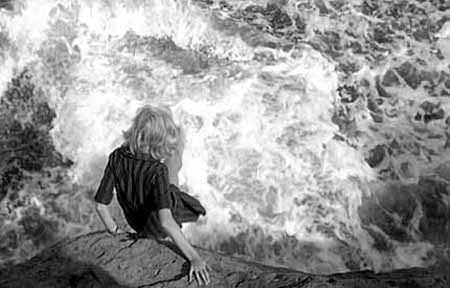
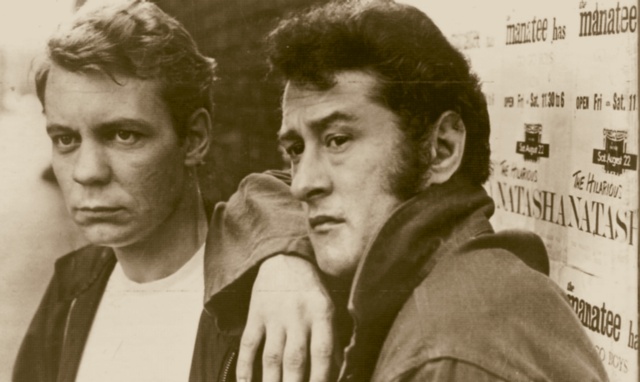
The Last Of Summer (Carle, Torossian, Local Films)

August Film Listing

Bytowne Cinema
I Am Love (Luca Guadagnino, 2009) 06/08 – 17/08.
The Hidden Fortress (Akira Kurosawa, 1958) 10/08 & 11/08
Les Herbes Folles (Alain Resnais, 2009) 27/08 – 31/08.

Mayfair Theatre
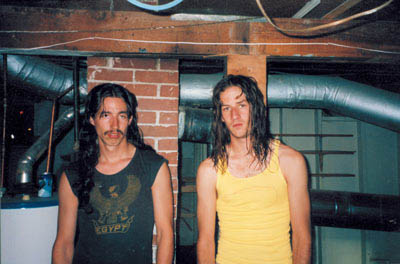
Long Pigs (Nathan Hynes & Chris Power, 2007) 06/08.
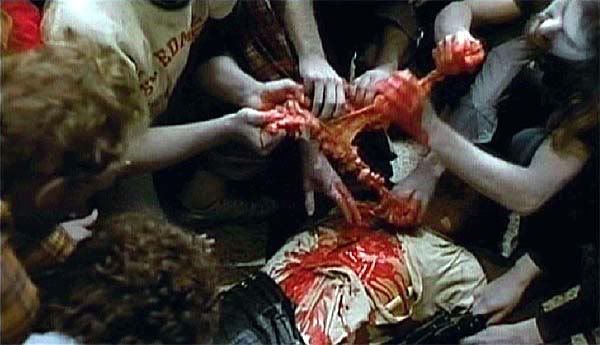
Two Evil Eyes (Dario Argento & George. A. Romero, 1990) 13/08.
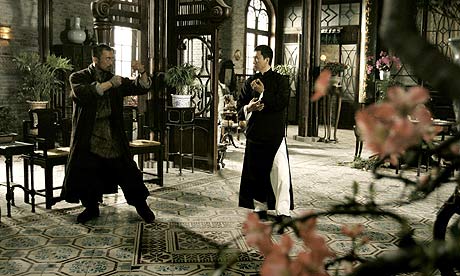
Ip Man Double Bill 17/08.
Canadian Cult Review 18/08.
Survival of the Dead (George A. Romero, 2009) 20/08, 21/08, 25/08 & 26/08.
Dixie Dynamite (Lee Frost, 1976) 28/08.
Merry Christmas Mr. Lawrence (Nagisa Oshima, 1983) 31/08.

*****


Réalisateur Nouvelle-France
Whether it is in his period films (Les Corps Célestes, L’âge de la Machinne) or in his contemporary film (La vraie nature de Bernadette, Le mort d’un bûcheron), roadblocks pop up sporadically in the work of Gilles Carle. In the only province in North America to emerge from a French colony - all the way back to the exploration of the Saint Lawrence River by Jacques Cartier in 1534. The uncontrollable nature of Canada’s untamed landscape for a long time has been aggravating its travelers, bringing them together, and making them late for wherever they are going. This visual is an apt metaphor to describe Gilles Carle mark in film history, as Gilles Carle is one of those directors that are undeservingly little known outside of Québec.

Piers Handling’s has written “Carle is a central figure in the history of Québec cinema, having created a diverse, rich, complex body of work over 40 years, which despite its unevenness, contains several enduring classics.” Which is true. Gilles Carle was born July 31st 1928 in Maniwaki, QC. Then he moved to Atibidi where he spent part of his childhood before moving to Montreal. He would set Les corps célestes in Atibidi during the 1940s, around the same time he would have been growing up there. He has won a plethora of Canadian film awards. His resume includes being a director, scriptwriter, and cinematographer for the NFB and then for the production companies Les Productions Carle-Lamy, Onyx Films, and Editions de l’Hexagone. He died of Parkinson’s disease complications on November 28th 2009 in Granby, Québec.


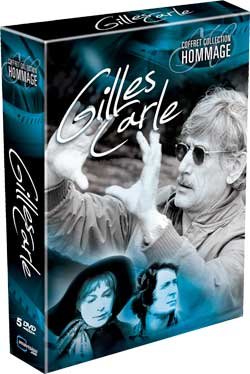
The fact that Gilles Carles is unrecognized might have to do that other then his film festival output in the 1970s and 1980s he has not received an international distribution or major DVD release outside of Quebec. Presently only five of his films and one of his TV-series, Les plouffe, are available on a unilingual French DVD’s that does not have English subtitles. The Coffret Collection; Hommage Gilles Carle only came out in September 9th 2009. And it was not until his death late last year that the NFB put up a few of his short films on their online catalog. Some of his other films are available on Ilico On Demand television. And a few others are available on VHS. With only these few films available, most of them purely for a French-speaking Québécois audience, Gilles Carle is truly on that other side of that roadblock.

The Coffret Collection; Hommage Gilles Carle set has been one of the most rewarding DVD collections I have had the pleasure to discover in a while. On it there is La vie heureuse de Léopold Z (1965), La vraie nature de Bernadette (1972), Les corps célestes (1973), La mort d’un bûcheron (1973) and La tete de Normande St-Onge (1975). The titles themselves anticipate these folkloric tales that are integral to the French-Canada mythology. As well they hint towards his blend of comedic irony and warm complicity in the troubling of the typical Carles protagonist. The southwestern Québec townships of his childhood are not only relevant in his biography but they play a prominent role in the locales of his films. The stories provide the opportunity for these locals with their exotic quétaine (i.e. Québécois kitsch) and joual (i.e. the working-class dialect) to be crystallized on film. Throughout the collection there is the depiction of the change in the province of Québec from the rural and catholic towards a modern, urban and secular society.

The latter films in the series have an Altmanesque quality as Gilles Carle uses genre and farcical characters to paint a colorful and riveting portrait of his idea of the Québécois community. The characters stand out with their odd wardrobe and irregular situations but there is a familiar quality to them. This approach differs from his earlier films iconoclasm, like Le viol d’une jeune fille douce (1968), as he moves more towards realism that allows an emphasis on the characters and the situations instead of the aesthetics. However eccentric the characters are, the inevitable fact that they are together makes them care for one another. This sense of community is the emotional bases grounded in the films of Gilles Carle. There is also a consistent theme of the return to nature and wilderness but as he demonstrates in La vraie nature de Bernadette; it is not feasible, and what the 1930s setting of Les corps célestes suggests, it never was.

His first feature, a short that was expanded to sixty-eight minutes, La vie heureuse de Leopold Z. is a tour-de-force of a snowplower Leopold Z. Trembaly (Guy L'Ecuyer) making his rounds on December 24th doing everything but snowplowing. The film was ostensibly funded by the NFB to be a straightforward documentary on Montreal snowplowing, which Gilles Carles subverted to create his dreamlike and snowy tale. Some of Leopold’s tasks include getting a fur coat for his wife, picking up his cousin and helping his supervisor move. The black-and-white cinematography dazzles and the bumbling protagonist seems to just float his way by on chance. Leopold takes out a loan to get his wife a fur coat. She kisses him on the cheek after he gives it to her. She then holds his hands before slowly moving it towards the coat. As much warmth is directed towards Leopold there is sly cynicism as Gilles Carle puts him through a lot of annoyances by the end of the day. This hand movement emphasizes the tension between the two.

La vraie nature de Bernadette is a real “director” movie as the elliptical story seems to progress in a way to illustrate a Carlien tableaux of the rural Québécois landscape with striking colors and irregular situations.


The next three films can be seen as the Carole Laure trilogy that examines femininity during the sexual revolution of the 1960s. Carole Laure in Les corps célestes is a virgin courtesan, in Le mort d’un bûcheron she is in search of her lost father, and in La tete de Normande St-Onge she is desperately getting her mother out of a psychiatric ward.

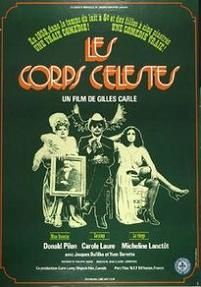
Les corps céletes is set in the pre-WWII days in Atibidi, as a pimp and his five prostitutes try to set up a brothel. One of the girls is frequently scared for the European Jews as she listens to radio broadcast of the demagogues, Adolf Hitler and Benito Mussolini. This is Gilles Carle take on Hannah Arendt’s theory of the banality of evil and Jean-Luc Godard’s one-time idea to make a film about a secretary at Auschwitz.

In Le mort d’un bûcheron, based on the 1913 Louis Hémon novel, Marie Chapdeleine (Carole Laure) moves to Montreal to find her estranged father. The only job she can get is that of a country-western singer at a nudie bar and then as a nude fashion model. Gilles Carles is making up here for the timidity of Les corps céletes, which only had a few seconds of bare breast. After finding out her mother died, by finding all the letters she sent to her returned by her door. She leaves with her boss, her fathers ex-lover and her generous neighbor to find her father dead at the lumberyard he worked at. All the while her exploitative boyfriend is trying to find her. They meet a serial killer in the woods.

In La tete de Normande St-Onge, Carole Laure moves from her job at a pharmacy, where everyone is really friendly with her, to kidnapping her mother from a psychiatric ward. Returning to her mother will prove to be detrimental to her mental health and social life, as she becomes a source of stress and a factor to regress from everyday life. Denys Arcand is great as the brother of Carole Laure’s mother.

What makes Carole Laure so great is both her sensuality and vulnerability. She is both sexy and exciting. It does not hurt that she also acted in Dušan Makavejev’s Sweet Movie (1974), John Houston’s Victory (1981) and André Forcier’s L’eau chaude, l’eau frette (1976). What makes her personality so interesting and Gilles Carle’s liberal worldview so fascinating is how sexuality does not impede on the sense of community. The brothel in Les corps célestes is a family oriented place and in Le mort d’un bûcheron Carole Laure has sex a few feet away from her adult friends. And none of this seems at all sleazy.


There is the element of cinema of attractions to his films as he interlaces them with non-narrative vignettes. For example, a dash of a musical-sequence here and real-time intercourse-sequence there. There is also marginal narratives. These two aspects of his work anticipates the films of Robert Morin and Lorraine Dufour from the Coop Vidéo de Montréal. The family oriented strip club where Marie is country-western singer is similar to the strip club in Robert Morin’s My Life is for the Rest of my life (1980), He has earned his wings (1981), and Yes Sir! Madame... (1984). The quirkiness of the Western club owner (Wilie Lamothe) seems like he could have been the star of Morin’s The mysterious Paul (1983). The street scenes share the same local as Morin’s The thief lives in hell (1984). And the western Les corps célestes falls into the genre of Québécois westerns like Morin’s Preliminary notes for a western (1989).

The works of Gilles Carles and other Québécois filmmakers exist in a film history of their own. Bill Marshall has a book Quebec National Cinema (McGill-Queen’s University Press; 2001) where he focuses on the French speaking “national majority” and the representation of its cultural identity. Québécois cinema is extremely fertile and is proud to boast such big names like Gilles Groulx, Jean Pierre Lefebvre, Michel Brault, Pierre Perrault, and Claude Jutra. What I find so interesting about the work of Gilles Carles is not exactly what he has to say about Québec but what he has to say about contemporary experiences, which resonates decades after their original creation. People should care for one another, sex is normal, relationships are tough, and there are a lot of obstacles we need to overcome. His work should be more widely accessible and should be more generously remembered.

*****

Elective Identities
The Canadian Film Institute hosted two Café eX screenings in July for a retrospective on the film tapestries of Gariné Torosisan. For me, Ms. Torossian’s work consists of self-portraits and homage’s that can be interpreted as self-portraits. I agree with Scott Birdwise when he writes that “Come Around partakes and what can be called a pneumatological imagination and process.” Just as Pneumatology is the study of holy spirits, Torossian’s work flickers between spiritual meditations and the means of self-representation. When she does not put herself in her films that position is passed onto one of her many friends and artists. All the while contemplating on her home country of Armenia and what it means and how she feels towards it from the position of a Diaspora Armenian.

To accompany the retrospective the CFI put out a book on the filmmaker Elective Identities: The Moving Images of Gariné Torossian, edited by Tom McSorley. The book is well worth checking out and can be purchased online through the institute. To order yourself a copy e-mail the CFI here (info@cfi-icf.ca). Torossian Short Film Programme I: Ferocities of Arrival, Early Works 1992-1999 consisted of Visions (1992), Girl From Moush (1993), Drowning in Flames (1994), My Own Obsession (1998), Passion Crucified (1998), Pomegranate Tree (1998), Find Your Holy Self (1998), Red Brick (1999), and Sparklehorse (1999). Torossian Short Film Programme II: New Millennial Memory, 21st Century Works 2000-2008 consisted of Platform (1998), Dust (2000), Hokees (2000), Babies On The Sun (2001), Death To Everyone (2001), Shadowy Encounters (2002), Garden In Khorkhom (2003), Hypnotize/Mesmerize (2005), Elect The Dead (2007), and Come Around (2008). It was a sublime experience. More people should have came out to enjoy them…


*****

Independent Canadian Filmmaking
It seems like this summer has been a major one for independent projects. In April the Canadian Film Institute projected Carlo Bruno’s supernatural road-movie In April (2009). In July, Scott Birdwise presented his experimental film Of Hands (2010) at IFCO’s third annual summer-time evening of experimental films Dogme Films 2010. Of Hands is a wonderfully photographed series of hands performing various tasks. Some scenes that stick out are of hands grabbing money, fingers wearing flamboyant jewelry, a lighter being lit, and the act of using a hammer. These observations are a microcosm for the most basic tasks within a post-colonial capitalist federation. This is Scott Birdwise’s second feature, the first being Smoke and Mirrors (2009) that played at the Dogme Films 2009. Patrice James wonderfully hosted the event at the Rideau street underpass.


This month on August 3rd, Lesley Marsland and Matt Miwa’s will project at Club Saw their short sci-fi comedy Captain Sorelski and the women in search of Spacegold (2010). Luke Ciesielski will be presenting the music video he made for local musician Adam Saikaley at the Ottawa International Film Festival, which will take place on August 21st and 22nd. Starring Lidija Marie and Candace Boivin’s bicycle the Golden Hawk. The Toronto directors Nathan Hynes and Chris Power and actor Anthony McAlister will be at the Mayfair Theatre on August 6th to present their cannibal pseudo-documentary Long Pigs (2007). These independent features will all be well worth checking out. I hope to see all of you out there.

I also picked up Lee Demarbre’s latest effort Summer’s Moon (2009) on DVD. Fellow Ottawa film-critic Joel Crary, who is soon moving to Vancouver, has written an interesting piece on the residing memories from, and use of, locations in Lee’s Jesus Christ Vampire Hunter (2001), which can be found here.

Finally, I am currently working on an instructional video for the French language department at the University of Ottawa. I am sure this series of seven podcasts will be keep me busy for this upcoming month. Expect less entries.-David Davidson

Wednesday, June 30, 2010

Canada Day Hoser-O-Rama

Goin’ Down the Road (Don Shebib, 1970)
**** (Masterpiece)


Strange Brew (Rick Moranis & Dave Thomas, 1983)
** (Worth Seeing)


Fubar (Michael Dowse, 2002)
** (Worth Seeing)


(The Mayfair Theatre, 1074 Bank Street, 30/06)

Saturday, June 26, 2010

Fringe Film Revery

Stone Time Touch (Gariné Torossian, 2007)
**** (Masterpiece) *Filmmaker in attendance


"These home-made quilts show a world of pictures in delirious collision. This personal archive is also an image of home, because Torrosian insist that our histories of looking, canonized in museums and picture books have offered us a landscape where we have learned to recognize ourselves." - Mike Hoolboom

(Canadian Film Institute, Library and Archives Canada, 395 Wellington Street, 26/06, 6:00PM)

Silent Cottage Country Yarn

Back to God's Country (David Hartford, 1919)
**** (Masterpiece)


In David M. Hartford’s Back To God’s Country (1919), an adaptation of James Oliver Curwood’s short story “Wapi The Walrus”, Nell Shipman reprises her role of Dolores from the “girl from God’s country” series. God’s country, which I assume is a grandiose reference to the Canadian North, is portrayed as a colonial setting of forest cottages surrounded by rivers, mountains, and wildlife. While in the shadows there lurks dastardly villainy and ruder racism. Nell Shipman utilizes her animal training skill to full capacity as her father’s cottage is bustling with wildlife that includes dogs, wolfs, foxes, bears and turkeys. One of scenes that stick out is that of a pre-cursor Winnie the Pooh cub that constantly sneaks into a jug of food. Wether it is of these furry and cuddly creatures or the frozen landscapes surrounding a traveling ship off the Baffin Islands the mise-en-scène is bustling with a fervent vigour.

Nell Shipman is an important figure in Canadian cinema as an independent pioneering female silent film producer, director, writer and star alongside her husband Ernest Shipman. Nell Shipman looks beautiful in her toque and vintage Hudson Bay Company coat, I bet Lilian Gish or Louise Brooks never appeared in those garments. While the Canadian North of the silent era looks untamed and pure similar to Robert J. Flaherty’s Nannook of the North (1922). In regards to scholarship on the film, I much prefer Kay Armatage book “The Girl From God’s Country Nell Shipman and the Silent Cinema” (2003) erudite overview of the female star with an analysis of her films, compared to Christopher Gitting’s ideology dense – and impenetrable – “Canadian National Cinema” (2002) that unapologetically detracts and puts off the film instead of highlighting the pleasures and cultural importance of this rare gem. The Lost Dominion Screening Collective succeeds again. In a beautiful 35mm print that provides a crisp image and emphasis on the shifting color stock. With an accompanying original musical score by Mike Dubue primarily on the xylophone. The projection was a nostalgic and captivating pleasure.-David Davidson

(The Mayfair Theatre, 1074 Bank Street, 25/06)

Thursday, May 27, 2010

A Busy June (And What I Will Be Doing)

June Film Listings

Bytowne Cinema
Punishment Park (Peter Watkins, 1971) 14/06 – 16/06.
Sweetgrass (Ilisa Barbash & Lucien Castaing-Taylor, 2009) 18/06 – 22/06.
Breaking the Waves (Lars von Trier, 1996) 21/06 – 22/06.

Mayfair Theatre
Steven Spielberg Double Bill 08/06.
Close Encounters of the Third Kind (Steven Spielberg, 1997) 14/06.
Back to God’s Country (David Hartford, 1919) 25/06.
Prime Cut (Michael Ritchie, 1972) 26/06.
Canadian Cult Revue 30/06.

Canadian Film Institute
Day of Wrath (Carl Theodor Dreyer, 1927) 12/06.
Lebanon (Samuel Maoz, 2009) 13/06.
Drunken Angel (Akira Kurosawa, 1948) 19/06.
The Lower Depths (Akira Kurosawa, 1957) 25/06.
Stone Time Touch (Gariné Torossian, 2007) 26/06.

Movie Night at the Imperial
Written on the Wind (Douglas Sirk, 1956) 1/06.
Top Hat (Mark Sandrich, 1935) 29/06.

TIFF Cinematheque (Toronto, ON)
Personal Views: A Tribute to Robin Wood 18/06.

Cinema Beaubien (Montreal, QC)
Les Amours Imaginaire (Xavier Dolan, 2010) 11/06.

Saw Gallery
Lesley Marsland’s Science Fiction Comedy TBA.

*****

It is summer here in Ottawa and the weather is hot. Since completing my Bachelors of Arts with a Major in Psychology and a Minor in Film Studies at the University of Ottawa in April my activities can best be described as idling. A lot of my time is spent at coffee houses, movie theaters, and at bars. I have a few short-term contract jobs here including researching vocabulary and working memory in elementary school students, the production of a couple of educational tool videos, and my part-time gig at the CFI. These jobs help me get by, but If find I am somehow still increasing my credit card debt. Whatever.

Solo reading wise, I have been really enjoying reading Zoë Druick’s erudite Projecting Canada, government policy and documentary film at the national film board (2007), she writes in the book “It is my contention that the NFB represents a rarified site for examining the use of new communications technology (in this case, film) and a new film form (documentary) for education, nation building, and the governmental project of an administered welfare state.” I am also having a pleasure exploring Vidéographe’s box set Robert Morin, The Videomaker’s Journey (1976-1997). Robert Morin and Lorraine Dufour output for their Coop Vidéo de Montréal is rich and compelling.

It looks like there are going to be a lot of worthwhile films going to be screening this month. Cool. Just browsing through my June Film Listings I am partly interested in writing about my friend Lesley Marsland directorial debut, it is supposed to be a twenty-minute sci-fi comedy; Back to God’s Country with the great Nell Shipman and which the film guide describes as “the earliest surviving Canadian feature film from 1919”, there will be live music by Mike Dubue; If I can make it out to it I would be interested in putting my thoughts out there on Xavier Dolan’s remake of François Truffaut’s Jules and Jim (1962), Les Amours Imaginaire (2010); and finally I eagerly anticipate Ottawa’s premiere of Gariné Torossian essay film narrated by Arsinee Khanjian Stone Time Touch (2007), which also includes a book with a contribution by Scott Birdwise. If you are at all interested in reading about the other films I am sure you can find analysis of them in the writings of Robin Wood, Joseph McBride, Cinema Scope, and Jonathan Rosenbaum.

I am also happy to hear Apichatpong Weerasethakul’s newest film Uncle Boonmee who can Recall his Past Lives (2010) won The Palme d’Or. Joe is ever adventurous in his projects and his work recalls the mysticism of Andrei Tarkovsky. I liked how his film Tropical Malady (2004) spoke towards a distinct Thai experience while expanding on more universal themes of fright and loneliness in the search for a partner through its two narratives; one which is straightforward and the other an abstract re-rendition.-David Davidson

Tuesday, May 25, 2010

An Unexpected Discovery

The Young Victoria (Jean-Marc Vallée, 2009)
*** (A Must-See)


Jean-Marc Vallée’s The Young Victoria (2009), with a screenplay by Julian Fellowes who has an ear for period dialogue, tells the story of Queen Alexandrina Victoria of the United Kingdom who was born in London in 1809. From her near isolation during the “Kensington System” under the pretense of a potential Regency by her mother the Duchess Mary Louise Victoria and her advisor Sir John Conroy, to her 1938 coronation, and finally to her marriage to Prince Albert. Queen Victoria's reign as the sovereign is the longest, specifically for a female, in the British monarch history. It recently played at the Bytowne Cinema on Victoria Day (May 24th), which is a federal Canadian statutory holiday, in honor of both the Queens birthday and her participation in the enactment of the Constitution Act that formed Canada in 1867.

The Montreal-born Vallée is proving to be a Canadian director of considerable talent, especially in his ability to fuse visual storytelling innovation in what could be drab material. He turns a Victorian period film into a virtuoso experience of suspense, high emotions, intrigue, and romance. Unlike less note-worthy efforts like, say, Jane Campion’s sterile Bright Star (2009). The setpieces, costumes, and period details are fine to boot. And through appropriate - instead of superfluous - tracking shots, close-ups, shifting focal planes, freeze frames, steadycam shots, and the dolly zoom effect. Vallée's cinema expands on the possibilities of studio-filmmaking.


Vallée's directorial debut at the age of thirty is Stéréotypes (1993) and his following five features are Les Fleurs Magiques (1995), Liste Noire (1995), Los Locos (1997), Les Mots Magiques (1998), and Loser Love (1999). As well he has done some television work. Though all of these efforts are less well known compared to Vallée's more famous and partly self-financed film C.R.A.Z.Y. (2005), co-written with François Boulay. The title of the film stands for a lot of things like how it is an acronym of the protagonist family children names (Christian, Raymond, Antoine, Zachary, Yvan), a reference to the Patsy Cline’s song (whose music Mr. Beaulieu has a strong affinity towards, alongside Charles Aznavour), and an ironic descriptor of the unusual Québécois Beaulieu family who represents French-Canada’s changing norms away from the traditional nuclear family and the waning influence of the papal authority.

It is interesting that Martin Scorsese is a producer of The Young Victoria. Scorsese who is most notably known as a director whose content and style has always been adventurous among the years has been gaining prestige as being equally as important as a patron, protector, and preserver of motion pictures. Both of his The Film Foundation, which was organized in 1990, and the World Cinema Foundation, whose special advisor Kent Jones tended the 2010 restorations at Cannes Classic, are important landmarks in film-culture. He is currently working on a documentary on Elia Kazan (whose On The Waterfront (1954) was a monumental film of his adolescence) and has one on the producer Val Lewton. He has created several rockumentaries and documentaries on musicians. And he has acted in other respected directors films [e.g., Akira Kurosawa’s Dreams (1990)] and popular television series [e.g., Curb Your Enthusiasm (2005), Entourage (2008)]. Scorsese's role has shifted toward one of a patron of global film-culture. By spreading his affluence towards films that mark his influence, he is reaffirming the importance of his more creative and daring output. Like his films that anthropologically address his Italian-American New York City heritage, the gangster films, and bold social critiques [e.g., Mean Streets (1973), Taxis Driver (1976), Raging Bull (1980), The King of Comedy (1982)]. Whether it is through sole recommendations, like his praise of Wes Anderson’s Bottle Rockets (1996), to distribution, like releasing Matteo Garrone’s Gommora (2008), and now co-producing Vallée’s The Young Victoria - a project in itself that is similar to Scorsese’s The Age of Innocence (1993). It is for this patronage Mr. Scorsese late period will be remembered for, not for his multiplex fodder spooks or his quirky cameos in his commercials.

C.R.A.Z.Y. is a stylish film and it proves Vallée position as a cinematic maximalist. The compelling soundtrack that adds depth to each scenes (which the director took pay-cuts to afford) is akin to the soundtrack in Martin Scorsese’s Goodfellas (1990). The dream- and wish-fulfillment sequences come out of something from the Coen Brothers. The supernatural, inter-connectivity and fantasy sequences is reminiscent of M. Night Shyamalan. And the queer content and visual flamboyancy hawks back to Gus Van Sant. It is this exciting mélange of technique that feels like it just came out of the blue in Canadian cinema as the film invades ones perceptive and auditory senses. It also paved the way for the type of Québécois cinema that Vallée's Montreal heir Xavier Dolan - the French cinema admirer, specifically François Truffaut - would later create. Dolan's new film Les Amours Imaginaire (2010) recently won him the “Regards Jeunes”, for the second year in a row, at the Cannes Film Festival.

Where C.R.A.Z.Y. can be categorized as being ambiguous. For example, Zachary and a friend leave a Cutlass and the friend walks away while Zachary zips up his pants. Mr. Beaulieu who sees this is dismayed as he, and the viewer, do not know if Zachary just got a blowjob. Though in The Young Victoria this ambiguity is replaced by the rendering of personal experiences. For example, there are melancholy moments of loneliness felt by a child imprisoned in a palace, the triumph of the courageousness of standing up for oneself in front of intimidation, and being shared the joys and frustrations of a newly embraced relationship.


Vallée seems to be a better director of character-types then of true characters. The young Queen and the Prince play the roles with brief moments of unbridled emotion as otherwise they are used as chess-piece portraiture-facsimiles in Vallée’s larger scale co-ordinations, akin to Stanley Kubrick’s Barry Lindon (1975). But even so Emily Blunt and Rupert Friends play the leads exceptionally well with intelligence and determinism. And the film has Vallée’s trademark moments of spiritual connection between mother and kin, Freudian dream sequences, slow motion to heighten tragic incidents, and beautiful and kinetic rendering of hyper-subjective moments.

In C.R.A.Z.Y. Vallée excelled at a depiction of the French-Canadian Québécois culture such as the large families, a collectivistic community, the personalities, and the places. Through its twenty-year span, it provides insight on varying aspect of the life cycle (e.g., birth, childhood, adolescents, adulthood). While The Young Victoria excels in the portrayal of social realities, when it does so, like the monarchy growing concern with the working class through inquiry in the housing and living conditions of the industrial-age workers or in the intense proletariat manifestation. Though sometime Vallée fails and when he does he falls hard. These moments of facile sensationalism like in C.R.A.Z.Y. with the slow-motion knockout and the slingshot across desert or in The Young Victoria when in slow-motion Albert takes a bullet for the young Queen (which in itself is a historical inaccuracy). These moments prove not to have any real insight.

C.R.A.Z.Y is a lot more then just an airport paperback of the topical issue of the week. It excels beyond anything generic even though it uses easy character types as it uses them to paint a complex situation. It provides complex family dynamics that are defined through several ecological levels and complex sibling dynamics that evolve and radicalize over time. It also looks at the self-regulation people do due to neighborhood watch and it looks at cultural norms as facets that play a larger role in the ways people define themselves as the film is set in a working-class Montreal suburb between 1960 and 1980, during the Quiet Revolution.


Vallée seems to be a criminally underrated director. Even though C.R.A.Z.Y. made a shit-load of money (estimated over six-million-dollars) and won several Canadian film awards (ten Genies) there has not been enough critical writing on the director, his technique, or the aims he tries to achieve. Even in Québec 24 Images, the province’s better film-criticism magazine, has yet to review The Young Victoria or include Vallée in their decade review (a similar injustice that befell Robert Morin). If Film is anything, let’s return to the birth of the cinematographic medium and the silent era. The greatest cinematic art is not found in narrative, dialogue, or words - a quality that is more defining of books and essays - just look at The Young Victoria for it as it reveals Film is at its best when it truly defines itself from other medium with a focus on images, sounds and atmosphere.

David Davidson

Thursday, May 20, 2010

Canadian Cult Review: Three Slackers

Monkey Warfare (Reginald Harkema, 2006)
*** (A Must-See)


Reginald Harkema’s Monkey Warfare (2006) follows two middle age hoarders, Dan (Don McKellar) and Linda (Tracy Wright), who are refuging in a gentrifying Toronto neighborhood. They left Vancouver where they set accidently set a security guard a blaze. This isn’t your postcard portrait of Toronto. The CN tower is always cut off in establishing shots as well the protagonists worry about police and the complexities of relationships and finances. Dan meets a twenty-something cute drug dealer Susan (Nadia Litz). In the process of befriending one another Dan introduces her to Leonard Cohen and the Black Panthers, the Fugs and the Baader Meinhof Complex. Susan has her own personal revolution as her views shifts towards radical activism. The film bookends with the perseverant Dan and Linda couple responsible for someone else’s third degree burns. The only previous screening of Monkey Warfare in Ottawa was as a one-night screening as part of the 2006 Canadian Top Ten, which was hosted by the Canadian Film Institute.

One of the films production companies is Masculine-Feminine Films. This reference to the Jean-Luc Godard feature is telling as Reginald Harkema interlaces the film with some Godardian touches. Firstly the theme of revolution, which is also relevant in an other recent Canadian film, Jacob Tierney’s The Trostky (2009). These films posit an ambiguous stance on the relevance of activism; is it useful or are people apathetic? And aesthetic influences like interlaced reverse shots of people addressing the camera and colorful intertitles to accompany the films pleasant jingles. There should be more films that are this ambitious.

*****

Work Bike Eat (Keith Lock & James Anderson, 1971)
*** (A Must-See)*Keith Lock in attendance


Keith Lock and James Anderson’s Work Bike Eat (1972) tells the half-hazard story of a Toronto anachronistic dweeb who works at a Chinatown pharmacy when he is not biking with strangers and eating and drinking with friends and family. The ADHD camera movements and narrow close-ups gives off a hazy quality and the films apparent 1200$ funding, other then camera and stock cost, looks like it went towards pizza and beer. Though what it expresses is the joys of a youth picking up a camera and the pleasures of filmmaking as everyone looks like their having a great time. As the co-director Keith Locks noted some contributing factors to its style were cinéma vérité and caméra-stylo.

What is so fascinating about Work Bike Eat is in its depiction of personal experiences within a locked cultural moment that remain universal. Like the clash between parent and youth, overcoming intimidation threats, meeting girls, telling bad jokes, and just hanging out with friends. This theatrical screening is the first for the film since going straight to television broadcasting on PBS in the 1970s. The context of seeing this old 16mm print, that was having difficulty even being projected, seems like the equivalent of browsing through a box of someone’s old photographs at a garage sale. There is a nostalgia of sharing something something so private within a public space. In a black-and-white and with an aspect ratio of 1.37:1 Work Bike Eat is a rare and rewarding experience.

*****

Waydowntown (Gary Burns, 2000)
*** (A Must-See)


Set in Calgary in the “Plus-15” system of elevated walkways connecting nearly all the buildings in the downtown core Gary Burns’ Waydowntown tells the story of three guys and a women who have a strange bet to never leave the confines. No matter what! Calgarians apparently love the film. For more information on the film check out fellow Ottawa online film-critic Joel (David) Crary’s interview with Gary Burns here.

Don McKellar in Waydowntown plays the creepy cubicle neighbor who ends up stapling weird motivational messages onto his chest. It is interesting to see how he adapts to his different roles with candor and honesty. Even though his presence is slight it still has a memorable quality. His performances are so varied like the off-kilter gay fish-store owner in Atom Egoyan’s Exotica (1994) and as the touchy censorship-board categorizer in The Adjuster (1991), he also wrote the screenplays and acted in Bruce McDonald’s Highway 61 (1991) and Roadkill (1989). Don McKellar presence in a film provides a familiar face and bankability, which is one factor that can make or break an indepedent Canadian film.

*****

The Canadian Cult Review, which is programmed by Paul Gordon and John Yemen, had their Slacker-Triple Bill on Wednesday May 19th 2010. The films that were screened include Monkey Warfare, Work Bike Eat, and Waydowntown.

Look out for June’s Canadian Cult Review screenings of Canada’s oldest surviving photoplay Nell Shipman’s Back to God’s Country (1919) and a Hoserama that includes Donald Shebib’s Goin’ Down The Road (1970), Rick Moranis and David Thomas’ Strange Brew (1983) and Michael Dowse’s Fubar (2002).

Tuesday, May 11, 2010

CinemaScopic

Cinema Scope and Film Criticism
It is rewarding, personally and for film culture, to compare Mark Peranson’s editor’s note in Cinema Scope issue 42 with Positif’s March 2010 editor’s note. In Positif’s, Franck Kausch pits Positif’s decade review list against the one by Cahiers du Cinéma and Film Comment while Cinema Scope opposes specifically me, David Davi(d)son from Ottawa, Ontario. This acknowledgment re-emphasizes Cinema Scope’s interest in film culture esoterica and it expresses the generous personality behind the magazine that is willing to extend itself to mention one of its keen readers. This interest in the esoteric is demonstrated anew with each issue with its up-to-date content that brings to attention upcoming trends on obscurantist art films that do not get enough coverage in mainstream press.


Cinema Scope’s strategy is simple: to have an in depth analysis on relevant filmmakers and global cinéphilia while effusing a frontal attack on world cinema’s fraudulent and pundit attachés who easily fall prey to journalistic shorthand’s. Their eclectic film reviews are a formation in the avant-garde, artistic, intellectual, humanistic, and political cinema of the present day. Cinema Scope’s championing of these films has to do with their quality not their cultural presence, which is something that is usually based on “apparent” mainstream importance (i.e. advertising budgets), which is accentuated by a megaplex cultural conformism. In a Hollywood driven North American film-industry market, economic privilege, for Cinema Scope, is usually a factor to negate a film. Mr. Peranson describes his position in Cinema Scope (N.06) “Being contrarian – never a be all and end all – means giving more slack and more coverage to alternatives to multiplex fare.” Unlike other contrarians like, lets say, Armond White or Pauline Kael, you can actually agree with the films and filmmakers Cinema Scope champions as they provide an overview and insight on exciting world-cinema that otherwise might be overlooked.


Some of Cinema Scope’s preferred directors include: James Benning, Jia Zhangke, Pedro Costa, Guy Maddin, Corneliu Porumboiu, Apichatpong Weerasethakul et al. These filmmakers are not too common in mainstream Canadian-American press, which leads to Cinema Scope’s side-taking of the position of you-don’t-like-us-and-we-don’t-like-you. Their feuds can get pretty nasty and their tone certainly aggressive. Cinema Scope’s use of polemics and attacking the exterior is worth saluting as their contrarian stance and rivalry choices have a cathartic quality.

The magazine’s interviews with directors showcase a convergence of the technical, personal and social aspect of films; and the film reviews come from the film festival circuit, which includes Cannes, Toronto, Vancouver, Venice, Sundance, Rotterdam, and Berlin. This immediacy, fresh from the festival screens, is maintained by a critical analysis - something that is usually missing in the writing of rushed bloggers. The magazines book reviews can lead to interesting spinoff readings, while the documentation of installation art provides a better perspective of the visual context surrounding innovation with sights and sounds.


There are similarities between the wide-screen anamorphic process CinemaScope and the magazine Cinema Scope. The CinemaScope process arose from Hollywood’s search in the early 50s for a product to counter the threat of television, which it did with its two and a half times wider image (an aspect ratio of 2.35:1). This is similar to the magazine’s subtitle “expanding the frame on international cinema.” The first film made with CinemaScope, Henry Koster’s biblical epic The Robe (1953) expressionistically utilizes the new medium, with similarities to the approach of the magazine Cinema Scope, that includes attentiveness to fine detail, an attuned sense of art history, innovation, context, politics, role in cult-cinéphilia, (techni)color, and the ability to spread people apart.

Cinema Scope tries to answer the Bazinien question of “Qu'est-ce que le cinema?” which André Bazin’s talks about categorically: ontology and language, an art form distinguished amongst others, sociological, and a realist aesthetic. In a global film culture, Cinema Scope projects itself as a cinema and the reviewers are actors in its flickering. It creates an unseen cinema in the mind, that is imagined through its readers image-reservoir; a cinema of amour fou. The reviewed films become real through their description and analysis. These films present alternative narratives while simultaneously providing a means to explore and understand another culture.


In the “Decade in Review” issue (N.42) the centerpiece is a panoptic address on cinema in the first decade of the third millennium. The word “cinema” is derived from the Greek word for movement and it is the ancient Greek mathematician Ptolemy who invented the precursor apparatus that would latter me referred to as the Zoetrope; the cylinder with related pictures that during rotation gives the impression of succession. The moving-pictures have gone a long way since Edward Muybridge’s series on racehorses and it now shows itself to be ever changing within an international context in a period of new possibilities with new technologies like 3D films, performance capture, digital, and celluloid; and mutating methods of production, filming and distribution.

Alongside Other Film Editorials
The Toronto-based international film quarterly Cinema Scope is ahead of most trends relative to other well-worth reading film criticism editorials that include Positif, Cahiers du Cinéma, 24 Images, Film Comment, Sight & Sound, Cineaste, and Film Quarterly. Cinema Scope is also readily accessible as the magazine can be easily found at local (upscale) newsstands unlike other film-criticism rarities like Trafic, Video Watchdog or Framework. A lot of these magazines share the same writers and there is a charm to follow their idiosyncratic taste. Cinema Scope has an underdog quality as it is a relatively new publication and its contrarian stance reacts, though sometimes builds upon, the tastes of these other magazines.


The French magazines Cahiers du Cinéma and Positif usually review the more interesting foreign films before the English language magazines. This is partly due to distribution, as their headquarters in Paris - the “unofficial” film capital of the world – receives these films earlier then their North American counter parts. Cinema Scope’s content competes with their proficiency while being more accessible to a western hemisphere audience, due to the fact that it is an English publication.

Canadian Cinéphilia
Cinema Scope has a tendency towards a nationalist Canadian cinema with reviews of the Can-Con and the Can-Cult, and content varying like the Toronto Images Festival and Montreal’s social-documentarist Donigan Cumming. This is done without falling prey to isolationism unlike many of the other Canadian film criticism magazines. Some of the strongest vocationers for Canadian cinema can be found within Cinema Scope’s archives and it should be considered among other Canadian film publications like CineAction (which was co-founded by Robin Wood) as well alongside Canadian film book-publishers like TIFF, University of Toronto Press, Canadian Film Institute, and Caboose Books.


The moving images - particularly the newsreel and the documentary - are part of a long tradition in Canadian identity that goes back to the National Film Board’s (NFB) inception by John Grierson in 1938. A running theme of Canadian national cinema is its citizen’s sense of identification with its country, made even more eclectic by the diversity of its ingrained multiculturalism. Cinema Scope extends the notion of film as part of Canadian identity by positing that cinéphilia is part of the Canadian experience. This idiosyncratic cinéphilia is part of a tradition, I think, of an unleashed cinéphilic repression caused by an isolating landscape - that consists of ten provinces and three territories - which for approximately four months leads to hibernation due to the snow and coldness. This sense of hibernation – which itself is similar to the film-going experience – is accompanied by extraneous free time which accentuates these outlier cinéphiles.

Though an easy word to throw around, what exactly is a cinéphile, the implications of classifying oneself as such, and its relevance? The suffix –phile specifies an attraction to something, and cine being an abbreviation for cinema. It implies a holistic passion for film and its relevance arriving from a threefold illumination: (1) a source of pleasure, (2) psychological development (akin to Jacques Lacan’s mirror phase), and (3) in its political quality in portraying subtleties and viable social options.


The omnivorous-cinephile’s scopophilia - Freud’s psychoanalytic term for those that take a general pleasure in looking – accentuates the viewing of the esoteric, which includes, lets say, 1920s Italian diva films, the somber world of Robert Bresson or the soft-core erotic Emmanuelle series. I would classify Mr. Peranson into this category alongside other idionsyncratic Canadian cinephiles including the Winnipeg-based prairie fabulist Guy Maddin, who appropriates a silent-film syntax and whose experiences and thoughts are so anxiously and passionately confessed in his book “From the Atelier Tovar: Selected Writings”; James Quandt, the senior programmer at the TIFF Cinematheque, who is from a village in northern Saskatchewan where he grew up with no television; and Lee Demarbre who grew up outside of Ottawa and as a youth went to New York City to see exploitation films; his professional history in Ottawa includes filmmaking, running a film radio-talk show Drunken Master Revue on CKCU-FM on Wednesday evenings, and he has worked at the repertories Bytowne Cinema, the CFI and is currently the programmer at the Mayfair Theater.

Cinema Scope’s History
Cinema Scope’s history starts with its venturesome chief-editor and publisher Mark Peranson creating the film-review periodical as a zine in 1999 – the first issue consisted of over 100 reviews of films from the 1999 Toronto International Film Festival. As Mike White writes “It boasted reviews of nearly all of the entries to the Toronto International Film Festival and proved to be among the most valuable possessions of folks attending the fest that were lucky enough to score a copy.” The magazine headquarters initially begun in Vancouver and then later moved to Toronto. The format of the magazine has not changed too much (at least since the 6th issue, the earliest one I have encountered) and the small noticeable change is in the title, as earlier magazines were entitled cinéma scope (with an é and the o is flanned between two lines). Other then that Cinema Scope’s proportions have remained consistent. Jonathan Rosenbaum’s indispensable Global Discoveries on DVD must have been added somewhere between the 6th and the 21st issue. And the invaluable website - that had major renovations in the last year - provides a wonderful database of archival features, spotlights, columns, and currency and is interweaved with facilitating keys to share pages on Facebook and Twitter.


Cinema Scope’s film critics present tastes and choices with an absolute enthusiasm, brilliance, provocation, and erudition. It is a breath of fresh air to read they’re blending of research, intelligent journalism and criticisms - and there are many of them - especially in an oversaturated journo-advertising industry. Some note worthy Cinema Scope forum colleagues and contributors include film critics Tom Charity, Jason Anderson, Robert Koehler, Scott Foundas, Andréa Picard, Christoph Huber, Andrew Tracy, Michael Sicinski (though his review of Philip Hoffman’s All Fall Down is unfair; Phil’s independent imaging retreat “Film Farm” in Mount Forest, ON is a considerable force in grassroots Canadian experimental cinema), Olaf Möller, Jonathan Rosenbaum, Quintín, Geof Pevere, Kent Jones, Liam Lacey, Jerry White, James Quandt, Noel Vera, Don McKellar, James Benning, Richard Porton, Adam Nayman, David Walsh, Tom McSorley, Serge Daney, and David Borwell.


On Cinema Scope’s Editor Mark Peranson
Cinema Scope’s publisher Mr. Peranson’s - born in Canada in 1968 - career history includes being an industrious film critic (e.g., The Believer, Moving Image Source, Film Reference Library), director of the film Waiting for Sansho (2008), actor in Albert Serra’s Birdsong (2008), writer on the Canadian TV series “On Screen” (2005), and worked as the programming and promotions associate for the Vancouver International Film Festival. Mr. Peranson’s Waiting for Sancho is about Albert Serra’s filmmaking process during the shooting of Birdsong. Mr. Peranson himself stars in Birdsong as the Hebrew-speaking Joseph, Jesus’s Father, from the tale of the Journey of the Magai. Mr. Peranson is insightful about Birdsong when he highlights in Cahiers du Cinéma’s (N.634) the films use of varying ethnicity, religion and dialects; and when he cites Albert Serra from a Catalan television interview that Birdsong consist of “filming people that I like, the ways that they move, their gestures, and the way they talk” a comment Mr. Peranson appropriates as also a definition of the essence of cinema.

Mr. Peranson’s editors notes includes social-politics as he provides his support to director and program manager Quintín and Flavia de la Fuente of the Buenos Aires International Film Festival against getting fired by government bureaucrats, he stood behind Barack Obama in the 2009 American presidential elections, and he wrote a heart-felt eulogy for Alexis Tioseco and Nika Bohic after their brutal murders.

Mr. Peranson’s writing is characterized by a joyful cynicism (similar to his defense of David Wain’s Role Models (2008) in his analysis of a film of 00’s) and is a pleasure to read. Hi shake-ups are equivocal to François Truffaut’s early Cahier du Cinéma’s polemic “Une certaine tendence du cinéma francais” (1954). Mr. Peranson’s dismissive comments like “Cannes 2005 appeared as if Thierry Frémaux and string-puller Gilles Jacob were assembling a loosely organized community college Intro to Cinema 101 class,” or “”you know, Loach-Almodovar-Campion-Giannoli-Ang Lee middlebrow, to which I now feel secure in adding the name of Michael Haneke” are refreshing to hear as they are an expression of an uncompromising dedication to a particular type of cult-art cinema as well it extends the magazines reputation of enraging and educating eager cinéphiles on opposing views.


To Conclude
Mr. Peranson’s iconoclastic Cannes reviews are one of the quarterly publications highlights. In them, Mr. Peranson rebels against the mistrials in the international film community, sometimes with a dogged humorous undercurrent other times with a disappointed moodiness. Mr. Peranson writes in the 25th issue “The one thing that connects all the issues of Cinema Scope together is a focus on films that are overlooked, undeservedly—those films that fall through the cracks.” It is always a pleasure to catch up with the films written about in Cinema Scope when they arrive in theaters or on DVD as they reveal surprises and unsuspected discoveries waiting ahead.

Cinema Scope is a fruitful magazine, ten years ago Mr. Peranson wrote, “The longer one is involved in this industry – and by comparison, I’m pretty much a child actor – the harder it is to avoid becoming jaded and/or cynical.” Mr. Peranson might be sometimes cynical but it is with resiliency and enthusiasm. Cinema Scope is now a carrying symbol of cinéphilia and with its unchangeable unruly taste it contributes to an increased scope and discourse on a transnational film culture to the benefit of film enthusiasts everywhere.

*****


My Introduction to Cinema Scope
In the latest issue of Cinema ScopeDecade in Review” Mr. Peranson mentions me, David Davidson, in regards to “editorial compromises of the greatest films of the last decade.” In the previous issue (N. 41) Mr. Peranson writes “Perhaps an outpouring of support from the readership will sway things one way or the other, but I’m not holding my breath on that one either.” After reading that I emailed Mr. Peranson with my support and I attached my own list. The title of that post is now, and has been for a while, “great films of the last decade”, and the inclusion of the word “greatest” – an overgeneralization and an unproductive concept - was a typo that I shortly changed at the time. Either way, let me be clear, I am honored to be mentioned in Cinema Scope. Thank you Mark. I did not think my personal list would get much attention. My great film of the 00’s list, which could be found here, is basically a reiteration of what a lot of other critics have been saying – that the decade is a reflection of the zeitgeist – except for a few highlights of mainstream Canadian filmmakers (e.g., Maddin, Egoyan, Kunuk) that were not mentioned other places.


I picked up my first copy of Cinema Scope in Berlin’s central station Hauptbahnhof at a magazine store by the railway. I was on my way to Vienna, Austria on a 6 hour train ride. It was entirely by coincidence that I found Cinema Scope, I also picked up The New Yorker and the French Premiere. At the time I just finished reading Thomas Pynchon’s behemoth Gravity’s Rainbow and it was an appropriate book to anticipate finding Cinema Scope, as personally, I was sharing the book’s German setting, and Cinema Scope’s “Cannes 2009 Bloody Hell” issue was very unconventional, similarly to Gravity’s Rainbow protagonist Tyrone Slothrop, as the magazine seemed like a mixture between traditional film criticism, paranoia, pot, and encyclopedic trivia with articles like “A Weave of his Stories Rediscovering Vittorio Cottafavi” or “Contact High A Stoner’s Movie Journey from A to Z.

On the train-ride, in an experience that made me think of the trip in Jim Jarmusch’s The Limits of Control [2008, (which the magazine reviews, and that I drove to Montreal to go see at the Cinéma du Parc)], reading the magazine made me well aware of the transcontinental context of “cinema” and where I stand within it as a bilingual Canadian somewhere between Germany and Austria. In my compartment there was a little girl making noise by banging on her toy piano as her elderly sun-burnt Teutonic parents were bickering in a language I could not understand.


In the Cannes spotlight Mr. Peranson highlighted Quentin Tarantino’s Inglorious Basterds (2009) focus on language and semantics. Inglorious Basterds, though, should really be discussed with it’s Nazi-occupied France French counterpart Robert Guédiguian’s The Army Of Crime (2009). Anyways, I saw Inglorious Basterds at the Hackesche Höfe filmtheater in Berlin and even though I thought the killing was morally ignoble there was something about the films use of multiple languages and dialects, especially in a foreign context, which resonated. In Inglorious Basterds when the actor spoke either German or Italian (except for Lt. Aldo Raine and his minions) I had very little or no idea of what was being said, emphasizing an un-American context and the films international market. This also happened in Berlin when I saw Jim Jarmusch’s Night on Earth (1991) at the Babylon Filmtheater, but at least there, luckily, I had a friend to translate some Italian, at least, when she was not laughing so hard with Roberto Benigni.


*****

Personal Background
I am twenty-two-year-old and I have been running Ottawa Film Review since 2008. My writing has definitely improved as I have started to mature and find my own voice. My tastes have been refined from reading film criticism collections and anthologies (e.g., Rosenbaum, Sarris, Godard, MacDonald, Agee, Farber, Britton) from the University of Ottawa Morisset Library and through mulling about films over beers with friend Scott Birdwise - the assistant programmer at the CFI and who also got me a part-time job there; dropping by Invisible Cinema to chat with Wyatt, and the participation on the threads at davekerh.com. This has lead to perspective taking and evolving views. I have had an omnivorous diet of videos, some purchased from the used DVD store Tuning Point (411 Cooper St), Tony Daye’s regrettably now-closed Sounds Unlikely (5 Arlington Avenue, the store that introduced me to films of the French-, and Iranian-New-Wave; Samuel Fuller and Michelangelo Antonioni), and bargain bins at chain music-video stores. I saw current releases and classic films projections at the Bytowne Cinema programmed by Bruce White, the new Mayfair Theater programmed by Lee Demarbre, and films at the Library and Achieves Canada programmed by the Tom McSorley from the CFI. And I have written for the student paper University of Ottawa’s Fulcrum Volume 69 Issue 24, 20, 9, and Volume 70 Issue 14, 19, 22, 23, 24, 25, 27.-David Davidson


Monday, May 10, 2010

Behaviorism in the Palais Garnier

La danse - Le ballet de l'Opéra de Paris (Frederick Wiseman, 2009)
**** (Masterpiece)


(The Mayfair Theatre, 1074 Bank Street, 7/05 - 9/05 & 12/05)

Tuesday, May 4, 2010

Moviephile May Listings

May Film Listings

Bytowne Cinema
The Young Victoria (Jean-Marc Vallée, 2009) 23/05 & 24/05.
Mother (Bong Joon-ho, 2009) 28/05 – 3/06.
The Red Shoes (Michael Powell & Emeric Pressburger, 1948) 28/05 – 3/06.

Mayfair Theatre
La Dance (Frederick Wiseman, 2009) 7/05 - 9/05 & 12/05.
Canadian Cult Revue 19/05.
Carmen, Baby (Radley Metzger, 1967) 29/05.

Movie Night at the Imperial
Sunrise (F.W. Murnau, 1927) 25/05.

Cinémathèque Québécoise (Montreal, QC)
Le Documentaire Utilitaire d’Après Gierson 13/05.
Précurseurs des Nouvelle Vague 20/05.

Carleton University
Scott Birdwise's Thesis Dissertation on Donigan Cumming 12/05, 10:00AM.

Thursday, April 15, 2010

DiverCiné: Romania under Ceauşescu

Contes de l'Age d'Or (Cristian Mungiu, Ioana Uricaru, Hanno Höfer, Rãzvan Mãrculescu, & Constantin Popescu, 2009)


(Canadian Film Institute, Library and Archives Canada, 395 Wellington Street, 17/04, 7PM)

Tuesday, April 6, 2010

Interview with Lee Demarbre

This is an interview I have been working on for a while with Lee Gordon Demarbre. Part of a series of interviews and list from local film experts to increase awareness of Ottawa cinéphiles and to bring them together online. Thanks again Lee for contributing to Ottawa Film Review and for making Ottawa a lot more exciting with your eclectic programming at the Mayfair Theatre.-D.D.


OFR: So Lee, what is your next project?

Lee Demarbre: I'm developing a film project now based on an idea from Sasha Gr-y, to star Sasha Gr-y. Ian Driscoll is hoping to have the script finished by mid-February.

OFR: What is it about this disturbed behavior that interest you so much? And is there anything you learnt from exploring this subject matter so closely, apparently you continue pursuing this interest in Summer’s Blood (2009)?

Lee Demarbre: I don't think I'm really exploring all this on purpose. I'm not setting out to say something about the disturbed mind. It just turns out this is a subject matter of many of my films. I think that's because I'm taking a lot from genre; and genre deals a lot with violence, as a result disturbed minds become my antagonists.

OFR: Why did you pick to film The Dead Sleep Easy (2007) in Mexico?

Lee Demarbre: I was already in Mexico shooting a documentary on Mexican wrestling entitled Vampiro: Angel, Devil, Hero (2008). It was a dream to make a movie about Mexican wrestling in Mexico -- so I jumped at the chance. Mexico is so bad-ass. The landscape of the country is like a modern day wild-west; no set dressing necessary. I'd do it again in a heart beat - it's dangerous at times but worth it.


OFR: What are the charms of filming in Ottawa? I imagine your crew must pretty tightly knit? Do you guys feel like you have reached a celebrity status?

Lee Demarbre: Ottawa's charm is the fact that the film industry doesn't really exist in this city. So when you approach someone about shooting in their restaurant, shop or cinema; most times they let you do it for next to nothing because they're so excited you're shooting a film. That wouldn't happen if people were shooting here all the time. And no I don't feel the sense of celebrity. It's always nice to have someone tell you how much they like your film, but there really isn't a sense of being famous. Just the sense that the movies are out there and some people have seen them; which is rewarding.


OFR: I am wondering what are your views on Canadian cinema? Is it lacking anything? What is that you like about it?

Lee Demarbre: Canadian cinema is looked down upon by many people because our films hardly resemble what people are use to watching; Hollywood movies. And I think the current state is on a down low. In the 90's there was a better sense of new Canadian films and filmmakers. The new films from Atom Egoyan, David Cronenberg, Bruce McDonald were exciting ten or more years ago. But these guys are still really the only "names" in the business, and now they're lesser filmmakers. We need a new wave of young Canadian filmmakers to come along and put a sense of excitement back into Canadian films.

OFR: Are there any prints you wish were still around or were more easily attainable? Have you created any fond relationships with other people distributors through running the cinema?

Lee Demarbre: I can't figure out why there aren't prints of the original Dawn of the Dead (1978) or Day of the Dead (1985) still kicking around. I wish I could show them again and again. The best part of my job is tracking down older prints (16mm or 35mm) and showing them. I'm still not sure if people really dig seeing original prints of movies; but for me it's like going to a concert to see your favorite old band. It's like a music fan saying "there's Kiss, live on stage" and me coming to the Mayfair and saying "there's an original print of that old movie that I've never seen before." For me it's that visceral.


OFR: How do you guys at the Mayfair feel about the Lansdowne Live decision and will it affect the cinema? Is there anything regular moviegoer should know or do?

Lee Demarbre: People should realize what an original film print is. That like still photography what we're showing is a positive of the negative that was in the camera on set when the movie was being shot. Seeing a movie in the theatre on 35 mm is like going to a museum and seeing a real life painting, opposed to seeing a copy of the painting printed in a magazine. And with the major studios witching over to digital projectors and showing movies downloaded onto a server; the idea of seeing a print is more real then ever. Forget about watching your DVD's, Blurays or whatever at home -- seeing an original print of your favorite movie is really like seeing it for the first time. If you don't get this -- then please stay at home.

OFR: What would you say were your favorite ten movies that came out in 2009?

Lee Demarbre: Here's my list

- Red Cliff: Part II (John Woo)
- Ip Man (Wilson Yip)
- Inglourious Basterds (Quentin Tarantino)
- Bronson (Nicolas Winding Refn)
- The Fantastic Mr. Fox (Wes Anderson)
- Invictus (Clint Eastwood)
- Che (Steven Soderbergh)
- Star Trek (J.J. Abrams)
- Whatever Works (Woody Allen)
- The Girlfriend Experience (Steven Soderbergh)