Showing posts with label Cinémathèque Québécoise. Show all posts

Monday, July 5, 2010

Love of Movies (Carles, Rohmer)

La Petite Forêt (Gilbert Taggart, 2000), La Guerre des Boutons (Yves Robert, 1962), The Great Dictator (Charles Chaplin, 1940), Leonardův Deník (Jan Švankmajer, 1973), Wanda (Barbara Loden, 1970), Dr. Jekyll and Mr. Hyde (John Robertson, 1920), L’âge de la machinne (Gilles Carle, 1978) Le Viol d’une Jeune Fille Douce (Gilles Carle, 1968) When the Day Breaks (Wendy Tilby & Amanda Forbis, 1999) Les Nuits de la Pleine Lune (Éric Rohmer, 1984), La Città Delle Donne (Federico Fellini, 1980), Konservfilm (Zlatin Radev, 1990), Runaway Train (Andrei Konchalovsky, 1985), Ssaki (Roman Polanski, 1963), The Shout (Jerzy Skolimovski, 1985), Across The Street (Arto Paragamian, 1988), Fast Company (David Cronenberg, 1979)


The second annual Fête du Cinéma hosted by 24 Images: La Revue Québécoise du Cinéma at the Cinémathèque Québécoise took place in the salle Claude-Jutra and at the Café-bar Saturday June 19th to Sunday June 20th. The Fête du Cinéma consisted of a twenty-four hour movie marathon; 35mm and 16mm celluloid passing through a projector for an eager community of cinéphiles. In the lobby there was a booth selling the magazine (2$ for older issues; 6$ for the ones including a DVD) and the Café-bar had specials on sangria and local brews while on the patio they were projecting classic NFB Unit B documentaries. The magazine 24 Images, which started in 1987, has always had a close relationship with the Cinémathèque as it typically reviews the more eclectic films that they screen, the venue’s ticket booth sells the magazines and for special occasions 24 Images dabble in programming. I got there later on in the day at seven o’clock for a commemoration of the works of Gilles Carle.

*****

Gilles Carle’s cinema reflects both his creativity and its fragrances over his perceptions of the Québécois landscape. Whether it is the runaway housewife in La vraie nature de Bernadette (1972); the effortful mannered gentleman in his 1950s Labatt commercials “C’est l’étiquette”; the whimsical police officer who truly wants to become an entomologist in L’âge de la Machinne (1978); to his multifaceted social portrait and bewildering comedy Le viol d’une jeune fille douce (1968). Gilles Carle’s always seem interested in showing the mainstream and sub-sector of his wonderful French-speaking province with wit and an eccentricity.

The misspelled typo in the title of L’âge de la machinne (there is only one “n” in machine) refers to the inability to backspace in the then modern new technological instrument of the typewriter. The title also shows up in Le viol d’une feune fille douce when one of the girls is also learning how to use the machine. L’âge de la machinne is set in 1933 and is about a police officer going from Senneterre to Montréal to recover a cute detainee on Christmas Eve. This NFB short film is noteworthy for the universal theme of pursuing independence in face of the imposition of religion, job security and social norms. There is a meticulous attention to period detail like the community-truck, which is an enclosed flatbed on a truck as a form of public transportation, is significantly delayed due to a roadblock. There is sense of warmth in the filming of all the characters as the viewer can sympathize with all these passengers that would rather be at home with their families then waiting at a train station for a delayed locomotive.


Le viol d’une jeune fille douce is a pop aesthetic portrait of a young women, Julie (Julie Lachappelle), ennui, pregnancy and early motherhood in Montreal in 1960s. It is comparable to Jean-Luc Godard’s early filmmaking period as the two are marked by an iconoclastic enthusiasm. The oddly title of the film refers to an unsympathetic short scene where Julie’s three thuggish brothers rape a young women. It is just one short episode out of many. Emphasizing that even amongst all of this fun and excitement, brutalities still unfold. There is a deadpan humor to everything as people remain emotionless. Gilles Carle dabs each frame with a Crayola-crayon palette of primary colors: a tyrian purple hat here, a baby blue sports car there, the placement of a bulk of consumer goods, and references to contemporary art. The characters dialogue also seems interested in the expressions of a national identity. Like when Julie’s Moroccan Jewish boyfriend asks her about her citizenship in reference to the national holiday Saint-John-Baptiste and the Front de libération du Québec (FLQ). While later on Julie buys stereotyped African groceries emphasizing the food consumption value whereas he see the goods in terms of their country of origin. There seems to be constant conflict between opposing people’s whether it is through language or actions.

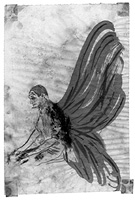
Gilles Carle passed away at the age of 81 on November 28th 2009 at a hospital in Granby, Québec. His mark on Québécois cinema and culture seems omnipresent whether it is through the programming of his films or the respect and awe he instills. There are even visual reminder of his presence like the etching on the Fête du Cinéma poster or his portrait that hangs around certain cultural landmarks, for example, the restaurant Le Café Cherrier. His films La vraie nature de Bernadette, La Mort d’un bûcheron (1973) and Fantastica (1980) made their way to the Official Competition at the Cannes Film Festival. Gilles Carle is proving to be an untapped treasure of French-Canada cinema and his films continue to prove to be ever adventurous and intensely pleasurable.

*****


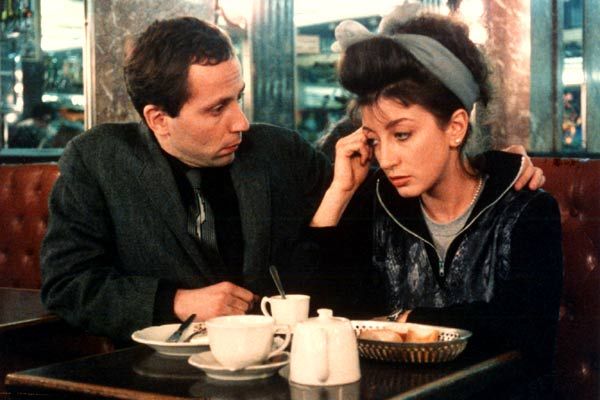
The series highlight and my favorite was the late Éric Rohmer’s Les nuits de la pleine lune. A masterpiece! The fourth in his series Comédies et Proverbes, the subtitle is “Qui a deux femmes perd son âme, qui a deux maisons perd sa raison”. Les nuits de la pleine lune is about a gorgeous, yet somewhat androgynous, women Louise (Pascale Ogier) who gets bored with her husband Rémi (Tchéky Karyo), an architect working on the redevelopment of Marne-la-Vallée in province de Champagne. Louise decides to return to Paris studio that is no longer being rented. Basically, Louise is having a midlife crisis and is unsure of what she wants. Still, she will continue her deep friendship with intellectual and writer Octave (Fabrice Luchini); have a one-night stand with a drummer Bastien (Christian Vadim) who’s leaving town; and sporadically visits her husband.

The night Louise spends with Bastien consists of party hopping and riding on his motorcycle. She returns to his place. They have sex. When she leaves in the middle of the night there is a full moon. Les nuits de la pleine lune is similar to Ma nuit chez Maud (1969) and La genou de Claire (1970) as Éric Rohmer uses movie titles that express the films visual imagery while simultaneously important scenes that culminate the crashing or comedy of an enlightened self-deception. While Les nuits de la pleine lune also refers to the myth of the werewolf and the transformation towards animalistic impulses that arises during full moons.


Éric Rohmer, like the large-format photographs of Jeff Wall, uses fiction as a guise to document the modernization of their own countries respective metropolis; Paris, France and Vancouver, Canada. After a rudimentary glance at Éric Rohmer’s episode Place de l’Étoile in Paris vu par (1965) this fact is further emphasized. The film follows this quirky shirt salesman Jean-Marc (Jean-Michel Rouzière) as he accidentally gets into a fight with a thief. In the background of all of this comic yarn is the 1964 subway reconstruction and theArch of Triumph. Cranes are flying, buildings are being built, roads are closed off and construction workers are on the street. One of Les nuits de la pleine lune more sublime camera movements is at the start with a 360-degree pan of the newly built housing developments and the subway connecting it to the rest of the city. Like Jean-Luc Godard’s 2 ou 3 choses que je sais d’elle (1967), these films are interested in Parisian real estate and architecture and how their consumption infiltrates modern day consciousness. One of Les nuits de la pleine lune shots is framed through a two-plane window. There is an immense crane right in the center of the image. Just as the banlieue is in a constant state of construction, the characters themselves are simultaneously also in a current state of expansion. Where the future for everyone and everything is equally uncertain.

Éric Rohmer birth name is Jean-Marie Maurice Scherer. The first name Éric is an appropriation of Austrian-born director Erich von Stroheim and the last name Rohmer came from the American pulp novelist Sax Rohmer. Mr. Rohmer finished his thesis dissertation on the organization of space in F.W. Murnau’s Faust (1926). He was a film critic and editor during the early years of Cahiers du Cinéma. He worked into his septuagenarian years creating his last film Les amours d'Astrée et de Céladon in 2007 from Honoré d'Urfé 17th century text L'Astrée. One of the heirs of his particular type of talky cinema is Noah Baumbach. As Baumbach’s latest film Greenberg (2010) approach is interested in household and restaurant conversations that are really inquisitive and poignant in regards to his characters motivation and there are strong textual references that give off a strong sense of the Los Angeles and its progressive upper class culture.


The French New Wave actor László Szabó has a small role in the film as a comic-book artist sitting at a café one night. He draws sketches of people and is inspired by the dreams of people. The idea of an artist drawing rough sketches of people is a very modest proposal especially from Éric Rohmer who, if I can be so bold, is one of the most psychologically introspective directors. Éric Rohmer seems interested in the use of language and how it is used and abused in conversations as a way to better understand one another. These inquisitions have quick way to intensify and some times are so memorable that Octave has to write them down. These conversationalist appear all the more foreign and exotic as it seems to be a culturally specific quality that makes France and French culture all the more attractive.

What a terrific experience! My personal reaction to the film (in the Barthesian punctum sense) was very engaged. I downlooked, sighed, was exasperated, laughed, got frustrated and was on the edge of my seat. To see a Éric Rohmer film on the big screen (my first time) was a terrific experience. The wall-sized screen is a right outlet for the classic cinematography of Renato Berta that focuses more on full body shots while consciously discarding classic editing norms. In a gorgeous 1,37:1 35mm original print without any subtitles this was the highlight of the night.

*****

Federico Fellini’s La città delle donne (1980) is a commedia all'italiana about Snàporaz (Marcello Mastroianni) who gets mixed up in a feminist rally and then in a philanderers mansion party that even Silvio Berlusconi would approve of. The one memorable scene that sticks out is a nostalgic musical sequence to Irving Berlin’s Lets Face the Music and Dance with Mastroianni in a top hat and cane prancing with two showgirls. Other then that the film gets itself lost in its own episodic drift and carnivalesque spectacle. By the end keeping up got strenuous.


I would have slept through more of Andrei Konchlovsky’s Runaway Train (1985) if the soundtrack weren’t more obtrusive. It felt like a movie made by a high school drop out that sees the world through crude stereotypes. The Alaskan cinematography was all right. Starring Jon Voight and a couple of other unimpressive actors.

Why I bothered to stay through the dreg were these next two films. Roman Polanski’s Ssaki (1961) is the last of his Łódź Film School black-and-white short films. The English title Mammals is appropriate as it is a tale of two guys who interchangeably pull one another on a sled in a barren snow-covered field while slowly depluming a chicken. A conceptual work whose title I posit refers to the plight of humanity.

Following was Jerzy Skolimoski’s fantastic horror film The Shout (1978). Jerzy Skolimoski who arrived in London from Poland in 1968, like the Italian director Marco Bellochio, seems like the type of director that is really underrepresented on video, which really restricts autodidact studies on these films. Thankfully the Cinémathèque has these programming and where I was lucky enough to see Marco Bellochio’s Abbasso il zio (1961) and Nel nome del padre (1972). Jerzy Skolimosky’s (who in 2008 appeared in David Cronenberg’s Eastern Provinces) The Shout begins with an unsuspecting visitor (Tim Curry) going to mental institute and what unfolds is the maddening of the already insane. All of this takes place in a flashback during a game of cricket in a Caligari fashion. There are some pretty interesting formal experiments including reverberating sound equipment and the use of close up.


*****

Though by six in the morning - like for most movie marathons - consciousness drifts in and out. I still perceived an overall unifying narrative to the programming. Both le viol d’une jeune file douce and Les nuits de la pleine lune have women protagonist and a narrative that progressives monthly, while the displacement from Montreal to France emphasized a shifting international setting. La città delle donne takes the idea of a vacation and pushes it southward to Italy. The progressing train Snàporaz is on with his wife before he starts dreaming will be passed on to Runaway Train and that movies winter landscape will be shared in Ssaki while the interest in landscapes will be continued now through sand desert vistas in The Shout. Les nuits de la pleine lune, La città delle donne and The Shout all have bookend stories that start at the location where they begin.


The programming at the Cinémathèque Québécoise under Pierre Jutras and Yolande Racine continues to prove to be adventurous. The fun and carriable eco-responsible schedule (which started in autumn 2009) and a good communicative website make their calendar easily accessible. The special programs highlight both high- and low-cultures works and highlight films and filmmakers hard to come by on video or ones that truly deserve a big-screen and communal viewings. Like their series on erotic Japanese films, Souleymane Cissi, Stroheim Boulevard, Marco Bellochio, Chairs et Vicere and Ken Rusell among many others.

After The Shout I decided to leave. I was on my way to my friend Alexandre Lemire’s place. I met a few of his friends there too. I was really tired after all that movie watching. Even the previous night I did not get much sleep after partying with friends at an Italo disco concert. St. Denis and Sherbrooke Street are really still at six in the morning. There were very few cars and a few staggerers that look like they belong in a Donigan Cumming or Robert Morin film. After a long night like that all you want to do is get to bed. Tomorrow will be a new day.-David Davidson

(Cinémathèque Québécoise, 335 boul. De Maisonneuve Est, Montreal, QC, 19/06 & 20/06)

Tuesday, May 4, 2010

Moviephile May Listings

May Film Listings

Bytowne Cinema
The Young Victoria (Jean-Marc Vallée, 2009) 23/05 & 24/05.
Mother (Bong Joon-ho, 2009) 28/05 – 3/06.
The Red Shoes (Michael Powell & Emeric Pressburger, 1948) 28/05 – 3/06.

Mayfair Theatre
La Dance (Frederick Wiseman, 2009) 7/05 - 9/05 & 12/05.
Canadian Cult Revue 19/05.
Carmen, Baby (Radley Metzger, 1967) 29/05.

Movie Night at the Imperial
Sunrise (F.W. Murnau, 1927) 25/05.

Cinémathèque Québécoise (Montreal, QC)
Le Documentaire Utilitaire d’Après Gierson 13/05.
Précurseurs des Nouvelle Vague 20/05.

Carleton University
Scott Birdwise's Thesis Dissertation on Donigan Cumming 12/05, 10:00AM.

Friday, April 23, 2010

Silent Drama

Greed (Erich von Stroheim, 1924)
**** (Masterpiece) * Rick Schmidlin will be presenting the film.


“Stroheim’s prominence doesn’t lie only in the power of his images, nor does it come from the merciless rhythm propelling the story and the anguish it stirs in us. It stems from a passion for the grandiose; a grandiose beyond bad taste. It is a climate that might seems harsh at first, but once one gets used to it, it becomes the Garden of Eden.” - Jean Renoir

(Cinémathèque Québécoise, 335 boul. De Maisonneuve Est, Montreal, QC, 23/04, 6:30PM)

Wednesday, March 17, 2010

Montreal Social Margins

I would like to thank Scott Birdwise for leading me to Mr. Cummings oeuvre and providing me with useful information for this piece.-D.D.

Donigan Cumming: Oeuvres Récentes (Donigan Cumming, 2003 - 2009) *Director in Attendance
**** (Masterpiece)


The screening of Montreal documentarian Donigan Cumming’s recent oeuvre at the Cinémathèque Québécoise,in the Salle Claude Jutra, on Wednesday March 17th has been eagerly anticipated, met its expectations, exceeded them and was so exasperatingly original that you wished there were more films. Donigan introduced the screening and you could recognize his familiar voice and face from his earlier works. He is also taller then you would imagine. The screening from a high quality Blue-ray disc included Locke’s Way (2003), Cold Harbor (2003), Voice: Off (2003), Fountain (2005), 3 (2005), Monument (2008), Untitled (2009), and Too Many Things (2010).


Outside the screening hall there is Cumming’s photograph exhibit Kincora 2010. The exhibit Kincora includes the framed photographs Barber’s Music (Ottawa, 1999), Les Pleureurs (which accompanied the video installation of A Prayer for Nettie, 1995), Lying Quiet and a few mixed-materials Kincora sketches. Donigan writes about it:
“The title of this exhibition refers to a street in downtown Montreal that was erased by developers in the late 1980s, destroying a little neighborhood and scattering its residents across the city and suburbs. Nothing was ever built on the site. It remains an urban wasteland, a parking lot. Most of the people who lived there are now dead."
The show will be on display in the Foyer Luce-Guilbeault until March 28th.


Locke’s Way is an epistemological rumination on Donigan’s older brother Julien through a photographic analysis. Donigan speaks out his train of thought as he goes through one picture to the next. Locke’s Way is and apt start to the retrospective as it presents the end of Cumming’s early video period (1995 – 2003), which is available on the DVD set Controlled Disturbance. Similarly to how Cumming's A Prayer for Nettie (1995) presented the end, or at least a transition, from photography to video. Cumming’s photographic publications up to that point included Reality and Motive in Documentary Photography (1986), The Stage (1991), and Pretty Ribbons (1996). The transition from photography to video was highlighted by a decreased sample size and increased attention to the minutia details of his participants and the spontaneity of their collaboration.


Locke’s Way deals with larger philosophical and political issues. An immediate philosophical reference is to the British empiricist John Locke who posited that all knowledge arises from sensory experiences. Locke’s Way also evokes the process of memory and the act of recollection as Donigan looks and thinks about the table full of photographs. Though he tries repeatedly to escape this activity by running up the basement stairs to get away from the memories, he is only able to find that upstairs there are his brother Julien's old medical reports. Julien, the subject of Locke’s Way, seems to represent a repressed subject for the filmmaker and the descent into the basement physically illustrates this concept of delving into the unconscious. There are two photographs of Donigan hidden in the mess. One is a childhood portraiture in a family collection and the second is at a wedding and Donigan is wearing a black suit with dark sunglasses. The film deals with biopolitics - Michel Foucault's term for the style of political power that regulates all aspects of human life - as it is the government policy that deems Julien as unfit. Julien was deemed “mentally disabled” at a young age by the government. His mother and grandmother worried about how his presence would affect his siblings. This is akin to Robert Zajonc’s confluence model, which suggests that children are born into intellectual environments that affect their intelligence. While Donigan is reflecting on these issues, he is also being affected by biopolitics as he runs around his house. This process of running up-and-down stairs directly alternates Donigan’s physiology, how he communicates, and the audio-track through Donigan’s heavy breathing. If you look closely at the edge of the steps when Donigan is moving there are signs of fading on the stairs. The edge of the stairs are missing paint and are grooved. This detail in the mise-en-scène extends the themes of frailty, timeworn, and decrepitness. Finally As Donigan looks over the pictures the audio-track fast-forwards and then slowdowns coming to a creeping close on a picture of Julien.


Cold Harbor is a 3-minute short-film about an ill African-Canadian decrepitly breathing with off-screen voice-over narration reciting facts about the American Civil War (1861 – 1865) and it ends with a radio news report on the Iraq war. The American Civil War was a prominent subject in Donigan Cumming’s childhood growing up in the United States. Fountain is the accumulated video-footage from the earlier videos and photograph with some unseen footage. It is an eulogy for all his past-collaborators (e.g., Pierre, Julien, Gerry, Marty, Nettie, etc) and examines his old friends from multiple perspectives varying from bodily close-ups, to their rooms, neighborhoods, and their reciprocal relationship. This video footage had been also used for the book and grid collage Lying Quiet that was produced with Peggy Gale for the Museum of Contemporary Canadian Art. It interesting to see the footage that had not yet been released and in it Donigan creates a visual bricolage of live-action and photographs. 3 is interlaced with a lot more intertitles then his previous work. The intertitles include: men asleep, a dream, play, a song; angel and snow, wings and flowers, money and trees; fast then slow, piano decays, laughter. The intertitles and the scenes present dualities that sometime contradict one another. One scene that particularly stands out is an exchange of money between the hands of Donigan and a collaborator where he exposes the monetary transaction side of his film-making while presenting a beautiful image of a green grass and trees background. Untitled, A.K.A. Pencils, Ashes, Matches, Dust, is a commissioned “film haïku” for Visions du Réel International Film Festival in Nyon, Switzerland.
The two most interesting films in the series were Monument and Too Many Things. They represent very transitional works in Donigan’s career. These unexpected illustrations show Donigan’s films in a post-Nettie-Collin-Colleen-Pierre-Albert-Nelson world. There is the passing of an era and the resurrection of another for a new decade.

Monument starts with Donigan kneeling down naked in a white room, he crushes a statue of a flower, there is a quick cut to Julien waking up, and then a sunrise on the water. The strange flower sculture is passed around and people are mourning. In the video interview “Visions du Réel, Atelier with Donigan Cumming” Donigan is critiqued for documenting others instead of himself. In Monument Donigan brings himself more directly into the picture. He creates an angst-ridden portraiture of himself destroying the symbolic flower. Nakedness in art history represents simultaneously a symbol and a true identity. Also while interviewing the new collaborators Donigan implements his presence more as he reflects himself in a mirror and his discussions with his collaborators showcases the slow process of building trust with an unreceptive participant. In Donigan's friendship with his old participants there was a mutual understanding that Donigan guided the behavior and controlled their actions. Now, when Donigan guides the new collaborators, such as asking them to put the destroyed statue in a fridge, there are these moments of hesitancy and ridicule. As if they are surprised to perform such a task. This could possibly be the result of the interviewees temperament or how many takes Cumming’s chose to film.

In Too Many Things, which was produced during Donigan Cumming's 2008 - 2009 artist residency at the Productions Réalisations Indépendantes de Montréal (PRIM), there is such an overabundance of creativity and celebration that the excitement leaks out of the frame. Now that Cumming’s has a firmly established palette and a distinct visual style which includes the socially assisted poor, his Mini-DV mobility, images with an abstract quality, useful trivia, slow-motion, and songs. He can abstractly present these issues through visual stand-ins. The narrative follows Ross (who looks strikingly similar to the late Éric Rohmer) and his friends during their routine weekday two-hour visits to the Salvation Army (880 rue Guy) where they hang out and look at the assortment of objects. They enjoy each others companionship and they incomprehensibly babble on top of each other in a Altmanesque fashion. There are breaks in the narrative for a stop-motion waterpaint-infused dissection of a CPU and Kincora moth-like sketches filling the frame. Where earlier on in his career Cumming’s was investigating the underrepresented now it is the underrepresented examining discarded household objects with the same magnifying precision.

Fountain presents an eulogy for his past-collaborators, in Monument Donigan works through his frustrations, and in Too Many Things there is a rejuvenation. This retrospective showcases Donigan Cumming as an ever-evolving artist who is fully aware and interested of pursuing his career to the brink. He is experimenting with different approaches, meeting new participants and building an evolving body of work. He is a constant extender of the Canadian documentary tradition and now he is also appropriating the NFB animation sector with his use of stop-motion. The theatrical programming really added a narrative to the works and I eagerly anticipate his future endeavors.-David Davidson

Monday, February 22, 2010

Old and New Canadian Films in March

March Film Listings

Canadian Film Institute
Dying At Grace (Allan King, 2003) 14/03.

Bytowne Cinema
J’ai Tué Ma Mère (Xavier Dolan, 2009) 19/03 - 25/03.
Inferno of Henri-Georges Clouzot (Serge Bromberg & Ruxandra Medrea, 2009) 17/03 & 18/03.
Chloe (Atom Egoyan, 2009) 26/03 - 8/04.

The Mayfair Theatre
Near Dark (Kathryn Bigelow, 1987) 12/03.
eXistenZ (David Cronenberg, 1999) 23/03.
The Frighteners (Peter Jackson, 1996) 26/03.

Cinémathèque Québécoise (Montreal, QC)
Donigan Cumming: Oeuvres Récentes (Donigan Cumming, 2003 - 2009) 17/03, 6:30PM.

Monday, February 1, 2010

French Thirties Film Noir

Pépé le Moko (Julien Duvivier, 1937)
**** (Masterpiece)


(Cinémathèque Québécoise, 335 boul. De Maisonneuve Est, Montreal, QC, 31/01)