Showing posts with label 24 Images. Show all posts

Monday, March 6, 2017

Canadian Cinema – Winter 2017

“Mais laissons les grands de côté, car 2016 a été unne année beaucoup plus intéressante à observer du côté des petits.” – Bruno Dequen

Well I agree! There’s been something exciting going on in Canadian cinema recently: new and exciting directors are emerging in the cinematographic landscape just like how grass and flowers will soon rise from below the dirt and snow to bring out some lightness and color.
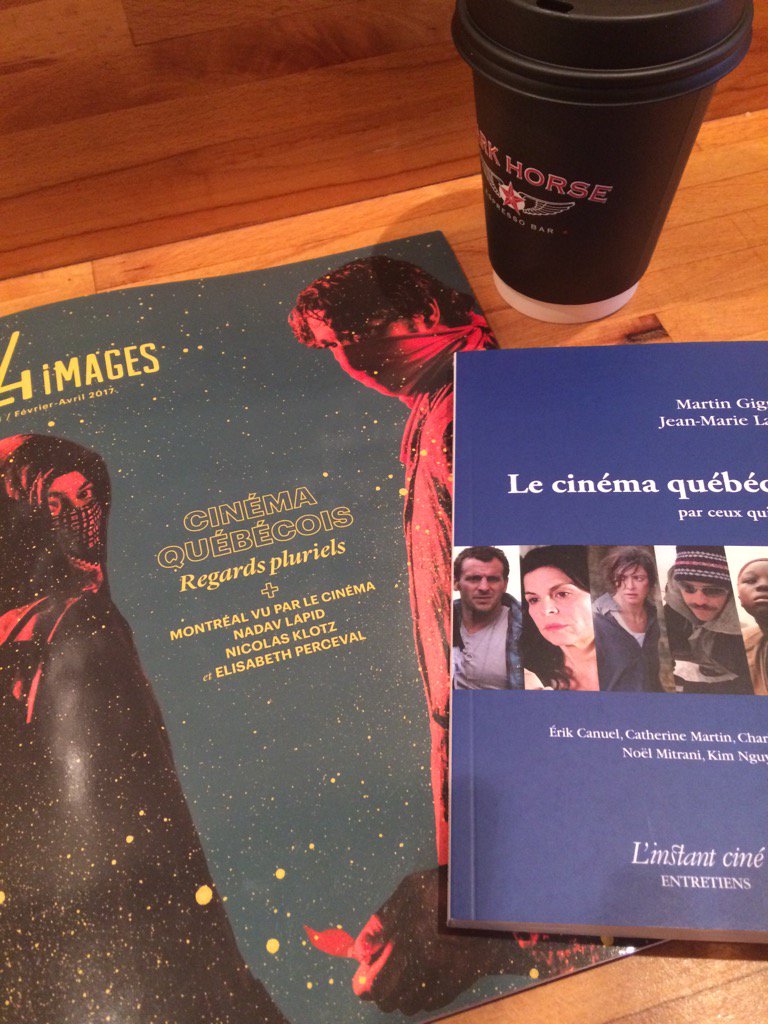
The new issue of 24 Images takes stock of some of these developments in the Québécois context through its new dossier Regards pluriels. In it there’s an essay by Bruno Dequen on the future prospects of these smaller films in face of the shrinking attendance of public screenings. There’s a round-table with new voices in Québécois cinema (to accompany their short films on the 24 Images produced DVD) that includes Jean-Guillaume Bastien, Loïc Darses, Alexandre Dostie, Philippe David Gagné, Émilie Mannering and Rafaël Ouellet (not the one who made Gurov and Anna). A conversation between the critics Gérard Grugeau and Philippe Gajan on Mathieu Denis and Simon Lavoie’s Ceux qui font les révolutions à moitié n'ont fait que se creuser un tombeau. Essays and reviews on Olivier Godin’s films, Sylvain L’Espérance’s Combat du bout de la nuit, Anne Émond’s Nelly, Sophie Goyette’s Mes nuits feront écho, Zaynê Akyol’s Gulîstan, terre de roses and Olivier Asselin’s Le Cyclotron (many of which are playing at the Les Rendez-vous du cinéma québécois).

Loïc Darses perhaps best describes the context of this new generation of Québécois directors and their hopefulness in the round-table. Darses writes,
I remember having these discussion when we aspired to be directors while we were still in film school. Even though we admire the films of Denis Côté, Anne Émond and Maxime Giroux we need to distance ourselves from them to exist. It’s a generation that went through certain disenchantment of globalization and that makes films about, among other things, mostly solitude. The problems haven’t disappeared but instead our generation rather transmits hope.
One of the nice surprises in this issue of 24 Images is to see Sophie Goyette’s first full-length feature Mes nuits feront écho, after two great shorts La ronde and Le futur proche, get the appreciation that it deserves. Though small in terms of its production budget, its multiple narratives follows three different characters in three different countries as they search for themselves and try to reconcile with the spirits of their deceased loved ones. There’s a beauty, modesty, hopefulness and ambition to Mes nuits feront écho that’s rare among first features.

Well regarded since its premiere, Ceux qui font les révolutions… needs to be seen in a theater to be properly experienced. It’s fervor and scope in portraying a group of young Québécois activist in the aftermath of the 2012 student protests is both inspiring and chilling. The 24 Images piece on it elaborates on its achievements and flaws, critiquing it for not giving the population of Montréal enough credit (the province throughout its history has shown more revolutionary fervor than any other in the country), not offering any firm political solutions and for being defeatist. Though I liked it more than them for its critical politics and its tactile media form (e.g. graffiting a billboard, throwing a Molotov cocktail into a restaurant) that seems new in this form to Québécois cinema. The insert shots in Ceux qui font les révolutions… of a Montréal of leisure (as discussed by Marcel Jean in 24 Images in the inaugural Montréal et Cinéma feature on La semaine dernière pas loin du pont), which presents the quotidian of the urban social life, are especially damning in the context of the film towards a more general cultural apathy and resistance towards direct action. Denis and Lavoie discuss being inspired by Gilles Groulx.

Émond’s Nelly is both devastating and fantastic. Similar to Jean-Marc Vallée’s Café de flore, it’s devastating in its portrayal of youth, drug problems and what’s it like to be torn apart by love. It’s fantastic for its direction of Mylène Mackay, who plays Nelly Arcan, and the complexity of the character and her ability to be transformed into a star. There’s a scene in the film where Nelly is describing her literary fiction, about her previous life as a call girl, to her book publisher and says about it, ‘What’s wrong with some imagination?’ After the bleakness of Les êtres chers, Émond with Nelly aims towards new life experiences and aesthetic extremes. The result is outstanding.

It’s this turn to hope, extreme positions and grand affects that makes these new Québécois films so stimulating.

It’s emblematic for these young filmmakers to actively persist to raise funds to complete their projects and to pursue their vision. Though their multiple funding agencies including  SODEC, Telefilm, NFB among other independent producers provide for them more economic resources than any other province. 
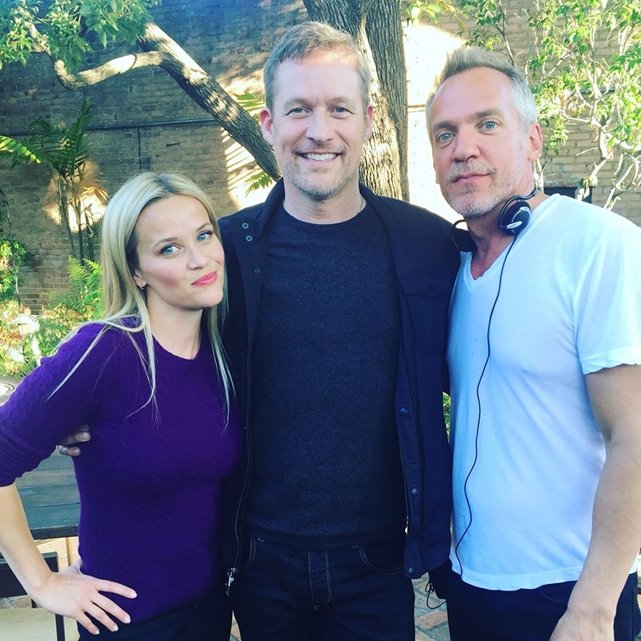
A new book Le cinéma québécois par ceux qui le font full of interviews with Érik Canuel, Catherine Martin, Charles-Olivier Michaud, Noël Mitrani, Kim Nguyen and Rafaël Ouellet shows how an older generation can be a bit too complacent in the system while they complain about not being appreciated enough. (Though a new title in the same L'instant même series Le Cinéma Québécois au féminin sounds a lot more interesting). A more positive example of an older generation director is someone like Jean-Marc Vallée, and to a lesser extent Denis Villeneuve, who made the right decision for their career so that they could best expand their canvas by continuing to make the movies that they envision by going to Hollywood. Big Little Lies is just the newest and most glorious illustration of someone like Vallée’s skill.

All of this discourse, production and screening opportunities, with 24 Images at the center of it all continues to make Québécois cinema one of the best in the country. We’d be so lucky to have an equivalent of 24 Images, that's so invested in the art of cinema of its own city, here in Toronto. Though it’s surprising how there isn’t necessarily a crossover of it to the other provinces (see: poll). Other Canadian cities competing with Montréal for the best city for young Canadian filmmakers include Toronto (probably its biggest competitor), Vancouver and Cape Breton. But I’d also be curious to discover more from other Canadian cities.

Though there’s been recent films set near the Atlantic Coast (Closet Monster, Weirdos), it’s perhaps due to Ashley McKenzie’s Werewolf that there’s a revitalized interest in the filmmaking of the Maritimes. Werewolf, similar to Andrew Cividino’s Sleeping Giant, revitalizes a somewhat bland community by focusing on its youthful delinquency: the story of a young Methadone-addicted couple that eventually separates. It’s hard to properly get at what makes Werewolf so interesting. Some comparisons: Goin' Down the Road meets conceptual art? The Nova Scotian equivalent of East Hastings Pharmacy and Tower? Buffalo '66 meets the Dardenne brothers? But perhaps most productively is to see Werewolf as a personal film for McKenzie about witnessing the problems of her community first hand and of having friends ripped away due to circumstances. It’s also worth noting another Halifax filmmaker Heather Young whose two short films Fish and Howard and Jean also testify to the social problems and loneliness afflicting their surroundings. Young’s Fish is especially striking for following a single mother over a few years after she gives birth to twins and it continues in Youngs tender manner to express the loneliness that most people experience.

From Vancouver the two most anticipated new films are Neil Bahadur’s directorial debut From Nine to Nine and Kurt Walker’s follow up to Hit 2 Pass, S01E03. I’d be curious to see how they look when they’re all done.

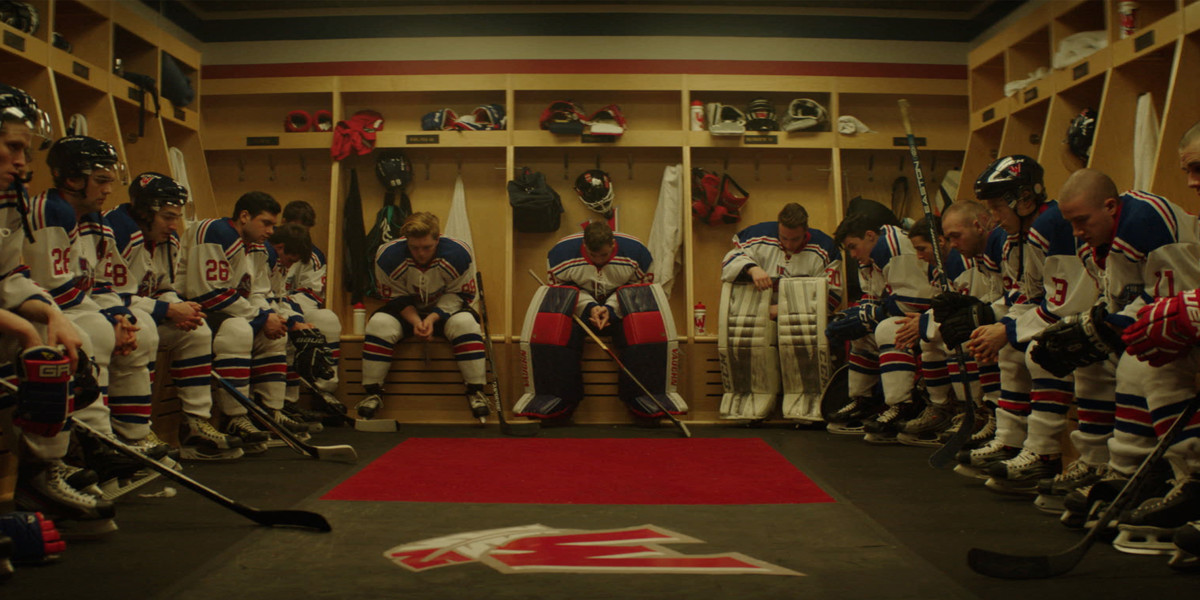
But perhaps the biggest news from Vancouver is the success of Kevan Funk’s first feature, after the two earlier short films Yellowhead and Destroyer, Hello Destroyer, which is now only getting its theatrical release starting on March 10th. In a singular gritty style of medium shots and close-ups, full of shadows and set in modest urban environments and harsh nature settings, Hello Destroyer closely follows an up-and-coming hockey player (Jared Abrahamson) as his dream slowly gets crushed. It’s especially critical of institutional practices that foster excessive masculinity and that hypocritically turns away from its victims when they are needed.
If there’s a pessimism to Funk’s filmmaking as characters are slowly crushed by their surroundings, an optimism can be found in one new Toronto work: the Zapruder Films produced nirvanna the band the show (currently now on Viceland). It’s Matt Johnson’s ability to dream and to imagine actually winning that makes his work so uplifting.

But there’s also a lot more exciting events and new projects in the works going on in Toronto. This March: Kazik Radwanski’s How Heavy This Hammer is now on iTunes, Funk's film on the 10th, the Canadian Screen Awards (where Johnson, Funk and Johnny Ma are nominated) on March 12th, Efehan Elbi and Aleksey Matviyenko’s Rainfall is having its Toronto premiere at the Canadian Film Fest on March 21st, and Sofia Bohdanowicz’s Never Eat Alone is getting a theatrical and some of her short films are playing on the March 25th. Here’s hoping that Lev Lewis’s The Intestine, Daniel Warth and Miles Barstead’s Dim the Fluorescents, Joyce Wong's Wexford Plaza, Rebeccah Love’s Acres and Claudia Hébert's Le Déni soon have their Toronto premiere. There are also some new projects in either development or near-completion including those by filmmakers such as Fantavious Fritz, Mitch Greenberg, Antoine Bourges and Isiah Medina. Here’s to better times!

Wednesday, May 18, 2016

Bruno Dequen’s New Editorship of 24 Images

All it took was three issues. Since the departure of the previous chief-editor of 24 Images, Marie-Claude Loiselle leaving after 23 years at the end of 2015, Bruno Dequen, the new holder of the position, has been able to reorient the magazine by bringing to it a new fresh and youthful voice, improving the layout and sections to more clearly express its views, reaching out to cinema in its entirety through its multi-disciplinary and –platform incarnations while also holding on to some of its predecessor Loiselle’s major values and never loosing sight of Québécois cinema as its centerpiece. Not an easy task! But which Dequen accomplishes with what appears as ease. So far the three first covers of Dequen’s period includes Miguel Gomes’ Arabian Nights with a feature on the major cinematographic shifts from 2010 to 2015 (which creates an intellectual base to build upon), then a Ben Wheatley High Rise cover with a dossier on new experimental documentary forms, and finally a Sylvain L’Espérance cover for his upcoming monumental Greece documentary Combat au bout la nuit (which seems to answer Loiselle’s earlier call for exactly this in one of her last essays) and a roundtable on young cinephile culture from the perspective of 2016. Through continuity and rupture, Dequen took the magazine from a perhaps esoteric Trafic model to resembling something more like the mixture of Cahiers and Cinema Scope but specific entirely to Montreal, its cinephile culture and its repertoire film institutions and festivals. Ce n’est plus seulement du ‘sérieux’ mes maintenant ça inclus le monde. Each issue now is full of interesting articles (with the golden rule being that there should be at least five to warrant the purchase) all which answers the question of comment penser le cinéma aujourd'hui de Montréal? Some of these recent highlights include the pieces by its new writers like Alexandre Fontaine Rousseau (probably one of the biggest cinephiles to come out of Aylmer) on vulgar auteurism, The Forbidden Room and his own comical film-related drawings; Ariel Esteban Cayer on Isiah Medina’s 88:88 and Adam Nayman’s Showgirls book It Doesn’t Suck; and Apolline Caron-Ottavi on André Habib’s book La Main gauche de Jean-Pierre Léaud. These are all mixed together with pieces by its older writers, which all have a new personal urgency to them, like Dequen on Philippe Lesage’s Les demons, Robert Greene’s Kate Plays Christine and Edward Yang’s A Brighter Summer Day; Robert Daudelin on Thom Andersen, or a special contribution by Leo Goldsmith on Dominic Gagnon’s of the North. To celebrate this new energized activity Marcel Jean at the Cinémathèque Québécoise has been inspired to re-boot the old La Fête du cinéma program (May 20th to the 21st). With this level of confidence and joyous activity: everybody gains.

Monday, August 31, 2015

Recommended Reading: 41 Strange and 24 Images

The collection of horror stories 41 Strange is a short and fun read. The 41 stories range in length from one to a few pages and, similarly to Creepshow, through these brief horrific stories emerges dire situations, characters and worlds. They’re fun and eerie: In Staircase Man a new tenant slowly becomes the apartment’s monster under the stairs, in Qlugg Wiqq a fugitive gets the breath of death after a voice alteration operation, the Murderess Mattress is like The Cat Came Back but with a murdering mattress, in The Shortcut there’s a weird turkey epidemic and virtual reality call girls, in Strickland Domain the visitors of a Jurassic Park-like theme park are killed by a fungal bacteria, in Cannibal Diner cannibals come to dine, and Monkeys is a play on the premise of Planet of the Apes. The authors Diane Doniol-Valcroze, daughter of Jacques Doniol-Valcroze (Cahiers du Cinéma), and Arthur K. Flam have already made low-budget horror films and these short stories share a cinematic quality, as they are reminiscent of the films of Joe Dante, David Cronenberg and John Carpenter, while the writing style recalls the horror writing of Stephen King, Edgar Allan Poe and H.P. Lovecraft. The Shakespeare Macbeth quote that opens the book, “Your face, my thane, is as a book where men May read strange matters…”, and its Hieronymus Bosch cover art contribute to the book’s artistic and intellectual premise: Through these nightmare stories there is something about our present that is being told. Many of the individual stories in 41 Strange, or the anthology in whole, would make for a compelling cinematic adaption.
*** 

 The new 24 Images has on its cover a beautiful picture of Monica Vitti (Red Desert) with the title Revoir Antonioni on its center. But the real centerpiece of the issue is its dossier, Cinéma Québécois – Vents Contraires. It’s a voice of dissent of their domestic film production and its manifold essays illustrate film criticism’s potential to shout out towards one’s national cinema. The chief editor Marie-Claude Loiselle provides the tone to the different pieces in the editorial and essay Comment Sortir du Cadre?, “We were waiting to have the necessary distance to situate these films and trends, which hadn’t really offered us any really stimulating perspectives.” Loiselle continues, “The most vivifying aspect of cinema is its side of not falling prey to our ambivalent times, but instead, to resist with vigor and rage.” The essays on Québécois cinema include: Alexandre Fontaine Rousseau’s take-down of Xavier Dolan Culte de la personnalité, “If his mise en scene is calculated to please the most amount of people, his poppy posture is constantly contradicted by his condescending attitude that breathes throughout the film. This is his imposture.” Philippe Gajan in his essay La Trilogie de L’Alinénation looks a the legacy of the silent revolution and Gilles Groulx (Le chat dans le sac) on the recent student protests and three contemporary Québécois films, Laurentie, Le torrent and Corbo. Richard Brouillette in his essay Une Certaine Tendance du Cinéma Québécois, similarly to essay by Truffaut which it references, attacks their recent auteur films for shallow psychologizing and apolitical formalism, which Loiselle picks up on and takes further, especially through a contrast with two recent Greek documentaries found on derives.tv (Ici rien, La pierre triste). Bruno Dequen in his essay, En Terrains Trop Connus?, highlights the marketability and clichés of some of their recent films, and in contrast prefers Matthew Rankin’s Mynarski Chute Mortelle and Jean-Marc E. Roy and Philippe Daid Gagné’s Bleu Tonnere. And to finish it off Simon Galiero interviews Olivier Godin. It’s only – and major ! – omission is that Québec’s greatest director Jean-Marc Vallée’s name is not once mentioned in the whole dossier! If his recent American films – with the most recent Demolition shortly premiering in Toronto – provide a counterpoint to some of the miserable films that 24 Images describes it is that he needed to cross borders to make the most out of the medium. But he’s still Québécois at heart, as can attest anyone that has ever met him, and with his landmark film C.R.A.Z.Y. and his early work in commercials (especially his dairy ones) his work is deeply rooted in family, society and country. He’s definitively theirs, ours, and the world’s greatest director!

Saturday, March 14, 2015

A Must-Read: Rafaël Ouellet on Québécois Auteur Distribution


In a great Cinéastes invités blog post at 24 Images Rafaël Ouellet discusses his frustrations with the distribution of Québécois auteur films in Montréal.


"Here's a lot of question, with few answers. But the status quo doesn't work. I'm inviting those interested to respond, if they feel like it, here or elsewhere. This isn't a war but we just need to fix this system."

Thursday, December 15, 2011

La Ronde and some recent Québécois films

Congratulations to Igor Drljača and Sophie Goyette for their respective short-films The Fuse: Or How I Burned Simon Bolivar and La Ronde for making it onto Canada’s Top Ten short film selection for 2011. They will be screening at the TIFF Bell Lightbox as part of Programme B on Sunday, January 8 at 8:30PM, which I highly recommend going to.
I am also still writing a third review of a few other Canadian short-films: Simon Ennis' Up in Cottage Country, Rafal Sokolowski's Three Mothers and Blake Williams' Coorow-Latham Road. - D. D.


"More than a nouvelle vague, their cinema is perhaps foremost, and more importantly, a new cry. It is our job to know how to listen."  - Helen Faradji
 
In her article Les cinéastes cinéphiles from the dossier on the Renouveau du cinéma Québécois in 24 images (N.152), Helen Faradji discuses Gilles Deleuze's concept of maniérisme to describe a group of feature-filmmakers that are revitalizing the Québécois cinematographic landscape. The filmmakers highlighted are Denis Côté, Maxime Giroux, Rafaël Ouellet, Myriam Verreault, Henry Bernadet, Xavier Dolan, and Stéphane Lafleur. Though I would also include Guy Édoin, Philippe Falardeau and, especially, Jean-Marc Vallée.
 
Faradji uses the term maniérisme to speak about a third state of the image, “when the root of the image is always still an image.” The term maniérisme, which is derived from the Italian expression bella maniera, is appropriate to label these filmmakers. Like Baroque painters, they reject the rule that art should be an imitation of nature. Deleuze further expands on this style in his book The Fold: Leibniz and the Baroque proposing that mannerism is about altering, twisting and folding visions of reality. This is something that these filmmakers also do as they meticulously set their scenes and place their camera - twisting and distorting reality for it to conform to their vision. The distinct character of this group of contemporary Québécois filmmakers can be traced to three attributes: mannerism as an operative function to capture reality while at the same time changing it, a keen awareness of contemporary cinema - what is good, and what they like - and unique funding opportunities (SODEC, NFB etc).
 
Though the films of these diverse filmmakers are different, Faradji highlights reoccurring commonalities:
“No sunny roads or alleyways with bystanders, but instead new locations (countrysides, suburbs, dumps, etc.) usually in dead mid-season. No idle chatter, stories that lead the viewer by the hand or didactic montages, but instead there is silences, contemplation, and narrative “holes” that force the viewer to focus his attention on the qui-vive […] While it first appeared a priori difficult to account for different approaches and tone of these filmmakers, their reunion under the banner of maniérisme, as well as their different use of formal elements, seems like the cement of their shared identity.”
I propose to put forward two up-and-coming Montreal short-film directors to Faradji’s cinéastes cinéphiles banner and they are Anne Émond and Sophie Goyette.
 
Émond’s short film Sophie Lavoie is exceptionally well-done in its minute social observations through indirect means as in a single-long take it explores the thoughts and feelings of a young woman (Catherine De Léan) as she is getting an STD test. It is about "modern love" as Émond describes it. While Émond also moved to full-length features as her Nuit #1 premiered in Canada First at TIFF 2011 and is being released in Montreal on December 16th. Nuit #1 is about a young woman who picks up a guy at a rave and then how she deals with the nights after effects. While there is also Goyette whose La Ronde I will be reviewing below. But to confirm these two and their generations passion for filmmaking here is a quote from an interview between Goyette and Sonia Sarfati from La Presse Suisse, “I adore writing, and directing is another form of writing. So I can’t really see myself giving my scripts to anybody else, just like I can’t see myself directing something somebody else wrote.” Émond and Goyette truly captures this new Québécois mannerism. They have a story to tell and a desire to share it through cinema.
 
*****
Sophie Goyette’s fourth short-film, and longest to date at twenty-three minutes, La Ronde is a rural Québec drama set in Laval about these identical twins Ariane and Alex Valencourt whose father Michael, who was suffering from schizophrenia, recently attempted suicide. They now have to decide if they want to ‘pull the plug’ on their father who is being kept alive by life-support systems. The twenty-three-year-old Ariane (played brilliantly by Éliane Préfontaine) has a plane ticket and she is ready to leave, while Alex does not really wants to go, even though he only works at a late night diner. Similarly to Sean Durkin's Martha Macy May Marlene and Steve McQueen’s Shame, the film explores the breakup of a family and how it affects both siblings differently through how they deal with the solemnity of the grieving process.
 
La Ronde begins with an amazing circular shot of Ariane in her family home while she plays the piano. This sequence is similar to the opening of Catherine Martin's Trois temps après la mort d'Anna where a gifted violinist Anna performs a complex Beethoven concerto while her adoring mother Françoise looks on. You can tell that Ariane’ home has not been inhabited for a while, or at least has not taken care of, since it is messy and full of empty beer cans. The kitchen sink is full of dishes and for dinner Ariane makes a microwaveable dinners. There is a loneliness to the scene of her prodding the layer of plastic over the tray. Then Ariane walks through her father’s room where she listens to his voice on the answering machine and spells his deodorant. Ariane's grief is presented with an understated sensitivity. And then she is off into the night on her electric scooter.
 
Ariane used to be the local high school football coach and she catches on the school’s playing field a few of the boys drunk. The beer cans are littered around and the boys are stumbling and then one of them barfs. Ariane brings the sick boy back to his parent’s house. And in the conversation with the kid’s father, who thought that his son was staying at a friend’s place, the viewer learns about Ariane’s father and the reason for his hospitalization – a suicide attempt. This father and Michael were co-workers in a nearby industrial park, which is a major contributor to Laval’s economy.
 
Ariane then drives off to the top of a cliff, which looks down upon an industrial park. Where she stands a bit too close to the edge in is a close-up of her feet kicking little rocks off. She then decides to back away and drive off. Except that her scooter dies - it no longer works. All of this loss and stress has been building up in her and this is the breaking point. She has lost her parents and does not know what to do or where to go. In a vulnerable cry for help and protest Ariane yells out "câlisse". 

And then, what does Ariane do? She kicks her helmet off the cliff à la Football kickoff and keeps moving onward into the night and forward in her journey.
 
Walking on the side of an off-beat road, Ariane gets picked up in a car by a mysterious man (is he a criminal on the run?). After driving for a while they run into a dead deer lying on the middle of the road. The man wants to drive on top of the deer but Ariane decides to get out of the car to pull it out of the way. This appreciation of life, of all different species, reflects the films Christianity, the dominant Québécois religion. This was hinted at earlier while they were driving and passed a a brightly lit cross.

While preventing this deer from being run over Ariane sees and hears something from off in the forest, which she decides to follow. In one of the most spellbinding sequences in the film Ariane follows this apparition. In a point-of-view shot through a dark grassy field with a path illuminated by a flashlight the soundtrack also shifts to the conversation between the brother Alex and a doctor discussing cutting off Michael's life support. When Ariane finally gets to what she has seen, it turns out to be a cow. The films mysticism and contrasts gives the impression that it is the father re-incarnated in the out-of-place farm animal. The texture of the scene feels very sci-fi supernatural or more concisely like Apichatpong’s oneiric Tropical Malady. As well this focus on animals seems like general trend in Québécois cinema as an owl played a large role in Halima Ouardiri’s Mokhtar as well Denis Côté’s new film Bestiaire (which is premiering at Sundance) is a documentary consisting solely of animals filmed in a Montreal zoo.

There is a beautiful exposition shot of a brick wall with statues of white doves flying to the light, and then Ariane makes her way to the family’s tombstone. She spends the night there and in the morning she scratches out with chalk Alex and her name. She then calls her brother and says, "Je suis ici avec tois," “I am here with you”. To end La Ronde, Ariane is able reconcile her demons and find solace - her views making a full circle.

David Davidson

*****
Sophie Goyette’s other short films include En parallèle (2008), À l’État sauvage (2009) and Manèges (2009). As well she is currently completing a new short, Le futur proche, and writing her first full-length feature film. La Ronde had it’s world premiere at the Big World for Short Films program at the Locarno Film Festival 2011 and also played in TIFF Short Cuts Canada and in the Focus Section of Montreal Festival du Nouveau Cinema.

Monday, July 5, 2010

Love of Movies (Carles, Rohmer)

La Petite Forêt (Gilbert Taggart, 2000), La Guerre des Boutons (Yves Robert, 1962), The Great Dictator (Charles Chaplin, 1940), Leonardův Deník (Jan Švankmajer, 1973), Wanda (Barbara Loden, 1970), Dr. Jekyll and Mr. Hyde (John Robertson, 1920), L’âge de la machinne (Gilles Carle, 1978) Le Viol d’une Jeune Fille Douce (Gilles Carle, 1968) When the Day Breaks (Wendy Tilby & Amanda Forbis, 1999) Les Nuits de la Pleine Lune (Éric Rohmer, 1984), La Città Delle Donne (Federico Fellini, 1980), Konservfilm (Zlatin Radev, 1990), Runaway Train (Andrei Konchalovsky, 1985), Ssaki (Roman Polanski, 1963), The Shout (Jerzy Skolimovski, 1985), Across The Street (Arto Paragamian, 1988), Fast Company (David Cronenberg, 1979)


The second annual Fête du Cinéma hosted by 24 Images: La Revue Québécoise du Cinéma at the Cinémathèque Québécoise took place in the salle Claude-Jutra and at the Café-bar Saturday June 19th to Sunday June 20th. The Fête du Cinéma consisted of a twenty-four hour movie marathon; 35mm and 16mm celluloid passing through a projector for an eager community of cinéphiles. In the lobby there was a booth selling the magazine (2$ for older issues; 6$ for the ones including a DVD) and the Café-bar had specials on sangria and local brews while on the patio they were projecting classic NFB Unit B documentaries. The magazine 24 Images, which started in 1987, has always had a close relationship with the Cinémathèque as it typically reviews the more eclectic films that they screen, the venue’s ticket booth sells the magazines and for special occasions 24 Images dabble in programming. I got there later on in the day at seven o’clock for a commemoration of the works of Gilles Carle.

*****

Gilles Carle’s cinema reflects both his creativity and its fragrances over his perceptions of the Québécois landscape. Whether it is the runaway housewife in La vraie nature de Bernadette (1972); the effortful mannered gentleman in his 1950s Labatt commercials “C’est l’étiquette”; the whimsical police officer who truly wants to become an entomologist in L’âge de la Machinne (1978); to his multifaceted social portrait and bewildering comedy Le viol d’une jeune fille douce (1968). Gilles Carle’s always seem interested in showing the mainstream and sub-sector of his wonderful French-speaking province with wit and an eccentricity.

The misspelled typo in the title of L’âge de la machinne (there is only one “n” in machine) refers to the inability to backspace in the then modern new technological instrument of the typewriter. The title also shows up in Le viol d’une feune fille douce when one of the girls is also learning how to use the machine. L’âge de la machinne is set in 1933 and is about a police officer going from Senneterre to Montréal to recover a cute detainee on Christmas Eve. This NFB short film is noteworthy for the universal theme of pursuing independence in face of the imposition of religion, job security and social norms. There is a meticulous attention to period detail like the community-truck, which is an enclosed flatbed on a truck as a form of public transportation, is significantly delayed due to a roadblock. There is sense of warmth in the filming of all the characters as the viewer can sympathize with all these passengers that would rather be at home with their families then waiting at a train station for a delayed locomotive.


Le viol d’une jeune fille douce is a pop aesthetic portrait of a young women, Julie (Julie Lachappelle), ennui, pregnancy and early motherhood in Montreal in 1960s. It is comparable to Jean-Luc Godard’s early filmmaking period as the two are marked by an iconoclastic enthusiasm. The oddly title of the film refers to an unsympathetic short scene where Julie’s three thuggish brothers rape a young women. It is just one short episode out of many. Emphasizing that even amongst all of this fun and excitement, brutalities still unfold. There is a deadpan humor to everything as people remain emotionless. Gilles Carle dabs each frame with a Crayola-crayon palette of primary colors: a tyrian purple hat here, a baby blue sports car there, the placement of a bulk of consumer goods, and references to contemporary art. The characters dialogue also seems interested in the expressions of a national identity. Like when Julie’s Moroccan Jewish boyfriend asks her about her citizenship in reference to the national holiday Saint-John-Baptiste and the Front de libération du Québec (FLQ). While later on Julie buys stereotyped African groceries emphasizing the food consumption value whereas he see the goods in terms of their country of origin. There seems to be constant conflict between opposing people’s whether it is through language or actions.

Gilles Carle passed away at the age of 81 on November 28th 2009 at a hospital in Granby, Québec. His mark on Québécois cinema and culture seems omnipresent whether it is through the programming of his films or the respect and awe he instills. There are even visual reminder of his presence like the etching on the Fête du Cinéma poster or his portrait that hangs around certain cultural landmarks, for example, the restaurant Le Café Cherrier. His films La vraie nature de Bernadette, La Mort d’un bûcheron (1973) and Fantastica (1980) made their way to the Official Competition at the Cannes Film Festival. Gilles Carle is proving to be an untapped treasure of French-Canada cinema and his films continue to prove to be ever adventurous and intensely pleasurable.


*****


The series highlight and my favorite was the late Éric Rohmer’s Les nuits de la pleine lune. A masterpiece! The fourth in his series Comédies et Proverbes, the subtitle is “Qui a deux femmes perd son âme, qui a deux maisons perd sa raison”. Les nuits de la pleine lune is about a gorgeous, yet somewhat androgynous, women Louise (Pascale Ogier) who gets bored with her husband Rémi (Tchéky Karyo), an architect working on the redevelopment of Marne-la-Vallée in province de Champagne. Louise decides to return to Paris studio that is no longer being rented. Basically, Louise is having a midlife crisis and is unsure of what she wants. Still, she will continue her deep friendship with intellectual and writer Octave (Fabrice Luchini); have a one-night stand with a drummer Bastien (Christian Vadim) who’s leaving town; and sporadically visits her husband.

The night Louise spends with Bastien consists of party hopping and riding on his motorcycle. She returns to his place. They have sex. When she leaves in the middle of the night there is a full moon. Les nuits de la pleine lune is similar to Ma nuit chez Maud (1969) and La genou de Claire (1970) as Éric Rohmer uses movie titles that express the films visual imagery while simultaneously important scenes that culminate the crashing or comedy of an enlightened self-deception. While Les nuits de la pleine lune also refers to the myth of the werewolf and the transformation towards animalistic impulses that arises during full moons.


Éric Rohmer, like the large-format photographs of Jeff Wall, uses fiction as a guise to document the modernization of their own countries respective metropolis; Paris, France and Vancouver, Canada. After a rudimentary glance at Éric Rohmer’s episode Place de l’Étoile in Paris vu par (1965) this fact is further emphasized. The film follows this quirky shirt salesman Jean-Marc (Jean-Michel Rouzière) as he accidentally gets into a fight with a thief. In the background of all of this comic yarn is the 1964 subway reconstruction and theArch of Triumph. Cranes are flying, buildings are being built, roads are closed off and construction workers are on the street. One of Les nuits de la pleine lune more sublime camera movements is at the start with a 360-degree pan of the newly built housing developments and the subway connecting it to the rest of the city. Like Jean-Luc Godard’s 2 ou 3 choses que je sais d’elle (1967), these films are interested in Parisian real estate and architecture and how their consumption infiltrates modern day consciousness. One of Les nuits de la pleine lune shots is framed through a two-plane window. There is an immense crane right in the center of the image. Just as the banlieue is in a constant state of construction, the characters themselves are simultaneously also in a current state of expansion. Where the future for everyone and everything is equally uncertain.

Éric Rohmer birth name is Jean-Marie Maurice Scherer. The first name Éric is an appropriation of Austrian-born director Erich von Stroheim and the last name Rohmer came from the American pulp novelist Sax Rohmer. Mr. Rohmer finished his thesis dissertation on the organization of space in F.W. Murnau’s Faust (1926). He was a film critic and editor during the early years of Cahiers du Cinéma. He worked into his septuagenarian years creating his last film Les amours d'Astrée et de Céladon in 2007 from Honoré d'Urfé 17th century text L'Astrée. One of the heirs of his particular type of talky cinema is Noah Baumbach. As Baumbach’s latest film Greenberg (2010) approach is interested in household and restaurant conversations that are really inquisitive and poignant in regards to his characters motivation and there are strong textual references that give off a strong sense of the Los Angeles and its progressive upper class culture.


The French New Wave actor László Szabó has a small role in the film as a comic-book artist sitting at a café one night. He draws sketches of people and is inspired by the dreams of people. The idea of an artist drawing rough sketches of people is a very modest proposal especially from Éric Rohmer who, if I can be so bold, is one of the most psychologically introspective directors. Éric Rohmer seems interested in the use of language and how it is used and abused in conversations as a way to better understand one another. These inquisitions have quick way to intensify and some times are so memorable that Octave has to write them down. These conversationalist appear all the more foreign and exotic as it seems to be a culturally specific quality that makes France and French culture all the more attractive.

What a terrific experience! My personal reaction to the film (in the Barthesian punctum sense) was very engaged. I downlooked, sighed, was exasperated, laughed, got frustrated and was on the edge of my seat. To see a Éric Rohmer film on the big screen (my first time) was a terrific experience. The wall-sized screen is a right outlet for the classic cinematography of Renato Berta that focuses more on full body shots while consciously discarding classic editing norms. In a gorgeous 1,37:1 35mm original print without any subtitles this was the highlight of the night.

*****

Federico Fellini’s La città delle donne (1980) is a commedia all'italiana about Snàporaz (Marcello Mastroianni) who gets mixed up in a feminist rally and then in a philanderers mansion party that even Silvio Berlusconi would approve of. The one memorable scene that sticks out is a nostalgic musical sequence to Irving Berlin’s Lets Face the Music and Dance with Mastroianni in a top hat and cane prancing with two showgirls. Other then that the film gets itself lost in its own episodic drift and carnivalesque spectacle. By the end keeping up got strenuous.


I would have slept through more of Andrei Konchlovsky’s Runaway Train (1985) if the soundtrack weren’t more obtrusive. It felt like a movie made by a high school drop out that sees the world through crude stereotypes. The Alaskan cinematography was all right. Starring Jon Voight and a couple of other unimpressive actors.

Why I bothered to stay through the dreg were these next two films. Roman Polanski’s Ssaki (1961) is the last of his Łódź Film School black-and-white short films. The English title Mammals is appropriate as it is a tale of two guys who interchangeably pull one another on a sled in a barren snow-covered field while slowly depluming a chicken. A conceptual work whose title I posit refers to the plight of humanity.

Following was Jerzy Skolimoski’s fantastic horror film The Shout (1978). Jerzy Skolimoski who arrived in London from Poland in 1968, like the Italian director Marco Bellochio, seems like the type of director that is really underrepresented on video, which really restricts autodidact studies on these films. Thankfully the Cinémathèque has these programming and where I was lucky enough to see Marco Bellochio’s Abbasso il zio (1961) and Nel nome del padre (1972). Jerzy Skolimosky’s (who in 2008 appeared in David Cronenberg’s Eastern Provinces) The Shout begins with an unsuspecting visitor (Tim Curry) going to mental institute and what unfolds is the maddening of the already insane. All of this takes place in a flashback during a game of cricket in a Caligari fashion. There are some pretty interesting formal experiments including reverberating sound equipment and the use of close up.


*****

Though by six in the morning - like for most movie marathons - consciousness drifts in and out. I still perceived an overall unifying narrative to the programming. Both le viol d’une jeune file douce and Les nuits de la pleine lune have women protagonist and a narrative that progressives monthly, while the displacement from Montreal to France emphasized a shifting international setting. La città delle donne takes the idea of a vacation and pushes it southward to Italy. The progressing train Snàporaz is on with his wife before he starts dreaming will be passed on to Runaway Train and that movies winter landscape will be shared in Ssaki while the interest in landscapes will be continued now through sand desert vistas in The Shout. Les nuits de la pleine lune, La città delle donne and The Shout all have bookend stories that start at the location where they begin.


The programming at the Cinémathèque Québécoise under Pierre Jutras and Yolande Racine continues to prove to be adventurous. The fun and carriable eco-responsible schedule (which started in autumn 2009) and a good communicative website make their calendar easily accessible. The special programs highlight both high- and low-cultures works and highlight films and filmmakers hard to come by on video or ones that truly deserve a big-screen and communal viewings. Like their series on erotic Japanese films, Souleymane Cissi, Stroheim Boulevard, Marco Bellochio, Chairs et Vicere and Ken Rusell among many others.

After The Shout I decided to leave. I was on my way to my friend Alexandre Lemire’s place. I met a few of his friends there too. I was really tired after all that movie watching. Even the previous night I did not get much sleep after partying with friends at an Italo disco concert. St. Denis and Sherbrooke Street are really still at six in the morning. There were very few cars and a few staggerers that look like they belong in a Donigan Cumming or Robert Morin film. After a long night like that all you want to do is get to bed. Tomorrow will be a new day.-David Davidson

(Cinémathèque Québécoise, 335 boul. De Maisonneuve Est, Montreal, QC, 19/06 & 20/06)