“Mais laissons les grands de côté, car
2016 a été unne année beaucoup plus intéressante à observer du côté des petits.”
– Bruno Dequen
Well I agree!
There’s been something exciting going on in Canadian cinema recently: new and
exciting directors are emerging in the cinematographic landscape just like how
grass and flowers will soon rise from below the dirt and snow to bring out some lightness and color.
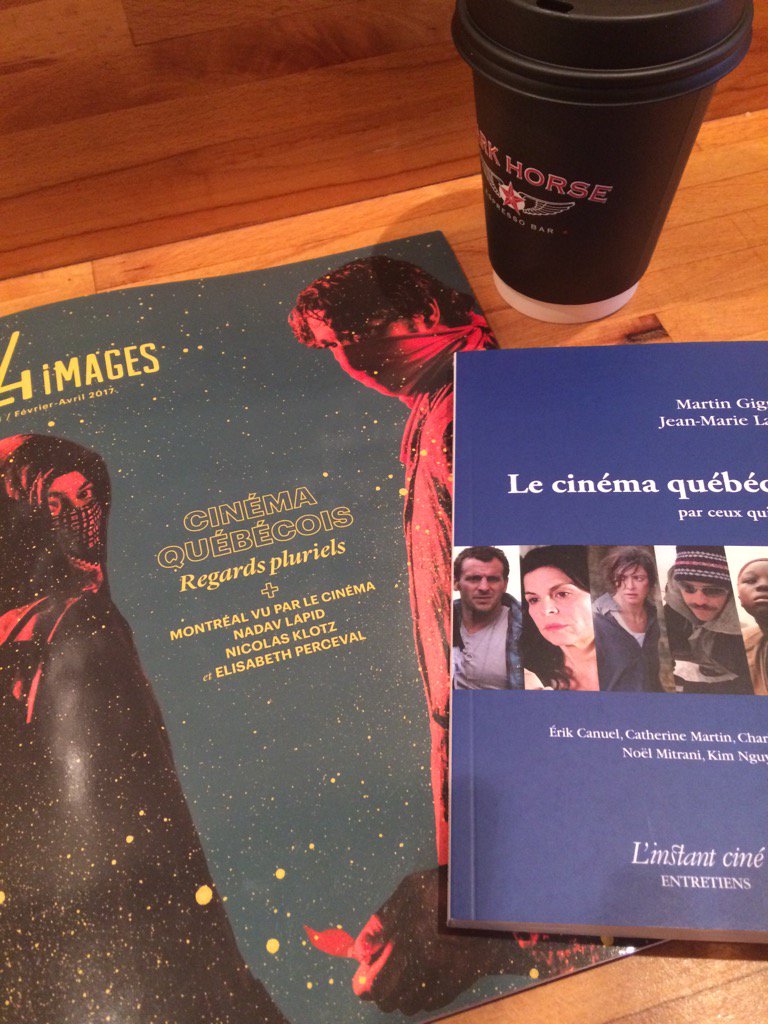
The new issue of
24 Images takes stock of some of
these developments in the Québécois context through its new dossier Regards pluriels. In it there’s an essay
by Bruno Dequen on the future prospects of these smaller films in face of the shrinking
attendance of public screenings. There’s a round-table with new voices in
Québécois cinema (to accompany their short films on the 24 Images produced DVD) that includes Jean-Guillaume Bastien, Loïc
Darses, Alexandre Dostie, Philippe David Gagné, Émilie Mannering and Rafaël
Ouellet (not the one who made Gurov and
Anna). A conversation between the critics Gérard Grugeau and Philippe Gajan
on Mathieu Denis and Simon Lavoie’s Ceux
qui font les révolutions à moitié n'ont fait que se creuser un tombeau.
Essays and reviews on Olivier Godin’s films, Sylvain L’Espérance’s Combat du bout de la nuit, Anne Émond’s Nelly, Sophie Goyette’s Mes
nuits feront écho, Zaynê Akyol’s Gulîstan,
terre de roses and Olivier Asselin’s Le
Cyclotron (many of which are playing at the Les Rendez-vous du cinéma
québécois).
Loïc Darses perhaps
best describes the context of this new generation of Québécois directors and their
hopefulness in the round-table. Darses writes,
I remember having these discussion when we aspired to be directors while we were still in film school. Even though we admire the films of Denis Côté, Anne Émond and Maxime Giroux we need to distance ourselves from them to exist. It’s a generation that went through certain disenchantment of globalization and that makes films about, among other things, mostly solitude. The problems haven’t disappeared but instead our generation rather transmits hope.
One of the nice
surprises in this issue of 24 Images
is to see Sophie Goyette’s first full-length feature Mes nuits feront écho, after two great shorts La ronde and Le futur proche,
get the appreciation that it deserves. Though small in terms of its production
budget, its multiple narratives follows three different characters in three
different countries as they search for themselves and try to reconcile with the spirits of their deceased loved ones. There’s a beauty, modesty, hopefulness and
ambition to Mes nuits feront écho that’s
rare among first features.
Well regarded
since its premiere, Ceux qui font les révolutions…
needs to be seen in a theater to be properly experienced. It’s fervor and
scope in portraying a group of young Québécois activist in the aftermath of the
2012 student protests is both inspiring and chilling. The 24 Images piece on it elaborates on its achievements and flaws,
critiquing it for not giving the population of Montréal enough credit (the
province throughout its history has shown more revolutionary fervor than any
other in the country), not offering any firm political solutions and for being
defeatist. Though I liked it more than them for its critical politics and its
tactile media form (e.g. graffiting a billboard, throwing a Molotov cocktail
into a restaurant) that seems new in this form to Québécois cinema. The insert shots in Ceux
qui font les révolutions… of a Montréal of leisure (as discussed by Marcel
Jean in 24 Images in the inaugural Montréal et Cinéma feature on La semaine dernière pas loin du pont),
which presents the quotidian of the urban social life, are especially
damning in the context of the film towards a more general cultural apathy and resistance towards direct
action. Denis and Lavoie discuss being inspired by Gilles Groulx.
Émond’s Nelly is both devastating and
fantastic. Similar to Jean-Marc Vallée’s Café
de flore, it’s devastating in its portrayal of youth, drug problems and
what’s it like to be torn apart by love. It’s fantastic for its direction of Mylène
Mackay, who plays Nelly Arcan, and the complexity of the character and her ability to be transformed into a star. There’s
a scene in the film where Nelly is describing her literary fiction, about her
previous life as a call girl, to her book publisher and says about it, ‘What’s
wrong with some imagination?’ After the bleakness of Les êtres chers, Émond with Nelly
aims towards new life experiences and aesthetic extremes. The result is
outstanding.
It’s this turn
to hope, extreme positions and grand affects that makes these new Québécois
films so stimulating.
It’s emblematic for these young filmmakers to actively persist to raise funds to complete
their projects and to pursue their vision. Though their multiple funding agencies including SODEC, Telefilm, NFB among other independent producers provide for them more economic resources than any other province.
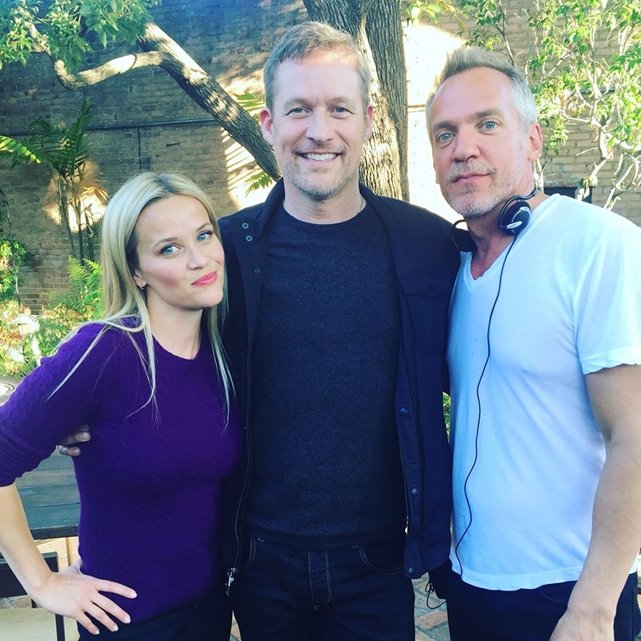 A new book Le cinéma québécois par ceux qui le font full of interviews with Érik
Canuel, Catherine Martin, Charles-Olivier Michaud, Noël Mitrani, Kim Nguyen and
Rafaël Ouellet shows how an older generation can be a bit too complacent in
the system while they complain about not being appreciated enough. (Though a
new title in the same L'instant même series Le Cinéma Québécois au féminin sounds a lot more interesting). A more positive example of an older generation director is someone like Jean-Marc Vallée, and to a lesser extent Denis
Villeneuve, who made the right decision for their career so that they could best expand their canvas by continuing to make the movies that they envision
by going to Hollywood. Big Little Lies is just the newest and most glorious illustration of someone
like Vallée’s skill.
A new book Le cinéma québécois par ceux qui le font full of interviews with Érik
Canuel, Catherine Martin, Charles-Olivier Michaud, Noël Mitrani, Kim Nguyen and
Rafaël Ouellet shows how an older generation can be a bit too complacent in
the system while they complain about not being appreciated enough. (Though a
new title in the same L'instant même series Le Cinéma Québécois au féminin sounds a lot more interesting). A more positive example of an older generation director is someone like Jean-Marc Vallée, and to a lesser extent Denis
Villeneuve, who made the right decision for their career so that they could best expand their canvas by continuing to make the movies that they envision
by going to Hollywood. Big Little Lies is just the newest and most glorious illustration of someone
like Vallée’s skill.
A new book Le cinéma québécois par ceux qui le font full of interviews with Érik
Canuel, Catherine Martin, Charles-Olivier Michaud, Noël Mitrani, Kim Nguyen and
Rafaël Ouellet shows how an older generation can be a bit too complacent in
the system while they complain about not being appreciated enough. (Though a
new title in the same L'instant même series Le Cinéma Québécois au féminin sounds a lot more interesting). A more positive example of an older generation director is someone like Jean-Marc Vallée, and to a lesser extent Denis
Villeneuve, who made the right decision for their career so that they could best expand their canvas by continuing to make the movies that they envision
by going to Hollywood. Big Little Lies is just the newest and most glorious illustration of someone
like Vallée’s skill.
All of this
discourse, production and screening opportunities, with 24 Images at the center of it all continues to make Québécois
cinema one of the best in the country. We’d be so lucky to have an equivalent of 24 Images, that's so invested in the art of cinema of its own city, here in Toronto. Though it’s surprising how there isn’t
necessarily a crossover of it to the other provinces (see: poll). Other Canadian
cities competing with Montréal for the best city for young Canadian filmmakers
include Toronto (probably its biggest competitor), Vancouver and Cape Breton. But I’d also be curious to discover more from other Canadian cities.

Though there’s
been recent films set near the Atlantic Coast (Closet Monster, Weirdos), it’s perhaps due to Ashley McKenzie’s Werewolf that there’s a revitalized
interest in the filmmaking of the Maritimes. Werewolf, similar to Andrew Cividino’s Sleeping Giant, revitalizes a somewhat bland community by focusing
on its youthful delinquency: the story of a young Methadone-addicted couple that eventually separates. It’s hard to properly get at what makes Werewolf so interesting. Some comparisons: Goin' Down the Road meets conceptual
art? The Nova Scotian equivalent of East
Hastings Pharmacy and Tower? Buffalo '66 meets the Dardenne brothers?
But perhaps most productively is to see Werewolf
as a personal film for McKenzie about witnessing the problems of her community
first hand and of having friends ripped away due to circumstances. It’s also
worth noting another Halifax filmmaker Heather Young whose two short films Fish and Howard and Jean also testify to the social problems and loneliness
afflicting their surroundings. Young’s Fish
is especially striking for following a single mother over a few years after
she gives birth to twins and it continues in Young’s tender manner to express the
loneliness that most people experience.
From Vancouver
the two most anticipated new films are Neil Bahadur’s directorial debut From Nine to Nine and Kurt Walker’s
follow up to Hit 2 Pass, S01E03. I’d
be curious to see how they look when they’re all done.
But perhaps the
biggest news from Vancouver is the success of Kevan Funk’s first feature, after the
two earlier short films Yellowhead and
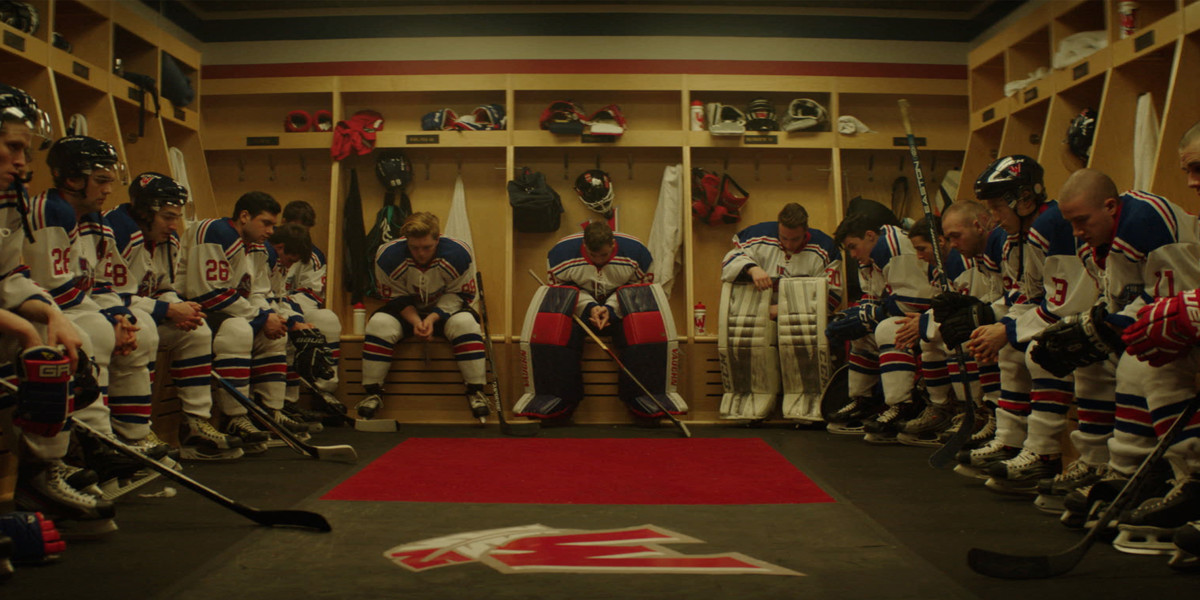
Destroyer, Hello Destroyer, which is now only getting its theatrical release
starting on March 10th. In a singular gritty style of medium shots and close-ups, full of shadows
and set in modest urban environments and harsh nature settings, Hello Destroyer closely
follows an up-and-coming hockey player (Jared Abrahamson) as his dream slowly
gets crushed. It’s especially critical of institutional practices that foster excessive masculinity and that hypocritically turns away from its victims when they are needed.
If there’s a
pessimism to Funk’s filmmaking as characters are slowly crushed by their
surroundings, an optimism can be found in one new Toronto work: the Zapruder Films produced nirvanna the band
the show (currently now on Viceland). It’s Matt Johnson’s ability to dream
and to imagine actually winning that
makes his work so uplifting.
But there’s also a
lot more exciting events and new projects in the works going on in Toronto. This
March: Kazik Radwanski’s How Heavy This
Hammer is now on iTunes, Funk's film on the 10th, the Canadian Screen Awards (where Johnson, Funk
and Johnny Ma are nominated) on March 12th, Efehan Elbi and Aleksey
Matviyenko’s Rainfall is having its
Toronto premiere at the Canadian Film Fest on March 21st, and Sofia
Bohdanowicz’s Never Eat Alone is getting a theatrical and
some of her short films are playing on the March 25th. Here’s hoping that
Lev Lewis’s The Intestine, Daniel Warth
and Miles Barstead’s Dim the Fluorescents, Joyce Wong's Wexford Plaza, Rebeccah Love’s Acres and Claudia Hébert's Le Déni soon have their Toronto premiere. There are also some new
projects in either development or near-completion including those by filmmakers such as Fantavious Fritz, Mitch Greenberg, Antoine
Bourges and Isiah Medina. Here’s to better
times!

