Showing posts with label Empire 7 Cinema. Show all posts

Sunday, July 25, 2010

Mainstream Summer Movies

Cyrus (Jay & Mark Duplass, 2010)
*** (A Must-See)


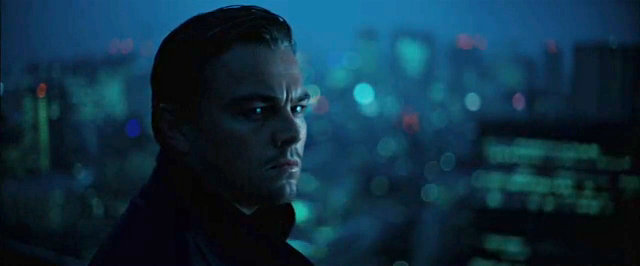
Inception (Christopher Nolan, 2010)
** (Worth Seeing)


This Movie Is Broken (Bruce McDonald, 2010)
** (Worth Seeing)

(World Exchange Plaza, Empire 7 Cinema, 111 Albert Street) &
(SilverCity Gloucester, 2385 City Park Drive) &
(Bytowne Cinema, 324 Rideau Street)

Thursday, February 18, 2010

Some New Auteur Films

The White Ribbon (Michael Haneke, 2009)
* (Has redeeming facets)


Dave Kehr writes about Michael Haneke as being a “finger-wagging sensationalist” and Richard Combs calls him the “pious admonisher”. These labels sum up my feelings towards Haneke and his misanthropy and distaste for humanity, specifically in his latest Palme d’Or winning film The White Ribbon. In it Haneke presents people: a priest; who can not fathom the cruelty in his own community even though he violently disciplines his own children, a father; who condescends and insults his non-marital lover and has pedophilic relations with his daughter, and children; who devastate their community by torturing their neighbors rich and the mentally disabled offspring. Haneke hypocritically looks down on these people, as if saying: look at you people (i.e., the characters, viewers, and humanity), you make me sick! This unearned air of superiority consistently leaves a sense of distaste, the viewing experience felt unnecessarily masochistic.

(Bytowne Cinema, 324 Rideau Street, 19/02 - 28/02)

*****

Shutter Island (Martin Scorsese, 2010)
* (Has redeeming facets)


Martin Scorsese’s Shutter Island, can be seen as being some-what inspired by Jacques Tourneur The Cat People (1942). I see it, as an alternative path Oliver Reed and Irena Dubrovna could have gone. Shutter Island also has the Tourneur-like quality of abstaining from violence while maximizing frights. It is interesting to see Mr. Scorsese finally make a film that addresses the Holocaust since he was originally supposed to direct Schindler’s list (1993) before trading projects with Steven Spielberg for Cape Fear (1991). And whatever happened to Martin Scorsese’s past collaborator Paul Schrader’s film Adam Resurrected (2008)? That seemed like another good film, also set in a post-WWII mental institute, which got lost finding distribution.

One of my criticisms is that one of the inspirations for the Teddy Daniels character was supposedly Dana Andrews from Otto Preminger’s Laura (1944). I do not really see any acting comparisons since Preminger’s long takes accentuated attention to gestures and small details, while Scorsese’s camera work and fast editing do not. All in all, Shutter Island leaves a lot to be desired but at times it is enjoyable.

(World Exchange Plaza, Empire 7 Cinema, 111 Albert Street, Opening 19/02)

*****

Invictus (Clint Eastwood, 2009)
*** (A Must-See)


Clint Eastwood’s 32nd film Invictus (2009) is a stimulating political drama about the true story of the president of the Republic of South Africa Nelson Rolihlahla Mandela (Morgan Freeman) uniting the post-apartheid country for the 1995 Rugby World Cup. The title of the film derives from a Wiliam Ernest Henly poem from 1888, Nelson Mandela used the poem for inspiration during his 27 year jail sentence as a political prisoner.

Clint Eastwood latest output has been historical revisionism. Invictus, Changeling (2008), Letters from Iwo Jima (2006), and Flags of Our Fathers (2006) are all about moments in time grounded in a precise place and where the events and communities surpass any one individual and the focus is that of social movements and political change. Invictus is about the blacks and whites of South Africa coming together - overcoming prejudices – for an international sport event, which becomes a catalyst for peace and unison.

Invictus obfuscates social realities and it does not address issues such as racisms, poverty, and the necessary political challenges Nelson Mandela had to overcome in achieving what he did for the country. Everything appears to be really simple for the president except for when he faints from being overworked and when he talks about being detached from his immediate family. And some scenes seem easy and unsubstantial including when the rugby coach Francois Pienaar (Matt Damon) “generously” gives a world cup final match ticket to his family's black house keeper or when the black and white presidential security officers make amends in the empty stadium. These are just a few minor squabbles in a story about an exceptional man that is well worth being told.

One reoccurring Eastwoodian theme is that of revenge. Clint Eastwood has been in the revenge business since early in his career with the Man with No Name and the Dirty Harrys’ onwards to Josey Wales and the Walt Kowalskis’. There has been a shift from his youthful vigilante justice to a more mature peaceful vocation. Nelson Mandela prevents the sports council decision of revamping the South African Springboks - a symbol of white power for the Afrikaans- rugby team early on in the film, as he believes it would cause more strife between ethnicities. Nelson Mandela as his new hero brings peace and understanding while promoting nationalism.

Drama is created out of the ordinary (i.e. a fast approaching van creates uneasy suspense), computer generated imagery fills a stadium to the rafters, and aerial views of Cape Town are breathless. All of these qualities and many others are proof that the 80-year-old director is a serious and artful chronicler and that his vast talent and energy has yet to be depleted. As Invictus shows, his best has yet to come.-David Davidson

(The Mayfair Theatre, 1074 Bank Street, 19/02 - 21/02, 24/02 & 25/02.)

Monday, December 14, 2009

Orson's Mercury Theatre Production

Me and Orson Welles (Richard Linklater, 2008)
**** (Masterpiece)


(World Exchange Plaza, Empire 7 Cinema, 111 Albert Street)

Wednesday, November 25, 2009

Splendid Melancholy

Fantastic Mr. Fox (Wes Anderson, 2009)
*** (A Must-See)


Wes Anderson's adaptation of Roald Dahl's Fantastic Mr. Fox, co-written with Noah Baumbach, is a splendid and wistful yarn. Mr. Fox and Mrs. Fox unhappy marriage, with their child Ash, an annoying runt, is the catalyst for Mr. Fox's mid-life crisis. He buys a new house; that he can not afford, is unhappy as a journalist, and regresses back to an instinctual bestiality and theft. The marriage between the Foxes is underlined with regret, and their son Ash is always being devalued. The animation is well done and there is a lot of attention given to small details (e.g., decorated apples, Mrs. Fox thunderstorm landscapes etc.), but I feel that George Clooney as the voice of Mr. Fox is a terrible miscast. That guy really irks me.-David Davidson

(World Exchange Plaza, Empire 7 Cinema, 111 Albert Street)

Sunday, October 25, 2009

Judaism + Nihilism

A Serious Man (Joel & Ethan Coen, 2009)
**** (Masterpiece)


(World Exchange Plaza, Empire 7 Cinema, 111 Albert Street)

Tuesday, October 6, 2009

Free Market Tribute

Capitalism: A Love Story (Michael Moore, 2009)
*** (A Must-See)


Documentary activist filmmaker Michael Moore`s Capitalism : A Love Story sets out to do a historical analysis on the current financial collapse. The aim being to create a cause and effect relationship in the United States of America from the Great Depression to the current Recession in regards to the effects and evolution of its socio-economic system.

The Franklyn D. Roosevelt administration (1933-1945) started in the Great Depression. A era of deprivations and rationing. In face of a turbulent landscape with social need insufficiencies president Roosevelt, in an important historical artifact, addressed the nation in a call for a “second Bill of Rights” proposing to insure the rights for a job, equitable pay and health care. The bill was never enacted.

In the post-war era, with the Harry S. Truman administration (1945-1953) and the Dwight D. Eisenhower administration (1953-1961), was the turning point for productivity, industrialization and development. These objective conditions were a result of the destroyed Eurasia infrastructure and accelerated government spending during the war. The destroyed German and Japanese nations were unable to participate in an international market which led to the booming American manual labor industry. The Marshall plan helped create new European countries progressive Bill of Rights. Germany and Japan reached an industrial level and started to have an innovative and competitive automobile industry. Their emergence on the international market had an adverse effect on the supply of American jobs. The negative effects of free-market capitalism took place which lead to General Motors cutting jobs. Flint, Michigan has been greatly devastated by the job loss of the closing of the General Motor factories which Mr. Moore explores further in his first documentary Roger & Me (1989).

Partly autobiographical, home videos of Mr. Moore`s childhood are woven throughout. Joyously bathing in the revolutionary and progressive spirit of capitalism of its day. Videos include his families touchstone moments of 1960 white middle class suburbia life. His father Frank Moore, an automotive assembly-line worker, was an employee at one of the now defunct manufacturing plants. Which he reflects upon with Michael when the two returns to its remains. He ruminates about the joys of working at the factory in a team.

The Ronald Regan era (1981-1989) shifted the American political-economic-social spectrum towards corporate sponsorship and reduced business regulations. In the third millennium the employment, wages, and healthcare of the working class has been decreasing and there is a 1% financial elite. To explore these relationships between individuals and society there are humanizing cases which he shows to represent the personal effects of larger economical and social shifts. There is an enduring concern for the difficulties of the working people and suffering population.

Capitalism : A Love Story is valuable in its ability to teach and inform. However it is guilty of facetious comparisons, manipulative filming, boorish antics, and an inability to come to a conclusion. Catholicism, through select preachers, also do some deriding. Mr. Moore opportunistically lavishes them with opportunities to scorn the most certainly atheistic Wall Street bankers. This gets tiring really quickly. Interest include underlining jobs of the lowly service workers which are created by capitalism. The positions include a carpenter who boards up houses, a sign salesman that specialized in foreclosures and guards that are always pushing Mr. Moore aside. The psychological implications of their occupations are interesting. Ultimately, a criticism of the profit system is still noteworthy at any cost and this documentary is sure to inform and broaden one’s mind to the context of the world we live in. It is a great opposition to inferior popular media coverage and press publications which regrettably dominate our culture.–David Davidson

(World Exchange Plaza, Empire 7 Cinema, 111 Albert Street)

Wednesday, September 23, 2009

A Subsection of the Corrupt and Mundane American Corporation Topography

The Informant! (Steven Soderbergh, 2009)
** (Worth Seeing)


(World Exchange Plaza, Empire 7 Cinema, 111 Albert Street)

Tuesday, August 4, 2009

American-Iraqi Action War Film

The Hurt Locker (Kathryn Bigelow, 2008)
****(Masterpiece)


(World Exchange Plaza, Empire 7 Cinema, 111 Albert Street)

Wednesday, July 8, 2009

Comical Cynicism

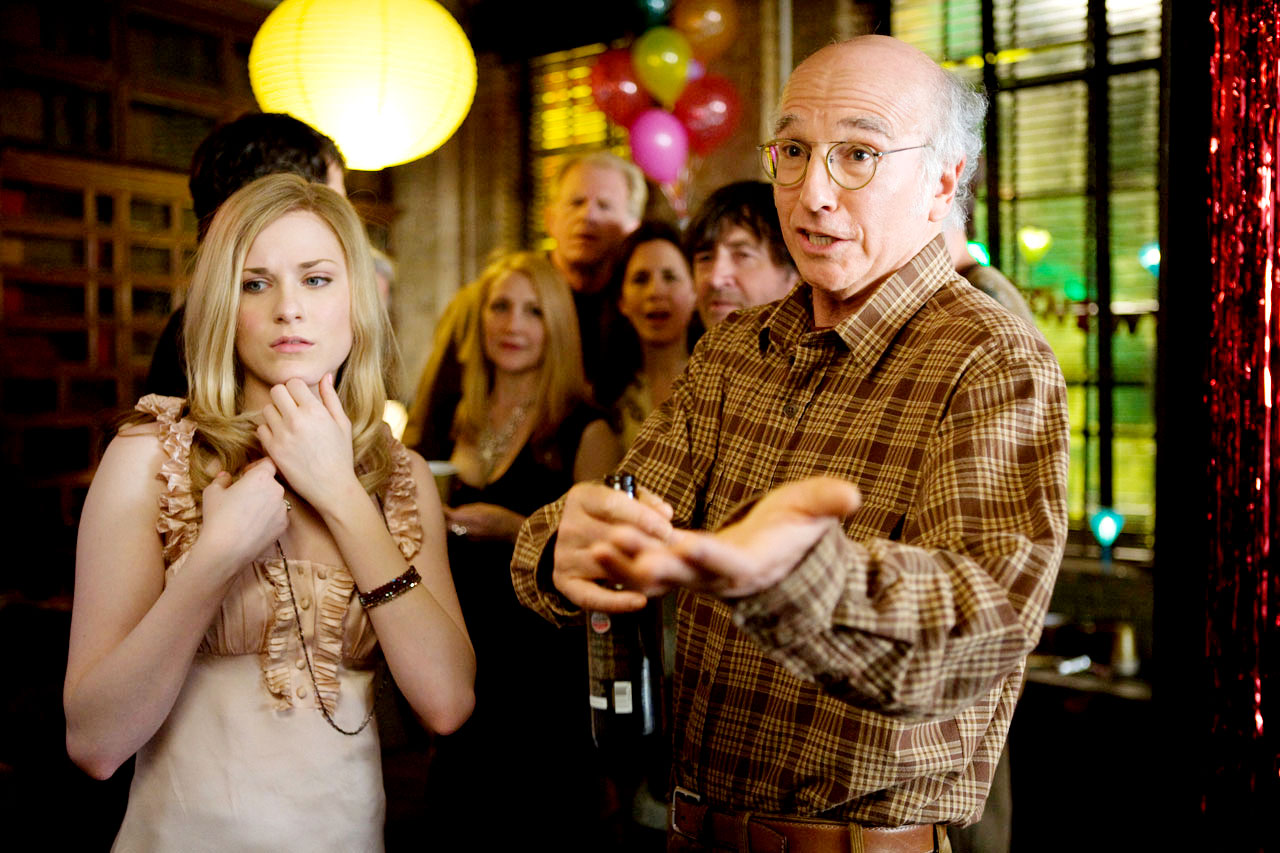
Whatever Works (Woody Allen, 2009)
*** (A Must-See)


(World Exchange Plaza, Empire 7 Cinema, 111 Albert Street)

Thursday, July 2, 2009

American Action Fare on the Current Economic Drought

The Taking of Pelham 1 2 3 (Tony Scott, 2009)
** (Worth Seeing)


(World Exchange Plaza, Empire 7 Cinema, 111 Albert Street)