Showing posts with label Canadian Film Institute. Show all posts

Sunday, June 27, 2010

Another Month (Horror and Action Movies)

July Film Listings

Bytowne Cinema
This Movie is Broken (Bruce McDonald, 2010) 30/07 – 5/08.

Mayfair Theatre
Day of the Dead (George A. Romero, 1985) 02/07.
Cruising (William Friedkin, 1980) 3/07.
The Wild One (Laslo Benedek, 1953) 26/07.
Short Cuts (Robert Altman, 1993) 27/07.
Dillinger (John Milius, 1973) 31/07.

Canadian Film Institute
The Idiot (Akira Kurosawa, 1951) 10/07.
Torossian Short Film Programme I 15/07.
Torossian Short Film Programme II 29/07.

Cinémathèque Québécoise (Montreal, QC)
Fantasia
Ken Russell Retrospective

Doc Films (1212 East 59th Street, Chicago, Illinois, USA)
A Child's Garden and the Serious Sea (Stan Brakhage, 1991) 17/07 7:00PM.

*****

Here is protest footage for the Toronto G20 meeting:


Saturday, June 26, 2010

Fringe Film Revery

Stone Time Touch (Gariné Torossian, 2007)
**** (Masterpiece) *Filmmaker in attendance


"These home-made quilts show a world of pictures in delirious collision. This personal archive is also an image of home, because Torrosian insist that our histories of looking, canonized in museums and picture books have offered us a landscape where we have learned to recognize ourselves." - Mike Hoolboom

(Canadian Film Institute, Library and Archives Canada, 395 Wellington Street, 26/06, 6:00PM)

Wednesday, June 16, 2010

Cinema of Israel

Ajami (Scandar Copti & Yaron Shani, 2009)
*** (A Must-See)


Lebanon (Samuel Maoz, 2009)
* (Has redeeming facets)


As-Salāmu `Alaykum, Scandar Copti and Yaron Shani’s Arab-Israeli crime thriller Ajami (2009), named after the neighborhood in the Jaffa district in Tel Aviv, is an intertwined tale of Arab adolescents and young adults who deal with the dissent neighborhood crimes and tensions. The characters are various. Omar (Shahir Kabaha) is coping with a fatal family rivalry. Malik (Ibrahim Frege) is an illegal immigrant working at a friend’s restaurant. Binj (Copti) wants to peddle a bulk of cocaine. A policeman, Dando (Eran Naim), suspects his brother to be dead. Nasri (Fouad Habash), Omar’s younger brother, is a seer cartoonist that draws out everyone’s fate.

Ajami is tactful and inquisitive as it’s five divisive chapters provide varying perspective on the event of a drug deal gone awry with a shooting. Though there are intertextual allusions to American action films, the multiple perspectives reiterates the complexities of the issues at hand and reminds the viewer that whether in film or in a news article, things are a lot more multifaceted then it would appear at first glance. Ajami also provides an interesting perspective on the Israeli society as it portrays the Arab population to be divided between Muslim- and Christian-Arabs as well as Israeli and non-Israeli Arabs.

Ajami really makes one identify with the Arab population as human beings and provides a portrait that is uncharacteristic of recent media portrayal. The characters experiences are complex, as they have to deal with life impending threats, dangerous family history, perpetual cyclical feuds, social inequalities, class differences, anxieties of blooming romances, untenable medicine bills, risks of illegal immigration and tainted drugs. The film excels at portraying a window of the Arabic and Hebrew speaking Jaffa neighborhood residents. It does so in showing the dress of these men (i.e. desert-wear and sport shirts) and the behaviors and sights, like guys sitting around smoking hookah surrounded by wandering sheep and geese. All the while the story has a strong humanist belief of care and appreciation between family and friends as the emotional center lies in the personal warmth and support between people.

Ajami won the Wolgin Prize for best feature film at the 2009 Jerusalem Film Festival and won the Caméra d'Or Special Mention at the 2009 Cannes Film Festival.

*****

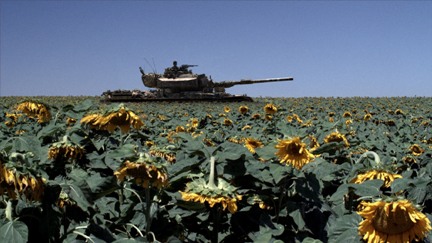
While Samuel Maoz’s Lebanon (2009), which won the Golden Lion at the Venice Film Festival, tells the story of Israel Defense Force soldiers in a tank at the start of the 1982 Lebanon War. The young soldiers include a driver, the turret loader, the gunner and the commander. Without portraying any context Lebanon unapologetically drifts in the obscurity and obscenity of warfare without providing any redeeming values for anyone. It feels like a film made by someone who lived through the trauma, an emphasis on the shooters eye looking at atrocities through his crosshair, and whose posttraumatic stress pushes any trace of humanity out of the movies existence.

It’s daring aesthetic quality is that the story is told from inside of the sweaty and oily tank, without leaving the claustrophobic confines except for the films introduction and bookend conclusion in the same striking decaying sunflower field. Objects are used as visual stand-ins as a crying halved horse or hanging meat to represent the sadness and casualties of the warfare. In a destroyed travel agency pictures of a Paris, London, and the New York City skyline, with the twin towers in full bloom, represent the international community. Lebanon works as a form of history revisionism as it is not heroic or nationalist as it posits that war is hell, especially for these twenty-something-year-old soldiers.

At the core of Lebanon is an emotional maladaptation, which one hopes can be attributed to Samuel Maoz direction and not to a social malaise associated with mandatory three-year regular service in the IDF. This emotional maladaptation is overriding in every moment and results in the films series of conflict. Even before combat starts there is petty feud within the tank over who should stand on guard. While later on expressed in a monologue one of the soldiers describe finding out about his fathers death by his grade eleven female teacher and recalls how he got a hard-on from being hug by her and that he uses the hug opportunity to eventually ejaculate. These soldiers manifest the cold recurring motto stamped in Hebrew on the tank “Humans are made of steel, Tanks are made of trash.”

These piss-poor recollections of wartime combat shroud any sign of benevolence out of the Lebanon War as well any possible humanitarian future efforts. Even the Christian Phalangist militia, who is assumed to want to help a detained Syrian war prisoner, utters him death threats. International law is dismissed, as “phosphorous” gas is renamed “flaming smoke.” All of this is made even sicklier with the miserable twist ending as the soldier, who sent home a message that he was ok, dies as they are informed his parents received it. These obscenities stick out in contrast to Ajami as that film was interested in sympathizing with the Arab plight while Lebanon is more interested in using them as crosshair targets.

These two films are a cultural production of an Israeli social consciousness similar to how South Korean director Bong Joon-Ho’s Mother (2009) presents a cultural product of a Korean reality. Though Mother is not necessarily about the North and South Korea rivalry. In the wake of the North Korea attack on a South Korea Warship in March killing 42 people. Mother, other then being a gripping thriller of a mother trying to take care of her mentally delayed grown-child, posits a reversal of expectations where the layman son turns out to be more rational then the delusional and violent mother authority figure.

The national cinema of Israel has gone a long way since Yom Ha'atzmaut, the inauguration of the Jewish State, in May 14th 1948. What Lebanon and Ajami, and other recent Israeli films like Waltz with Bashir (2008), Beaufort (2007), The Band’s Visit (2007), or The Lemon Tree (2008) demonstrate is that the country has developed a sustainable feature-film production infrastructure. These films win prizes at prestigious film festivals circuits and get mainstream Academy Awards nominations. With a topical spirit in content, a palimpsest of historical influences, and working on a collective Israeli memory contribute to create these individual works that provide a different position on a country that is being internationally negatively portrayed right now by the Prime Minister of Israel Benjamin Netanyahu’s high-handed policies through the mishandling of the Gaza Strip and prevention of resources of the Free Gaza Movement flotilla ships. These films, many of which are playing at the Library and Achieves Canada as part of the Israeli Film Festival organized by the CFI, broach some of the countries contemporary issues, convey a divergent narratives and if they are done right can increase the knowledge one has about Israel and can be a catalyst for more peaceful relations.-David Davidson

(Quartier Latin, 350 Rue Emery, Montreal, QC) &
(Canadian Film Institute, Library and Archives Canada, 395 Wellington Street, 13/06)

Monday, June 7, 2010

Spielberg, Dreyer, von Trier

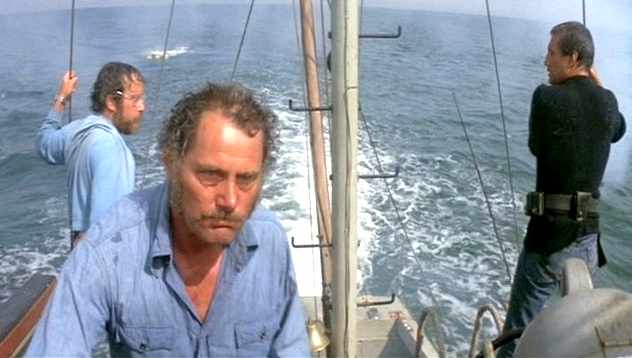
Jaws (Steven Spielberg, 1975)
*** (A Must-See)


1941 (Steven Spielberg, 1979)
*** (A Must-See)


Close Encounters of the Third Kind (Steven Spielberg, 1977)
** (Worth Seeing)


(The Mayfair Theatre, 1074 Bank Street, 08/06 & 14/06)

*****

Day of Wrath (Carl Theodor Dreyer, 1943)
**** (Masterpiece)


(Canadian Film Institute, Library and Archives Canada, 395 Wellington Street, 12/06)

*****

Breaking the Waves (Lars von Trier, 1996)
*** (A Must-See)


(Bytowne Cinema, 324 Rideau Street, 21/06 – 22/06)

Thursday, May 27, 2010

A Busy June (And What I Will Be Doing)

June Film Listings

Bytowne Cinema
Punishment Park (Peter Watkins, 1971) 14/06 – 16/06.
Sweetgrass (Ilisa Barbash & Lucien Castaing-Taylor, 2009) 18/06 – 22/06.
Breaking the Waves (Lars von Trier, 1996) 21/06 – 22/06.

Mayfair Theatre
Steven Spielberg Double Bill 08/06.
Close Encounters of the Third Kind (Steven Spielberg, 1997) 14/06.
Back to God’s Country (David Hartford, 1919) 25/06.
Prime Cut (Michael Ritchie, 1972) 26/06.
Canadian Cult Revue 30/06.

Canadian Film Institute
Day of Wrath (Carl Theodor Dreyer, 1927) 12/06.
Lebanon (Samuel Maoz, 2009) 13/06.
Drunken Angel (Akira Kurosawa, 1948) 19/06.
The Lower Depths (Akira Kurosawa, 1957) 25/06.
Stone Time Touch (Gariné Torossian, 2007) 26/06.

Movie Night at the Imperial
Written on the Wind (Douglas Sirk, 1956) 1/06.
Top Hat (Mark Sandrich, 1935) 29/06.

TIFF Cinematheque (Toronto, ON)
Personal Views: A Tribute to Robin Wood 18/06.

Cinema Beaubien (Montreal, QC)
Les Amours Imaginaire (Xavier Dolan, 2010) 11/06.

Saw Gallery
Lesley Marsland’s Science Fiction Comedy TBA.

*****

It is summer here in Ottawa and the weather is hot. Since completing my Bachelors of Arts with a Major in Psychology and a Minor in Film Studies at the University of Ottawa in April my activities can best be described as idling. A lot of my time is spent at coffee houses, movie theaters, and at bars. I have a few short-term contract jobs here including researching vocabulary and working memory in elementary school students, the production of a couple of educational tool videos, and my part-time gig at the CFI. These jobs help me get by, but If find I am somehow still increasing my credit card debt. Whatever.

Solo reading wise, I have been really enjoying reading Zoë Druick’s erudite Projecting Canada, government policy and documentary film at the national film board (2007), she writes in the book “It is my contention that the NFB represents a rarified site for examining the use of new communications technology (in this case, film) and a new film form (documentary) for education, nation building, and the governmental project of an administered welfare state.” I am also having a pleasure exploring Vidéographe’s box set Robert Morin, The Videomaker’s Journey (1976-1997). Robert Morin and Lorraine Dufour output for their Coop Vidéo de Montréal is rich and compelling.

It looks like there are going to be a lot of worthwhile films going to be screening this month. Cool. Just browsing through my June Film Listings I am partly interested in writing about my friend Lesley Marsland directorial debut, it is supposed to be a twenty-minute sci-fi comedy; Back to God’s Country with the great Nell Shipman and which the film guide describes as “the earliest surviving Canadian feature film from 1919”, there will be live music by Mike Dubue; If I can make it out to it I would be interested in putting my thoughts out there on Xavier Dolan’s remake of François Truffaut’s Jules and Jim (1962), Les Amours Imaginaire (2010); and finally I eagerly anticipate Ottawa’s premiere of Gariné Torossian essay film narrated by Arsinee Khanjian Stone Time Touch (2007), which also includes a book with a contribution by Scott Birdwise. If you are at all interested in reading about the other films I am sure you can find analysis of them in the writings of Robin Wood, Joseph McBride, Cinema Scope, and Jonathan Rosenbaum.

I am also happy to hear Apichatpong Weerasethakul’s newest film Uncle Boonmee who can Recall his Past Lives (2010) won The Palme d’Or. Joe is ever adventurous in his projects and his work recalls the mysticism of Andrei Tarkovsky. I liked how his film Tropical Malady (2004) spoke towards a distinct Thai experience while expanding on more universal themes of fright and loneliness in the search for a partner through its two narratives; one which is straightforward and the other an abstract re-rendition.-David Davidson

Wednesday, May 19, 2010

Radical Polish Video Art

The Films of Artur Żmijewski (Artur Żmijewski, 1998 - 2007)
**** (Masterpiece) *Daniel Baird will be introducing the films.


Artur Żmijewski’s Them is a social experiment in a large warehouse flat that documents the archetypization of individuals into groups (i.e. conservatives, humanist, nationalist, liberals) and the confrontations that arise between each other. Each group consists of 4 or 5 members. Their tasks being to paint on a large white canvas a symbol of their collective groupthink. The groups paint a church, the word Poland in Hebrew, the Szczerbiec “the Jagged Sword” – a symbol of Polish Nationalism - with the Polish-flag colors across it in tape, and the word freedom. Each group member is then given a t-shirts to wear of their sign. In the following meetings - there are around five - each group is given access to alter one another’s paintings. These groups are providing their own portraitures of a nation with honesty through their rivalries and chaos.

It is noted in the Peter Kilchmann Galerie (Zurich, Switzerland) text for Them:
“In “Them” Artur Zmijewski refers to experiences from his time as a student of Professor Grzegorz Kowalski’s famous Kowalnia studio where he participated in an exercise called “The exercise” which taught dialogue and collective task solving using the language of visual symbols. Artur Zmijewski transforms this formula into an instrument where visual language illuminates social diversity and reveals pathological tendencies.”

Them in itself purports an opposition as the video is about the tearing apart of four groups of Poles and simultaneously about the groups being brought together on video. Mr. Żmijewski is the sovereign within this experiment as he creates these camps of people; extending himself into their everyday through his instructions. He gives the right to create and to destroy the art works. There is a recurrent demonstration of Mr. Żmijewski’s speculation on the administration and regulation of a population. This theme is noticeable in his earlier film In Eye for an Eye where he shatters the notion of normality as he purports it as a social construct by meshing the abled with the disabled.

The societal crosses into the private as the Polish youth confront the seniors on the virtues of the church, deriding them, to the point that they leave one of the meetings early. The youth cannot understand this emphasis on the church due to it contributions/ignorance to the mass termination of the Jewish population during the WWII (similarly to the title of Mr. Żmijewski’s book If it happened only once it’s as if it never happened [2005]; referring to the Holocaust). This is emphasized with the cameras lingering on a painted swastika. The confrontation comes to a climax as the participants start cutting – and not cutting - each other’s t-shirts and making large-scale canvas fabric airplanes and throwing them out of the window.


The diversity really challenges the notion of a national Polish history, as for each group, Poland, represents something entirely different. This is telling especially for a country known for its endurance with dealing with hardships, which includes the death of Polish President Lech Kaczyński and other parliament members in the aircraft crash on April 10th 2010, the Katyn forest Stalin led execution of 20,000 military officers and intelligentsia, the Nazi Germany Invasion of Poland on September 1st 1939 that marked the start of WWII, and its perseverant Medieval Age period that included an unstable sense of selfhood due to invasions by Germany, Austria, and Russia.

Art critic Daniel Baird is astute in his observation on Poland and the films of Artur Żmijewski when he writes “The tragedy of Jewish history in Poland often seems to be an affront to Poles’ own well-developed sense of betrayal and victimhood” and “national identity, religion, and what can only described as the palpable absence of Jews are divisive themes in contemporary Polish art, and no one has confronted them with the boldness, rigor, and simplicity of Artur Zimijeski.”

Mr. Żmijewski does not really fall into easy categorization relative to Polish cinema, say, compared to people like Andrzej Wajda or Krzysztof Kieślowski, as though they all deal with similar themes like moral anxiety, cultural complexity, and soviet occupancy; he does so abstractly and through termite art tactics and aesthetics. With his handheld camera with a naturalistic non-manipulated setting, mixture of bitter comedic irony mixed with detached social criticism; Mr. Żmijewski aligns himself more to the Dogme 95 movement, specifically the Dane Lars von Trier and his film The Idiots (1998). While Mr. Żmijewski undermining of the idea that Poland is a land of brotherhood and unity as he showcases a more multifaceted portrait is similar to the subversive Yugoslavian Black Wave director Karpo Godina whose aims run parallel in Litany of Happy People (1971), which is set it Vojvodina, Serbia.


While Mr. Żmijewski’s easily malleable camera, experimental nature of his body of work, use of shock tactics and fragrant use of nudity, and overall sense of controlled disturbance puts him, I think, as the Polish counterpart to the Montreal experimental-documentarist Donigan Cumming. Both of their latest work, Mr. Żmijewski’s Them and Donigan Cumming’s Too Many Things (2010), are natural progressions of their radical approach as they intensely render their interested in art history, experimenting with new approaches, and surrogating their position through their collaborators. While Mr. Żmijewski interest in the body and rituals is reminiscent, and extends the work, of 1960s Polish performance artist Zbigniew Warpechowski; the avant-garde artist from the marshy plains of Volhynia.

Another focal interest of Them is the idea of art in Poland, from past generations onto the present. With new generations picking up paintbrushes – or video cameras – the work of the past gets reevaluated and meanings changed from a contemporary perspective. Mr. Żmijewski physically demonstrates this shift as his exercise takes national art-history proportions as the canvas’s get defaced through scissors and fire and then reconstructed with new layers of paper on top of the old.


These works have the quality of mythologizing Polish social consciousness. In The Game of Tag half-a-dozen naked people slap each other in a concrete den; the setting of the unmarked den shifts from a gas chamber and a basement. In KR WP former national guards march by a war memorial and then naked in a aerobics room; a historical undressing of sorts, that critics posit to represent that the WWII soldiers and war criminals were normal people who were following a set of rituals. These videos if not anything else really problematize Polish art and Polish society as it presents a micros-cosmos of the country. Mr Żmijewski mechanically captures this national discourse, and the fun and unease arise from seeing his participants loose themselves in his trap.

*****

The films of Artur Żmijewski (not to be mistaken for the Polish actor who shares the same name) were projected at the Library and Achieves Canada, hosted by Saw Video, introduced by David Bairns, and included Them (2007), The Game of Tag (1999), KR WP (2000), and An Eye for an Eye (1998); Mr. Żmijewski newest film Democracies (2009) was not screened. Born in Warsaw in 1966, Mr. Żmijewski has studied extensively throughout Europe, his breakout film being An Eye for An Eye, which won the first prize in 2000 at the Guarene Arte.-David Davidson

(Canadian Film Institute, Library and Archives Canada, 395 Wellington Street, 21/04, 8PM)

Thursday, April 29, 2010

Café Ex: Winnipeg Nostalgia

Memory Work: The Films of Cecilia Araneda (Cecilia Araneda, 1998 - 2010)
**** (Masterpiece) *Director in Attendance


(Club SAW, Café Ex, 67 Nicholas Street, April 29th 7:30PM)

Thursday, April 15, 2010

DiverCiné: Romania under Ceauşescu

Contes de l'Age d'Or (Cristian Mungiu, Ioana Uricaru, Hanno Höfer, Rãzvan Mãrculescu, & Constantin Popescu, 2009)


(Canadian Film Institute, Library and Archives Canada, 395 Wellington Street, 17/04, 7PM)

Sunday, March 28, 2010

Studious April Distractions

April Film Listings

Canadian Film Institute
Le Jour Avant Le Lendemain (Marie-Hélène Cousineau & Madeline Ivalu, 2009) 11/04.
Contes de l'Age d'Or (Cristian Mungiu et al, 2009) 17/04.
Revanche (Götz Spielman, 2008) 24/04.

Bytowne Cinema
Les Vacances de M. Hulot (Jacques Tati, 1953) 9/04 - 13/04.

The Mayfair Theatre
The Robe (Henry Koster, 1953) 3/04.
Army of Darkness (Sam Raimi, 1992) 10/04.
Naked Lunch (David Cronenberg, 1991) 25/04.

Cinémathèque Québécoise (Montreal, QC)
Greed (Erich von Stroheim, 1924) 23/04.
Greed: Reconstruction (Erich von Stroheim, 1924) 25/04.
Blind Husbands (Erich von Stroheim, 1919) 30/04.

Wednesday, March 17, 2010

Toronto Palliative Care Ward

Dying At Grace (Allan King, 2003)
**** (Masterpiece)


Allan King was one of Canada’s, and the world’s, great vérité documentary filmmakers. He died of cancer in 2009. Mr. King’s actuality dramas were fly-on-the-wall documentaries examining relevant issues through astute portraits of raw psychology. Mr. King was a strong advocate for a Canadian national cinema and his filmography includes critically acclaimed National Film Board documentaries and Canadian fiction films: Skid Row (1956), Rickshaw (1960), A Married Couple (1969), Warrendale (1966), Who Has Seen The Wind (1977), and Whose In Charge (1983). Jean Renoir described him in a letter to Allan King’s publicist as “a great artist” after seeing Warrendale.

In Dying at Grace (Rated #7 in the Macleans top ten Canadian films of the 00’s list), Allan King and his director of photography Peter Walker unobtrusively record the process of dying at the Salvation Army’s Toronto Grace Health Center. Over the course of one winter the film follows five terminally ill patients in its palliative care ward, which is a treatment that concentrates on the reduction of disease severity and suffering. The patients decide what kind of treatment is right for them, which includes declining life support, to smoke cigarettes etc. It is a relevant Canadian subject as the publicly funded health care system is an integral quality of Canada’s political and social infrastructure.

The patients in Dying at Grace are Joyce, Eda, Carmella, Rick, and Lloyd. They all differ in gender, age, ethnicity, sexual orientation, profession, and outlook. The patient’s presence represents lived experiences. The Italian-Canadian Carmella in her home country picked tomatoes to support her family, Lloyd is a minister and his partner Norm desperately hangs bedside with him, Joyce’s life since childhood has been filled with death, Rick used to be homeless drug addict and now has fits of paranoia, while Eda is perseverant as her health fluctuates and her closes relationship is with her step-brother. As some film-critics have noted, Dying at Grace with its treatment of the elderly completes Allan King’s trilogy of man, witch began with childhood in Warrendale and continued onwards to adulthood in A Married Couple.

The diagnosed terminally ill patients go through what psychiatrist Elizabeth Kübler-Ross describes as the five stage model to deal with grief. The stages are denial, anger, bargaining, depression, and acceptance. The patient’s experiences and feelings are shown through conversations with the staff, revealing their subjective descriptions of their phenomenology, while the medical staff objectively describes their behavior in an overheard audio recording. The staff also is perceived to be in pain, as the young nurses look worn-down due to the intensity of their surroundings. The older staff seems both more resilient and ambivalent as they provide authentic support and contact comfort, however desperate the patient’s situation.

The cinematography and dialogue at time adds depth and irony to the people and surroundings. Eda is offered a one-year gym membership, though she will probably not live for that long. Watches and calendars are constant reminders of the impending cessation of life. The walls of the rooms and hospital are filled with images of past lovers and family, tropical sunsets, and television shows filled with “healthy normal people”. There is an apt visual metaphor of Joyce sitting in the shadows, this is a documentary of the people who are brushed over, who are soon forgotten, and whose in place in society have been pushed to the margins - similarly to collaborators in the films of the Montreal social reality documentarist Donigan Cumming.

Though the patient’s condition is fatal their situation is not all that bad. It is a miracle that they are there in a hospital setting. One can just imagine all the people who are not afforded this service. The scenes of the patients enjoying simple pleasures like reading, listening to portable music player, being with friends, praying, and recollecting their life experiences remind the viewer how similar we are to these people and how this transition is an inevitable meta-physical reality. The afterlife idea is accentuated by the morning-after-death establishing shots of the Toronto skyline with the CN has orange sunlight seeping down onto the city, increasing the intensity after each death.

Dying at Grace illustrates the multifaceted issue of death – a similar concept explored in Ottawa filmmaker Frank Cole’s A Life (1986) – as an inescapable haunting experience. In the exhaustive last scene, once all of the other patient have died, there is a close-up of Eda’s shriveling face on her bed sleeping. Her respiratory physiology is slowly deteriorating and with each breath and neck clench there are longer pauses, until they stop.-David Davidson

(Canadian Film Institute, Library and Archives Canada, 395 Wellington Street, 14/03, 7PM)

Wednesday, March 3, 2010

Stories of Struggle

Nurse.Fighter.Boy (Charles Officer, 2008) *Director in Attendance
*** (A Must-See)


Writer-director Charles Officer’s first feature film Nurse.Fighter.Boy - co-written by Ingrid Veninger - is a moving story of three Jamaican-Canadians during the last week of summer in Toronto. The story follows a boxer, Silence (Clark Johnson), a nurse, Jude (Karen LeBlanc), and her adolescent son Ciel (Daniel Gordon). It was partly financed by the Canadian Film Centre. Nurse.Fighter.Boy is in competition for 10 Genies at the April 12th Canadian film award ceremonies. It the strongest contender with Denis Villeneuve’s Polytechnique, a film about the 1989 Marc Lépine massacre of 18 women at the École Polytechnique in Montreal. Nurse.Fighter.Boy was projected in Ottawa on March 6th at the Library and Achieves Canada as part of the CFI’s Emergence – New Canadian Independents series.

In Nurse.Fighter.Boy, Jude is from a family of Jamaican-Canadian nurses and is resilient in face of her sickle-cell disease. She does her best to look after her son. In the most moving sequence in the film, Jude is finally courted by Silence. She goes up to his place, they listen to a record (music, specifically Canadian music, plays a large role in this film) they slowly dance beside each other. They dance and then they kiss. All her troubles such as her illness, her deep worry for Ciel, her vulnerability, and her yearning are all somehow relieved. This cathartic moment is beautifully prolonged as we relish in the two hurt souls coming together. We enjoy their consolidation vicariously.

Charles Officer previous short When Morning Comes (2000) is an experimental film that touches upon gang activity in Toronto. Nurse.Fighter.Boy is a continuation of that theme with its emphasis on youth violence. Jude worries about her son when he gets into a fight at a park, later she tells him that he should always fight back. Her worrying increases when at the hospital she nurses a dying young adult, who reminds her of Ciel.

Silence runs the Exodus Fighters Gym, the previous owner Horace died of a heart attack. He teaches local kids to box, with an assistant trainer, and purports to be good role model as he denounces gun activity and looks after them when necessary. He still has to come to terms with his past as an illegal street fighter. After winning what-is-a-brutal fight, there is a close-up of the faces of all the on-looking African-Canadian adults. Afterwards Silence vows not to fight again and he tells the bookie to never again show up at his gym.

Charles Officer is best to be approached as a blooming Canadian counter-part of the American independent filmmaker Ramin Bahrani, the director of Goodbye Solo (2009), Chop Shop (2008), and Man Push Cart 2005). In the New York Times A.O. Scott classifies Ramin Bahrani as a “Neo-Neo-Realist” which is an extension of the 1940’s Italian Neo-Realism – a group of filmmakers whose films focused on the lives of the working class in a war-torn country – and is characterized by “Most of the scenes in the film take place outdoors, and while there is a clear, poignant story, it takes shape not through expository dialogue but through gestures, actions and details that the camera absorbs in long, patient shots.” This is an apt description for Charles Officer's style in Nurse.Fighter.Boy. The stylistic traits he does use are restraint and include heartbeat editing, heightening color, and isolating shots to change settings.

Charles Officer is part of the wider landscape of Canadian filmmakers whose narrative go against the archetype caucasian male protagonist. Other filmmakers include Zacharias Kunuk with the Inuit population, Denny Arcand and the Québécois, Atom Egoyan and the Armenian assimilationist, Deepa Mehta and Indo-Canadians, Léa Pool and her women protagonist, and Donigan Cumming with the socially-assisted poor. As a whole these filmmakers better demonstrate Canadian multiethnicity and diversity and it is these types of films that should be promoted and seen within Canada and abroad instead of the Canadian-Hollywood appropriators like Jason Reitman or James Cameron.-David Davidson

(Canadian Film Institute, Library and Archives Canada, 395 Wellington Street, 6/03, 7PM)

Monday, February 22, 2010

Old and New Canadian Films in March

March Film Listings

Canadian Film Institute
Dying At Grace (Allan King, 2003) 14/03.

Bytowne Cinema
J’ai Tué Ma Mère (Xavier Dolan, 2009) 19/03 - 25/03.
Inferno of Henri-Georges Clouzot (Serge Bromberg & Ruxandra Medrea, 2009) 17/03 & 18/03.
Chloe (Atom Egoyan, 2009) 26/03 - 8/04.

The Mayfair Theatre
Near Dark (Kathryn Bigelow, 1987) 12/03.
eXistenZ (David Cronenberg, 1999) 23/03.
The Frighteners (Peter Jackson, 1996) 26/03.

Cinémathèque Québécoise (Montreal, QC)
Donigan Cumming: Oeuvres Récentes (Donigan Cumming, 2003 - 2009) 17/03, 6:30PM.

Friday, February 12, 2010

Rural Agronomy

All Fall Down (Philip Hoffman, 2009)
**** (Masterpiece)


Philip Hoffman’s 94-minute All Fall Down - his first excavation in full-length features - is a lot of things. It is virtuoso exploration of a southern Ontario farmhouse, a meditation on the damaging effects of imperialism on Nahneebahweequa; a 18th century Canadian aboriginal land activist, as well as for George Lachlan Brown; Phil’s daughters biological father, and it is a diary film of experiences with his wife Janine Marchessault and step-daughter Jessie Marchessault. Though not a traditional documentary, the film incorporates the filmmaking process into it with shots of e-mails with correspondents and the behind-the-scenes activity involved in making All Fall Down.

Scott Birdwise writes in Rivers of Time: The films of Philip Hoffman (Edited by Tom McSorley. Canadian Film Institute Press, 2008) “I think that if we refer to Hoffman’s oeuvre as a kind of “first person cinema,” we can do so in the (implicit) terms of Agamben’s discussion of the melancholic and the schizophrenic, the obsessive neurotic and the epileptic”. All Fall Down expresses Gorgio Arcamben’s three different modalities of temporality: the past tense, the present tense, and the future tense. The past is being explored, the present is being lived, and the future after the exploration being suggested through his daughter Jessie.

Two indelible scenes in the film involve the Canadian landscape. One is long take of a personal skating rink in the back of a farmhouse. It is dusk and the sun is setting in the background. Phil takes a garbage can of water and throws it onto the ice. The surface glimmers as the sunset is projected and lights up the freezing water. The second scene is haunting drift on a river. Previously the film revealed Nahneebahweequa is now buried under a golf course and that her land has been surrendered to the government. George Lachlan Brown's car with all his belongings has been towed and he is left with almost nothing. The drift on the river is a haunting black and white shot where the camera originally jerks to the left, where the river would keep going, but then shifts to the right coming to a halt. This shot repeats itself. For me, it is representative of the two victims of a larger overbearing bureaucratic social system and their inability to cope within it. These are only two examples of meticulous visual scenes with interesting insight woven throughout the film.-David Davidson

(Canadian Film Institute, Library and Archives Canada, 395 Wellington Street, 13/02, 7PM)

Tuesday, February 2, 2010

Toronto Experimental Cinema

The World Viewed (Chris Kennedy, 2003-2006)
**** (Masterpiece)


(Club SAW, Café Ex, 67 Nicholas Street, February 4th 7:30PM)

Friday, January 29, 2010

Quality and Quantity February and the Double Bill at the Mayfair

February Film Listings

Bytowne Cinema
Groundhog Day (Harold Ramis, 1993) 01/02 & 02/02.
Antichrist (Lars Von Trier, 2009) 05/02 - 09/02.
Vertigo (Alfred Hitchcock, 1958) 07/02 & 08/02.
The White Ribbon (Michael Haneke, 2009) 19/02 - 28/02.

Café Ex
The World Viewed (Chris Kennedy, 2003-2006) 04/02.

Canadian Film Institute
All Fall Down (Philip Hoffman, 2009) 13/02.
Polytechnique (Denis Villeneuve, 2009) 20/02.

The Mayfair Theatre
Black Caesar (Larry Cohen, 1973) 06/02.
The Sexy Film Festival (?, ?) 12/02.
Casablance (Michael Curtiz, 1942) 14/02 & 15/02.
Play It Again, Sam (Herbert Ross, 1972) 14/02 & 15/02.
Invictus (Clint Eastwood, 2009) 19/02 - 21/02, 24/02 & 25/02.
Fantastic Mr. Fox (Wes Anderson, 2009) 20/02 - 23/02.
The Darjeeling Limited (Wes Anderson, 2007) 23/02.
Antichrist (Lars Von Trier, 2009) 24/02 & 25/02.
Some Like It Hot (Billy Wilder, 1959) 27/02 & 28/02.

Sunday, January 24, 2010

In Case of a Fire

This article was originally published November 27th 2009 here on Ottawa Film Review. It is slightly modified.-D.D.

The Adjuster (Atom Egoyan, 1991)
*** (A Must-See)


The internationally known Canadian artist and filmmaker Atom Egoyan will be in Ottawa on Thursday January 28th at 7PM at the Libary and Archieves Canada to introduce his 1991 fourth feature The Adjuster to accompany the official book launch of Tom McSorley's monograph Atom Egoyan's: The Adjuster (University of Toronto Press, $16.95).

Tom McSorley’s new book is a revealing examination of Atom Egoyan’s fourth feature The Adjuster. McSorley describes The Adjuster as “a dark drama about the complex and intense relationships between an insurance adjuster and his clients”. As the executive director of the Canadian Film Institute in Ottawa, Tom McSorley in the last couple of years has helped program screenings at the Library and Archives Canada of Atom Egoyan’s first and latest feature: Next of Kin (1984), and Adoration (2008). The book is part of the Canadian Cinema series whose goal is to “bring scholarly reflection on Canadian cinematic tradition and contemporary Canadian film”.

McSorley’s monograph on The Adjuster begins with a short history of Canadian cinema. The 1982 government Capital Cost Allowance (CCA) lead to the post-tax shelter generation of Canadian filmmakers who would spearhead a creative resurgence in national film. The Toronto Festival of Festivals - now more commonly known as the Toronto International Film Festival (TIFF) - emphasis on Canadian content (e.g., “The Northern Light”, “Perspective Canada”) was a launch pad for the Toronto New Wave filmmakers emerging work, Atom Egoyan at the frontline. McSorley connects The Adjuster with Egoyan’s first three films Next of Kin, Family Viewing (1987) and Speaking Parts (1989) emphasizing thematic continuity, an expansion from video to a Cinemascope widescreen and growing international attention. The analysis of the film is illuminating. Specifically its examination of the fire motif, the influence of the Italian director Michelangelo Antonioni, the absurdist theatre tradition, and finally pinpointing what exactly is the integral aspect of The Adjuster viewing experience. The quality of not knowing.

Tom McSorley’s monograph on The Adjuster came out in September and feels really fresh with its references to Adoration that was released in May 2009. The book launch at the 2009 TIFF, the programming of The Adjuster as part of the festivals “Open Vault” retrospective and an upcoming film Chloe emphasize Atom Egoyan importance as a Canadian filmmaker and rich body of work that has consistently been getting more international attention and quality appraisals. If you have not yet seen The Adjuster, it is well worth seeing. If you want to better appreciate it and understand its role in the context of Canadian cinema, read this book.-David Davidson

(Canadian Film Institute, Library and Archives Canada, 395 Wellington Street,28/01 & 6/02)

Thursday, January 21, 2010

Gilles Carle

La Vraie Nature de Bernadette (Gilles Carles, 1972)
*** (A Must-See)


(Canadian Film Institute, Library and Archives Canada, 395 Wellington Street, 22/01 & 24/01)

Wednesday, January 13, 2010

Library and Archieves January

A separate post on the Canadian Film Institue January projections as there are some really interesting films being programmed. La Vraie Nature de Bernadette (1972) by Gilles Carles-who died November 28 2009 at the age of 89, For The Love Of Movies: The Story Of American Film Criticism (2009) which will be definitly worth seeing just to hear what my favorite film critic Jonathan Rosenbaum has to say, and finally the most exciting event, the screening of Atom Egoyan's The Adjuster with the official book launch of Tom McSorley's monograph on the film and with an introduction by Mr. Egoyan himself. To read my thoughts on Tom McSorley's great book, my review can be found here.-D.D.

January Listings

Canadian Film Institute
La Vraie Nature de Bernadette (Gilles Carles, 1972) 22/01.
For The Love Of Movies: The Story of American Film Criticism (Gerald Peary, 2009) 23/01.
The Adjuster (Atom Egoyan, 1991) 28/01 & 6/02.

Wednesday, November 25, 2009

Modern French Cinema

Un Prophète (Jacques Audiard, 2009)
*** (A Must-See)


Jacques Audiard's Un Prophète story follows 19-year-old Malik El Djebena in prison as he cunningly works his way up through the hierarchy of a Corsican crime syndicate. Audiard claims that the film aims at "creating icons, images for people who don't have images, the Arabs in France", and he does so in a gripping prison-crime-thriller. Comparing it to other recent foreign language thrillers examining the relationship between crime and business; Slumdog Millionaire (2008)and Gomorra (2008), it stands out by being more visually inovative and stylish. The length allows for a greater examination of the multifaceted issues while avoiding easy simplifcations.-David Davidson

(Canadian Film Institute, Library and Archives Canada, 395 Wellington Street, 28/11, 7:00PM)

Sunday, November 1, 2009

DVD Watching November Confinement

November Listings

The Mayfair Theatre
Smash Cut (Lee Demarbre, 2009) 20/11.
The Last House on the Left (Wes Craven, 1972) 20/11.
The Polar Express (Robert Zemeckis, 2004) 28/11.
Double Agent 73 (Doris Wishman, 1974) 28/11.

Canadian Film Institute
Un prophète (Jacques Audiard, 2009) 28/11.