Showing posts with label Toronto. Show all posts

Tuesday, July 15, 2025

Fortescue at the Carlton (July 24-25-26)

 I’m happy to announce that I’ll me moderating a panel discussion with Rebeccah Love and part of the cast of Fortescue at its Thursday, July 24th screening at its Carlton Cinema screening (6:30PM). 

After its premiere at the Forest City Film Festival in the Fall and then a tour of Canada before finally having its Toronto premiere in June at Future of Film, these three screenings are a perfect opportunity for local audiences to come check out the film.

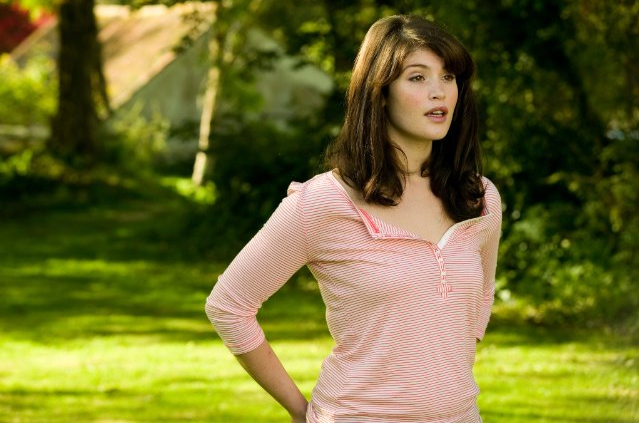
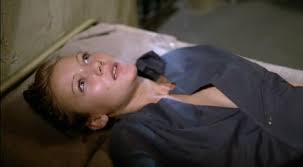
It’s a perfect summer film: Set in Haliburton, two best-friends, Lea (Kelsey Falconer) and Gabby (Chelsea Preston), one an actress and the other a playwright, idle in the sun, hang out by the water, meet neighbours and friends, rehearse, and one of their boyfriends, Kevin (Tyson Coady), even drops by.

Under the omnipresent heat, tensions of a crowded cottage, and stress over whether her new play will be a success things start to go awry for the three, and Lea’s past mental health problems slowly resurface.

By one of my favourite Canadian directors, it’s so great to finally discover her first feature-length film in her own city. I can’t recommend Fortescue enough!

Monday, August 27, 2018

Suggested Screening : A Woman's Block

Well August is almost over but summer doesn't officially end until September 22nd. So even though it's back to school and business for a lot of folks, why not try to enjoy the next few weeks to the fullest? Instead of packing up the outdoor gear and returning to a routine, it'll be good to relax and enjoy yourself and the city as much as you can while you still can. In the Toronto film community there's an exciting screening this week: Rebeccah Love is premiering her new short A Woman's Block, which has her team up again with Sarah Swire from Acres and is shot in her own neighborhood of Regal Heights but with a new improvisational style. It'll be on Tuesday, August 28th at The Pilot and it starts at 7:10PM sharp. There will be some special guests, too. See this great MUFF interview with Love for more information about the new short film and her process. Hope to see some of you there and enjoy the next few weeks!

Tuesday, March 20, 2018

Springtime in Toronto

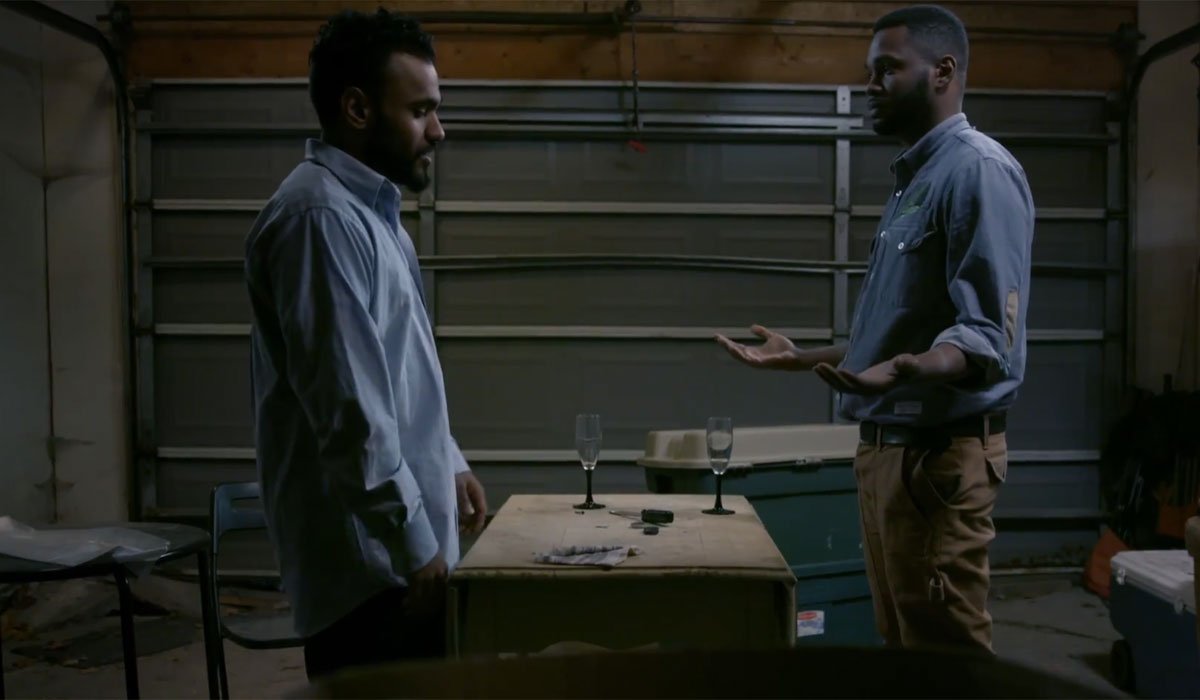
In Natty Zavitz’ Edging (now available on iTunes) a young man is in a period of transition in his life. Having just bought a house, he’s having a housewarming party with friends from throughout his life but where instead of hosting he’s stubbornly focused on a home maintenance problem in his garage. Edging is a tale of springtime in Toronto. Where the rest of the city, and the world too, is moving forward with confidence, after a harsh winter, in what should be a period of renewal, its protagonist Jordan (Shomari Downer) gets stuck on one of the immediate problems at hand: The garage door is broken. Throughout the film, old friends come and go, recollecting about their youth and current anxieties, while new acquaintances come through, enjoying themselves and getting into trouble, but for Jordan, to make sense of the confusion and chaos around him, he has to remove himself from the social center, contemplate and discuss, so that he can eventually regain self-confidence and grow.
            This narrative of anxiety and growth is a great metaphor for how I’m experiencing the Toronto film culture in the Spring of 2018. By all accounts it’s thriving: Every night there’s an exciting screening, on weekends a new festival and publications are putting forward relevant polemics. Some positive recent examples: There’s the publication of the new André Bazin’s Selected Writing, the film magazines Cahiers, Positif and Cinema Scope are on point, CBC’s new shows Workin’ Moms and Caught exceeded expectations, and there’s the upcoming What The Film Festival and Canadian Film Fest. Regardless of the problems in the world, the consensus seems to be that Toronto film folks are forming communities, pursuing goals and achieving results. All really great things.
            But sometimes it’s important to step back a little and figure out what you need to do before you can go out to join others.

Tuesday, February 21, 2017

Toronto 1971-1989 and Midi Onodera

Just a heads up that the AGO currently has an exhibition 'Toronto: Tributes + Tributaries, 1971-1989' that looks interesting. Would be curious for any thoughts on it if you've seen it? I'd probably go check it out in the next couple of weeks. As well the CFMDC will be presenting a series of screenings 'Personal Perspectives 1971–1979' to accompany it from March 9th to 12th. I'm particularly interested in the works in 'Geographies of Self and City' on Sunday March 12th at 2PM, which includes a film by Mike Hoolboom, who also just published a book on the Funnel film cooperative and was awarded the Governor General award, and Midi Onodera, whose vital The Displaced View (1988) just played at EMS and whose updated website offers a thorough sample of her filmography.

Sunday, May 27, 2012

Bruce Baillie and others (Experimental Cinema, Summer 2012)

To kick off their Summer program at the Lightbox, The Free Screen will be screening Bruce Baillie’s Quixote, "the Baillie film most in need of rediscovery" according to The Free Screen programmer Chris Kennedy, and All My Life with Arthur Lipsett’s 21-87, and Joshua Romphf’s Ride This Country (May 30th, 7PM), a portrait of a southern Ontario farm, with Romphf in attendance. The Free Screen summer schedule will also include the programs Liquid Metal (June 20th, 7PM), a series that explores the changing textures of new digital effects; Fractured Movement / Constituent Parts (July 18th, 7PM), whose centerpieces are the restored work of Los Angeles avant-gardist Gary Beydler, and with works by Alexandre Larose and Alexi Manis who will be in attendance; and Jonathan Schwartz: The Skies Can't Keep Their Secrets (August 15th, 2012). On the subject of experimental-films, there are also the Pleasure Dome screenings of the recent work of Basma Alsharif at A Space Gallery (June 2nd – July 14th); James Richards recent videos at Cinecycle (June 2nd, 7PM) and a conversation between Richards and Steve Reinke at The Power Plant (June 3rd, 3PM); a book launch and screening of the short movies of Emily Vey Duke and Cooper Battersby at Cinecycle (June 15th, 8PM) and artist talk with Mike Hoolboom (June 16th, 2PM); Robert Frank’s Me & My Brother at the Courtyard (July 21st, 9PM); an Open Screening at the Courtyard (August 11th, 9PM); and screenings of performance art curated by Johannes Zits at Artscape Gibraltar Point (August 19, 7:30PM). The next Early Monthly Segments will feature Ute Aurand, Ulrike Pfeiffer and Marie Menken at the Art Bar in the Gladstone Hotel (June 11, 8PM), as well they will continue their programming into the summer. As part of the TIFF Cinematheque First Peoples Cinema program, Kate MacKay programmed Chick Strand's Anselmo Trilogy a three-part look ath the Mexican native Anselmo Aguascalientes (July 11th, 6:30PM). And to keep up-to-date on all experimental film related screenings in Toronto make sure to keep checking out John Porter’s website super8porter.

***** 
To discuss Baillie it is relevant to bring up the book Radical Light: Alternative Film & Video in the San Francisco Bay Area, 1945-2000 as Baillie is most readily known as one of the grandfather figures of the San Francisco experimental film community.

The book Radical Light which is edited by Steve Anker, Kathy Geritz and Steve Seid is described by film critic Nicole Brenez as being "a scientifically and visually magnificent survey". The title, Radical Light, according to Seid, “emerges from this sense of a cinema that considers its origins in a substrate of emulsion and luminescence.”  And, according to Anker, “They were filmmakers, many of them not-so-recovered painters and poets, ill at ease with cinema as an entertainment but rather fondly fixated on the apparatus, the alchemy of light and chemistry, and their own eccentric admixture that might make this all art.” In the books two introductions by Seid and Anker, what is highlighted is the Bay Area's topography, from Anker’s introduction A Haven for Radical Art and Experimental Film and Video, the Bay Area “remains unsurpassed as a place where artists using film and video for personal expression choose to live.” The history of this art form, as Seid brings up in Form from the Fog: A Book Takes Shape, "begins in the late nineteenth century, in 1878 in nearby Palo Alto. It was then that Eadweard Muybridge began his pioneering experiments with the photographic image and the incremental improvements that would result in the motion picture.” The avant-garde film flourished in San Francisco after World War II with people like Sidney Peterson. In Scott MacDonald’s essay, Art in Cinema: Creating an Audience for Experimental Film, things started, in the fall of 1946, with the San Francisco Museum of Art which had a film series Art in Cinema, organized by Frank Stauffacher, that focused on “avant-garde films in modern art forms - surrealist, non-objective, abstract, fantastic.”” The series was called Art in Cinema which was “established to present a more vigorous and liberated attitude towards the film medium.”  The popularity of experimental cinema was connected not only with advantageous exhibition venues, but also with the educational institutions that taught production and appreciation of experimental film and video, and media arts centers that fostered it.

Baillie was one of the founding members of Canyon Cinema in 1961, “a nomadic group presenting underground programs in different settings, and developed into a small organization that presents a regular series, produced by artists and curators,” which was named after the small town of Canyon which is just outside of Oakland. Canyon Cinema later became the San Francisco Cinematheque.

Baillie, as Kennedy describes him, “has forged a singular path in his visionary explorations of the world, his exquisite treatment of light and fragmented storytelling influencing successive generations of like-minded filmmakers.” Radical Light includes a really nice artist page by Baillie, which includes a picture of him as a boy with his dog, a younger picture of him in an open field carrying a camera on a tripod, and a few colorful figural sketches. Michael Sicinsky's contribution, The Bay Area as Cinematic Space in Twenty-five Stops or Less, includes Baillie’s All My Life, and Sicinsky writes, “Bruce Baillie’s lasting achievement (in this and all his films) is his attention to the living surfaces of the physical world, the way he allows them to disclose themselves.” While in Canyon Cinema: The Early Years – Interviews with Bruce Baillie, Ernest Callenbach, Chick Strand, and Emory Menefee by Kathy Geritz, Baillie talks about the aura around the early screenings, programming criteria, and projection details. Bailie: “Years of fun, work, and thoughtful exchange, covering perhaps everything under the sun!” 

David Davidson
*****


“This visually exquisite masterpiece of minimal-budget, low-tech filmmaking has nothing to do with the Castro Street of San Francisco’s gay district, or with Fidel Castro of Cuba. Named for a Spanish land grantee, Castro Street, in Richmond, California, is a gritty industrial byway lined with refinery structures, railroad switchyards, omnipresent power lines, and the general detritus of modern heavy industry. Bruce Baillie, with his magical eye, has taken these unpromising materials and constructed a flowing lyric poem. Its steady rhythm of pans and dissolves is set by the ponderous motion of trains over a sound track bass line of industrial noises: bangs, regular beats, whirrs, clangs, toots. Baillie makes iris effects in the camera; he softens and blurs the imagery, perhaps with Vaseline on the lens; he distorts images, perhaps with mirrors; he catches a gorgeous palette of colors in the wasteland; he twists human voices into abstract sounds; he runs some images in negative color. This elegant playfulness combines the half-recognizable, the luminously abstracted, and occasional flashes of ordinary vision: train wheels, yellow earth-moving machinery, flowering lupines glowing purple, corrugated iron. Yet everything is carried along with the flow, the dance of exploration and perception: this is what we can see, if our inner eyes are open. Castro Street is a meditation on the reality of our industrial condition, not redeeming it, but transcending it." - Ernest Callenbach on Castro Street (1966)

Sunday, April 1, 2012

Images Festival 2012 (April 12-21)


“Here’s to you! Keep up the good work!” so says Jonas Mekas, from the Anthology Film Archives in New York, to the Images Festival in their new program guide. This cheer and delight seems like the general attitude felt towards Images, especially now since they are celebrating their 25th anniversary and that their program is consistently great, as it engages with the most contemporary avant-garde and activist work. The festival includes Images On Screen, so film and video. There are Images Off Screen which consists of installations at galleries spread out across the city. There are Live Images which embraces different performance traditions that are related to the moving images. There is going to be a Mediatheque and bookstore at Urbanscape Gallery and their festival space will be at 204 Spadina Avenue. As well there is going to be an online archive of Canadian video art set up at the iFpod section of their website, which sounds interesting (but whose url imagesfestival.com/ifpod isn’t up and running, yet).

Some other things that's good about Images includes, as Scott Miller Berry mentions in his welcome, that the festival has generous programming fees to artists, and that it takes a stand against the reigning festival “premiere policies”. The program guide also has a great essay Expanding Moving Pictures by Andrew “Andy” James Paterson, who has been attending the festival since it’s inception in 1988 (and who also, which I recently discovered, plays an angry journalist in John Greyson's Zero Patience), on the history and development of the festival. Some interesting comments from it include how Images grew out of the New Works Video Show (84-86) and Paterson seems very interested in the labels the festival has used to identify itself as it evolved, and how the festival grew and expanded over time, alternating venues, programmers and Artistic Directors.

To only scratch the surface of the rich work being programmed, I have compiled a list of work that I think will be well worth attending:

Talk To The Pie (Urbanspace Gallery):
- Defining Cinema Space (Friday, April 13, 3PM), Eric Veillette discuss what exactly constitutes a cinema. As well Veillette will also have an exhibition Toronto: Cinema City at the Images Hub on the history of the different movie theaters and repertories in this city.
- People and Places (Tuesday April 17, 3PM), Antoine Bourges, Lina Rodriguez and Myrium Yates discuss their filmmaking, the people they've met and the places they've been.
On Screen + Live Images:
- Marielle Nitoslawska’s documentary Breaking the Frame on the avant-garde artist Carolle Schneemann. Wednesday April 4, 7PM. The Royal Cinema.
- Lewis Klahr’s pop art dreamscape The Pettifogger. Wednesday April 11, 7PM. In collaboration with The Free Screen at the TIFF.Bell Lightbox.
- John Akomfrah’s The Nine Muses, which uses Homer’s Odyssey as a point of departure to explore the journey of Caribbean and African migrants of the 50s and 60s. Thursday April 12, 6:45pm. The Royal Cinema.
- Images 25th Anniversary 1998 Screening Part 1, which consists of Richard Kerr’s Last Days of Contrition, Jan Peacock’s Sirensong, and Frances Leeming’s Orientation Express. I am especially curious about Peacock’s Sirensong, after recently discovering her work at The Free Screen program Using Clouds for Words. Peacock in therethere is great at catching figures on a journey and creating a captivating motion in the changing background. While in Reader by the Window the malleable distortions of the landscape are a pleasure to behold. And the two of them seem to be fore-runners for what Blake Williams seems to be doing in his Coorow-Latham Road. Friday April 13, 8PM. Jackman Hall.
- Images 25th Anniversary 1988 Screening Part 2, which includes Marc Glassman presenting Vera Frenkel’s Censored:The Business of Frightened Desires (or the Making of a Pornographer). Thursday April 19, 9PM, Images at 204.
- The program Right Ascension, which is recent film and video from Toronto, curated by Selena Lee and Carly Whitefield, looks good, which includes Blake Williams' Depart, a transition work from his early performance based videos that also anticipates his digital road-trip masterwork Coorow-Latham Road; Clint Enns’ Connecting with Nature and Chris Kennedy’s Towards a Vanishing Point. Saturday April 14, 9:30PM. Jackman Hall.
- Ben Rivers, whose previous work is the meditative and lyrical Slow Action, returns with Two Years at Sea. Sunday April 15th, 9PM. Jackman Hall.
- The program A Place in the World is described as “These four films all reflect on distinct structures and environments drawing out qualities of space, time, architecture and weather.” In it Antoine Bourges (Woman Waiting) will have the Canadian premiere of his first medium-length film East Hastings Pharmacy which documents the routines between the pharmacists and clients of a methadone clinic in Vancouver’s Downtown East Side. Expect a longer review here on East Hasting Pharmacy closer to the screening date. Monday April 16, 7PM. Jackman Hall.
- James Benning’s look at Thoreau’s cabins and ideas in Two Cabins which is going to be in the program Two Movies, along with a piece by Elke Marhofer. Tuesday April 17, 9PM. Jackman Hall.
- Keren Cytter’s performance I Eat Pickles At Your Funeral (whose work is also showing at the Oakville Galleries). Thursday April 19, 7PM. Al Green Theatre.
- In the program Sidewalk Stories there are two shorts that look promising: Lina Rodriguez 75 seconds Protocol, a glimpse of a fortress wall in Cartagena, Columbia; and Kevin Jerome Everson’s Century which is a video of automobiles being destroyed that kind-of sounds like Gordon Matta-Clark’s Fresh Kill. Friday April 20, 9PM. Jackman Hall.
- Lav Diaz’s 360 minutes Florentina Hubaldo, CTE, which is a Philippine Dickensian portrait of poverty and suffering rooted in colonial trauma, which makes a great accompaniment to last year’s Vapor Trail (Clark) by John Gianvito.
- Yo La Tengo scoring an early silent film by Jean Painlevé of Jellyfishes and seahorses. Mantler will have an opening performance. Saturday April 21, 8PM. Toronto Underground Cinema.
All of the Off Screen works looks interesting but to only mention a few of them briefly there is Annie MacDonell’s The Fortune Teller (AGO), Deborah Stratman’s Tactital Uses of a Belief in the Unseen (2) (Mercer Union), Twinning Cities: AVALON (Bangalore and Toronto) (OCAD U), Kerry Tribe: Speak, Memory (The Power Plant), Gary Kibbins’s Girl Sitting on Blue Chair and Cop Out and A Short History of Water (Trinity Square Video), and Joshua Bonnetta’s Strange Lines and Distances (YYZ).

Tickets can be purchased online at imagesfestival.com or at the appropriate venue starting one hour before the event. Cheaper tickets for members.

Thursday, December 1, 2011

Ken Jacobs and Experimental Cinema (Toronto 2011)

So far 2011 has been a good year for experimental film in Toronto. To list some of the highlights: In collaboration between The Free Screen and the Images Festival the Lightbox hosted a book launch, with two screenings, of Radical Light: Alternative Film and Video in the San Francisco Bay Area, 1945–2000 with Kathy Geritz in attendance. Hot Docs programmed Allan Sekula and Noël Burch’s The Forgotten Space. The CFMDC and the Cinémathèque Québecoise released the complete work of Joyce Wieland on DVD, a first, and there was also an accompanying screening at Jackman Hall. Andréa Picard’s Wavelengths program (see: Bart Testa’s coverage) curated Ben Rivers’ Slow Action at Gallery TPW. Early Monthly Segments1 - a monthly experimental film series programmed by Scott Berry, Chris Kennedy and Kate MacKay - had an Owen Land memorial screening. The Pleasure Dome had the projection and book launch of Splitting the Choir; The Moving Images of Donigan Cumming, co-presented by Scott Birdwise. And to sidestep from these Toronto screenings, I went to New York for a week in October. Where I got to see Harun Farocki’s Images of War (at a Distance), which included Serious Games I–IV (2009–10). As well the Anthology Film Archives was having an Adolfas Mekas memorial retrospective where I got to see The Brig (1964).

Now to top off these screenings there were the Ken Jacobs' projections and performance in Mississauga2 and Toronto on November 18th and 19th, which was part of the University of Toronto Arts Council 2011 "Speaker in the Arts" Series. Where Jacobs’ held a Nervous Magic Lantern performance and screened his 00's digital work, including his much anticipate Seeking the Monkey King, which recently played in Zuccotti Park in New York in conjunction with the Occupy Wall Street protests.

How to best describe one of Ken Jacobs' Nervous Magic Lantern performances? It was to take place in the evening time on a Friday. I was surprised to see this university classroom - out in Mississauga! - so full with students. Nearing the 8PM start time the last minute stragglers were being rounded up by Jacobs who was helping them find a seat. The seating was arranged so that the chairs were centered and that the front rows had fewer chairs, so that the quantity progressed outwards with more chairs adding on to the edges. As well each row was higher then the previous one. It was kind-of like a pyramid of people facing forward. With the Nervous Magic Lantern set up at the center, back of the hall where Ken's long-time wife and collaborator Flo Jacobs was sitting.

The Magic Lantern is a pretty primitive device whose origins are the 18th century lamp image-projectors. Wikipedia describes how they operate as such,
"The magic lantern has a concave mirror in front of a light source that gathers light and projects it through a slide with an image scanned onto it. The light rays cross an aperture (which is an opening at the front of the apparatus), and hit a lens. The lens throws an enlarged picture of the original image from the slide onto a screen."
The Nervous Magic Lantern has a rotating propeller that serves as a shutter over the lens, which gives the image a strobe-light effect. For Jacobs, the light source magnifies these various plastic slides that he changes sporadically over the hour-long performance. The light stops being projected between the slides and the room is in pitch-black3. I counted around twelve changes. These plastic slides, which the light passes through and are then projected onto the screen, are all different. They are hand-painted in a style that recalls the Abstract Expressionist - by that I mean colorful, formalist and non-representational - though one can always tease out specific images from them. As well these plastic slides are doubled and can be indented, bubbled, scratched and further manipulated. The pulsating image gives off a sense of three-dimensionality. While Jacobs can, and does, move the slides around to give the image a sense of motion - a form of motion that seems infinite as the objects always seem to be moving while never actually going anywhere. The image is being projected at the front of the classroom on a projection screen as well as the surrounding chalkboard and wall.

Michele Pierson writes about the genesis of the Nervous Magic Lantern performances in his Introduction: Ken Jacobs – A Half-Century of Cinema in the new Oxford University Press book Optic Antics: The Cinema of Ken Jacobs (2011)4, which is edited by Michele Pierson, David E. James and Paul Arthur,
“From the mid-1960s, Jacobs became increasingly involved in the development of a variety of performance projects: shadow plays (THE BIG BLACKOUT OF ’65: Chapter One “Thirties Man” [1965]), multimedia light and sound shows (THE BIG BLACKOUT OF ’65: Chapter four “Evoking the Mystery” [1968]), and diverse types of projection-based performance (including, in the early 1970s, a marathon multiple projector film performance at the Bleecker Street Cinema. […] Sometime in the late 1960s he began using the term paracinema to describe these works. Some, like the shadows plays and, much later, Nervous Magic Lantern performances, create the conditions for a cinematic experience entirely without film, while others exploit the creative potential of projection to make film newly and strangely resonant. Jacobs’ conceptualization of paracinema as a kind of parallel cinema, running alongside the cinema everyone already knew, brilliantly foregrounded the extent to which the technological and material parameters of cinema could still be considered up for grabs […] Precursors for the Nervous Magic Lantern performance are not to be found, as they are for the Nervous System, in the analytical experiments of Eadweard J. Muybridge and Étienne-Jules Marey, but in Thomas Wilfred’s colored light shows.”
Jacobs' Nervous Magic Lantern paracinema have a unique quality to them as you are watching something pass before you that is unlike anything that has shown before or will show again. Jacobs' describes them in the Rountable on Digital Experimental Filmmaking5 in October (N.137) as, “each time I do it, I improvise. I can’t repeat what I did a previous time,” which is removed from the definitive performances one can find on the DVD transfer Celestial Subway Lines/Salvaging Noise (with John Zorn and Ikue Mori) (2005). All the while there is also something about sharing the experience with others, being in the same room with Jacobs, the uniqueness of the score (Jacobs has different scores), physically being under the light that is projected onto the screen, and sharing in the improvisation on how Jacobs' spins the projected plastic sheet - that contributes to a palpable sense of anticipation and then awe.

At the performance there were a few introductions by three different professors, all brief and generous, and then Jacobs introduced the work. He discusses his studies with Hans Hofman who taught him how to better utilize the flatness of painting while being able to give it depth. His speech was evocative of Clement Greenberg’s essay Modernist Painting but transplanted Greenberg’s ideas towards image-projection instead of painting as Jacobs’ emphasis was on image self-criticism, focusing on what makes it medium-specific – it’s flatness – which removes it from the representational and literal while instead rendering it abstract.

One thing about Jacob's work that is interesting is how it mixes formalism with the personal and the social. An example of this is the use of sound in the Nervous Magic Lantern performance. The audio soundtrack is a recording of Jacobs going out and being on the New York City subway. What do you hear? There is the whizzing of the subway, footsteps, people chatting, singing, and music. It continues as such until near the end, where Ken leaves the subway, goes up stairs to his apartment and he chats with his wife Flo. She asks him if he brought up the mail? No, he didn’t. There was only one envelope – the punch line of the performance. The Subway station sounds, just like the neighborhood in Window or the references to New York in Blonde Cobra, give Jacobs’ work a particularly New York City, American quality. As well the conversation with Flo continues the interlacement of his wife and family within his work. The formal-aesthetic qualities come from the visuals created by the Nervous Magic Lantern (as described above). This hybrid of elements leads to interesting results.

1. The Early Montly Segments will be closing up for the year on Monday December 12th with a screening of Jack Chambers’ Hart of London, to coincide with an exhibition of Chambers’ artwork at the Art Gallery of Ontario.
2. The performance took place on the UTM campus, where in the Blackwood Gallery there was a looped projection of Daïchi Saïto's Never a Foot Too Far, Even, which was well worth checking out.
3. The use of non-images has been consistent for Jacobs’, which started in his early work when he would not splice out the flameouts (the black frames at the end of film reels), “I kept them in my films for a number of reasons. I wanted to say, “This is film; this is the character of film. What I’m showing you are unedited rolls from a camera; I left the flash frames in: that was part of the statement. And now you can make it happen digitally, and it doesn’t connote anything. It doesn’t signify. It’s just an effect.” Jacobs’ also writes,
“But the marks of these older technologies mean something. They ring a bell, they do something. I studied decay, OK? My Tom, Tom, The Piper’s Son is really about decay, among a lot of other things. It wasn’t about nostalgia, it was about asking, What is this old stuff? What is it made of? What is its character as a series of light impressions?”
4. So what are the key Jacobs’ references? This new book Optic Antics: The Cinema of Ken Jacobs (2011) - a word play on Jacobs’s Ontic Antics (2005) – is going to be important for all future Jacobs’ scholarship. Especially as Pierson’s introduction increases the knowledge surrounding Jacobs as his research includes a lot of unpublished material. As well there is the 1979 Lindley Hanlon interview with Ken Jacobs. And there is the catalogue Films The Tell Time: A Ken Jacobs Retrospective, which is edited by David Schwartz and has contributions by Tom Gunning.
5. The Roundtable on Digital Experimental Filmmaking included Flo and Ken Jacobs, Luis Recoder, Lynne Sachs, Mark Street, Malcolm Turvey and Federico Windhausen (who does a good job at guiding the conversation). In it Sachs’ brings up an interesting point, “I think one of the interesting directions that the digital world is taking us toward is a fetishism of decay […] The desire for decay is a nostalgia for the aura of the original and its physical transformation.”

*****
Ken Jacobs’ Life and Career
Stan Brakhage’s book Film At Wit’s End1 (1989) is one of the earliest published resources to describe Jacobs biographical information at length. Jacobs was born Jewish in 1933 in Williamsburg in Brooklyn, New York and his childhood was rough. When Jacobs was fifteen his public school got him an access card to the Museum of Modern Art where he could go see films like old classics and the French avant-garde. Jacobs has always had a leftist, anti-military attitude. But even so, he was forced into being drafted after high school where he served his time in the Coast Guard, which was a position that he was told is essentially defensive and “does nothing.” In 1956 his stint was over and Jacobs returned to New York. The living conditions in New York at the time for artists were miserable, Brakhage describes it as, ““Jungle” is not the term to describe it because there is no jungle so dirty as a lower east side apartment in the 1950s.” During this time Jacobs met Jerry Sims, who would be important to his artistic development, along with the journalist-photographer Weegee (The Naked City) and the artist Hans Hofmann, who was one of his teachers. Jacobs with Larry Gottheim would start a film department and teach at Harpur College, New York and St. John’s College in Queens. Since then Jacobs has kept teaching, making cinema, performing, and has had a family.

How best to talk about Jacobs work and career?
(1) There are the early, less polished works starting with Orchard Street (1955). This period includes Jacobs' collaborations with his friend of the time Jack Smith who acted in some of his films like Blonde Cobra (1959-63), which was made out of footage from Bob Fleischner’s Blonde Venus and The Cobra Woman. Brakhage refers to Blonde Cobra as "one of the masterpieces in the American cinema." There is something quintessentially beat about this period through its forming of a junk aesthetic. Pierson describes Jacobs and Smith’s collaboration as their “shared attraction to the marginal produced a collection of films more explicitly antagonistic to prevailing social values than anything the art world could accommodate.”

(2) Things would change once Jacobs' got his “lucky break” (as he puts it) and met his current wife Florence Karpf. The Jacobs had a falling-out with Smith after the arrest of Ken (theatre manager), Flo (ticket seller), and Jonas Mekas (programmer) over the premiere of Flaming Creatures (1963) at the New Bowery Theatre on St. Mark’s Place in March 1964. The work Jacobs created in the wake of this event, where he was in-and-out of court hearings, like Window (1964) and Nisan Ariana Window (1968) and Spaghetti Aza (1976) Jacobs describes as "chamber works"2 and "pockets of sanity." The films are calm places to forget about the American army that was at war with Vietnam, Laos and Cambodia from 1955 to 1975. And there is a stronger impression of his own filming, instead of using found-footage, and that primarily consisted of his New York City surroundings and an engagement with his new family, which included his wife Flo and his newly-born children Nisi and Azazel.

(3) Tom, Tom, The Piper's Son (1969) is the work that Jacobs is most readily known for along with Star Spangled to Death (1956-60/2001-04), which is “the greatest found-footage film” according to Jonas Mekas. In Tom, Tom Jacobs makes the viewer more conscious of film as a manipulative element that consists of celluloid through obvious filmic flips and turns. Brahkage describes it, “Ken’s Tom, Tom is probably an ultimate comedy. It takes a simple comedy that was cranked out in the dawn of the film industry and reaches all the way to the fullest possibilities of comedy that I have ever seen in one film.” While Pierson describes Tom, Tom as a structural film, to use P. Adams Sitney's term, “a new focus on and exploration of the structural features of the medium.” There are now at least two digital versions of it: A Tom, Tom Chaser (2002) and Return To The Scene of The Crime (2008). While Jacobs' Perfect Film (1985) continues his appropriation of old archive footage as he gathers material of news-reporters talking to witnesses and a police sergeant about the Malcolm X assassination in Harlem. Jacobs' comments on it,
“For the straight scoop we need the whole scoop, or no less than the clues entire and without rearrangement. O, for a Museum of Found Footage, or cable channel, library, a shit-museum of telling discards accessible to all talented viewers/auditors."
Which brings us to Jacobs' digital work…

1. The other filmmakers brought up in Film At Wit’s End along with Ken Jacobs include Jerome Hill, Marie Menken, Sidney Peterson, James Broughton, Maya Deren, Christopher MacLaine and Bruce Conner.
2. “He [Jacobs] calls the films he began making with this camera in the year the Flaming Creatures trials took place – Window (1964), We Stole Away (1964), The Winter Footage (1964), Winter Sky (1964), and The Sky Socialist (1964-68) – chamber works. In his words: “Composers, I knew, would sometimes take their most personal thoughts and feelings and experimental ideas and work them out in chamber works rather than concert hall ideas.”” According to Michelle Pierson in Optic Antics.
*****
Digital technologies
Jacobs has been using digital technology since 1999, starting with Flo Rounds A Corner (1999). On the subject, “digital technologies were revolutionary and that they fundamentally changed filmmaking,” with came about through the rise of cheaper digital cameras and editing software like Final Cut Pro. This do it yourself software culminates for Jacobs in his recent six-part 3D Occupy Wall Street series, which is available on YouTube under his username Nervous Ken1.

Malcolm Turvey’s recent article Ken Jacobs: Digital Revelationist from October (N.137) situates Jacobs in the realm of digital experimental cinema. Turvey sees Jacobs work as part of the distinct tradition of revelationism,
“and Jacobs is one of this tradtition’s most important and brilliant contemporary practitioners, extending it into the digital era […] What distinguishes revelationism is its embrace of both the cinema’s capacity to reproduce reality, as beloved by realist such as André Bazin and its ability to transform reality, as celebrated by modernist like Rudolf Arnheim.”
Turvey also looks at the ‘indexical’ quality of digital photography and cinema by arguing against Mary Ann Doane’s essay The Indexical and the Concept of Medium Specificity as digital videos remnants are, “mechanically generated non-contact physical traces.”

1. The nervousness of Jacobs’ account name in relation to the protests that he is filming might be a nervousness of social anxieties. Instead of the optical nervousness of his entitled performances that is derivative from,
““Cézanne’s nervousness” Picasso spoke of wasn’t nervousness at all but his efforts to put down the elusive contours of objects studied very closely as seen with two eyes […] What Cézanne’s apple means to me is that painting is being used less to tell us the facts about the apples than about what it is to see with two adjacent eyes reporting similar but conflicting and forever unfixable (on a flat plane: the canvas, the movie screen, the monitor surface) aspects of three-dimensional reality.”
From the Nicole Brenez contribution in Optic Antics.
*****
Jacobs' 00’s digital work
On Saturday night, November 19th at University College (Room 140) St. George Campus there were the screenings of some of Jacobs' 00’s digital work: Capitalism: Slavery (2006), The Surging Sea of Humanity (2006), Capitalism: Child Labor (2006), Another Occupation (2011), and Seeking the Monkey King (2011). It was a throbbing lights series - not for persons afflicted with epilepsy - that uses Jacobs’ patented eternalism, “a method for creating an appearance of sustained three-dimensional motion-direction of unlimited duration, using a finite number of pictures.”

With Michael Moore-like titles Capitalism: Slavery and Capitalism: Child Labor, Jacobs uses the tools and techniques from his other work to offer a social critique in a series that is ostensibly more political then it has been in the past. There is a focus on infrascenic movement, to use Nicole Brenez’s term, where Jacobs “finds irrational, inconceivable movements that nonetheless form the objective material of human circulation.” It is insightful to bring up Brenez as she describes one thing useful in better understanding Jacobs, which is that he is “the creator of a theory [visual study] that is as important for its technical initiatives as for its textual and filmic manifestations.” Visual study being, “the study of an image using the very means of the image itself.” This study of an image through use of the image itself is what Jacobs accomplishes in these Capitalism films and in The Surging Sea of Humanity, which uses an old 19th century picture by B.W. Kilburn of a crowd of bowl-hat wearing industrialist flâneurs and then superimposes the picture on itself with some Tom, Tom manipulations. While in Another Occupation Jacobs’ takes archive footage of a Huckleberry Fin upstream journey into a military occupation and slave plantation. The video is interlaced with anti-military comments and has some Disorient Express (1996) footage alteration.

To finish it off there is Seeking the Monkey King, which consists of twelve pictures of crumpled gold and black aluminum foil with a digital strobe light effect. There is a slow momentum of the enlarging of the scale of the images. And with J.G.Thirlwell’s music the piece is especially haunting. Where through text Jacobs offers scathing political criticism of American president Barack Obama’s failings mixed with references to his own cinematic evolution from his teenager days seeing the French avant-garde at the MoMA (À nous la liberté) to the heyday of the underground film (Deren, Brakhage). As David Phelps writes about Seeking the Monkey King over at Mubi,
"As younger, American avant-garde masters—Dorsky, Klahr—pursue the veil of illusion, a sublime presence blind to history, Jacobs makes movies that work to break through the patina of beauty, only to reveal the ultimate illusions of movie-making, the third dimension of a figurative space and movement out of single, still images."
The works of Jacobs are spellbinding adventures of perception that continue to provide fresh experiences while still being able to comment about the state of American politics.

David Davidson

Monday, June 13, 2011

João Pedro Rodrigues in Toronto

The Portuguese filmmaker João Pedro Rodrigues is getting a New Auteurs* treatment June 23rd to the 28th at the TIFF Cinematheque and his newest feature To Die Like a Man, which made Cahiers Top Ten of 2010, will be getting a three night run. Here is Andréa Picard, the Free Screen programmer, from her essay on the mini-retrospecitve:
"Wry and perfectly poised between the silly and the serious (and sometimes shocking), Rodrigues’ “unholy three” (to quote the title of his Carte Blanche selection for this programme) reveals the filmmaker’s willingness to veer into dangerous territory by challenging not only moral and ethical boundaries, but those of taste. The films’ ritualistic push and pull between seduction and repulsion speaks to the unspeakable in matters of desire, but also to those of artistic creation, in which wild contradictions of style can be a risky affair. Rodrigues’ paradoxical vision, in which cruelty is ultimately confronted by hope, is made manifest by his feverish, uninhibited imagination. Even the depths of abjection offer a sideways slit for transcendence, best expressed by the dying Tonia’s incurable romanticism and her/his brave, dignified acceptance. In Rodrigues’ extreme studies of lust, longing and loneliness, death looms, but so does the everlasting. As a rival softly but matter-of-factly says to Tonia as she lies weakened on her deathbed: “We’re all here in passing. This is not the end.”
*Pedro Rodrigues and his longtime collaborator João Rui Guerra da Mata will be in attendance to discuss their work.

Thursday, May 5, 2011

Vapor Trail (Clark)

In the last month, the film that had the strongest impact on me, which engaged me the most, made me reflect, showed me something about the world that I was unfamiliar with, and did so in an innovative and intelligent way is John Gianvito’s four-and-a-half hour documentary Vapor Trail (Clark). It is a work of awe-inspiring social activism and historical revisionism as with the collaboration of Myrla Baldonado and Teofilo Juatco from the Alliance for U.S. Bases Clean-up, Philippines (ABC) the film explores the ABC’s campaigning for the US government to take responsibility for its toxic dumping in and around its former military bases in the Philippines, particularly that of Clark and Subic in the Pampanga province. Gianvito is finishing the accompanying Vapor Trail (Subic). Presently in the settlements around the Clark base, which was abandoned in 1991 due to the eruption of Mount Pinatubo, the groundwater is contaminated and is causing illnesses and death. There aren’t enough resources to accommodate the victims and Myrla, who was present at the screening, had a cast on her left leg and you can tell that she was overworked though hopeful, fighting though getting disillusioned. The present day injustices are historically contextualized against the Philippine-American War (1899-1902), which was part of Philippine’s early struggle for independence, and it is also the first engagement between the United States and the islands. For an example of one of the wars atrocities: there are the American troops under General Leonard Wood who trapped 600 half-naked Moro natives, and shot them all dead while they were in a crater. The soldiers were later to be congratulated by President Theodore Roosevelt.

The Emerson College professor Gianvito, who edited Andrei Tarkovsky: Interviews, shares a similar filming technique with the Russian master as his observatory camera with long and fixed takes contribute to a contemplative stillness. This state of meditation is especially strong when the visuals include a series of infant tombstones, a landscape that shows sign of industrial-military-commercial transformation, and the local residents that are being interviewed or conversing.

Vapor Trail (Clark) was brought to Toronto as part of the Images Festival 2011, which included an artist talk with Gianvito. It was more of a reading group as a couple of sheets were distributed with texts related to Vapor Trail for everyone to read and discuss. These texts were Mark Twain’s The War Prayer, a blurb from Howard Zinn, Susan Sontag’s answer to “What should artists do now?”, and an except from Fernando Solanas and Octavio Getino’s Towards a Third Cinema. Gianvito spoke about why he makes films, his answer was “to remind people of real life.” Everyone's efforts were truly commendable, and if one feels charitable, money can be donated at http://fdnbayanihan.org/.

Friday, April 8, 2011

Hot Docs 2011

-- James Marsh, whose Man on Wire was superb, has a new doc Project Nim; the subject is Nim Chimpski, “a chimpanzee whose epic life story unfolds against startling human error, eccentricity and hubris.” Thursday, May 5th 9:45PM and Friday May 6th 11:00AM.

-- Gianfranco Rosi’s El Sicario, Room 164, in it a sicario “confesses the secrets of his lethal 20-year career.” Monday, May 2nd 6:15PM and Wednesday, May 4th 11:00AM.

-- Allan Sekula and Noël Burch in The Forgotten Space explore "the catastrophic effects globalization has wrought on the ship, truck and train industries." Friday, May 6th 9:30PM and Saturday, May 7th 8:15PM.

-- Charles Officer’s follow up to the full-length feature Nurse.Fighter.Boy (which I wrote about here) is Mighty Jerome; “Race, national pride and tragic misfortune shape the story of 1960s track star Harry Jerome.” The former hockey-player turned director, since Nurse.Fighter.Boy, made a TV-series on musicians, City Sonic. Friday, April 29th 9:30PM, Saturday, April 30th 11:00AM, and Sunday, May 8th 4:30PM

-- Gary Burns and Jim Brown in their new documentary The Future is Now! “tackle the future in this documentary-drama hybrid.” Thursday, May 5th 9:00PM and Saturday, May 7th 1:00PM.

There are also two programs worth checking out:
-- Outstanding Achievement, Retrospective Honouring Terence Macartney-Filgate, which includes A Candid Eye (04/05 6:45PM), Timothy Findley: Anatomy of a Writer (05/05 6:45PM) and Pinter People (29/04 7:00PM).

-- Focus on Alan Zweig, which includes early short films (30/04 7:15PM), Vinyl (05/05, 9:30PM), Vinyl: The Alternate Take (06/05 9:30PM), A Hard Name (29/04 11:15AM), I, Curmudgeon (03/05 6:45PM), and Lovable (01/05 7:00PM).

For more information on Hot Docs 2011, here is the url: http://www.hotdocs.ca/.

*****
On a side note, The National Film Board of Canada has been innovative recently through engaging with what the documentary can be in the age of new digital media. The result is their new Interactive menu. Two of their virtual documentaries include:

-- Highrise, a multi-year, many-media collaborative documentary, which “explores vertical living in the global suburbs.” Directed by Katerina Cizek and produced by Gerry Flahive.

-- Welcome to Pine Point, by The Goggles, which consists of Paul Shoebridge and Michael Simons, is a documentary about the deserted and forgotten townsite of Pine Point, Northwest Territories and their relationship towards it. The inspiration for the project emerged from the website Pine Point revisited.

Tuesday, March 8, 2011

Mid-Month Recomendations

There are always a few last minute films appearing in Toronto which I usually miss in my early monthly editorials. So to better cover these movies, here are a few more listings:

Toronto director Phil Borg's New Year will be playing at The Royal on Tuesday March 15th (9:15pm), Wednesday March 16th (9:15pm) and Thursday March 17th (7:00pm).

The press release describes it as:
"The random violent murder of a gas station attendant acts as the catalyst for lovers, Jason, a 23-year-old slacker who lives at home and Allison, his girlfriend, to take stock of their lives and relationship. When Allison’s high school sweetheart returns home for the holidays from his tour as a Canadian peacekeeper in the Middle East, he magnifies the unspoken gap that has grown between her and Jason. They all go head-to-head at an unbelievable New Year’s bash full of emotion, egos and really gross humour!"

*****
While the great website for alternative film listings Super 8 Porter brought to attention some gems that will be screening:

-- The U. of T. Cinema Studies Student Union (CINSSU) presents Free Friday Films which will be a Rene Clair Double Feature: Le million (1931) and A nous la liberte (1931). Friday, March 11th, 7pm at Innis Town Hall.

-- Stan Brakhage: The Vancouver Island Quartet (1991-2002, 16mm, 192 minutes, colour, silent) in "one of the first-ever public screenings!" will be introduced by R. Bruce Elder. Friday, March 18th , 8pm at CineCycle.

-- Joyce Wieland DVD Launch & Screening with Selected 16mm shorts with introductions by special guests. Friday, March 25th, 7pm at Jackman Hall.

-- The Images Festival takes place March 31st to April 9th. The film here I most look forward to see is by Lina Rodriguez which is footage that was taken in Vienna, Austria.

-- The Free Screen will be hosting a book launch of Radical Light: Alternative Film and Video in the San Francisco Bay Area, accompanied by some films. Wednesday, March 30th 7PM at the TIFF Bell Lightbox.

Thursday, December 23, 2010

January Film Listing

In the latest issue of Cinema Scope (N. 45) Adam Nayman has his first cover article and it is on Athina Rachel Tsangari’s Attenberg (for his review, go here), which opens January 21st at The Royal (608 College St. West). While his class In Nayman’s terms recommences Monday January 17th at 7PM and that is at the Miles Nadal JCC (750 Spadina Avenue). I recommend to go to both. This is the second time, at least since I moved to Toronto, that Cinema Scope used its cover article to feature a film distributed by filmswelike, the first being Uncle Boonmee, while I now anticipate their most recent acquisition Thom Andersen’s Get Out of the Car. One thing that I like about the magazine are the movies Mark Peranson highlights, whether it is Andrei Ujica’s Autobiography of Nicolae Ceausescu that premiered at Cannes, Gianfranco Rosi’s El Sicario Room 164 that premiered at Venice, or Tony Scott’s Unstoppable that is now playing at the multiplexes. I eagerly anticipate seeing them at the first chance I get. Anyways, great issue (thanks Andrew for hooking me up with a copy).

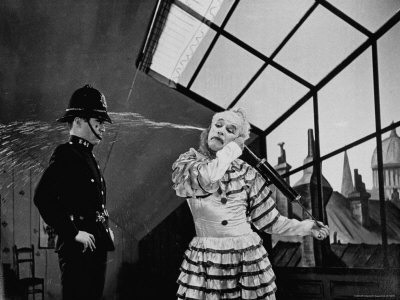
Just to reiterate, the raison d'être of Toronto Film Review is as an outlet for me to take a movie or book and to use the post as an excuse to watch more movies and do a literature review for the purpose to have a better understanding of the subject at hand as well as improving my capability to articulate myself on that subject. I also want to provide something new and highlight a film that might go under-the-radar especially in the context of the Toronto film community. The 180° has a couple of good writers, and to name two: Noah Cowan and Andrea Picard. While I look towards the big film criticism magazines for contemporary movie reviews, so magazines like 24 Images, Cinema Scope, Cineaste, Film Comment, Cahiers du Cinema and Positif. Whichever one I have at hand. So I try to avoid writing about whatever is already adequately covered. Now that I work at the shop, I will use that as an opportunity to focus more on book reviews in the format of The New York Review of Books and two projects that are currently in the works is a film review of Gaspar Noe’s Enter the Void and, hopefully, a book review of James Quandt’s Apichatpong (hey Film Reference Library, how about you open your screening rooms so that I can finally watch Joe's The Adventure of Iron Pussy). After that, I would really like to write something on the new Catherine Martin film, which is part of Canada’s Top Ten.

What else is there to see? Godard’s Film Socialisme, Patricio Guzman’s Nostalgia for the Light, the Bertolucci movies, the Spanish experimental cinema, Chaplin and Pickford, whatever Essential Cinema is left, and, of course, James Quandt’s Hollywood classics. Non-Lightbox movies includes Sofia Coppola’s Somewhere, Derek Cianfrance’s Blue Valentine, Mike Leigh’s Another Year, and Sylvain Chomet’s The Illusionist. Also, the Bloor is playing The Mouth of the Wolf. And for a very special treat on December 28th there will be a Robert Mapplethorpe exhibition at the Olga Korper Gallery (17 Morrow Avenue), which is running until January 15th.
*****
City Lights (Charlie Chaplin, 1931)
**** (Masterpiece)


*****
Film Socialisme (Jean-Luc Godard, 2010)
**** (Masterpiece)


*****
Limelight (Charles Chaplin, 1952)
**** (Masterpiece)


*****
The Mouth of the Wolf (Pietro Marcello, 2009)
*** (A Must-See)


*****
True Grit (Joel & Ethan Coen, 2010)
** (Worth Seeing)


*****
Monsieur Verdoux (Charles Chaplin, 1947)
**** (Masterpiece)


*****
Little Buddha (Bernardo Bertolucci, 1993)
** (Worth-Seeing)


*****
Somewhere (Sofia Coppola, 2010)
*** (A Must-See)


*****
Sparrows (William Beaudine, 1926)
*** (A Must-See)


*****
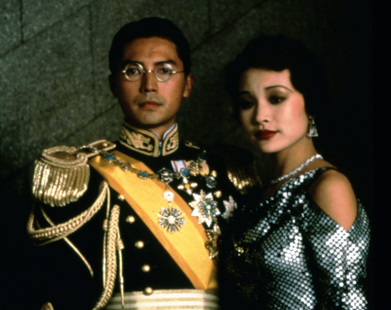
The Last Emperor (Bernardo Bertolucci, 1987)
*** (A Must-See)


*****
Breathless (Yang Ik-Joon, 2009)
**** (Masterpiece)


*****
Partner (Bernardo Bertolucci, 1968)
*** (A Must-See)


*****
Incendies (Denis Villeneuve, 2010) * Director in attendance
*** (A Must-See)


*****
Curling (Denis Côté, 2010) * Director in attendance
**** (Masterpiece)


*****
Culloden (Peter Watkins, 1964)
**** (Masterpiece) Early Monthly Segments


*****
Trois temps après la mort d'Anna (Catherine Martin, 2010)
*** (A Must-See) Director in attendance


*****
Nostalgia for the light (Patricio Guzmán, 2010)
*** (A Must See)


*****
ATTENBERG (Athina Rachel Tsangari, 2010)
** (Worth Seeing)


*****
The Agony and Ecstasy of Phil Spector (Vikram Jayanti, 2009)
**** (Masterpiece)


*****
The Robber (Benjamin Heisenberg, 2010)
** (Worth-Seeing)


*****
Dogtooth (Giorgos Lanthimos, 2009)
*** (A Must-See)

Saturday, December 18, 2010

Toronto's Current Film Climate

Here are three Toronto-based end-of-the-year film surveys. -D.D.

1. 2010 Toronto Film Critics Award winners
- The Social Network for Best Picture, Best Director (David Fincher), Best Actor (Jesse Eisenberg) and Best Supporting Actor (Armie Hammer).
- Exit Through the Gift Shop for Best First Feature and Documentary.
- Jennifer Lawrence for Best Actress (Winter's Bone).
- Hailee Steinfeld for Best Supporting Actress (True Grit)
- How to Train Your Dragon for Best Animated Feature.
- Uncle Boonmee Who Can Recall His Past Lives for Best Foreign Film.
- You Are Here by Daniel Cockburn received the Jay Scott Prize for emerging talent.
- A Special Citation for Bruce McDonald.

2. TIFF Canada's Top Ten 2010

Canada’s Top Ten feature film selections for 2010:
- Les Amours imaginaires by Xavier Dolan (Alliance Films).
- Barney’s Version by Richard J. Lewis (Entertainment One). December 2010
- Curling – Denis Côté (Mongrel Media). March 2011
- The High Cost of Living by Deborah Chow (Filmoption). Spring 2011
- Incendies by Denis Villeneuve (Entertainment One). January 2011
- Last Train Home by Lixin Fan (Kinosmith).
- MODRA by Ingrid Veninger (Mongrel Media). February 2011
- Splice by Vincenzo Natali (Entertainment One).
- Trigger by Bruce McDonald (Entertainment One).
- Trois temps après la mort d’Anna by Catherine Martin (K Films).

Canada’s Top Ten short film selections for 2010:
- Above the Knee by Greg Atkins.
- Les Fleurs de l'Age by Vincent Biron.
- I Was a Child of Holocaust Survivors by Ann Marie Fleming (NFB).
- The Legend of Beaver Dam by Jerome Sable.
- The Little White Cloud That Cried by Guy Maddin.
- Lipsett Diaries by Theodore Ushev (NFB).
- Marius Borodine by Emanuel Hoss-Desmarais (Travelling Distribution).
- Mokhtar by Halima Ouardiri (EyesteelFilm).
- On the Way to the Sea by Tao Gu.
- Vapor by Kaveh Nabatian (Locomotion).

3. James Quandt, senior programmer at the TIFF Cinematheque, best of 2010.
1. Rite of Spring & The Strange Case of Angelica (Manoel de Oliveira)
2. Mysteries of Lisbon (Raul Ruiz)
3. Uncle Boonme Who Can Recall His Past Lives (Apichatpong Weerasethakul)
4. Film Socialisme (Jean-Luc Godard)
5. Aurora (Christi Puiu)
6. Carlos (Olivier Assayas)
7. Four Times (Michelango Frammartino)
8. The Mouth of the Wolf (Pietro Marcello)
9. The Wanderer (Avishai Sivan)
10. Static (Steve McQueen)
*****
Also, this just in, Mark Peranson in the Editor's Note of the latest issue of Cinema Scope (N.45) writes "So because I have nothing else to do, it’s time for an about face: starting this winter, check out cinema-scope.com for a weekly supplement, reviews and reports of the same quality you’ll find in the printed issues (and quarterly web postings) of the magazine from some of our frequent contributors" and "as well as articles on retrospectives and the like taking place in our immediate and general global jurisdiction. This is a Canadian film magazine based in Toronto, and that’s an important part of the mandate."

I guess that means that my own website will be getting some more competition.

Monday, November 29, 2010

On Positif (Getting Ready For Burton)

This is a preliminary note on an eventual defense of Tim Burton. -D.D.


“In the space of eight years, between 1984 to 1992, four directors that were younger then thirty-years-old turned up in the American cinematographic landscape: Joel and Ethan Coen (who are really just one person), Tim Burton, Steven Soderbergh and Quentin Tarantino. These four musketeers form the last generation who – to this day - sparked the torch of North American cinema and were celebrated in these pages [Positif] since the start, similar to how twenty years earlier there was Coppola, Scorsese, Schatzberg and Malick.” – Michel Ciment

I have found it astonishingly surprising how controversial this above quote has been while talking to some ardent Toronto cinephiles. We would agree on a lot of other topics but when I bring it up they would become dismissive of both the directors and my taste. Others were even rude about it like how this one guy turned his back to me mid-conversation. I guess there is a time and place to insinuate that these mainstream directors are viable and that they belong within a relevant cinephilic terrain. Positif’s position is important as it takes these more artistically endeavored films by mainstream directors and lifts them to an auteur level to highlight their merits, which is relevant in a film criticism climate where they are dismissed for being the exact opposite, impersonal and generic. My squabbles are only a minor footnote in a larger unawareness and dismissal of both Cahiers du Cinema and Positif found within English-language film criticism. This refusal can be due to either an inability to be read French or a refusal to acknowledge any artistic merit in some of their outlier choices, which can lead to an eventual dismissal of the magazines as a whole. This reluctance does more harm then good as these two publications have done more for film and film culture then any particular individual or new media outlet, their catalogue is so rich with insightful writing on films and as a window into particular cultural climate, and finally, and the most important point, is the sheer pleasure of discovering a film that you truly enjoy with the awareness that it is a shared reception.

Tuesday, November 2, 2010

Toronto November Film Listings (New Mandate)

Since my move to Toronto I had to reconsider the mandate and title of Ottawa Film Review. Now that I am a Toronto resident, I decided to change the title to Ottawa-Toronto Film Review. I would have removed the Ottawa- from the title except that would force me to change the url, which would cause major revamping. Maybe one day… Anyways, what can be expected from Ottawa-Toronto Film Review in the next while? I want to change my traditional monthly film listings from a mere listing to a written paragraph format (see below). Ideas for pieces that I have been ruminating: (1) Write a piece on two films from the Toronto-based production company MDFF; Kazik Radwanski’s Green Crayons and Antoine Bourges’ Woman Waiting; both films premiered at the TIFF 2010 Short Cuts Canada. (2) Finish reading James Quandt’s (the senior programmer of the TIFF Cinematheque) book on the Thai director Apichatpong Weerasethakul (FilmmuseumSynemaPublikationen; 2009) in the hopes of writing a book review. And, (3) see more Zacharias Kunuk’s films that are available to view at the Isuma Productions website. I will just be doing generic posts with all the screenings I see and an arbitrary star ranking, and I hope it is clear, this website prides itself on the longer pieces, the criticism and the reporting, and not on the minor viewing acknowledgements.


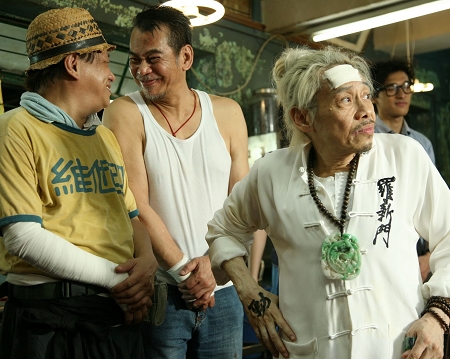
At the Toronto Film Society on Monday November 15th at 7:30PM there is a double-bill that consists of Jules Dassin’s Thieves’ Highway (1949) and Martin Ritt’s Edge of the City (1957). The Toronto experimental film collective Pleasure Dome is having a few screenings in November. I will keep seeing all the TIFF Essential Cinema films that I have yet too see and others that I want to re-see; so far I have seen eighty-four out of one-hundred and I hope to do a personal top ten afterwards. There are a few Exclusive Engagements that I want to see; Le Pere de mes enfants, The Light Thief, and I Wish I Knew. On Friday November 5th the Bloor Cinema will have a free screening of Scott Pilgrim vs. the World with the director Edgar Wright in attendance. Later on in the month at the Bloor Cinema there will be screenings of Small Change (Nov. 7th – 9th) and Blow Out (Nov. 25th, 9:30PM). I have also discovered the 18th annual rendezvous with madness film festival (Nov. 5th -13th), which has some interesting titles like Denis Villeneuve’s Next Floor (Nov. 6th; 8:30PM) and William D. MacGilivray’s The Man of a Thousand Songs (Nov. 13th; 8PM). As well there is the 14th annual Toronto Reel Asian International Film Festival; I particularly look forward to see Clement Cheng and Derek Kwok’s 70s kung-fu ode Gallants (7PM; Bloor Cinema); the directors will be in attendance and afterwards there is the opening night gala party at the Century Room (free with a screening stub). Yeah and finally I will go see any cool-looking new releases; right now I want to see Stephen Frear’s Tamara Drew. - David Davidson

*****
Johnny Guitar (Nicholas Ray, 1954) Essential Cinema # 63
*** (A Must-See)

*****
Winnebago Man (Ben Steinbauer, 2009)
* (Has redeeming facets)

*****
Singin' In The Rain(Stanley Donen & Gene Kelly, 1952) Essential Cinema # 62
**** (Masterpiece)

*****
Memories of Underdevelopment (Tomás Gutiérrez Alea, 1968) Essential Cinema # 68
*** (A Must-See)

*****
Le père de mes enfants (Mia Hansen-Løve, 2009)
*** (A Must-See)

*****
Good Neighbours (Jacob Tierney, 2010) *Director in attendance.
** (Worth Seeing)

*****
Tamara Drew (Stephen Frears, 2010)
** (Worth Seeing)

*****
Recent Video by Gary Kibbins *Director in attendance. Pleasure Dome
7 Questions About Bicycles (2009) & The Unlucky Sailor (9 Unread Chapters of Finnegans Wake) (2010)

*****
Gallants (Clement Cheng & Chi-kin Kwok, 2010) *Clement Cheng in attendance.
** (Worth Seeing) Reel Asian

*****
A Film For Ollie Gilbert (Scott Cudmore, 2010) *Director in attendance.
** (Worth Seeing) 107 Shaw Gallery

*****
I Wish I Knew (Jia Zhangke, 2010)
*** (A Must-See)

*****
The Land Left Behind (Juan Camilo Sarmiento, 2010) *Director in attendance.
*** (A Must-See) aluCine

*****
Bringing Up Baby (Howard Hawks, 1938)
*** (A Must-See) Essential Cinema # 61

*****
Cléo de 5 à 7 (Agnès Varda,1962)
**** (Masterpiece) Essential Cinema # 96

*****
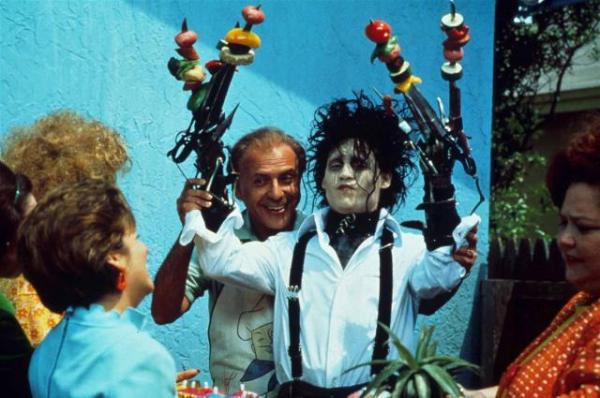
Edward Scissorhands (Tim Burton, 1990) *Director in attendance.
*** (A Must-See)

*****
Barbed Wire Dolls (Jess Franco, 1975)
** (Worth Seeing)

*****
Kings of Pastry (Chris Hegedus & D.A. Pennebaker, 2009)
** (Worth Seeing)

*****
The Light Thief(Aktan Arym Kubat, 2010)
*** (A Must-See)

*****
The Third Man (Carol Reed, 1949)
*** (A Must-See) Essential Cinema # 91

*****
Dust in the Wind ( Hou Hsiao-Hsien, 1986)
**** (Masterpiece) Essential Cinema # 69

*****
Blow Out (Brian De Palma, 1981)
*** (A Must-See)