It's finally here ! Did the the a/v department at the CIA in 1967 attempt to fake the moon landing ? Did Stanley Kubrick have anything to do with it ? What were the repercussions of this for everyone involved ?
Matt Johnson and his team, building off of the conspiracy thrillers of Kubrick (Dr. Strangelove), the showmanship of Orson Welles (F for Fake) and the cynicism of Brian de Palma (Blow Out), takes on the history of cinema from its origins of Georges Méliès to highlight the veil of fiction and deceit of the cinematic medium. All you can really do is burn it all down to the ground.
Other important references to keep in mind : With Operation Avalanche Johnson is building off the too-little-known space exploration films of Canadian cinema such as Roman Kroitor and Colin Low's Universe(while also poaching from another NFB documentary, Christopher’s Movie Matinee), which subject of space exploration the media theorist Marshall McLuhan would conceptualize in The Global Village in terms of an evolving human apperception. But perhaps, maybe a little indirectly, Operation Avalanche performs and demonstrates other concepts of cinematic deceit that have a long history. Lets not forget that Godard described televised space exploration footage as, “The picture is totally out of focus, you can’t really see anything. They’re always like that. There’s so much work and technique involved with making this type of image. It’s faked. Those are models, it’s pure George Lucas. It isn’t real.” Or that Orson Welles described the moon landing as a terrible event in the history of humanity. Leaving the space race aside, there's many important formal arguments at play in Operation Avalanche. As the name of Johnson's production company, Zapruder Films, implies: There was a moment when the world lost its innocence, all we can really do is re-watch the primal scene to attempt to figure out what really happened. For more information on showtimes (and special q-and-a screenings) see the Facebook event page : https://www.facebook.com/events/336863169988983/ And for more of my writing on Johnson and my original review of Operation Avalanchejust click on the linked titles.
Slowly rolling out to magazine and book stores in the upcoming week, the new Cinema Scope offers a great survey of the Fall new releases, festivals titles and other cool movie stuff. Pick it up if you can!
“We’ve
been making movies about neophyte filmmakers, and the form of which you engage
the film is their own finished movie. And so not only does that give you
license to do a lot of things that are cheap – like we can’t spend money on
slider-dollies or even tripods, which you can’t set up in public spaces – it
lets you shoot them as if they are almost like reality television shows, but
even lower budget, reality television shows shot by kids. And so that aesthetic
allowed us to make that feature because of course we had no money. Like
literally we had no money from anybody. So it’s like that software concept of
turning your bugs into features, which I think is really important for young
filmmakers is to take the things that make you bad and turn them into the
things that will make you stand out… I think that the mind set, which does
comes from software design, is really powerful as an independent arts tool.” –
Matt Johnson
With the premiere of nirvana
the band the show at TIFF and then shortly after the theatrical release of Operation Avalanche it’s worth
reiterating the obvious fact about Matt Johnson: an inventor of forms, changing
the medium and probably one of the most exciting things to happen to Canadian
cinema in a long time. With Operation
Avalanche,about two agents from the CIA a/v department attempting to fake
the moon landing, Johnson showed that all images are manipulations, fiction, and
lies as they’ve been corrupted in the process of becoming a means to an end. So
what to do next? A remake of his earlier web-series nirvana the band the show: two hapless losers
trying desperately to get a music gig at the The Rivoli. After the departure from Eden due to the loss of grace
of the image all that that all can be done is recount the defeat ad infinitum, and with their brief 25 minute
running time (always rebooting from scratch), nirvana the band the show tells the story of this defeat.
Nirvana
the band the show, or how to capture the world? Some
might talk about Johnson’s mise en scène as that of regular television à laArrested Development but it’s actually a lot
more sophisticated than that. Not only are there symbolic details that reappear
throughout the season (explicitly addressed or just as background information)
but the images themselves are conceptualized. Nirvana the band the show, which started as a web series, is the
logical conclusion of new media as it brings together many of the aesthetics,
formats and viewing patterns of the internet, video games, television and cinema and turns them into a new video form.
Take the show’s living room, for example: A poster of the world, Jacques
Cousteau exploring the oceans, NASA moon landing imagery and all sorts of
Criterion Collection posters. Johnson overflows the image with too much
information (in a style similar to too many tabs open in a browser) to suggest
red herrings and to provide an interactive relationship with the viewer to then
follow up on their meaning, in a way similar to David Foster Wallace and all of his footnotes.
This aesthetic development parallels another major one for
video games from the year 2016: that of John Hanke at Niantic launching Pokémon
GO. Just like how Johnson gives the spectator the tools to play with all of the associations in nirvana the band the show,Hanke with
his new augmented reality cellphone app he got people to go outside, altered their perceptions of their surroundings
and brought a newfound sense of joy and of play into the world.
This leap into the imaginary is also there in Nirvana the band the show. For Johnson
the réel is imagination: How to take
an overlooked recognizable Toronto site, distilling it of its blandness and
making it pure fantasy. This use of imagination is perhaps Johnson’s greatest
tool and its perhaps even more important as its lacking in abundance in Canadian cinema. As
why are there so many Canadian films that are slaves to the mundaneness of reality and who by focusing on ‘social oppressions’ just recreates without
ever offering any room to escape? So when Johnson and Jay McCarroll make a joke
or speak nonsense it is an attempt to eclipse current social relations or an
understanding of language to begin again from scratch, to find the zero degrees
from which a new world can spring from. This is why their important.
As per nirvana the
band the show being like the internet, it is in fact a repertoire of
popular culture: from its opening credits that riff on popular TV shows, to the
many subject of conversations and memorabilia, to the activities of the
characters and the styles in which it is shot. There’s a fan fiction quality to the
show (with Spielberg as the Lord presiding over it) and it takes a negotiated
response to popular culture where smart ideas can be extrapolated from bad
object movies (Johnson’s discussion of Ernest
Goes to Jail is quite funny). But this idea of the musical riff, that
of tonal variations offering new possibilities of experience, is perhaps best
illustrated by Jay McCarrol’s piano routines. A professional musician with
close connections to the Yuk Yuk’s comedians, McCarrol brings a warmth,
liveliness and sense of morals to Johnson's conniving.
I could go on about how Johnson got to where he's at on
his own terms (with a blunt approach to denouncing many of the mediocrities
of the Canadian film industry), or how he’s like the Canadian Godard (experimenting
in all sorts of formats, poaching from all sorts of media to tell the important
tales of the 20th and 21st Century), or further discuss
the importance of Spielberg and Abrams on him (Star Wars: The Force Awakens plays a big role in one of the
episodes), or the importance of video games and the film Hackers to his work (the idea with playing with temporal
association, how to take command of the networks for one’s end) and so on. But
let me just conclude by reiterating my first point: After taking on all of film
history (Operation Avalanche), now
returning back to the city and to just burn it all to the ground (nirvana the band the show), his next projects include a John A
MacDonald film where he’ll take on the entirety of Canada and its history and
then he's planning a remake of Command and Conquer:
Red Alert where he’ll take on one of the biggest crimes against humanity of all of History: The Holocaust.
The time has come where the networks are failing and the viruses are
taking over. The era of Matt Johnson.
A work-in-progress chart to show a version of the evolution of Canadian film (click here to see it in full-scale). Many of these filmmakers have work at TIFF which includes Arrival, We Can't Make the Same Mistake Twice, Anatomy of Violence, Maliglutit, Two Lovers and a Bear, Weirdos, Juste la fin du monde, The Bleeder, Hello Destroyer, Old Stone, Werewolf, nirvana the band the show, Pays, India in a Day, The Stairs, Blind Vaysha, A Funeral For Lightning, Tout simplement, A Cool Sound from Hell and Nelly. Check out some of them if you can!
It's a work in process with those who are in close proximity implies a connection in some way and there will be more updates to come. We're excited to get feedback for future iterations! - David Davidson and Marko Balaban
‘I related
to Davis Mitchell and to this journey.’ – Jean-Marc Vallée
‘On était jeunes. On était fous. La
bohème, la bohème. Ça ne veut plus rien dire du tout.’ – Charles Aznavour
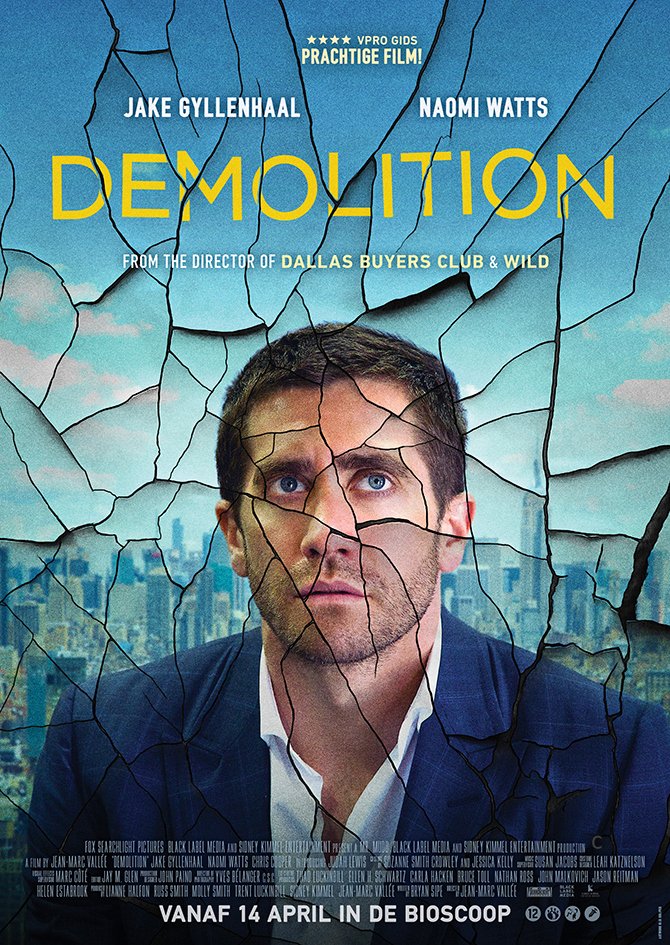
The release
of a Jean-Marc Vallée DVD is always a special occasion and with this new
Blu-ray of Demolition you can now
take the film home in its pristine image and sound quality. It’s the story of
Davis Mitchell, a successful Wall Street banker, and after his wife's sudden death
his life is shook up and through grieving he is able to find himself, learn to
feel again and start a new friendship with a single mother Karen and her son.
Every scene and detail in the mise en scène provides a unique rhythm and
information that has a larger meaning in Demolition’s
complex structure and Jake Gyllenhaal is perfect in the role with his subtle expressiveness and range. This expression of intimate human feelings is the emotional réel of the film that
is given substance as it engages with the geographical réel. The scene that best illustrates this is when Jake Gyllenhaal dances through New York City, engaging with its landmarks and enjoys
himself. This is the Valléeien gesture: that of in cynical times to bring music
and joy to people and the city. These non-narrative scenes, that contribute and
build on an emotion, are Vallée's specialty. Similar to Howard Hawks, starting
with The Big Sleep and To Have and Have Not, Vallée likes to
stall the storytelling to focus on scenes for the sake of creating good ones:
where Hawks aimed for entertaining character development and witty dialogue,
for Vallée it is that of a musical lyricism. This musical point is made
explicit with the film’s soundtrack (only available as a digital soundtrack
from ABKCO Music and Records, with a press release that reads almost as if it
was written by Vallée) that ranges from classical, folk, indie pop, rock and
electronica; and where each song gets to the heart and personality of each
character without ever being too recognizable (Depeche Mode is another
unidentified reference).
Vallée is able to create this musical lyricism with Yves Bélanger’s refined yet simple
imagery that brings a palatable energy and emotion to each scene. While Vallé's
regular cameo, that of a mourner at Julia's funeral, explicitly continues his
humanist outreach project (which goes back to his role as the priest in C.R.A.Z.Y.) but is now turned towards the upper
class, which is a similar gesture to that of Denis Côté with his Boris sansBéatrice. This fantasy and support for others leads to Mitchell’s phantasm
at the end of Demolition where he’s
reunited with the ghost of Julia (similar to apparitions like Raymond in C.R.A.Z.Y., Rayon in Dallas, and Bobbi in Wild) on the carousel that was reconstructed in
honor of her legacy.
Then there's the
Paul Valéry quote in Demolition and,
as with Café de flore, Vallée seems
to enchanted by the culture of the Paris of the belle époque and the melancholy
and beauty of the popular poetry of its time. ‘The future is not what it used to be,’ which for Valéry when
he wrote this in the thirties, meant that the atrocities of the Great War would
taint the comforting assumption that the future will no longer resemble the
past, but which Phil applies to the world of digital trading and unregulated
capitalism. But another Valéry quote that would have been equally appropriate,
for either the title or for Mitchell, is from the most recent Hayao Miyazaki
film: “The wind is rising! . . . We must
try to live!” The idea of poetry as a privileged escape from the oppression
of reality has currency for Vallée as language, style and new technologies are
all equally important for him to express his poetic vision through his mise en
scène. As Demolition takes language
and ontology as its starting point: Mitchell tries to make sense of his
existence by discussing his life, the mood and atmosphere, the meaning of words
and the limits of his own psyche and his physical body. Underneath the surface
of beings and objects lies an essence and this is what he's searching for. So Phil tells him, “If you want to fix something you have to take everything apart and
figure out what's important,” while for Mitchell, “Everything has become a
metaphor…” This is why Mitchell tears apart as much from his life as he can with his hands, tools
and even a bulldozer everything from his appliances to even the infrastructure of his own house.
There are a few details from Demolition that stand out after
repeated viewing: The reoccurring gecko (similar to the fox in Wild) is actually from the Dan Deacon
and Liam Lynch video Drinking Out of
Cups where Deacon, in a thick Long Island accent, rehearses some cynical
statements. The use of this viral comedy video from 2006 that Mitchell and
Julia bonded over earlier on in their relationship (probably a Bryan Sipe
reference) is just like Demolition as
just like Mitchell and Julia had a negotiated response to this video (turning
its cynical Seahorse reference into a romantic one) Vallée
takes what could have been a cynical drama and fills it with warmth, care and
love.
Vallée is clearly a réalisateur
d'oeuvre as with each new
film he builds upon the previous one and all of them contribute to the
world-building of his filmography: A Matthew McConaughey-like cowboy appears in
a parking-lot in Wild, the business
man that tries to pick up Cheryl Strayed at the end of the memoir spins off
with Mitchell in Demolition, and the
mother-and-son Karen and Chris will anticipate Jane and Ziggy in Big Little Lies. [In the credits
there are also references to used footage from Wild from Twentieth Century Fox
(though I can’t exactly pinpoint it; maybe the earlier hospital scenes?) as
well there is the Snow Monkeys clips which Mitchell watches before going to
sleep (from WNET/Thirteen Productions) which anticipates the snowstorm ending
of Du bon usage des étoiles.]
Though
the Blu-ray is skimpy of features, there’s at least one great one on it: the
Behind the Scenes location footage of the production (mostly short scenes) which is mostly silent with some natural noises. There is Vallée carrying the camera, similar to
Soderbergh, and he talks to the actors in his energetic English. There is the small crew, and all of the production specifics, as they’re out
filming on naturally beautiful outdoor locations. This form of poetic and
personal cinema, along with Vallée’s resourceful means and major
actors eager to work with him, makes him
closer to a filmmaker like Terrence Malick than to most other Hollywood independents. The other few making-ofs are short
and not that impressive (e.g. rehashed footage from the film, with espoused clichés
from the crew). So there could have been more… But, either way, it’s
incredible to have the chance to re-watch Demolition
and the Blu-ray looks and sounds great. It can keep any Valléeien
occupied until the release of Big Little
Lies on HBO next year. Mysteries are abound.
A new soundtrack
from Jean-Marc Vallée for Demolition which
includes a mix of rock, classical, folk, indie pop and electronica. The songs
appear in subtle ways during key scenes in the film to express the emotions and
personality of the characters. The musicians include Frédéric Chopin, Gil
Scott-Heron, Sufjan Stevens, Loui Doillon, My Morning Jacket, Free, M. Ward, Alexandra
Streliski, Half Moon Run, Heart, Cave, The Animals, J.S. Bach, Dusted, Jeremy
Zuckerman, Charles Aznavour and Bob Dylan. And the songs are Nocturnes, Op. 9: No. 2 in E-Flat Major;
B-Movie; Redford (for Yia-Yia and
Pappou); Where to Start; Touch Me, I’m Going to Scream (Pt. 2); Mr. Big; To Be
Alone with You; Watch the Show; Le
départ; Warmest Regards; Crazy on You; Sweaty Fingers; When I Was Young;
Brandenburg Concerto No. 3 (I.–II. Adagio); Bruises; Property Lines; Under a
Blanket of Snow; La Bohème; and It’s
All Over Now, Baby Blue. Enjoy! - D.D.
 It's finally here ! Did the the a/v department at the CIA in 1967 attempt to fake the moon landing ? Did Stanley Kubrick have anything to do with it ? What were the repercussions of this for everyone involved ?