Showing posts with label Matt Johnson. Show all posts

Friday, September 5, 2025

TIFF Review: Nirvanna The Band The Show The Movie (Matt Johnson)

The “M” in Nirvanna The Band The Show The Movie should stand for Maturity. In it Matt even goes to see a movie and in it someone says, “Why can’t your friends be as mature as you?” 

But what exactly is maturity for the Nirvanna series?

A first point would be an evolution of their comedy. 

When Matt ends up accidentally travelling back in time to 2008 – the year him and Jay first hatched their dream to play a show at The Rivoli – and goes to see The Hangover, he finally realises that his Orbitz-infused time-travel RV really worked as the slurs in the film are laughed at by the audience (which from the perspective of 2025 hindsight we now understand as insensitive). There’s this same refinement of humour that crosses the series, almost as if Nirvanna was a barometer of our times.

I think it was David Lynch that said that comedy is about “timing” and after years of trying to describe the Nirvanna series as about these two hapless but good-hearted musicians trying to get a show at The Rivoli, I think now it might be more appropriate to describe it as about them not trying to get that show. Because it’s becoming clear – after a web-series, two tv seasons, and now a movie – that if they really wanted to book a show there then it would have already happened

There’s also the maturity of their style. There’s been a long gestation and development process for the film to come into being after the finale of Season 2 in 2018. And with this the question of taking the series to the big screen became essential: What raw material was there to sculpt to do justice to the change of scale?

There was always something democratic about the Nirvanna series: no matter who you were – class, race, age –, if you were lucky enough to be around them, while they were filming in Toronto, you could make it into the show. After Wonderland, the ROM and the underground tunnels of the city – among many other wonderful local sites – they had to dream bigger, so they looked up: the CN Tower.

The beautiful premise of The Movie is that their new effort to get a show at The Rivoli involves skydiving off of the CN Tower to land in the Rogers Centre field during a Jays game to announce to the crowd their performance. But they end up going too late in the day and they don’t make it as its rooftop was closing due to poor weather conditions. So their genius idea? Create a time-machine to re-start the day so that they can go earlier on so that their leap is successful.

After Drake got onto the top of the Tower for his Views (2016) album cover, the Nirvanna guys had to out-do him and show us their spin on the city’s iconic tower. It’s insane and I’m sure illegal all that they were able to film there. But that’s why you love it: They have a way of turning Toronto into this exciting playground and lovingly shows its idiosyncratic character, returning it to the people.

They’re creating an image of Toronto that feels truer than anything else, which is especially meaningful as no one else seems willing to do it (or even can).

It’s interesting to note that at the TIFF premieres yesterday, the prime minister Mark Carney (not a cinephile) was at the John Candy documentary, and that the mayor of Toronto Olivia Chow was at Nirvanna. Real ones know.

One last point in terms of maturity. 

There’s a new darkness in The Movie that wasn’t readily there in the previous work. The cinematographer Jared Raab films Jay in these high-contrast shadows. At the start, when Jay is contemplating leaving Matt and is driving to have his solo debut at the Lafayette in Ottawa, there’s almost a violence and pain in how he’s presented. It reminded me of some of Rembrandt’s late self-portraits or Tom Stern’s work with Clint Eastwood. Engulfing its two heroes in shadows culminates in a memorable scene that I’m still thinking about as there’s something so indelible and mysterious about it: After connecting a power-cord from the top of the CN Tower to a plug outlet at the corner of Queen and Spadina, so that when lightning strikes they can re-charge their DeLorean-style time machine, Matt gets incinerated when it finally hits and leaves only his trademark fedora in the wake. From being obfuscated in shadows to fully disappearing, I feel like there’s something significant taking place there.

There’s still lots to say about the Nirvanna movie: Johnson continues his archeology of film history, foraging from other films on day-dreamer musicians and ambitious rock stars – here Back to the Future – and putting them into the Nirvanna cannon (the film is full of other great Toronto cinephile culture references too – hell, I’m even in it!). The special effects of Tristan Zerafa are really impressive, seamlessly making all of these wild stunts believable. Curt Lobb does wonders editing, making the old and new footage go perfectly together. And we finally find out the inspiration for the Brave Shores track Never Come Down.

There’s still much to think about Nirvanna The Band The Show The Movie and I suspect it’ll only keep sharing with us its mysteries in the years to come.

Monday, October 23, 2017

the nirvanna the band canon

since the second season of nirvanna starts this friday, october 27th on viceland and city, i decided to make a thorough filmography related to the show, matt johnson and the zapruder films team, from the more ‘official’ credits like the original web-series, its reboot and the two feature films to the more hidden, ephemeral works - hidden on the dvds or online - which are just as important. taken as a whole, these smaller, somewhat obscure videos add a larger dimension and complexity to the main body of work as they provide opportunities to create and experiment, test jokes and engage in the short form. but what makes them great, as with the official credits, is how they become opportunities to explore the world, engage folks and through their imagination create fantasy narratives. these videos could be witty and sweet, funny and innovative, about their influences or pop culture. i hope this master list is of interest, some links are embedded. – d.d.
***

nirvana the band the show
ten episode web-series (2007-2009) : the beginning, the buzz, the break in, the basement, the banned, the b-day, the battle of the bands, the burn, the band, the rivoli
bonus episode : the buena vista social club (dvd extra, with audio-commentary by christ kelley, a friend)

special features : the deleted scenes (fifteen videos), the adventures (four videos, including the famous update day), live @ the rivoli (july 31, 2009, the final show), the auditions (five videos), the piano sessions (five videos), dead: the ntbts blooper reel (seven videos), interactive menu screens,  one alternate opening (the burn).
audio-commentary :  all ten episodes (the band’s is special for matt and jared discussing their production model)
top secret : matt sees parkour, iraq: shubadak, (directed by kathryn mallinson, editor of ntb, matt’s cut), ntb tv pilot, turner classic movies, condom dance

the dirties
feature film (2013)
special features : five different trailers, anatomy of a scene, making of the dirties, the piano session, mistakes were made, mr. muldoon’s cut, cat stevens cover, twelve deleted scenes, the visitor (three house productions) with an intro, commentary, and reading by matt and owen; five press and extras materials (the world premiere interview, a slamdance tv feature, bars and tone, the 7th art interview, forty-eight production stills)
audio-commentary : five in total including a hidden one on close encounters of the third kind
top secret : lhotsky and fisher: honolulu blue (matt johnson, student film, 2004), my mother’s pearls (matt johnson, curt lobb), matt johnson’s acting for screen and stage

operation avalanche
feature film (2016)
special features : five featurettes and four deleted scenes
audio-commentary : three different ones (matt’s is really good, more vulnerable than usual)

nirvanna the band the show
eight episode television series – season one (viceland, 2017) : the banner, the booking, the bean, the blindside, the big time, the boy, the buffet, the bank
special features : four piano sessions, twelve deleted scenes and operation avalanche (short the dirties-like video, from the big time)

eight episode television series – season two (viceland, 2017) : brand new, starts october 27th

random videos
breakingnewsTO : occupy reporter hijacks station (2011)
breaking news – comic con (three parts, funny or die)
how canadians celebrate spring w/ jay mccarrol (evan morgan)
in the studio w/ jared: born ruffians (2013)
three barry lyndon (josh boles) music videos (matt johnson, 2011-14)
never come down (brave shores, 2014; directed by tony ho)
dreams tonite (alvvays, 2017; directed by matt and shy kids)

actor in other projects
shorts, features, and documentaries :
captain coulier, jay as the silver robot iggy (lyndon casey, 2008)
the revenge plot, matt scheming with teenagers (jared raab, 2011)
cosmotive inc. (thomas hackett, 2012)
d.i.y. (peter baxter, eric ekman, ben hethcoat, 2014)
spice it up, matt as a passport photographer (calvin thomas, lev and yonah lewis, 2014, unreleased)
diamond tongues, matt as john matheson, over-the-top actor in film-within-the-film (pavan moondi and brian robertson, 2015)
how heavy this hammer, matt as a hardware store employee (kazik radwanski, 2015)

unproduced / unrealized / screenplays
nirvana the band the movie (a cross-country journey with ntb, abandoned)
encyclopedia brown screenplay by matt johnson (warner bros.)
kill hitler, in pre-production
john a. macdonald biopic screenplay by josh boles

Saturday, April 22, 2017

Matt’s Movie Posters

“Going to lounge at a friend’s house and play board games and just waste their time. That’s one of the great... That is what our society… Like all of this stuff. Like the doctors, the energy, all of the wars, all of this brutality. It’s so that we can have those moments!” – Matt Johnson

The posters in Matt and Jay’s house in Nirvanna The Band offer suggestive references to larger subjects and themes of particular episodes and the series. The background pictures and posters hanging on the walls of the living rooms and workspaces in Matt Johnson’s work have slowly evolved over time: In the original Nirvana web-series there were images of popular culture and personalized pictures adorned on the walls. In The Dirties there’s plenty of posters from mainstream nineties films in the basement and what makes them unique is that they have been grafitied, illustrating what Henry Jenkins describes as the participatory textual poaching of convergence culture. In Operation Avalanche, which is set in 1967, there is a well-selected arrangement of vintage posters of the classic films of that historical period. And now in the reboot of Nirvanna their living room includes a wall layered with the highly esteemed Criterion Collection posters.
Matt Johnson’s Nirvanna The Band The Show, similar to videogames, creates a playful, virtual world full of references that act like interactive hyperlinks that allows its viewers to participate in their meaning by pursuing them IRL to better understand their significance (I’ve definitively taken up playing pool at The Rivoli because of the show). These textual references through movie posters was always there in Johnson’s work and they culminate in the pop DVD covers turned posters of the Criterion Collection films that layer the walls of the Zapruder Films studio in Nirvanna. It was probably during the transition from the original web-series to The Dirties that Johnson leaped exponentially as a filmmaker. While the first Nirvana series seems more influenced by popular television and reality shows, mainstream movies and alternative music, video games and digital media, afterwards starting with The Dirties the history of cinema and its masters became his biggest rivals. Though it’s still popular culture (‘His name is John Cena!’) and movies from a nineties childhood (Teenage Mutant Ninja Turtles, Terminator 2: Judgment Day, F. Gary Gray’s The Negotiator) that’s usually at the forefront of each episode, these tucked away references add depth to the work and participates in a larger circulation of film forms. From what’s available so far in the Criterion Collection, I’ve counted twenty titles that are directly engaged with in Johnson’s work (though there’s many others that appear through the posters).
François Truffaut’s The 400 Blows (1959) seems like the obvious choice: a delinquent teen in Paris of the fifties who skips school and spends his time hanging out with friends and fighting with his mother. The Dirties has been said to owe a lot to Rémy Belvaux, André Bonzel and Benoît Poelvoorde’s Man Bites Dog (1992), which is dark comedy that follows a serial killer as a documentary crew is making a film about him. Johnson has spoken highly of Orson Welles (a The Stranger poster is on their office wall in Operation Avalanche) and the film of this star-director that has been the most cited is F for Fake (1973) for revealing the illusionary nature of the medium and for being about the creation of a film. One of the special features on the DVD of The Dirties is Johnson editing the film on his Mac computer, which is the most direct connotation of the Welles documentary (and perhaps also Filming Othello). Lindsay Anderson’s If…. (1968) starring Malcolm McDowell as a rebellious teen in the academy who takes to violence is a staple of the school shooting genre. When Matt is in drag singing ‘Malkovich, Malkovich…’ making their student film in The Dirties it’s a direct reference to Spike Jonze’s Being John Malkovich (1999). The two secret, hidden references in The Dirties are Eric Harris and Dylan Klebold home videos (the Columbine shooters) and Ben Coccio’s Zero Day (2003).
In Operation Avalanche there’s a scene where Matt is talking and in the background Dr. Strangelove or: How I Learned to Stop Worrying and Love the Bomb (1964) is playing in the background and they also visit Stanley Kubrick on the set of 2001: A Space Odyssey (1968). The direct cinema style of the film was said to be influenced by Albert and David Maysles and Charlotte Zwerin’s documentary on The Rolling Stones Gimme Shelter (1970). One particular great introductory medium shot of Matt reminded of how John Ford introduced John Wayne in Stagecoach (1939). The hidden references in Operation Avalanche are the moon landing conspiracy films Peter Hyams’s Capricorn One (1977) and William Karel’s Opération Lune (2002).
But the difference between the use of posters in Operation Avalanche and Nirvanna is comparable to the difference between Hollywood Canteen and the Criterion offices on Fifth Avenue. In episode six The Boy there are two miracles: discovering the boy is able to walk and Jay coming to terms with his severe mother. These reminded me of how the fifties Cahiers critics saw in the films of Rossellini (Journey to Italy) and Hitchcock the creation of miracles. In episode seven The Buffet the episode revolves around the premise of My Dinner with André (1981) and there’s even an insert shot from it at the beginning. Matt also describes being really moved from a scene from Ingmar Bergman’s Autumn Sonata of Ingrid Bergman’s saying, ‘I could always live in my art but never in my life.’
            But its episode five The Big Time where the most posters appear in the frame, as opposed to mostly just being in the background of some of the interior shots, and it’s the one where Matt becomes a filmmaker and takes his film to Sundance (also explicitly referenced is the Entourage episode The Sundance Kids). In their living room, surrounded by their piano, television and N64 and other collectibles these Criterion posters are on full display on the west wall by the bunkbed. These include: Sam Fuller’s White Dog (1982), which makes one think if is it’s the Matt character whose racist or if it’s a show about racism? Though the blunt insensitivity to racial issues probably owes more to the shtick of certain gonzo comedians and their characters like David Brent (Ricky Gervais), Jonah Takalua (Chris Lilley) and Ali G (Sacha Baron Cohen). There’s Spike Lee’s Do the Right Thing (1989). So is Matt just trying to do the right thing? I’m not so sure… Martin Scorsese’s The Last Temptation of Christ (1988). Is this to suggest Matt is a Christ-like martyr, suffering for all of our sins? Maybe a bit of stretch… Michelangelo Antonioni’s L’Avventura (1960) is there. The Antonioni film transitioned cinema to its modernity with its narrative and ambiguity, sense of alienation and duration. Would Nirvanna be bringing the cinematographic medium into its next phase? The Beastie Boys Video Anthology, and perhaps to a lesser extent Richard Linklater’s Slacker (1991) and Dazed and Confused (1993), culminates the MTV music video mashups of styles and nineties pop joyfulness that they would expand on. Chasing Amy (1997) because Kevin Smith (who has a cameo in the series) would help Johnson earlier in his career by distributing The Dirties. Rainer W. Fassbinder’s World on a Wire (1973) predicts the virtual, simulated world of spectacle that modern society is wrapped up in but also Fassbinder the filmmaker, working with a tightly-knit troupe, starring in his work and making auteur television (Fox and His Friends is another example of a work with similarities). Abbas Kiarostami’s Close-Up (1990) which is about a con-artist being so moved by a film that he pretends to be its director Mohsen Makhmalbaf and is then caught, charged, released and then finally accepted as the illusion. Finally, and I think most importantly, David Lean’s adaptation of the Noël Coward play Brief Encounter (1945) where a chance encounter leads to a change of ones life, giving meaning to its existence and whose memories will always be fondly remembered. As great a description of what makes Nirvanna so valuable if Ive ever heard any.
So all of these references contribute to the DNA of cinematographic forms in Johnsons’s work, which I think him makes one of the most sophisticated directors working today, even though they are tucked underneath the work’s overt silly and adolescent narratives. Just like the master of suspense Alfred Hitchcock these little details in the mise en scène can contribute to the plot and themes or just only be suggestive red herrings. It makes one wonder: where’s the Psycho poster hiding?

Thursday, January 5, 2017

Breaking In: Outsiders, Toronto and Populism in Matt Johnson’s Cinema

There are some consistent themes that run throughout the work of the Toronto filmmaker Matt Johnson such as outsiders struggling against the system, megalomania dividing friendships, and failure as the end result. This raises the questions of what is the political strategy of focusing on these outcasts? What does it mean to show them in a negative perspective? And what hope can be interpreted from their failure? Johnson’s work in web-series and film so far include Nirvana The Band The Show (2007-2009), The Dirties (2013), Operation Avalanche (2016) and an upcoming follow-up to his original show, Nirvanna The Band The Show (now with two ‘n’s).
This essay, through an analysis of the works, will illustrate how by focusing on people who are at the margins of middle-class society and by emphasizing their strangeness, Johnson is reorienting the norms of the dominant culture towards fantasy narratives that focus on struggle and defeat. These works are especially compelling in the context of the Canadian state-funded film industry whose vague idea of its demographics leads it to favor diversity and positive representations rather than being truthful and entertaining. Johnson’s mixture of guerrilla filmmaking along with unrestrained textual poaching provides an example of how society is oversaturated with media and the effects of a cultural identification with it. Johnson finds a way to work within the system of relations of dominant 21st century media to then co-opt it through appropriation and parody to dismantle its power and authority from within.

The Political Strategy of Outsiders
Johnson’s work is characterized by a youthfulness and delinquency. The characters that populate his worlds at first try to fit in and adapt to social norms before it leads them to conflict and rejection. There are the amateur musicians in Nirvana The Band The Show (NTBTS), the bullied teens in The Dirties and the audio/visual department of the CIA in Operation Avalanche who all share a desire to fit in and assimilate but through their struggles end up being rejected by the social groups and institutions that they want to be a part of. The main protagonists in all of the works take up the question of social participation in different ways. Matt and Jay in NTBTS just want to play a show at a nearby concert venue, Matt and Owen in The Dirties do not want to get bullied at their high school, and Matt and Owen in Operation Avalanche want to help their country the United States win the Space Race (the film is set in 1967). These characters provide different models of the outsider from that of the loafer, the psychopath and the idealist. In all three cases, there is a desire to adapt to the norm which is always crushed and rejected by larger social forces.
To use Carl Schmitt’s definition of the political, that of the distinction between friend and enemy, in NTBTS the Matt and Jay characters represents loathers, slackers and resistors to the dominant capitalistic order of social progress and economic growth. Their idleness and scheming defy a neoliberal pursuit of the common good. The two, who are in their mid-twenties (perhaps the most suited time for this kind of behavior), do not try to integrate as they avoid participating in the labor market to instead focus on their imagination and dreams. The show and Johnson’s work is not that of the politics of inter-state relations – such as the work of government, social and foreign policy – but more so that of intra-state. NTBTS antagonizes the social by privileging the youthful and non-socially useful. If there is an enemy to the state it is the irresponsibility and recklessness of these young adults that consistently undermine it.
The two bands that the show’s title directly alludes to – Nirvana and The Band – might give a better example of the politics it expresses. Kurt Cobain’s anti-mainstream sentiments and grunge attitude is one major influence. The iconic Nirvana song Smells Like Teen Spirit (1991) appears twice throughout NTBTS: once over the season’s end credits and then as the ‘encore’ of their live post-season show at The Rivoli.
Johnson takes Nirvana’s counter-culture lessons to heart as he plans his own youthful revolution – what would it look like if the Millennials took over and created their own institutions? It would have a punk aesthetic absorbed in the popular culture of the eighties to the present. It would define itself by the communities of young friends, who were formed in front of screens and in their parents’ basements, trying to find ways to subvert their upper middle class upbringing. Alternative music with its melancholy and defiance would offer one remedy. Just like the Nirvana song, the Matt character in these works struggles with his enthusiasm and melancholy as they conflict.
While Ronnie Hawkins from The Band, who appears in episode eight The band of NTBTS, provides another example. The mixture of old country music with early rock in The Band’s songs conjures nostalgic images of an earlier world and creates strong emotional affects that both saddens and uplift. Another example is episode seven The battle of the bands where the Smashing Pumpkins song Tonight, Tonight (1995) plays a big role to set the tone of their characters’ mood while also anticipating a literal pumpkin smashing scene. Matt also wears a Daniel Johnson t-shirt in that episode. The reoccurring motif of melancholic musicians is a symbol of their permanent adolescence and how they are content to rejoice in their friendship, struggles and failures.
Where the cinéma vérité style of NTBTS is closer to the fly-on-the-wall approach of The Office (2005–2013) and the adventures through urban spaces of Flight of the Conchords (2007–2009), in The Dirties the conflict and filmmaking in a real high school is closer to Chris Lilley’s Summer Heights High (2007) and the surreal documentary-like footage of a psychopath in Man Bites Dog (1992). The Matt character also continues to resemble Kurt Cobain through his grunge wardrobe and reckless behavior. The Dirties is the story of two film-obsessed teenagers who plan a revenge plot to kill the bullies at their high school. The two friends are the happiest when they are together but as time goes by and Matt seriously wants to follow through with his plan, Owen (Owen Williams) starts to distance himself from him and spends more time with his new crush Chrissy (Krista Madison).
The Dirties was a controversial film as it was critiqued as being irresponsible for not taking seriously its subject and that it might inspire future school shootings. But what it does instead is create an expression for youthful concerns that are not usually discussed. The frightening quality of The Dirties is that Matt’s problems and alienation are relatable. The Dirties stands out for focusing on the uncomfortable and dangerous territory of adolescence that tends to get overlooked. It shows the embarrassment of being bullied at school, games and popular culture as an escape from reality and the rationalizing of dangerous obsessions. The Dirties shows a darker side of humanity but presents it unflinchingly. It is effective for showing the problems of youth and creating empathy for its characters while also being repulsed by what he does at the end. The uncertainty in the response to the film partly came from the fact that Johnson also starred in the film, which blurred the line on whether you were seeing his own thoughts and actions or that of the characters. 
 In one scene of The Dirties Matt leaves his classroom when all of his peers are laughing at the film that he made, though he keeps looking on through the door window. This scene is described in the audio commentary as being inspired by an Orson Welles anecdote from one of the F for Fake (1973) DVD special features where he describes walking out of a The Magnificent Ambersons (1942) projection just to peek into it from outside of the room’s door. With The Dirties Johnson started taking on and including more of film history into his work, which has only been increasing since. And as a multitalented filmmaker, who started at a young age and who stars, writes, directs and edits the director Welles was one of his models. A film like Citizen Kane (1941) provides a major reference point. Just like how Welles’ first film antagonized one of the most popular figures in America of his time William Randolph Hearst. Here Matt takes a sensitive topic and uses it to study the mind and character of a school shooter but also to get the sensational media attention and response that goes with addressing a taboo subject.
Just like how Welles used his film as a form of critique and to spark controversy, so does Johnson with The Dirties. Similar to how Welles rooted his film in the real world and blurred non-fiction with fiction through the newsreel that opens Citizen Kane, Johnson uses a similar technique by starting The Dirties with documentary footage set in a school on the problem of bullying. Another filmmaker would also use the same technique. Stanley Kubrick does this with the Cold War nuclear scare when he made Dr. Strangelove or: How I Learned to Stop Worrying and Love the Bomb (1964). He took the public fears of the nuclear conflict between the United States and Soviet Union, and made a dark comedy on this subject – an air force general becomes paranoid over subversive Soviet infiltration so he orders the first nuclear strike.  
The end credits of The Dirties anticipate Operation Avalanche. Within its compilation of classic opening film credits there are three from the films of Stanley Kubrick: Dr. Strangelove, 2001: A Space Odyssey (1968) and The Shining (1980). Just like how The Dirties could have been made from a newspaper headline about a delinquent teen, Operation Avalanche could have been conceived in online conspiracy forums in the wake of the The Shining documentary Room 237 (2012). The premise of Operation Avalanche is that since the Americans could not win the Space Race, they instead arranged for the audio/visual department of the CIA to find a way to fake it. The two of them Matt and Owen go visit Kubrick on the set of 2001, and inspired by his use of front-screen projection, they are able to fabricate footage of a moon landing. Eventually higher officials at the CIA turn against them, kill Owen, and Matt has to blackmail them about their corruption to survive. It is a preposterous story but it fuels the popularity of its conspiracy narrative and convincingly critiques the power and malleable quality of images and the coercion of powerful institutions that use them. 
 Similar to the film Wag the Dog (1997), about a film producer that fakes a war to help the American president get re-elected, Operation Avalanche is about the power of images to change society, regardless of their authenticity and for what ends. After being an idealist who wanted to help his country and make a difference, those in charge started to mistrust Matt and the whole conspiracy got out of hand. It is Johnson’s most direct and critical film about institutions and their coercion. After an earlier idealism comes resignation. And one wonders what his character is going to do next?
Operation Avalanche is also a victory for Johnson for bringing his cinéma vérité style to a period film and have it be pulled off successfully. It is quite surprising how the independent film was able to pull off the look of the sixties while being filmed in contemporary times. The special effects and archive footage are seamlessly integrated. There is an ambiguity to its form as it celebrates the creativity of image making while criticizing its abuse. 
It is worth noting some of the differences between Johnson’s serial work and his films. The films both cast the more serious Owen Williams in the friend role. Williams is more introverted than Matt, less likely to follow him in the extremes of his adventures, usually turns away from him and then suffers the most due to their friendship. While Jay McCarrol, who works in the music industry and is in the popular band Brave Shores, is cast as the friend in the two versions of the show NTBTS. McCarrol still plays the straight man to Matt’s joker, but he is more exaggerated and silly than Williams and his musical skills add an extra lyricism to his performance.
There is also a difference in the tone and form of the feature films and the show. The feature film with its long format necessitates a consistency in its story and for a singular style to be stretched for a sustained duration. The feature film encourages straightforward storytelling, continuity in performances, and sustained character arcs. While for the show the episodes, with their shorter format, allow for more experimentation. They are testing grounds to try to recreate famous movies and shows, suggest references and to find novel ways to have adventures in Toronto and beyond. They can engage in more TV tropes and non-sequiturs.

The Eccentrics of Canadian Cinema
Johnson’s references to Canadian cinema might be the most extensive out of the new generation of young Toronto filmmakers. For example, he cited Don Owen’s Nobody Waved Good-bye (1964) as contributing to his style. Though there are many points of comparison between Nobody Waved Good-bye and Johnson’s cinema, it resembles the most NTBTS for its independent approach to tell a story of youthful rebellion in Toronto. Don Owen’s film is one of the breakthrough Toronto-set and English-language Canadian films. While much of Canadian film history is rooted in documentary, Owen’s film marks the transition towards hybrid documentary-narratives that brought Toronto and its youth to Canadian screens. A charismatic and rebellious Peter Kastner’s plays a thinly veiled version of both himself and Owen.
Johnson brings up the importance of the scene in Nobody Waved Good-bye where Kastner is working at a parking lot and surprises the customers by having regular conversations with them without them knowing that they are being filmed. The reference point reaffirms Owen’s importance to Canadian cinema and highlights this hybrid approach of documentary mixed staging as one of the central characteristics of Canadian filmmaking. 
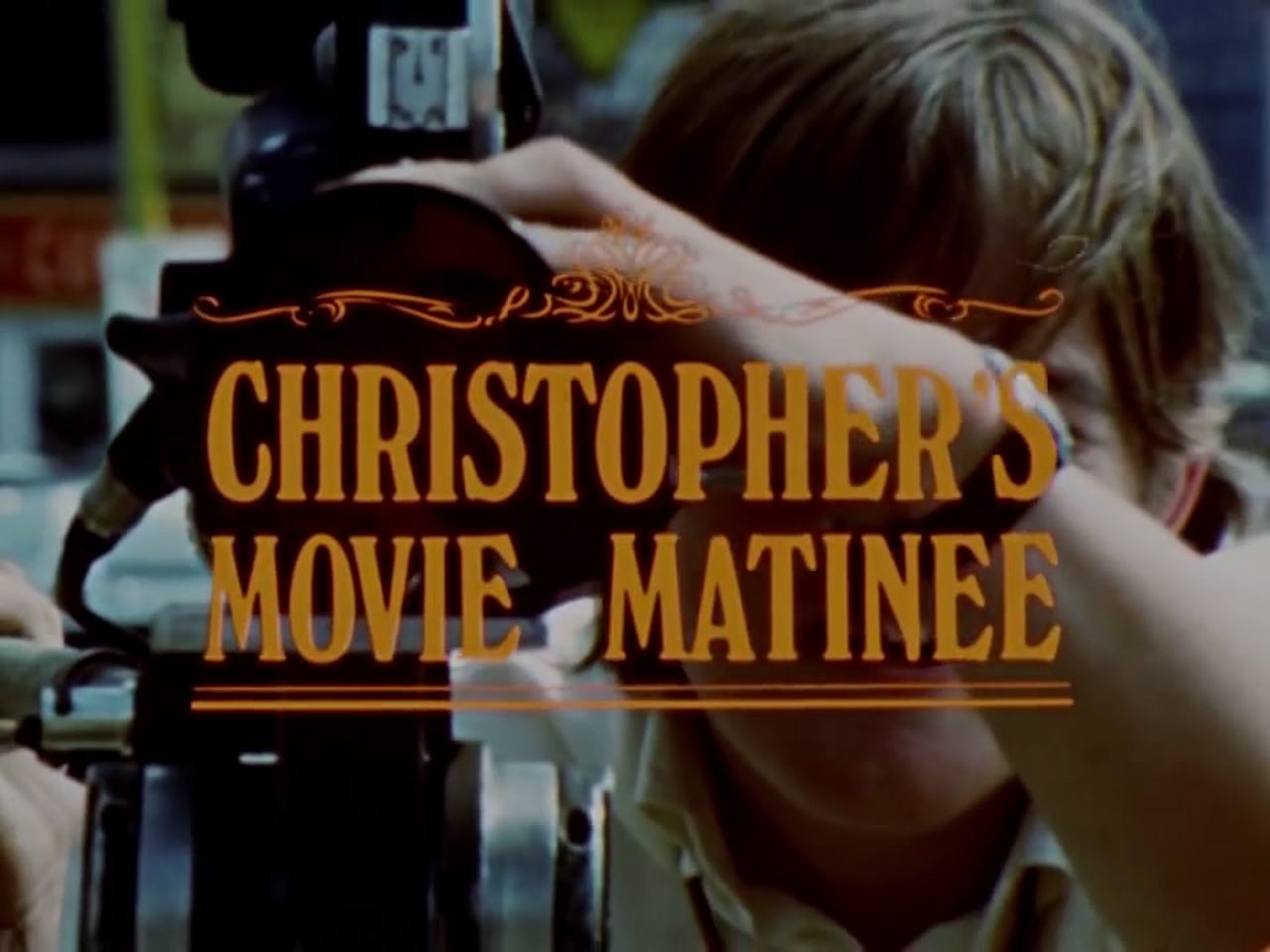
 In Operation Avalanche Johnson includes insert clips from Mort Ransen’s Christopher's Movie Matinee (1968), though its inclusion is more than just a simple insert. The spirit of Christopher’s Movie Matinee clearly inspires Johnson’s work. This radical sixties documentary tells the story of teenagers and hippies who get National Film Board cameras to do whatever they want with them – from goofing off with their friends, recording random footage, discussing what they are going to do, attending anti-war protests, and discussing the values of youth culture with city council members. Again, a surprising referential discovery that highlights the history of filmmaking on Toronto’s streets and capturing unexpected encounters between youthful rebellion and an older generation.
Johnson, through these references, is creating his own pantheon of the important filmmakers that have contributed to the evolution of style of the national cinema. These homages to previous Toronto filmmakers take place through discussing their influences, emulating their style, copying shots, and including their footage. By doing this he presents a lineage of evolving representations of Toronto that was created by youthful perseverance.
            Johnson has been quite public about the problems with the Canadian state-funded film industry. As it stands currently, it is a fragile risk-adverse market for both production and exhibition, and whose measurements of success are not clearly defined. The funding institutions favor the safety of funding already established talent. An organization like Telefilm is not interested in quality, creativity or even representations of the city per se. Its pre-production process instead selects for grant form application know-how and the necessity of networking. These are just some of the problems that Johnson has critiqued the Canadian film funding system and which has led to a David and Goliath-like public fight. 
By doing this he is connecting his advocacy for filmmaking in Canada with the themes in his films. His films themselves offer potential solutions to many of the problems plaguing the industry here. They are examples of how to create entertaining media in an affordable manner while proudly showcasing the city. Johnson’s creates an image of Toronto that starts with the real – real places, people, and events – through a documentary style. Their small filming crew goes out into the streets and film but they bring to it a sense of imagination and wonder through their stories and humor.
Instead of news style reporting, Johnson’s approach, with its conspiracy tone, brings the viewer more into the heart of the public life of Toronto. The upcoming NTBTS for Viceland will indulge in this more so than has his previous works. Johnson’s fourth, largest, and most funded project wants to make Toronto one of the main characters in the series. Here are some examples of some settings and events from the upcoming season: Yonge and Dundas during the marijuana craze 420, Canada’s Wonderland, the Sickkids hospital, the Santa Claus Parade, FanExpo, the premiere of Star Wars: Force Awakens at the Scotiabank movie theater, a public fight at a famous Chinatown restaurant, and a fiery sensation on Queen street West. The unpredictable nature of the NTBTS adventures has the ability to transform unnoticed areas of the city into centers for imaginative narratives and schemes.
There are so many references in Johnson’s cinema in general (it is as if all of them together would form his own personal canon) that ones to previous Toronto filmmakers can be easily recognized. Such as to the do-it-yourself quality of Bruce McDonald’s first feature Roadkill (1989) or to the original Toronto moon movie Mysterious Moon Men of Canada (1988). McDonald had a large role in the original Toronto New Wave and his editorship of the 1988 Outlaw edition of Cinema Canada lays out many of the major problems that are still plaguing the current Canadian film industry – a public role that Johnson has now taken up. There is Paul Gross who as a patriotic star-director-producer resourcefully and imaginatively transformed Toronto in each episode of Due South (1994–1999), in a fashion that would be similar to NTBTS. The comedic rifts and transgressive humor of NTBTS recalls the earlier skits of The Kids in the Hall. The Dirties and John Fawcett’s Ginger Snaps (2000) are both about high school murders. The media obsessed Matt character also recalls the Don McKellar TV addict in Twitch City (1998–2000)
But Johnson’s work engages more explicitly with an Americanized mainstream popular culture and does not neatly accept these specialized Canadian references. But still, perhaps as a surprise, he might relate more to the free spirit of nineties Canadian cable television hosts of shows such as YTV and Much Music. There is a preference in Johnson’s work to focus on the lowbrow culture and as such he would rather side with someone like PJ Phil than an already canonized director. For example, Johnson’s ethos is closer to someone like the program jockey Phil Guerrero who was the regular host of the after school teenager show The Zone in the early 1990s and later Gamerz (1998–2000). This is essential part of Johnson’s project: to stay loyal to the popular culture that he grew up with whether it is a popular film, show, videogame, book or song and to breathe life into it again by filming it with respect, especially if it has been disreputed or forgotten about.

Cultural Identification with Mainstream Media
The identification with mass culture in Johnson’s work is closer to the populism as described by Ernesto Laclau and Meghan Surtherland than it is to that of Siegfried Kracauer or Guy Debord. Popular culture is everywhere in NTBTS and The Dirties from movie posters on the wall, characters watching and playing video games in front of screens, and dialogue made entirely of references. Though the world it portrays is one that has been turned into an image and of spectacle, mass culture does not necessarily instill a relationship of a passive engagement or blind acceptance but instead becomes a means to define oneself, one’s peers and becomes a source of play and transgression. Because a mass heterogeneous population can identify with popular culture it can unite different social groups into one community and articulate their concerns – this is the voice that is articulated throughout Johnson’s work. The relations to mass culture get transformed in Johnson’s work through spectatorship and action.
            Here are some specific examples of how popular culture is intergraded in Johnson’s work: In NTBTS the incoming call background picture on Matt and Jay’s cellphone is of each other recreating an iconic look from Calvin and Hobbes; in The Dirties Matt references that he is just like the child detective Encyclopedia Brown when he is measuring his locker, and the late night bike ride is described as a homage to Spike Jonze’s music video for Arcade Fire’s song The Suburbs (2010); in Operation Avalanche on their office wall there is a poster for Otto Preminger’s Anatomy of a Murder (1959). However fleeting the references are, among so many others, they make sense for the characters and contribute to the larger themes of the work.
Just like the rapport between Abed and Troy in Community (2009–2015), in Johnson’s work the inside jokes and references create an identification as they mean something to the characters and the worlds that they inhabit. For the characters they are a source of pleasure as they allow for a temporary relief from their lives. This camaraderie and referentiality extends to the paratext of the work as the DVDs include numerous audio-commentaries where in some of them all they do is discuss the references and their personal meaning. It is the recognition of the reference that creates an identification and it is the camaraderie that then creates its affective dimension. This is for Laclau how populism functions.
            Johnson takes the routine and habit of living in a media saturated culture and transforms and negotiates its meaning to undermine a unidirectional power relationship. For example, when the new NTBTS played in the Primetime section at the Toronto International Film Festival in 2016 it unnecessarily included the TIFF specific L'Oréal commercial to parody the commodity fetishism of its original purpose. 
 Johnson’s work has a fan fiction quality as he takes these popular forms and references and reanimates them into his own work. The parody openings of classic television shows at the beginning of each episode of NTBTS is an example of this. There would be the problem of copyright infringement in including so much of this material. But with the increased power of fair use laws, the transformative nature of the appropriation, that the work skirts the line between documentary and fiction, and with the help of a good team of lawyers this has led to the wider circulation of textual poaching in media. Other prime examples of digital media that benefitted from the rise of fair use to overrule possible copyright infringement lawsuits include the Banksy documentary Exit Through the Gift Shop and Escape from Tomorrow (2013) who both have scenes set on the private property of Disneyland; and the monumental collage films like Jean-Luc Godard’s Histoire(s) du cinéma (1988–1998) and Thom Andersen’s Los Angeles Plays Itself (2003) that are now finally being able to be released on DVD after many years where their audio-visual citations prevented them to be.
Even though the social demands of Johnson’s work are not radical – they are not positing a full communist revolution, for example – they still offer a critique of the restrictions and demands in a neoliberal society in favor for the possibility of freedom, imagination and dreams. Their use of the identification with the populism of spectacular entertainment plays a large role in their representation of a 21st century media consumer and shifts this position towards one of transgression. Though Johnson’s work does not call for any specific social need or political plan it instead calls for the fulfillment of personal desires such as to value friendship, to find better ways to experience your surroundings, and to be skeptical of powerful institutions. It reaffirms the value of a youthful idealism and proposes a more positive way to engage with popular culture.

Conclusion
There is an ambivalent nature to Johnson’s project. It is emancipatory in giving a voice to outsiders whose negotiating use of popular culture critiques the status quo of neoliberalism. Filmmaking for Johnson becomes a way to engage with others and the larger Toronto community, to see and experience life, and to record and show it to the world. There is a beauty to this gesture, as filmmaking becomes a way to get closer to others and to let them be and speak for themselves. One great example of this is the beginning of The Dirties where Matt sparks a conversation with two kids in the park who themselves are aspiring filmmakers. Just being out filmmaking in the street for Johnson alters the surrounding reality and creates surprises and shifts perceptions. This focus on outsiders might eventually shift in Johnson’s work as one wonders what he might do with his upcoming biopic on the Canadian Prime Minister John A. MacDonald. 
But there is a pessimistic side to Johnson’s work. His production company is called Zapruder Films (whose team works just as hard as he does to pull off all of these projects) and there is something about that reference that seems apt in regards to his work. It conjures the death of John F. Kennedy, conspiracy and public murder entering the mainstream consciousness and a loss of innocence. But the content of the Zapruder film brings to mind another similarity to Johnson’s work, which is that they all end with deaths. Matt shoots Vince Valence at the end of NTBTS, Matt kills the bullies at the end of The Dirties and Owen gets killed at the end of Operation Avalanche. Johnson seems to be including the own limitations to his project in his work and the risks and failures of a group of friends going up against powerful institutions. There is a real fragility to Johnson’s endeavor as even to capture and sustain such a light-hearted mood they seem to be putting their lives on the line and risking a lot. To make their work they are performing dangerous stunts, breaking laws, burning bridges with the industry and putting themselves at risk of lawsuits. Is the controversy of their work going to pay off and have an effect? Will they be able to create a real change? Will they be able to recover if they get burnt? It is too soon to tell but perhaps one positive aspect of all of this is that even if they fail they can always try again and keep working at it.

Thursday, September 29, 2016

New Release : Operation Avalanche !!!

It's finally here ! Did the the a/v department at the CIA in 1967 attempt to fake the moon landing ? Did Stanley Kubrick have anything to do with it ? What were the repercussions of this for everyone involved ?  

Matt Johnson and his team, building off of the conspiracy thrillers of Kubrick (Dr. Strangelove), the showmanship of Orson Welles (F for Fake) and the cynicism of Brian de Palma (Blow Out), takes on the history of cinema from its origins of Georges Méliès to highlight the veil of fiction and deceit of the cinematic medium. All you can really do is burn it all down to the ground.

Other important references to keep in mind : With Operation Avalanche Johnson is building off the too-little-known space exploration films of Canadian cinema such as Roman Kroitor and Colin Low's Universe (while also poaching from another NFB documentary, Christopher’s Movie Matinee), which subject of space exploration the media theorist Marshall McLuhan would conceptualize in The Global Village in terms of an evolving human apperception. But perhaps, maybe a little indirectly, Operation Avalanche performs and demonstrates other concepts of cinematic deceit that have a long history. Lets not forget that Godard described televised space exploration footage as, “The picture is totally out of focus, you can’t really see anything. They’re always like that. There’s so much work and technique involved with making this type of image. It’s faked. Those are models, it’s pure George Lucas. It isn’t real.” Or that Orson Welles described the moon landing as a terrible event in the history of humanity. Leaving the space race aside, there's many important formal arguments at play in Operation Avalanche. As the name of Johnson's production company, Zapruder Films, implies: There was a moment when the world lost its innocence, all we can really do is re-watch the primal scene to attempt to figure out what really happened.

For more information on showtimes (and special q-and-a screenings) see the Facebook event page : https://www.facebook.com/events/336863169988983/

And for more of my writing on Johnson and my original review of Operation Avalanche just click on the linked titles.

Friday, September 9, 2016

The Era of Matt Johnson

“We’ve been making movies about neophyte filmmakers, and the form of which you engage the film is their own finished movie. And so not only does that give you license to do a lot of things that are cheap – like we can’t spend money on slider-dollies or even tripods, which you can’t set up in public spaces – it lets you shoot them as if they are almost like reality television shows, but even lower budget, reality television shows shot by kids. And so that aesthetic allowed us to make that feature because of course we had no money. Like literally we had no money from anybody. So it’s like that software concept of turning your bugs into features, which I think is really important for young filmmakers is to take the things that make you bad and turn them into the things that will make you stand out… I think that the mind set, which does comes from software design, is really powerful as an independent arts tool.” – Matt Johnson 
With the premiere of nirvana the band the show at TIFF and then shortly after the theatrical release of Operation Avalanche it’s worth reiterating the obvious fact about Matt Johnson: an inventor of forms, changing the medium and probably one of the most exciting things to happen to Canadian cinema in a long time. With Operation Avalanche, about two agents from the CIA a/v department attempting to fake the moon landing, Johnson showed that all images are manipulations, fiction, and lies as they’ve been corrupted in the process of becoming a means to an end. So what to do next? A remake of his earlier web-series nirvana the band the show: two hapless losers trying desperately to get a music gig at the The Rivoli. After the departure from Eden due to the loss of grace of the image all that that all can be done is recount the defeat ad infinitum, and with their brief 25 minute running time (always rebooting from scratch), nirvana the band the show tells the story of this defeat.

Nirvana the band the show, or how to capture the world? Some might talk about Johnson’s mise en scène as that of regular television à la Arrested Development but it’s actually a lot more sophisticated than that. Not only are there symbolic details that reappear throughout the season (explicitly addressed or just as background information) but the images themselves are conceptualized. Nirvana the band the show, which started as a web series, is the logical conclusion of new media as it brings together many of the aesthetics, formats and viewing patterns of the internet, video games, television and cinema and turns them into a new video form. Take the show’s living room, for example: A poster of the world, Jacques Cousteau exploring the oceans, NASA moon landing imagery and all sorts of Criterion Collection posters. Johnson overflows the image with too much information (in a style similar to too many tabs open in a browser) to suggest red herrings and to provide an interactive relationship with the viewer to then follow up on their meaning, in a way similar to David Foster Wallace and all of his footnotes.

This aesthetic development parallels another major one for video games from the year 2016: that of John Hanke at Niantic launching Pokémon GO. Just like how Johnson gives the spectator the tools to play with all of the associations in nirvana the band the show, Hanke with his new augmented reality cellphone app he got people to go outside, altered their perceptions of their surroundings and brought a newfound sense of joy and of play into the world.

This leap into the imaginary is also there in Nirvana the band the show. For Johnson the réel is imagination: How to take an overlooked recognizable Toronto site, distilling it of its blandness and making it pure fantasy. This use of imagination is perhaps Johnson’s greatest tool and its perhaps even more important as its lacking in abundance in Canadian cinema. As why are there so many Canadian films that are slaves to the mundaneness of reality and who by focusing on ‘social oppressions’ just recreates without ever offering any room to escape? So when Johnson and Jay McCarroll make a joke or speak nonsense it is an attempt to eclipse current social relations or an understanding of language to begin again from scratch, to find the zero degrees from which a new world can spring from. This is why their important.

As per nirvana the band the show being like the internet, it is in fact a repertoire of popular culture: from its opening credits that riff on popular TV shows, to the many subject of conversations and memorabilia, to the activities of the characters and the styles in which it is shot. There’s a fan fiction quality to the show (with Spielberg as the Lord presiding over it) and it takes a negotiated response to popular culture where smart ideas can be extrapolated from bad object movies (Johnson’s discussion of Ernest Goes to Jail is quite funny). But this idea of the musical riff, that of tonal variations offering new possibilities of experience, is perhaps best illustrated by Jay McCarrol’s piano routines. A professional musician with close connections to the Yuk Yuk’s comedians, McCarrol brings a warmth, liveliness and sense of morals to Johnson's conniving.


I could go on about how Johnson got to where he's at on his own terms (with a blunt approach to denouncing many of the mediocrities of the Canadian film industry), or how he’s like the Canadian Godard (experimenting in all sorts of formats, poaching from all sorts of media to tell the important tales of the 20th and 21st Century), or further discuss the importance of Spielberg and Abrams on him (Star Wars: The Force Awakens plays a big role in one of the episodes), or the importance of video games and the film Hackers to his work (the idea with playing with temporal association, how to take command of the networks for one’s end) and so on. But let me just conclude by reiterating my first point: After taking on all of film history (Operation Avalanche), now returning back to the city and to just burn it all to the ground (nirvana the band the show), his next projects include a John A MacDonald film where he’ll take on the entirety of Canada and its history and then he's planning a remake of Command and Conquer: Red Alert where he’ll take on one of the biggest crimes against humanity of all of History: The Holocaust.

The time has come where the networks are failing and the viruses are taking over. The era of Matt Johnson.