Showing posts with label Nirvanna The Band. Show all posts

Monday, October 23, 2017

the nirvanna the band canon

since the second season of nirvanna starts this friday, october 27th on viceland and city, i decided to make a thorough filmography related to the show, matt johnson and the zapruder films team, from the more ‘official’ credits like the original web-series, its reboot and the two feature films to the more hidden, ephemeral works - hidden on the dvds or online - which are just as important. taken as a whole, these smaller, somewhat obscure videos add a larger dimension and complexity to the main body of work as they provide opportunities to create and experiment, test jokes and engage in the short form. but what makes them great, as with the official credits, is how they become opportunities to explore the world, engage folks and through their imagination create fantasy narratives. these videos could be witty and sweet, funny and innovative, about their influences or pop culture. i hope this master list is of interest, some links are embedded. – d.d.
***

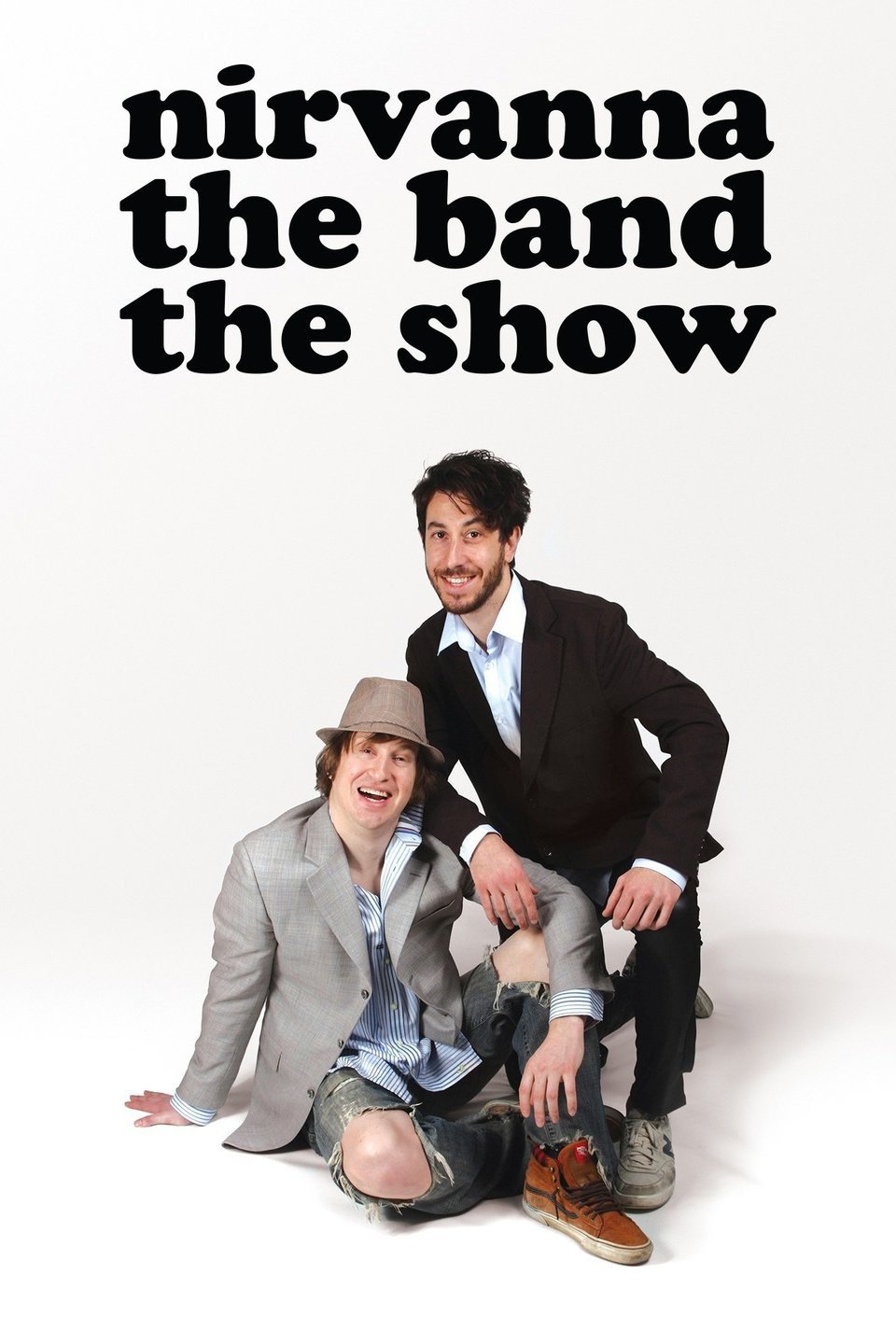
nirvana the band the show
ten episode web-series (2007-2009) : the beginning, the buzz, the break in, the basement, the banned, the b-day, the battle of the bands, the burn, the band, the rivoli
bonus episode : the buena vista social club (dvd extra, with audio-commentary by christ kelley, a friend)

special features : the deleted scenes (fifteen videos), the adventures (four videos, including the famous update day), live @ the rivoli (july 31, 2009, the final show), the auditions (five videos), the piano sessions (five videos), dead: the ntbts blooper reel (seven videos), interactive menu screens,  one alternate opening (the burn).
audio-commentary :  all ten episodes (the band’s is special for matt and jared discussing their production model)
top secret : matt sees parkour, iraq: shubadak, (directed by kathryn mallinson, editor of ntb, matt’s cut), ntb tv pilot, turner classic movies, condom dance

the dirties
feature film (2013)
special features : five different trailers, anatomy of a scene, making of the dirties, the piano session, mistakes were made, mr. muldoon’s cut, cat stevens cover, twelve deleted scenes, the visitor (three house productions) with an intro, commentary, and reading by matt and owen; five press and extras materials (the world premiere interview, a slamdance tv feature, bars and tone, the 7th art interview, forty-eight production stills)
audio-commentary : five in total including a hidden one on close encounters of the third kind
top secret : lhotsky and fisher: honolulu blue (matt johnson, student film, 2004), my mother’s pearls (matt johnson, curt lobb), matt johnson’s acting for screen and stage

operation avalanche
feature film (2016)
special features : five featurettes and four deleted scenes
audio-commentary : three different ones (matt’s is really good, more vulnerable than usual)

nirvanna the band the show
eight episode television series – season one (viceland, 2017) : the banner, the booking, the bean, the blindside, the big time, the boy, the buffet, the bank
special features : four piano sessions, twelve deleted scenes and operation avalanche (short the dirties-like video, from the big time)

eight episode television series – season two (viceland, 2017) : brand new, starts october 27th

random videos
breakingnewsTO : occupy reporter hijacks station (2011)
breaking news – comic con (three parts, funny or die)
how canadians celebrate spring w/ jay mccarrol (evan morgan)
in the studio w/ jared: born ruffians (2013)
three barry lyndon (josh boles) music videos (matt johnson, 2011-14)
never come down (brave shores, 2014; directed by tony ho)
dreams tonite (alvvays, 2017; directed by matt and shy kids)

actor in other projects
shorts, features, and documentaries :
captain coulier, jay as the silver robot iggy (lyndon casey, 2008)
the revenge plot, matt scheming with teenagers (jared raab, 2011)
cosmotive inc. (thomas hackett, 2012)
d.i.y. (peter baxter, eric ekman, ben hethcoat, 2014)
spice it up, matt as a passport photographer (calvin thomas, lev and yonah lewis, 2014, unreleased)
diamond tongues, matt as john matheson, over-the-top actor in film-within-the-film (pavan moondi and brian robertson, 2015)
how heavy this hammer, matt as a hardware store employee (kazik radwanski, 2015)

unproduced / unrealized / screenplays
nirvana the band the movie (a cross-country journey with ntb, abandoned)
encyclopedia brown screenplay by matt johnson (warner bros.)
kill hitler, in pre-production
john a. macdonald biopic screenplay by josh boles

Saturday, April 22, 2017

Matt’s Movie Posters

“Going to lounge at a friend’s house and play board games and just waste their time. That’s one of the great... That is what our society… Like all of this stuff. Like the doctors, the energy, all of the wars, all of this brutality. It’s so that we can have those moments!” – Matt Johnson

The posters in Matt and Jay’s house in Nirvanna The Band offer suggestive references to larger subjects and themes of particular episodes and the series. The background pictures and posters hanging on the walls of the living rooms and workspaces in Matt Johnson’s work have slowly evolved over time: In the original Nirvana web-series there were images of popular culture and personalized pictures adorned on the walls. In The Dirties there’s plenty of posters from mainstream nineties films in the basement and what makes them unique is that they have been grafitied, illustrating what Henry Jenkins describes as the participatory textual poaching of convergence culture. In Operation Avalanche, which is set in 1967, there is a well-selected arrangement of vintage posters of the classic films of that historical period. And now in the reboot of Nirvanna their living room includes a wall layered with the highly esteemed Criterion Collection posters.
Matt Johnson’s Nirvanna The Band The Show, similar to videogames, creates a playful, virtual world full of references that act like interactive hyperlinks that allows its viewers to participate in their meaning by pursuing them IRL to better understand their significance (I’ve definitively taken up playing pool at The Rivoli because of the show). These textual references through movie posters was always there in Johnson’s work and they culminate in the pop DVD covers turned posters of the Criterion Collection films that layer the walls of the Zapruder Films studio in Nirvanna. It was probably during the transition from the original web-series to The Dirties that Johnson leaped exponentially as a filmmaker. While the first Nirvana series seems more influenced by popular television and reality shows, mainstream movies and alternative music, video games and digital media, afterwards starting with The Dirties the history of cinema and its masters became his biggest rivals. Though it’s still popular culture (‘His name is John Cena!’) and movies from a nineties childhood (Teenage Mutant Ninja Turtles, Terminator 2: Judgment Day, F. Gary Gray’s The Negotiator) that’s usually at the forefront of each episode, these tucked away references add depth to the work and participates in a larger circulation of film forms. From what’s available so far in the Criterion Collection, I’ve counted twenty titles that are directly engaged with in Johnson’s work (though there’s many others that appear through the posters).
François Truffaut’s The 400 Blows (1959) seems like the obvious choice: a delinquent teen in Paris of the fifties who skips school and spends his time hanging out with friends and fighting with his mother. The Dirties has been said to owe a lot to Rémy Belvaux, André Bonzel and Benoît Poelvoorde’s Man Bites Dog (1992), which is dark comedy that follows a serial killer as a documentary crew is making a film about him. Johnson has spoken highly of Orson Welles (a The Stranger poster is on their office wall in Operation Avalanche) and the film of this star-director that has been the most cited is F for Fake (1973) for revealing the illusionary nature of the medium and for being about the creation of a film. One of the special features on the DVD of The Dirties is Johnson editing the film on his Mac computer, which is the most direct connotation of the Welles documentary (and perhaps also Filming Othello). Lindsay Anderson’s If…. (1968) starring Malcolm McDowell as a rebellious teen in the academy who takes to violence is a staple of the school shooting genre. When Matt is in drag singing ‘Malkovich, Malkovich…’ making their student film in The Dirties it’s a direct reference to Spike Jonze’s Being John Malkovich (1999). The two secret, hidden references in The Dirties are Eric Harris and Dylan Klebold home videos (the Columbine shooters) and Ben Coccio’s Zero Day (2003).
In Operation Avalanche there’s a scene where Matt is talking and in the background Dr. Strangelove or: How I Learned to Stop Worrying and Love the Bomb (1964) is playing in the background and they also visit Stanley Kubrick on the set of 2001: A Space Odyssey (1968). The direct cinema style of the film was said to be influenced by Albert and David Maysles and Charlotte Zwerin’s documentary on The Rolling Stones Gimme Shelter (1970). One particular great introductory medium shot of Matt reminded of how John Ford introduced John Wayne in Stagecoach (1939). The hidden references in Operation Avalanche are the moon landing conspiracy films Peter Hyams’s Capricorn One (1977) and William Karel’s Opération Lune (2002).
But the difference between the use of posters in Operation Avalanche and Nirvanna is comparable to the difference between Hollywood Canteen and the Criterion offices on Fifth Avenue. In episode six The Boy there are two miracles: discovering the boy is able to walk and Jay coming to terms with his severe mother. These reminded me of how the fifties Cahiers critics saw in the films of Rossellini (Journey to Italy) and Hitchcock the creation of miracles. In episode seven The Buffet the episode revolves around the premise of My Dinner with André (1981) and there’s even an insert shot from it at the beginning. Matt also describes being really moved from a scene from Ingmar Bergman’s Autumn Sonata of Ingrid Bergman’s saying, ‘I could always live in my art but never in my life.’
            But its episode five The Big Time where the most posters appear in the frame, as opposed to mostly just being in the background of some of the interior shots, and it’s the one where Matt becomes a filmmaker and takes his film to Sundance (also explicitly referenced is the Entourage episode The Sundance Kids). In their living room, surrounded by their piano, television and N64 and other collectibles these Criterion posters are on full display on the west wall by the bunkbed. These include: Sam Fuller’s White Dog (1982), which makes one think if is it’s the Matt character whose racist or if it’s a show about racism? Though the blunt insensitivity to racial issues probably owes more to the shtick of certain gonzo comedians and their characters like David Brent (Ricky Gervais), Jonah Takalua (Chris Lilley) and Ali G (Sacha Baron Cohen). There’s Spike Lee’s Do the Right Thing (1989). So is Matt just trying to do the right thing? I’m not so sure… Martin Scorsese’s The Last Temptation of Christ (1988). Is this to suggest Matt is a Christ-like martyr, suffering for all of our sins? Maybe a bit of stretch… Michelangelo Antonioni’s L’Avventura (1960) is there. The Antonioni film transitioned cinema to its modernity with its narrative and ambiguity, sense of alienation and duration. Would Nirvanna be bringing the cinematographic medium into its next phase? The Beastie Boys Video Anthology, and perhaps to a lesser extent Richard Linklater’s Slacker (1991) and Dazed and Confused (1993), culminates the MTV music video mashups of styles and nineties pop joyfulness that they would expand on. Chasing Amy (1997) because Kevin Smith (who has a cameo in the series) would help Johnson earlier in his career by distributing The Dirties. Rainer W. Fassbinder’s World on a Wire (1973) predicts the virtual, simulated world of spectacle that modern society is wrapped up in but also Fassbinder the filmmaker, working with a tightly-knit troupe, starring in his work and making auteur television (Fox and His Friends is another example of a work with similarities). Abbas Kiarostami’s Close-Up (1990) which is about a con-artist being so moved by a film that he pretends to be its director Mohsen Makhmalbaf and is then caught, charged, released and then finally accepted as the illusion. Finally, and I think most importantly, David Lean’s adaptation of the Noël Coward play Brief Encounter (1945) where a chance encounter leads to a change of ones life, giving meaning to its existence and whose memories will always be fondly remembered. As great a description of what makes Nirvanna so valuable if Ive ever heard any.
So all of these references contribute to the DNA of cinematographic forms in Johnsons’s work, which I think him makes one of the most sophisticated directors working today, even though they are tucked underneath the work’s overt silly and adolescent narratives. Just like the master of suspense Alfred Hitchcock these little details in the mise en scène can contribute to the plot and themes or just only be suggestive red herrings. It makes one wonder: where’s the Psycho poster hiding?