Showing posts with label Jean-Marc Vallée. Show all posts

Tuesday, April 22, 2025

Jean-Marc Vallée at Centre PHI

If you’re in Montreal this summer and you’re a movie buff, there is a great multimedia exhibit and sound-journey to check out at the Centre PHI in Old Montreal on Jean-Marc Vallée (extended until July 6 and takes around an hour to go through). This is his first homage exhibit, after his death in winter 2021. The exhibit was organized by the gallery’s founder and director Phoebe Greene and Sylvain Dumais, working closely with Vallée’s son Alex.

It’s appropriately entitled “Mixtape” as music has always been at the heart of Vallée work and life. One can think of the famous scene of the Stones’ “Sympathy for the Devil” in C.R.A.Z.Y (2005) or the iconic selection of Michael Kiwanuka’s “Cold Little Heart” in Big Little Lies (2017). There’s also a remarkable anecdote about his dad being a radio host. 

The exhibit is divided into four principal rooms. The first room has his son Alex Vallée recollecting on his relationship to his father and music. Two more rooms let you hear stories about his work; one with ten booths to listen to audio commentaries on him by peers accompanied by famous songs from his films, and another dark room, where you can sit on beanbags, and listen to more testimonies. One room presents some of his earliest short films such as Les fleurs magiques (1995) and Les mots magiques (1998). These films are also available to watch in a bigger room at the end of the exhibit. Actor Marc-André Grondin makes the argument that his whole cinema is encapsulated in these earlier works.

Vallée was a rather private filmmaker and did not reveal much about himself in interviews. This exhibit opens his personal life up somewhat. For example, we hear Vallée speak of how it was only when he became a father that he started to invest more of himself into his filmmaking. 


To hear his son talk about their relationship you can really feel that love, impact and how music was at the center of this. In this first room, there’s a mashup of samples from his scores and clips, that seems hand selected by his son and seems especially resonant for Vallée, who always said, “I don’t try to hide it, there’s always a little autobiographical trait in my films, that tries to express how I feel.” The
re’s also a maquette of his childhood Rosemont home.

The early short-films also especially resonant – especially as they’ve never been distributed on home-video before – to understand his troubled childhood, which pushed him towards music, which he said made him dream and imagine a more exciting world then the one that he was living in.

In this period, Sinéad O’Connor was a big influence, and so was Led Zeppelin. Through the commentary, we learn of Vallée’s failed attempt to get the rights to the latter’s “Stairway to Heaven” for Café de flore (2011). His music supervisor, Susan Jacobs, recalled how after getting the rights to one of Led Zep’s songs for Sharp Objects (2018), Vallée told her that at a younger age the band’s music helped him find meaning in his life. 

Audio commentaries let you listen to famous actors like Vanessa Paradis, Evelyne Brochu, Matthew McConaughey, Reese Witherspoon, and Laura Dern speak about his life and work. Stories from Denis Babin from his inner circle, friend Marie-Julie Dallaire, producer Pierre Evan, cinematographer Yves Bélanger and compatriot Denis Villeneuve were especially insightful. All contributors spoke very highly of him.

Paradis said that Vallée was a fascinating figure on set and would act out scenes to help inspire everyone to bring out their best work. Witherspoon spoke about her cellphone videos of him singing during his famous karaoke sessions while filming Big Little Lies which you can watch at the end of exhibit. Laura Dern, in her commentary, spoke reverently of him saying that they had a “master plan” to work together for the rest of their lives. It is both extremely touching and heart-breaking.

Hauntingly, after hearing about his obsessive work writing the script to his John Lennon and Yoko Ono biopic, you hear his last remaining voicemail, telling a friend he was going to go to his new house in Quebec’s countryside, which must have been shortly before he died at age 58 of a heart attack.

I take great pride in Canadian cinema that we had one of the greatest working directors and that he lived in Montreal. This exhibit is a fitting tribute. And make sure to leave with a link to the Spotify playlist so that you can take part of it home.

Monday, August 14, 2017

A Cinema Of Imagination in English Canada

The release of Big Little Lies out now on Blu-ray is a reminder of what’s lacking so much in Canadian cinema: beauty, generosity and spirit. The community of and around these three mothers and their children is going through many challenges and problems but there’s a resilience that holds everyone together. The interior emotional world of these characters oscillates between anger and joy, sadness and humor. It’s by this fine balance, accentuated by a powerful soundtrack, that Big Little Lies captures a truth of the human spirit today. The image that comes to mind is that of Madeline telling people to fuck off with a smile as she has the best interest of her family and friends in mind. That is to mean well and to fight for it. In Big Little Lies everyone are themselves: they are complex characters that have experienced challenges, they are beautiful and full of emotions, they need to be loved and are loving, and at the end they get what they need (to cite the Rolling Stones song that plays during the end credits). If Jean-Marc Vallée is still the best working Canadian director it’s not because he has gone stateside and has more resources (though this is obviously a plus as it has given him more freedom), it’s because he proposes a cinema of three things: dreams, imagination and winning.
            So to repeat these three terms, since they are so necessary though actually scarce: dreams, imagination and winning. Dreams as it’s so important to believe in a future or another world where so many of today’s problems are no longer prescient and happiness is possible. Imagination as it’s necessary to believe, to imagine these possibilities and relationships to make them real. And finally winning as it through these wishes coming true and perseverance eventually paying off, which gives meaning to the struggle that it took to get there. Humanist beliefs for sure, but why have they become so hard to find and rare in an English Canadian cinema? Why is it when so many Canadian directors finally get a chance to make a film the end result is usually the opposite: reality, oppression and defeat? A collective imagination doesn’t have to essentially rely on social reality and its problems, an individual defeat that’s a symptom of institutional malaise. Why instead of dreaming success and victory that instead so many of these directors put forward defeat and failure? I know that the world is and can be a shitty place but this only makes the potential for imagination and victory even more important: at least in art it doesn’t have to be.
            Jacques Rancière can be valuable here as he has a novel manner to articulate the link between art and democratic politics. His concept of the distribution of the sensible refers to the communal forms of naturalized perception within a particular social order. For Rancière social formations are naturally oligarchic therefore the powers of artistic operations are capable of reconfiguring hegemonic perceptions of reality. Art is able to dispute any sense that existed meanings of socio-cultural life is inevitable. This can be seen in his two favored regimes of imageness: the artistic image for Rancière, which creates discrepancies within a given order of expectation of reality as it attempts to dismantle normalized standards of representation; and symbolic montage that connects disparate elements to create affinities, whose co-belonging shows these elements as being part of the same world, as it blends familiarity with mystery. Two other important terms are politics which for Rancière is anything that reframes the sensory community and police which is anything that reinforces the status quo.
            Through a Rancièrien perspective the positive qualities of this idea of an English language Canadian Cinema of the Imagination becomes political, in that they imagine a world of co-habituation while also troubling the apparatus, the institutions that circulate in the financing and distribution of these works. 
            The current genre of the English Canadian miserablist drama seems to be have been solidified by the institutionalization of the discourse formations of and surrounding the work of Atom Egoyan – whose films regularly denounces the problems of society and shows the effects of alienation, while routinely being celebrated for it – as this model, and themes about Canadian fiction like the garrison mentality and weird sex and snow shoes, has ended up creating a collective imagination of individuals being separated instead of finding a place within a larger social community. This ossification might have its roots in the creation of a state-sponsored fiction film industry in favor of social portrayals and in opposition to the communal popularity of American films. It can even be seen as disseminating into current CBC television productions like the reboot of Anne of Green Gables that focuses more on sensationalism and violence than the earlier joyous moments and accomplishments of its original. In this context programming can be seen as supporting this industry and curation favoring those that work within this system.
            Part of this problem is that there are so few directors with a clear, personal vision of hope. Instead of believing in coherence and breath the reigning model is that of fragmentation and group-consensus. Feeding social expectations and stereotypes instead of exceeding them.
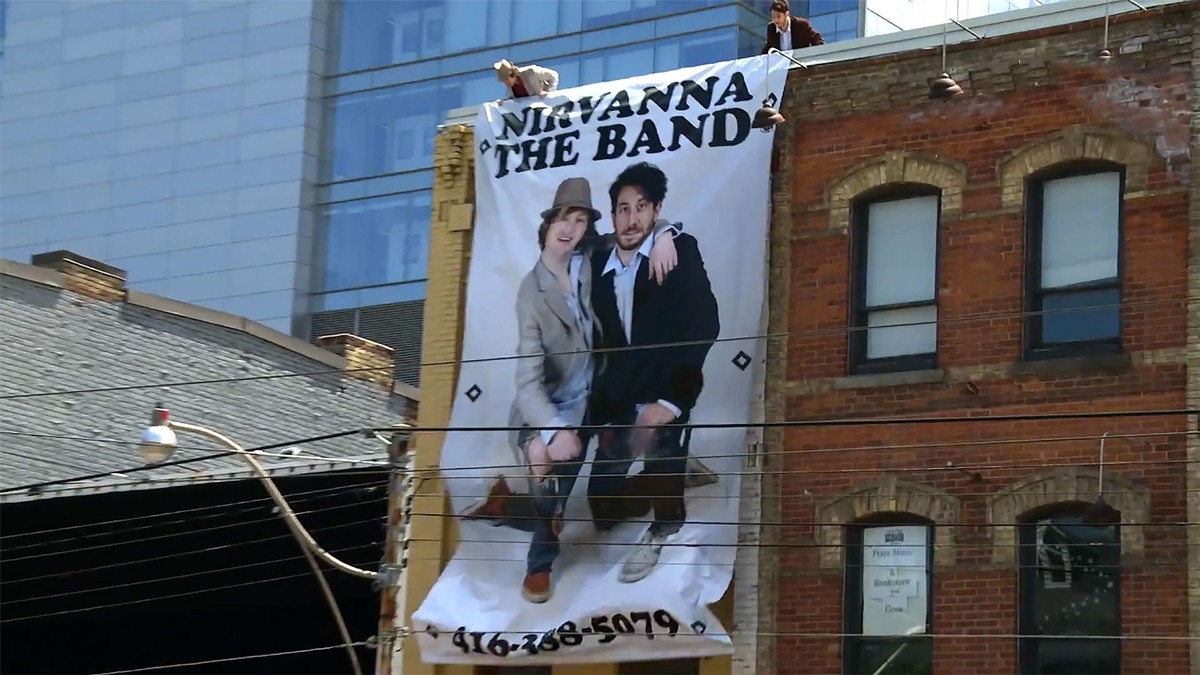
If there’s a noble tradition in English Canadian cinema its roots can be seen in the work of Don Owen and Allan King: the documentary tradition, focusing on the people and streets of Toronto and elsewhere, as it hesitates towards fiction. In this middle-ground there is room for imagination to appear where through improvisation surprises can occur to show off what makes us unique. This tradition can be seen as continuing in the work of Kazik Radwanski (Scaffold) and Matt Johnson (Nirvanna The Band The Show). But there’s also a more imaginative Canadian film history hidden behind this: I’m thinking about the line that traces John Paizs’ Crime Wave to Matt Johnson’s Operation Avalanche in English Canada, and Gilles Carle’s La vie heureuse de Léopold Z to Vallée’s C.R.A.Z.Y. in Québec. A leap to dreams, imagination and winning is possible and nobler. And there’s a history of these works in Canadian cinema that shows it has been done in the past. Some examples that come to mind includes King’s Who Has Seen the Wind?, Peter Mettler’s The Top of his Head, Donald Brittain’s Family: A Loving Look at CBC Radio and Terrance Odette’s Saint Monica.
So how to break the mold? How to combat individualism and cynicism? The answer, to restate it, is quite simple (though hard to achieve): find the possibility to dream, imagine and find success (how ever intimate it’s defined: it can be as small as two friends high-fiving after a rough day). Some recent examples that come to mind that strive for this includes Pierce Csurgo and Mitch Greenberg’s La Chasse and its fantasy narrative to recover a stolen painting; the expanded cinema route of Rebeccah Love’s live readings of short stories and plays and the over-ambitiousness of the longer short film Acres; or finally Mark Cira’s work that’s oversaturated with symbolism whether through the story of a young girl being diagnosed with diabetes (Sweet Yoyo) or an out of control Instagram short.
This Cinema of Imagination in English Canada would be one that’s loyal to one’s emotions and intellect. It would need to be faithful to one’s personal history and the people that have crossed it. It’s currently what’s so exciting about Canadian cinema and it might just have to take place at the margins: A small group of friends making work, coming together and dreaming that happiness and success is possible.

Thursday, July 6, 2017

Vallée Esoterica: Lost Girls and Love Hotels

Would the unrealized Lost Girls and Love Hotels have been an important project for Jean-Marc Vallée? A couple of online articles discuss its possible adaption: It’s 2009, The Young Victoria is about to be released, and Kate Bosworth (21) is planning to star, adapt and produce Catherine Hanrahan’s book with the Québécois director. But instead Vallée would go on to make Café de flore then Dallas Buyers Club and the rest is history (just last week he was honored with an Order of Canada): to tell more personal stories he would discard the weight of studio filmmaking to work more closely with the actors and actresses, a smaller crew, lighter cameras and in a more insular environment.
But what did Vallée exactly see in Lost Girls and Love Hotels? A commissioned job? Something more personal? What could it have added to his oeuvre? Is it best that it was never made? Important questions for a Valléeien to ask.
First off, here is the story of Lost Girls and Love Hotels: Margaret, a young Toronto woman, leaves her family and home, which includes a brother with schizophrenia and her single mother (their father left a long time ago), to live in Tokyo to teach English at a stewardess academy. There Margaret lives in a low-rent apartment with a party friend Ines, gets involved with a gangster Kazu and spends her nights drinking, dancing, high and having sex. Eventually she comes to terms with the trauma of her past and starts to accept herself for who she is. The book ends with an interior monologue: “I tell myself, there is no happy ending. All the pieces do not fit together perfectly. Things are ragged and messy. We are torn apart by events. Put back together differently by others. And somehow everything is beautiful.”
A few things come to mind reading Lost Girls: It’s a perfect fit for Vallée, anticipates his later redemption stories and it’s a shame that he stopped making more personalized projects.
So what’s characteristic of a Vallée story? A child being dropped into an unwelcoming world. Individual perseverance against some form of oppression. Travel as necessary to see the world and to find oneself. Sex, drugs, smoking as important parts of life. Music as essential. And I’m sure that I could go on about more reoccurring themes in his work.
The suggestive title and cover of Lost Girls and Love Hotels might give the impression that it’s about sensational sexual encounters. But it’s actually more about the spirit of the Margaret character: her vulnerability, childhood trauma, aimlessness and friendships. It’s a brisk read of young adult fiction that recalls Enemy, Fifty Shades of Grey and Lost in Translation.
The odd characteristic of books that Vallée has either adapted, or had planned to adapt, is that they all seem have been written in a prose that recalls his visual style, while at the same time being very personal, or at least very individual stories, for their authors (Wild and Lost Girls are the two that come to mind). Are these just Valléeien coincidences?
Just as a reminder of the titles so far in the Vallée literary canon: So far they include Hanrahan’s Lost Girls and Love Hotels, Cheryl Strayed’s Wild, Liane Moriarty’s Big Little Lies, Gillian Flynn’s Sharp Objects and Dominique Fortier’s Du bon usage des étoiles. All works by women authors.
But on the subject of symmetries between the books and Vallée’s mise en scène let’s look at Lost Girls as an example. Inside its story, classic pop music makes an appearance through conversation and atmosphere. There’s a focus on a dysfunctional childhood and its family dynamics. Memories appear through stream of consciousness flashbacks. There are certain reoccurring subjects that are touched upon like airports and border crossing, diseases and hospitals. As well, like so many of Vallée’s films (including The Young Victoria and the abandoned Janis Joplin project), they’re all coming of age stories about young woman.
Where something like Lost Girls would fit in the Vallée cannon would be somewhere between the erotic thriller of Loser Love and the young woman rediscovery narrative of Wild. The film would have also provided a great role for the actress Kate Bosworth whose talents are definitively underused. And two things that I think would have made an adaptation of Lost Girls so great is that it would have been Vallée’s first production partly set in Toronto and it would have really delved into his interest in Japanese culture.
But what’s being lost through Vallée’s submission to American production companies – that would rather adapt New York Times best sellers that already have built-in audiences – are some regional specificities, a dilution of his own interests and (most importantly) a director loosing the direction of his own career. However good Sharp Objects will be (and the rumors is that afterwards he might have to do a couple more commissioned projects for some friends), I would rather see Vallée start working on films like his own Les fleurs/mots magiques follow-up, Lost Girls and Love Hotels, the Joplin or even the John Franklin film.
So finally what makes Jean-Marc Vallée exactly Jean-Marc Vallée is slowly being pushed towards the background – the personal desire and force that led him to make C.R.A.Z.Y. and Café de flore. The Jean-Marc Vallée that exploded the Canadian film landscape with a newfound cinematographic ambition mixed with an impressive playlist. Where imagination and fantasy, ambition and dreams, winning and melancholy could rise above the problems of society and an omnipresent cynicism. But since Vallée’s stateside trip in the meantime Québécois cinema seems to have met and exceeded his call for a cinema of the imagination: Vic + Flo ont vu un ours, Nelly, Les démons, Tu dors Nicole and Ceux qui font les révolutions à moitié… (with a few of their directors even casting the lead of C.R.A.Z.Y., Marc-André Grondin). It led to a new cinematographic renaissance in Montreal.
Though there’s still something about Vallée that infiltrates his current projects like Sharp Objects. Since he couldn’t make Janis Joplin film (which I imagined the show being initially a test-run with Amy Adams for it), Sharp Objects will have to make up for it. You can see parallels between both projects as they're both about a young vulnerable artist (here a journalist), sensitive to their own feelings and surrounding, and when confronted with a cold, cruel and violent world, through their perseverance to their passion and work (however underappreciated they are), the consequences will lead them to their own personal resignation and possible death. It’s the same narrative drive that leads to the plane crash at the end of Café, Ron Woodroof’s martyrdom in Dallas Buyers Club and finally the fate of both Janis Joplin and John Franklin.
But as Anne Marie Fox’s amazing Instagram account shows (and we’re still waiting for the special features on the Big Little Lies boxset), Vallée is a consummate professional, still light-hearted and a team leader. He knows what he’s doing: Modestly siting in the shadows, waiting to share his prediction of the future with the rest of us. But the question remains: Could Vallée be lost to the American system or is his best work still to come?

Tuesday, February 21, 2017

Crossroad: Jean-Marc Vallée at Big Little Lies

 “I’ve been doing one after the other for the last five years, since Dallas Buyers Club and I’m exhausted. After Sharp Objects and another American film (perhaps with Witherspoon) to follow, I’m taking a break where Hollywood won’t see me. No one will see me except for my close ones in Montreal.” – Jean-Marc Vallée (Montreal Gazette)

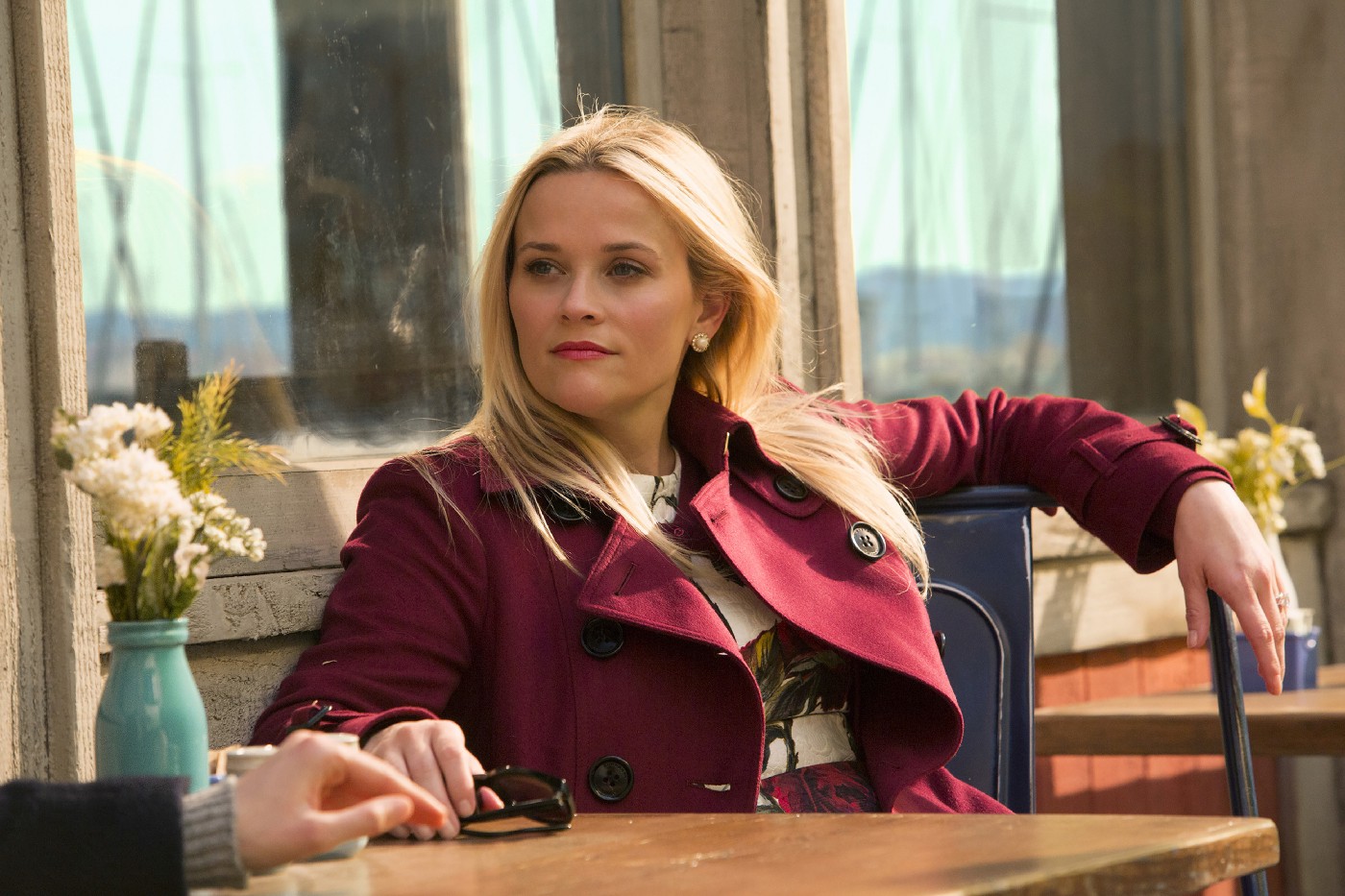
There’s a reservation and anger to Jean-Marc Vallée. Even though he’s at the peak of his career, now with the seven one-hour episodes of Big Little Lies currently airing on HBO which is perhaps his most ambitious, heartfelt and stylistic work so far; there’s still a resentment to his private observations (‘No one will see me…’). You would think he would be in a better mood: Variety gave Big Little Lies a cover and it has been getting rave reviews from the likes of IndieWire, The Week and Le Blog du Cinéma. In the Variety feature there’s even an anecdote from the Big Little Lies wrap party where Reese Witherspoon, Nicole Kidman, Laura Dern and Shailene Woodley serenaded him to Fleetwood Mac's Dreams (a reference to episode 3). You would have to wonder what he has to be upset about?
            Similar to Steven Soderbergh, and unlike Denis Villeneuve, Vallée seems to have an ambivalent relationship to the film industry. The economics, logistics and bureaucracy are all hindrances towards his need to create and make movies. And after the commercial failure of his more personal project Demolition – audiences are no longer interested in character studies, so he says, even such an action-oriented and luminous one such as this – there’s a sense that what he wants to create and what others want from him are no longer the same. The Janis Joplin project fell through and now after another television series (Sharp Objects) his friend Witherspoon wants him for another feature. But these aren’t the projects of his choosing. If Vallée wants to remain a personal filmmaker (with the personal films being the ones where he appears in a cameo) then he needs to free himself from the industry so that he can make what he wants: whether this is the John Franklin film, an extension of his earlier Les Fleurs and Mots magiques films or any other project that he desires.
             It’s this Vallée, the private filmmaker, that generally gets overlooked in broad summaries of him. Take the Vice Guide to Film episode on Vallée for example. With interviews with his actors, actresses and producer Matthew McConaughey, Marc-André Grondin, Evelyne Brochu, Vanessa Paradis and Bruna Papandrea (whose now no longer at Pacific Standard) along with rare photographs, clips and voice over analysis, the episode does a good job at identifying how Vallée’s like on set and reoccurring themes and motifs. But Vallée doesn’t appear in it, which illustrates both his thoughts on these sorts of vanity projects and his busy schedule. Though they mention his earlier Los Locos and Loser Love it’s unclear if the works were even seen or if their merits picked up upon. About the sequel to Posse, Los Locos: Posse Rides Again Vallée talks about first working with children with Down syndrome whose positive spirits would charm him and his production crew so much that he would cast children with it in his films from Café de flore onward. The New York setting of Loser Love would anticipate Demolition and its domestic abuse subject the fights between Celeste and her husband in Big Little Lies. Probably the biggest inaccuracy of the episode is its blind acceptance of The Young Victoria into his cannon, which he has regularly disowned due to studio interference both on set and in the final cut. And there’s nothing either on the two television shows that he’s worked on Strangers and The Secret Adventures of Junes Verne, which also anticipates his move now back to the small screen.
             This brings us to Big Little Lies. It needs to be said, in these cynical times, Big Little Lies is more urgent then ever with its message of kindness, nostalgia and its association to music, and its emphasis on sentiment which all contribute in making it a piercing spark of light and hope that can shine its surrounding darkness. Though it acknowledges divided households and communities, it’s message is one of strength, endurance and reconciliation in tough times. The David E. Kelley adaptation of Liane Moriarty’s book is a pretty loyal adaptation and though there are some differences it makes it better suited to express the feelings of the scenes and the social world of the characters. In the Variety feature Witherspoon speaks about giving Renata (Dern) more depth and for spicing up Madeline through how she hooks up with the theater director. Some other changes includes nobody saying the catchphrases ‘Oh, calamity!’ which was famous from the book. It hints that Madeline had a cancer scare. Anger and the gesture towards violence is more presently bubbling underneath the social surface. For example Ed, who is no longer a journalist but a website designer, nearly fights with Nathan. And the big shift is that it’s no longer set in rural Australia but in Monterey, California.
            There are also scenes that anticipates Vallée’s adaptation of Dominique Fortier’s Du bon usage des étoiles. Madeline looks out to the ocean and mentions its beauty and mystery. There are scenes about putting on a play that are similar to ones in the Fortier book. Big Little Lies gets at what’s it like to feel pain and to fight for oneself while also allowing for some more frivolous scenes. The melancholic beauty and nostalgic musicality comes through the song selection. Michael Kiwanuka’s Cold Little Heart sets the tone and each character, most notably Madeline’s Chloe, play songs that provide a musical and emotional counterpart to what they’re going through. Vallée’s elliptical style, mixing flashbacks and fantasy into reality, is subtle as he adapts to the more straight-forward storytelling approach of television. But it’s all there from book and Kelley’s adaptation does a better job at balancing moods and giving life to the characters than Nick Hornby did awkwardly with Wild. I won’t say more about the murder mystery that’s at the center, the story is set around flash-forwards to an apparent death at one of the school’s fundraiser, but as the opening credits show, all of the main women characters are there and they are all finally dancing in unison. 
             If one worried that a new generation of Québécois directors, of such great films as Les démons, Nelly, Ceux qui font les révolutions à moitié n'ont fait que se creuser un tombeau and Mes nuits feront echo, would supersede Vallée as he succumbs to the industrial Hollywood machine then you should be relieved. He’s lost none of his charm and the beauty of the project shines brighter than a shooting star. But Big Little Lies is still a transition work for Vallée as this move to television has left him frustrated and his next project Sharp Objects, or at least the book, is extremely cynical. The damaged journalist Camille Preaker (Amy Adams), discovering the corruption and vileness of her hometown, becomes nearly catatonic in front of the misery of the world. The youthful cynicism recalls CW’s Riverdale and the young women protagonist to Casey and the cutting in Shyamalan’s Split. It would be a shame if Sharp Objects becomes one of Vallée's more popular projects because his previous work is just filled with so much heart and generosity.
            So what does Vallée need to do to become Vallée again? To start deciding on what he wants to do again. Maybe find a way to make the Joplin film? Definitively the Franklin film one. And return to Montreal to work on his own projects and to engage more with his community. It’s not the cynical and angry Vallée that we love but the one of a youthful exuberance, perseverance and dreams.
            In the meanwhile, Big Little Lies is right at the start of its run and it promises to be one of his grandest projects yet. There's hope.

Sunday, November 27, 2016

Jean-Marc Vallée in the News

Taking a break from the post-production of Big Little Lies (that needs to be completed by December 23rd), Jean-Marc Vallée held an intimate master class with a group of eight at-risk teens from the Emmett Johns school as part of Dans la rue and Québec Cinéma. Two new articles from La Presse and Le Huffington Post Quebec recount what went on. After a screening of Dallas Buyers Club, the students and some journalist, were there to ask him some questions and get him talking. He liked the experience so much that he hopes to return for another event.

From the event: Vallée said that Demolition is the favorite of his films even though it was a commercial disappointment. While being bored at cégep he took at course called ‘Cinema and Society’ whose prof Yves Lever gave him the desire to dream and become a filmmaker. Big Little Lies is described as a police procedural and drama of manners while Vallée also sees some connections between it and his breakthrough film C.R.A.Z.Y., which shows that he’s conscious about how his American projects rework and refine his earlier Québécois films. But the real scoop of the pieces is when he discusses his upcoming projects: Sharp Objects with Amy Adams as a TV series will be his next project, though unfortunately the more personal Janis Joplin film has been scrapped (most likely due to copyright issues). But whats really exciting to hear is that he’s planning to return to filmmaking immediately after with two Québécois projects. But during his American hiatus there was a new generation of Québécois filmmakers that imposed themselves: Stéphane Lafleur, Anne Émond, Philippe Lesage and Sophie Goyette. The competition has grown. But it’s still a positive gesture that he's taking more control of his oeuvre by returning to Montreal to create more personal stories and to engage more with his community.

So what exactly are these new films? Could they include the adaptation of Dominique Fortier’s Du bon usage des étoiles? I’m skeptical of this since its grand historical narrative of John Franklin’s trans-Atlantic journey would suggest the necessity of an English-language transnational co-production. And what ever happened to his planned French production? More information will hopefully come.

A director of red herrings, false starts and who makes sure to keep you guessing: Jean-Marc Vallée, or how to start again anew, be loyal to oneself and engage with society and the world.

Monday, October 17, 2016

Trailer : Big Little Lies


 Follow the link for more of my writing on Jean-Marc Vallée's upcoming Big Little Lies.

Monday, August 22, 2016

A Must-Have: The Demolition Blu-Ray

‘I related to Davis Mitchell and to this journey.’ – Jean-Marc Vallée

‘On était jeunes. On était fous. La bohème, la bohème. Ça ne veut plus rien dire du tout.’ – Charles Aznavour

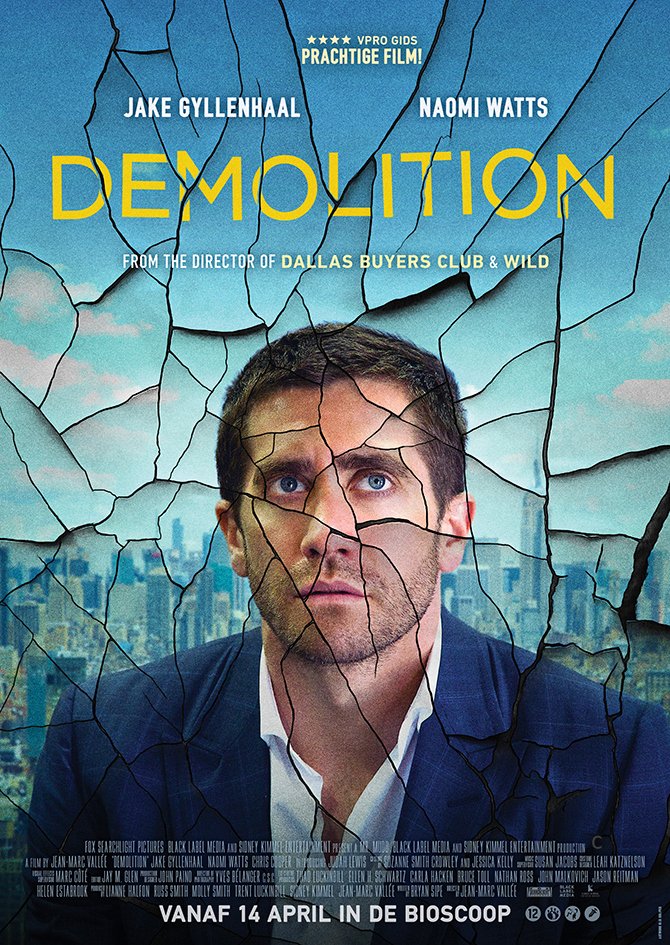
The release of a Jean-Marc Vallée DVD is always a special occasion and with this new Blu-ray of Demolition you can now take the film home in its pristine image and sound quality. It’s the story of Davis Mitchell, a successful Wall Street banker, and after his wife's sudden death his life is shook up and through grieving he is able to find himself, learn to feel again and start a new friendship with a single mother Karen and her son. 

Every scene and detail in the mise en scène provides a unique rhythm and information that has a larger meaning in Demolition’s complex structure and Jake Gyllenhaal is perfect in the role with his subtle expressiveness and range. This expression of intimate human feelings is the emotional réel of the film that is given substance as it engages with the geographical réel. The scene that best illustrates this is when Jake Gyllenhaal dances through New York City, engaging with its landmarks and enjoys himself. This is the Valléeien gesture: that of in cynical times to bring music and joy to people and the city. These non-narrative scenes, that contribute and build on an emotion, are Vallée's specialty. Similar to Howard Hawks, starting with The Big Sleep and To Have and Have Not, Vallée likes to stall the storytelling to focus on scenes for the sake of creating good ones: where Hawks aimed for entertaining character development and witty dialogue, for Vallée it is that of a musical lyricism. This musical point is made explicit with the film’s soundtrack (only available as a digital soundtrack from ABKCO Music and Records, with a press release that reads almost as if it was written by Vallée) that ranges from classical, folk, indie pop, rock and electronica; and where each song gets to the heart and personality of each character without ever being too recognizable (Depeche Mode is another unidentified reference). 

Vallée is able to create this musical lyricism with Yves Bélanger’s refined yet simple imagery that brings a palatable energy and emotion to each scene. While Vallé's regular cameo, that of a mourner at Julia's funeral, explicitly continues his humanist outreach project (which goes back to his role as the priest in C.R.A.Z.Y.) but is now turned towards the upper class, which is a similar gesture to that of Denis Côté with his Boris sans Béatrice. This fantasy and support for others leads to Mitchell’s phantasm at the end of Demolition where he’s reunited with the ghost of Julia (similar to apparitions like Raymond in C.R.A.Z.Y., Rayon in Dallas, and Bobbi in Wild) on the carousel that was reconstructed in honor of her legacy.  

Then there's the Paul Valéry quote in Demolition and, as with Café de flore, Vallée seems to enchanted by the culture of the Paris of the belle époque and the melancholy and beauty of the popular poetry of its time. ‘The future is not what it used to be,’ which for Valéry when he wrote this in the thirties, meant that the atrocities of the Great War would taint the comforting assumption that the future will no longer resemble the past, but which Phil applies to the world of digital trading and unregulated capitalism. But another Valéry quote that would have been equally appropriate, for either the title or for Mitchell, is from the most recent Hayao Miyazaki film: “The wind is rising! . . . We must try to live!The idea of poetry as a privileged escape from the oppression of reality has currency for Vallée as language, style and new technologies are all equally important for him to express his poetic vision through his mise en scène. As Demolition takes language and ontology as its starting point: Mitchell tries to make sense of his existence by discussing his life, the mood and atmosphere, the meaning of words and the limits of his own psyche and his physical body. Underneath the surface of beings and objects lies an essence and this is what he's searching for. So Phil tells him, “If you want to fix something you have to take everything apart and figure out what's important,” while for Mitchell, “Everything has become a metaphor…” This is why Mitchell tears apart as much from his life as he can with his hands, tools and even a bulldozer everything from his appliances to even the infrastructure of his own house.  

There are a few details from Demolition that stand out after repeated viewing: The reoccurring gecko (similar to the fox in Wild) is actually from the Dan Deacon and Liam Lynch video Drinking Out of Cups where Deacon, in a thick Long Island accent, rehearses some cynical statements. The use of this viral comedy video from 2006 that Mitchell and Julia bonded over earlier on in their relationship (probably a Bryan Sipe reference) is just like Demolition as just like Mitchell and Julia had a negotiated response to this video (turning its cynical Seahorse reference into a romantic one) Vallée takes what could have been a cynical drama and fills it with warmth, care and love. 

Vallée is clearly a réalisateur d'oeuvre as with each new film he builds upon the previous one and all of them contribute to the world-building of his filmography: A Matthew McConaughey-like cowboy appears in a parking-lot in Wild, the business man that tries to pick up Cheryl Strayed at the end of the memoir spins off with Mitchell in Demolition, and the mother-and-son Karen and Chris will anticipate Jane and Ziggy in Big Little Lies. [In the credits there are also references to used footage from Wild from Twentieth Century Fox (though I can’t exactly pinpoint it; maybe the earlier hospital scenes?) as well there is the Snow Monkeys clips which Mitchell watches before going to sleep (from WNET/Thirteen Productions) which anticipates the snowstorm ending of Du bon usage des étoiles.] 

Though the Blu-ray is skimpy of features, there’s at least one great one on it: the Behind the Scenes location footage of the production (mostly short scenes) which is mostly silent with some natural noises. There is Vallée carrying the camera, similar to Soderbergh, and he talks to the actors in his energetic English. There is the small crew, and all of the production specifics, as they’re out filming on naturally beautiful outdoor locations. This form of poetic and personal cinema, along with Vallée’s resourceful means and major actors eager to work with him, makes him closer to a filmmaker like Terrence Malick than to most other Hollywood independents. The other few making-ofs are short and not that impressive (e.g. rehashed footage from the film, with espoused clichés from the crew). So there could have been more… But, either way, it’s incredible to have the chance to re-watch Demolition and the Blu-ray looks and sounds great. It can keep any Valléeien occupied until the release of Big Little Lies on HBO next year. Mysteries are abound.

Saturday, August 20, 2016

The Demolition Soundtrack

A new soundtrack from Jean-Marc Vallée for Demolition which includes a mix of rock, classical, folk, indie pop and electronica. The songs appear in subtle ways during key scenes in the film to express the emotions and personality of the characters. The musicians include Frédéric Chopin, Gil Scott-Heron, Sufjan Stevens, Loui Doillon, My Morning Jacket, Free, M. Ward, Alexandra Streliski, Half Moon Run, Heart, Cave, The Animals, J.S. Bach, Dusted, Jeremy Zuckerman, Charles Aznavour and Bob Dylan. And the songs are Nocturnes, Op. 9: No. 2 in E-Flat Major; B-Movie; Redford (for Yia-Yia and Pappou); Where to Start; Touch Me, I’m Going to Scream (Pt. 2); Mr. Big; To Be Alone with You; Watch the Show; Le départ; Warmest Regards; Crazy on You; Sweaty Fingers; When I Was Young; Brandenburg Concerto No. 3 (I.–II. Adagio); Bruises; Property Lines; Under a Blanket of Snow; La Bohème; and It’s All Over Now, Baby Blue. Enjoy! - D.D.
  ***

Thursday, August 18, 2016

Found File : Jean-Marc Vallée on Liste noire

An obscure Jean-Marc Vallée interview from the Liste noire period that was re-posted on the Films du Québec website: this early interview provides a thorough and rich portrait of the filmmaker before he would become more internationally known. Many of the core ideas of his filmmaking are already there but he’s also more vocal and keen, which is a trait that would diminish with the years.

Published in the press dossier for the film, Liste noire – Entretien avec Jean-Marc Vallée (1995) is a rare early interview. The interviewer Charles-Henri Ramond contextualizes Liste noire as one of the commercially successful Québécois films of the late 90s, with Caboose by Richard Roy and Erreur sur la personne by Gilles Noël, that helped refresh their genre films as they were inspired by their American counter-part. Ramond writes, “The modern era of crime stories, thrillers, suspense and other type of fantastic film reinvested the Québécois corpus.”  

In it Vallée still sees the medium for its entertaining qualities but where then he highly values that of audience manipulation in his post-C.R.A.Z.Y. films he was able to refine his aesthetic by focusing first on its emotions.

In the interview he cites Hitchcock (obviously he thoroughly read Hitchcock/Truffaut) but also Paul Schrader and Philip Kaufman. He’s already saying (about the film's sex scenes) on understatement in acting, "Less is more," but he adds, "But as Philip Kaufman also says: ‘Sometimes, more is more.'" He mentions an appreciation for 37°2 le matin by Jean-Jacques Beineix, which he contrasts with Liste noire.

Of note is how Vallée mentions Hitchcock and Truffaut as the center of his cinephilia… Vallée brings the ideas of the original Cahiers project to Montreal and through it is able to re-invent Québécois cinema and film in general. Around the same time that Vallée was making these comments about Hitchcock and Psycho, in Switzerland Jean-Luc Godard was doing the same thing in his Histoire(s).

It’s an honor to translate him. – D.D.
***
The interview begins with a Hitchcock quotation that Vallée then explains,
“You know that the public is always searching to anticipate where the film is going as they love to say: Ah! I already knew what was going to happen. So because of this, one must take this into account, but also completely guide the thoughts of the spectator.” – Alfred Hitchcock


“To begin this interview with this citation from the master of suspence, it’s to say the importance that I grant him and his influence that he has on how I approach cinema, that is to say, like a game. A game with the public. A game that utilizes the cinematographic art to deceive, play, scare, make laugh, to create emotions on a mass scale. With this in mind, Psycho is the perfect example of what cinema can do, and for Hitchcock, it’s his experience that is the most passionate game with the public. “With Psycho, I was doing the directing of the spectator,” he affirmed in his famous interview with François Truffaut. To direct the spectator. It’s based on this idea, and through constantly reminding myself of it, that I took on the task of realizing Liste noire.”

On what brought him to the project,
“The task of directing of Liste noire interested me for several reasons. First off, I was really interested by the challenge of making a thriller that I found to be well written. Suspense, as a genre, permits a grand exploration of the cinematographic language. Secondly, the talkative side of its script really pleased me. And finally, I really liked the characters, and especially the bad guy! Liste noire is certainly story driven, where the story takes away from the stars, but it’s also, for me at least, a film about its characters.”

How to work with actors,
“I must really know the character so that I can know what to tell the actor and explain to them their motivation, debate and identify with their emotions; to really know the scene and how they normally work to best be able to direct them with a continuity; to have the judgment to nuance their performance; and finally, the choice and values to be able to choose a shot. So even if I’m really interested in its technical side (I like to frame, get good shots, have nice movements, light, and create pretty images) I reserve a capital importance to the work of the actors. It’s they who make the film. The cinema that I want to make is one of emotions.”

Why he edits his own films?
“Well because I like it. We learn so many things about understanding the language of cinema in an editing room while were manipulating the footage oneself. This is such the case that we eventually start to hesitate giving the job to others…  The montage ideas come mostly to me in pre-production or while the decoupage where I choose, for 75 percent of the time, the looks of the characters to determine where I cut. At the end of the day, I remain pretty loyal to my own découpage.”

And on its score,
“I told my composer that I wanted something that was equally simple, classic and modern. I set the bar quite high because, as on my working cut, I’ve already included several already existing tracks from Bernard Hermann, Jerry Goldsmith, Trevor Jones, Maurice Jarre, Ennio Moricone, Pino Donagio and then I told them: ‘Inspire yourself from these… but remain original.’ They fulfilled by request and exceeded them.”

Finally on Vallée’s American film references,
“My favorite cinéastes are American and my influences are primarily American. So it is sure that there is something American about my films. But it’s not forced, it’s, it’s just my nature! To make a film, for me, this means, wanting to create a good show. I’m interested in cinema in all of its forms (cinephile one day, always a cinephile). To honestly say it, I prefer the films of Clint Eastwood to those of Marguerite Duras. The cinema that I make, and that I want to create, will always be relatively simple. Even in its narrative form the most simple, as I find the cinematographic language is already really complex. To tell a story through images, by the succession of shots, and not by the interior of the shots, can seem banal and easy to attain. But it is not at all evident! Hitchcock had passed his life experimenting one film genre. It’s probably one of the most beautiful lessons to take from the History of cinema. I re-read the book Hitchcock-Truffaut before the filming of each of my films. This reminds me each time that the ‘direction of the spectator’ is just as important as the direction of the actors.”

Tuesday, August 16, 2016

The Three DVDs of C.R.A.Z.Y.

So there are at least three different editions of Jean-Marc Vallée’s film C.R.A.Z.Y. on DVD: there’s the standard edition, a collector’s edition and a Blu-ray. Why this is important is that to fully appreciate its array of special features you would need all three of them.


The standard edition is the only DVD that comes with the audio commentaries, which includes ones by Vallée, the sound designer Martin Pinsonnault and production designer Patrice Bricault-Vermette, and two other featurettes C.R.A.Z.Y. sur le plateau and C.R.A.Z.Y. à Venise. The Collector’s Edition and the Blu-ray share many of the same special features: Making of featurettes on the director Jean-Marc Vallée, the producer Pierre Even, and with the actors; along with separate featurettes Émile’s audition, Visual effects, Filming in Morocco and deleted scenes. With the difference between the two is that the collector’s edition comes with a special booklet and the Blu-ray has the best image quality out of all of them. I’ll elaborate more fully on these special features later.

But that’s not all. To best appreciate the Jean-Marc Vallée’s film there are some great books that elaborate on its meaning. First off there’s the C.R.A.Z.Y scénario (Éditions Somme Toute) with the script, one of Vallée’s rare essays (a manifesto on his filmmaking) and rare photographs from the production. Secondly Robert Schwartzwald’s new study on C.R.A.Z.Y. as part of the Queer Film Classic series. And finally Vallée’s early film professor Yves Lever’s book L’analyse filmique (a valuable resource for a young Vallée when he was becoming a filmmaker). This last book might be the most important of them all because it attempts to get to the essentials of Jean-Marc Vallée’s art: the mise en scène.

Isn't this not what Vallée, Pinsonnault and Bricault-Vermette are actually trying to articulate throughout their audio commentaries? And what makes their behind the scenes stories so fascinating is how it either shows or describes the creation of filmmaking into the mise en scène.

If Jean-Marc Vallée is a private filmmaker – reluctant to take away from the experience of watching his films by talking about them; and annoyed by the repetitive nature of promotion (usually with uncaring film critics) – then these commentaries and featurettes show him at his most open: generous, filled with energy and emotion, and willing to do anything to protect his vision.

But then why is it necessary to divide these features throughout different DVDs? I first heard of the collector’s edition through the standard edition audio commentary where Vallée mentions the deleted scenes (which aren't included). But if you only owned the collector’s edition then you wouldn’t have access to his audio commentary. Something about this situation just doesn’t make sense.

I would propose a couple of reasons for these complications: among the nine full-length features in his oeuvre (and among these only six that he acknowledges as his films) there is only two of them with audio commentaries: C.R.A.Z.Y. and Wild. Apparently Vallée recorded an audio commentary for Café de flore, which was never included on the DVD release. His newest feature Demolition doesn’t even include an audio commentary. 

So those who are  sympathetic would acknowledge that he’s busy with an average of one feature every year and now two upcoming television series for HBO (Big Little Lies, Sharp Objects) or say that Vallée, just like Stanley Kubrick and Woody Allen, is reluctant to discuss his own films as he prefers them to speak for themselves, which I feel must be partly true as he describes himself more as a filmmaker by nature instead of necessarily a public speaker. But then why the mix-up of the special features on the C.R.A.Z.Y. DVD, not include the Café de flore audio commentary, or not have one for Demolition (which I’ll review in a future post)?

Is it a mismanagement or a lack of interest by the DVD vendors? Unfortunately, this would be my guess… A simple enough job and effort could have gave these recent masterpieces a commentary by Vallée, which would be of value and interest for years to come. A missed opportunity…
***

On the C.R.A.Z.Y. special features:
- The idea of stars in the sky have an important place in Vallée’s cinema. The four-point star of his production company, Crazy Film, is described as being influenced by his ‘lucky star’. This four-point star would appear as a tattoo on Raymond in C.R.A.Z.Y. and as a reoccurring symbol in Café de flore (which ends with a character looking up and saying ‘It’s written in the stars’). And Dominique Fortier, whose Du bon usage des étoiles Vallée is planning to adapt, is already thanked in the credits of C.R.A.Z.Y.
- Vallée has already described C.R.A.Z.Y. as a film-prières, so then it's not surprising to hear him cite Pasolini at the beginning of his own making-of. Just like how his earlier film professor Yves Lever was cast as the priest in Liste noire in these special features he discusses his reasons for playing the priest as a "lesson in humility." His dialogue as the character is especially important for the story such as after Raymond's passing, “Even in the face of death, we’re willing to stake that the affirmation to live is stronger, as it comes from God.” An essentially religious and spiritual filmmaker. Michel Côtée talks about how 150 candidates auditioned for the role but how Vallée finally chose himself (‘He’s got connections!’).
- The somewhat forgotten French filmmaker Bertrand Blier is an important reference for Vallée (Merci la vie being a staple of Lever’s syllabus). Early on in interviews Blier is regularly cited and described as great; and supposedly Les valseuses was the film that got Vallée into cinema. Perhaps his film that’s most in a Blier tradition is Loser Love for its frank portrayal of sex, aggression and transgression (an omitted film in most of his filmographies, its New York setting anticipates that of Demolition by 15 years; and it themes of domestic violence and a lengthy sociopath confession at its end connects it to his upcoming Big Little Lies and Sharp Objects).
- On the editing process (which quite a few of these are included in the deleted scenes) Vallée says, “One must not be scared to get rid of the start and ending of scenes that are too long in one’s movies.”
- Music references are in abundance in C.R.A.Z.Y. and Vallée’s films in general: The John Lennon death Time magazine cover to transition to the eighties, the Janis Joplin t-shirt Zach wears; Johnny Rotten, Sid Vicious, Jim Morrison and Ian Curtis are character influences; Pink Floyd, David Bowie and the Rolling Stones on the soundtrack. Zach (though it’s never shown) is a DJ in the film…
- Not that it’s much discussed or referenced directly in the film but Paulo Coelho’s book The Alchemist seems like a big influence on the story’s structure: Zach has to travel abroad to Jerusalem (actually Morocco, near where Welles shot Othello) where Jesus walked to be able to find peace at home… This self-discovery journey can be seen in all of Vallée’s subsequent films. (On the subject of imagined Vallée adaptations, after this summer’s The BFG, Roald Dahl’s Danny, the Champion of the World seems like it would be a great fit for him).
- So many important details of the mise en scène are nearly invisible: a character walking with his back-turned, posters that you can’t really see, personal belongings that provide historical context etc. Their unconscious value make the films a lot richer and full of meaning. Vallée’s audio-commentaries are extremely helpful to make sense of all of these details.
- François Boulay wrote a part of his life for Vallée around the time of Liste noire which forms the bases of C.R.A.Z.Y. But apparently it’s one of Boulay’s friends that was ashamed and experienced queer guilt which really inspired the inner struggles of Zach and the structure of the film. Vallée would also add many of his own family memories to the film.
- The behind the scenes of the filmmaking is incredible as it provides the reverse-shot of the many stories of Vallée’s unique filming approach. The footage of Émile Vallée and his brother Alex and even their mother Chantal Cadieux show up in them which give it a home movie quality. Vallée’s extremely animated on set and his outfits change to reflect the type of scene he's filming.
- Vallée had a bad first week on the set of C.R.A.Z.Y. He was sick, impatient and horrorfied after having been forced to do some budgetary scene cuts the previous week. After a week or so of filming, and with the footage really working out, the crew eased up.

I could go on – I mean it, I really could! – but I’ll leave the rest of the discoveries to anyone willing to check out these amazing special features. More of Jean-Marc Vallée’s films on DVD should be as rich in supplementary material!

Bon cinéma,
David Davidson

C.R.A.Z.Y. in Special Features


***


***


***