Thursday, September 24, 2015

Thoughts on Demolition

So Demolition has now premiered, received some good press, and Jean-Marc Vallée and the crew have given some great interviews. Some of these highlights include Vallée discussing editing Demolition as if it was an action film – always stimulating the brain – with more edits than any of his other films, with shorter takes as there's around 600 to 700 cuts. In the interviews with the cast, they elaborate all of the character’s back-stories and relationships, which are purposefully more opaque in the film. There is also a fascinating discussion of Vallée's method regarding music, as he gives his actors playlists and then have some of these songs emerge organically throughout the film.

But it’s a little confusing to read Helen Faradji when she writes in 24 Images that Demolition lacks confidence (?) since it’s message is clear, even though its tucked away beneath its surface. There’s even mysteries about Demolition that still keep haunting me. Why isn’t the Charles Bradley song Heartaches and Pain from the trailer in the film? Demolition’s famous still of Jake Gyllenhaal with an electric saw and Karen’s name in the background – isn’t in the movie. There’s a production picture of Gyllenhaal with a bad ass Asian girlfriend – also, not in the film. As Phil says in the film, “If you want to fix something, you need to take everything about it apart. To figure out what’s important.” These are only some mysteries of the film, paths that it could have gone in, ways to keep the audience thinking about it. Demolition, or how to hide an idea.

Demolition Interviews !

 
***

Alexis Fortier-Gauthier on Jean-Marc Vallée


In a kind essay on 24 Images the Montreal director Alexis Fortier-Gauthier (Après tout) shares an exchange between himself and Jean-Marc Vallée that had a great impact on him. 
During the 2008 Christmas season, after running into Vallée at the check-out in a book store, they strike up an exchange. 

Vallée, "It was only after the birth of my first son that I really learnt how to write." 

Fortier-Gauthier, thinking about this, "As a young guy, this revelation surprised me, marked me. Was Jean-Marc Vallée suggesting to me to reproduce? To reproduce the fastest I can to get over this writing block?"

To read what happens next follow the link, La fois où j'ai pris Jean-Marc Vallée en otage.

Isiah Medina on 88:88

Monday, September 21, 2015

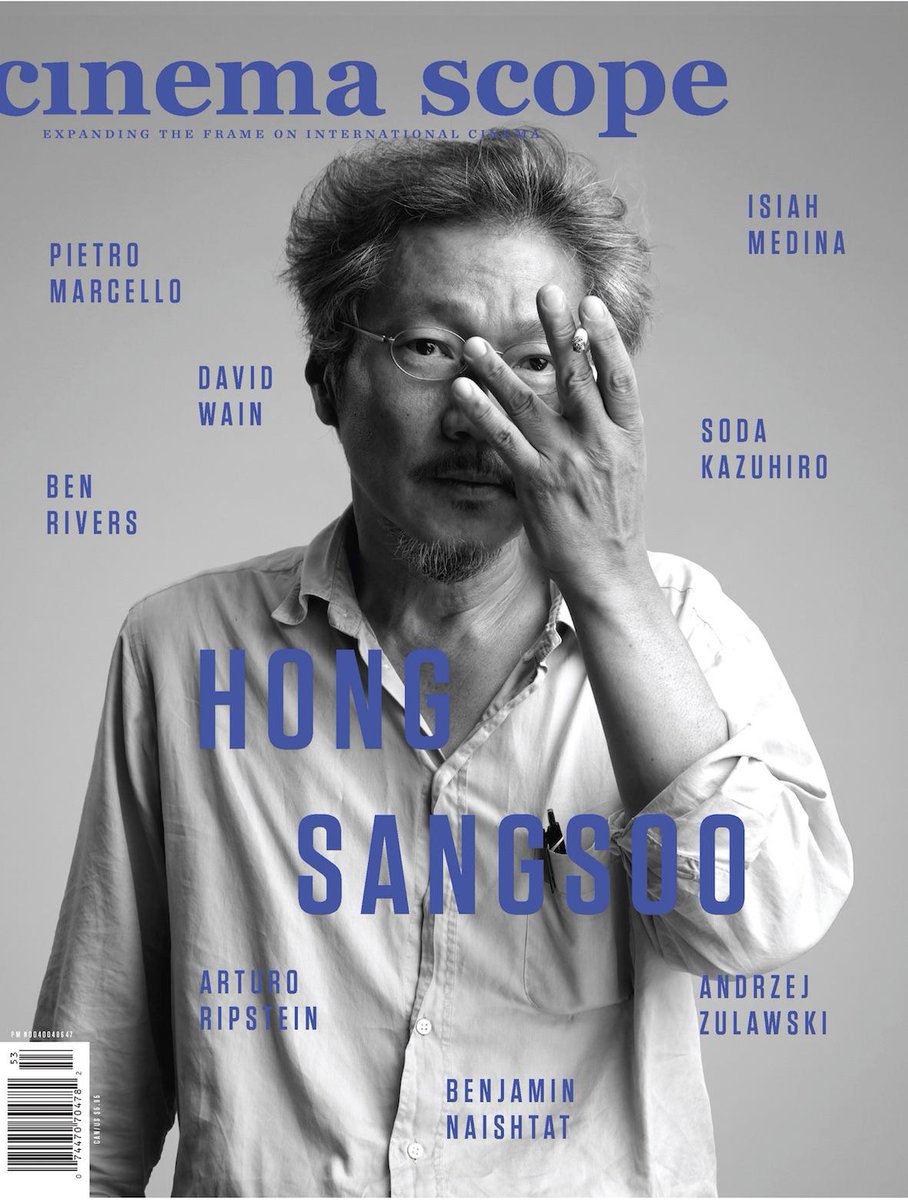
Cinema Scope and Demolition


To coincide with their new issue and the recent Toronto International Film Festival, Cinema Scope has been publishing capsule reviews of many films at this year's event. 

Check out my review of Jean-Marc Vallée's Demolition.

Thursday, September 17, 2015

Film Review: Bring Me the Head of Tim Horton

There’s something about Bring Me the Head of Tim Horton that’s comparable to experiencing the high activity of a major film festival: being alone, sick, tired and broke. Guy Maddin, our tour guide on the behind-the-scenes of Paul Gross’ Hyena Road, describes the Jordan set (which is substituting for Afghanistan) as ‘gross’, that he’s not liked by film crew, and how he ends up having to be play a dead Taliban extra made to lie motionless in a background. Maddin’s self-professed ‘cinema after-life’, taking on this commissioned project just for the cash, illustrates the difference between both filmmakers: A major international location set with a crew of hundreds for Gross, to a small personal studio, mostly working with close friends and collaborators, for Maddin. This feeling of being a third-party, or at least very far, from the cinema industry and film history can be sometimes be accentuated in the high activity of so many prestigious events.

But the nearly 30 minute film by Maddin, Evan Johnson and Galen Johnson is a fascinating work of experimental cinematography and thinking about the cinema. Mark Peranson, in his Cinema Scope Online review of the film, brings up the influence of Pere Portabella’s Cuadecuc, vampire on Maddin’s project, along with on Ben Rivers’ The Sky Trembles and the Earth Is Afraid and the Two Eyes Are Not Brothers and A Distant Episode. The vampirizing of the Gross film, similarly to what Portabella did on Franco’s, allows the filmmakers to create some indelible images: a moving green-screen that substitutes the background for Canadian sights, black-and-white pixelated footage of soldiers running around the desert landscapes, and inverted and fluorescent colors.

Bring Me the Head of Tim Horton engages in the contemplation of filmmaking: there’s a quote from Sun Tzu on how war is the art of deception, along with the hockey player Guy Lafleur’s song Scoring which discusses how to get the perfect shot. Michael Kennedy, from Cineplex Magazine, promotes the film in a sensational manner, while in lofty voice-over the nature of sight and style of filmmaking is discussed. All different modes of thinking of cinema, which the film brings together organically.

Other influences include Sam Peckinpah (who recently benefitted from a Locarno retrospective and a book from Capricci) as the title indicates, and even F.W. Murnau whose actual head was recently stolen from his cemetery plot in Germany. But also, more explicitly, Tim Horton, the famous Canadian hockey player, who founded the famous doughnut and coffee chain. There’s something about hockey that’s extremely important to the Canadian experience and Maddin is trying to find the root to it. For him, it involves his childhood obsession of it, and his relationship to his brother and father. This meditation on his personal obsessions makes it a great companion to his earlier collection of writing, From the Atelier Tovar.

With Bring Me the Head of Tim Horton, The Forbidden Room, and later the online components, Maddin and the Johnsons have won this game. They’re rock stars.

Monday, August 31, 2015

Recommended Reading: 41 Strange and 24 Images

The collection of horror stories 41 Strange is a short and fun read. The 41 stories range in length from one to a few pages and, similarly to Creepshow, through these brief horrific stories emerges dire situations, characters and worlds. They’re fun and eerie: In Staircase Man a new tenant slowly becomes the apartment’s monster under the stairs, in Qlugg Wiqq a fugitive gets the breath of death after a voice alteration operation, the Murderess Mattress is like The Cat Came Back but with a murdering mattress, in The Shortcut there’s a weird turkey epidemic and virtual reality call girls, in Strickland Domain the visitors of a Jurassic Park-like theme park are killed by a fungal bacteria, in Cannibal Diner cannibals come to dine, and Monkeys is a play on the premise of Planet of the Apes. The authors Diane Doniol-Valcroze, daughter of Jacques Doniol-Valcroze (Cahiers du Cinéma), and Arthur K. Flam have already made low-budget horror films and these short stories share a cinematic quality, as they are reminiscent of the films of Joe Dante, David Cronenberg and John Carpenter, while the writing style recalls the horror writing of Stephen King, Edgar Allan Poe and H.P. Lovecraft. The Shakespeare Macbeth quote that opens the book, “Your face, my thane, is as a book where men May read strange matters…”, and its Hieronymus Bosch cover art contribute to the book’s artistic and intellectual premise: Through these nightmare stories there is something about our present that is being told. Many of the individual stories in 41 Strange, or the anthology in whole, would make for a compelling cinematic adaption.
*** 

 The new 24 Images has on its cover a beautiful picture of Monica Vitti (Red Desert) with the title Revoir Antonioni on its center. But the real centerpiece of the issue is its dossier, Cinéma Québécois – Vents Contraires. It’s a voice of dissent of their domestic film production and its manifold essays illustrate film criticism’s potential to shout out towards one’s national cinema. The chief editor Marie-Claude Loiselle provides the tone to the different pieces in the editorial and essay Comment Sortir du Cadre?, “We were waiting to have the necessary distance to situate these films and trends, which hadn’t really offered us any really stimulating perspectives.” Loiselle continues, “The most vivifying aspect of cinema is its side of not falling prey to our ambivalent times, but instead, to resist with vigor and rage.” The essays on Québécois cinema include: Alexandre Fontaine Rousseau’s take-down of Xavier Dolan Culte de la personnalité, “If his mise en scene is calculated to please the most amount of people, his poppy posture is constantly contradicted by his condescending attitude that breathes throughout the film. This is his imposture.” Philippe Gajan in his essay La Trilogie de L’Alinénation looks a the legacy of the silent revolution and Gilles Groulx (Le chat dans le sac) on the recent student protests and three contemporary Québécois films, Laurentie, Le torrent and Corbo. Richard Brouillette in his essay Une Certaine Tendance du Cinéma Québécois, similarly to essay by Truffaut which it references, attacks their recent auteur films for shallow psychologizing and apolitical formalism, which Loiselle picks up on and takes further, especially through a contrast with two recent Greek documentaries found on derives.tv (Ici rien, La pierre triste). Bruno Dequen in his essay, En Terrains Trop Connus?, highlights the marketability and clichés of some of their recent films, and in contrast prefers Matthew Rankin’s Mynarski Chute Mortelle and Jean-Marc E. Roy and Philippe Daid Gagné’s Bleu Tonnere. And to finish it off Simon Galiero interviews Olivier Godin. It’s only – and major ! – omission is that Québec’s greatest director Jean-Marc Vallée’s name is not once mentioned in the whole dossier! If his recent American films – with the most recent Demolition shortly premiering in Toronto – provide a counterpoint to some of the miserable films that 24 Images describes it is that he needed to cross borders to make the most out of the medium. But he’s still Québécois at heart, as can attest anyone that has ever met him, and with his landmark film C.R.A.Z.Y. and his early work in commercials (especially his dairy ones) his work is deeply rooted in family, society and country. He’s definitively theirs, ours, and the world’s greatest director!