Saturday, December 18, 2010

Toronto's Current Film Climate

Here are three Toronto-based end-of-the-year film surveys. -D.D.

1. 2010 Toronto Film Critics Award winners
- The Social Network for Best Picture, Best Director (David Fincher), Best Actor (Jesse Eisenberg) and Best Supporting Actor (Armie Hammer).
- Exit Through the Gift Shop for Best First Feature and Documentary.
- Jennifer Lawrence for Best Actress (Winter's Bone).
- Hailee Steinfeld for Best Supporting Actress (True Grit)
- How to Train Your Dragon for Best Animated Feature.
- Uncle Boonmee Who Can Recall His Past Lives for Best Foreign Film.
- You Are Here by Daniel Cockburn received the Jay Scott Prize for emerging talent.
- A Special Citation for Bruce McDonald.

2. TIFF Canada's Top Ten 2010

Canada’s Top Ten feature film selections for 2010:
- Les Amours imaginaires by Xavier Dolan (Alliance Films).
- Barney’s Version by Richard J. Lewis (Entertainment One). December 2010
- Curling – Denis Côté (Mongrel Media). March 2011
- The High Cost of Living by Deborah Chow (Filmoption). Spring 2011
- Incendies by Denis Villeneuve (Entertainment One). January 2011
- Last Train Home by Lixin Fan (Kinosmith).
- MODRA by Ingrid Veninger (Mongrel Media). February 2011
- Splice by Vincenzo Natali (Entertainment One).
- Trigger by Bruce McDonald (Entertainment One).
- Trois temps après la mort d’Anna by Catherine Martin (K Films).

Canada’s Top Ten short film selections for 2010:
- Above the Knee by Greg Atkins.
- Les Fleurs de l'Age by Vincent Biron.
- I Was a Child of Holocaust Survivors by Ann Marie Fleming (NFB).
- The Legend of Beaver Dam by Jerome Sable.
- The Little White Cloud That Cried by Guy Maddin.
- Lipsett Diaries by Theodore Ushev (NFB).
- Marius Borodine by Emanuel Hoss-Desmarais (Travelling Distribution).
- Mokhtar by Halima Ouardiri (EyesteelFilm).
- On the Way to the Sea by Tao Gu.
- Vapor by Kaveh Nabatian (Locomotion).

3. James Quandt, senior programmer at the TIFF Cinematheque, best of 2010.
1. Rite of Spring & The Strange Case of Angelica (Manoel de Oliveira)
2. Mysteries of Lisbon (Raul Ruiz)
3. Uncle Boonme Who Can Recall His Past Lives (Apichatpong Weerasethakul)
4. Film Socialisme (Jean-Luc Godard)
5. Aurora (Christi Puiu)
6. Carlos (Olivier Assayas)
7. Four Times (Michelango Frammartino)
8. The Mouth of the Wolf (Pietro Marcello)
9. The Wanderer (Avishai Sivan)
10. Static (Steve McQueen)
*****
Also, this just in, Mark Peranson in the Editor's Note of the latest issue of Cinema Scope (N.45) writes "So because I have nothing else to do, it’s time for an about face: starting this winter, check out cinema-scope.com for a weekly supplement, reviews and reports of the same quality you’ll find in the printed issues (and quarterly web postings) of the magazine from some of our frequent contributors" and "as well as articles on retrospectives and the like taking place in our immediate and general global jurisdiction. This is a Canadian film magazine based in Toronto, and that’s an important part of the mandate."

I guess that means that my own website will be getting some more competition.

Wednesday, December 1, 2010

Burton-O-Rama

Books on Tim Burton
Book Title: Tim Burton
Authors: Ron Magliozzi, Jenny He, & Jesse Wente.
Editor: Andrew Tracy
Publisher: Toronto International Film Festival
Price: 14.00$

Book Title: Burton on Burton, 2nd Revised Edition
Editor: Mark Salisbury
Publisher: Faber on Faber
Price: 30.00$

Book Title: Tim Burton
Author: Aurélien Ferenczi.
Publisher: Masters of Cinema, Cahiers du Cinéma Sarl
Price: 12.55$

“Burton remains a filmmaker whose modus operandi is based entirely on his innermost feelings.” – Mark Salisbury

Timothy William Burton was born on August 25th, 1958 and grew up with his parents in the suburbs of Burbank, Los Angeles, before he moved in with grandmother. As a child he is described as being an introvert and a joker. He made short films with friends in backyards and he spent free time in graveyards and watching horror films. His outsider illustrations even at a young age seemed to be publicly recognized by an audience at large as his sketches were on local papers and city vehicles. He received a scholarship to attend the California Institute of the Arts (CalArts) and his graduation project, The Stalk of the Celery Monster (1979), caught the attention of the Walt Disney Studio who hired him on as an in-betweener and assistant animator. He did drawings for The Fox and the Hound (1981) and The Black Cauldron (1985). He hated it and his macabre illustrations were consistently turned down. Later he would use these sketches for inspirations for some of his other work, like the poetry and drawing collection The Melancholy Death of Oyster Boy and Other Stories and the MoMA career-spanning exhibition. Tim Burton's first short films were made with the help of his CalArts collaborator, Rick Heinrichs, who turned his sketches into three-dimensional maquettes. The first three short-films were Vincent, Hansel & Gretel (both 1982), and Frankenweenie (1984) for the Disney cable channel. Since then he has made fourteen full-length feature films, the first being Pee-Wee’s Big Adventure (1985) and his latest is a re-working of the classic Lewis Carroll story Alice in Wonderland (2010). Other side projects include a series of collectible figures Tragic Toys for Girls and Boys from Dark Horse Comics that were designed in 2003, and a large format collection of artwork, The Art of Tim Burton, in a standard and deluxe edition, that gathers his drawings and paintings in thirteen sections with quaint titles like Misunderstood Monsters, Freaks, Friends & Foes, Love, and The End. There is also the six-video web-series The World of Stainboy (2000) that follows the titular anti-hero, whose superpower is that he leaves stains, as the police captain of Burbank sends him out to round up the cities social outcasts, in an animation style similar to the official Tim Burton interactive website. These videos are a mixture of comedic punch lines and blunt social criticism. Tim Burton now resides in London, England with his wife Helena Bonham Carter and their young son.

This is the official story of the man that can be disseminated by reading the three books: Masters of Cinema: Tim Burton, TIFF: Tim Burton, and Burton on Burton. Each of the books offers a perspective and emphasis that is different then the other. There is an art critic, a film critic and the man himself. Though they all have a biases and flaws what they do highlight is insightful to better understand the context and depth of Tim Burton’s art.

Ron Magliozzi's, who is an assistant curator in the department of film at the Museum of Modern Art, essay Tim Burton; Exercising the Imagination focuses on Tim Burton’s biography and place within art history. He gathers diverse elements of Tim Burton’s childhood and traces his transition to adolescence and to adulthood. He does this consciously and vocal of Tim Burton intrinsic contradictions, like how Mr. Burton wants to frighten and be comic, as well as how he is an outsider who wants be accepted. Ron Magliozzi’s essay also contextualizes Tim Burton within art history. He posits that Tim Burton is an appropriation artist whose influences come from the American pop culture, so things like television, cartoons, B movies, comic strips, advertising and toys. As well as with other dark and macabre illustrators (Maurice Sendak, Charles Addams, and Edward Gorey), mainstream cartoonist (Henry Syverson, Angelo Torres, Gahan Wilson), the Carnivalesque, Pop Cubism, and Pop Surrealism (Robert Williams and Mark Ryden).

Jesse Wente’s, TIFF head of film programmes, essay Beautiful Outsider; Tim Burton and Hollywood emphasizes Tim Burton in the history of cinematic stop-motion animation. Jesse Wente traces the history back to the animation pioneer Willis O’Brien, who did the special effects on the 1933 King Kong then to the inspiring Ray Harryhausen (Jason and the Argonauts). Jesse Wente writes “Even more importantly, Burton has occasioned a greater recognition and respect for the supposedly “outdated” medium of stop-motion animation, restoring a vital part of film history to pride of place in a film world ever hungry for novelty.” Jesse Wente highlights the turning point in making Tim Burton a brand with his-name-above-the-marquee in the film The Nightmare Before Christmas that his fellow animator and collaborator Henry Selick directed. As well because Tim Burton has proved that it is viable to create these offbeat and gothic films, Jesse Wente posits that it has inspired studios to entrust into similar visions by up-and-coming directors.

Similar to the first TIFF Bell Lightbox publication, Essential Cinema by Michael Connor and Noah Cowan, where in a published conversation between the two in a casual tone they evoke personal responses to the video-art that was in the TIFF exhibtion Wunderkammer and around the city during the 2010 festival. These personal reactions are similar to the essays in the new TIFF Tim Burton monograph as they are both meditations on art and personal receptions to it.

Burton on Burton consist of a series of interviews with Tim Burton shortly after he made each of his films, though with a prolific director like Tim Burton the 2006 book already feels dated as the last interview is for Charlie and the Chocolate Factory (2005). There are synopsis of each film, production background and biographical context. Tim Burton provides shooting anecdotes, like the hardships of location shooting, and personal anecdotes, like how when he was making Big Fish his father recently passed away, he says “It was an amazing catharsis… because you’re able to work through those feelings without having to talk to a therapist about it.” As well there is much discussion on the role of casting and being able to get the right actors who can bring exactly what the role demands of them, a balance of emotional commitment and human exaggeration to visually translate Tim Burton’s original sketches and conceptions. The emphasis is on honesty of feelings and a focus on character psychology and background, but not necessarily on any historical accuracy, which gives the impression that his films are in a world of their own. The Burtonesque. He also laments CGI-laziness to the detriment of the stronger emotional resonance of the more human handmade quality special effects, which Nicolas Saada elaborates in an extract from his review of Beetlejuice, “Scare Me”, in the Masters of Cinema: Tim Burton book.

Masters of Cinema: Tim Burton by Aurélien Ferenczi is a general introduction to Tim Burton’s films with reviews, criticism and an industry perspective. The book is full of glossy larger format illustrations and the writing is concise and astute, though some times the choices are problematic. I disagreed on a couple of assessments. Aurélien Ferenczi writes on Mars Attack “But at best it remains a rather slack and pointless parody.” while, I think, it is one of his stronger films for its critique of society as the Martians destroy the American military and politicians. It has this anger and social critic element, which to me, is where Tim Burton truly excels, like the devastating flashback at the end of The World of Stainboy and the barber knife throat slashing in the masterpiece Sweeney Todd: The Demon Barber of Fleet Street (2007). There is just something so honest, no matter how impolite, about these moments. Aurélien is not always generous towards the director, on the MoMA show he quotes the art critic Ken Johnson who writes “Amalgamating the styles of Edward Gorey, Ralph Steadman, Edward Sorel and other cartoon expressionists into his own less-than-original Victorian-Gothic-Grotesques, Mr Burton has created countless cartoons resembling illustrations for cutely perverse greeting cards.” I wonder how Positif’s French-language book on Tim Burton differs as that magazine has always been more generous. The Masters of Cinema series is a Cahiers du Cinema publication. Though Aurélien’s final comments seems apt “It seems he [Tim Burton] has opted to alternate very dark – and no doubt more personal – films like Sweeney Todd with works like Alice that are aimed at a more general audience”.

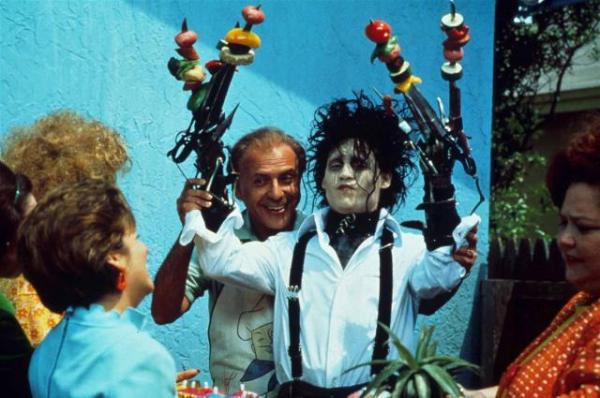
The Tim Burton exhibition that was organized by the Museum of Modern Art in New York recently arrived at the TIFF Bell Lightbox on November 26th 2010. It consists of drawings, sculptures, maquettes, costumes, props, and videos. Though not all of the work from the original MoMA exhibition made it due to a space limitation and apparently the additional work showed how he refined his initial characters to be able to transplant the vision for the live-action counterparts. The storyboard etchings place him alongside other cinematic draftsmen like Sergei Eisenstein and Federico Fellini. While his gothic antecedents are the likes of Edgar Allen Poe and Vincent Price. Cinematically speaking, the shots (medium), camera movements (crane shots, pans, punch-line shots), and editing (shot-reverseshot) are very standardized and his films usually have an engrossing score by his regular film composer Danny Elfman. But how Tim Burton truly distinguishes himself, is not by thinking out-of-the-box, but by taking scissorfingers to that box(!), and using it to create his own unique vision. In his most recent films there seems to be something new going on, a youthful rejuvenation. As Tim Burton’s is now working with a new generation of younger actors, people like Mia Wasikowska as Alice in Alice in Wonderland and Jamie Cambell Bower as Anthony Hope and Jayne Wisener as Johanna in Sweeney Todd, which achieves a new relevancy. Finally, Tim Burton’s explores the subject of the transition from adolescence to the world of adulthood and its accompanying loss of innocence with a remaining feeling of melancholy. He uses the folkloric as a guise to explore this subject, that of making sense of the chaos of existence, in a heightened way, and over and over again and with each new film, the breath of his imagination has grown and so is his personal philosophy. - David Davidson

Monday, November 29, 2010

On Positif (Getting Ready For Burton)

This is a preliminary note on an eventual defense of Tim Burton. -D.D.


“In the space of eight years, between 1984 to 1992, four directors that were younger then thirty-years-old turned up in the American cinematographic landscape: Joel and Ethan Coen (who are really just one person), Tim Burton, Steven Soderbergh and Quentin Tarantino. These four musketeers form the last generation who – to this day - sparked the torch of North American cinema and were celebrated in these pages [Positif] since the start, similar to how twenty years earlier there was Coppola, Scorsese, Schatzberg and Malick.” – Michel Ciment

I have found it astonishingly surprising how controversial this above quote has been while talking to some ardent Toronto cinephiles. We would agree on a lot of other topics but when I bring it up they would become dismissive of both the directors and my taste. Others were even rude about it like how this one guy turned his back to me mid-conversation. I guess there is a time and place to insinuate that these mainstream directors are viable and that they belong within a relevant cinephilic terrain. Positif’s position is important as it takes these more artistically endeavored films by mainstream directors and lifts them to an auteur level to highlight their merits, which is relevant in a film criticism climate where they are dismissed for being the exact opposite, impersonal and generic. My squabbles are only a minor footnote in a larger unawareness and dismissal of both Cahiers du Cinema and Positif found within English-language film criticism. This refusal can be due to either an inability to be read French or a refusal to acknowledge any artistic merit in some of their outlier choices, which can lead to an eventual dismissal of the magazines as a whole. This reluctance does more harm then good as these two publications have done more for film and film culture then any particular individual or new media outlet, their catalogue is so rich with insightful writing on films and as a window into particular cultural climate, and finally, and the most important point, is the sheer pleasure of discovering a film that you truly enjoy with the awareness that it is a shared reception.

Saturday, November 27, 2010

Toronto December Film Listings

In December the Lightbox has some pretty cool stuff playing like the Exclusive Engagements of Margarethe von Trotta’s Vision, Henry Selick’s The Nightmare Before Christmas in 3-D, Gaspar Noé’s Enter the Void and Jean-Luc Godard’s Film Socialisme. There are going to be double-billed Tim Burton films with movies that inspired them or share similar characteristics and though I do not think they are all perfect match-ups, I am still really looking forward to see some of the accompanying titles as they are by some fun auteurs like Mankiewicz, Harryhausen, Wood, Tashlin and Waters. The Jafar Panahi retrospective is topical as the Irainian director has been recently released from political imprisonment. The Essential Cinema series is coming to a close and, thankfully, next up is Chaplin. Elsewhere, I am curious to see what Florian Henckel von Donnersmarck does in his second film, the big-budget and all-star cast The Tourist. The Bloor Cinema and the Japan Foundation are programing a few Japanese films. The Toronto Film Society has a musical and holiday double-bill on December 6th and 12th. And, the Pleasure Dome’s fall programs last screening is on December 4th.

I am sure I missed a few things but that is it for now. In the following space I will be adding the titles alongside a generic one-out-of-four star rating to the films I actually see.
*****
Big Fish (Tim Burton, 2003)
** (Worth Seeing)

*****
Corpse Bride (Tim Burton & Mike Johnson, 2005)
* (Has redeeming facets)

*****
Sweeney Todd: The Demon Barber of Fleet Street (Tim Burton, 2007)
**** (Masterpiece)

*****
Batman Returns (Tim Burton, 1992)
*** (A Must-See)

*****
Crimson Gold (Jafar Panahi, 2003)
*** (A Must-See)

*****
Offside (Jafar Panahi, 2006)
**** (Masterpiece)

*****
The Mirror (Jafar Panahi, 1997)
**** (Masterpiece)

*****
The Ghost and Mrs. Muir (Joseph L. Mankiewicz, 1947)
*** (A Must-See)

*****
Ed Wood (Tim Burton, 1994)
**** (Masterpiece)

*****
Bride of the Monster (Edward D. Wood Jr., 1955)
** (Worth-Seeing)

*****
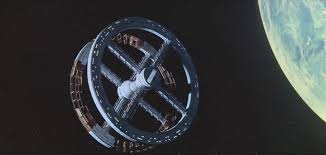
2001: A Space Odyssey (Stanley Kubrick, 1968)
**** (Masterpiece) Essential Cinema # 26

*****
Early Monthly Segments In tribute to Will Munro


*****
Pee-wee's Big Adventure (Tim Burton, 1985)
*** (A-Must-See)

*****
Black Swan (Darren Aronofsky, 2010)
** (Worth-Seeing)

*****
Modern Times (Charlie Chaplin, 1936)
**** (Masterpiece)

Wednesday, November 3, 2010

MDFF Reviews (Green Crayons, Woman Waiting)

“In my opinion, there aren’t big or small subjects [for film], because the smaller the subject is, the more we can treat them with grandeur. In truth, there is only truth.” – Claude Chabrol

Kazik Radwanski’s Green Crayons is the captivating story of two elementary school children, an Indian Canadian kid Xavier (Raj Manav) and his Caucasian friend Liam (Kaiden Wiliams), who have to deal with the consequences of spitting on each other in class. At first glance the story appears sweet as the two children are in a classroom; in the background there is one of those inspirational posters that says “Be Generous” and they are browsing through books with cute titles like “Dog” and “Big Cats”. It unexpectedly takes a turn towards an impromptu spiting battle between the two until this catches the attention of the teacher who only sees Liam spitting and sends him to the principal’s office. The rest of the ten-minute short film deals with Liam's shame due to that the principal is going to have to call his parents and Xavier’s guilt of getting his friend in trouble. The green crayon of the title refers to the Crayola writing instrument used by Liam to fill in the third square on his notebook, which means that the principal will have to call his parents. He is asked to fill in the square several times before he does so reluctantly. The grandeur of how this scene is treated reaffirms the above Claude Chabrol quote and has the intensity of the young Jean-Pierre Léaud police interrogation in Les Quatre Cents Coups (1959). The films emotional core comes from Xavier realization that he should look out for his friend. During recess, Xavier plays slapsies with this girl in the playground. He twists her arm, and slaps her in the face. You can tell there is something else eating him up. He spies through the crack of the door at the principal office to see how Liam is doing. Back in class, he rubs Cheez Whiz all over his face as a ploy to go to the washroom. On the way back in the hallway he looks at his notebook and only sees the one green square on it and afterwards he walks up to the main office door. His friend pulls him away. And when he fesses up to his teacher, her verdict is to give them both green squares; “I don’t want to give you a green square, how does that make you feel?” she says. There is no resolution, it ends with each student being more divided and a worst situation then they started. Similar to the mute elementary school children who at such a young age can define atrocities in Michael Haneke’s Code inconnu (2000), the problem facing the kids in Green Crayons is not intrinsic within the children but with the teachers and principals, especially their method of regulating the children’s behavior through a three-strikes-and-your-out approach to anti-social behavior and a one-sided approach to communication. Who knows what is next for these two little boys, outside there is a birch tree with its green leaves blowing in the wind.

Kazik Radwanski is the writer and director of four short films: Green Crayons (2010), Out in That Deep Blue Sea (2009), Princess Margaret Blvd. (2008), and Assault (2007). Film critic Jason Anderson in the Toronto star wrote “[Kazik Radwanski is] one of the most exciting local filmmakers yet to make a feature…”.
*****
Antoine Bourges’ Woman Waiting is the story of a middle age woman, Jane (Carmen Casanova), who is searching for assisted housing in Vancouver, British Columbia in the month of January 2010. During the day she runs into many complications but what is truly generous of the storytelling are the few moments of well-deserved relief and humanity. Jane gets to relax with a coffee, a nice gym receptionist gets her a free one-week membership, and she runs into a friendly woman in a buildings waiting room. Woman Waiting is Beckettian fable that hawks back to Waiting for Godot as the new apartment is always beyond Jane’s grasp and the absurdist touches like toenail clipping episode, desolate grey apartment, and the distinct looking actors further emphasize the films strangeness. There is something about Jane that is similar to Orn (Jenjira Jansuda), the old woman in Apitchatpong’s Blissfully Yours (2002), as the two women are old, express loss and frailty through their physical appearance and dress, and both movies showcases them in fat two-piece bathing suits while swimming. The cinematography by William Fritzberg frames the actors to best showoff their individual characteristics and the swimming pool scenes gleam as a place of solace. It is no surprise I saw Antoine during TIFF 2010 leaving a Kelly Reichardt Maverick Series as Woman Waiting closest antecedent is Reichardt’s Wendy and Lucy (2008) as they are both about marginal women, grim social realities, and a constant feeling of displacement.

Antoine Bourges’ is the writer and director of two short films: Woman Waiting (2010), and Hello Goodbye (2008).

The company Medium Density Fibreboard Films (MDFF) was founded in 2007 by the producer Daniel Montgomery and the director Kazik Radwanski; www.mdff.ca.

Tuesday, November 2, 2010

Toronto November Film Listings (New Mandate)

Since my move to Toronto I had to reconsider the mandate and title of Ottawa Film Review. Now that I am a Toronto resident, I decided to change the title to Ottawa-Toronto Film Review. I would have removed the Ottawa- from the title except that would force me to change the url, which would cause major revamping. Maybe one day… Anyways, what can be expected from Ottawa-Toronto Film Review in the next while? I want to change my traditional monthly film listings from a mere listing to a written paragraph format (see below). Ideas for pieces that I have been ruminating: (1) Write a piece on two films from the Toronto-based production company MDFF; Kazik Radwanski’s Green Crayons and Antoine Bourges’ Woman Waiting; both films premiered at the TIFF 2010 Short Cuts Canada. (2) Finish reading James Quandt’s (the senior programmer of the TIFF Cinematheque) book on the Thai director Apichatpong Weerasethakul (FilmmuseumSynemaPublikationen; 2009) in the hopes of writing a book review. And, (3) see more Zacharias Kunuk’s films that are available to view at the Isuma Productions website. I will just be doing generic posts with all the screenings I see and an arbitrary star ranking, and I hope it is clear, this website prides itself on the longer pieces, the criticism and the reporting, and not on the minor viewing acknowledgements.


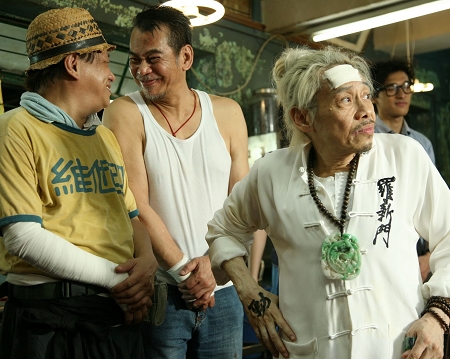
At the Toronto Film Society on Monday November 15th at 7:30PM there is a double-bill that consists of Jules Dassin’s Thieves’ Highway (1949) and Martin Ritt’s Edge of the City (1957). The Toronto experimental film collective Pleasure Dome is having a few screenings in November. I will keep seeing all the TIFF Essential Cinema films that I have yet too see and others that I want to re-see; so far I have seen eighty-four out of one-hundred and I hope to do a personal top ten afterwards. There are a few Exclusive Engagements that I want to see; Le Pere de mes enfants, The Light Thief, and I Wish I Knew. On Friday November 5th the Bloor Cinema will have a free screening of Scott Pilgrim vs. the World with the director Edgar Wright in attendance. Later on in the month at the Bloor Cinema there will be screenings of Small Change (Nov. 7th – 9th) and Blow Out (Nov. 25th, 9:30PM). I have also discovered the 18th annual rendezvous with madness film festival (Nov. 5th -13th), which has some interesting titles like Denis Villeneuve’s Next Floor (Nov. 6th; 8:30PM) and William D. MacGilivray’s The Man of a Thousand Songs (Nov. 13th; 8PM). As well there is the 14th annual Toronto Reel Asian International Film Festival; I particularly look forward to see Clement Cheng and Derek Kwok’s 70s kung-fu ode Gallants (7PM; Bloor Cinema); the directors will be in attendance and afterwards there is the opening night gala party at the Century Room (free with a screening stub). Yeah and finally I will go see any cool-looking new releases; right now I want to see Stephen Frear’s Tamara Drew. - David Davidson

*****
Johnny Guitar (Nicholas Ray, 1954) Essential Cinema # 63
*** (A Must-See)

*****
Winnebago Man (Ben Steinbauer, 2009)
* (Has redeeming facets)

*****
Singin' In The Rain(Stanley Donen & Gene Kelly, 1952) Essential Cinema # 62
**** (Masterpiece)

*****
Memories of Underdevelopment (Tomás Gutiérrez Alea, 1968) Essential Cinema # 68
*** (A Must-See)

*****
Le père de mes enfants (Mia Hansen-Løve, 2009)
*** (A Must-See)

*****
Good Neighbours (Jacob Tierney, 2010) *Director in attendance.
** (Worth Seeing)

*****
Tamara Drew (Stephen Frears, 2010)
** (Worth Seeing)

*****
Recent Video by Gary Kibbins *Director in attendance. Pleasure Dome
7 Questions About Bicycles (2009) & The Unlucky Sailor (9 Unread Chapters of Finnegans Wake) (2010)

*****
Gallants (Clement Cheng & Chi-kin Kwok, 2010) *Clement Cheng in attendance.
** (Worth Seeing) Reel Asian

*****
A Film For Ollie Gilbert (Scott Cudmore, 2010) *Director in attendance.
** (Worth Seeing) 107 Shaw Gallery

*****
I Wish I Knew (Jia Zhangke, 2010)
*** (A Must-See)

*****
The Land Left Behind (Juan Camilo Sarmiento, 2010) *Director in attendance.
*** (A Must-See) aluCine

*****
Bringing Up Baby (Howard Hawks, 1938)
*** (A Must-See) Essential Cinema # 61

*****
Cléo de 5 à 7 (Agnès Varda,1962)
**** (Masterpiece) Essential Cinema # 96

*****
Edward Scissorhands (Tim Burton, 1990) *Director in attendance.
*** (A Must-See)

*****
Barbed Wire Dolls (Jess Franco, 1975)
** (Worth Seeing)

*****
Kings of Pastry (Chris Hegedus & D.A. Pennebaker, 2009)
** (Worth Seeing)

*****
The Light Thief(Aktan Arym Kubat, 2010)
*** (A Must-See)

*****
The Third Man (Carol Reed, 1949)
*** (A Must-See) Essential Cinema # 91

*****
Dust in the Wind ( Hou Hsiao-Hsien, 1986)
**** (Masterpiece) Essential Cinema # 69

*****
Blow Out (Brian De Palma, 1981)
*** (A Must-See)

Monday, October 25, 2010

Toronto Film Festivals (enRoute & imagineNATIVE)

It seems like every week there is a new film festival taking place in Toronto. So far have I attended two of these, the Air Canada enRoute Film Festival 2010 and the 11th annual imagineNative: Film + Media Arts Festival. It was the fourth annual enRoute Film Festival: Stories that move and the short films are designated for Air Canada’s in-flight entertainment monitors. The prizewinners get all-inclusive trips to the Whistler Film Festival as well as a monetary prize. The final competition on October 13th consisted of Rob Coxford, Josh Vamos & Marlaina D’Angelo’s Push Past: Rob Dyer’s Skate across Canada, Shervin Kermani & Aita Jason’s Sofia, Allessandro Piedimonte’s A Cut Above, Sandrine Brodeur-Desrosiers Un Trou dans la Memoire, King Mugabi’s Red Snow, and Adam Shamash’s La Khaima: The Tent of Mile-End. The festival was followed by an open bar award celebration at The Drake Hotel. The most impressive short by far is Sofia. In it a reclusive elderly painter recalls the major emotional events that shaped him. From his first girlfriend telling him that they should stay together, to his father explaining why he is leaving, and to a wonderful ballet sequence by his youthful mother. The acting is superb, the mise-en-scene is original, Robert Tagliaferri's cinematography is indelible with lush colors and atmospheric lighting, and its dream-like nature accentuated by long-takes is reminiscent of Tarkovsky.


imagineNative each fall (Oct. 20th – 24th) presents a selection of the most compelling and distinctive indigenous work from around the globe. This year’s festival included two projects by Zacharias Kunuk. The 1995 Caribou Hunt, which is set in Igloolik, fall 1945, and is about the community of First Nations trying to hold onto their traditional shamanistic culture in face of a frightening changing world (i.e. WWII). There was also the world premiere of Mr. Kunuk’s new film Inuit Knowledge and Climate Change, which is an Isuma Productions documentary addressing the issue of climate change with interviews with Inuit’s that are personally experiencing the effects of melting polar ice caps. The Kaleidoscope: Shorts Program III, which I attended, highlights were Bear Witness’ Strange Home Land part 2, which is about a road-trip between Bear and his father through the Six Nations territory with interesting appropriations of Hollywood movies and Saturday morning cartoons; and Alanis Obomsawin’s When All the Leaves are Gone set in 1940, Quebec it is the story of shy little Wato who moves from the rural to the urban. To get away from the cities xenophobia and bullies, she dreams about an idyll nature setting with men-dressed-in-caribou suits to play with and a man playing the violin. These dream sequences are just charming. The program guide is really well designed and it included a memorial on the Māori, which are an indigenous group from New Zealand, filmmaker Merata Mita. The festival also had free discussions and panels. Beyond the Talking Head: New Ways to Doc, which I attended, had Peter Mettler and Zacharias Kunuk on the panel, among others, and they spoke about the importance in New Documentary of themes, honesty and transparency with the subjects, and of having a good team. - David Davidson