Showing posts with label MDFF. Show all posts
Showing posts with label MDFF. Show all posts
Thursday, January 5, 2017

Sunday, November 27, 2016
MDFF Fundraiser: Winter 2017 at The Royal
Just a heads-up to a seasonal fundraiser to help MDFF bring some critical and festival favorite films such as Bi Gan's Kaili Blues, Ted Fendt's Short Stay and Philippe Grandrieux's Malgré la Nuit to Toronto. There are some cool and affordable perks for donating such as tote bags, DVDs and my favorite the MDFF branded mug with original animal illustration by Toronto artist Caitlyn Murphy. Help them out if can, and don't forget they're having a screening of Celia Rowlson-Hall's film Ma on December 1st. The Toronto film-going community is much richer with this series in activity. See some of you there?
Tuesday, October 4, 2016
The Look of Love
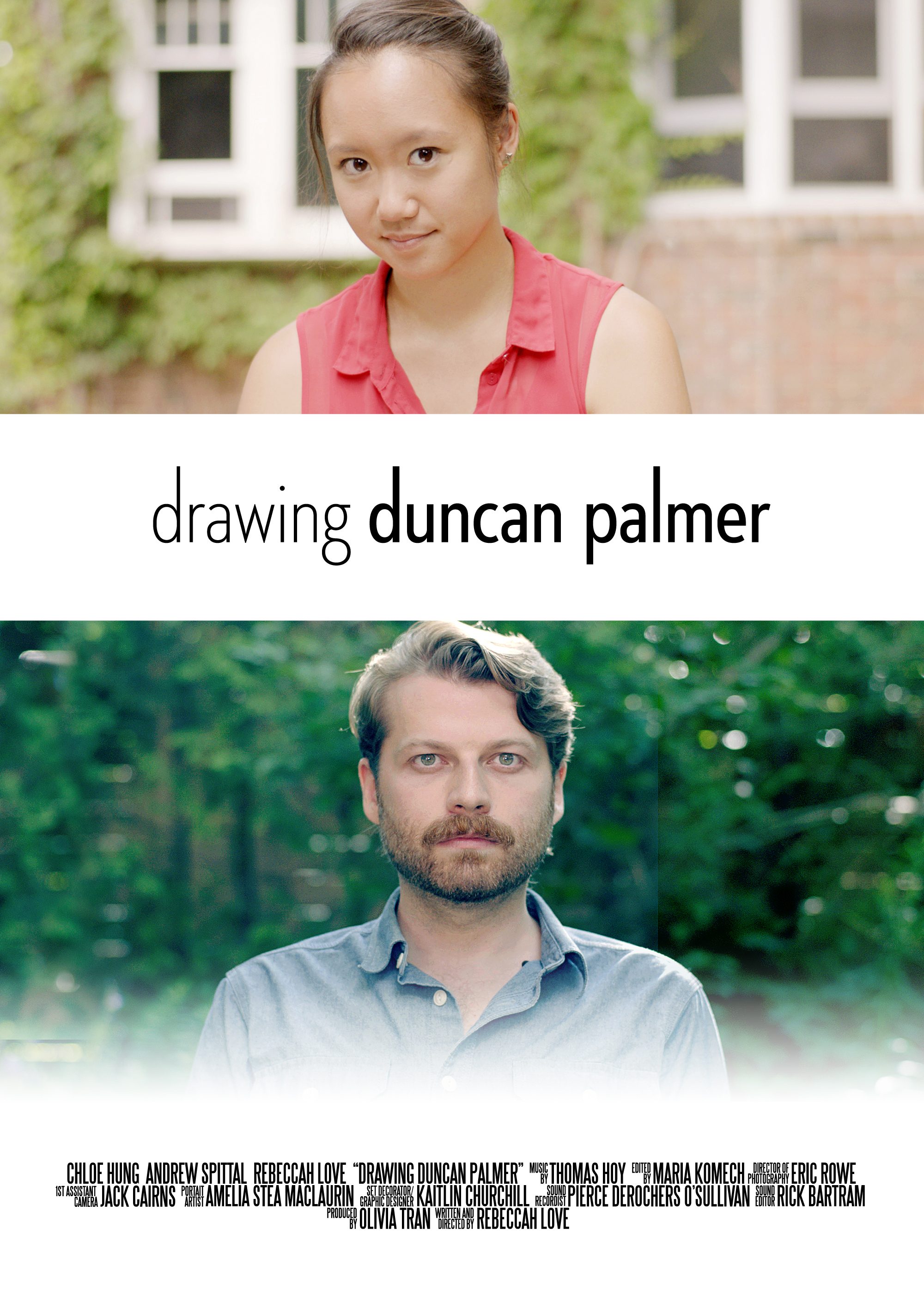 Rebeccah Love’s Drawing Duncan Palmer is finally
getting its first public screening at the MDFF screening series and it should
be memorable. It’s a touching short film as it peels away the
superficial rhetoric of Toronto to focus on more honest emotions: what’s it
like to lonely and what it’s like to be sad. In it Miriam (Chloé Hung) and Zoe
(Love) had organized a fundraiser for a scholarship in the memory of their
recently deceased professor Dr. Crawford and which their fellow student Duncan
(Andrew Spittal) had outbid everyone else to win the opportunity to have Miriam
draw his portrait.
Rebeccah Love’s Drawing Duncan Palmer is finally
getting its first public screening at the MDFF screening series and it should
be memorable. It’s a touching short film as it peels away the
superficial rhetoric of Toronto to focus on more honest emotions: what’s it
like to lonely and what it’s like to be sad. In it Miriam (Chloé Hung) and Zoe
(Love) had organized a fundraiser for a scholarship in the memory of their
recently deceased professor Dr. Crawford and which their fellow student Duncan
(Andrew Spittal) had outbid everyone else to win the opportunity to have Miriam
draw his portrait.
Drawing Duncan Palmer begins with Miriam spending time alone
preparing to hang out with Zoe to go over the results of the silent auction. There’s
an elegance to this scene as Miriam takes her time baking cookies and preparing
some snacks. You see her get all of the ingredients ready, mix them in an
ornamented bowl, put the batter in the oven and quietly drink some water while
waiting for everything to be ready. Love’s camera captures an appreciation for
the smaller moments of life and the reserve of having to do it alone, which is
only heightened by Thomas Hoy’s elegiac score. When Zoe does finally arrive
(talking about gardening, almost in anticipation to Acres) they have fun and she encourages Miriam to ask Duncan out on
a date (why else would he spend so much on a portrait?) on the Saturday when he
comes over. She’s eager and nervous and courageous when she finally poses
Duncan the question but as it turns out he only bid so much for the portrait so
that he could put it up in his apartment beside that of another
one of a person whom he truly misses.
With an official
filmography of just a few short films: Drawing
Duncan Palmer along with Abacus, My Love, Pitching for the Heights,
Circles (which she wrote and art
directed) and the upcoming Acres
Love already has an impressive oeuvre. But as it turns out it also includes a series
of videos that can be found on her YouTube channel beccahlove.
These videos
reveal almost an experimental filmmaker stage in Love’s oeuvre as these home
movie-style works include stylistic effects that further heighten everyday
experiences to the level of poetry. In them the world, Love’s relation to it
and its filming become organically intermingled so that an imagination becomes the starting point: people get out of their comfort
zones to be freer to enjoy and live life. What especially stands out is how
Love is able to joyously capture communities coming together and the casual
articulation of a philosophical idea. Behind these modest works with their emphasis on a joyousness and imagination is the
expression of an egalitarian politics and democracy: access to community and country is a moral right and everyone has a role to play in the pursuit of the common good.
If there are
negative repercussions of a gender imbalance in the Canadian film industry:
it’s that there aren’t more films like those of Rebeccah Love that have such a
kindness to them (though Mes nuits
feront écho by Sophie Goyette that’s premiering at FNC or Sofia Bohdanowicz’s Never
Eat Alone that’s premiering at VIFF are steps in the right direction). Rebeccah
Love’s films are a reminder of how the gift of intimacy can speak volumes.
Sunday, March 13, 2016
Stinking Heaven @ The Royal (March 14, 8PM)

MDFF presents Nathan Silver's new film Stinking Heaven Monday, March 14th at The Royal at 8PM. The film continues some of Silver's major preoccupations, such as ones from his earlier Soft in the Head, as it explores the idea of an alternative community, relationship dilemmas and the interruption of one's life by a volatile guest. Deragh Campbell and Hannah Gross, from I Used to be Darker, reunite and are extremely compelling, which is partly due to Silver's Cassavetes-like, improvisational directing. A compelling drama.
Wednesday, September 10, 2014
Cutaway Fall Festival Premieres

Monday, July 14, 2014
Ali Aydin’s Küf at Double Double Land (July 16 @ 9PM)
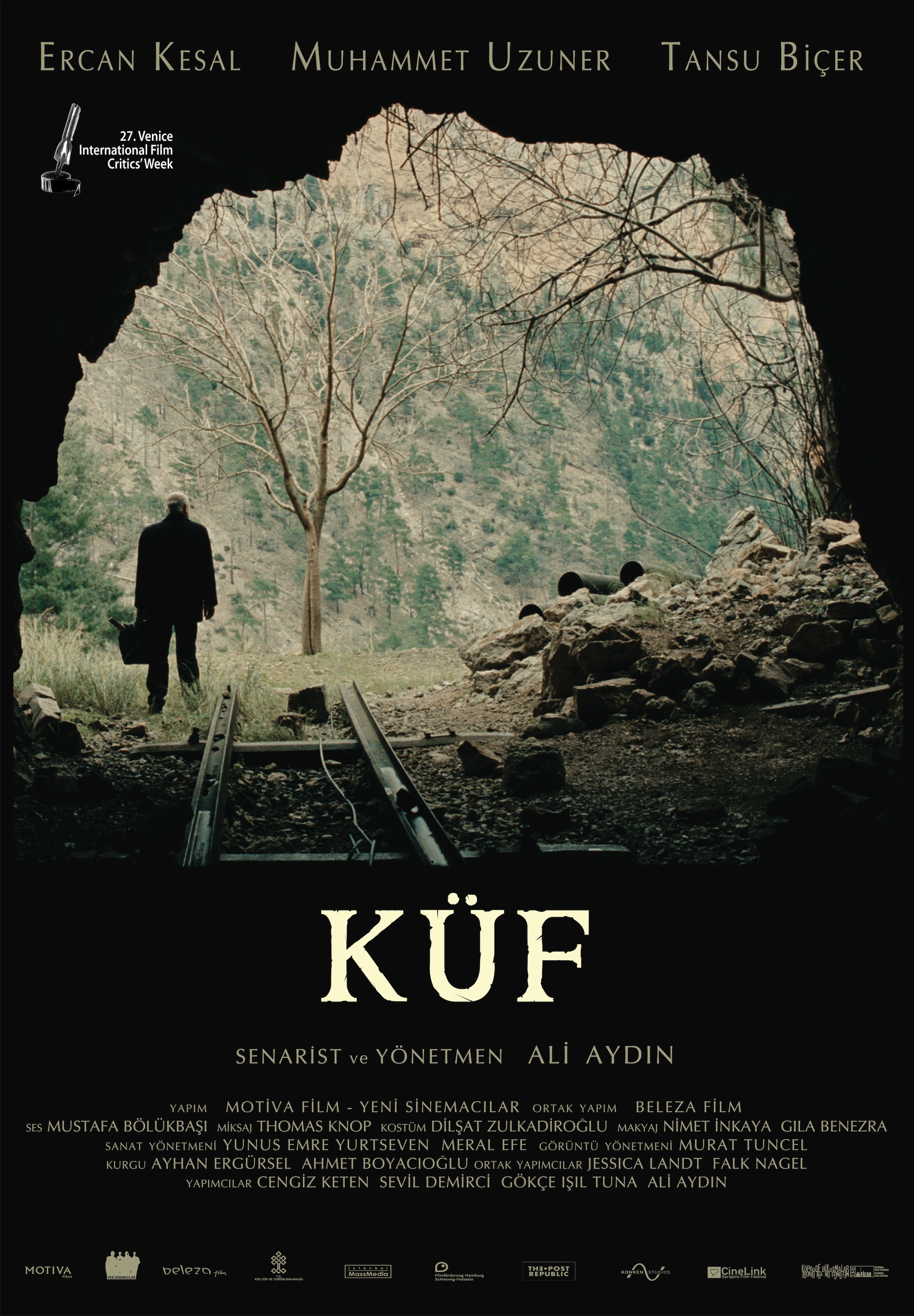
On Wednesday July 16th at 9pm at Double Double Land, MDFF will present the Canadian premiere of Ali Aydin’s Küf.
Monday, February 17, 2014
It Felt Like Love (Feb 18th, 8PM @ Double Double Land)

On Tuesday February 18th at 8pm at Double Double Land, MDFF and cléo will present a free screening of Eliza Hittman's It Felt Like Love with an introduction by cléo Managing Editor Julia Cooper.
Monday, December 16, 2013

Monday, November 18, 2013

Friday, September 6, 2013
Waiting for Sancho at The Coffin Factory (Friday, September 6)

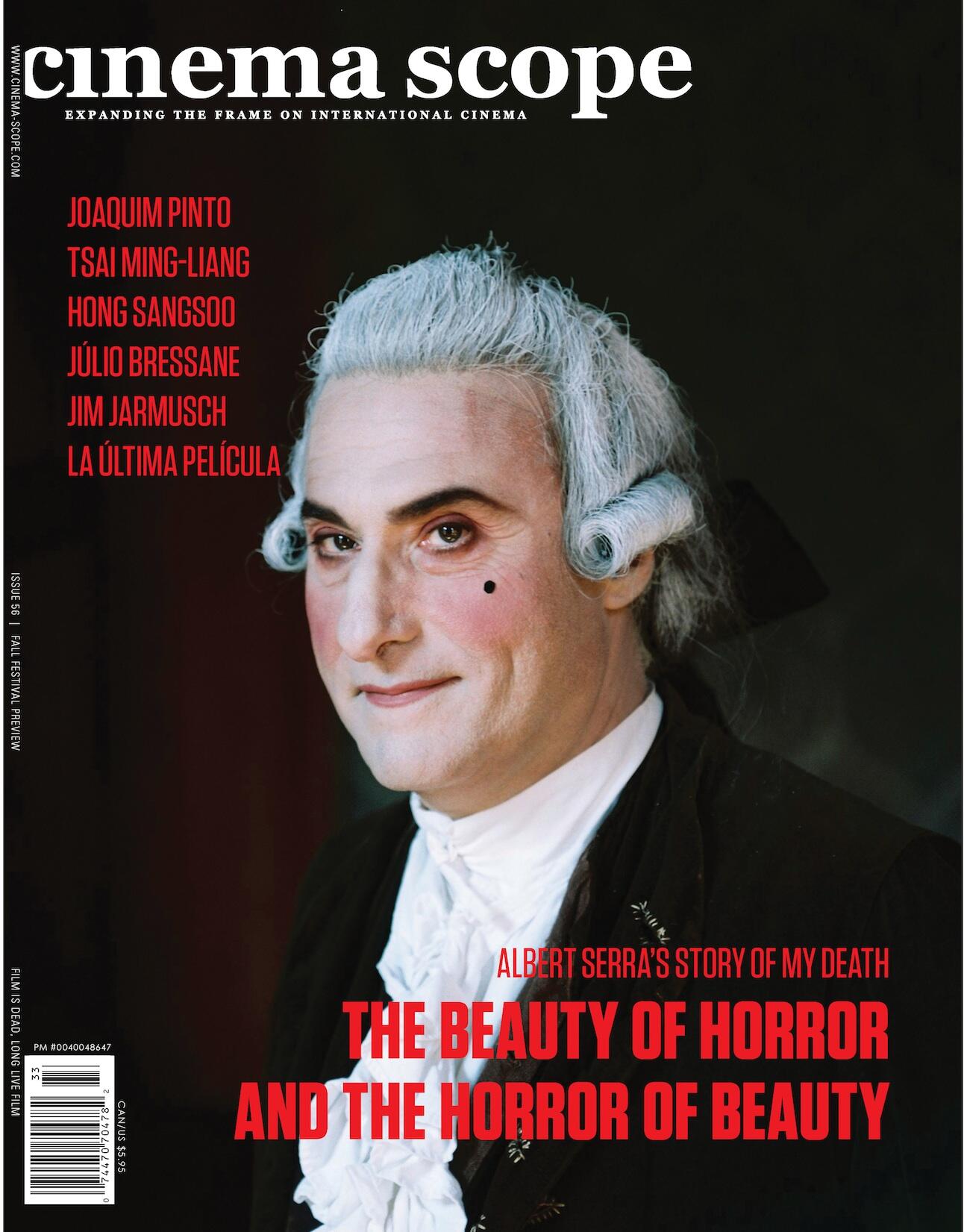 In anticipation for Raya Martin and Mark Peranson's La última película, on Friday September 6th at 9:45pm MDFF is presenting at The Coffin Factory a special screening of Peranson's Waiting for Sancho, a making-of documentary of Albert Serra's Birdsong (who also has a new film, Story of my Death).
 And while you are it, to read while you are waiting in lines, might as well pick up the great new issue of Cinema Scope!
Monday, December 17, 2012
The Trailer for Kazik Radwanski's TOWER
The trailer for Kazik Radwanski's Tower (MDFF) was first previewed when it played before Denis Côté's animal hybrid-documentary Bestiaire, when it recently had its theatrical release. Côté describes Tower, and you can see the blurb in the trailer as a "great curosity," and it's "like a wound that won't heal." Since Tower had it's world premiere at the Locarno Film Festival and then afterwards here at TIFF, Radwanski's Tower has been traveling the festival circuit (Viennalle, Belfort) gathering favorable reviews and an international reputation. Tower has recently appeared on indieWIRE's list of best undistributed films of 2012, and local film critic Adam Nayman includes a scene of Derek listening to Serani's song No Games as one of the best shots of the year.
Tower does not yet have an American distribution, though hopefully it eventually does, but for now it's Canadian release has just been announced: it's theatrical run begins on February 22, 2013 at The Royal.
Tower from Medium Density Fibreboard Films, will have a theatrical release at The Royal on February 22, 2013.
Monday, December 3, 2012
The MDFF Interview by The Seventh Art
The Seventh Art is a
new video-magazine, based out of Toronto, that conducts extended
interviews with leading local and world filmmakers – inspired, in
style, by the French television show Cinéastes de notre temps – and produces high quality video-essays. The Seventh Art recently conducted a long interview with the guys at MDFF – Dan
Montgomery, Kazik Radwanski and Antoine Bourges – where they discuss with them
everything from their creative process, production, distribution and their
films East Hastings Pharmacy and Tower. Christopher Heron, the lead interviewer of The
Seventh Art, also made a video-essay
about Radwanski’s MDF Trilogy - Assault, Princess Margaret
Blvd. and Out in that Deep Blue
Sea (“The films of the MDF trilogy all
deal to a variety extent to a protagonist in crisis…”) – which is one of the
special features on their handmade DVD.
Some interesting comments from the Seventh Art interview includes when Radwanski
discusses how he was first drawn to cinema,
“I remember that for a few years in high school when I was really depressed. That I sort of fell in love with cinema. When I think why would anyone want to watch the films that I’ve made. I think back of myself in high school and how I would watch this, […] and feel compassion.”
Radwanski’s comments how the Canadian film tradition of the documentary influenced his work,
“When I’m looking at Canadian cinema, what I would draw from it is documentary. Even when I was younger and trying to figure out what direction to go, it was definitively Canadian documentary. Allan King, directors like that. For sure, that Canadian tradition. But at the same time, with documentary, it was more a feeling that I like, a feeling, a texture.”
Here is the full MDFF interview by The Seventh Art:
Monday, July 16, 2012
First Look: Kazik Radwanski's "Tower"
Kazik Radwanski's first full-length feature Tower starring Derek Bogart and Nicole Fairbairn will be having its World Premiere at the 65th Locarno Film Festival in the Filmmakers of the Present Competition.
Here is the synopsis of Tower from the films website:
Tower centers on thirty-four year old man, Derek, who limes at home with his parents in Toronto, Canada. Unlike his married brother who is expecting a baby, Derek is single and without a career. Although he aspires to become a graphic-animator, he works part-time at his uncle's construction company. Late at night he wanders the streety alone and frequents nightclubs in search of companionship. Derek suddenly finds himself in an intimate relationship with a woman he meets, Nicole. When a neighbourhood raccoon becomes a constant nuisance by tearing up his family's garbage, Derek sets out to catch it.
Wednesday, April 11, 2012
You’re supposed to build the city, not deconstruct it. (The films of Antoine Bourges)
The Canadian filmmaker Antoine Bourges’ first short film Hello Goodbye (2008) follows the foreign exchange student Park (Joshua Pak) on his first and final day of university. At the beginning Park has trouble making friends and then, on his last day, he has trouble saying goodbye. “All good things come to an end,” he murmurs. In this fifteen-minute short film, like in life, everything goes by too quickly. What stands out in Hello Goodbye is how Bourges films the first and last day. The different time periods are filmed as if it was the same scene with the transition shot between them being seamless: you see Park arrive in his classroom where he meets a girl and starts to unpack his things and, in the same shot after she leaves the frame, Park starts putting his things away in the box as the girl returns, now wearing winter clothes, talking about how quickly the year went by and she returns to him a couple of DVDs that he leant her. Park sees his student organizer, who he will present his final architecture project as a gift, and has one last game of foosball with a friend. The ambient score by Patrick Beechinor is trance-like and Beechinor, who is also the cinematographer, shoots in a style that is geometrically composed where Vancouver is presented as a bustling metropolis - a dynamic background to this somber story.
This invisible transition from ‘Hello’ to ‘Goodbye’ might be the key to look at Bourges next couple of films: Woman Waiting (2010) and now in his latest pharmaceutical hybrid-fiction East Hastings Pharmacy (2012). Where in Hello Goodbye the year at the University of British Columbia (which Bourges also attended) is passed over. In his next two films Bourges takes this ‘in-between’ time and makes it the focus. As he captures people that are in search of something whether it is when they are between homes and searching for a new apartment or during their daily visit to a methadone clinic. What Bourges seems to be doing is trying to find action within inaction. Where Bourges' Hello Goodbye resembled the photo-conceptualist work of a Jeff Wall which emphasized long takes and open spaces, his more recent works are micro-narratives of people in institutions, like the documentaries of Frederick Wiseman and Allan King, with a Pedro Costa-like sense of hybridizing fiction and non-fiction through documenting grim social realities.
***** To describe Bourges filmmaking process on East Hasting Pharmacy here are my translations of Bourges’ answers from a Cinéma du Réel interview between him and Stéphane Gérard.
On these methadone pharmacies:
***** “When a patient is prescribed methadone, he or she must attend a pharmacy that is open every day of the week. In most cases, the directions on the prescription will indicate that the dose is to be dispensed daily, and that the consumption should be witnessed by the pharmacist.” – Pharmacy Methadone Maintenance Guide, College of Pharmacists British Columbia.
This inter-title that opens East Hastings Pharmacy is a good enough starting point to discus what goes on at a methadone clinic. Some further information (though I’m not passing myself as an expert): methadone, or dolophine as it’s also known, is a designed psychoactive chemical to be used medically as a painkiller as substitute for harder drugs, like heroin. Although it perpetuates physical dependence, the goal is to provide a clinically supervised, stable dose of a particular opioid in order to provide a measure of control to both pain and cravings.
In East Hastings Pharmacy you see a varied group of patients coming in, on several different days, for their daily dose of methadone. The young, plain-faced pharmacist (Shauna Hansen) works with the older pharmacy technician (Luis Figueroa) who provides her with the properly measured quantity of pills and liquid. The film begins in the morning as you see Shauna on her cell phone sitting behind the counter as you hear the door rattling and the people outdoors laughing. The pharmacy is a site of rituals and procedures, repeated interactions and slight differences, things going smoothly and confrontations. One patient says to the pharmacist regarding the television that plays cartoons and the news, “You seem to watch the same show every day?” And the pharmacist responds, “Well, we don’t have too many options here, unfortunately.” Some of the events that happen include: one woman, who wants to have her medicine to go (“carries”) so that she can spend more time with her son, is told again that the pharmacy can’t do that as she has lost that privilege. Another patient, who appears to be of upper-middle class, easily picks up ‘carries' and then he goes out to enjoy the nice weather. Another patient is bargaining for some methadone, as her prescription didn’t account for one day. While another patient gives the pharmacist a hard time to use the phone, which she does not have permission to share.
The cinematographer Lindsay George creates succinct images: that of close-ups of hands picking up pills and drinking from a cup, and shot / revere-shots of the patients and the pharmacist. The pharmacy is a medium-sized open white room, which is a little scuffed. It includes a few plastic-and-steel chairs and a water-tank. The people that come through it are varied and include men, women, first nations etc. The visitors are given the space to speak for themselves, which gives this unscripted film a level of authenticity. You can hear one of the guys sharing his life philosophies: “Or you can say, you know what, I had enough, I want to do something positive.” And no one is ever identified, except for during the credits, which gives the film a universality, as if this is happening all of the time in most urban centers.
What East Hastings Pharmacy achieves is a clear-eyed and objective look at a methadone clinic. As Mel Hurtig brings up in The Truth About Canada there are problems in Canadian national healthcare. And as Rachel Giese brings up in her article The Errors of Their Ways (The Walrus, April 2012), on the death toll of medical mistakes (“Yet as the tools for healing proliferate, so do the difficulties in determining and executing correct diagnoses and treatments; each discovery creates new opportunities for mistakes, side effects, and dangers.”); there is much to be gained from improved protocols, teachings, and decisive action. There are people’s quality of life and lives depending on it.
East Hastings Pharmacy will have its Canadian premiere on Monday April 16, 7PM at Jackman Hall as part of the program A Place in the World at the Images Festival. And can be seen online at the mubi website during the festival.

This invisible transition from ‘Hello’ to ‘Goodbye’ might be the key to look at Bourges next couple of films: Woman Waiting (2010) and now in his latest pharmaceutical hybrid-fiction East Hastings Pharmacy (2012). Where in Hello Goodbye the year at the University of British Columbia (which Bourges also attended) is passed over. In his next two films Bourges takes this ‘in-between’ time and makes it the focus. As he captures people that are in search of something whether it is when they are between homes and searching for a new apartment or during their daily visit to a methadone clinic. What Bourges seems to be doing is trying to find action within inaction. Where Bourges' Hello Goodbye resembled the photo-conceptualist work of a Jeff Wall which emphasized long takes and open spaces, his more recent works are micro-narratives of people in institutions, like the documentaries of Frederick Wiseman and Allan King, with a Pedro Costa-like sense of hybridizing fiction and non-fiction through documenting grim social realities.
On these methadone pharmacies:
“They interest me because they are ideal places of observation on the everyday life of the neighborhood [East Hastings, Vancouver], one of the poorest in North America, with a high rate of criminality and prostitution. Everything is organized for these residents: the neighborhood is isolated, the people don’t leave and the pharmacies are the only place they check into everyday.”On how Bourges filmed East Hastings Pharmacy:
“I decided to create a replica of a real pharmacy and to have my own space, so now I had the possibility to work with a tripod, and I no longer had to follow people or hide, because I could control the place. At the beginning I wanted to film in long-shots a bit like Depardon but I realized that I couldn’t because of this glass window. I could not get between it and that you are either on one side or the other, and that because of this you inevitably have to pick a side. The shot / reverse-shot formula was functional. It wasn’t so much a demanding condition instead it was the default.”On the actors:
“The visitors are all patients of the neighborhood, I met them in the pre-production of the film. I asked them to go to the counter where they would ask for their dose of methadone and to act as they are used to. It was them that guided things because it is them that have the experience, I relied on them.”
This inter-title that opens East Hastings Pharmacy is a good enough starting point to discus what goes on at a methadone clinic. Some further information (though I’m not passing myself as an expert): methadone, or dolophine as it’s also known, is a designed psychoactive chemical to be used medically as a painkiller as substitute for harder drugs, like heroin. Although it perpetuates physical dependence, the goal is to provide a clinically supervised, stable dose of a particular opioid in order to provide a measure of control to both pain and cravings.
In East Hastings Pharmacy you see a varied group of patients coming in, on several different days, for their daily dose of methadone. The young, plain-faced pharmacist (Shauna Hansen) works with the older pharmacy technician (Luis Figueroa) who provides her with the properly measured quantity of pills and liquid. The film begins in the morning as you see Shauna on her cell phone sitting behind the counter as you hear the door rattling and the people outdoors laughing. The pharmacy is a site of rituals and procedures, repeated interactions and slight differences, things going smoothly and confrontations. One patient says to the pharmacist regarding the television that plays cartoons and the news, “You seem to watch the same show every day?” And the pharmacist responds, “Well, we don’t have too many options here, unfortunately.” Some of the events that happen include: one woman, who wants to have her medicine to go (“carries”) so that she can spend more time with her son, is told again that the pharmacy can’t do that as she has lost that privilege. Another patient, who appears to be of upper-middle class, easily picks up ‘carries' and then he goes out to enjoy the nice weather. Another patient is bargaining for some methadone, as her prescription didn’t account for one day. While another patient gives the pharmacist a hard time to use the phone, which she does not have permission to share.
The cinematographer Lindsay George creates succinct images: that of close-ups of hands picking up pills and drinking from a cup, and shot / revere-shots of the patients and the pharmacist. The pharmacy is a medium-sized open white room, which is a little scuffed. It includes a few plastic-and-steel chairs and a water-tank. The people that come through it are varied and include men, women, first nations etc. The visitors are given the space to speak for themselves, which gives this unscripted film a level of authenticity. You can hear one of the guys sharing his life philosophies: “Or you can say, you know what, I had enough, I want to do something positive.” And no one is ever identified, except for during the credits, which gives the film a universality, as if this is happening all of the time in most urban centers.
What East Hastings Pharmacy achieves is a clear-eyed and objective look at a methadone clinic. As Mel Hurtig brings up in The Truth About Canada there are problems in Canadian national healthcare. And as Rachel Giese brings up in her article The Errors of Their Ways (The Walrus, April 2012), on the death toll of medical mistakes (“Yet as the tools for healing proliferate, so do the difficulties in determining and executing correct diagnoses and treatments; each discovery creates new opportunities for mistakes, side effects, and dangers.”); there is much to be gained from improved protocols, teachings, and decisive action. There are people’s quality of life and lives depending on it.
East Hastings Pharmacy will have its Canadian premiere on Monday April 16, 7PM at Jackman Hall as part of the program A Place in the World at the Images Festival. And can be seen online at the mubi website during the festival.
Sunday, March 25, 2012
Clintophilia
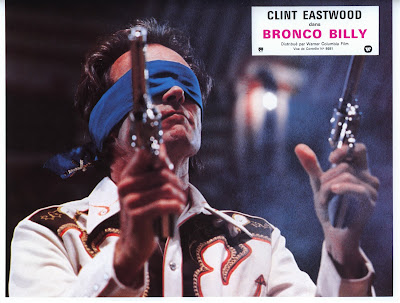 “But as you know, when we like something, we like it… that’s all.” – Clint Eastwood
Clint Eastwood is a bit of an oddity. Somehow that Nameless Gunslinger and Inspector Harry Callahan had become a filmmaker of grocery-store paperbacks: a Meryl Streep romance, a quirky court-room drama, over-long liberal-humanist war films, Angelina Jolie looking sour for two hours, a movie about Nelson Mandela that avoids all of Africa's social realities, and now a queer J. Edgar Hoover story. The diversity and range is immense. In his twilight years at the respectful age of eighty-one, it seems like Eastwood is out of step with contemporary trends. Even in France the publisher Capricci recently put out the book Clint Fucking Eastwood, which argues his decline as a filmmaker since the mid-nineties.
This might be accurate for some people but I don't think that it is the best way to approach Eastwood's oeuvre.
I will try to argue for an appreciation for Eastwood: he's a charming man and one of action. His brand of individualism is quintessentially American, which includes a faith in humanity - one just needs to remember the beginning of Hang 'Em High where he stops to pick up a calf that couldn't make it across a river. Whether it should be viewed as a nomadic pioneering spirit or a vein of sublime narcissism, in his films the society is viewed as a corrupt place while the main character - usually played by himself - is put in a situation to fix it by acting out and doing what's right. His films demystify legends as he shows them off as mere ordinary people. Eastwood has had a long and industrious career, so to share some rudimentary biographical information: he was born Clinton Eastwood Jr. in 1930 during the Great Depression (a subject of some of his films) and fought in the Korean War before returning to Hollywood to take acting classes before getting his first big break on the television series Rawhide. This was a time when the classic studio system era was ending so his career trajectory explored new territory: first television, and then Eastwood went to Europe to film the spaghetti westerns, and when he returned to Hollywood he continued to make films in the system (Where Eagles Dare, some Orangutang films) while also starting to work with an early mentor Don Siegel and also paving his own path as a director and by starting his own production company.
To discuss his style of film-making, in his most recent efforts, I would say it is of a gut-reaction simplicity and assurance. While some argue that the quality of his films depend too much on the screenplay, the other side of the coin, is that, like Alain Resnais, Eastwood picks and chooses his screenplay as a camouflage to explore new territory and subjects that interested him. Eastwood's films have a particular atmosphere - a seriousness that allows room for humor - and are filmed with a simplicity, an expressionist use of lighting and a freshness of performances that comes from a loose sense of improvisation on his sets. The Cahiers guys write about his approach, “We have the impression that you like to combine two styles: one form really established, that you have refined over the years with your team, as well as some liberties that you manage on set... In the last 10 years [1990-2000], you were able to affirm a veritable style, which has since simplified and refined: you pay so much attention to lighting, a real poetics of lighting. Absolute Power is a perfect example.” Similar to the greatest films, say, like Le diable probablement or Once upon a time in Anatolia, one gets a sense that Eastwood is trying to get at the ideas behind the subjects of the films; like the social criticism and historical revisionism in his recent period films, the peaceful anti-revenge angle of Invictus, and the Dickensian inter-connectivity of Hereafter. Eastwood's productivity of almost a new film each year (that might only be matched by Woody Allen) makes his body of work even more relevant to today's concerns and denser in associations. As well his engagement with new digital technologies and special effects is especially interesting.
 Eastwood in France
Recently at Cahiers du Cinema, in their January 2012 issue (N.674), the event is C. Eastwood – Investigation. The well-illustrated feature includes a review of J.Edgar and an essay on Malpaso Productions, both by Stéphane Delorme, and a piece on Leonardo DiCaprio by Cyril Béghin (“DiCaprio is with Matt Damon one of the rare actors that still physically integrates himself in face of the digital malleability: never does a movie deform him through pixels, instead, and still today, it is through make-up, a method that is as old as Hoover."); and there is an interview with Eastwood and his director of photography Tom Stern (who is vocal about filming with an informed blackness), editor Joel Cox (who discusses speed, instinct, observations etc) and producer Robert Lorenz. On Eastwood, Delorme classifies his late period as the following: “the moment of the strongest crystallization of his directing abilities was around 1992-95, with the perfect triangle Unforgiven, A Perfect World, On the Bridge of Madison County... Then there are the darker films of the 2000’s: Mystic River, Million Dollar Baby, Flags of Our Fathers/Letters from Iwo Jima.” And on Changeling, Invictus, and Hereafter: “in terms of the image the filmmaker has become more blurry, fuzzy, if only in trying to engage in a purely melodramatic way.”
Since the 80's Cahiers has had a strong and durable relationship with Eastwood’s films and a major investment towards him occurred at the time of the release of Space Cowboys in September 2000 (N.549). Il Etait une fois Eastwood, is the the title of the issue, and the centerpiece is an interview between Eastwood and the Cahiers writers Nicolas Saada and Serge Toubiana. What is included in this feature are a few introductory text, a twenty-two page illustrated interview, a review of Space Cowboys by Oliver Joyard (“Eastwood forgets a priori what constitutes the story. He stops filming the elderly, but instead focuses on men at work, that are occupied with assuring their survival to realize their dreams, seeing the planet from the stars.”), and a discussion with a few of Eastwood's collaborators (it’s interesting to note the differences between both Eastwood issues, to see who changed in the Malpaso staff). Eastwood comes off as very candid in the interview, discussing a variety of subjects at length, always saying jokes, and he is similar to John Ford as he resists over-intellectualizing his work and process. Some interesting answers by Eastwood include his remarks on Don Siegel and filming Coogan’s Bluff which “Isn’t necessarily my best film that I acted in, far from it, but all the while it was an agreeable experience which we built upon in Two Mules for Sister Sara and The Beguiled.” And, “If my acting style stuck, from a few certain films that made me famous, it’s because sometimes you can do a lot without saying much and instead say a lot by doing these little things.”
Now onto J.Edgar: a mythological biopic on the man that created the Federal Bureau of Investigation and ruled it from from 1924 to 1972. The story centers around Hoover and the Associate Director Clyde Tolson (Armie Hammer) and their secretary Helen Gandy (Naomi Watts). The film looks at how Hoover's policies where shaped by an early political attack which led to a new police procedural system that included fingerprint investigation and more registering of information. Like Land of the Pharoahs for Hawks (an individualistic late film in career built on so many groups), J.Edgar seems atypical for Eastwood, as a director of so many anti-authoritarian figures now in J.Edgar Eastwood seems to be glorifying, or at least identifying, a man that has build an institution. And in this institution this man, Hoover, has been able to implement his vision for over forty years and where he was able to look out of his window towards a changing world to different times with new presidents and all. As well there is a reflexivity in the myth-making process as you see Hoover take charge of dictating his own biography.
Here I want to bring up both the Cahiers and the Positif review of J.Edgar to expand on the film and the differences in how the magazines judge movies.
One thing in J.Edgar that Cahiers narrows in on is the mother figure in the film. In a brief survey of Eastwood's films (Bronco Billy, Perfect World, Bridges) one can spot many mother figures, who are complex in their own way, but are important as providers of a moral center for their children. While in J.Edgar the mother figure is almost domineering as she guides her son on the right path. Delorme writes about how these intimate conversations in her room are the reverse-shot of the powerful man he presents himself in his office, “like the secret explanation of exterior wrong doing, everything outside of this room... This room, similar to the one in Psycho, is his confidential report, with the mother tucked away like a file in a drawer.” This reference to Hitchcock's film maudit seems especially appropriately for Eastwood and this film. As they are both about guilt-ridden sons. Hoover is shown as faithful son riddled by his insecurities, partly, caused by his domineering mother - he even throws on one of her dresses in an intense moment of despair after her death - and this personal malaise and paranoia would seep into the larger culture. Just as Hitchcock was able to create some of his darkest images in Psycho, like the rain crashing on the windshield when Marion Crane is driving out of town, the room full of taxidermy birds, or the skeleton mother revealed by a swinging lamp; Eastwood is also able to create some unparalleled images of sadness, misery and power in his oeuvre. As well there have been other references to Psycho in Eastwood's other films like how in Bronco Billy there is this rich blonde (Sandra Locke) who gets "killed" at this roadside motel and there is even a comedic cameo by Anthony Perkins at the motel in Thunderbolt and Lightfoot (a Malpaso Productions). The references to Psycho illustrates Cahiers interest in characters who deviate from the norm, a film remembered by images, and the feelings - maybe that of horror - that one can experience watching a movie.
While at Positif, Franck Garbarz reviews J.Edgar and Michael Henry Wilson keeps up his rapport with Eastwood. In Garbarz interesting review, he discusses the other Hoover films by Larry Cohen, Rick Pamplin, and Oliver Stone; finds parallels with J.Edgar and Citizen Kane: a man who builds his own myth and who alters the American psyche through his empire, a man who collects and builds up an inexhaustible archive; and Garbarz has a spot-on conclusion, in describing the scene, between Edgar and Helen Gandy in the Library of Congress, while the Goldberg Variations is playing: “In this moment here, the palette, quasi-monochrome brightens suddenly. As if we could be believe in a form of relief and carefreeness. That, evidently, does not last long.”
That Positif compares J.Edgar to Citizen Kane while Cahiers compares it to Psycho says something about both magazines. It is relevant to show how Cahiers stands behind their cinema maudit while Positif's plane is more willfully artistic, Cahiers is more interested in intense images while Positif revels in a literary analysis, and that even though they are both auteurist publications it shows how both magazines have a different frame of reference.

Eastwood - Cinephile
While reading the previously mentioned interviews, as well as Eastwood by Eastwood, it's interesting just to hear Eastwood talk about movies: to hear what actors, films and directors that he likes. As well to hear what are the little-known projects that he has been associated with or worked on. The discovery of many of these titles expands ones knowledge on the history of cinema and Eastwood's relationship to it.
Eastwood acted in William A. Wellman's Lafayette Escadrille (1958) and in Michael Cimino's Thunderbolt and Lightfoot (1974). He has brief cameo in the friendly ghost movie Casper and David Gordon Green recently filmed him in the Super Bowl commercial Halftime in America. He admires the old actors Steve McQueen, Joel McCrea, Henry Fonda and James Cagney. Movies that Eastwood really likes includes Billy Wilder’s Sunset Blvd. and Double Indemnity, Carol Reed’s The Third Man, David Lynch’s The Straight Story, Howard Hawks' Sergeant York, the early Warner Bros gangster films, and, with his favorites being The Ox-Bow Incident, Paths of Glory, and White Heat. Other directors that he likes are Anthony Mann, Frank Capra, Alfred Hitchcock, Sam Peckinpah and, who he even made a film White Hunter Black Heart based on, John Huston. On the films that have most marked Eastwood: "when I was a kid, and that I have the best memories of, were films that were modest. I adored Red River and The Searchers, but also Out of the Past, and films of that caliber that remained marginal.”
Of special importance to Eastwood was his early working relationship with Sergio Leone, who he talks about: “He admired a lot John Ford which shows in his long shots, he understood the importance of the landscape. And Leone's films with all of their violence are a real departure of the what was being made in Hollywood under the Hays Code" And, "I understood that Leone wasn’t making an epic western à la John Ford, because it wasn’t his temperament. Instead Leone focusing on parody, which interested me a lot. It suited perfectly the spirit of the times, or at least the 60s.” And on the rhythm, mood and music in Leone's films: “Leone has been one of the first to get it. He understood that and had an interesting way to increase the tensions before confrontations. The confrontations were fine, but the way to increase the tension was extraordinary. This had to do with the waiting… and the music by Morricone, of course. While we wait and we look at the faces…. Don Siegel proceeded in a similar way. He would tighten the frames right before the action and then would multiply them afterwards.”
 "Clint Eastwood is an auteur: this has been said, here and elsewhere, always with good reason. But he is an auteur because he was able to create a system of production, unique in what it does, where experience and competence always contributes to his formidable institution of cinema." - Nicolas Saada
Malpaso Productions
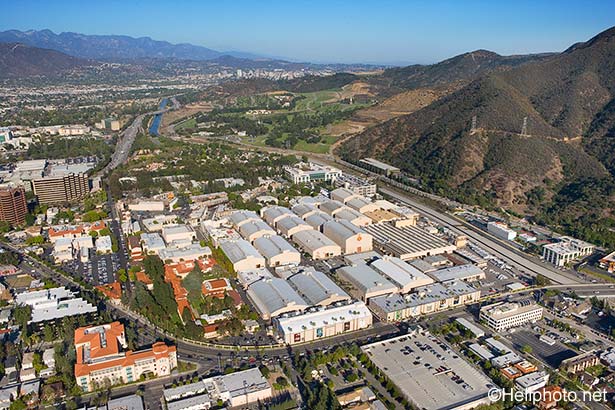
You've probably seen the title before one of Eastwood's films: A Malpaso Productions. The name derives from the Malpaso Creek in Carmel, California (where Eastwood is from, and where he spent one term as the mayor) and the word is Spanish for a "bad step", which is what Eastwood was told when he was first going to film the Dollar Trilogy in Europe, so to spite this producer he gave his company that ironic title. Eastwood talks about the impetus in creating his own production company as a way to protect himself from studio negligence, the harassment from producers and to stay away from a world of eternal discussion. The Malpaso production company is genuinely known for making affordable films, quickly. It was founded in 1967 with the first production being Hang 'Em High, which was Eastwood's first post-Leone film. The Malpaso production company is usually associated with Eastwood as it produces his directorial projects and the films that he acts in. The Malpaso Productions offices and warehouse is in the Warner Bros Studios in Burbank, California. The new Eastwood issue of Cahiers has pictures of it and you can go on a mini-tour of it in Richard Schickel's documentary The Eastwood Factor.
There is an idea that is discussed in relation to cinema of that of a utopia: an ideal place, a visionary system, for artist to make their films. A place without any studio interference, where the goal is to create the film as the director conceives it. One imagines a studio piling together their resources to push the medium to its limits and create vibrant new films. In this utopia one would make movies for themselves and friends, about subjects that interest the creator. The dream would be that all of this would be sustainable within the industry. This idea of an utopia is most often associated with Francis Ford Coppola's Zoetrope studio. Where in the eighties it was a place where art-house directors like Wim Wenders and populist filmmakers like George Lucas would come together. A studio that would be more a labor of love then it would based on capitalistic impulses. This Tucker-like factory is an ideal. It is also a collaborative ideal. So, like, when Coppola would run out of funds when he was filming One From the Heart his crew postponed their pay and kept on working. Since the bust of this utopia Coppola retreated from filmmaking, for a while. Until his resurgence in the late 2000s with his last three great films Youth without Youth, Tetro and now Twixt. These self-financed projects are personal films that he makes for himself - keeping on this utopian dream of a world where the movies are a place of creative self-expression, before being anything else.
This utopia of production is the somewhat what Eastwood seems to be doing at Malpaso. "You can't make a film to fit the presumed tastes of the audiences. You make the film in which you believe," says Eastwood. The collaborative nature is there as many of Malpaso's staff - so, like, Tom Stern, Joel Cox and Robert Lorenz - have a loyalty to the studio and seem to dedicate themselves wholeheartedly to it. And it's economic streamlining production avoids the economic faults of other major studio. Through making films Eastwood has even been able to literally integrate his family and other interest, like music, into them. If Eastwood continues to be this prolific in his twilight years, the reason is the efficient production system that he has created and maintained. From Eastwood in the coming years you can expect from him, back in front of the camera, in his producer Robert Lorenz's directorial debut Trouble With the Curve where he plays a blind father to his daughter a baseball player (Amy Adams), and then a remake of A Star is Born featuring Beyoncé.
This model of having a small localized production company seems to be shared amongst the up-and-coming young independent filmmakers: like Josh and Benny Safdie from Red Bucket Films in New York, whose new short-film The Black Balloon is much anticipated; and Antoine Bourges, Kazik Radwanski and Dan Montgomery from Medium Density Fibreboard Films (MDFF) in Toronto, whose new films East Hastings Pharmacy (which is playing at Cinéma du Réel and Images Festival, so far) and Tower should be real event film experiences of the year.
Tuesday, December 27, 2011
Happy New Years! (TFR Top Ten of 2011)
Instead of the typical Top Ten, each entry is organized through thematic categories: (1) the presentation of the unconscious mind through cinema by the world's best Québécois directors, (2) Hitchcockian French thrillers starring the great Guillaume Canet, (3) late works by masters of American cinema, (4) these short films are precursors of what is to come out of Canadian cinema, (5) hybrid films that take the luster of mainstream movies, inflicting them with a singular and vibrant sensability, (6) horror, action and the supernatural reigns supreme, (7) some might call these middle-brow but they are undeniably well crafted and complex, (8) funny, smart, personal and full of feeling, (9) formally invigorating world cinema, (10) social activism, political documentary and anarchist films has been pushed to the margins of experimental cinema - these have been the most challenging.
Following the Top Ten there are a few other lists: best new film books, favorite local film critics, upcoming series etc...
I hope you've enjoyed reading Toronto Film Review and that you keep checking it out in 2012 - there is a lot more film coverage and book reviews to come. A special thanks goes out to everyone who contributed and helped. And make sure to check out the twitter account, TOFilmReview. - D.D.
 "You know what, my films resemble more and more what children make in their rooms, when they make little expositions with rocks and seashells: I see more and more clearly my films, and more so the next one, like expositions of little things that I want to share." - Lars von Trier
Top Ten of 2011
Andrew Parker:
for his writing at Criticize This! and Dork Shelf as well as his programming series Defending the Indefensible at the Toronto Underground Cinema. If you were to have told me a year ago that the state of Toronto's weekly film criticism is in good shape and that the best writing could be found on website's with silly names like Criticize This! and Dork Shelf, I would have probably laughed at you. But lo and behold, I was wrong. Andrew is the kind of guy that still writes his reviews longhand with an old pen and notepad. And Andrew's weekly reviews, which run around the one-thousand word mark, of the majority of new releases provides the most thorough readings of what is playing on Toronto's screens. With a special attention to the films that can gain from this critical support like Extremely Loud and Incredibly Close and Beauty Day. As well he seems to be ahead of most trends as he can tell you why movies like Like Crazy and Margaret are terrific and his opinions stand out as he can also say why most commercial drivel is bad.
Along with Andrew's series Defending the Indefensible, there is also John Semley's (A.V. Club Toronto) new series Remake/Remodel, both of which I recommend and that I look forward to starting up again in the new year. As well there is a new class that seems interesting as part of the Media Mondays at the JCC, Reflections in the Hall of Mirrors: American Movies and the Politics of Idealism presented by Kevin Courrier which will be running from January 16th to March 26th each Mondays starting at 7:00PM - except for February 20th and March 12th. As well, like always, there is Early Monthly Segments and Pleasure Dome for your experimental film fix, and the monthly film-blogger pub nights for some camaraderie. And while I am shouting people out, might as well bring up the Cinema Scope Twitter account CinemaScopeMag, which is a lot of fun too.
Most anticipated films of 2012:

Following the Top Ten there are a few other lists: best new film books, favorite local film critics, upcoming series etc...
I hope you've enjoyed reading Toronto Film Review and that you keep checking it out in 2012 - there is a lot more film coverage and book reviews to come. A special thanks goes out to everyone who contributed and helped. And make sure to check out the twitter account, TOFilmReview. - D.D.
 "You know what, my films resemble more and more what children make in their rooms, when they make little expositions with rocks and seashells: I see more and more clearly my films, and more so the next one, like expositions of little things that I want to share." - Lars von Trier
 Top Ten of 2011
 1.       Café de Flore (Jean-Marc Vallée)
          Curling (Denis Côté)
 2.       Espion(s) (Nicolas Saada)
          Une vie meilleure (Cédric Kahn)
 3.       Road to Nowhere (Monte Hellman)
          Twixt (Francis Ford Coppola)
          The Tree of Life (Terrence Malick)
 4.       The Fuse: Or How I Burned Simon Bolivar (Igor Drljača)
          Coorow-Latham Road (Blake Williams)
          Up In Cottage Country (Simon Ennis)
          La Ronde (Sophie Goyette)
          Three Mothers (Rafal Sokolowski)
 5.       Melancholia (Lars von Trier)
          Drive (Nicolas Winding Refn)
          You Are Here (Daniel Cockburn)
          Hors Satan (Bruno Dumont)
          Un été brûlant (Philippe Garrel)
 6.       Super 8 (J.J. Abrams)
          Scream 4 (Wes Craven)
          Le Gamin au vélo (Jean-Pierre and Luc Dardenne)
          The Twilight Saga: Breaking Dawn: Part 1 (Bill Condon)
          Attack the Block (Joe Cornish)
          Kill List (Ben Wheatley)
          Martha Marcy May Marlene (Sean Durkin)
 7.       Restless (Gus Van Sant)
          The Skin I Live In (Pedro Almodóvar)
          Pina (Wim Wenders)
          Contagion (Steven Soderbergh)
          Shame (Steve McQueen)
          The Adventures of Tintin (Steven Spielberg)
 8.       Hall Pass (Bobby and Peter Farrelly)
          How Do You Know (James L. Brooks)
          Midnight in Paris (Woody Allen)
          Bridesmaids (Paul Feig)
          We Bought a Zoo (Cameron Crowe)
          The Descendants (Alexander Payne)
 9.       Ne change rien (Pedro Costa)
          To Die Like a Man (João Pedro Rodrigues)
          The Strange Case of Angelica (Manoel de Oliveira)
          Mysteries of Lisbon (Raoul Ruiz)
          The Future (Miranda July)
          Le quattro volte (Michelangelo Frammartino)
          The Autobiography of Nicolae Ceausescu (Andrei Ujica)
 10.      Seeking the Monkey King (Ken Jacobs)
          The Forgotten Space (Allan Sekula and Noël Burch)
          Vapor Trail (Clark) (John Gianvito)
          This is not a Film (Mojtaba Mirtahmasb and Jafar Panahi)
          Slow Action (Ben Rivers)
          We Can't Go Home Again (Nicholas Ray)
          Too Many Things (Donigan Cumming)
Best new and discovered film books and writing: - Another Fine Mess: A History of American Film Comedy by Saul Austerlitz (Chicago Review Press, 2010).
- The Film Comedy Reader edited by Gregg Rickman (Limelight Editions, 2004).
- Comment Woody Allen peut change votre vie by Éric Vartzbed (Éditions du Seuil, 2011).
- Apichatpong Weerasethakul edited by James Quandt (Austrian Film Museum, 2009).
- Splitting the Choir – The Moving Images of Donigan Cumming edited by Scott Birdwise (Canadian Film Institute, 2011).
- Pencil, Ashes, Matches & Dust by Donigan Cumming (Editions J’ai VU, 2009).
- Trammel up the Consequences by Robin Wood (Lightstruck Film & Media Book, 2011).
- Monte Hellman - Sympathy for the devil by Emmanuel Burdeau (Capricci, 2011).
- Monte Hellman: His Life and Films by Brad Stevens (McFarland & Company, 2003).
- Masters of Cinema: Francis Ford Coppola by Stéphane Delorme (Phaidon, 2010); as well as his writing and direction of Cahiers du cinéma.
- When Movies Mattered: Reviews from a Transformative Decade by Dave Kehr (University Of Chicago Press, 2011); as well as Kehr's weekly DVD review column in The New York Times.
- The American Cinema: Directors and Directions 1929-1968 by Andrew Sarris (Da Capo Press, 1968).
- Films And Feelings by Raymond Durgnat (MIT Press, 1971).
- BFI Modern Classics - WR: Mysteries of the Organism by Raymond Durgnat (BFI, 2008).
- Joseph L. Mankiewicz et son double by Vincent Amiel (Presses Universitaires de France, 2010).
- World Film Locations: Tokyo edited by Chris MaGee (Intellect Ltd, 2011).
- Optic Antics: The Cinema of Ken Jacobs edited by Michele Pierson, David E. James and Paul Arthur (Oxford University Press, 2011)
- Anthology Film Archives.
- Adam Nayman:
- Abel Ferrara's 4:44 Last Day on Earth and Christopher Nolan's The Dark Knight Rises. As well Kazik Radwanski and Antoine Bourges from Medium Density Fibreboard Films (MDFF) should hopefully have their current projects finished in the new year - I look forward to catching these two on the festival circuit.

Monday, March 21, 2011
MDFF presents First Generation at Lichter Frankfurt
This is a guest contribution from Toronto-based filmmaker Kazik Radwanski (Green Crayons) - D.D.
Later this week Dan Montgomery and myself (from Medium Density Fibreboard Films) will be traveling to Frankfurt for the Lichter Filmtage. They invited our latest short film Green Crayons to play at the festival and it will be the third consecutive year that one of our films has played there. To celebrate this, they also invited our first short film Assault (2007), and invited us to curate a program of short films. We were given carte blanche and told that we could program anything we like as long as it related to Toronto. Frankfurt is Toronto’s sister city and one of the festivals missions is to celebrate that fact. However, we soon found that all of our favourite local filmmakers were from somewhere else.
This program centres on the notion of the director being informed by a place and its inhabitants, yet removing this context from their films. The following five short films share a connection to one of Frankfurt’s sister cities, Toronto, Canada. They have been created by directors that spent time in Toronto, but did not necessarily film there. These temporary-residents play a role in Canadian cinema: their films maintain a connection to Toronto, while defining their own territories and landscapes.
Director Igor Drljaca, was born in Bosnia and Herzegovina, and is currently finishing his Masters degree in Film Production at Toronto’s York University. Nicolas Pereda was born in Mexico, and has since relocated to Toronto. Similarly, Chris Chong Chan Fui was born in Malaysia and spent some of his formative years in Toronto.
These three foreign-born directors are at the beginning of their careers. Most of the conceptual and audiovisual underpinnings of their current production developed through their short films.
In Chong Chan Fui’s Pool, a village pool bearing the name USAID awaits completion in post-tsunami Indonesia, while the village children learn to swim in it. In Block B, concrete homes and contrasting soundscapes frame the lives of an expatriate community. Both films won Best Canadian Short Film at the Toronto International Film Festival in consecutive years (07 and 08). His debut feature film, Karaoke, premiered at the 2009 Cannes Directors’ Fortnight and he is currently developing his second feature, The Tour.
In Drljaca’s Woman in Purple, a young Sarajevo orphan, Mirza, who earns easy money by assisting a local drug dealer reconsiders changing for the better. The film has screened at numerous festivals including Telluride, Encounters and Tampere. Drljaca’s other short, On a Lonely Drive, depicts a father attempting to calm down on a leisurely drive, unaware that his actions may have tragic consequences.
In Pereda’s Interview with the Earth, a series of interviews and enactments share the story of Nico and Amalio, two children who lost a friend while climbing a mountain. Successful on the festival circuit in its own right, the film also relates to Pereda’s most recent acclaimed feature film, Summer of Goliath, which won the Orrizonti Prize when it premiered at the 67th Venice International Film Festival. - Kazik Radwanski

Later this week Dan Montgomery and myself (from Medium Density Fibreboard Films) will be traveling to Frankfurt for the Lichter Filmtage. They invited our latest short film Green Crayons to play at the festival and it will be the third consecutive year that one of our films has played there. To celebrate this, they also invited our first short film Assault (2007), and invited us to curate a program of short films. We were given carte blanche and told that we could program anything we like as long as it related to Toronto. Frankfurt is Toronto’s sister city and one of the festivals missions is to celebrate that fact. However, we soon found that all of our favourite local filmmakers were from somewhere else.
This program centres on the notion of the director being informed by a place and its inhabitants, yet removing this context from their films. The following five short films share a connection to one of Frankfurt’s sister cities, Toronto, Canada. They have been created by directors that spent time in Toronto, but did not necessarily film there. These temporary-residents play a role in Canadian cinema: their films maintain a connection to Toronto, while defining their own territories and landscapes.
Director Igor Drljaca, was born in Bosnia and Herzegovina, and is currently finishing his Masters degree in Film Production at Toronto’s York University. Nicolas Pereda was born in Mexico, and has since relocated to Toronto. Similarly, Chris Chong Chan Fui was born in Malaysia and spent some of his formative years in Toronto.
These three foreign-born directors are at the beginning of their careers. Most of the conceptual and audiovisual underpinnings of their current production developed through their short films.
In Chong Chan Fui’s Pool, a village pool bearing the name USAID awaits completion in post-tsunami Indonesia, while the village children learn to swim in it. In Block B, concrete homes and contrasting soundscapes frame the lives of an expatriate community. Both films won Best Canadian Short Film at the Toronto International Film Festival in consecutive years (07 and 08). His debut feature film, Karaoke, premiered at the 2009 Cannes Directors’ Fortnight and he is currently developing his second feature, The Tour.
In Drljaca’s Woman in Purple, a young Sarajevo orphan, Mirza, who earns easy money by assisting a local drug dealer reconsiders changing for the better. The film has screened at numerous festivals including Telluride, Encounters and Tampere. Drljaca’s other short, On a Lonely Drive, depicts a father attempting to calm down on a leisurely drive, unaware that his actions may have tragic consequences.
In Pereda’s Interview with the Earth, a series of interviews and enactments share the story of Nico and Amalio, two children who lost a friend while climbing a mountain. Successful on the festival circuit in its own right, the film also relates to Pereda’s most recent acclaimed feature film, Summer of Goliath, which won the Orrizonti Prize when it premiered at the 67th Venice International Film Festival. - Kazik Radwanski

Wednesday, November 3, 2010
MDFF Reviews (Green Crayons, Woman Waiting)
 “In my opinion, there aren’t big or small subjects [for film], because the smaller the subject is, the more we can treat them with grandeur. In truth, there is only truth.” – Claude Chabrol
Kazik Radwanski’s Green Crayons is the captivating story of two elementary school children, an Indian Canadian kid Xavier (Raj Manav) and his Caucasian friend Liam (Kaiden Wiliams), who have to deal with the consequences of spitting on each other in class. At first glance the story appears sweet as the two children are in a classroom; in the background there is one of those inspirational posters that says “Be Generous” and they are browsing through books with cute titles like “Dog” and “Big Cats”. It unexpectedly takes a turn towards an impromptu spiting battle between the two until this catches the attention of the teacher who only sees Liam spitting and sends him to the principal’s office. The rest of the ten-minute short film deals with Liam's shame due to that the principal is going to have to call his parents and Xavier’s guilt of getting his friend in trouble. The green crayon of the title refers to the Crayola writing instrument used by Liam to fill in the third square on his notebook, which means that the principal will have to call his parents. He is asked to fill in the square several times before he does so reluctantly. The grandeur of how this scene is treated reaffirms the above Claude Chabrol quote and has the intensity of the young Jean-Pierre Léaud police interrogation in Les Quatre Cents Coups (1959). The films emotional core comes from Xavier realization that he should look out for his friend. During recess, Xavier plays slapsies with this girl in the playground. He twists her arm, and slaps her in the face. You can tell there is something else eating him up. He spies through the crack of the door at the principal office to see how Liam is doing. Back in class, he rubs Cheez Whiz all over his face as a ploy to go to the washroom. On the way back in the hallway he looks at his notebook and only sees the one green square on it and afterwards he walks up to the main office door. His friend pulls him away. And when he fesses up to his teacher, her verdict is to give them both green squares; “I don’t want to give you a green square, how does that make you feel?” she says. There is no resolution, it ends with each student being more divided and a worst situation then they started. Similar to the mute elementary school children who at such a young age can define atrocities in Michael Haneke’s Code inconnu (2000), the problem facing the kids in Green Crayons is not intrinsic within the children but with the teachers and principals, especially their method of regulating the children’s behavior through a three-strikes-and-your-out approach to anti-social behavior and a one-sided approach to communication. Who knows what is next for these two little boys, outside there is a birch tree with its green leaves blowing in the wind.
Kazik Radwanski is the writer and director of four short films: Green Crayons (2010), Out in That Deep Blue Sea (2009), Princess Margaret Blvd. (2008), and Assault (2007). Film critic Jason Anderson in the Toronto star wrote “[Kazik Radwanski is] one of the most exciting local filmmakers yet to make a feature…”.
Antoine Bourges’ is the writer and director of two short films: Woman Waiting (2010), and Hello Goodbye (2008).
 The company Medium Density Fibreboard Films (MDFF) was founded in 2007 by the producer Daniel Montgomery and the director Kazik Radwanski; www.mdff.ca.
Subscribe to:
Posts (Atom)