Sunday, March 20, 2016

Stéphane Delorme and Cahiers: 2015 – 2016

 The Smell of Us belongs to these rare films that reconfigure everything when we see them: we leave the theater by saying that this is why we go see films… What’s at stake with this film is an idea of cinema. Where the horizon today is getting more de-complexed towards these ‘well made’ products, just as insipid as most commercial products, Larry Clark arrives with his terrible poison, a chaotic film, a grand accident that undresses his desires, his emotions, his frights… He’s transmitting us the truth of his emotion… Rarely has a cinéaste gone so far in undressing his cinema. The son is stuffed by his mother who’s bored, a post-sixtyeighter that suffocates all of their descendants. The scene designates less an incite then a blasé delirium of a bourgeois intellectual, broken, lamentable, held up between a regret of the grandeur of the past and the inertia of the actual present.” (N.707)

“Today we need more teams. Of assemblages of intelligences with a common goal. ‘Team’ is the best word for it. A ‘group’ is too closed within itself, too homogeneous, too dogmatic. A ‘gang’ is too puerile, almost mafioso. A ‘team’ can go far, and Cahiers knows something about this: reassembling a few die-hard cinephiles and, one thing leads to another, it’s the nouvelle vague. A team doesn’t stop, it advances with a common goal. It isn’t a trapped community, closed-off, utopic. But instead it stimulates the réel for everyone. Utopia isn’t a good concept, contrarily to what a few nostalgics from the sixties and seventies would make you believe. The only thing that counts is the réel, that which is of the here and the now. In the name of an idea. There must be a realism of all the instances to be able efficiently drop an idea into the réel.” (N.708)

“If we like certain cinéastes, it’s firstly because of this: they don’t tell us ‘stories’, but instead share with us that which is the most intimate that goes through them… Rarely has a film since Nanni Moretti’s Mia madre so well described the misfortune of these children that want to do well but who don’t know how.” (N.716)

“Rivette doesn’t scatter himself, he doesn’t engage with the b-film, he’s focused and he just wants to understand. What makes Hawks, Rossellini, Lang, Preminger cinéastes? He’s searching for a common point, a common ground, which he names mise en scène. It only takes one or two texts to spell it out, reassembling his thought once and for all. When he discusses for the first time Bergman, on Summer Interlude, in 1958, he barely cites the film: it’s especially the occasion for his text on Bergman, and also the occasion for something else: to understand what makes a great cinéaste. So no little details but instead an exulting higher moral view that confines towards an abstraction. Rivette, by honesty, stops sometimes: to frankly asks himself, ‘Qu'est-ce que le cinéma?’ and he excuses himself for not being able to answer, but the important thing is to know what it is the unique question that’s in his head.” (N.720)

François Truffaut to Luc Moullet

“Neither in its tone nor its form nor its content is your article on Les Hussards right for Cahiers, even though it’s not-uninteresting… That’s why your joining Cahiers poses the moral problems that you can image; I’m sure we’ll come to trust you, but you will understand why we are wary...

 “It was so very friendly and revealed a Moullet I had not suspected, full of humour, relaxed and realistic…. Yes, I admit it, we were a little scared of you. First because you are as (sincerely and violently) caustic as we used to be and there’s something shocking about this eternal recurrence at Cahiers, this eternally recurring sarcasm, and it also seemed to us that you tended to go too far in both directions (adulation and loathing)...

(Francois Truffaut: Correspondence, Pg. 85, 95)

Saturday, March 19, 2016

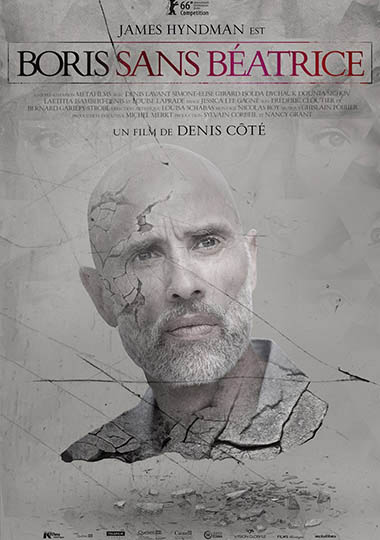
A Must-See: Denis Côté’s Boris sans Béatrice

Illness strikes, and the world changes. Boris, even more alone than the teenagers in It Follows, is a rich factory owner who retreats from his public life to move to the Québécois countryside to take care of his sick wife, a former cabinet member to the prime minister (Bruce LaBruce), whose suffering from depression and other illnesses and no longer speaks. It’s clear that Boris has hubris problems (getting into fights with cashiers, local politicians, his own daughter and almost everyone else), and after receiving a mysterious letter, he meets with this mysterious figure (Denis Lavant) who confronts him to change his lifestyle. Boris sans Béatrice brings together many themes and images from Denis Côté’s repertoire of motifs, though now they are evolved and refined: an isolated cottage and outsider characters, fraught father-daughter relations, an underlying violence that edges towards the horror genre, a reflection on the arts, a multi-lingual and sophisticated use of language, and very precise camerawork and compelling music. Where Vic + Flo ont vu un ours ended on such a bleak-note (the murder of the two main characters, and it’s also worth mentioning the idiosyncratic pleasure of all of Côté’s character names), here the fate of Boris seems more optimistic, in terms of trying to change, loving his wife and opening up to the world. Boris is the most upper-class, bourgeois character in Côté’s body of work, and through him, the director is experimenting, trying to explore new territory: psychological, social and affective. The scenes of Boris being with his younger lovers or that of grieving and regretting his previous self recalls similar ones in the films by another Québécois director, Jean-Marc Vallée (Café de flore, Demolition). The glimpses of sunlit, euphoric flashbacks with Boris and Béatrice are a bright reminder of the pleasures available when one opens oneself up to others and to love, and points towards the direction of Boris’ fate. Boris sans Béatrice is Côté’s best film. All of the actors are great – underplayed, gestural, and affective – and especially its four main leads James Hyndman, Simone-Élise Girard, Isolda Dychauk and Laetitia Isambert-Denis. Since its earlier behind-the-scenes production photographs and the eventual ones from its Berlin premiere, there has been a lot of mystique and anticipation surrounding Boris sans Béatrice. It exceeds any expectation and pleasurably surprises: Côté blends the réel with an imagination to best present his story. The strategy of the quick turn-around of the film from its premiere to its theatrical run (where in local interviews he even promotes the Toronto filmmaking scene, particulary the work of Kazik Radwanski) offers a great model for independent directors in Canada: first off, make efficient and ambitious work that matters to you and engages with the world; get it out there onto screens, festival ones and domestic theaters, to have people to actually see it, and finally, (as Boris would come to learn) stay humble and also think about others.

Friday, March 18, 2016

Toronto Film Review Proudly Presents: SEVEN DAY RENTAL

For an event that I helped organize tonight, Friday, March 18th, 2016, at Sonic. - D.D.
***
On a fateful night some weeks ago, Toronto Film Review was humbly introduced to quite possibly the hottest and freshest video-editing collective in the city... Seven Day Rental digs into their sacred catacombs of forgotten VHS tapes to bring you a visual smorgasbord of the weirdest, the funniest, most titillating, and most horrifying footage imaginable.

These hard-working lads have pillaged the back rooms of local video stores for months, gathering rare and unwanted tapes to deliver spicy one-of-a-kind experiences that you will not soon forget.

Riding on the success of their recent feature in Video-Rama's live showcase at Dundas Video, 7DR is hungry for more.

Check them out tonight at SONIC CAFE, 60 Cecil Street, Toronto, off Spadina, just south of College. And if you can't make it, at least do yourself a favour by searching 'Seven Day Rental' on YouTube, and let your brain absorb some of their troubled past. - Daniel Barone

7DAY RENTAL live @ SONIC:
PRE-SHOW / WARM-UP @ 8PM
MAIN EVENT @ 9PM (intermission @ 10PM)
DJ SET / COOL-DOWN @ 11PM - 12AM

SEVEN DAY RENTAL @ Youtube:
https://www.youtube.com/channel/UCCH_BB6L6sDuD_58Ovg_GrA

Tuesday, March 15, 2016

Paul Gross and Canadian Cinema

In honor of tonight’s, Tuesday, March 15th, Innis College screening of Hyena Road with Paul Gross in attendance for a question period, here are some good Paul Gross quotes, which are particularly interesting for young independent Toronto directors. – D.D.
***
 “My advice is shoot, shoot. Make movies. You know, you have the luxury of having equipment that you have access to that can allow you to make things, in the way that we didn’t when I was coming in because we actually had to have film still. But I think the most important thing is just keep doing it. When you’re leaving school, you get yourself involved in productions. If you really want to get involved get into film, movies and television, you just go and get onto shows. Shows that are shooting out of Toronto, Montreal, Newfoundland. Get in and around those kind of things, to start to really understand what the operations of what a set is like, and at the same time you write your own shows, you direct your own shows. Make them shorts. Once you start to feel comfortable making a complete narrative inside a short, then you start expanding that out. Make movies!”

   
"What does start to happen is that you go to other people for money, like you go to Telefilm, the federal funding agency. And they always have a lot of opinions about your script, many of which are completely idiotic, but you have to sort of bear with them somehow. Once in a while you pick through there and there's a couple of notions - and you say, oh that's pretty smart - but most of it is nonsense."
“The really important thing for directors is that you got to know how to delegate. You can’t know all of this stuff. Know what you’re strong at. I’m not… I mean I kinda vaguely know what cameras do, and I roughly know what lenses do. And I more or less know what stock is. But I would never pretend to say that I want it on… such and such a lens at eight feet… I can describe what I want the effect to be. And those guys can achieve it. And the same goes for costume, with design. And what I understand better are performers. But other people come in and who don’t really know or understand performers, since they come from editing. Or they’re Ridley Scott and they come from… wherever here does… The factory of invention.”

“And I think that you have to be in love with the performers. The director needs to… Some advice to a director would be to do not dislike your cast. You must love them. You must decide that you love them. Because they’re everything for you…”

Sunday, March 13, 2016

Stinking Heaven @ The Royal (March 14, 8PM)


MDFF presents Nathan Silver's new film Stinking Heaven Monday, March 14th at The Royal at 8PM. The film continues some of Silver's major preoccupations, such as ones from his earlier Soft in the Head, as it explores the idea of an alternative community, relationship dilemmas and the interruption of one's life by a volatile guest. Deragh Campbell and Hannah Gross, from I Used to be Darker, reunite and are extremely compelling, which is partly due to Silver's Cassavetes-like, improvisational directing. A compelling drama.

Monday, March 7, 2016

John Porter at Early Monthly Segments

For tonight's seventh year anniversary of Early Monthly Segments its programmers are organizing a special series of projection of the short-films by the local director-photographer-experimental film enthusiast John Porter, in conjunction with the release of his new book, John Porter’s CineScenes: Documentary Portraits of Alternative Film Scenes, Toronto and Beyond, 1978-2015. The screening is tonight Monday, March 7th at 8PM at the Gladstone Hotel.
But probably the most anticipated film in the program is the 1992 The Secret of the Lost Tunnel (or Woody Allen: A Space Odyssey), which is described on Porter's website as,
"A Camera Dance, using time-lapse/pixilation. John performs for the camera in a rare "narrative" film, edited in-camera. Playing a naked Hardy Boy carrying a lantern in the dark, he discovers a mysterious, long, pink tunnel. Struggling to squeeze all the way through, faster and faster, he passes advertisements on the walls along the way, and at the end he emerges into a scene from Stanley Kubrick's movie 2001: A Space Odyssey (1968). John constructed the tunnel "set" in his apartment, changed shooting speeds to change his apparent crawling speeds, and recorded his grunts onto the sound film afterward. Inspired by a scene in Woody Allen's movie Everything You Always Wanted to Know About Sex, but Were Afraid to Ask (1972). The title, and title page in the film, is borrowed from a Hardy Boys book."
A regular dilemma for Canadian directors: How to make a cinema in the shadow of Kubrick or The Force Awakens? Film a projection of 2001: A Space Odyssey (The Secret of the Lost Tunnel), put Kubrick in your film (Operation Avalanche), document the public event which is the opening night screening of the The Force Awakens (Nirvana: The Band Part. II), or have children playing as if they had the force (Jean-Marc Vallée's Big Little Lies). 
 
An attempt for an auteurist cinema has its limits in Toronto so a good goal is to reach for the sky and produce something great in the model of some of the most popular and imaginative films of the last century. In the shadow of Hollywood, there's a need to do everything to bring attention to your film, first people need to want to see your film, before they can evaluate and appreciate it.