After a great launch
party at the Rivoli (the revered concert location of Nirvana The Band), Matt Johnson’s The Dirties, a black comedy about a high school shooting, is now available on a limited edition DVD and Blu-ray combo-pack. The film
comes with a wealth of supplementary material that provides a fascinating perspective on the origins of The Dirties and its production. There are making-of featurettes of the crew
filming its final shooting (after having raised extra funds just to do
it, they pulled it off on their third attempt), deleted scenes (with
jokes as funny as those from Anchorman
and multiple endings), a fluke real (where all of the mistakes in the film are
pointed out), Mr. Muldoon’s cut of The
Dirties, and a short-film The Visitors by a couple of teenagers that have cameos. There are different trailers for The Dirties in the style of Only God
Forgives, Aliens, and The Girl With
The Dragon Tattoo. There are audio commentaries by Johnson and Owen
Williams, the production team (who also have a couple hidden commentaries on
Steven Spielberg), its writer Josh Boles, and by the film critic Chris Heron (whose analyses of the film's complexities are quite insightful). There are many fascinating
anecdotes about the making of the film. Johnson speaks about how, for him, the performances of the non-professional actors are the most realistic when they are just being themselves
and reacting to what is happening. There are multiple lengthy interviews with
Johnson and the best one is the one by The
Seventh Art. The discussions are also full of jokes which makes them especially
entertaining. Some of the influences on the film that are brought up include Requiem for a Dream, Martha Macy May
Marlene, Hackers (Johnson’s favorite film), Fight Club, The Office, and Man
Bites Dog. If The Dirties appears
better after watching all of these special features – surpassing its already interesting troubling conceit
and anarchic visual style – it’s because what stands out is Johnson and his
friends, and the fun and naturalness of it all. It's this loyalty to oneself and friends which is the through line for Johnson. So just like how Nirvana The Band, which offered a microcosm
for the creative process through its
story of Matt and Bird trying to book a show at the Rivoli, is essentially about the friendship and emotional
bond between the two, The Dirties
pushes this theme of loyalty towards friends even further (e.g. the last scene
when Matt confronts Owen) to its self-destructive and violent conclusions. A
personal, troubled and scary film. The
Dirties gains in depth from repeated viewing.
Monday, May 5, 2014
Saturday, May 3, 2014
Matt Johnson on Steven Spielberg
One of the special features on the new DVD of The Dirties is a hidden audio commentary (it’s track 6) of Matt
Johnson & co. who instead of discussing the film provide a commentary of Steven
Spielberg’s adaptation of Hook. It’s
a characteristic move from this surprising and funny group as it allows the
viewer to just sit back and listen to these guys as they hang out and make jokes while
they watch Spielberg’s classic and under-appreciated story of Peter Pan. It’s worth noting how the commentary sometimes corresponds in interesting ways to The Dirties.
They’re big Spielberg fans. Some of their
favorite Spielberg films are Jurassic
Park, Catch Me If You Can, E.T., and Close Encounters of the Third Kind. There are obvious
connections between The Dirties and
Spielberg: there is the Schindler’s List
poster in Matt’s basement and the Catch
Me If You Can riff in the film’s end credits. They’re not
meaningless references either. The Dirties is an ode to the
victims of tragic circumstances just like how Spielberg’s film is about the holocaust. Matt's journey as he constantly puts on
disguises that reflect his character – most notably the The Catcher in the Rye shirt – is similar to Frank Abagnale’s sneaky attempts at
upward mobility.
But! There are also similarities between The Dirties and Close Encounters especially through their shared protagonist: an alienated young boy who feels
totally detached from their parents. There are also interesting setting parallels between the landfill shooting scene in The Dirties with those from Close Encounters and its isolated rocky mountain. This connection
is made even stronger with a special hidden track on only some of the
DVDs (!) where Johnson & co. have a commentary of Spielberg's masterpiece Close Encounters of the Third Kind.
The highlight of this secret commentary is their
discussion at the ending of the spacecraft landing at Devils Tower. Throughout the film Johnson & co.
constantly makes jokes on the commentary so in this scene you can hear them: “How did they even hire these people
at the military base? Who is this guy on the piano?” But eventually it gets emotional as the commentary track gets really quiet
(is light crying audible?) when Jilian’s son, who was abducted earlier, comes rushing out of the UFO. And then they discuss the genius of Spielberg around when Roy is brought onto the spaceship.
Johnson concludes:
“Steven Spielberg is the best! His use of the supernatural and the emotional is
unmatched!”
This is an interesting approach to the DVD
commentary and The Dirties is one of the most original and daring recent Toronto films. By watching The Dirties and listening to Johnson & co. the viewer can just tell that these guys were meant to make films. Pick up the DVD if you can!
David Lynch in Nayman's Terms
The local film critic Adam Nayman continues his film-lecture series at the JCC and this time it's on David Lynch. They're on Mondays at 7PM until June 23rd. Be there!
Friday, May 2, 2014
Les Cahiers du cinéma, une histoire étonnante d’une revue singulière...
"La revue a lancé une nouve lle formule en janvier 2007. Bien que ces changements soient très légers puisque seul le format est réduit et que quelques retouches visuelles et de mise en page ont été apportées, cette nouve lle maquette réussira-t-e lle à jouer dans le futur le rôle que ses créateur s attendent d’elle ? La question devra être reposée dans une dizaine d’années et ce sera aux étudiants de ce temps d’y répondre... "
Follow the link to read Noémie Deforseau's mémoire on Cahiers du cinéma. It is especially interesting for its analysis of the Le Monde years (1998-2007).
Des Cahiers jaunes aux Petits Cahiers rouges
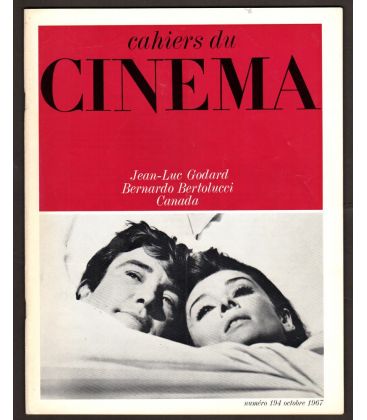
"En revanche, si l’aventure politique des Cahiers du cinéma était une aventure qui a laissé son empreinte comme celle d’une époque désormais révolu e, les déboires que le journal a connu en 2002 et 2003 ne vont pas sans engendrer des réso nances singulières pour qui connaît les tribulations des Cahiers à la fin des années 1960 et au début des années 19 70, même si le contenu politique qui était présent alors est aujou rd’hui complètement évacué. Les pertes de 700 000 euros de 2002, conjuguées à une baisse de 1 3% des ventes, ont fait ressurgir tant aux Cahiers que dans les milieux cinéphiles le spectre de la p ériode où le lectorat des Cahiers du cinéma se manifestait surtout par sa désaffection et sa d ésertion, et où la revue tirait le diable par la queue. Mais les résonances les plus aiguës a vec le passé se sont faites entendre dans les violentes attaques de François Maillot, directeur d es Editions de l’Etoile propriétaire des Cahiers, qui, dans une note qui était à l’époque à usage confidentiel, stigmatisait le manque de qualité éditoriale de la revue et la médiocrité de certains textes, et surtout une absence de manifestation claire d’un véritable amour du cinéma . Des scénarios que proposait cette note, et qui comprenaient la fermeture des Cahiers , c’est celui du remplacement de Charles Tesson et de Jean-Marc Lalanne à la tête des Cahiers par Jean-Michel Frodon qui a été retenu en juillet 2003. Or, ce remplacement ne s’est pas fait sans d’âpres empoignades, qui ne sont pas sans rappeler les passions et les polémiques qui on t secoué le journal pendant la fin des années 1960 et le début des années 1970. Ainsi, dan s une tribune dans le journal Libération , Tesson et Lalanne s’insurgent : «A aucun moment n'e st prévue une discussion avec l'équipe éditoriale en place pour qu'elle puisse défendre so n bilan. De telles méthodes nous choquent. Nous contestons violemment les jugements insultants proférés contre la politique éditoriale des Cahiers du cinéma et contestons l'analyse qui fait porter aux seuls résultats de la nouvelle formule la situation de déficit (...).»"
Follow the link to read Anna Svenbro's mémoire Cinéma, critique et politique dans Les Cahiers du cinéma (1964-1974).
Thursday, May 1, 2014
Subscribe to:
Posts (Atom)

