Friday, January 1, 2021

Top Ten Films of 2020

David Davidson

1. Parlour Palm and Short Pieces (Rebeccah Love)

2. First Cow (Kelly Reichardt)

3. The Woman Who Ran (Hong Sang-soo)

4. Tommaso / Siberia / Sportin’ Life / The Projectionist (Abel Ferrara) 

5. Watchmen (Damon Lindelof) and I May Destroy You (Michaela Coel)

6. Ewa Goes Viral (Erik Anderson) and Plea Bargaining (Mitch Greenberg)

7. Still Standing – Season 6 (Jonny Harris)

8. City Hall (Frederick Wiseman)

9. The Trial of the Chicago 7 (Aaron Sorkin) and Mrs. America (Dahvi Waller)

10. Borat Subsequent Moviefilm (Jason Woliner)

11. Crash (David Cronenberg, 1996) and An Affair to Remember (Leo McCarey, 1957)


(Honourable mentions for the films that I got to see in theaters since the start of the Covid-19 pandemic: Random Acts of Violence, Unhinged, The Nest, Possessor Uncut, Mank, Monster Hunter)

***


Candice Beaith

- Possessor (Brandon Cronenberg)

- Soul (Pete Docter, Kemp Powers)  

First Cow (Kelly Reichardt)

Borat Subsequent Moviefilm (Jason Woliner)

Mrs. America (Dahvi Waller)

Monster Hunter (Paul W.S. Anderson)

The King of Staten Island (Judd Apatow)

- Hillbilly Elegy (Ron Howard)
- The Flight Attendant (Steve Yockey)
Deer Skin (Quentin Dupieux)


Some reality-television that I liked: Tiger King, Love Island, Love is Blind, Great British Bake Off, The Great Pottery Throw Down…

***


Michael Davidson

1. Zappa (Alex Winter)

***


Megan Widawski

- Palm Springs (Max Barbakow)

- Onward (Dan Scanlon)

- Wonder Woman 1984 (Patty Jenkins)

Soul (Pete Docter, Kemp Powers)  

- The Hunt (Craig Zobel)

- Bill and Ted Face the Music (Dean Parisot)

- The Witches (Robert Zemeckis)

- Holidate (John Whitesell)

- Hillbilly Elegy (Ron Howard)

- Fatman (Eshom Nelms, Ian Nelms)

- The Prom (Ryan Murphy)

- Just Mercy (Destin Daniel Cretton)

***


Denis Côté

1. Days (Tsai Ming-liang)

2. First Cow (Kelly Reichardt) 

3. DAU (Ilya Khrzhanovsky)

4. The Trouble with Being Born (Sandra Wollner) 

5. Residue (Merawi Gerima) 

6. The Woman Who Ran (Hong Sang-soo)

***


Gilles Lyon-Caen

Livres: Souvenirs/Écran - Voyages en France 2017-2018 de Noël Herpe et Histoire de ta bêtise de François Bégaudeau.

Films: Énorme (Sophie Letourneur), Mignonnes (Maïmouna Doucouré), Le cas Richard Jewell (Clint Eastwood) et The King of Staten Island (Judd Apatow).    

DVD: Olive Kitteridge (Lisa Cholodenko), I see you (Adam Randall) et Cap Nord (Sandrine Rinaldi).

Un événement: Cahiers du cinéma n° 765 (et 766).

***


Frank Beauvais

1. First Cow (Kelly Reichardt) 

2. I Was at Home, But... (Angela Schanelec) 

3. The Devil, All the Time (Antonio Campos) 

4. Journal de Septembre (Eric Pauwels) 

5. Tutto l’oro che c’e (Andrea Caccia) 

6. Muscle (Gerard Johnson) 

7 Abou Leila (Amin Sidi-Boumédiène) 

8. La France contre les robots (Jean-Marie Straub) 

9. Traverser (Joël Akafou) 

10. Le Sel des larmes (Philippe Garrel)

***


Nicole Brenez

Twelve Films of the Year  (by alphabetical name of the author(s))    

- Carlos Adriano, O que há em ti, Brazil, 2020, 13’30    

- Danielle Arbid, Blackjack, Lebanon, 2020, 13’   

- Prantik Basu, Bela, India, 2020, 59’    

- Cecilia Bengolea, Shelly Belly Inna Real Life, Jamaica, 2020, 23’

- Fergus Daly, Mirror of the possible Worlds, Ireland, 2020, 24’   

- Anja Dornieden, Juan David González Monroy, Her Name Was Europa, Germany, 2020, 76’

- John Gianvito, Her Socialist Smile, USA, 2020, 93’    

- Florent Marcie, A.I. At War, France, 2020, 106’    

- Jacques Perconte, Avant l’effondrement du Mont Blanc, France, 2020, 15’    

- Jean-Marie Straub, La France contre les robots, Switzerland, 2020, 9’  

***


Gaspard Nectoux

1. The Woman Who Ran (Hong Sang-soo) 

2. L’Année dernière à Dachau (Mark Rappaport) 

3. La France contre les robots (Jean-Marie Straub) 

4. Le Sel des larmes (Philippe Garrel) 

5. Un soupçon d’amour (Paul Vecchiali) 

6. Merveilles à Montfermeil (Jeanne Balibar) 

7. City Hall (Frederick Wiseman) 

8. Her Socialist Smile (John Gianvito) 

9. Après les nuages (Collectif Les Scotcheuses) 

10. Tipografic majuscul (Radu Jude)   


A few « fantômes du permanent »: Hopper/Welles (Orson Welles, 1970 + Filip Jan Rymsza and Bob Murawski, 2020), El Tango del Viudo y Su Espejo Deformante (Raúl Ruiz, 1967 + Valeria Sarmiento, 2020) and Tapes (Jonas Mekas, 1990s-2010s + Microscope Gallery, 2020).


The programming work of Collectif Home Cinema at the occupied film theater La Clef Revival in Paris.

***


Blake Williams

1. Movie That Invites Pausing (Ken Jacobs) 

2. DAU. Degeneration (Ilya Khrzhanovskiy, Ilya Permyakov) 

3. Recovery (Kevin Jerome Everson) 

4. Figure Minus Fact (Mary Helena Clark) 

5. Her Socialist Smile (John Gianvito) 

6. Fauna (Nicolás Pereda) 

7. I May Destroy You S01 (Michaela Coel) 

8. Communicating Vessels (Maïder Fortuné, Annie Macdonell) 

9. How To with John Wilson S01 (John Wilson) 

10. Equinox (Margaret Honda) 

11. Days (Tsai Ming-liang)

12. Point and Line to Plane (Sofia Bohdanowicz) 

13. DAU. Three Days (Ilya Khrzhanovskiy, Jekaterina Oertel) 

14. Let Them All Talk a.k.a. The Fall of 2019 (Steven Soderbergh) 

15. Le Sel des larmes (Philippe Garrel)

16. The Last City + The Lobby (Heinz Emigholz) 

17. The Disciple (Chaitanya Tamhane) 

18. Malmkrog (Cristi Puiu) 

19. The History of the Seattle Mariners (Jon Bois)

***


Jordan Cronk 

1. DAU (Ilya Khrzhanovsky) 

2. Days (Tsai Ming-liang) 

3. Malmkrog (Cristi Puiu) 

4. The Works and Days (of Tayoko Shiojiri in the Shiotani Basin) (C.W. Winter, Anders Edström) 

5. Beginning (Dea Kulumbegashvili) 

6. Her Socialist Smile (John Gianvito) 

7. Le Sel des larmes (Philippe Garrel)

8. Siberia (Abel Ferrara) 

9. The Woman Who Ran (Hong Sang-soo) 

10. The Year of the Discovery (Luis López Carrasco)

***


Ryan Krahn

1. Fauna (Nicolás Pereda)

2. Atarrabi and Mikelats (Eugène Green)

3. Beginning (Dea Kulumbegashvili) 

4. Love Affair(s) (Emmanuel Mouret)

5. Malmkrog (Cristi Puiu)

6. Inventing the Future (Isiah Medina)

7. s01e03 (Kurt Walker)  

8. The Woman Who Ran (Hong Sang-soo)

9. Undine (Christian Petzold)

10. Siberia (Abel Ferrara) 

***


Andrew Stanley

- The Trouble With Being Born (Sandra Wollner)

- Rebecca H: Return to the Dogs (Lodge Kerrigan)

- The Servant (Joseph Losey)

- Sans Soleil (Chris Marker)

- The Woman Who Ran (Hong Sang-soo)

- Badlands (Terrence Malick)

- Sun Don’t Shine (Amy Seimetz)

- Paradise: Love (Ulrich Seidl)

- Talk Radio (Oliver Stone)

- The Assistant (Kitty Green)

- Mishima (Paul Shcrader)

***


Flavia Dima

- Days (Tsai Ming-Liang) 

- El Tango del Viudo y Su Espejo Deformante (Raúl Ruiz, Valeria Sarmiento)

- La Nature (Artavazd Pelechian) 

- Heimat is a Space in Time (Thomas Heise) 

- The Woman Who Ran (Hong Sang-soo) 

- Ne croyez surtout pas que je hurle (Frank Beauvais) 

No Data Plan (Miko Revereza) 

- Unusual Summer (Kamal Aljafari) 

Bird Island (Maya Kosa, Sergio da Costa) 

Fourteen (Dan Salitt)

***


Pedro Emilio

La France contre les robots (Jean-Marie Straub)

- The Woman Who Ran (Hong Sang-soo) 

- The Works and Days (of Tayoko Shiojiri in the Shiotani Basin) (C.W. Winter, Anders Edström) 

- Days (Tsai Ming-liang) 

- First Cow (Kelly Reichardt) 

- Communicating Vessels (Annie MacDonell, Maïder Fortuné)

- Malmkrog (Cristi Puiu) 

- Sun Dog (Dorian Jespers) 

- Isabella (Matías Piñeiro) 

- El Año del Descubrimiento (Luis Lopez Carrasco)

***


Marcus Pinn

1. Another Round (Thomas Vinterberg) 

2. Sorry We Missed You (Ken Loach) 

3. The Sound Of Metal (Darius Marder) 

4. Joan Of Arc (Bruno Dumont) 

5. The Inheritance (Ephraim Asili) / Fauna (Nicolás Pereda)

6. Tommaso (Abel Ferrara) 

7. The Lost Okoroshi (Abba Makama) 

8. City Hall (Frederick Wiseman) / Education (Steve McQueen) 

9. Bad Trip (Kitao Sakurai) / Deer Skin (Quentin Dupieux) 

10. Fourteen (Dan Sallitt) / Nomadland (Chloé Zhao)

***


Niles Schwartz

1. Small Axe (Steve McQueen) 

2. J’accuse (Roman Polanski) 

3. Martin Eden (Pietro Marcello) 

4. First Cow (Kelly Reichardt)

5. On the Rocks (Sofia Coppola) 

6. She Dies Tomorrow (Amy Seimetz) 

7. Time (Garrett Bradley) 

8. American Dharma (Errol Morris) 

9. Let Them All Talk (Steven Soderbergh) 

10. Driveways (Andrew Ahn) 

11. Dick Johnson is Dead (Kirsten Johnson) 

12. Tommaso (Abel Ferrara) 

13. Beanpole (Kantemir Balagov) 

14. David Byrne's American Utopia (Spike Lee) 

15. Wasp Network (Olivier Assayas) 

16. Possessor (Brandon Cronenberg) 

17. The Mole Agent (Maite Alberdi) 

18. Jeanne (Bruno Dumont) 

19. Bacurau (Kleber Mendonca Filho, Juliano Dornelles) 

20. The Personal History of David Copperfield (Armando Ianucci)  

***


Zac Goldkind

1. Vitalina Valera (Pedro Costa) 

2. Liberté (Albert Serra) 

3. To The Ends of the Earth (Kiyoshi Kurosawa) 

4. Fire Will Come (Oliver Laxe) 

5. I Was at Home, But... (Angela Schanelec) 

6. City Hall (Frederick Wiseman)

7. State Funeral (Sergey Loznitsa) 

8. DAU. Three Days (Ilya Khrzhanovsky, Jekaterina Oertel) 

9. Sound of Metal (Darius Marder) 

10. Bacurau (Kleber Mendonça Filho, Juliano Dornelles)


Others to watch: Isadora’s Children, Lingua Franca, Jinpa, Bulbbul, Heimat is a Space in Time, Tommaso, Ghost Tropic and Small Axe.

***


Alan Jones

1. Hubie Halloween (Steven Brill) 

2. Unhinged (Derrick Borte) 

3. TFW NO GF (Alex Lee Moyer) 

4. Sincerely, Louis CK (Louis CK) 

5. Martin Eden (Pietro Marcello) 

6. I’m Thinking of Ending Things (Charlie Kaufman) 

7. Assassin 33 A.D. (Jim Carroll) 

8. Tenet (Christopher Nolan) 

9. Family Romance, LLC (Werner Herzog) 

10. Color Out of Space (Richard Stanley) and Sonic the Hedgehog (Jeff Fowler)

***


Ethan Vestby

1. The Traitor (Marco Bellocchio) 

2. Tommaso (Abel Ferrara)

3. First Cow (Kelly Reichardt) 

4. I’m Thinking of Ending Things (Charlie Kaufman) 

5. Fourteen (Dan Sallitt) 

6. Tenet (Christopher Nolan) 

7. Fantasy Island (Jeff Wadlow) 

8. I Know This Much is True (Derek Cianfrance) 

9. Days (Tsai Ming-liang) / Le Sel des larmes (Philippe Garrel)

10. s01e03 (Kurt Walker)  / Inventing the Future (Isiah Medina)


Best First Time ViewingsRuby Gentry (King Vidor, 1952), Our Daily Bread (King Vidor, 1934), The Docks of New York (Josef von Sternberg, 1928), The Boy With Green Hair (Joseph Losey, 1948), Rita, Sue and Bob Too (Alan Clarke, 1987), Gohatto (Nagisa Ôshima, 1999), The Big Sky (Howard Hawks, 1952), The Aviator’s Wife (Eric Rohmer, 1981), The Fall of the House of Usher (Jean Epstein, 1928), Lonesome (Paul Fejos, 1928), Timecode (Mike Figgis, 2000) and Throw Down (Johnnie To, 2004).

***


Will Sloan

- Days (Tsai Ming-liang) 

- Tommaso (Abel Ferrara) 

- The 7th Annual Live ‘On Cinema’ Oscar Special (Eric Notarnicola) 

- Druids Druids Everywhere (Charles Roxburgh) 

I’m Thinking of Ending Things (Charlie Kaufman)

***


Mitch Greenberg

1. How To with John Wilson (John Wilson) 

2. Possessor (Brandon Cronenberg) 

3. An Evening with Tim Heidecker (Ben Berman) 

4. Hubie Halloween (Steven Brill) 

5. Tiger King (Eric Goode, Rebecca Chaiklin) 

6. Sonic the Hedgehog (Jeff Fowler) 

7. The Wrong Missy (Tyler Spindel)

8. Tenet (Christopher Nolan) 

9. Mank (David Fincher) 

10. The Reagans (Matt Tyrnauer)

***


Marko Orlic

1. I Know This Much Is True (Derek Cianfrance) 

2. Nomadland (Chloé Zhao) 

3. Small Axe (Steve McQueen) 

4. Shithouse (Cooper Raiff) 

5. Another Round (Thomas Vinterberg) 

6. I May Destroy You (Michaela Coel) 

7. Dave (Lil Dicky, Jeff Schaffer) 

8. The Last Dance (Jason Hehir) 

9. How To With John Wilson (John Wilson) 

10. Waiting For The Barbarians (Ciro Guerra)  


Honourable Mention: The King Of Staten Island (Judd Apatow), Pen15 (Maya Erskine, Anna Konkle, Sam Zvibleman), Ema (Pablo Larraín), Sound Of Metal (Darius Marder), Sorry We Missed You (Ken Loach), Bad Education (Cory Finley), Martin Eden (Pietro Marcello) and Calm With Horses a.k.a. The Shadow Of Violence (Nick Rowland)  

Best Films Not Yet Released: Quo Vadis, Aida (Jasmila Zbanic), The Father (Florian Zeller), Saint Maud (Rose Glass), Shiva Baby (Emma Seligman) and Gagarine (Fanny Liatard, Jeremy Trouilh).

***


Gabrielle Leith

1. And Then We Danced (Levan Akin) 

2. Small Axe (Steve McQueen) 

3. Time (Garrett Bradley) 

4. Sorry We Missed You (Ken Loach) 

5. Shiva Baby (Emma Seligman) 

6. Keyboard Fantasies: The Beverly Glenn-Copeland Story (Posy Dixon) 

7. Shithouse (Cooper Raiff) 

8. King of Staten Island (Judd Apatow) 

9. There’s No Place Like This Place, Anyplace (Lulu Wei) 

10. Tenet (Christopher Nolan) 

Honourable mention: Never Rarely Sometimes Always (Eliza Hittman)

***


Joseph Elliott

- Crazy World (Nabwana I.G.G.) 

- Days (Tsai Ming-liang) 

- Family Romance LLC (Werner Herzog) 

- First Cow (Kelly Reichardt) 

- Hudson Yards Video Game (Conner O’Malley) 

- In Sudden Darkness (Tayler Montague) 

- Labyrinth of Cinema (Nobuhiko Obayashi) 

s01e03 (Kurt Walker)  

- Still Processing (Sophy Romvari) 

- The Truth (Hirokazu Kore-eda)

***


Sophy Romvari

- The Assistant (Kitty Green) 

- Nasir (Arun Karthick)

- First Cow (Kelly Reichardt) 

- Ham on Rye (Tyler Taormina) 

- Murmur (Heather Young) 

- I Was at Home, But... (Angela Schanelec) 

City Hall (Frederick Wiseman)

- Dick Johnson Is Dead (Kirsten Johnson) 

- Time (Garrett Bradley) 

- Lovers Rock (Steve McQueen)  


Shorts: In Sudden Darkness (Tayler Montague), Sun/Moon Rise: She Goes Home (Eve-Lauryn LaFountain), Marriage Story (Jessica Dunn Rovinelli), Ghost (M.H. Hurray), I Wish You Would (Ryland Walker Knight) and Pick (Alicia K. Harris).


Films from 2020 on my watchlist: Shirley, Collective, Mayor, Martin Eden, Bacurau, The Sound of Metal, She Dies Tomorrow, Beginning, Saint Maud, Midnight in Paris, The Twentieth Century, Da 5 Bloods, Some Kind of Heavenand Bloody Nose, Empty Pockets.

***


Kurt Walker

- Inventing the Future (Isiah Medina)

- Gradations I-II (Dylan Tachick) 

- The Way Back (Gavin O'Connor) 

- Pears (Kelley Dong) 

- Autoficción (Laida Lertxundi) 

- Baby Anger (Caroline Poggi, Jonathan Vinel)  


Discoveries: Moonfleet (Fritz Lang), Berserk (Naohito Takahashi), The Terrorizers (Edward Yang), Rhapsody in August (Akira Kurosawa), Superstar: The Karen Carpenter Story (Todd Haynes), Water From the Seine (Teo Hernández), When a Stranger Calls Back (Fred Walton), Where is My Friend’s House? (Abbas Kiarostami), Hostel: Part II (Eli Roth), Running on Empty (Sidney Lumet), Julie and Julia (Nora Ephron), The Thing Called Love (Peter Bogdanovich), Nomad (Patrick Tam, Terry Tong), The Incubus (John Hough), Richard Pryor: Live in Concert (Jeff Margolis), Hookers on Davie (Holly Dale, Janis Cole), Wild Things (John McNaughton) and Frankenstein Unbound(Roger Corman).

***


Neil Bahadur

1. Inventing the Future (Isiah Medina)

2. Tenet (Christopher Nolan)

3. La Nature (Artevazd Pelechian)

4. Small Axe (Steve McQueen) 

5. Wife of a Spy (Kiyoshi Kurosawa) 

6. Swimming Out Till The Sea Turns Blue (Jia Zhangke)

7. Gradations I-II (Dylan Tatchick) 

8. Siberia (Abel Ferrara)

9. Bad Trip (Eric Andre, Kitao Sakurai) 

10. Monster Hunter (Paul W.S. Anderson)

***


Kelley Dong

New releases: Inventing the Future (Isiah Medina), Between the Hotel and City Hall (Syeyoung Park), Untitled (Moon) (Douglas Dixon-Barker). 

New to me: Melo (Alain Resnais), From the Notebook of… (Robert Beavers), JLG/JLG: Self-Portrait in December(Jean-Luc Godard).

***


Collin Brinkmann

1. Tenet (Christopher Nolan) 

2. Never Rarely Sometimes Always (Eliza Hittman) 

3. The History of the Seattle Mariners (Jon Bois) 

4. Mank (David Fincher) 

5. s01e03 (Kurt Walker) 

6. The Way Back (Gavin O’Connor) 

7. The Eddy (Damien Chazelle et al.) 

8. Emma (Autumn de Wilde) 

9. Inventing the Future (Isiah Medina) 

10. L’année dernière à Dachau and Anna/Nana/Nana/Anna (Mark Rappaport) 

11. Point and Line to Plane (Sofia Bohdanowicz) 

12. Monster Hunter (Paul W.S. Anderson) 

13. La France contre les robots (Jean-Marie Straub) 


A Special Few from 2019Martin Eden (Pietro Marcello), To the Ends of the Earth (Kiyoshi Kurosawa), A Rainy Day in New York (Woody Allen), I Was at Home, But… (Angela Schanelec), The Professor and the Madman (Farhad Safinia).


A Very Special Few from 2018: La flor (Mariano Llínas), CoinCoin et les Z'inhumains (Bruno Dumont), Grass (Hong Sang-soo).

***


Lola Landekic

1. First Cow (Kelly Reichardt)  

2. Wolfwalkers (Tomm Moore, Ross Stewart) 

3. Nomadland (Chloé Zhao) 

4. The Assistant (Kitty Green) 

5. Never Rarely Sometimes Always (Eliza Hittman) 

6. Dick Johnson is Dead (Kirsten Johnson) 

7. Kajillionaire (Miranda July) 

8. Still Processing (Sophy Romvari) 

9. Feels Good Man (Arthur Jones) 

10. David Byrne’s American Utopia (Spike Lee)


Shout outs also to: Shirley (Josephine Decker), Cuties (Maïmouna Doucouré), She Dies Tomorrow (Amy Seimetz), Driveways (Andrew Ahn), Alone (John Hyams) and The Invisible Man (Leigh Wannell).

***


Paolo Kagaoan

- Emicida (Fred Ouro Petro) 

- Hamilton (Thomas Kail) 

- Black is King (Beyoncé) 

- Kelet (Susani Mahadura) 

- Savage X Fenty 2 (Alex Rudzinski) 

- Disclosure (Sam Feder)  

- Shiva Baby (Emma Seligman) 

- Soul (Pete Docter, Kemp Powers)  

- Mangrove (Steve McQueen) 

- Lovers Rock (Steve McQueen)

***


Pat Mullen

1. Nomadland (Chloé Zhao) 

2. Promising Young Woman (Emerald Fennell) 

3. Boys State (Jesse Moss, Amanda McBaine) 

4. Another Round (Thomas Vinterberg) 

5. Let Them All Talk (Steven Soderbergh) 

6. Summer of 85 (François Ozon) 

7. Funny Boy (Deepa Mehta) 

8. First Cow (Kelly Reichert) 

9. Pieces of a Woman (Kornél Mundruczó) 

10. Nadia, Butterfly (Pascal Plante)

***


Leora Heilbronn

1. The Prom (Ryan Murphy)  

2. I May Destroy You (Michaela Coel)  

3. The Great (Tony McNamara)  

4. I Am Not Okay With This (Jonathan Entwistle, Christy Hall) / The Wilds (Sarah Streicher) / Teenage Bounty Hunters (Kathleen Jordan) / Feel Good (Mae Martin, Joe Hampson) / The Half of It (Alice Wu) 

5. Soul (Pete Docter, Kemp Powers)  

6. Sound of Metal (Darius Marder)  

7. Nomadland (Chloé Zhao)  

8. Shiva Baby (Emma Seligman)  

9. Another Round (Thomas Vinterberg)  

10. David Byrne’s American Utopia (Spike Lee)   


Honourable Mentions: The Boys S02 (Eric Kripke), The Crown S04 (Peter Morgan), Grand Army (Katie Cappiello), Unpregnant (Rachel Lee Goldenberg), I’m Your Woman (Julia Hart), The Haunting of Bly Manor (Mike Flanagan), All Together Now (Brett Haley), Relic (Natalie Erika James), Little Voice (Sara Bareilles, Jessie Nelson), Normal People (Lenny Abrahamson, Hettie Macdonald), Insecure S04 (Issa Rae, Larry Wilmore), Little Fires Everywhere (Liz Tigelaar) and The Baby-Sitters Club (Rachel Shukert).

***


Sean Kelly

- Soul (Pete Docter, Kemp Powers)  

- Host (Rob Savage)

- The 8th (Aideen Kane, Lucy Kennedy, Maeve O'Boyle)

- Leap of Faith (Alexandre O. Philippe)

- Freaky (Christopher Landon)

- Violation (Madeleine Sims-Fewer, Dusty Mancinelli.)

- Tenet (Christopher Nolan)

- Tiger King (Eric Goode, Rebecca Chaiklin)

- The Invisible Man (Leigh Whannell)

- Impetigore (Joko Anwar)

***


Eric Bizzarri

- Nomadland (Chloé Zao)

- Never Rarely Sometimes Always (Eliza Hittman)

- David Byrne’s American Utopia (Spike Lee)

- Da 5 Bloods (Spike Lee)

- Sound of Metal (Darius Marder) 

- Another Round (Thomas Vinterberg) 

- Boys State (Amanda McBaine, Jesse Moss) 

- Soul (Pete Docter, Kemp Powers)  

- Ma Rainey’s Black Bottom (George C. Wolfe) 

- The Assistant (Kitty Green)

***


Fred Jeanne

- Kongo (Hadrien La Vapeur, Corto Vaclav)    

- Chained/Beloved/Stripped (Yaron Shani)    

- I’m Thinking of Ending Things (Charlie Kaufman)     

- Sortilège (Tlamess) (Ala Eddine Slim)     

- Séjour dans les monts Fuchun (Gu Xiaogang)     

- La Femme des steppes, le flic et l’oeuf (Quanan Wang)     

- Honeyland (Tamara Kotevska, Ljubomir Stefanov)     

- Family Romance, LLC (Werner Herzog)     

- Abou Leila (Amin Sidi-Boumedine)     

The Woman Who Ran (Hong Sang-soo) 

- Another Round (Thomas Vinterberg)

- The King of Staten Island (Judd Apatow)

- La Communion (Jan Komasa)

- La Jeune fille à l’écho (Arūnas Žebriūnas)

- Benni (Nora Fingscheidt)

- The Hunt (Craig Zobel)

- L’Infirmière (Kôji Fukada)

- Madre (Rodrigo Sorogoyen)     

- Nina Wu (Midi Z)

- Kajillionnaire (Miranda July)


Hors compétition: Un pays qui se tient sage (David Dufresne) 


Comme un goût de revenez-y, voire un p’tit rappel du bon vieux temps: Parasite – Version noir et blanc (Bong Joon-ho)

***


Nicolas Rioult

- La Rupture (Philippe Barassat)  

- Degas et moi (Arnaud Des Pallières)  

- My octopus teacher (Pippa Ehrlich, James Reed)  

I’m Thinking of Ending Things (Charlie Kaufman)

- La voix humaine (Roger Avary)  

- Richard Jewell (Clint Eastwood)  

- Alphabet City (Amos Poe, 1984)  

- World of tomorrow 3 (Don Herzfeld)  

- Aviva (Boaz Yakin)  

- What did you do Jack? (David Lynch)  

- La virgen de augusto (Jonas Trueba) 

- Capone (Josh Trank)  

- Bombshell (Jay Roach)  

- Eurovision (David Dobkin)

***


Theresa Wang

1. Undine (Christian Petzold) 

2. log 2 (Isiah Medina) 

3. Love Affair(s) (Emmanuel Mouret) 

4. Beginning (Dea Kulumbegashvili) 

5. Fauna (Nicolás Pereda)


New to me: The Crucified Lovers (Kenji Mizoguchi, 1954), A Confucian Confusion (Edward Yang, 1994), Close-Up(Abbas Kiarostami, 1990), Marnie (Alfred Hitchcock, 1964), Comrades: Almost a Love Story (Peter Chan, 1996), The Dangerous Thread of Things (Michelangelo Antonioni, 2004), His Motorbike, Her Island (Nobuhiko Ōbayashi, 1986), Fire Will Come (Oliver Laxe, 2019), Bitter Moon (Roman Polanski, 1992) and The Strange Case of Angelica (Manoel de Oliveira, 2010).

***


Gary Eisenburg

1. Malmkrog (Cristi Puiu) 

2. Orphea (Alexander Kluge) 

3. Undine (Christian Petzold) 

4. City Hall (Frederick Wiseman) 

5. The Woman Who Ran (Hong Sang-soo) 

6. Atarrabi and Mikelats (Eugène Green) 

7. The Last City (Heinz Emigholz) 

8. Isabella (Matias Pineiro) 

9. Los Conductos (Camilo Restrepo) 

10. A Shape of Things to Come (J.P. Sniadecki, Lisa Marie Malloy)

***


Tom MacCammon

1. Mank (David Fincher)  

2. Soul (Pete Docter, Kemp Powers) 

3. The Midnight Sky (George Clooney)  

4. On the Rocks (Sofia Coppola) 

5. Another Round (Thomas Vinterberg)  

6. Da 5 Bloods (Spike Lee)

7. Falling (Viggo Mortensen)  

8. Wife of a Spy (Kiyoshi Kurosawa) 

9. The World to Come (Mona Farvold)  

10. Dear Comrades! (Andrei Konchalovsky)

***


Arika Jiang

1. Black Bear (Lawrence Michael Levine) 

2. And Then We Danced (Levan Akin) and Sound of Metal (Darius Marder) 

3. Bacurau (Kleber Mendonça Filho, Juliano Dornelles) 

4. Palm Springs (Max Barbakow) 

5. Another Round (Thomas Vinterberg) 

6. Summer of 85 (François Ozon) 

7. Queen of Hearts (May el-Toukhy) and Kajillionaire (Miranda July) 

8. Nomadland (Chloé Zhao) and Fauna (Nicolás Pereda) 

9. Swallow (Carlo Mirabella-Davis) and Babyteeth (Shannon Murphy) 

10. La nuit des rois (Philippe Lacôte) and Souterrain (Sophie Dupuis) 


Honourable Mentions: Beans (Tracey Deer), Lovers Rock (Steve McQueen), Sugar Daddy (Wendy Morgan), Martin Eden (Pietro Marcello), Saint Frances (Alex Thompson), She Dies Tomorrow (Amy Seimetz), Never Rarely Sometimes Always (Eliza Hittman), Undine (Christian Petzold).

***


Adrien Benson

1. The Climb (Michael Angelo Covino)

2. The Nest (Sean Durkin)

3. Bad Education (Cory Finley) 

4. I’m Thinking of Ending Things (Charlie Kaufman) 

5. Tenet (Christopher Nolan) 

6. Ma Rainey’s Black Bottom (George C. Wolfe) 

7. Possessor (Brandon Cronenberg) 

8. The King of Staten Island (Judd Apatow) 

9. The Queen’s Gambit (Scott Frank) 

10. Borat Subsequent Moviefilm (Jason Woliner) 

***


Patrick Devitt

Le Sel des larmes (Philippe Garrel)

- On the Rocks (Sofia Coppola) 

- The Last Dance (Jason Hehir) 

Malmkrog (Cristi Puiu)

- 2020 NBA Season Black Bear (Lawrence Michael Levine) 

- Zola (Janicza Bravo) 

- DAU. Degeneration (Ilya Khrzhanovsky, Ilya Permyakov) 

- Progressive Touch (Michael Portnoy) 

- Let Them All Talk (Steven Soderbergh)

***


Kevin Laforest

1. Lovers Rock (Steve McQueen)

2. Portrait de la jeune fille en feu (Céline Sciamma) 

3. Le rire (Martin Laroche)

4. Tenet (Christopher Nolan)

5. The Wolf of Snow Hollow (Jim Cummins)

6. Sound of Metal (Darius Marder)

7. I’m Thinking of Ending Things (Charlie Kaufman)

8. Da 5 Bloods (Spike Lee)

9. First Cow (Kelly Reichardt) 

10. Nomadland (Chloé Zhao)

***


Adam Nayman

First Viewings, 2020: Betty Tells Her Story (Brandon, 1972), Between the Lines (Silver, 1977), Cane River (Jenkins, 1982), The Driver’s Seat (Griffi, 1974), Fata Morgana (Aranda, 1965), The Hearts of Age (Welles, 1934), Season of the Witch (Romero, 1972), So Dark the Night (Lewis, 1946), Soft Fiction (Strand, 1979) and Three Comrades(Borzage, 1938).

***


Daniel Reed

1. Quo Vadis, Aida? (Jasmila Žbanić)

2. Another Round (Thomas Vinterberg)

3. How To With John Wilson (John Wilson) 

4. Small Axe: Red, White and Blue (Steve McQueen)

5. Nomadland (Chloé Zhao)

6. Sorry We Missed You (Ken Loach)

7. I May Destroy You (Michaela Coel)

8. Mank (David Fincher)

9. I Know This Much is True (Derek Cianfrance) 

10. The Last Dance (Jason Hehir)


Honourable Mention: The online presence of Conner O’Malley

***


C.J. Prince

1. Undine (Christian Petzold) 

2. Days (Tsai Ming-liang) 

3. The Disciple (Chaitanya Tamhane) 

4. The Last City (Heinz Emigholz) 

5. Fauna (Nicolas Pereda) 

6. Bad Trip (Kitao Sakurai) 

7. The Monopoly of Violence (David Dufresne) 

8. Saint-Narcisse (Bruce LaBruce) 

9. Her Socialist Smile (John Gianvito) 

10. Da 5 Bloods (Spike Lee) 


Honourable Mentions: Build the Wall (Joe Swanberg), City Hall (Frederick Wiseman), The Dark and the Wicked (Bryan Bertino), David Byrne’s American Utopia (Spike Lee), Education (Steve McQueen), Freaky (Christopher Landon), Host (Rob Savage), The Salt of Tears (Philippe Garrel), Siberia (Abel Ferrara), Wolfwalkers (Tomm Moore, Ross Stewart) and The Works and Days (of Tayoko Shiojiri in the Shiotani Basin) (C.W. Winter, Anders Edstrom).

Wednesday, May 20, 2020

The Last Two Delorme Issues: “La poésie doit être un peu bête”

There’s Buster Keaton, bored, at a graduation ceremony, in a full academic robe and square cap, as his peers brightly look towards the future. How to interpret his recognizable blank expression? While his cohort seems excited at the prospects of being indoctrinated into “civil” society, Keaton’s heart is elsewhere, that blank stare perfectly expressing that dread of imposed restrictions. 

The still is from College and it graces the cover of the penultimate issue of Stéphane Delorme’s editorship of Cahiers du Cinéma. Delorme writes in its editorial “The End” that the current team had to leave out of principal due to the recent purchase of the magazine by high profile French producers and businessmen. Their departure is a protest against the concentration of press outlets into the hands of a narrower group of millionaires that have close ties to the political sector. This is an ontological conflict of interest. Delorme writes, “The health of Cahiers is its virulence. That it be as firm as possible in the service of ideas, passions and convictions.” This is one of the reasons its readers liked Cahiers so much. They inspired faith to strengthen one’s convictions.
            The issue’s feature dossier is on the pedagogy of cinema studies and film production programs in French universities and colleges. This is representative of the Delorme ethos. He saw Cahiers as a place for youth to discover cinema and to be inspired. Each new issue offered strong ideas that formed a basis to argue for a counterculture. It would be a place to foster curiosity and idealism for an emerging generation of youth.
I always imagined the Cahiers team like rebels on the school yard. That it be a gateway drug towards a counterculture for cinephiles. It was never for the sake of aggressivity but instead to protest ideals that become withered due to neoliberal policies. Bertold Brecht ironized, “What is the robbing of a bank compared to the building of one?”
Jean-Philippe Tessé speaks of being a Cahiers critic in terms of having a monk-like existence. There should be no galas or careerism, impositions or compromises. Nothing. All that matters is an unburdened relationship to the screen and to be sincere and trenchant about what you felt and saw. 
Jean-Sébastien Chauvin addresses what’s essential about films through his teaching, “I ask my students to start off with an emotion instead of trying to artificially impose a meaning onto a scene. To follow the through line of the emotion as it progresses through different shots and editing… to be able to understand the organic relationship that unites its sensation to its cinematographic qualities. If the emotion is palpable, it’s that the surface of the image is hiding a secret. The emotion is usually volatile and subjective, but it should be your first guide, a compass.”
            The reviewed films could sometimes be esoteric if you don’t live in Paris. For example, in the last two issues they featured Kongo, Si c’était de l’amour, Né à Jérusalem (et toujours vivant), Brooklyn Secret, Monsieur Deligny: vagabond efficace, La Communion, Abou Leila and Hotel by the River. Films that I can guarantee would never be released, even in better times, in Toronto. But in every issue, out of their plethora of texts, there were still many fascinating things to read. In these last two issues there are impressive features on the major French directors Jean-Daniel Pollet and Anne-Marie Miéville; an impressive overview of Australian genre films; interviews with John Waters and Hollywood’s bugman Steven Kutcher; and homages to Kirk Douglas and Max von Sydow. To end it all they even put together an impressive thirty-page dossier on how they defined their period and what makes for good film criticism.
            I always admired their team especially in response to a lack that I’ve felt in the Canadian context. We don’t really have a comparable close-knit group here, at least in Toronto, that discusses and writes about what gets made. People have their allotted territory and there’s no encroaching upon it. Everyone is compartmentalised and no one speaks to each other. It’s to a point that there’s no way to see the bigger picture and everyone loses. It’s really sad. 
And on top of that critics are so poorly perceived by the industry, especially in Toronto, where the industry is too complacent in pandering to American productions for money and work or promoting mediocrities barren of any regional specificities and that nobody wants to see. There are exceptions, of course, but they’re usually the outliers that prove the rule.
Only by coming together as a group can our voices be heard. You have to believe that people can come together. You have to be hopeful for it to the point of a naïve optimism. Because you can’t create a culture on the basis of lament. I think that is what really is at stakes in terms of the future of Canadian cinema. To imagine, once the cinemas re-open up, that folks from a variety of backgrounds, strangers and friends, could come together and talk to each other, particularly about Canadian films. That’s really hope. Cinema, and Cahiers, offers a useful tool to do this and to think about ways to make it possible. As Stéphane Delorme writes, “Criticism is the art of kindness because cinema is the art of kindness.” It’ll either be a swan song to wanting the best of the world or nothing at all.

Monday, March 9, 2020

Carnet de voyage (Berlinale 2020)

4. Berlin Bound                                                                                 Thursday, February 20
            I got to Orly in Paris without any problems, which is the first stop on my way to Germany, but after arriving in Berlin there’s the initial culture shock of being in a country where you can’t speak or understand the language: it’s hard to talk to people and to know exactly where you’re going. But things have a way of working out and I eventually get to my hostel Singer109 (which is close to Jannowitzbrücke) without any problems. The place is tidy and clean. I’ll be sharing a room with seven other people – something I’m not looking forward to – but I’ll probably just be there to sleep, anyways.
            Then off Potsdamer Platz to pick up the accreditation badge. I hang around the Grand Hyatt, which is the headquarters for press, and surprisingly and which is quite nice, I run into a few friends that are there for the festival. There’s quite a few Canadians in Berlin: critics, programmers and directors. The Berlinale really changed this year as there’s new artistic directors and programmers that have created more cohesion between the different programs. On paper the selection looks really strong. (Jordan Cronk has a good piece on these changes over at Film Comment). It’s charming being in Berlin – the city of Siegfried Kacauer and Fritz Lang, Walter Benjamin and Rainer Werner Fassbinder – and people seem to be in a good mood.
            Ended up hanging out with Ariel, Mathieu and Olivier from Panorama-cinéma (a Montreal-based online film magazine) and later Pearl. After a long touristic stroll throughout the city – a polite way to say we got lost and wandered around –, which included some really great conversations, we ended up at the bar Anna Koschke. It was nice to start the festival catching up with some friends and hearing how they’re doing. After a couple of drinks and some charcuterie we all made our way home. I had trouble sleeping.

5. First Day                                                                                        Friday, February 21
            I had trouble getting into a couple of films… But eventually got to see Natalia Meta’s The Intruder in the Berlinale Palast. It’s the story of Inés, an Argentinian singer and voice actress, who slowly descends into madness either due to medication, childhood trauma or supernatural causes. It’s meant to be ambiguous. The Intruder progresses through cycles of scenes of Inés struggling with her voice, having it examined, seeing a romantic interest and then hallucinating. But something doesn’t work and it quickly becomes monotonous. The actress Erica Rivas is good but The Intruder progresses through scenes of humiliation, having no agency, being forced-fed pills. It becomes pathetic. If there’s a critique of toxic masculinity or repercussions of trauma, it becomes so watered down to fit the mold of the art-house horror film. Similar to my critique of the Uruguayan film The Moneychanger, its characters are so uninteresting and unlikeable that there’s no interest to want to follow or to see what happens to them. I always wonder about the motivation behind these types of films: why bathe in misery when you can look at the world for inspiration?
This is in contrast to the charisma and charm, intensity and melancholy of films like The Irishman or The Farewell where there are stakes and motivations in following its characters. By pushing The Intruder towards the giallo genre (you can tell that Argento is an influence) but not far enough, Natalia Meta creates a mood that’s only remotely eerie. So it doesn’t have the aesthetic effect of awe and mystery, but only of boredom and irritation. For a great Spanish art-house horror film that mixes violence and eros, I’d recommend Alejandro Amenábar’s Tesis, which is already 24 years old.

            Tommaso. Now that felt good. It was surprising to see it play in six different cinemas in Berlin while it was only playing in one in Paris and it’s never been shown in Canada. 
Partly on my way to Moviemento to see it the subway stopped four stops earlier. It was hectic. I ended up having to jog forty-minutes to get there. Moviemento is a hole-in-the-wall cinema and one of the oldest in Germany. I ended up being one of only two other people there to watch it and it felt appropriate watching this grungy film in this grungy cinema. Tommaso’s images are rough and dirty. Its rawness comes from its non-industrial early digital video aesthetic.
Tommaso is really delicate, and like Philippe Garrel or Hong sang-soo, Abel Ferrara breaks away any interval between his life and art. Willem Dafoe stars in it as surrogate for the director who now teaches acting classes in Rome while spending time with his family, taking Italian classes, writing a script and going to narcotics anonymous meetings. It feels like a late Rembrandt painting as Ferrara captures the weariness of a heavy life. There’s a new start for him – Ferrara’s in a new country, with his wife and daughter – but its burdened by regret and disappointment. It’s filmed in heavy shadows and in darkness. Ferrara seems inspired by the great Italian directors like Roberto Rossellini. He creates a hybrid work that’s part documentary – filming the surroundings, people and atmosphere – and fiction – he injects Dafoe and his family to propel the story. Dafoe is the intense force that propels Tommaso and the improvisational quality of his performance feels like a return to his early underground theater beginning. There are imaginary scenes that intensify his emotional character arc. There’s a rawness to it that’s closer to 4:44 Last Day on Earth but without the artificiality of the apocalypse film genre.
Throughout Tommaso there are insert shots of older musicians playing folkloric instruments. This is Ferrara’s late style and it’s so great to see him be so intimate and personal. It ends with a home-video scene of his three-year-old daughter dancing to music so awkwardly. In Tommaso beauty is everywhere, but there’s also a violent passion, and Ferrara knows brilliantly how to present both of these qualities together. 

            Raya Martin’s Death of Nintendo: Not sure how I feel about this one. It’s not at all like the other Martin films of his that I’ve seen, which isn’t many to be honest, though I’ve really like Buenas noches, España with its experimental style and shifting film stock, and La última película, of course. Death of Nintendo is a lot more mainstream – and at the Berlinale it was in the children-themed Generation section – and it’s about a group of three boys (and one sister) who really want to get circumcised (a cultural reference that I don’t get). There’s a pop filmmaking style that recalls Linklater, Stranger Things and maybe Araki (though not as traumatic or taboo). I’m not really sure how to judge “children films” – or at least this one – since they rest upon a nostalgia – the film takes place in the eighties and is set around lazy weekends and Nintendo video games – and has an innocence and naïve quality, which isn’t how the world really works. 

            I ended the night getting invited to the Malmkrog party by some new friends Christopher, Linda, Flavia, Pedro and Sofie. It was fun.

6. Bovine Cinema                                                                              Saturday, February 22
Started the day with the new Pixar film Onward by Dan Scanlon (the director of the great Monster Academy), which at first I thought was somewhat ridiculous, both for the fact that I was seeing it at the Berlinale (especially since it opens in a week) and that it’s a silly animated film set in a mythical world populated by folkloric creatures. But I ended up really getting into it and found it to be really strong. If Death of Nintendo is a mother-and-son childhood film – I forgot to mention a fantastic scene of the two sitting outdoors as a volcano is erupting with ash falling everywhere, which is as poetic as anything by Apichatpong – Onwards, on the other hand, is a film about brothers. I really identified with its protagonist, this little teen Ian, and his love-hate relationship with his brother Barley. On one of Ian’s adolescent birthdays they uncover a magical history hidden throughout the land (this is the cutesy child’s business that’s kind of ridiculous) and they spend a couple of days trying to uncover its secrets to try to relive a moment with their deceased father. I found it extremely touching and its emotions of sibling rivalry and resentment, bonding and respect to be quite precise. There’s a pop and a snap to its adventure storytelling and it has some fun references to Spielberg (Raiders, Ready Player One). 

            The first major event of the festival is Kelly Reichardt’s First Cow. I published a Twitter thread about why I like it so much but unlike Meek’s Cutoff, where Reichardt revisits the western genre but with a critical perspective on gender issues and colonialism that is purposely unpleasurable, here in First Cow those themes are pushed towards the background as it instead focuses on two westerners, a scavenger and a Chinese immigrant trader, and their comradery and struggle within a hostile landscape. First Cow is about the first cow that arrives in Oregon in the eighteen-hundreds and how these two outsiders end up stealing its milk to make and sell doughnuts. It takes this premise to experiment with ideas of mise-en-scène to create hypnotizing scenes of what it’s meant to live, spend time with someone else and to live in the the woods. First Cow is up there with Rio Bravo as one of the most beautiful cabin westerns about friendship. And like how the opening scene illustrates, First Cow shows the United States as being full of unmarked graves of those who have been defeated. It has a tragic history hidden in plain sight.

            What is there to say about the new Philippe Garrel film Le sel des larmes? First off, he’s one of my favorite filmmakers and has made some of my favorite films: L’enfant secret, J'entends plus la guitare, Le vent de la nuit and I really liked his recent films too. 
Le sel des larmes has everything that I would have liked about a Philippe Garrel film – a tragic love story, gorgeous black-and-white cinematography, and this time starting off in Montreuil – but it doesn’t work: there isn’t any chemistry between the actors, the dialogue doesn’t ring true and the plot doesn’t flow. It plays like a variation of his usual material: There’s a carpenter Luc in his thirties who has a few affairs as he shares his time between his father’s home in the country and his classes in Paris. But its vision of youth comes off as passé as there’s an incongruity between the millennial generation presented and their behaviour (one scene, for example, revolves around prostitutes which doesn’t fit its surrounding context). But there’s still something devastating to Le sel des larmes: its story is still tragic as when Luc finally lies to his father and finally finds love away from him for the first time, it’s the start of his downfall that will lead him to be all alone. There’s still a melancholy and sadness that Garrel does so well and which really suits its title, The salt of tears.
            This was my first Berlinale Palace premiere and everything about the ceremony made up for the disappointment of the film. There was a projection of the cast and crew walking up the stairs and into the theatre that was projected onto the main screen (and I was sitting in the first row). That it was Garrel made it even better. 
It’s pretty amazing how accessible and relatively easy going everything at the Berlinale is especially in contrast to Cannes and other festivals I’ve attended. I’ve never had this kind of access, pleasure and smoothness at a film festival. I think that I’ll have to come back.

            I saw the new film by Nobuhiro Suwa, whose previous H Story I really liked, even though I found Voices in the Wind to be disappointing. The subject is just so heavy that regardless of its treatment it just comes off as inadequate and clunky. It’s about a young woman’s journey to deal with the grief of her family’s death due to a disastrous tsunami some years earlier. Mourning is the catalyst for her exploring the countryside of Japan and everyone she meets shares their stories that form this tapestry of trauma. There’s a heaviness to Voices in the Wind and an accountability to the losses that burdens the films and creates a repetition of loss. It doesn’t know how to deal with the weight of the country’s history, so it stubbornly gets bogged down in it and its young protagonist Haru (Serena Motola) uncaringly isolates herself from others.  

7. Down in the Water                                                                       Sunday, February 22
            The new Christian Petzold film Undine features an industrial diver Christoph (Franz Rogowski). It’s not until you see him go underwater that you realize how vastly underused the bottom of a river has been used as a cinematic setting. The depth and endlessness of underwater exploration has almost a science-fiction quality as you get to see parts of the world that for the most part remains largely unseen: the landscapes are strange, the marine life bizarre and even the interplay between light and darkness appears uncanny. There are so many gorgeous shades of blue down there. Underwater there’s a transcendental quality of elusiveness and mystery where rationality seems to float away. This well suits the undine myth, the imaginary water nymph of folklore, that Petzold wants to explore. And that’s without saying anything about Günter, a legendary immense catfish, that causes inexplicable activity to occur.

Undine (Paula Beer) is an architecture tour guide in Berlin and after a bad break up she finds love with the more child-like Chistoph. At first Undine comes off as lighter than Petzold’s more recent historically fraught films as it’s part romantic-drama and fairy tale. The scenes of Undine’s speeches on the city’s history and architecture are impressive – especially for a tourist in the city – as it explains the urban planning and underlining theory in a sophisticated and funny manner. The chemistry between Undine and Christoph is touching and, along with the Garrel from last night, it’s nice to see loving couples populate the films at the Berlinale. There’s something inspiring about the couple’s beauty, fragility and tenderness. But Undine gets darker as her ex-boyfriend slowly becomes more persistent towards her, which leads to conflict and trouble at her work. I won’t say any more except there’s a mysterious quality to Undine and it’s nice to see Petzold having fun with Paula Beer and Franz Rogowski. Petzold’s equally great at doing more off-beat mystical and stylistic films: Undine is like a hybrid between Oncle Boonme and Under the Skin.            

It’s pouring rain outside and windy today. I’m cold and wet. Ended up going to McDonalds for lunch, which I could have easily foreseen being a mistake. 
I had a meeting with Michel Ciment to interview him on the subject of Parisian film culture. I hadn’t known he’s been experiencing health problems… But he seemed more welcoming and graceful than I had remembered. I got to interview him for thirty minutes. I think I’ll use it as a post-script for my dissertation.

            The featured retrospective director of this year’s Berlinale is King Vidor. The full retrospective includes many rare prints and the Berlinale published a luxurious catalogue on Vidor. It’s nice to see this type of full career retrospective at a film festival where the work of the present is put in conversation with masterpieces of the past. I got to see Vidor’s silent film La Bohème (1926) with a piano accompaniment. I hadn’t realized Vidor had been such an accomplished silent film director as at almost two hours his adaptation of the Puccini’s opera still feels modern and even though there’s a theatrical stylization to Lillian Gish and John Gilbert their emotional scenes still resonate without feeling overplayed. 
            
I think I’ll try to attend the Locarno party tonight.

8. The Edge                                                                                        Monday, February 23
A great day so far with My Little Sister and Siberia
            The German film was a surprise. I knew nothing about it, but it starts off with a good premise: an acclaimed Berlin thespian (Lars Eidinger) is diagnosed with cancer and his whole life goes up in smoke. I like how it asks what it’s like to give your life to the arts (his Hamlet monologue is striking) and what it means when this is cut short: what truly can you say that you’ve left behind?
His twin sister (Nina Hoss) is there take care of him. Hoss is a lot better here than she was in The Audition where she plays a severe piano instructor, though playing a variation of the type as she now she teaches poetry at a private school.
What I really liked about My Little Sister, as unlike other German films that I’ve seen (Fassbinder comes to mind, but there’s many others) where folks are usually cruel and are always yelling at each other, set in world that strongly revolve around guilt, here, on the other hand, there’s something very human: it shows its characters to be very light and frivolous, caring and funny. It’s quite the positive vision of humanity. 
The title of the film, which comes at the end, makes the struggle even more touching as it suggests the story is from the brother’s perspective, emphasising his love for his sister.
            After the mother-and-son (Martin), father-and-son (Garrel), two brothers (Pixar), now here’s a film that focuses on the brother-sister relationship. Family and sibling bonds are reoccurring subjects of many films at the Berlinale. It is this emotional grounding, experiences and history which is the theme of many films that I’ve seen and it’s nice to see because it is something so human and important. 


            Since the screenwriter Nicholas St. John left Abel Ferrara after The Funeral (1996) and Ferrara has been making these smaller more experimental films, I’ve found that the dialogue in his films has been lacking: the way people speak lack feeling or nuance and it’s somewhat distracting. Same problem here but Siberia still works. It’s similar to Claire Denis’ High Life or Lars von Trier’s The House that Jack Built as they are all nightmarish works of end of the life visions. There’s a real pleasure to see these directors exorcise their demons and showing their dark visions of humanity at the end of the world. Willem Dafoe is in a deserted cabin in a snow-ridden Siberia where he experiences and relives twisted moments that defy logic and time. He’s haunted by personal memories that give him angst as he’s metaphorically getting closer to the end of his life. It’s full of such bizarre imagery and stories: there’s an anecdote about fishing in Canada, a pregnant woman that gives birth in his cabin, his mother confronting him on their relationship, and that fish! The film is full of regret and sadness, which seems new for Ferrara. Siberia might be one of my favorite films of the competition so far. This is what film festivals are for.

            The Ross brothers Bloody Nose, Empty Pockets is like that Nathan For You episode “Smokers Allowed”: It’s a hybrid “recreation” of a typical day at a run-down American bar. This one is in outskirts of Las Vegas and it’s “casted” with twenty participants that represent the diversity of Americana. Everyone has a distinct way to expresses themselves and behave and their lives and personas take on a narrative dimension. You can’t create characters as richly dense as this in fiction. Bloody Nose, Empty Pockets has a beautiful visual texture: there’s an old saloon quality to the bar and its filmed as if John Ford and John Cassavetes were still around. The Ross’s have this Americana quality, heirs to Henry David Thoreau and Mark Twin, by finding nonconforming language and behaviours, people and a community where there’s something that’s happening. Bloody Nose, Empty Pocket felt a lot more like the Ross brothers than their last two films (Western, Contemporary Color) and closer to their best work (River, Tchoupitoulas).

9. Au Revoir                                                                                      Tuesday, February 24
            I’m ending my report of the Berlinale on bittersweet tone. I don’t want to leave. I was so well received here and had a great time: The films were good, met some cool folks and the city was beautiful. 
            
I’ve only seen one film today: Hong Sang-Soo’s The Woman who Ran. I don’t know how Hong does it, but I’ve loved every one of his films that I’ve seen since discovering him ten years ago. There’s an aperitif quality to Hong’s cinema as it’s light and refreshing. His films have a way to cleanse the palette especially in a film festival context where the films are usually heavy. Hong’s films are ones that you live with, discover at such-and-such festival and on different screens and in different cities. Their stories are usually similar to each other (e.g. an artist struggling with their career, a young woman at a crossroads) but it’s their variations and how Hong earnestly communicates news about himself and how he’s feeling that gives them their lightness and personal quality. With The Woman who Ran it seems like Hong’s doing well, especially in contrast to some of his previous depression films like Haewon or the Hill of Freedom.
The Woman who Ran starts off with a coop of chickens and some gardening. It starts off with this slow and unusual rhythm and tone, which is really funny too. It’s the story of a young woman (played, as usual, by the excellent Kim Min-hee) who when her husband is out of town for a weekend goes to visit three different friends. There isn’t really too much more than that aside from the different conversations she has with all of them and the description of how they’re doing and how they’ve changed since they’ve last seen each other. But there’s something relaxing and calming about it. There are discussions of vegetarianism, relationship problems and cinema. And after the great dog in Claire’s CameraThe Woman who Ran might feature the best cat appearance in all of Hong’s films (the one particular scene sparked a mass applause at the press screening, something that I’ve never seen before).

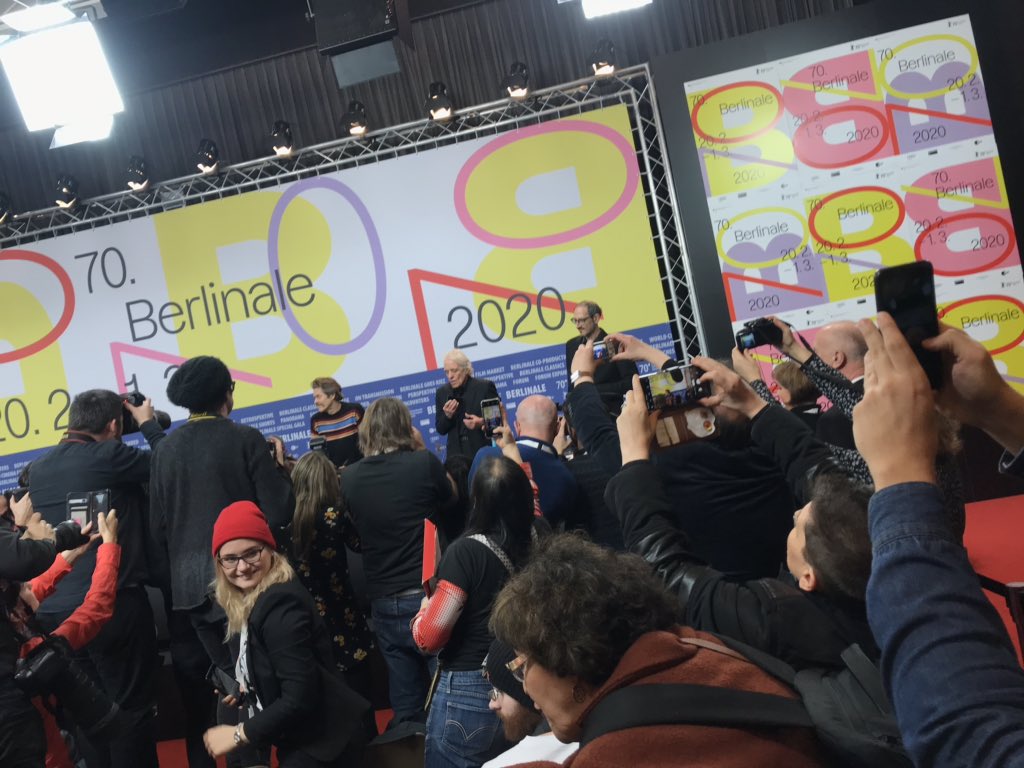
            Afterwards, I had a relatively lazy day. I didn’t want this trip to come to a close. I went to the press conference for The Woman who Ran (just like I did for the Ferrara and Reichardt), which is something I definitively suggest journalist do more at festivals, especially to see admired directors.
            And then I had another Cahiers-related interview and then went on a stroll to the German history museum. I finally made my way to see one my instructors for a small get together. It was a great way to end my time at the Berlinale.