Friday, December 21, 2018

The Cosmic Consciousness of Ian Lagarde

 “You eat because you know another plate is coming. The promise of a new plate is the promise of a new start.” – All You Can Eat Buddha

I don’t think anyone was really prepared for Ian Lagarde’s All You Can Eat Buddha when it premiered at TIFF in 2017. Who was this Montreal filmmaker? What was this Québécois film set in a Caribbean resort? Why mix the sacred with the profane, the spirituality of Buddhism with the indulgence of an all you can eat buffet? But as per the sad realities of Canadian film exhibition and marketing, I reckon few people saw it outside of its own province (where it received some accolades and awards), which is a shame, because it’s one of the most luminous and mysterious films recently made in this country that continuously offers itself up for contemplation and inspiration. I’m sure it’ll come as no shock or offence to anyone if I state that 2018 was a bad year for Canadian cinema. Some noteworthy exceptions aside, most of which reached any form of mainstream attention was aesthetically worthless and culturally correct. There is consistently no desire for innovation or the skill to achieve it. And a desire for positive representation has only lead to non-offensive stereotypes. All of this just comes off as non-dramatic, boring and fake. This is if the work even has aspirations of cultural expression, a trait that has been diminishing in front of a weak federal cultural policy that prioritizes international co-productions that continuously erase any form of regional specificity.
It’s not that All You Can Eat Buddha is a beacon of Québécois culture. As aside from the accent of the spoken French language and a couple of references to the French-Canadian province there isn’t much discussion about the nation. But instead it stands out for its mystery and style. It tells the story of Mike, a diabetic larger fellow, who goes on vacation to the Hotel Palacio in Cuba. After saving an octopus he receives supernatural powers that allows him to heal others but which comes at a self-destructive cost. The more he helps, the more it harms his own body. The film culminates with Mike’s body half blue due to his diabetes and with the El Palacio torn-down because of a civil war. If describing the plot of All You Can Eat Buddha seems absurd it's that it works best as an aesthetic experience of a cosmic consciousness: its simple absurdity allows for the opening up towards thinking differently.
The beauty of All You Can Eat Buddha comes from how it doesn’t resemble anything you would have seen. Lagarde’s project begins with the sublime: What new images can be created? How to encounter the unknown? And what would be the stakes of this project? Lagarde not only creates new visions but through them there is also the possibility of new human relations and new thoughts to exist. This is the total liberty of All You Can Eat Buddha. There is a refusal of a naturalism and the sociological as it rather experiment in film technique, an ambiguousness and a dream-like temporality. It progresses through minimal dialogue, ambient exposition and slow zooms, piercing stares and voice-over narration. The film works on a register of wonder and mystery, beauty and contemplation. There is the suggestion is that there is something holy and spiritual in regards to Mike but which is never explicitly explained. This is only heightened by the sense of wonder around Mike and the psychedelic scenes around his hallucinations. 
The experience of watching All You Can Eat Buddha is not rational. Instead it's more experiential as it heightens sensations, mood and atmosphere. There isn’t anything really like it in Canadian cinema: First off there are its carnivalesque characters, then there is its Caribbean setting, and finally there is its talking octopus! The closest thing to it that I can think of is Andrei Tarkovsky's Stalker. It’s the best thing that Lagarde has done. Aside from being a photographer, Lagarde's film work includes a Carte blanche short film for the Festival du nouveau cinéma where in a Maddin-like style a man and a women meet in a cabin and he ends up giving birth to a large golden egg. There's Vent Solaire (2011) about a strange cult and Merce (2017) that follows a few teens in central Havana. But perhaps the best ones are Éclat du Jour (2013) about delinquent Québécois teenagers that cause trouble in a small Montréal neighbourhood and Grimaces (2016) which is a Tashlinesque tale of otherness through the continuation of the weird and funny faces children make well into adulthood. All of these works, which are created with the artistic collaborator Gabrielle Tougas-Fréchette, aim to show and create something new but which reach with All You Can Eat Buddha a whole other level. I’m really excited to see what Lagarde does next and I have no qualms with stating that he's one of the country's best directors.
But it's hard to really position Lagarde or this film as a model for others. The film ecosystem in Canada is so risk-adverse and fragile while it explicitly aims towards an ‘American’ universalism to the detriment of any cultural expression (especially in English Canada). If All You Can Eat Budhha teaches us anything it's that we should: experience differently, think differently, feel differently, see differently. As long as there is a collective consciousness that is threading on tired clichés from south of the border and has a mentality of defeat in face of a perceived sense of lack then the battle is lost before it even started. Better to follow Mike’s footsteps in All You Can Eat Buddha and to find inspiration in the divine even if it shows its face in the profane. Success can only be found through creating a new territory.

Friday, October 12, 2018

Filmmaking in Toronto (on Erik Anderson's Thesis Film)

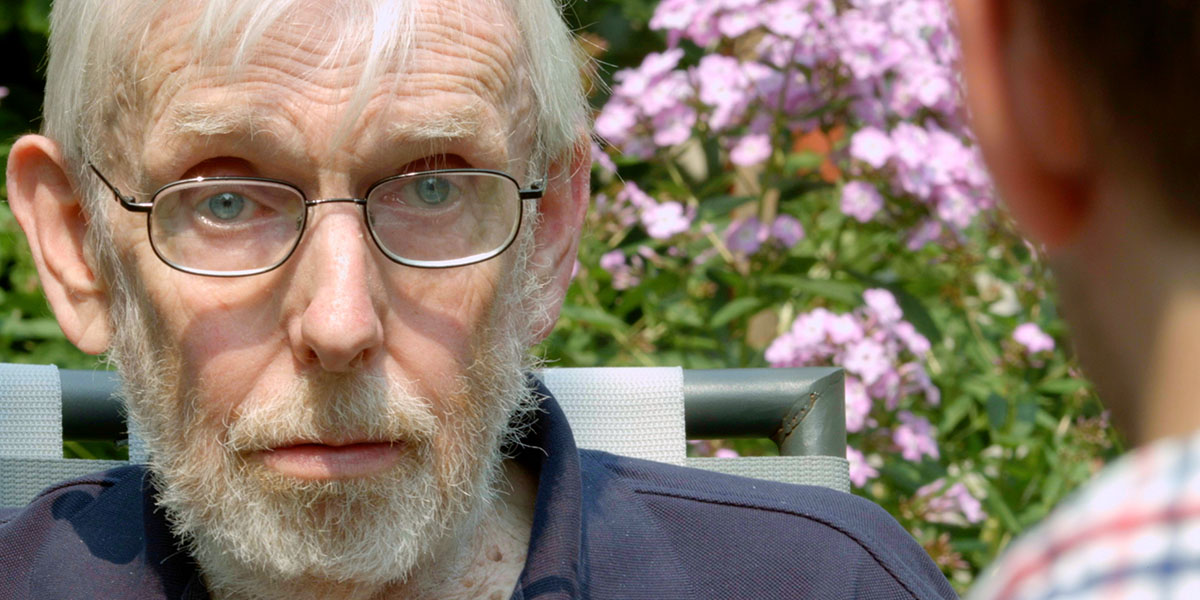
A unique experience in Canadian cinema, Erik Anderson's newest feature to get a public screening is impressive for its liberty and vulnerability. Just like Rebeccah Love’s Acres from last year, My Thesis Film: A Thesis Film by Erik Anderson, with its uncharacteristic lengthy running time of nearly four hours, reorients the traditional length onto its own narrative terms. When the aesthetic norm for first time and second features is either an ascetic formalism or a social naturalism (usually due to film festival imperatives), Anderson's film impresses in its ability to successfully entertain and captivate, to make you think and laugh. And even though its duration is lengthy, it never feels long as through its character’s excitement and vulnerability it is able to capture a thoughtfulness, pleasure and doubt. And this is especially redeeming as the indie feature norm seems to be to oppress or to bore, that is if they are even properly made or dramatic. But thankfully My Thesis Film bypasses these shortcomings as it is surprisingly well acted, stylistically polished, entertaining and most importantly funny.
My Thesis Film is about struggling to find your place – for Erik in Toronto, trying to complete his thesis film – but it does so with a lightness and a melancholy. Though the narrative is obviously fictionalized it still seems closer to a self-portrait for Anderson as, having known him over the years, I can attest that he has really put a lot of himself into his film, let alone that he stars in it and that he’s the one experiencing these re-enactments. My Thesis Film does a really good job at capturing a distinct experience of Toronto from the perspective of a grad student in film production, which in this case is at York University. It captures the bond between friends, interpersonal debate and conflict about representation in the arts, and feelings of insecurity experienced in these settings. It’s a quite distinct experience of the city, which isn’t always welcoming. But it does so with a humour that comes from an awkwardness in the addressing of these prickly topics that would make any fans of Seinfeld or Curb Your Enthusiasm both smile and cringe.
There is its prologue Plato's Republic: Book 1 that sets the rhythm and tone to the film. It is a modern day adaptation of a discourse on justice from Plato’s Republic. Anderson, in the lead role, surprises in terms of his acting and his range of emotions. But what’s especially noteworthy is the film’s dialogues. Words pop, language is nuanced and thoughtful, and most conversations progress as if all of these characters have spent years in the debate club. The character types are all different and have these well-defined personalities that provides the richness of the mosaic of voices and perspectives of this milieu. And there’s a naturalness and articulateness to all of them, which provides a more realistic portrait of a certain young educated class in Toronto more so than the inarticulateness of so many other Canadian low budget features. And their wit and opposing views is also the source of the film’s humour.
Following the Plato prologue, My Thesis Film progresses through three different chapters: Chapter 1. Erik arrives to Toronto from Montreal to start his MFA at York. There he starts to question his idea for his thesis film as he encounters overwhelming critiques in regards to gender parity and diversity. Throughout the year he spends a lot of time with his friends Fernando and Gary (played by Juan Arce and Franco Nguyen) while they start encountering other types that would be recognizable for anyone that has gone through a film studies degree: there is the brash young filmmaker who just got his first film into Slamdance, an esteemed Mexican filmmaker who is known for his 'slow' films, and the militant feminist and the spiritual hippie, among some others. The first year is a struggle for Erik and afterwards, as he didn’t receive any financial support, he's forced to return to his mother's in Victoria to spend the summer. Chapter 2. This is a sad summer for Erik as he starts to take on menial tasks to make a living – including, and even failing at, being a barista – and where, however well intentioned his mother, aunt and her husband try to be, they are actually not that encouraging. But Erik finally returns to Toronto, hopeful that it'll be a better year, but that is still to be determined. Chapter 3. After struggling with his Plato adaptation to take off, through a discussion with his best friend, he decides to incorporate his initial idea into a making-of of a making-of of his film. And there he finds success, well sort-of, at least he completes it before he has to go through a lengthy critique.
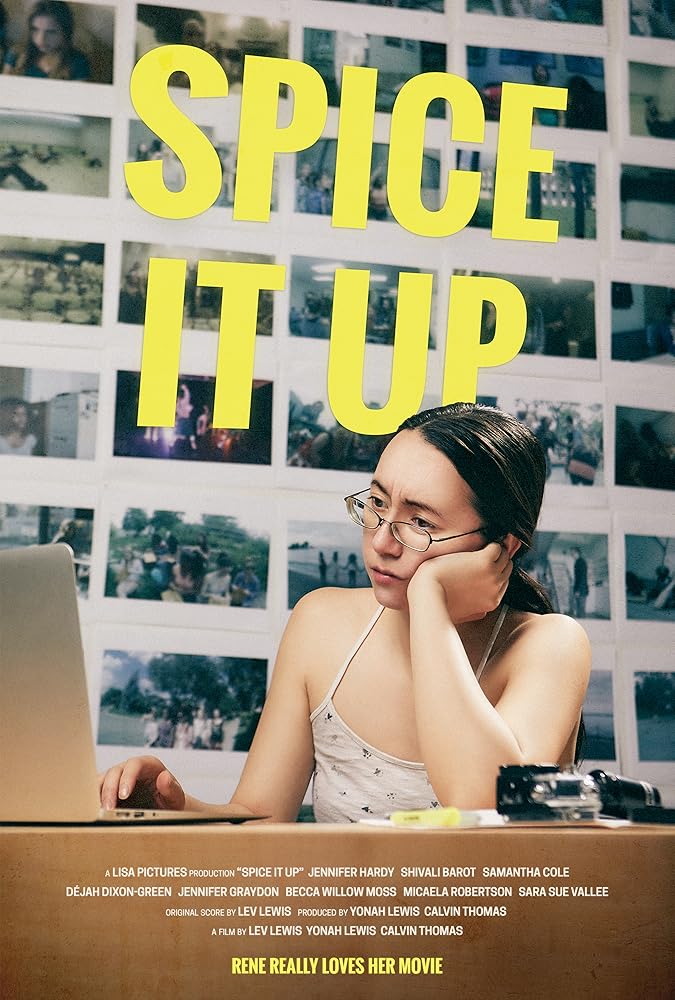
With My Thesis Film and Calvin Thomas, Yonah and Lev Lewis’s Spice It Up, another new Toronto film that had a fraught production history, it appears that the new generation of local filmmakers, which have started making work around 2010, are starting to be more explicit about the challenges of creation and getting programmed in this city. This reflexive tendencies tends to be more funny than dour and recalls something like Luc Moullet’s Les Sièges de l'Alcazar meets the CBC. It’s very interesting and I highly recommend both of these films if you have a chance to see them. Spice It Up is about a young woman filmmaker who also arrives to Toronto from out of town to complete her thesis film and that also has some shades of ancient Greek philosophy, though for her she is studying at Ryerson. In it you can find the local film critic Adam Nayman (after his small role earlier on this year in Fail to Appear) as a film professor giving his students advice and feedback that sounds just like he does in person. Matt Johnson also has a surprising small role in it as a playful and lewd photographer.
So with both My Thesis Film and Spice It Up a new landscape and geography of the city emerges and with that different characters and ways of being and talking. The freedom of these works, and especially of My Thesis Film, is that it elides conventional filmmaking trappings, and there's also a sense or urgency and necessity at play. Anderson talks about My Thesis Film as being thought out and conceived over a five year period and that it was made with the barest of crews (usually one or two people) and without any of the usual arts grants or funding. It's this necessity of creation, vulnerability of representation and the pulling off of the project that makes it so admirable. My Thesis Film is a great model for all struggling filmmakers.
It will be a real shame if it does not get more then the only two screenings that it has received so far.

Tuesday, October 9, 2018

Not to be missed : My Thesis Film: A Thesis Film by Erik Anderson

There's a truism in Canadian cinema which is that it's surprising it even exists. Just look at some of its major figures like Don Shebib, Joyce Wieland or even Patricia Rozema and you'd see that sometime throughout their career, and with good reason, that they've lamented the sad state of production, distribution and even reception in this country. However much cultural prestige they've been conferred, I would posit that all Canadian filmmakers are 'orphans' of a national media industry that was never that interested in fostering a domestic film industry with the goals of cultural expression or regional specificity. Instead you keep hearing about the creation of 'global' oriented 'content', while screen incentives keep being directed towards runaway American productions.
And if you've heard as many horror stories as I have from film production students about the difficulties they've encountered each step of their way to make their work and get it seen then you would understand how even just the completion of a project and then getting only one public projection could be seen as a success. 
And it's not that there hasn't been other interesting Canadian films that came out this year - I've seen more then my fair share, though I'm still wondering why... - but they seem to come out with a build-in ephemerality: Catch us if you can, or not at all...
With that in mind, I just want to signal a unique screening happening this week: I forget how many years exactly it has been in the making for - four years? or is  it five, or is it even more? - and how many requests I regret not taking up with its director, but Erik Anderson's thesis film, My Thesis Film: A Thesis Film by Erik Anderson, is finally getting screened in Toronto: On Wednesday at 6:30PM at the Lightbox. I can only speak for myself to say this is a cause for celebration and that I'm really excited to see it.
And it's another great sign of the uniqueness and perseverance of Toronto DIY filmmakers that so far this year they have already produced Fail to Appear, Mouthful, A Woman's Block, Spice it Up! and 22 Chaser (if I can indulge myself by including this gritty thriller). It's time for folks to start listening.

Monday, August 27, 2018

Suggested Screening : A Woman's Block

Well August is almost over but summer doesn't officially end until September 22nd. So even though it's back to school and business for a lot of folks, why not try to enjoy the next few weeks to the fullest? Instead of packing up the outdoor gear and returning to a routine, it'll be good to relax and enjoy yourself and the city as much as you can while you still can. In the Toronto film community there's an exciting screening this week: Rebeccah Love is premiering her new short A Woman's Block, which has her team up again with Sarah Swire from Acres and is shot in her own neighborhood of Regal Heights but with a new improvisational style. It'll be on Tuesday, August 28th at The Pilot and it starts at 7:10PM sharp. There will be some special guests, too. See this great MUFF interview with Love for more information about the new short film and her process. Hope to see some of you there and enjoy the next few weeks!

Friday, June 8, 2018

Listening to Others: On Antoine Bourges’ Fail to Appear

It starts with a photocopier in a dimly lit supply room: a fax is slowly being printed out with the report of a young man Eric (Nathan Roder) who has been charged with theft and who’ll need a social worker. The fiction begins and throughout Fail to Appear it’ll continue onward through subtle visual details in a setting that’s actually the one that it’s exploring. Antoine Bourges’ project, just like it was in his earlier East Hastings Pharmacy, is to use fiction to better articulate some of the world’s realities. To not simply document but to slow things down, really focus to better see and to think with the changes occurring around us. It’s at this formal level that Fail to Appear is really interesting. It’s the story of a young social worker Isolde (Deragh Campbell) trying to help her patients while also learning the tasks and responsibilities that go with the job. The great idea here is to cast someone unfamiliar with the milieu so that you can see the struggle to keep up, that of a mixture of care and confusion, eagerness and awkwardness. The film’s exploration of the world of social workers and its client’s matches the beginner’s journey that Isolde is going through. Then there’s the opening of the film up to the real world: there are the clients and other practitioners, its offices and community centres, courtrooms and neighbourhood surroundings. The world keeps intruding onto its fiction so that the film never ends up being self-contained. Its style also adds to its contemplation as the long-take form allows for the scenes to play out for as long as it’s necessary – for a person to say what they need to say, and for them to properly represent themselves – and its framing and stillness distils an emotion into the people that it portrays. Fail to Appear perfectly blends art-house cinema techniques with observational documentary and conceptual photography. It imagines a new way to look at the relationships between people and how they interact with their surroundings. If the actors in Fail to Appear remain somewhat impenetrable, whose motivations are never really clear, it instead proposes a good first step on how to create positive changes in people: that of listening and caring about others. So it is only after Isolde, who had already helped Eric avoid his charge, sent him a kind email that he would start to participate more in his family’s life. The film proposes that change and affect takes place at the level of these small gestures and how these can have a lasting positive influence. And in a province that overnight, with the Ontario elections, became a majority conservative government it’s even more vital to have these reminders of the personal struggles of the already underappreciated health care and social worker professionals and the people that they serve. It’s time to not turn away.