Bytowne Cinema
Hunger (Steve McQueen, 2008) Friday, May 1st, 6:50PM
The Cook the Thief His Wife & Her Lover (Peter Greenaway, 1989) Monday, May 4th, 9:05PM
Adoration (Atom Egoyan, 2008) Friday, May 15th, 8:50PM
Nightwatching (Peter Greenaway, 2007) Friday, May 22nd, 9:05PM
Les Enfants du Paradis (Marcel Carné, 1946) Wednesday, May 27th, 5:00PM
Mayfair Cinema
Y tu Mamá También (Alfonso Cuarón, 2001) Tuesday, May 5th, 9:15PM
Dingo (Rolf de Heer, 1991) Wednesday, May 6th, 9:30PM
Ms. 45 (Abel Ferrara, 1981) Saturday, May 9th, 11:45PM
The Killing (Stanley Kubrick, 1956) Sunday, May 17th, 1:00PM
The Education of Charlie Banks (Fred Durst, 2007) Friday, May 22nd, 7:00PM
The Tracey Fragments (Bruce McDonald, 2007) Friday, May 27th, 8:45PM
Thursday, April 23, 2009

Saturday, April 11, 2009
Morbid Psychological Impetus
The Brood (David Cronenberg, 1979)
** (worth seeing)
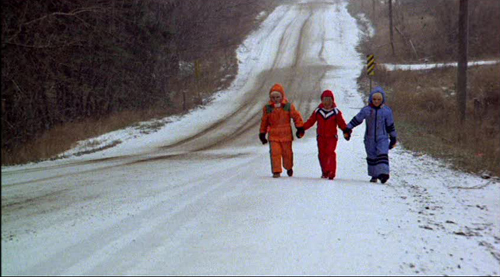
The Brood (1979), written and directed by David Cronenberg, deals with a father’s, Frank Carveth (Art Hindle), attempt to get a restraining order on his dementia induced wife Nola (Samantha Eggar) who is currently getting therapy in Dr. Raglan (Oliver Reed) Soma Free Psychoplasmic Institution. On one of their daughters, Candice (Cindy Hinds), weekly visits to see Nola she receives ambiguous beatings and lashings. His goals change from restraining to protecting as possessed brood’s start murdering the individuals that are looking after her. The brood’s vicious attacks and the instituted patients abnormalities elicit tension and queasiness and are meditations on body horror and the vulnerability of flesh. A recurring theme in the films of David Cronenberg.This is a good contemporary horror film with many interesting qualities except for an embarrassing Psycho stabbing rip-off and Howard Shore's mimicking Bernard Hermann musical score.
The Canadian film articulates national identity as the story unfolds in winter and markers include snowy, oak-tree encapsulated, cottage-country landscapes with the characters in respective winter-wear. As well subtle references to Halifax, Vancouver and Toronto. The characters in the film are everyday people and through psychoplasmic intervention and intimate conversations repressed psychological and physical traumas are revealed with an emphasis on their devastating adaptability consequences. (The Mayfair Theatre, 1074 Bank Street, Saturday, May 30th, 11:15PM)-David Davidson
** (worth seeing)
The Brood (1979), written and directed by David Cronenberg, deals with a father’s, Frank Carveth (Art Hindle), attempt to get a restraining order on his dementia induced wife Nola (Samantha Eggar) who is currently getting therapy in Dr. Raglan (Oliver Reed) Soma Free Psychoplasmic Institution. On one of their daughters, Candice (Cindy Hinds), weekly visits to see Nola she receives ambiguous beatings and lashings. His goals change from restraining to protecting as possessed brood’s start murdering the individuals that are looking after her. The brood’s vicious attacks and the instituted patients abnormalities elicit tension and queasiness and are meditations on body horror and the vulnerability of flesh. A recurring theme in the films of David Cronenberg.This is a good contemporary horror film with many interesting qualities except for an embarrassing Psycho stabbing rip-off and Howard Shore's mimicking Bernard Hermann musical score.
The Canadian film articulates national identity as the story unfolds in winter and markers include snowy, oak-tree encapsulated, cottage-country landscapes with the characters in respective winter-wear. As well subtle references to Halifax, Vancouver and Toronto. The characters in the film are everyday people and through psychoplasmic intervention and intimate conversations repressed psychological and physical traumas are revealed with an emphasis on their devastating adaptability consequences. (The Mayfair Theatre, 1074 Bank Street, Saturday, May 30th, 11:15PM)-David Davidson
Monday, April 6, 2009
Examplary Optimism
Nights of Cabiria (Federico Fellini, 1957)

Nights of Cabiria (1957) is my favorite Federico Fellini neo-realist film. Compared to his autobiographical reflexive, and reflective, later work (8½, Roma, Amarcord) the focus of Nights of Cabiria is melancholic as it gives attention to the plight of the poverty-stricken lower class. A great example of 1950s art house cinema it is exotic, wistful and full of disenchantment. The story follows a spirited and naive prostitute Cabiria Ceccarelli (Giulietta Masina) and her endearing endeavor's to find some sort of financial, romantic, and social security in a desolate post-war Roman landscape. Cabiria is filmed with such warmth and admiration that the devastating climax is one of the most wrenching scenes in film history.-D.D.
Nights of Cabiria (1957) is my favorite Federico Fellini neo-realist film. Compared to his autobiographical reflexive, and reflective, later work (8½, Roma, Amarcord) the focus of Nights of Cabiria is melancholic as it gives attention to the plight of the poverty-stricken lower class. A great example of 1950s art house cinema it is exotic, wistful and full of disenchantment. The story follows a spirited and naive prostitute Cabiria Ceccarelli (Giulietta Masina) and her endearing endeavor's to find some sort of financial, romantic, and social security in a desolate post-war Roman landscape. Cabiria is filmed with such warmth and admiration that the devastating climax is one of the most wrenching scenes in film history.-D.D.
Friday, April 3, 2009
Cinematic reappropriation's
Guy Maddin's Time-Machine Filmography
Bimbo's Initiation (Dave Fleischer, 1931)
Whoopee! (Thornton Freeland, 1930)
Blonde Venus (Josef von Sternberg, 1932)
Liliom (Fritz Lang, 1934)
Midnight (Mitchell Leisen, 1939)
Johnny Apollo (Henry Hathaway, 1940)
Random Harvest (Mervyn LeRoy, 1942)
Reap the Wild Wind (Cecil B. DeMille, 1942)
The Curse of the Cat People (Gunther von Fritsch & Robert Wise, 1944)
Love Letters (William Dieterle, 1945)
Strange Illusion (Edgar G. Ulmer, 1945)
The Strange Affair of Uncle Harry (Robert Siodmak, 1945)
Caught (Max Ophüls, 1949)
Moonrise (Frank Borzage, 1949)
Night and the City (Jules Dassin, 1950)
El (This Strange Passion) (Luis Buñuel, 1952)
On Dangerous Ground (Nicholas Ray, 1952)
Wuthering Heights (William Wyler, 1939)
The Egyptian (Michael Curtiz, 1954)
The Devil's Cleavage (George Kuchar, 1975)
Rehearsals for Extinct Anatomies (Stephen Quay & Timothy Quay, 1988)
Home Stories (Matthias Müller & Dirk Schaefer, 1990)
Caelum Vatnsdal, Kino Delirium: The Films of Guy Maddin, Arbeiter Ring Publishing, Winnipeg, 2000, pp. 130
Bimbo's Initiation (Dave Fleischer, 1931)
Whoopee! (Thornton Freeland, 1930)
Blonde Venus (Josef von Sternberg, 1932)
Liliom (Fritz Lang, 1934)
Midnight (Mitchell Leisen, 1939)
Johnny Apollo (Henry Hathaway, 1940)
Random Harvest (Mervyn LeRoy, 1942)
Reap the Wild Wind (Cecil B. DeMille, 1942)
The Curse of the Cat People (Gunther von Fritsch & Robert Wise, 1944)
Love Letters (William Dieterle, 1945)
Strange Illusion (Edgar G. Ulmer, 1945)
The Strange Affair of Uncle Harry (Robert Siodmak, 1945)
Caught (Max Ophüls, 1949)
Moonrise (Frank Borzage, 1949)
Night and the City (Jules Dassin, 1950)
El (This Strange Passion) (Luis Buñuel, 1952)
On Dangerous Ground (Nicholas Ray, 1952)
Wuthering Heights (William Wyler, 1939)
The Egyptian (Michael Curtiz, 1954)
The Devil's Cleavage (George Kuchar, 1975)
Rehearsals for Extinct Anatomies (Stephen Quay & Timothy Quay, 1988)
Home Stories (Matthias Müller & Dirk Schaefer, 1990)
Caelum Vatnsdal, Kino Delirium: The Films of Guy Maddin, Arbeiter Ring Publishing, Winnipeg, 2000, pp. 130
Friday, March 27, 2009
Upcoming Summer Film Preview
Ivan The Terrible, Part I & II (Sergei M. Eisenstein, 1944 & 1958)
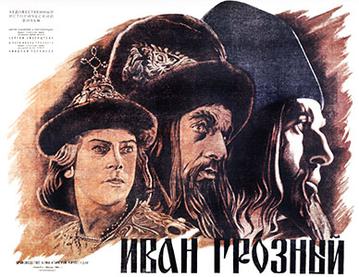
This summer’s most important cinematic event is Sergei Eisenstein Ivan the Terrible, Part I & II. Sergei Eisenstein is a landmark Soviet Film-maker and theorist. He was the driving force towards the reconsideration of the montage as he described it as the essence of Cinema. The montage is a technique of film editing where a scene is emotionally greater than the sum of its shots through linkages and juxtapositions. The Ivan the Terrible diptych, officially released in 1944 and 1958, is his ultimate work and it follows the 16th century Russian Tsar Ivan IV (Nikolai Cherkasov). Set in 1547 the film is about his effort to unite the turbulent country and is an intriguing meditation on power, superstition and jealousy. The engaging score by the Sergei Prokofiev raises the atmosphere of heroism and paranoia to an extraordinary level. Joseph Stalin, the General Secretary of the Communist Party of the Soviet Union from 1922 to 1953, praised the film and its admirable hero. An epoch piece of film art its highlights are its stylization which includes highly detailed facial characteristics, expressionistic sets, grotesque costumes and grandiose scale. With a new 35mm print all the way from Russia this is will be an experience devoted moviegoers are sure to relish.(Canadian Film Institute, Library and Archives Canada, 395 Wellington Street, Saturday, May 9, 7:00 and 9:00)-David Davidson
This summer’s most important cinematic event is Sergei Eisenstein Ivan the Terrible, Part I & II. Sergei Eisenstein is a landmark Soviet Film-maker and theorist. He was the driving force towards the reconsideration of the montage as he described it as the essence of Cinema. The montage is a technique of film editing where a scene is emotionally greater than the sum of its shots through linkages and juxtapositions. The Ivan the Terrible diptych, officially released in 1944 and 1958, is his ultimate work and it follows the 16th century Russian Tsar Ivan IV (Nikolai Cherkasov). Set in 1547 the film is about his effort to unite the turbulent country and is an intriguing meditation on power, superstition and jealousy. The engaging score by the Sergei Prokofiev raises the atmosphere of heroism and paranoia to an extraordinary level. Joseph Stalin, the General Secretary of the Communist Party of the Soviet Union from 1922 to 1953, praised the film and its admirable hero. An epoch piece of film art its highlights are its stylization which includes highly detailed facial characteristics, expressionistic sets, grotesque costumes and grandiose scale. With a new 35mm print all the way from Russia this is will be an experience devoted moviegoers are sure to relish.(Canadian Film Institute, Library and Archives Canada, 395 Wellington Street, Saturday, May 9, 7:00 and 9:00)-David Davidson
Sunday, March 22, 2009
April Screening Savor's
Bytowne Cinema
Le Chaos (Youssef Chahine & Khaled Youssef, 2007) Friday, April 17th, 6:45PM
Wendy and Lucy Friday (Kelly Reichardt, 2008) April 24th, 7:00PM
Mayfair Cinema
Cassandra's Dream (Woody Allen, 2007) Friday, April 3rd, 7:00PM
Andy Warhol's Frankenstein (Paul Morrissey, 1974) Saturday, April 4th, 12:00PM
Jésus de Montréal (Denys Arcand, 1989) Friday, April 10th, 4:30PM
Jesus Christ Vampire Hunter (Lee Demarbre, 2001) Saturday, April 11th, 11PM
The Last Temptation of Christ (Martin Scorsese, 1988) Sunday, April 12th, 9:20PM
El Topo (Alejandro Jodorowsky, 1970) Friday, April 17th, 12:00PM
Play Misty for Me (Clint Eastwood, 1971) Saturday, April 18th, 2PM
Nosferatu (F.W. Murnau, 1922) Saturday, April 25th, 9PM
Le Chaos (Youssef Chahine & Khaled Youssef, 2007) Friday, April 17th, 6:45PM
Wendy and Lucy Friday (Kelly Reichardt, 2008) April 24th, 7:00PM
Mayfair Cinema
Cassandra's Dream (Woody Allen, 2007) Friday, April 3rd, 7:00PM
Andy Warhol's Frankenstein (Paul Morrissey, 1974) Saturday, April 4th, 12:00PM
Jésus de Montréal (Denys Arcand, 1989) Friday, April 10th, 4:30PM
Jesus Christ Vampire Hunter (Lee Demarbre, 2001) Saturday, April 11th, 11PM
The Last Temptation of Christ (Martin Scorsese, 1988) Sunday, April 12th, 9:20PM
El Topo (Alejandro Jodorowsky, 1970) Friday, April 17th, 12:00PM
Play Misty for Me (Clint Eastwood, 1971) Saturday, April 18th, 2PM
Nosferatu (F.W. Murnau, 1922) Saturday, April 25th, 9PM
Friday, March 13, 2009
Ernesto Che Guevara
Che: Part Two (Steven Soderbergh, 2008)

ERNESTO CHE GUEVARA is the focus of Steven Soderberg two part biopic Che, a spellbinding film with great exotic locale, amazing acting and immaculate direction. Part 1: The Argentine deals with Che Guevara embarkment with Fidel Castro and the Cuban revolutionist. They journey across the mountainous Cuban landscape recruiting freedom fighters preparing their successful overthrow of Fulgencio Batista dictatorship. Part 2: Guerrilla deals with Mr. Guevara attempt to spread the revolution to Bolivia and idealistically to all of Latin America. Part 1 leads up to 1959 and the fragmented narrative are situated chronologically through titles of date and year. As their gaining more momentum, so does time advance and you get a feeling of progression. Part 2 takes place in 1967 and is more linear. Once Che Guevara arrives in Bolivia there begins a tally of the days he’s been there. As the numbers start reaching the triple digits there is the emergence of a daunting cyclical stasis. Where the guerrilla warfare tactics worked in the Cuban Revolution, and in Part 1 through successful attacks and voice-over narration of theory, in Bolivia they seem unfeasible. Broadly speaking, as a diptych, Part 1 revels in revolution while Part 2 ultimately condemns it. The viewer thus makes his own interpretation of the possibility of revolution. The epic film is an ambitious task on the part of Soderberg. A 235 minutes long film will surely detract a few audience goers. Simultaneously a result of its epic proportions is that it feels cramped. Crammed with too many ideas and events that results the scenes too be cut short, under-developed or not given enough weight. As well like the photograph of Che Guevara that is known as a counter culture popular icon. It is ironic to market it for a consumer culture. Belnicio Del Toro acting is magnificent as he instills awe and rigorous fighting skills during the action sequences while intellect and depth in interviews and at his United Nations speech. Steven Soderberg keeps the tone heavy throughout the film with occasional moment of levity keeping the film focused on its serious subject. His persistence to have the film shot in Spanish makes everything more realistic compared to English speaking Hollywood foreign films. As a whole it is a beautiful portrayal of Cuba and Bolivia countryside and the mind frame and attitude of Ernesto Che Guevara the man Jean-Paul Sartre described as " Not only an intellectual but also the most complete human being of our age ".-David Davidson
Che Part 2: plays at the ByTowne Cinema March 19th to the 22nd. Tickets are $10, $6 for members.
ERNESTO CHE GUEVARA is the focus of Steven Soderberg two part biopic Che, a spellbinding film with great exotic locale, amazing acting and immaculate direction. Part 1: The Argentine deals with Che Guevara embarkment with Fidel Castro and the Cuban revolutionist. They journey across the mountainous Cuban landscape recruiting freedom fighters preparing their successful overthrow of Fulgencio Batista dictatorship. Part 2: Guerrilla deals with Mr. Guevara attempt to spread the revolution to Bolivia and idealistically to all of Latin America. Part 1 leads up to 1959 and the fragmented narrative are situated chronologically through titles of date and year. As their gaining more momentum, so does time advance and you get a feeling of progression. Part 2 takes place in 1967 and is more linear. Once Che Guevara arrives in Bolivia there begins a tally of the days he’s been there. As the numbers start reaching the triple digits there is the emergence of a daunting cyclical stasis. Where the guerrilla warfare tactics worked in the Cuban Revolution, and in Part 1 through successful attacks and voice-over narration of theory, in Bolivia they seem unfeasible. Broadly speaking, as a diptych, Part 1 revels in revolution while Part 2 ultimately condemns it. The viewer thus makes his own interpretation of the possibility of revolution. The epic film is an ambitious task on the part of Soderberg. A 235 minutes long film will surely detract a few audience goers. Simultaneously a result of its epic proportions is that it feels cramped. Crammed with too many ideas and events that results the scenes too be cut short, under-developed or not given enough weight. As well like the photograph of Che Guevara that is known as a counter culture popular icon. It is ironic to market it for a consumer culture. Belnicio Del Toro acting is magnificent as he instills awe and rigorous fighting skills during the action sequences while intellect and depth in interviews and at his United Nations speech. Steven Soderberg keeps the tone heavy throughout the film with occasional moment of levity keeping the film focused on its serious subject. His persistence to have the film shot in Spanish makes everything more realistic compared to English speaking Hollywood foreign films. As a whole it is a beautiful portrayal of Cuba and Bolivia countryside and the mind frame and attitude of Ernesto Che Guevara the man Jean-Paul Sartre described as " Not only an intellectual but also the most complete human being of our age ".-David Davidson
Che Part 2: plays at the ByTowne Cinema March 19th to the 22nd. Tickets are $10, $6 for members.
Subscribe to:
Posts (Atom)