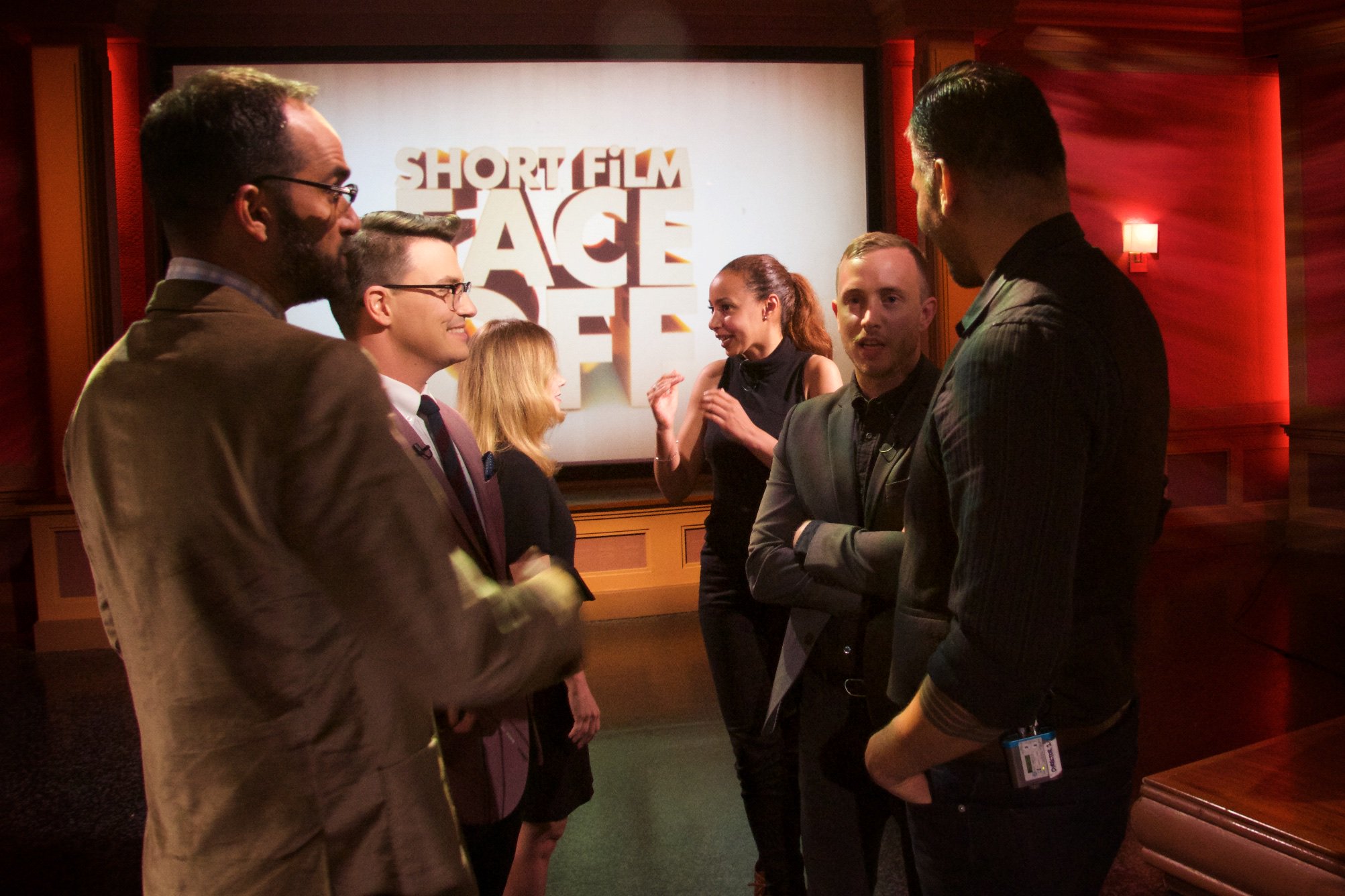
 A really good idea: A CBC television show to highlight short
films by emerging Canadian filmmakers in a competition for a large monetary
prize. Modest in scope, Short Film Face Off is remarkably rich and diverse as it provides a great platform to
actually watch Canadian short films. The 45-minute show with its light-hearted
and critical commentary is available to watch at your leisure online while the
public broadcasting of the show also raises the recognition of the work. And with its brisk format and commentary between the three shorts on each episode it provides a more satisfying platform to watch new short
films as compared to say more private online links or the occasionally stressful
group screenings. The host Steve Patterson is funny and the panelist Mohit
Rajhans, Eli Glasner, Nadia Litz (The
People Garden) all offer insightful advice. If the conversations with the
filmmakers might run short then you can always find extended versions of them
on its website. The nine filmmakers come from all the different provinces in
Canada and the average 10-minute shorts reflect their maker’s different
geographies, social issues and aesthetic sensibilities. Not that all of the
short films are perfect but they are all still good and as a whole they provide
an opportunity to see what aesthetic and dramatic techniques work better in the
format. Some of my favorite short films have been Jennifer Walden’s Painted Girl, Brett Ferster’s Claddagh, Daniel Boos’ Bound and Rachelle Casseus’ The Buckley Brothers. The final show is
this Saturday July 9th with the three finalist short-films Hector
Herrera’s animated Western The Ballad of
Immortal Joe, Mike Fardy’s comedic Moving
On and Mark Slutsky’s love affair Never
Happened. Short Film Face Off provides
a great showcase for emerging filmmakers from all across the country. There
should be more opportunities like these.
A really good idea: A CBC television show to highlight short
films by emerging Canadian filmmakers in a competition for a large monetary
prize. Modest in scope, Short Film Face Off is remarkably rich and diverse as it provides a great platform to
actually watch Canadian short films. The 45-minute show with its light-hearted
and critical commentary is available to watch at your leisure online while the
public broadcasting of the show also raises the recognition of the work. And with its brisk format and commentary between the three shorts on each episode it provides a more satisfying platform to watch new short
films as compared to say more private online links or the occasionally stressful
group screenings. The host Steve Patterson is funny and the panelist Mohit
Rajhans, Eli Glasner, Nadia Litz (The
People Garden) all offer insightful advice. If the conversations with the
filmmakers might run short then you can always find extended versions of them
on its website. The nine filmmakers come from all the different provinces in
Canada and the average 10-minute shorts reflect their maker’s different
geographies, social issues and aesthetic sensibilities. Not that all of the
short films are perfect but they are all still good and as a whole they provide
an opportunity to see what aesthetic and dramatic techniques work better in the
format. Some of my favorite short films have been Jennifer Walden’s Painted Girl, Brett Ferster’s Claddagh, Daniel Boos’ Bound and Rachelle Casseus’ The Buckley Brothers. The final show is
this Saturday July 9th with the three finalist short-films Hector
Herrera’s animated Western The Ballad of
Immortal Joe, Mike Fardy’s comedic Moving
On and Mark Slutsky’s love affair Never
Happened. Short Film Face Off provides
a great showcase for emerging filmmakers from all across the country. There
should be more opportunities like these.Thursday, July 7, 2016
The CBC Short Film Face Off
A really good idea: A CBC television show to highlight short
films by emerging Canadian filmmakers in a competition for a large monetary
prize. Modest in scope, Short Film Face Off is remarkably rich and diverse as it provides a great platform to
actually watch Canadian short films. The 45-minute show with its light-hearted
and critical commentary is available to watch at your leisure online while the
public broadcasting of the show also raises the recognition of the work. And with its brisk format and commentary between the three shorts on each episode it provides a more satisfying platform to watch new short
films as compared to say more private online links or the occasionally stressful
group screenings. The host Steve Patterson is funny and the panelist Mohit
Rajhans, Eli Glasner, Nadia Litz (The
People Garden) all offer insightful advice. If the conversations with the
filmmakers might run short then you can always find extended versions of them
on its website. The nine filmmakers come from all the different provinces in
Canada and the average 10-minute shorts reflect their maker’s different
geographies, social issues and aesthetic sensibilities. Not that all of the
short films are perfect but they are all still good and as a whole they provide
an opportunity to see what aesthetic and dramatic techniques work better in the
format. Some of my favorite short films have been Jennifer Walden’s Painted Girl, Brett Ferster’s Claddagh, Daniel Boos’ Bound and Rachelle Casseus’ The Buckley Brothers. The final show is
this Saturday July 9th with the three finalist short-films Hector
Herrera’s animated Western The Ballad of
Immortal Joe, Mike Fardy’s comedic Moving
On and Mark Slutsky’s love affair Never
Happened. Short Film Face Off provides
a great showcase for emerging filmmakers from all across the country. There
should be more opportunities like these.
Wednesday, July 6, 2016
Monday, July 4, 2016
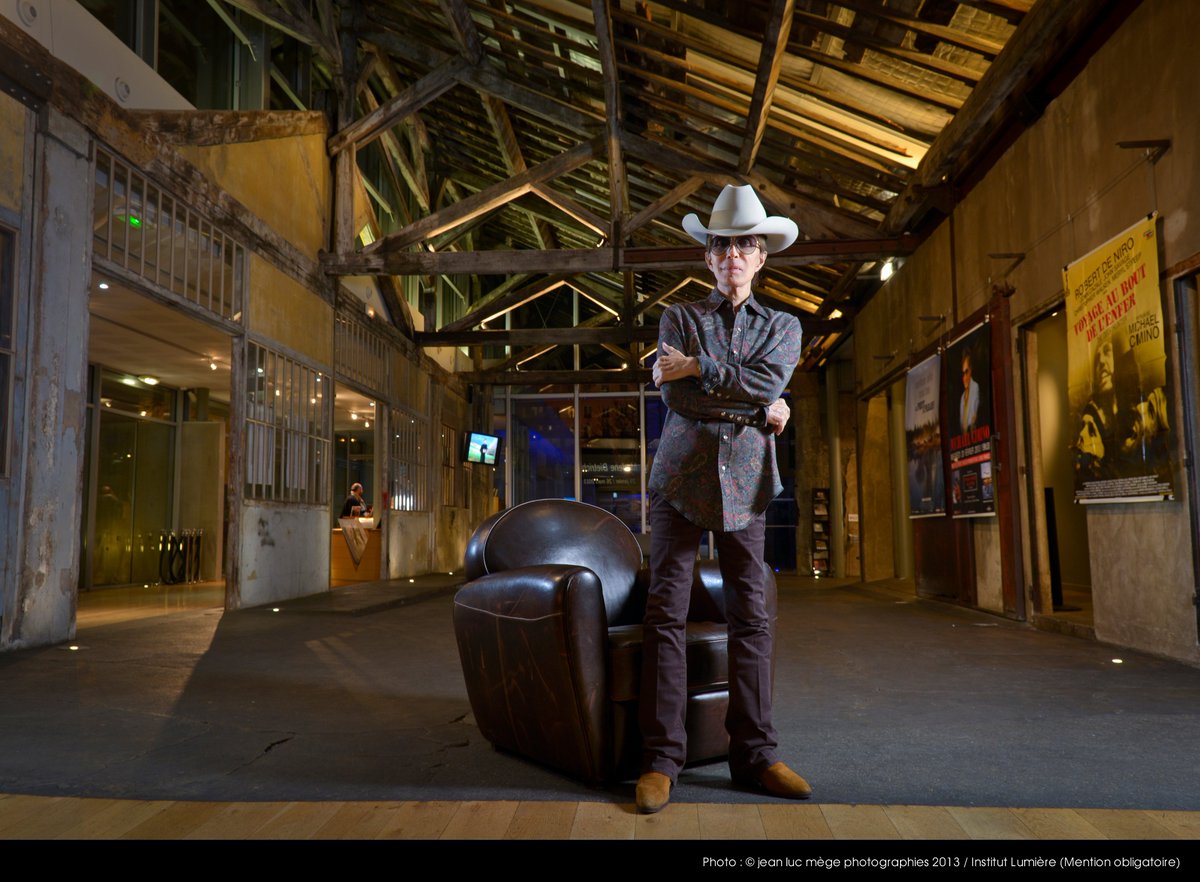
RIP Michael Cimino
“For example, let’s take a picture everyone, I think, including me (bud I’d like to defend it) considers a bad picture, Heaven’s Gate. I don’t what you have said about the picture, but I read some articles by Vincent Canby and other people, and I think they said a lot of good things about The Deer Hunter which I think was not that good; just as Heaven’s Gate is not that bad. Even if it’s a failure, in my opinion, failure is much more interesting than success because it is like a sick body. You can look at it and examine it and then say what’s going wrong or not. I think Heaven’s Gate is a very good example. It has a lot of magnificent things that the director cannot follow through on – for very obvious reasons which we can analyze. But the reviewers never say that, and never try to help even someone who is very arrogant, as Cimino is, to make a better picture next time… No but I am thinking that in that picture what was interesting was they got lost. Maybe I would like to talk to you about it because it concerns me as a moviemaker and I am interested in America, which I consider as my home for its mood and my link with Francis – he has a studio and he tries to make a home out of his studio, and I have a home and I would like to make a studio out of it. This is the only link I have with Francis. But I think all good American directors – Scorsese, De Palma, all the famous ones, they are as lost as I am; we are not turning out the pictures we could turn out. I could deliver a much better picture, Martin could, Francis could, but we are not. When I saw Heaven’s Gate two days ago I thought that he was trying to make a picture in America when a big picture – like Griffith – is no longer possible. It’s like seeing an artist who is crippled but doesn’t know it. It is very interesting; because Michael is inventing it as he goes along, he is only capable of turning out a few shots within a three-hour movie, but those few shots are much more interesting than a lot of shots in other pictures because it makes you understand what making a movie is. He is trying to make an American and that is very interesting… Well, look at the way the industry works. Even if you are not like a Time critic (because Time is in the movie business too), you are still part of the industry. Making a newspaper is part of the industry, it’s part of the culture… But I think if American movies are not so good today, it’s because you there should be a different way of writing about them. I don’t know if it’s possible – from what you say it’s not. You are not free, for example, to write regularly about an unknown movie. You would be fired by you editor. You are not free – let me put it that way. When I checked on the last two years of articles that you wrote in The New Yorker (I don’t want to attack you personally), you tried to be different from the other ones to a certain point. You told me about Kagemusha, for example. That you tried to review it after everyone else had reviewed it. But why not two years after, why not two years before? Why don’t you speak of a movie before it is completed? You are a movie critic. A movie critic is not just being a reviewer. You write about a Paramount picture when Paramount decided to open it. And so where is the freedom?” – Jean-Luc Godard in conversation with Pauline Kael (1981)
Thursday, June 30, 2016
Wednesday, June 29, 2016
Subscribe to:
Posts (Atom)