
Wednesday, January 14, 2015

Monday, January 12, 2015
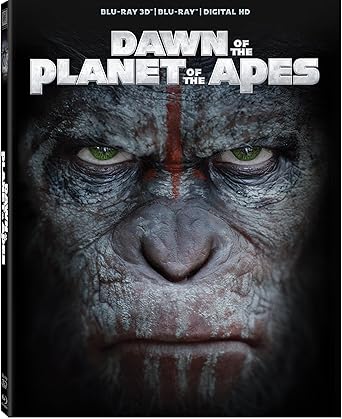
Dawn of the Planet of the Apes Blu-ray DVD

Set near San
Francisco in 2026, eight or ten years after Rise, the world of Dawn
of the Planet of the Apes takes place after the majority of humanity has
gone extinct due to a Simian flue (which is explained at the beginning in one
of its most chilling sequences) and the Apes reign. It starts with a close-up
on Caesar’s eyes. He’s wearing war-paint. With the other apes they’re getting
ready for a hunt, though they’re using pretty advanced military hunting tactics
to catch their prey. During this hunt they end up meeting a small group of
humans, who are out in the woods to find a dam to get electricity for their
community. Afterwards there is a an attempt at reconciliation, internal
conflict, power struggles and humanity pushed to its extreme. For what could
have been just another franchise film Dawn
is actually a lot closer with its complexity and drama to a William Shakespeare
play, which its main character gets his name.
And Dawn ends the same way that it started
on Caesar’s eyes, looking out towards a terrible world, where the apes are now
forced into an unnecessary war, which he will have to lead. It is this mixture
of melancholy and leadership that comes across through Caesar’s gaze that makes
the whole enterprise so affective. In the background warships are coming and
after the credits there is a pained ape grumbling (could Koba still be
alive?). More so than any other fiction film last year, or even any documentaries, Dawn along with Chris Nolan’s Interstellar captures cinema’s imaginary potential of the
science-fiction film to put forward humanity’s biggest concerns and its hopefulness.
In anticipation
for the third installment, along with re-releases of the whole series and a new
book on all of their productions, one of the best new resources is the
Blu-ray of Dawn of the Planet of Apes.
It’s just packed with special features! There are over two hours of bonus
special features, a director audio commentary, and deleted scenes along with
other extras. These are great just to see its director Matt Reeves and to hear
him talk about his relationship with the franchise, footage of him on set
filming, and for his ideas on cinematic storytelling. But it’s also full of
great information on the mechanisms of filming these large tent-pole
franchises, exciting locations and fascinating sets, and use of technology with
performance capture and CGI.
The bonus features,
which are between ten to fifteen minutes, include eight featurettes: Journey to Dawn, Andy Serkis: Rediscovering
Caesar, Humans and Apes: The Cast of Dawn, The World of Dawn, The Ape
Community, Move like an Ape: An Artist’s Medium, Weta and Dawn, and The Fight for a New Dawn. These are like
a film school for amateurs.
The star of
these special features is its director, one of the best working ones today, Matt
Reeves. You get to see him talking about the film all dressed up in a bow tie,
big glasses, and slicked back hair. You get to see him on set directing,
wearing a big coat on set, a neckerchief, and a huge black leather cowboy hat. In
the studio with an un-tucked schleppy white shirt. You hear his soft, curious,
and affirmative voice as he’s commenting over the film. It sounds like he just
loves talking about the film, the apes, the different stages of the project,
the roots of the film, and he acknowledges the importance of all of his collaborators.
Reeves has been
a big fan of the Apes series since
he was a kid. His introduction to it was the television series and then that
brought him back to the movies, and he would quickly go out and buy all of the
dolls and toys. He even says that as a boy he desperately wanted to be an ape
and to get a John Chambers prosthetic make-up treatment.
He’s a film geek
director, like Guillermo del Toro and Gareth Edwards, who puts his love of
cinema into the projects that he decides to make, and someone that takes the
idea of horror and science fiction films seriously. The audience already
knows how the reboots are going to end, that’s where the Charlton Heston film ended,
so Dawn will be more about “how”
things got there, what went wrong. Through this the film examines human nature
and the nature of violence.
Reeves changed
the story as initially it started with the humans, but he wanted
it to start with Caesar and the Apes. Point of view is really important for
him. This makes the Ape Ceremony and the birth of the new son really important.
Reeves is
described as “like an old-fashioned theater director,” as he does a lot of
rehearsal with his actors. As like it’s brought up, performance capture doesn’t
work if the performances aren’t good. Reeves really trust his actors and gives
them his full attention. Having worked with Keri Russell on Felicity, a more intimate show compared
to his more recent large-scale productions, working again with the actress, he
knows to search for the emotional center of each scene. The ones with the
actress especially stand out – she’s the heart of the film. Reeves
collaboration here with Russell emerged for a failed project between the two on
a wartime photographer film.
Reeves is really
hands on director. You get to see him working closely with all of his
collaborators, while working on the set, with the technology, and on the fight
sequences. You can see him
explaining to Andy Serkis that he needs to scramble more on a rooftop and see
him making silly noises to get Jason to get him to react before he has to repeat
a scene alone for over one-hundred takes. Reeves even gives his friend and composer
Michael Giacchino, after completing the score, Caesar’s spear from the film as
a gift.
Reeves ideas on
filmmaking and his discussion of the film is fascinating. On the beginning of
the film he describes it like, “Almost like a silent movie.” There are also a
lot of Western, Kurosawa and Kubrick references throughout the film. On the
introduction between Malcolm and Caesar, Reeves describes the scene like it’s
from a classic Western. Reeves, “It can function like an epic western.” The
classic mythic forms of the western genre are compared to the work of John Ford,
but with a new photo-realism. Gary Oldman’s first scene is described to be
right out of The Searchers. Reeves
has been a fan of Oldman since Sid and
Nancy. While Jason Clark has been admired by Reeves since Brotherhood and Zero Dark Thirty.
Reeves sees the focus on the apes and Caesar’s story as being Shakespearean, Kurosawa-ian, and similar to The Godfather. When Koba invades the castle it is compared to Kurosawa’s Ran. While the scene of Jason going into the camp to see Caesar is compared to Aguirre, the Wrath of God and Apocalypse Now.
Reeves brings up
Kubrick a lot in terms of human evolution, from the primitive to Darwinism. On
its opening where humanity gets destroyed is like the beginning of 2001, which is accentuated in Dawn with the rise of this new breed of
intelligent apes. On getting the movement and gestures for the apes Reeves
closely looked at the sad documentary Project
Nim.
And the ideas behind
the production of Avatar are also
present during the production, nonetheless because they were even filming some
of the performance capture in James Cameron’s studio where a poster of it hangs
high.
 It’s surprising
that Spielberg is only brought up once. The M11 tank war scene, from Blue Eyes perspective,
is compared the loss of innocence during a combat like in the beginning of Saving Private Ryan. But there are
other scenes that are really Spielbergian too. When Malcolm is going into the rainy
forest wearing the classic Indie hat it is pure Jurassic Park. The strong use of warm hues and backlighting recalls
the cinematography of Janusz Kaminski. The long-take during a combat of Malcolm
returning to the castle to get the backpack recalls Munich. And the whole father and son reconciliation is pure
Spielberg! More so then last year’s Godzilla,
which seemed to just take Spielberg and copy-and-paste, Reeves organically
takes Spielberg’s lessons and makes it think and puts it into practice. (I feel
like it being a 20th Century Fox film is one reason Spielberg is not
brought up as much). Reeves has discussed his Spielberg influences elsewhere,
for example, working on Let Me In
with Kodi Smit-McPhee, Reeves had a conversation with Spielberg about working
with children actors. And, of course, there is Cloverfield too.
It’s surprising
that Spielberg is only brought up once. The M11 tank war scene, from Blue Eyes perspective,
is compared the loss of innocence during a combat like in the beginning of Saving Private Ryan. But there are
other scenes that are really Spielbergian too. When Malcolm is going into the rainy
forest wearing the classic Indie hat it is pure Jurassic Park. The strong use of warm hues and backlighting recalls
the cinematography of Janusz Kaminski. The long-take during a combat of Malcolm
returning to the castle to get the backpack recalls Munich. And the whole father and son reconciliation is pure
Spielberg! More so then last year’s Godzilla,
which seemed to just take Spielberg and copy-and-paste, Reeves organically
takes Spielberg’s lessons and makes it think and puts it into practice. (I feel
like it being a 20th Century Fox film is one reason Spielberg is not
brought up as much). Reeves has discussed his Spielberg influences elsewhere,
for example, working on Let Me In
with Kodi Smit-McPhee, Reeves had a conversation with Spielberg about working
with children actors. And, of course, there is Cloverfield too.
I could probably
go on further at length about the sophistication and pleasures of getting the
chance to re-watch Dawn of the Planet of
the Apes on home-video and in such high quality image and rich soundtrack.
As well these notes just hit the surface of all the great supplementary material
on the Blu-ray DVD. It's a must-own film and one of the best DVD releases of 2014.
Sunday, January 11, 2015


Saturday, January 10, 2015


Friday, January 9, 2015
A Must-Read: Adam Nayman on Toronto DIY Filmmakers
"In the course on the history of Toronto cinema that I teach at the University of Toronto, I try to place Radwanski’s film in conversation with seminal titles like Don Owen’s Nobody Waved Goodbye (1964) and Don Shebib’s Goin’ Down the Road, as well as Morley Callaghan’s key Canadian modernist novel Strange Fugitive (1930), with which it shares both a calculatedly hardscrabble aesthetic and a poetically dismal view of its host metropolis."Follow the link to read a great piece that contextualizes the emerging trend of young Toronto directors within Canadian film history, Friends from the North: Adam Nayman on the Canadian filmmakers in First Look 2015.
Monday, January 5, 2015
Where They're At: Toronto DIY Filmmakers
Canada’s Top Ten Film Festival is now going on from January
2nd to the 11th, and as the program highlights some of
last year’s best Canadian films, it’s great to see that it include works by
some of the prominent emerging Toronto directors like Kazik Radwanski, Albert
Shin and Andrew Cividino.
The other current projects by these directors are vast. Some of the following are confirmed, and others are hearsay, things that I gleaned from conversation with some of the directors or acquaintances. If there are any mistakes or wrong facts, it's all my fault (and please correct me).
Radwanski’s Cutaway and Cividino’s Sleeping
Giant, which are both in the Shorts program that are screening Friday,
January 9th at 9PM, are exceptional works that demonstrate the
richness, ambition and creativity of the short-film format in the Canadian film
landscape.
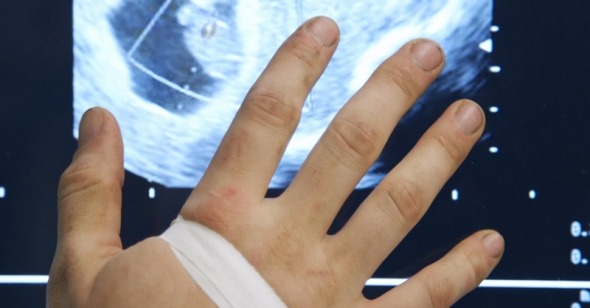
Cutaway tells the story of a construction
worker who’s confronted with his girlfriend’s aborted pregnancy. It’s minimal
style of being shot entirely in close-ups of the young man’s hands (who is
played by Radwanski himself), with its conciseness and spirituality, recalls
the Robert Bresson of L’Argent and Lancelot du Lac, and its tragic premise
and brief running time of seven minutes recalls the Ernest Hemingway’s famous
flash fiction story, ‘For Sale: baby
shoes, never worn’.
While in Sleeping Giant three boys spend their summer near Lake Superior
having fun and causing trouble. It climaxes with a dare between two of them to
jump off a very high cliff into the water. Cividino, who is coming from a
zombie film We Ate the Children Last
(2011), is planning to expand Sleeping
Giant into a feature. The short is most affective when it’s capturing
coming of age experiences of these youth and its lead’s bourgeoning feelings
towards the young girl that’s around.
In Her Place, which is playing on January 6th
at 8:45PM and the 8th at 3PM, is Albert Shin’s second feature after Point Traverse (2010). The film tells
the story of an affluent couple from Seoul who goes to a South Korean
countryside farm, and where the wife will stay, as their expecting to adopt a
paid for baby from a mother and her pregnant teenage daughter. The filming
style of In Her Place recalls the
poetic-realism of Lee Chang-dong and the social criticism and (at times)
dream-like nature of Luis Buñuel. It’s polished and accomplished.
On the subject of these young independent Toronto directors, with the start of 2015 here, it’s worth checking up on them to see where they are. Since my last survey (cf. Toronto DIY Cinema) the bulk of these directors have had major screenings and are in the process of making new works. There has also been a great essay on the subject at Toronto Film Scene by Trista Devries who in the piece The New Toronto New Wave, with the help of interviewee Steve Gravestock, provides an impressive lists of the major directors and trends of this movement, especially in regards to the opportunities that arose due to the accessibility of digital video.
On the subject of these young independent Toronto directors, with the start of 2015 here, it’s worth checking up on them to see where they are. Since my last survey (cf. Toronto DIY Cinema) the bulk of these directors have had major screenings and are in the process of making new works. There has also been a great essay on the subject at Toronto Film Scene by Trista Devries who in the piece The New Toronto New Wave, with the help of interviewee Steve Gravestock, provides an impressive lists of the major directors and trends of this movement, especially in regards to the opportunities that arose due to the accessibility of digital video.
MDFF seems to be at the forefront of this movement.
The production company, which are now also running one of the city’s best
independent film series, includes Radwanski, Dan Montgomery and Antoine Bourges.
They closed 2014 with a special screening of Cutaway paired with Denis Côté’s Joy of Man’s Desiring in one of their most attended event at the
AGO’s Jackman Hall. Radwanski in an interview with Angelo Muredda for the Torontoist speaks about Côté that, “Denis
is a hero to us. Carcasses is one of
our favorite Canadian films.” On the Toronto filmmaking scene, Radwanski talks about how
Olivier Père called them the ‘Canadian cousins’ of the new generation of American
independent filmmakers. And New York City is also taking notice. The Museum of the
Moving Image, coming up in mid-January, will have one of the first programs that will be featuring this group in their First Look series. They’ll be spotlighting Radwanski (Cutaway, Green Crayons), Bourges (Woman Waiting, and the exciting new William in White Shirt),
and Sofia Bohdanowicz (the trilogy of Modlitwa,
Wieczór and Dalsza Modlitwa). The directors will be in attendance for a question and answer period, which will be moderated by Adam Nayman. A must for anyone in that city.
The announcement of Bourges’s William in White Shirt is the big
discovery of the series. Since East
Hastings Pharmacy in 2012, and with Bourges move from Vancouver to Toronto,
everyone was wondering what Bourges would do next? How will he evolve
artistically? Apparently he’s now working on a new script and project. But just
the fact that he had a short film that has never been screened and that it’s
now becoming available is a real revelation. William in White Shirt continues Bourges’s project of Woman Waiting and East Hastings of that of a humanizing social ethnography. What
Bourges brings to his portrait of those that are outcasted in society is a mise en égalité without any stereotyping
whether they are poor and homeless, criminals or drug addicts. As
he says to Ezra Winton in A Conceptual
Intervention in Vancouver’s Downtown Eastside: An Interview with Antoine Bourges (Screening Truth to Power), “I am always more attracted to films
where characters are not treated in a negative way, where you try to see people
as they are and not keep them marginalized.
The other current projects by these directors are vast. Some of the following are confirmed, and others are hearsay, things that I gleaned from conversation with some of the directors or acquaintances. If there are any mistakes or wrong facts, it's all my fault (and please correct me).
The director Pavan Moondi and his producer Brian Robertson will have their new film Diamond Tongues, which stars Leah Fay from the band July
Talk, premiere at Slamdance. While Christopher Heron, also from The Seventh Art, made a new video-essay,
The Style of Xavier Dolan, which will screen before Mommy as part of CTT.
Calvin Thomas, Yonah and Lev Lewis are still in post-production on their new
film, whose title I think is, Spice It
Up!, which is about a young group of women who have a crazy summer after
high school before they join the military. As well I hear their getting ready
for a new project. Matt Johnson and his crew are making a period film set in the Fifties in the
same way they made The Dirties. I
hear the trailer for it is supposed really cool. Igor Drljača, at Time Lapse
Pictures with Shin, is following up on Krivina
with Tabija, a project that was
awarded support from the Hubert Bals Fund, and The Waiting Room which will now follow Drago (Jasmin
Geljo), but in a more fantasy dark-humor direction, which seems like it
hawks back to his The Battery-Powered Duckling. Nadia Litz is working
on a new project The People Garden with the help of Telefilm and with the actresses
Liane Balaban and Pamela Anderson. And she also just starred in Jefferson Moneo’s
Big Muddy. Lina Rodriguez is back in Columbia to make her second film after the
successful Señoritas. On Blake Williams, Darren Hughes's consideration at Senses of Cinema is especially insightful, “Many a Swan, which
screened at Wavelengths in 2012, treats the found, two-dimensional images as
pieces of paper, folding and bending them like origami. In Baby Blue (2013), he
experiments – in the true sense of the word – with parallax, exploring the 3D
effects that result when objects move horizontally through the frame at various
speeds and at various depths of field. Red Capriccio continues this inquiry
into the fundamental components of anaglyph 3D by focusing on blue-red
separation.” I think Simon Ennis is working on a new project (something Noir related?) after having shot some of the footage in Ron Mann's great new Altman documentary. Daniel Cockburn is finishing a new screenplay, and with its intellectual puzzles it seems like it will be similar to You Are Here. Leslie Supnet is
working on a found-footage apocalypse film. And Meelad Moaphi is trying to get more
screenings for his great new short-film Every Monday.
Our voices are growing.
Sunday, January 4, 2015
Subscribe to:
Posts (Atom)